Form W 9 For Revocable Trust
Description

Get your form ready online
Our built-in tools help you complete, sign, share, and store your documents in one place.
Make edits, fill in missing information, and update formatting in US Legal Forms—just like you would in MS Word.
Download a copy, print it, send it by email, or mail it via USPS—whatever works best for your next step.
Sign and collect signatures with our SignNow integration. Send to multiple recipients, set reminders, and more. Go Premium to unlock E-Sign.
If this form requires notarization, complete it online through a secure video call—no need to meet a notary in person or wait for an appointment.
We protect your documents and personal data by following strict security and privacy standards.

Make edits, fill in missing information, and update formatting in US Legal Forms—just like you would in MS Word.

Download a copy, print it, send it by email, or mail it via USPS—whatever works best for your next step.

Sign and collect signatures with our SignNow integration. Send to multiple recipients, set reminders, and more. Go Premium to unlock E-Sign.

If this form requires notarization, complete it online through a secure video call—no need to meet a notary in person or wait for an appointment.

We protect your documents and personal data by following strict security and privacy standards.
Looking for another form?



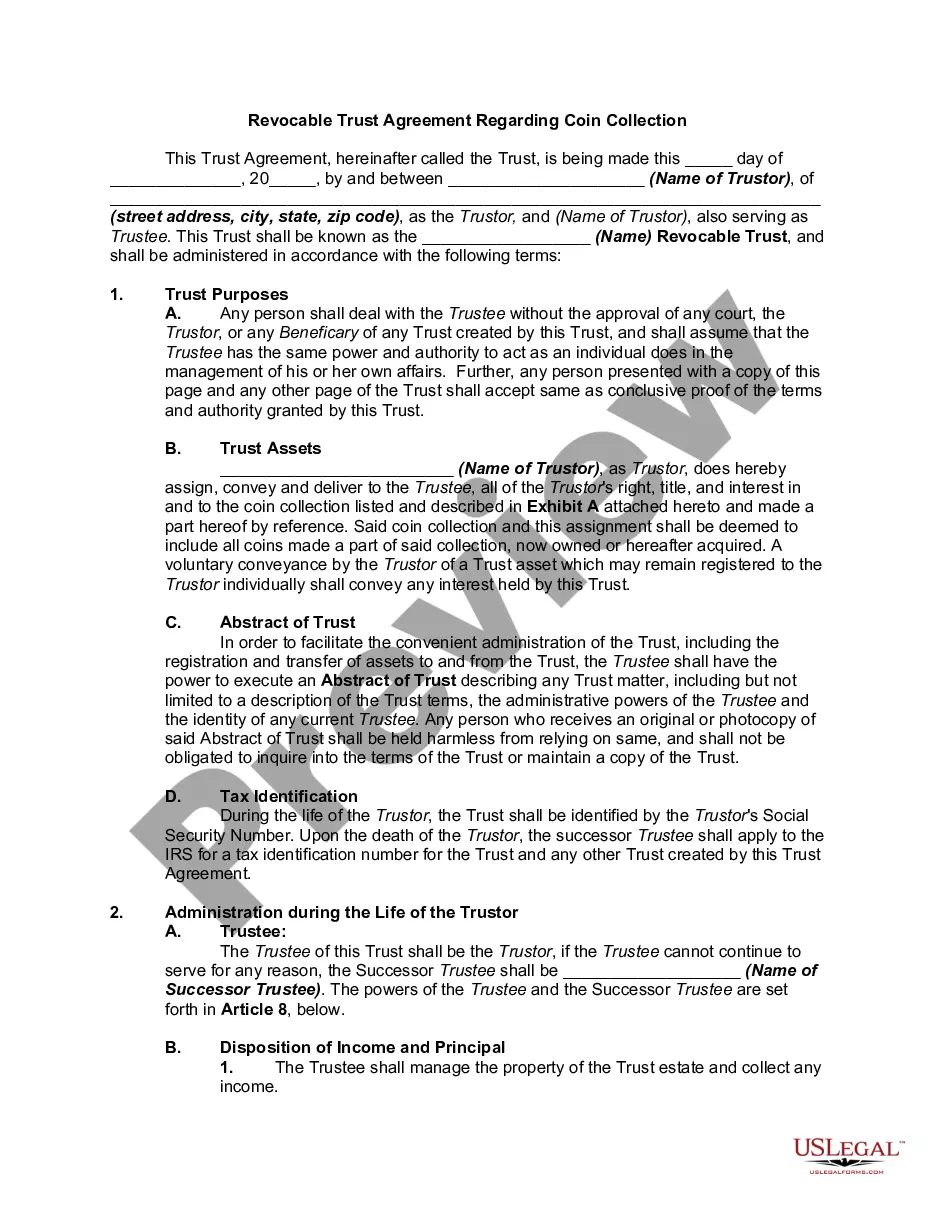
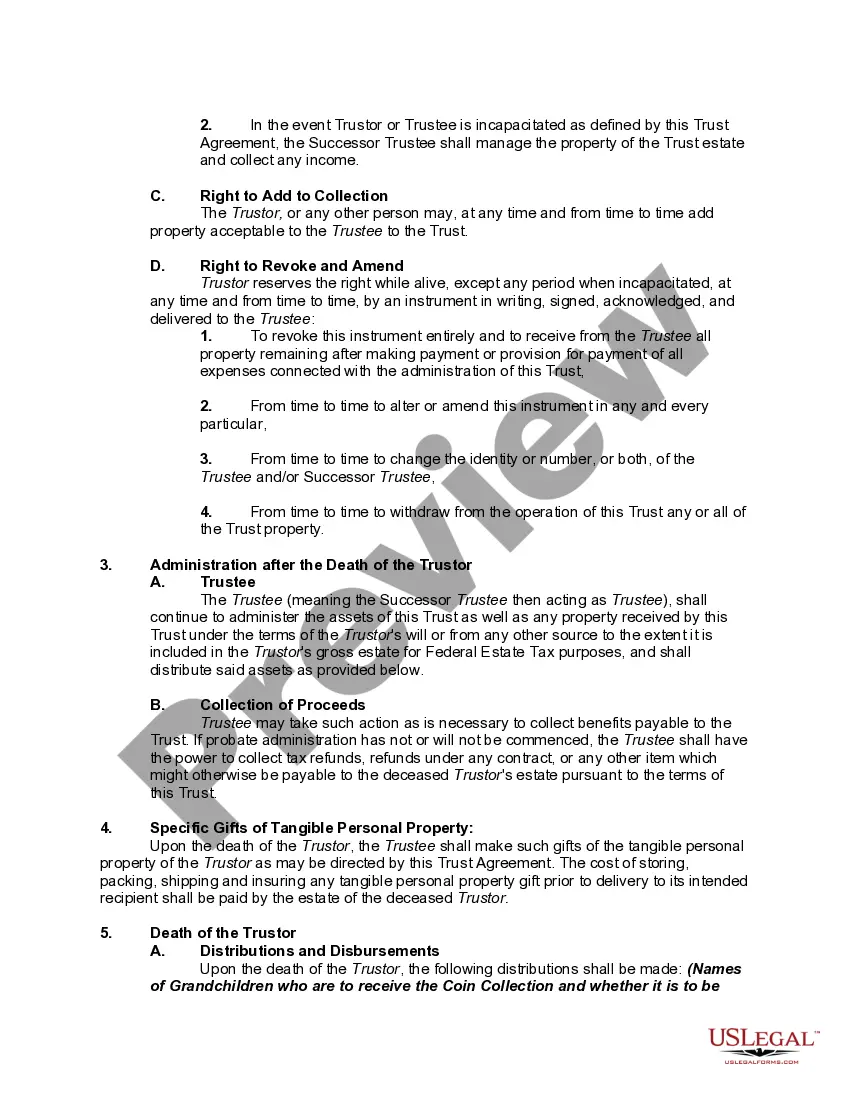
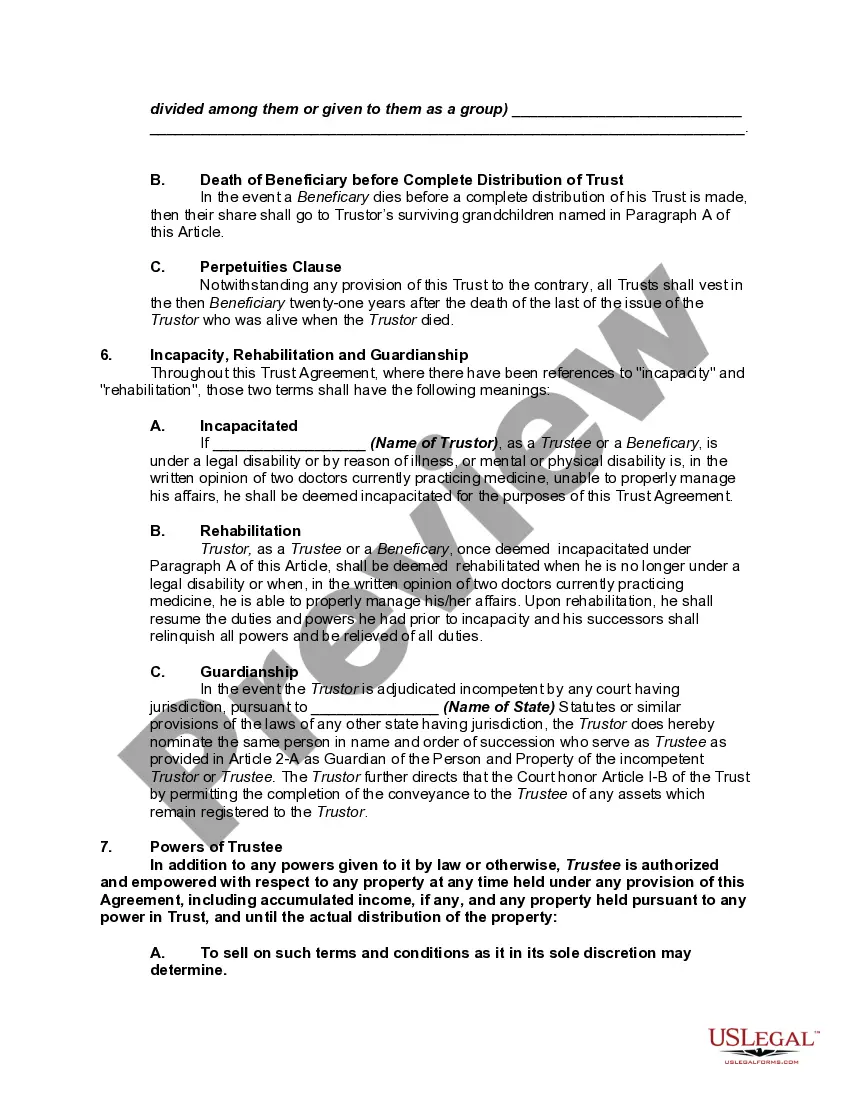
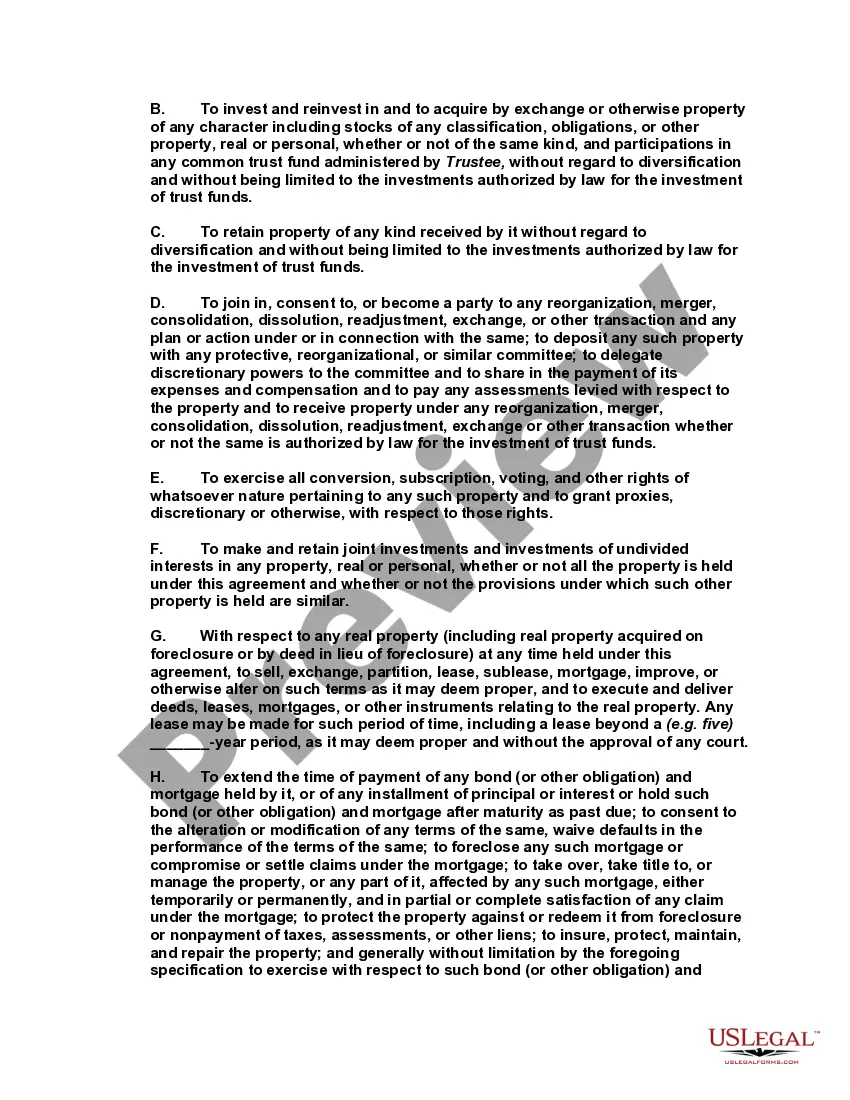
How to fill out Revocable Trust Agreement Regarding Coin Collection?
- If you're a returning user, log into your account to access your forms. Ensure your subscription is active, and download the required template by clicking the Download button.
- For new users, begin by previewing the form and its description. Confirm that it meets your requirements and complies with local jurisdiction regulations.
- If the form doesn’t fit your needs, utilize the Search feature to find a more suitable template. Once you find the right one, proceed to the next step.
- Purchase the form by clicking the Buy Now button. Choose the subscription plan that works for you and create an account to access the comprehensive library.
- Complete your payment using your credit card or PayPal account.
- Download the completed form to your device, and access it anytime from the My Forms section of your profile.
In conclusion, using US Legal Forms not only simplifies the process of obtaining your Form W 9 for a revocable trust but also ensures that you have access to a vast collection of legal documentation. This service empowers you to complete necessary legal tasks efficiently.
Get started now and enjoy a hassle-free experience with your legal forms!
Form popularity
FAQ
A revocable trust is primarily classified as a trust under state law, but for tax purposes, it is treated as a disregarded entity. This structure allows the grantor to retain control over the assets during their lifetime, while also facilitating smoother asset transfer upon death. When dealing with tax matters, make sure to utilize a W9 form for your revocable trust to ensure compliance.
The tax classification of a revocable trust is usually that of a disregarded entity. This means that the trust does not file its own tax return; rather, the income is reported on the owner's individual tax return. Therefore, incorporating a W9 form for your revocable trust becomes essential for accurate reporting.
A disregarded entity refers to a business structure that is not recognized as separate from its owner for tax purposes. In the context of a revocable trust, the trust itself is disregarded, and the income is reported on the individual’s tax return. This status affects how you file taxes, highlighting the importance of using a W9 form for your revocable trust.
Yes, a revocable trust is generally considered a pass-through entity for tax purposes. This means that the income generated by the assets within the trust is reported on the grantor's personal tax return. As a result, you may need to use a form W9 for your revocable trust to provide your taxpayer identification information.
To obtain a W9 form for your revocable trust, you can visit the IRS website and download the form directly. Alternatively, you can use platforms like US Legal Forms to access a ready-to-use downloadable version. Once you have the form, fill it out accurately to ensure proper identification for tax purposes.
Filing taxes on behalf of a trust generally involves submitting Form 1041, the U.S. Income Tax Return for Estates and Trusts. It’s crucial to report all income generated by the trust and any distributions made to beneficiaries. Keep in mind that the trust’s income may be taxed at different rates than individual income; consulting a tax professional can yield valuable guidance to manage the process effectively.
Filling out a Form W-9 requires you to provide accurate information about your entity type and taxpayer identification number. Ensure you correctly check the box for your entity type, provide your name, and include the TIN. Double-check the details for accuracy before submitting to avoid delays or issues with the requester of the form.
As a beneficiary, you may need to fill out a Form W-9 to provide your taxpayer information for tax reporting purposes. Financial institutions and other entities need your TIN to report income that could be generated by the trust. This documentation ensures accuracy in tax filings and helps you avoid withholding taxes on your income from the trust.
The person who created the Grantor trust, often called the Grantor, should sign the W-9 for the trust. This means the Grantor’s name should appear on the signature line, along with the title 'Grantor' or 'Trustee.' It is important for the signature to match the name on the trust documents to avoid any issues.
To fill out a Form W-9 for a revocable trust, first, enter the name of the trust in the appropriate section. You will need to provide the taxpayer identification number (TIN) for the trust, typically the Grantor's Social Security number. Make sure to check the box that indicates your entity type as a trust. Once completed, submit the form to the requester, such as a bank or financial institution.