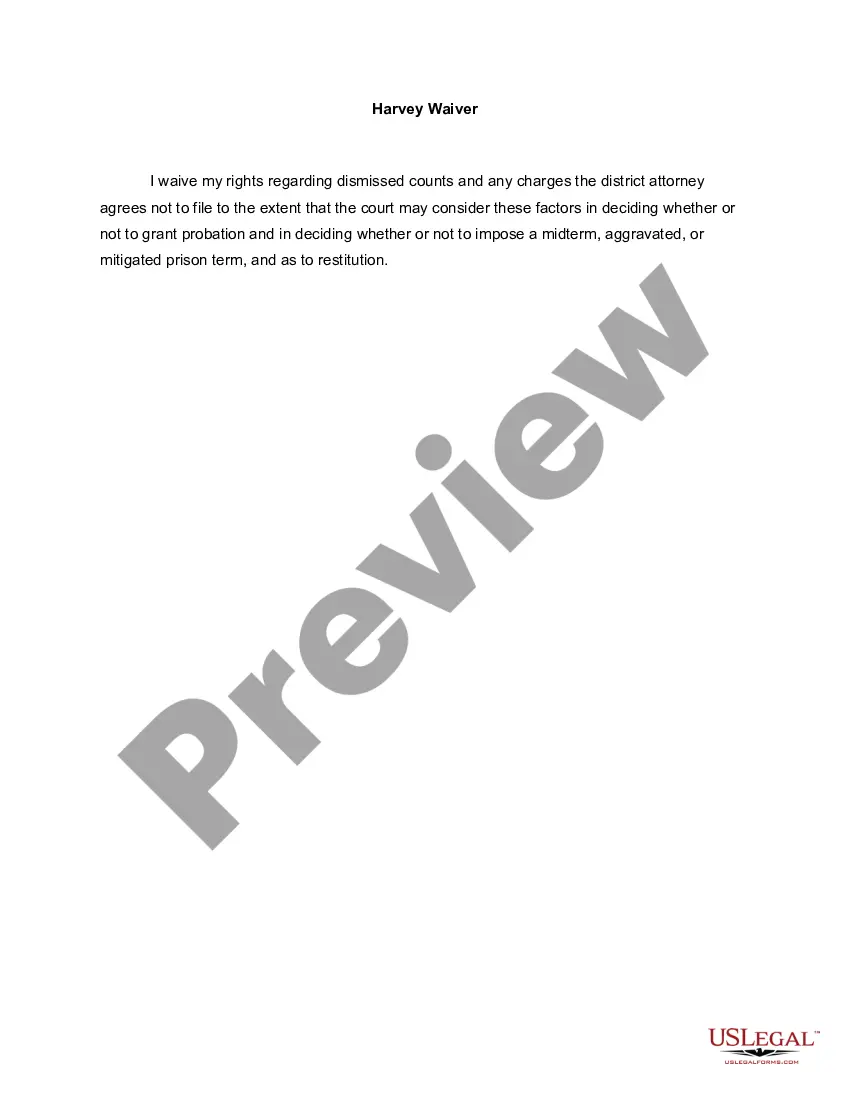
Harvey Waiver Definition
Description
Get your form ready online
Our built-in tools help you complete, sign, share, and store your documents in one place.
Make edits, fill in missing information, and update formatting in US Legal Forms—just like you would in MS Word.
Download a copy, print it, send it by email, or mail it via USPS—whatever works best for your next step.
Sign and collect signatures with our SignNow integration. Send to multiple recipients, set reminders, and more. Go Premium to unlock E-Sign.
If this form requires notarization, complete it online through a secure video call—no need to meet a notary in person or wait for an appointment.
We protect your documents and personal data by following strict security and privacy standards.

Make edits, fill in missing information, and update formatting in US Legal Forms—just like you would in MS Word.

Download a copy, print it, send it by email, or mail it via USPS—whatever works best for your next step.

Sign and collect signatures with our SignNow integration. Send to multiple recipients, set reminders, and more. Go Premium to unlock E-Sign.

If this form requires notarization, complete it online through a secure video call—no need to meet a notary in person or wait for an appointment.

We protect your documents and personal data by following strict security and privacy standards.
Looking for another form?
How to fill out Harvey Waiver?
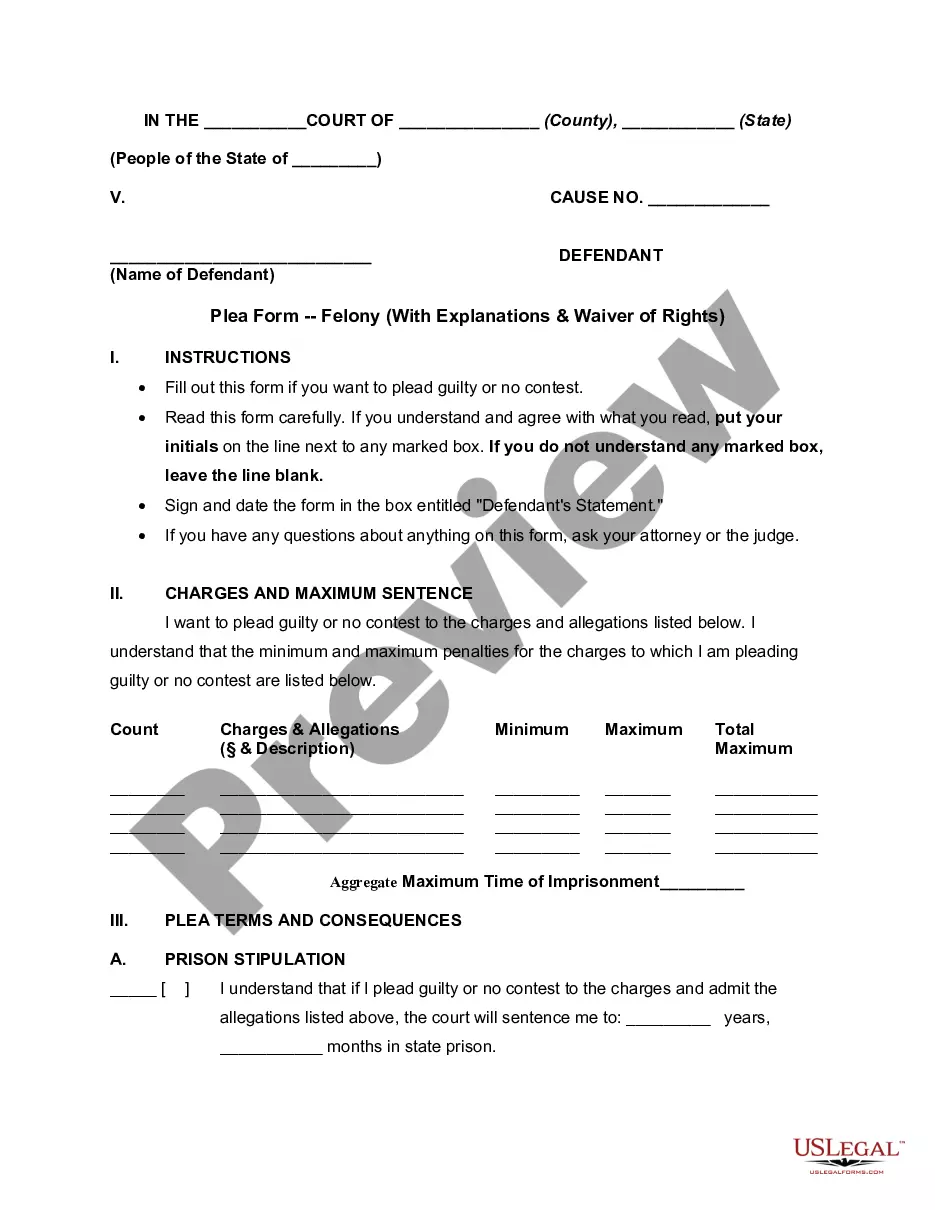
It’s clear that you cannot instantly become a legal expert, nor can you easily construct a Harvey Waiver Definition without possessing a specific skill set.
Assembling legal documents is a painstaking endeavor that necessitates particular education and expertise.
So why not entrust the development of the Harvey Waiver Definition to the experts.
You can revisit your forms from the My documents section at any time.
If you’re an existing customer, you can simply Log In, and find and download the template from the same section.
- Locate the form you need using the search feature at the top of the webpage.
- Examine it (if this feature is available) and review the accompanying description to ascertain if Harvey Waiver Definition meets your needs.
- Restart your search if you require an alternative form.
- Create a free account and choose a subscription plan to purchase the form.
- Click Buy now. Once the payment is processed, you can download the Harvey Waiver Definition, fill it out, print it, and send it by mail to the specified recipients or organizations.
Form popularity
FAQ
When a case is dismissed with a Harvey waiver, it means that the court has concluded the case voluntarily, typically at the request of the defendant. This dismissal often involves the defendant waiving their right to a hearing regarding certain charges, facilitating a more efficient legal process. Understanding the implications of such a dismissal is crucial, as it can affect future legal matters.
Yes, waivers can indeed be legally binding if they satisfy the required criteria. They must be clear, specific, and voluntarily agreed upon by all parties involved. Understanding the legal aspects of waivers, including the Harvey waiver definition, is vital for ensuring that all involved parties are protected.
Legally, a waiver is defined as the act of intentionally giving up a right or claim. This decision is usually documented to avoid confusion later on and to ensure all parties are aware of the relinquished rights. The Harvey waiver definition highlights its importance in both personal and professional legal transactions.
In legal terms, a waiver refers to the voluntary relinquishment of a known right. It can apply to various contexts, including contracts and legal rights in court proceedings. Understanding the waiver concept, particularly the Harvey waiver definition, is essential for individuals navigating legal processes.
Filling out a waiver requires attention to detail to ensure its validity. Start by clearly identifying the parties involved and specifying the rights being waived. Reviewing templates available on platforms like uslegalforms can simplify this process and ensure compliance with the relevant laws related to Harvey waivers.
For a waiver to be legally valid, it must meet specific criteria. This includes clear intent from the individual to waive their rights, proper language that states the waiver's scope, and support by consideration, which means something of value exchanged. The Harvey waiver definition emphasizes these elements, ensuring participants understand what they relinquish.
When a hearing result is waived, it indicates that a party chooses to forego their right to attend a hearing or contest the outcome. In legal contexts like a Harvey waiver, this could streamline the process, allowing for quicker resolutions. Understanding the implications of waiving a hearing is crucial for individuals involved in legal proceedings.
Time waived for sentencing indicates that a defendant has agreed to bypass the usual waiting period before their sentencing occurs. By waiving this time, the defendant accelerates the legal process, which can lead to quicker resolution of their case. This aligns with the Harvey waiver definition, highlighting the strategic choices defendants can make to navigate the complexities of the legal system more efficiently.
In criminology, 'waived' refers to the act of relinquishing a right or claim. When a defendant waives certain rights, they may agree to forgo a trial, allowing their case to be handled through plea bargaining or other means. This concept is essential for understanding the Harvey waiver definition, as it illustrates how individuals can opt out of specific legal processes, often in exchange for more favorable outcomes.
Rule 52 in court pertains to the standards for how errors are handled during trials. It specifies whether an error is 'harmless' or affects the trial's outcome, which is vital for determining grounds for appeal. Familiarity with the Harvey waiver definition complements your understanding of how Rule 52 functions within this legal context, especially during appeals.