Next Kin Agreement With Uk
Description
Get your form ready online
Our built-in tools help you complete, sign, share, and store your documents in one place.
Make edits, fill in missing information, and update formatting in US Legal Forms—just like you would in MS Word.
Download a copy, print it, send it by email, or mail it via USPS—whatever works best for your next step.
Sign and collect signatures with our SignNow integration. Send to multiple recipients, set reminders, and more. Go Premium to unlock E-Sign.
If this form requires notarization, complete it online through a secure video call—no need to meet a notary in person or wait for an appointment.
We protect your documents and personal data by following strict security and privacy standards.

Make edits, fill in missing information, and update formatting in US Legal Forms—just like you would in MS Word.

Download a copy, print it, send it by email, or mail it via USPS—whatever works best for your next step.

Sign and collect signatures with our SignNow integration. Send to multiple recipients, set reminders, and more. Go Premium to unlock E-Sign.

If this form requires notarization, complete it online through a secure video call—no need to meet a notary in person or wait for an appointment.

We protect your documents and personal data by following strict security and privacy standards.
Looking for another form?


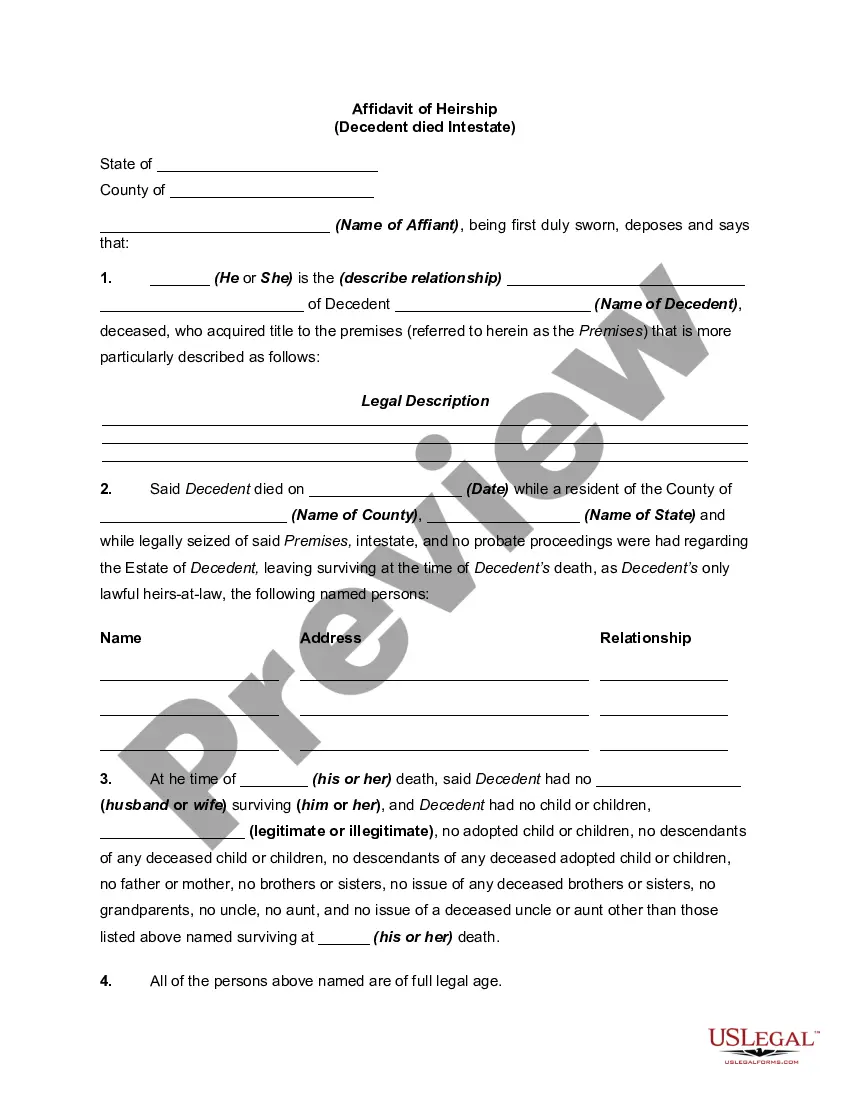
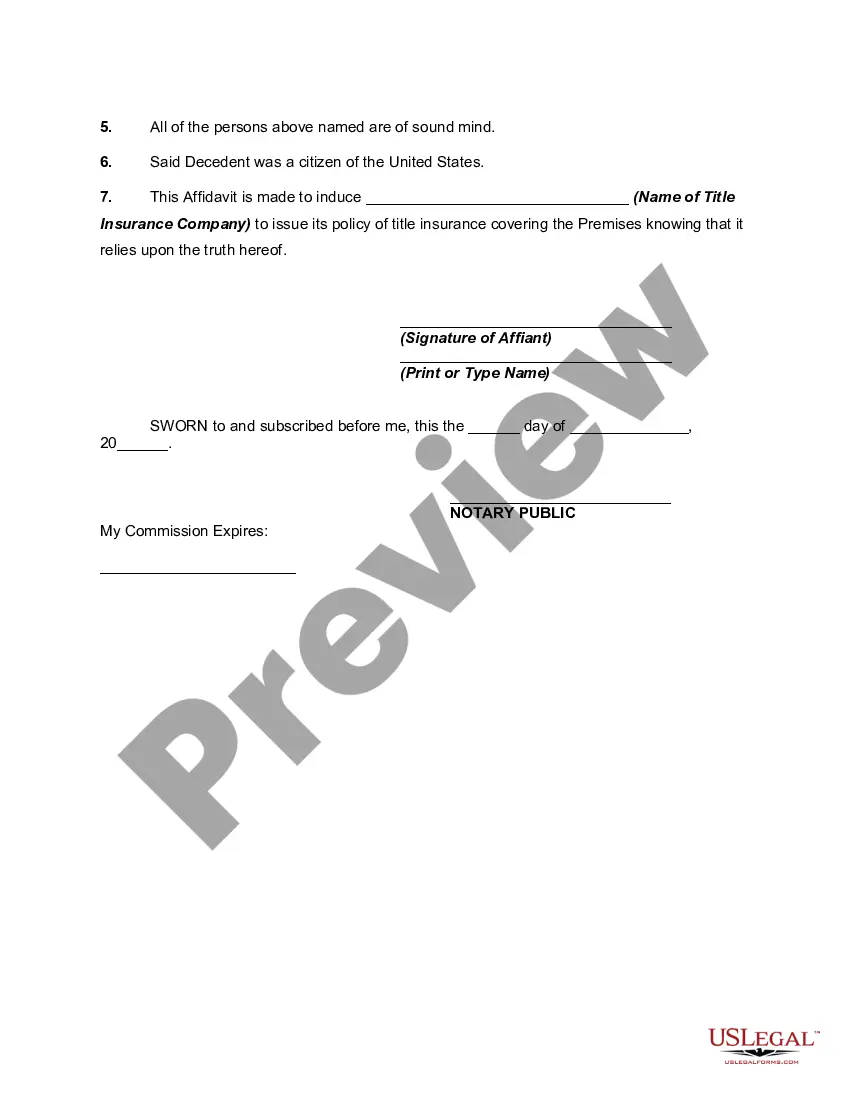
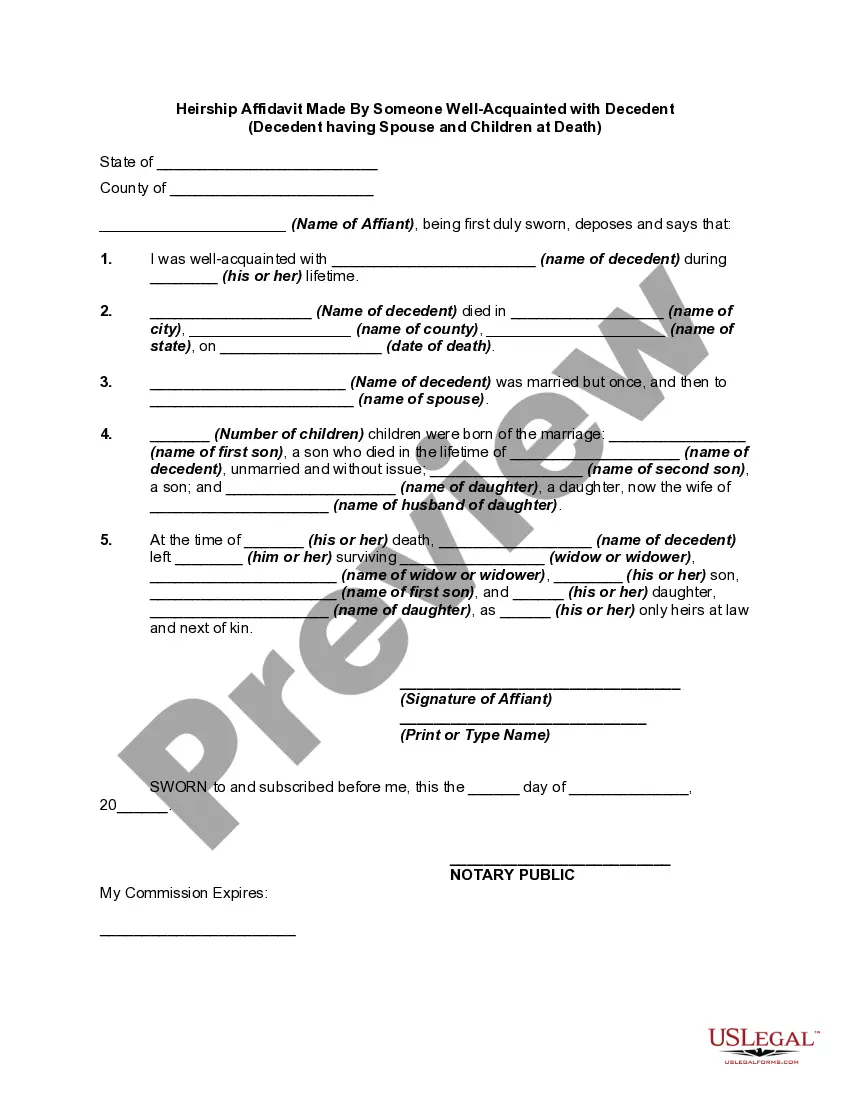
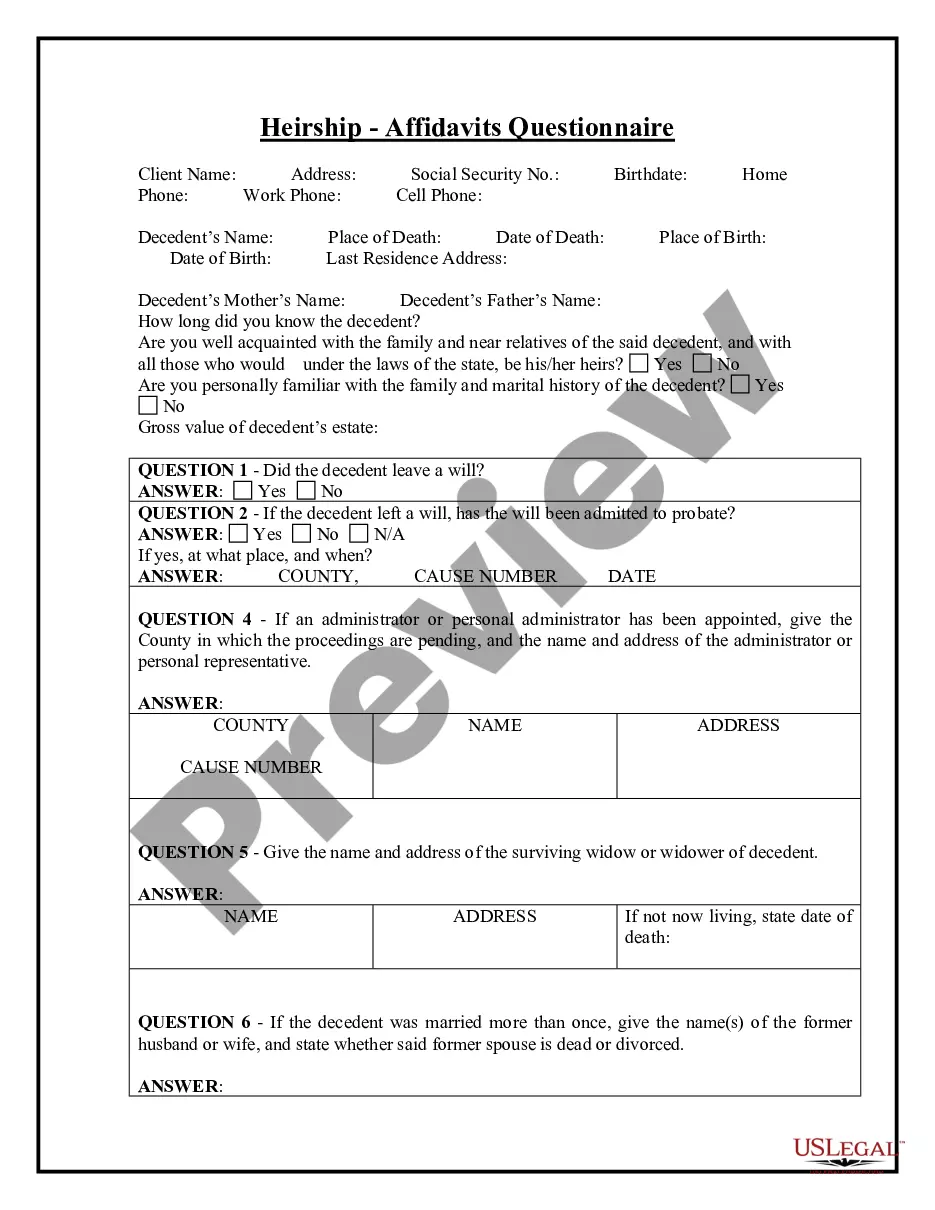
How to fill out Affidavit Of Heirship, Next Of Kin Or Descent - Decedent Died Intestate?
Managing legal documents can be daunting, even for the most experienced professionals.
When you require a Next of Kin Agreement with the UK and lack the time to search for the appropriate and current version, the process can be overwhelming.
US Legal Forms caters to any needs you may have, from personal to business paperwork, all consolidated in one location.
Leverage sophisticated tools to complete and manage your Next of Kin Agreement with the UK.
Once you've accessed the desired form, follow these steps: Verify that this is the right form by previewing it and reviewing its details. Confirm that the template is authorized in your state or county. Click Buy Now when you are ready. Choose a subscription plan. Select your preferred file format, and Download, complete, eSign, print, and send your document. Take advantage of the US Legal Forms online library, supported by 25 years of expertise and trustworthiness. Transform your everyday document management into a seamless and user-friendly process today.
- Access a valuable repository of articles, guides, and resources related to your situation and requirements.
- Save time and effort in searching for the documents you need, and employ US Legal Forms’ advanced search and Preview tool to locate the Next of Kin Agreement with the UK and obtain it.
- If you hold a subscription, Log In to your US Legal Forms account, search for the form, and download it.
- Check the My documents tab to view the documents you have previously saved and manage your folders as desired.
- If this is your first experience with US Legal Forms, create an account to gain unlimited access to all the platform's benefits.
- A robust online form repository can be transformative for anyone looking to navigate these matters efficiently.
- US Legal Forms is a leading provider of online legal documents, offering over 85,000 state-specific legal forms available at your convenience.
- With US Legal Forms, you can access personalized state or county-specific legal and business documentation.
Form popularity
FAQ
The term usually means your nearest blood relative, and most people assume it refers to their spouse or civil partner. You can, however, give the title of 'next of kin' to anyone you wish.
Next of kin is the term used to describe your closest living relative, such as your spouse or civil partner. The UK does not have laws around who you can name as your next of kin, but there are specific rules for who takes responsibility when someone dies.
Most NHS trusts ask you to nominate your next of kin when you are admitted to hospital. You should provide their name and contact details. What should I do if I want to change my next of kin? Inform your GP and the hospital so that they can update your records.
Siblings (brothers and sisters) are usually considered next of kin after the deceased's surviving spouse, parents and children and legally adopted children. 5. Grandparents: Grandparents may be considered to be next of kin when the deceased has no surviving spouse, parents or children.
Next of kin and medical care Being identified as your next of kin does not, however, give anyone the right to make decisions about your care, or to give or refuse consent to treatment on your behalf. At the most, your next of kin will be updated on your progress and asked for their thoughts on your care.