Trust Creation Date
Description

Get your form ready online
Our built-in tools help you complete, sign, share, and store your documents in one place.
Make edits, fill in missing information, and update formatting in US Legal Forms—just like you would in MS Word.
Download a copy, print it, send it by email, or mail it via USPS—whatever works best for your next step.
Sign and collect signatures with our SignNow integration. Send to multiple recipients, set reminders, and more. Go Premium to unlock E-Sign.
If this form requires notarization, complete it online through a secure video call—no need to meet a notary in person or wait for an appointment.
We protect your documents and personal data by following strict security and privacy standards.

Make edits, fill in missing information, and update formatting in US Legal Forms—just like you would in MS Word.

Download a copy, print it, send it by email, or mail it via USPS—whatever works best for your next step.

Sign and collect signatures with our SignNow integration. Send to multiple recipients, set reminders, and more. Go Premium to unlock E-Sign.

If this form requires notarization, complete it online through a secure video call—no need to meet a notary in person or wait for an appointment.

We protect your documents and personal data by following strict security and privacy standards.
Looking for another form?



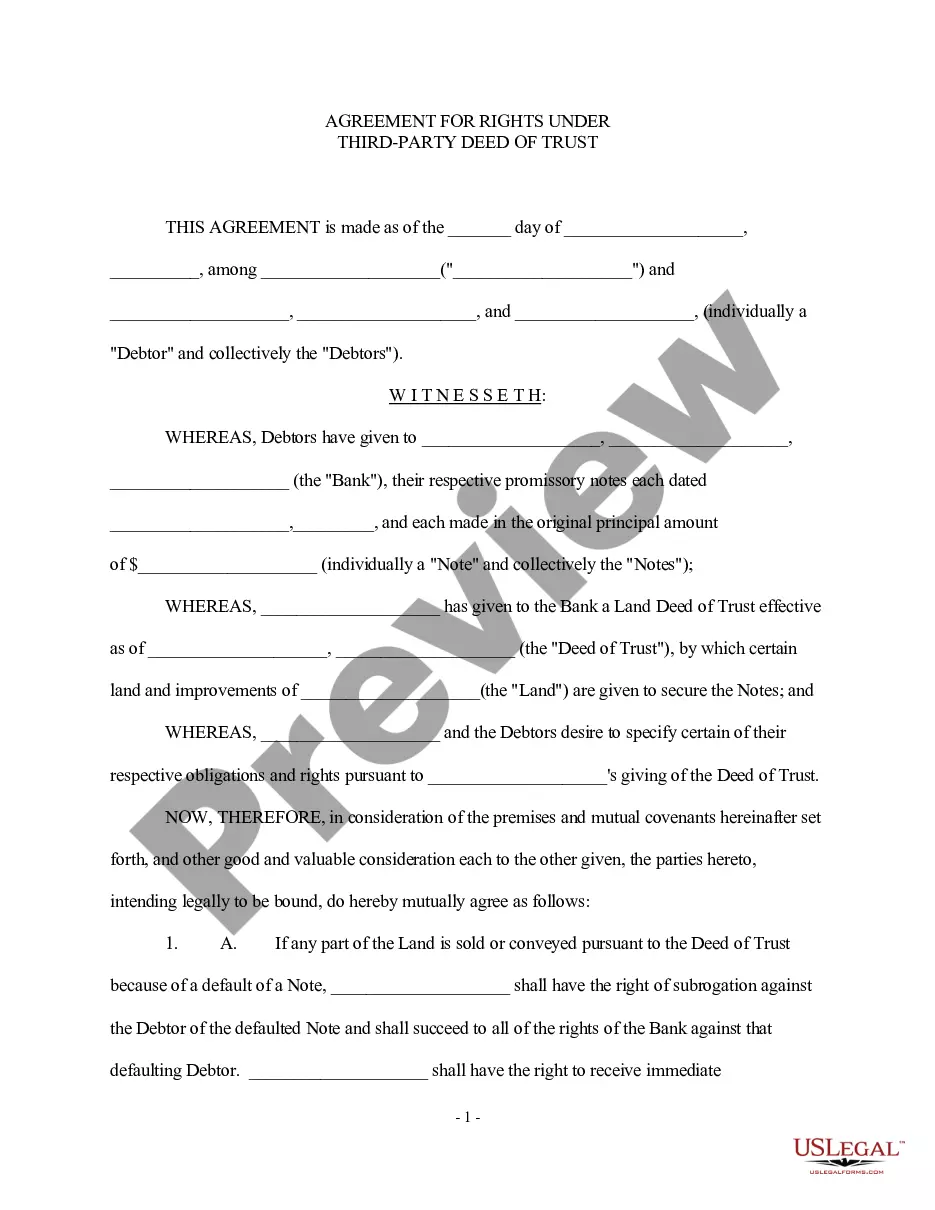
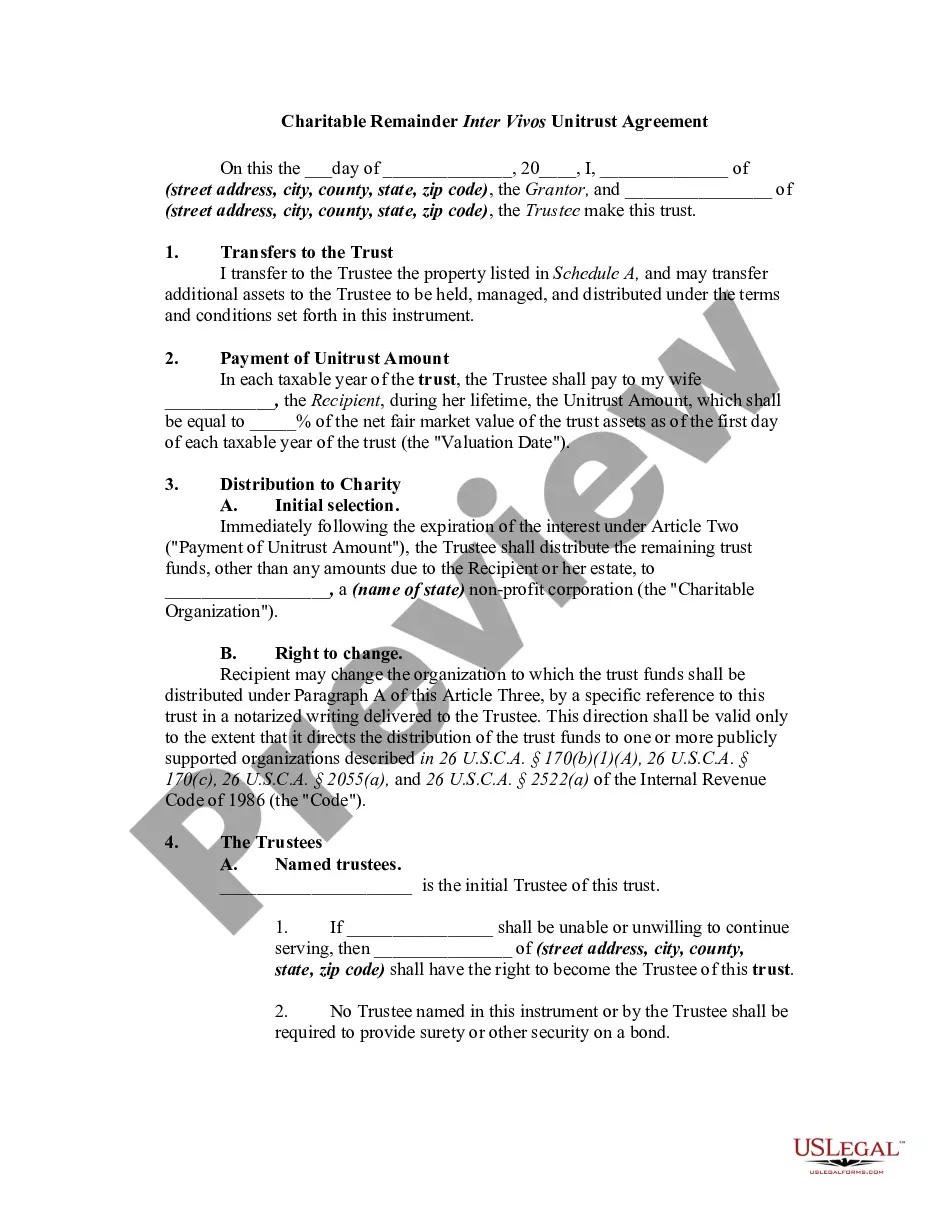
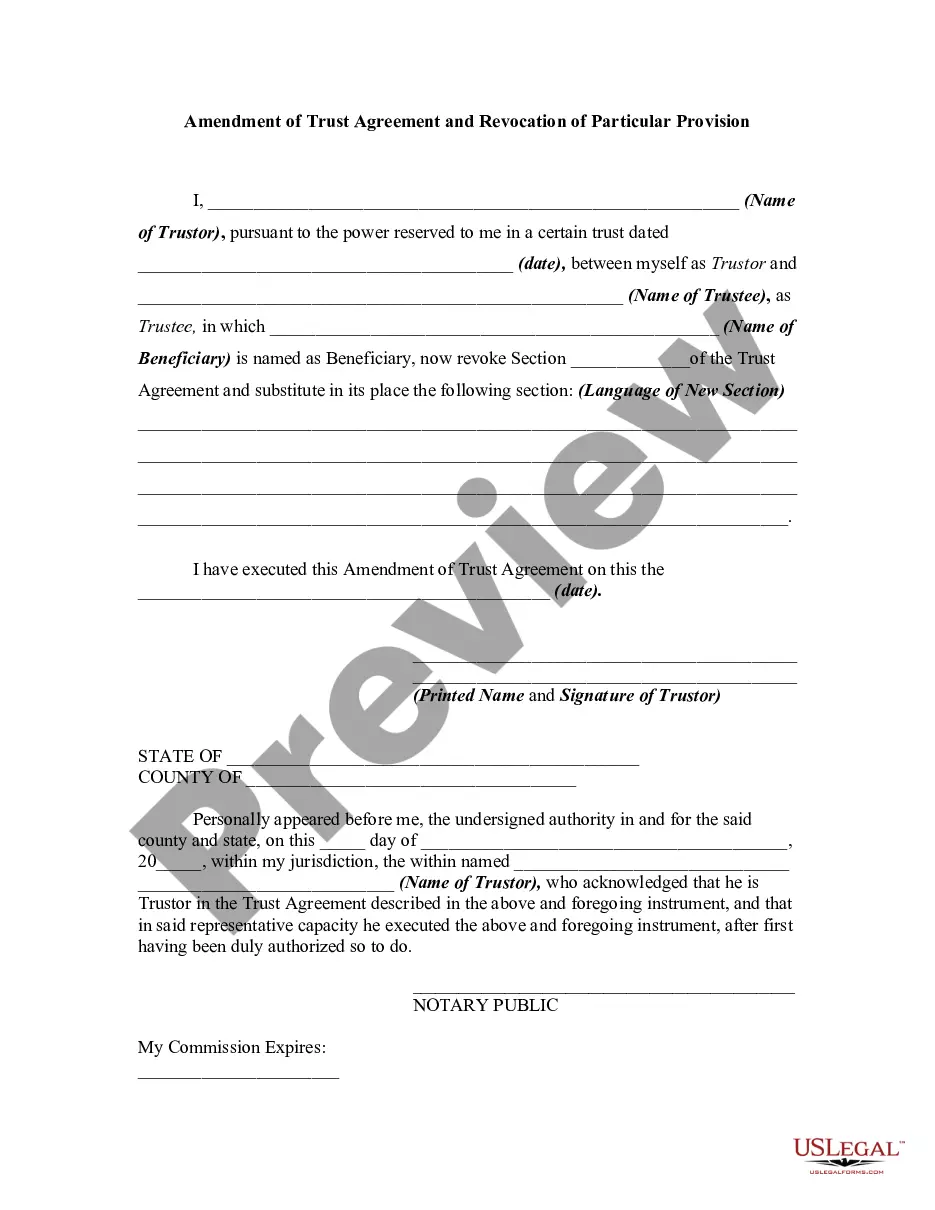


How to fill out Qualified Income Miller Trust?
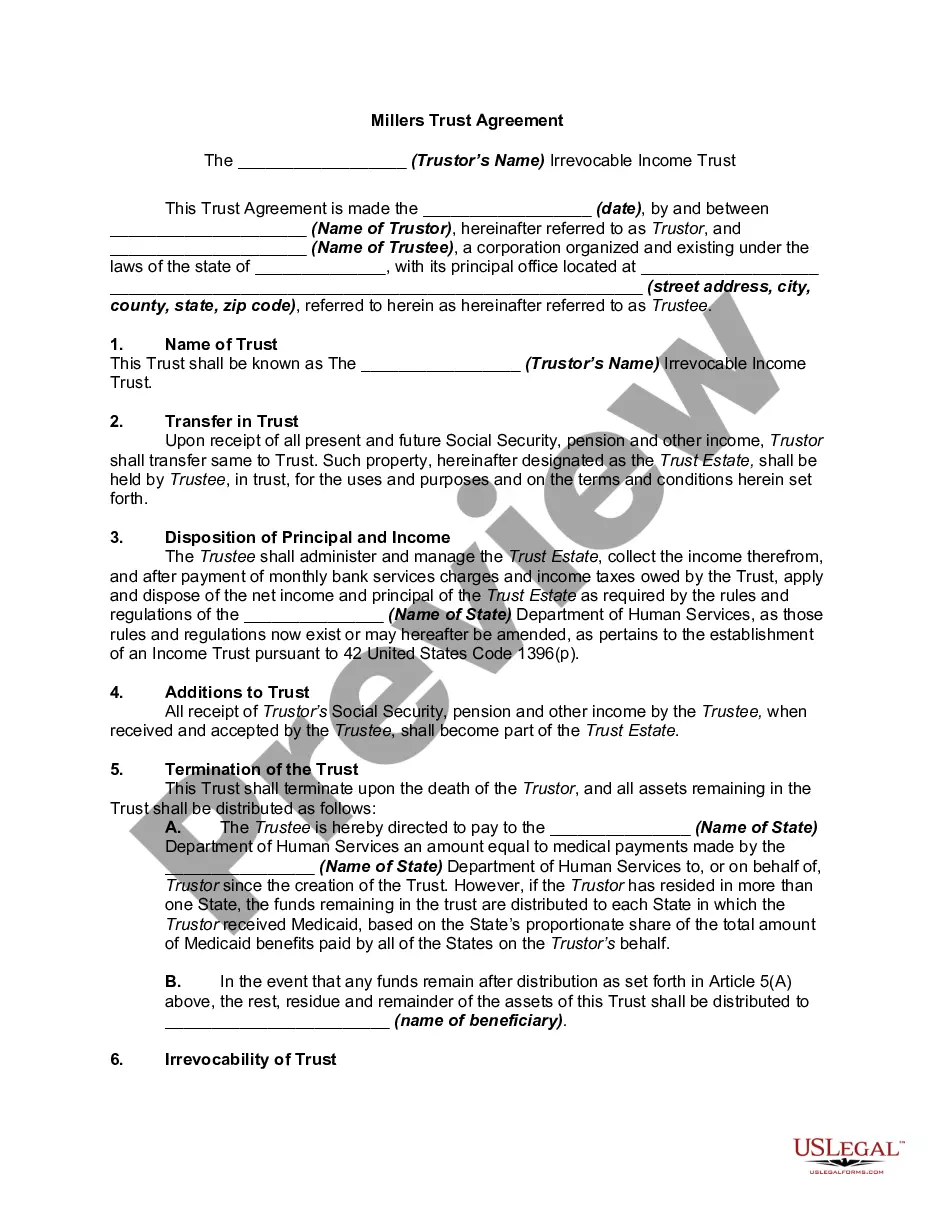
The Trust Establishment Date displayed on this page is a versatile formal model crafted by skilled attorneys in compliance with federal and local regulations.
For over 25 years, US Legal Forms has supplied individuals, organizations, and legal professionals with over 85,000 authenticated, state-specific documents for any business and personal situation. It is the fastest, most transparent, and most dependable method to acquire the documents you require, as the service ensures bank-level data protection and anti-malware safeguards.
Register for US Legal Forms to have authenticated legal templates for all of life’s situations readily available.
- Search for the document you require and review it.
- Browse through the example you searched and preview it or review the form description to confirm it meets your standards. If it does not, utilize the search bar to find the appropriate one. Click Buy Now after you have located the template you need.
- Subscribe and sign in.
- Select the pricing option that works for you and create an account. Use PayPal or a credit card to execute a quick payment. If you already possess an account, Log In and review your subscription to proceed.
- Obtain the editable template.
- Select the format you prefer for your Trust Establishment Date (PDF, DOCX, RTF) and download the example onto your device.
- Fill and sign the document.
- Print the template to complete it by hand. Alternatively, use an online versatile PDF editor to swiftly and accurately fill out and sign your form with a legally-binding electronic signature.
- Download your files once again.
- Reutilize the same document anytime it is needed. Access the My documents tab in your profile to redownload any previously downloaded documents.
Form popularity
FAQ
Most trusts are required to file tax returns annually if they have any reportable income or distributions. This filing takes place using Form 1041. Additionally, understanding the trust creation date helps clarify the trust's filing obligations each year. To ensure compliance, consider using platforms like UsLegalForms for guidance on filing requirements and best practices.
The due date for filing a trust tax return depends on the trust's taxable year-end, which is commonly the 15th day of the fourth month after the year ends. For calendar-year trusts, this means the return is due by April 15. It is important to adhere to this timeline based on the trust creation date to avoid penalties. Always check the IRS guidelines for any updates on due dates.
Filing Form 1041 late, even if no tax is due, can lead to penalties from the IRS. Typically, the penalty amounts to a certain percentage of the tax due for each month the return is late. However, even with no taxes owed, you still must file on time to avoid unnecessary complications. Keeping track of the trust creation date can help you set reminders for timely filing.
Yes, most trusts are required to submit annual tax returns, which typically involve Form 1041. These returns report income, deductions, and distributions to beneficiaries. Submitting the return on time, according to the trust's creation date, is important to maintain compliance with tax laws. Trusts that fail to file may incur penalties, so it is essential to stay informed.
The start date of a trust is synonymous with its creation date, marking when the trust is officially established. This date initiates the terms of the trust and any legal obligations that arise from it. Knowing the start date is important for managing distributions, compliance with regulations, and filing the necessary tax returns. Always keep records related to this date for reference.
Trust returns are generally due on the 15th day of the fourth month following the close of the trust's taxable year. If your trust operates on a calendar year, the due date is April 15. However, if the trust’s creation date is later in the year, the due date may differ based on the established end-of-year practices. It is advisable to monitor these dates closely to avoid potential penalties.
The creation date of a trust is the date when the trust document is signed and the trust becomes legally effective. This date is crucial as it marks the beginning of the trust's existence and affects many legal and tax-related timelines. It is important to reference the trust creation date when filing tax returns or managing trust assets. Knowing this date helps in ensuring compliance with various regulations.
Yes, you can file IRS form 1041 electronically through various tax software platforms. This method streamlines the filing process and reduces the risk of errors. It is essential to ensure that you have the necessary documentation, including your trust creation date, to support your filing. Electronic filing can also expedite any potential refunds.
You can look up trust documents online, but access may be limited due to privacy laws surrounding these documents. Some jurisdictions offer online databases that contain certain trust-related records, but you may not find personal details. To efficiently manage trusts, consider using resources available on platforms like US Legal Forms that can assist you with the process. Remember to note the trust creation date as it can be crucial to your search.
Trust records are generally kept for a significant period, often for the lifetime of the trust and sometimes longer. Specific retention policies may vary based on state laws and the type of trust. The trust creation date is important here, as it helps determine the record's relevance. If you need guidance on how to manage or store these records, US Legal Forms can provide useful tools.