Agreement and Declaration of Equitable Interest in Kansas Real Property
What this document covers
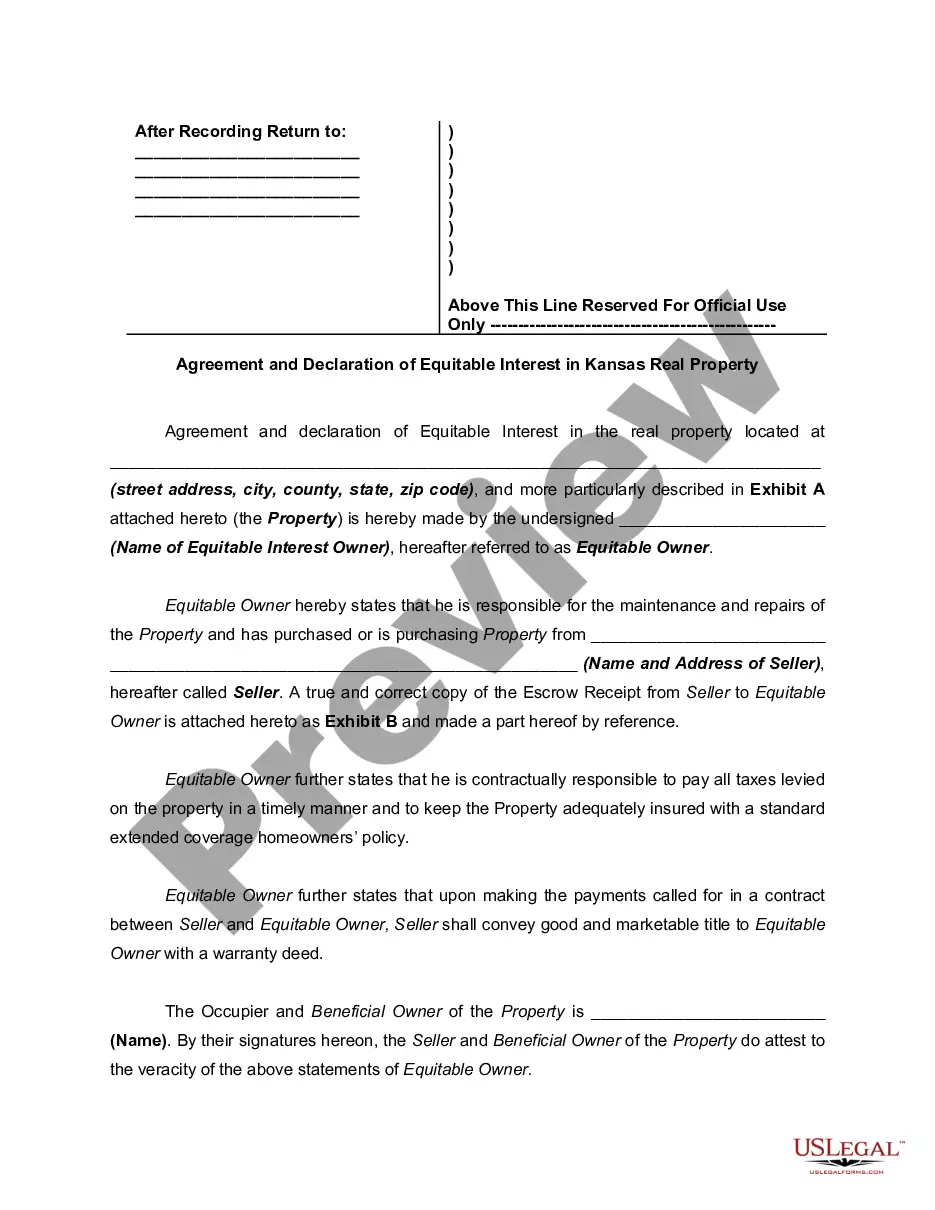
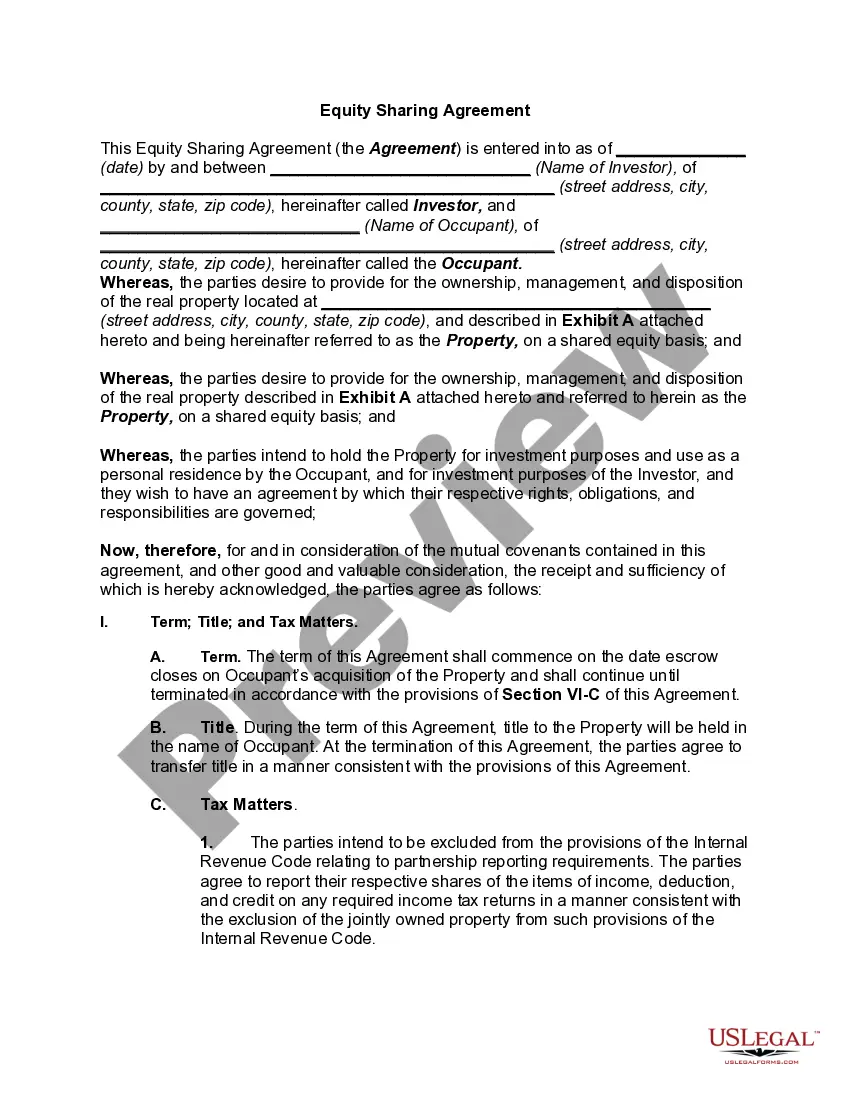
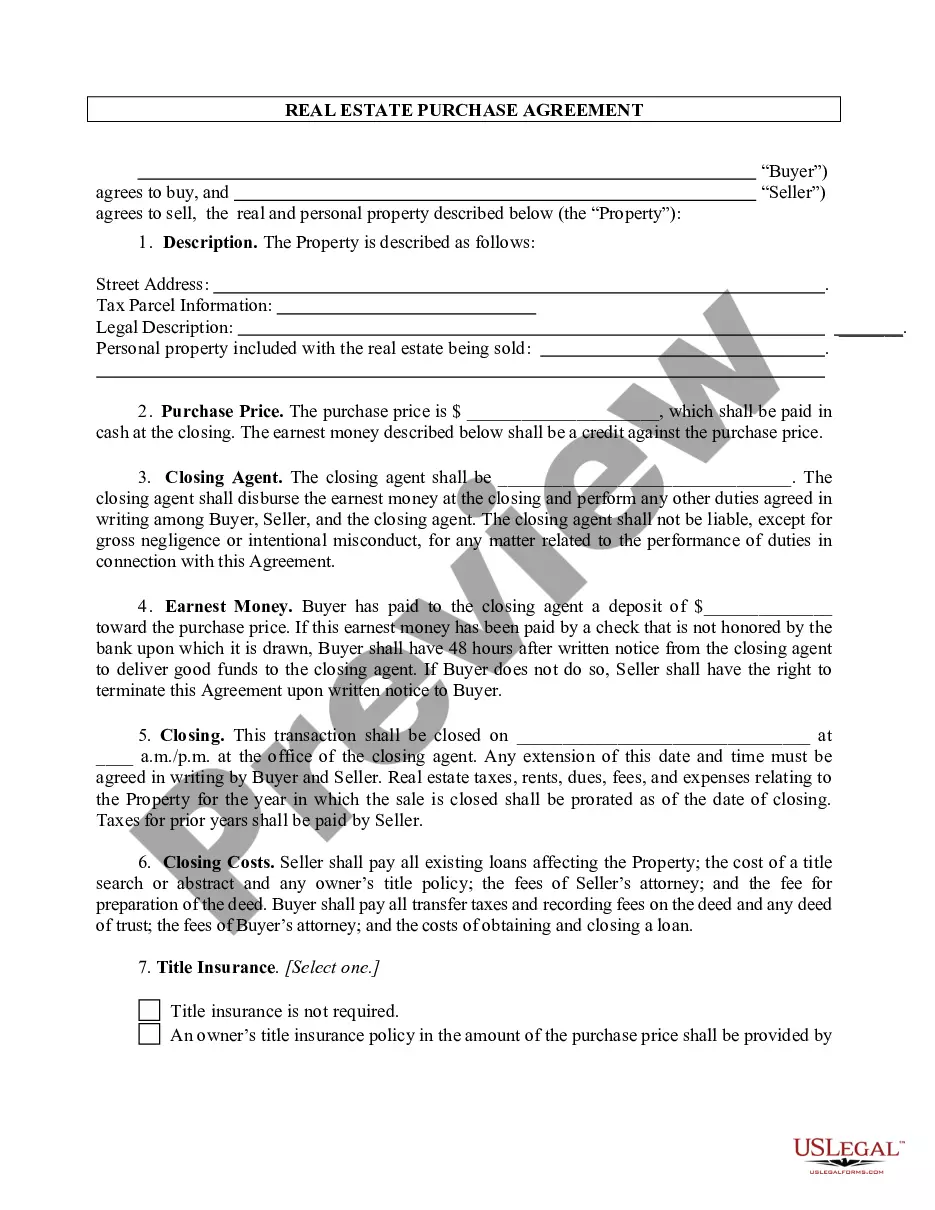
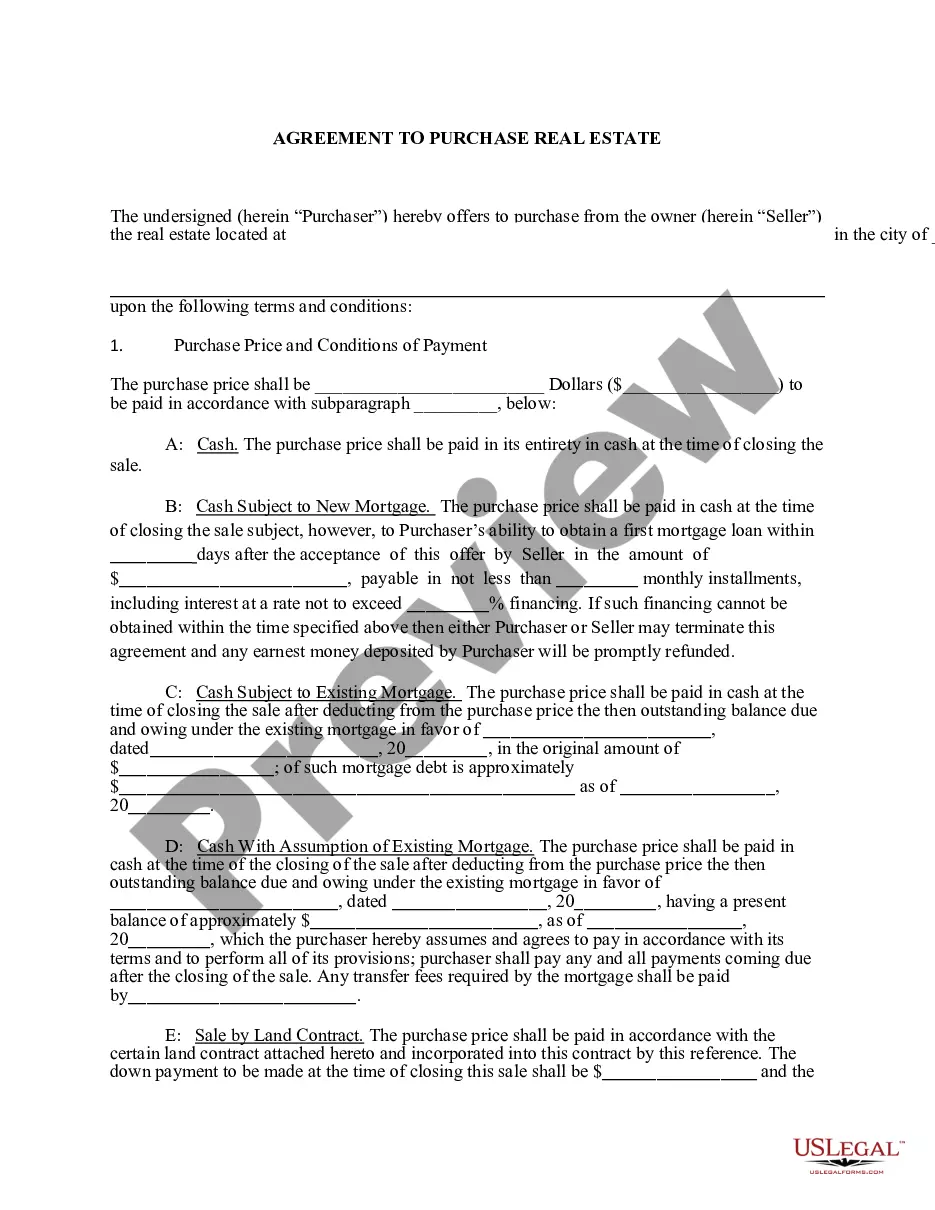
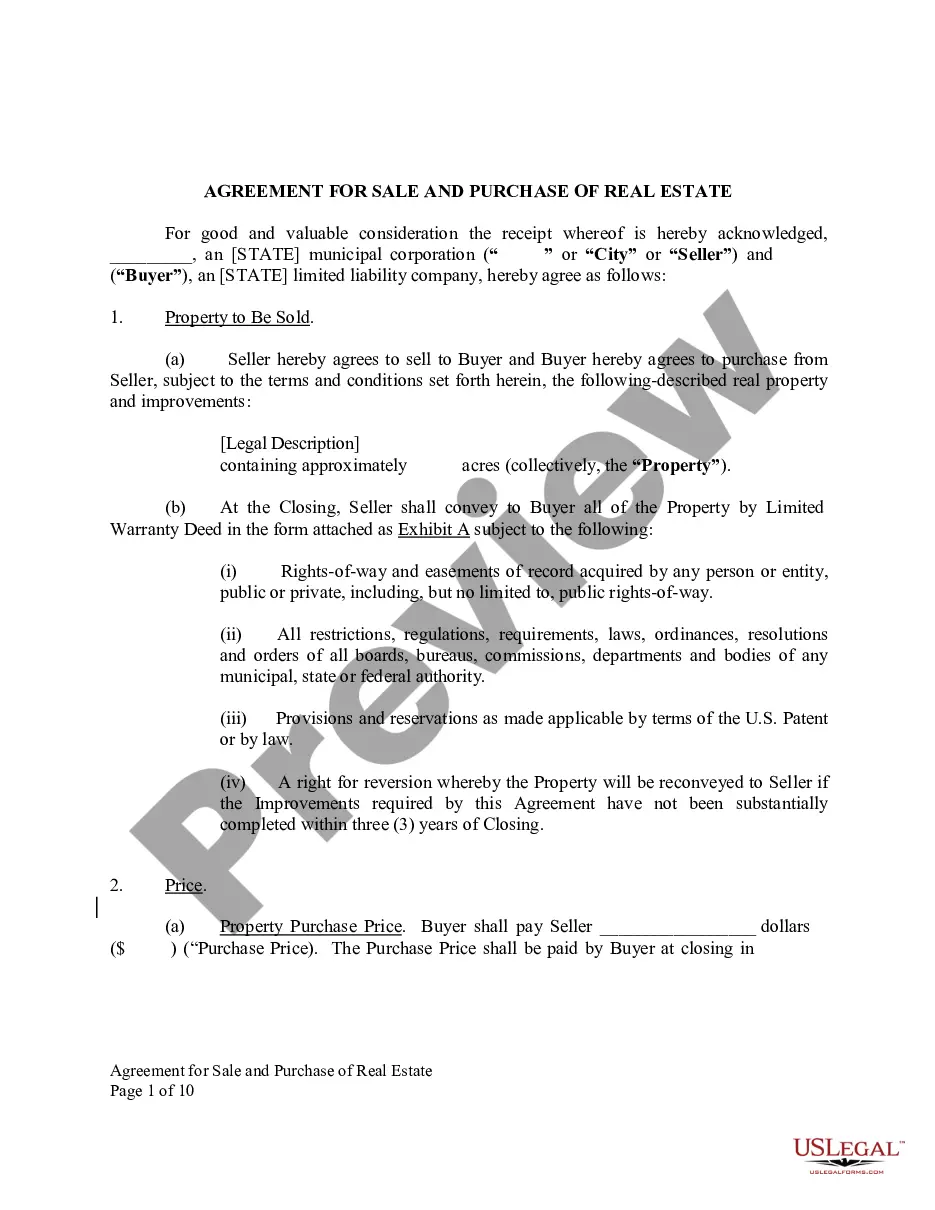
The Agreement and Declaration of Equitable Interest in Kansas Real Property is a legal document designed to clarify the rights of parties involved in a real estate transaction where the seller retains the title until the purchase price is fully paid. This form establishes an equitable interest for the buyer, ensuring that they are recognized as the equitable owner of the property, despite not holding the legal title. This form differs from standard purchase agreements by explicitly stating the buyer's rights in the property before formal title transfer.
Main sections of this form
- Identification of the property and high-level details about it.
- Names and responsibilities of the equitable owner and seller.
- Obligations regarding property maintenance, repairs, and insurance.
- Terms regarding tax liabilities and titles upon fulfillment of payment obligations.
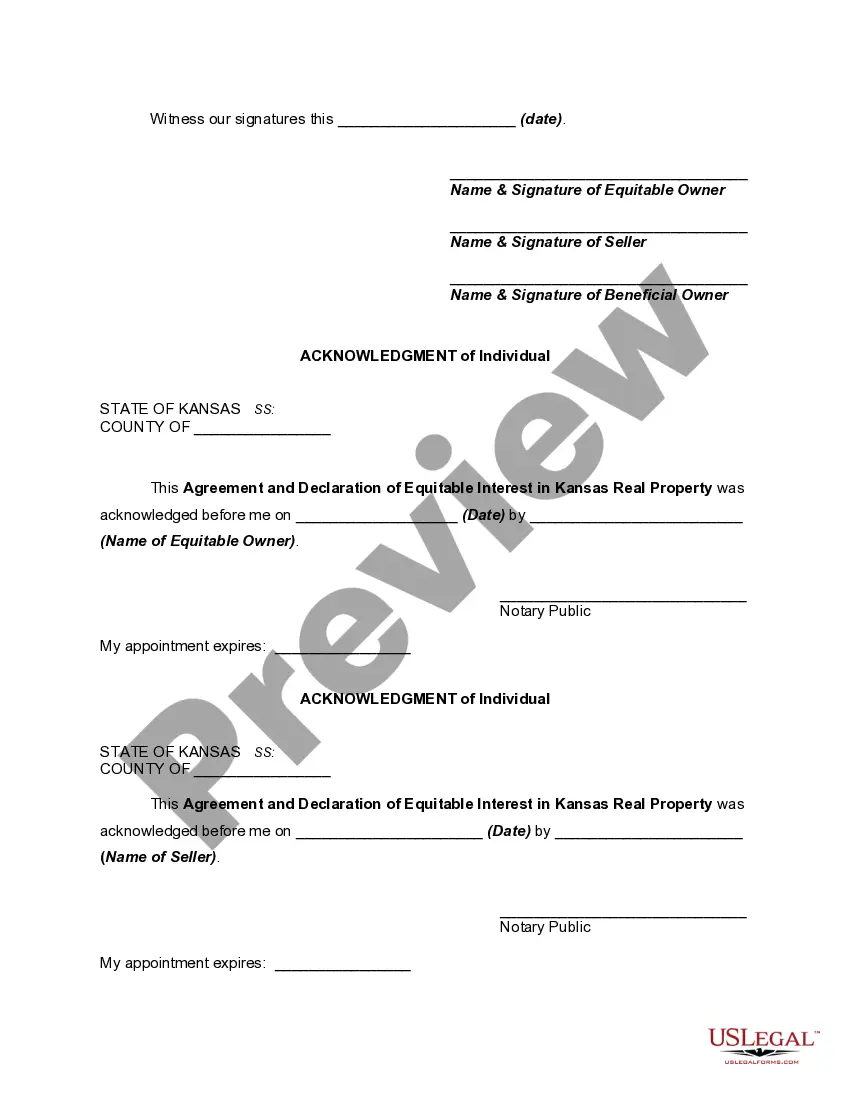
- Signatures from the seller, equitable owner, and any beneficial owner.
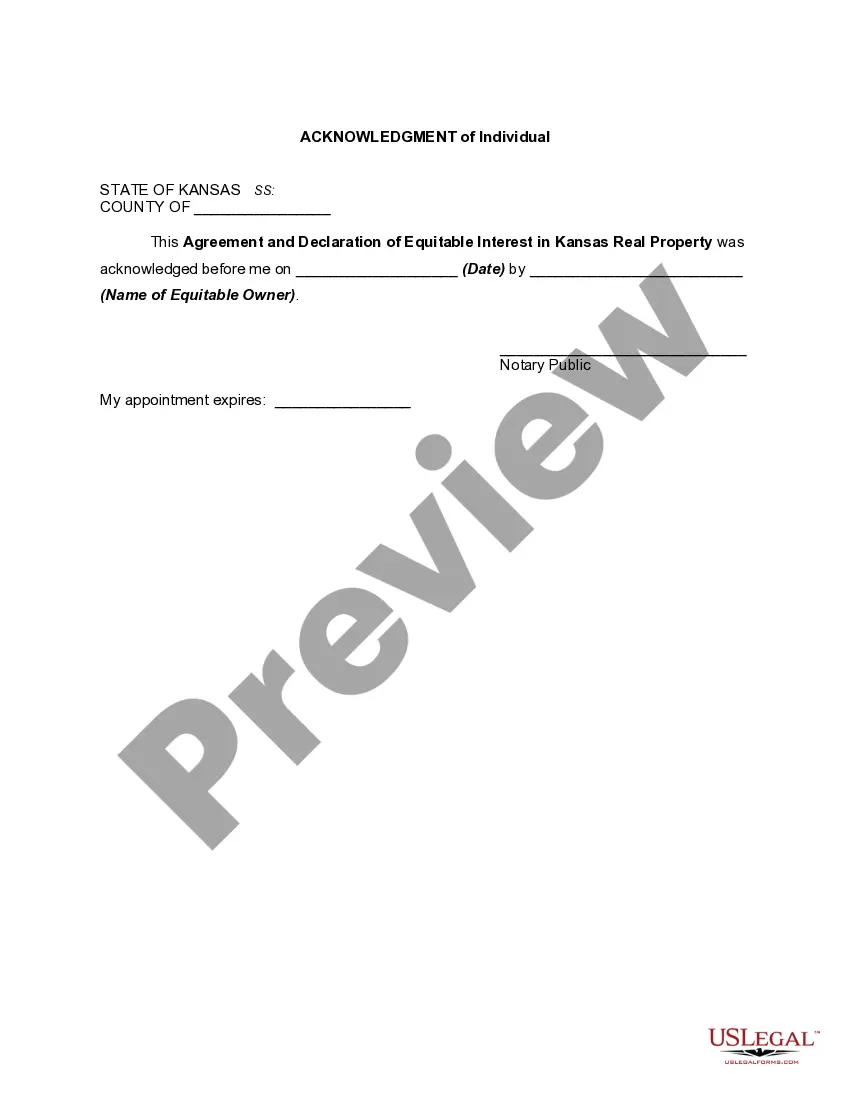
- Notary acknowledgment sections to validate the agreement.

Situations where this form applies
This form should be used in situations where there is a delay in the transfer of legal ownership of real property until full payment is made. It's particularly useful when there is a verbal or informal agreement about the ownership transfer and the parties wish to formalize the arrangement to ensure legal protection and clarity of responsibilities.
Who can use this document
- Individuals purchasing real property who are not ready to take legal title immediately.
- Sellers who wish to retain the title until receipt of complete payment.
- Real estate professionals facilitating transactions with delayed title transfers.
How to complete this form
- Identify the property by entering the street address, city, county, state, and zip code.
- Name the equitable owner and the seller, providing accurate legal names and addresses.
- Specify maintenance and insurance responsibilities clearly within the agreement.
- Ensure that the terms regarding payment and title transfer are clearly outlined.
- Gather signatures from the equitable owner, seller, and beneficial owner, and complete the notary acknowledgment sections.
Does this form need to be notarized?
Yes, this form must be notarized to be legally valid. The notary's acknowledgment confirms the identities of the signing parties and ensures the integrity of the document. US Legal Forms offers integrated online notarization services for convenience, providing secure video calls that meet legal requirements without the need to travel.
Get your form ready online
Our built-in tools help you complete, sign, share, and store your documents in one place.
Make edits, fill in missing information, and update formatting in US Legal Forms—just like you would in MS Word.
Download a copy, print it, send it by email, or mail it via USPS—whatever works best for your next step.
Sign and collect signatures with our SignNow integration. Send to multiple recipients, set reminders, and more. Go Premium to unlock E-Sign.
If this form requires notarization, complete it online through a secure video call—no need to meet a notary in person or wait for an appointment.
We protect your documents and personal data by following strict security and privacy standards.

Make edits, fill in missing information, and update formatting in US Legal Forms—just like you would in MS Word.

Download a copy, print it, send it by email, or mail it via USPS—whatever works best for your next step.

Sign and collect signatures with our SignNow integration. Send to multiple recipients, set reminders, and more. Go Premium to unlock E-Sign.

If this form requires notarization, complete it online through a secure video call—no need to meet a notary in person or wait for an appointment.

We protect your documents and personal data by following strict security and privacy standards.
Common mistakes to avoid
- Failing to include all necessary parties in the agreement.
- Not specifying property details that could cause confusion.
- Signing the form without proper notarization, where required.
- Omitting responsibilities related to property maintenance or tax payments.
Advantages of online completion
- Convenience of downloading the form directly and filling it out at your own pace.
- Editability allows customization to fit your specific needs and circumstances.
- Reliable access to forms drafted by licensed attorneys to ensure legal sufficiency.
Looking for another form?
Form popularity
FAQ
The main disadvantages of a contract for deed include lack of ownership until the full payment is made, and the risk of losing payments if the seller defaults. Buyers should also be aware that they may not have the same rights as traditional property owners during the contract period. To mitigate risks, consider using an 'Agreement and Declaration of Equitable Interest in Kansas Real Property' for added security and clarity in your agreement.
The status of an interest in land as either legal or equitable traditionally determined the rules of enforcement of that interest against third parties: legal interests bound all third parties, whereas equitable interests would only bind third parties who were not bona fide purchasers for value of a legal estate
Unlike a right recognisable in law, all equitable rights are enforceable only at the discretion of the court.Legal rights, however, are enforceable as of right. Once the existence of the right is established it is not really open to the court to consider the merits of the situation before giving a remedy.
In real estate law, "equitable title" refers to a person's right to obtain full ownership of a property or property interest.Thus, a person can have equitable title to a property that they have invested in, while another party holds legal title.
The status of an interest in land as either legal or equitable traditionally determined the rules of enforcement of that interest against third parties: legal interests bound all third parties, whereas equitable interests would only bind third parties who were not bona fide purchasers for value of a legal estate
An equitable right is a legal right guaranteed by equity as opposed to a legal right which derives authority from a legal source. An example of an equitable right could be seen in Land law, where mention is made of a beneficial interest i.e. vested interests in an estate which are protected by equity.
A beneficial interest in real property that gives the title holder the right to acquire legal title to the property. Equitable title holders cannot transfer legal title to real property, but they derive benefits from the property's appreciation in value.
According to Lawpath, equitable interest arises when there is an interest in the property, but no legal title exists. It's a broad term that covers an interest established through principles of fairness, rather than the true legal assignment of ownership.
An equitable interest is an "interest held by virtue of an equitable title (a title that indicates a beneficial interest in property and that gives the holder the right to acquire formal legal title) or claimed on equitable grounds, such as the interest held by a trust beneficiary".
An equitable interest is an "interest held by virtue of an equitable title (a title that indicates a beneficial interest in property and that gives the holder the right to acquire formal legal title) or claimed on equitable grounds, such as the interest held by a trust beneficiary".