Trust 18005
Description

Get your form ready online
Our built-in tools help you complete, sign, share, and store your documents in one place.
Make edits, fill in missing information, and update formatting in US Legal Forms—just like you would in MS Word.
Download a copy, print it, send it by email, or mail it via USPS—whatever works best for your next step.
Sign and collect signatures with our SignNow integration. Send to multiple recipients, set reminders, and more. Go Premium to unlock E-Sign.
If this form requires notarization, complete it online through a secure video call—no need to meet a notary in person or wait for an appointment.
We protect your documents and personal data by following strict security and privacy standards.

Make edits, fill in missing information, and update formatting in US Legal Forms—just like you would in MS Word.

Download a copy, print it, send it by email, or mail it via USPS—whatever works best for your next step.

Sign and collect signatures with our SignNow integration. Send to multiple recipients, set reminders, and more. Go Premium to unlock E-Sign.

If this form requires notarization, complete it online through a secure video call—no need to meet a notary in person or wait for an appointment.

We protect your documents and personal data by following strict security and privacy standards.
Looking for another form?





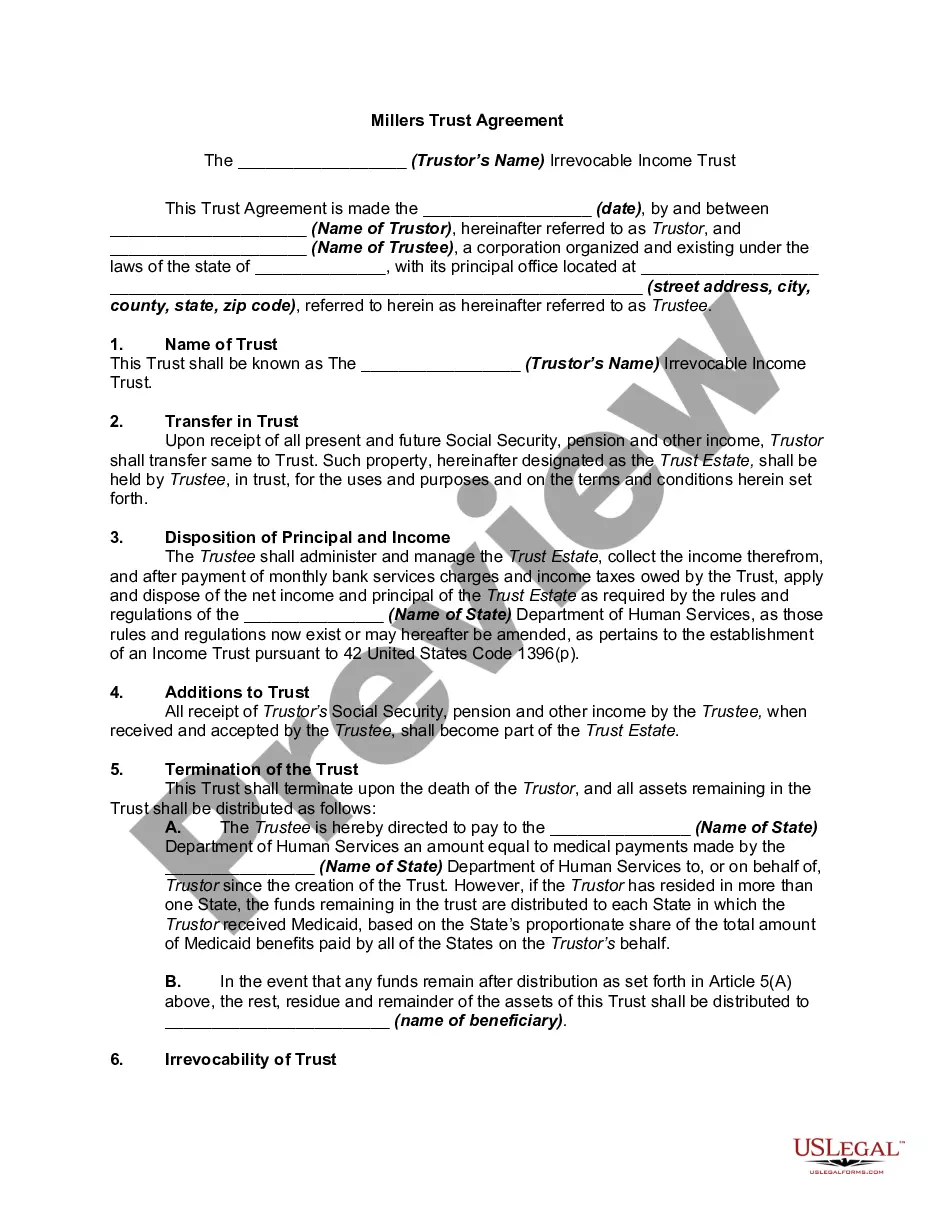
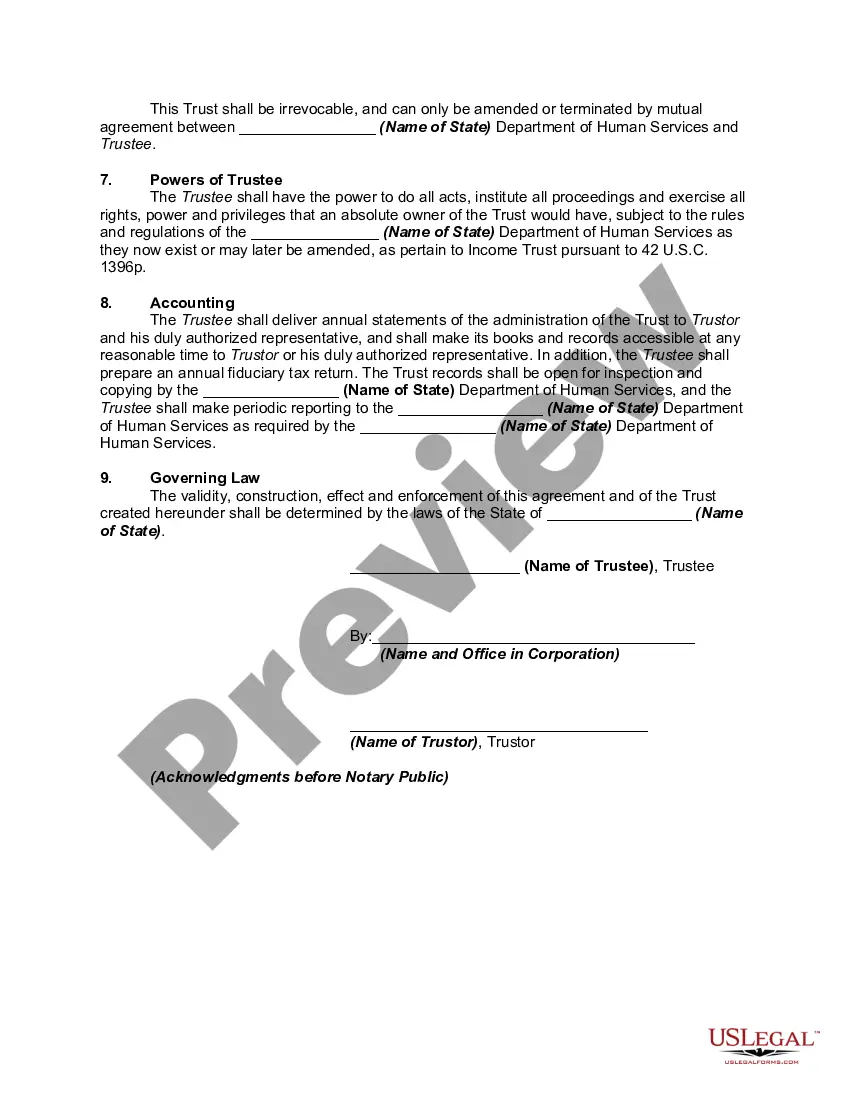
How to fill out Qualified Income Miller Trust?
- If you're an existing user, log into your account to download your desired form template directly. Verify that your subscription is active; if not, renew it based on your chosen payment plan.
- For first-time users, begin by browsing the extensive preview mode and form descriptions to identify the correct document that fits your legal needs and complies with your local jurisdiction.
- If you encounter discrepancies or need a different template, utilize the search functionality at the top to locate the right form.
- Once you've found the appropriate document, click the 'Buy Now' button and select your preferred subscription plan. You'll need to create an account to unlock limitless access to the forms library.
- After completing your purchase, provide your payment details via credit card or PayPal to finalize the transaction.
- Finally, download your selected form to your device. You can also revisit it anytime in the My Forms section of your profile.
In conclusion, Trust 18005 through US Legal Forms is an exceptional resource for ensuring you have quick and easy access to all necessary legal documentation. With robust features and unmatched assistance from premium experts, you can confidently create legally sound documents without hassle.
Start your journey to legal empowerment today—explore Trust 18005 and unlock your path to seamless document execution!
Form popularity
FAQ
To file a tax return for a trust, you typically need IRS Form 1041, which reports income, deductions, and distributions. You may also need additional schedules depending on your situation and whether you are adhering to Trust 18005 guidelines. Using platforms like US Legal Forms can help you access the necessary documents and guidance for proper filing.
To file a return for a trust, you will typically need TurboTax Business, which is designed for estates and trusts. This specific version assists in navigating the complexities of trust taxation while adhering to Trust 18005 requirements. Choosing the right software can simplify filing processes and ensure accuracy in your returns.
Yes, most trusts are required to file a federal tax return annually, unless they meet specific exceptions. Compliance with tax obligations is essential for maintaining the status and benefits associated with the Trust 18005. Ensure you understand your filing requirements to avert any potential legal complications.
FBAR filing requirements apply to US citizens, residents, and entities, including trusts, with foreign accounts exceeding $10,000 at any point in the year. This means trustees may need to take action if the trust's foreign account balances cross this threshold. Following the guidelines related to Trust 18005 will help clarify responsibilities and prevent issues with compliance.
Yes, trust tax returns can often be filed electronically, making the process more efficient and streamlined. Many software solutions, including those offered by reputable platforms like US Legal Forms, support electronic filing for trusts. By leveraging these tools, you can ensure accurate and timely compliance while adhering to the standards set forth by Trust 18005.
Generally, a trust must file an FBAR if it owns foreign financial accounts that exceed the reporting threshold. However, the specific requirements can vary based on how the trust is structured and the residency of its grantors and beneficiaries. If your trust falls under the Trust 18005 guidelines, it’s important to consult with a tax professional to determine your filing obligation.
Several types of accounts are exempt from filing the Foreign Bank and Financial Accounts Report (FBAR). Non-reportable accounts can include certain types of employee benefit plans and certain government accounts. When considering reporting requirements related to Trust 18005, familiarize yourself with the specific exemptions to ensure compliance and avoid penalties.
Yes, a trust can be considered a US person for tax purposes depending on its structure and the residency of its beneficiaries. If a trust is established in the United States and meets certain criteria, it is treated as a domestic trust. Thus, it must adhere to US tax regulations, including the requirements tied to the Trust 18005. Understanding the classification of your trust is crucial for compliance.
Documenting trust income requires meticulous record-keeping of all revenue sources and related expenses. You should maintain detailed statements for interest, dividends, and any other earnings. This organized approach not only facilitates accurate tax reporting but also aligns with the expectations of the Trust 18005. Using digital tools or accounting software can further streamline this process.
Recent IRS changes regarding trusts emphasize stricter reporting and transparency requirements. Trusts must provide more details about distribution and income, ensuring beneficiaries are properly informed. Staying updated with these changes is essential for effective management under the Trust 18005. Consulting a professional can help navigate these new rules, ensuring your trust remains compliant.