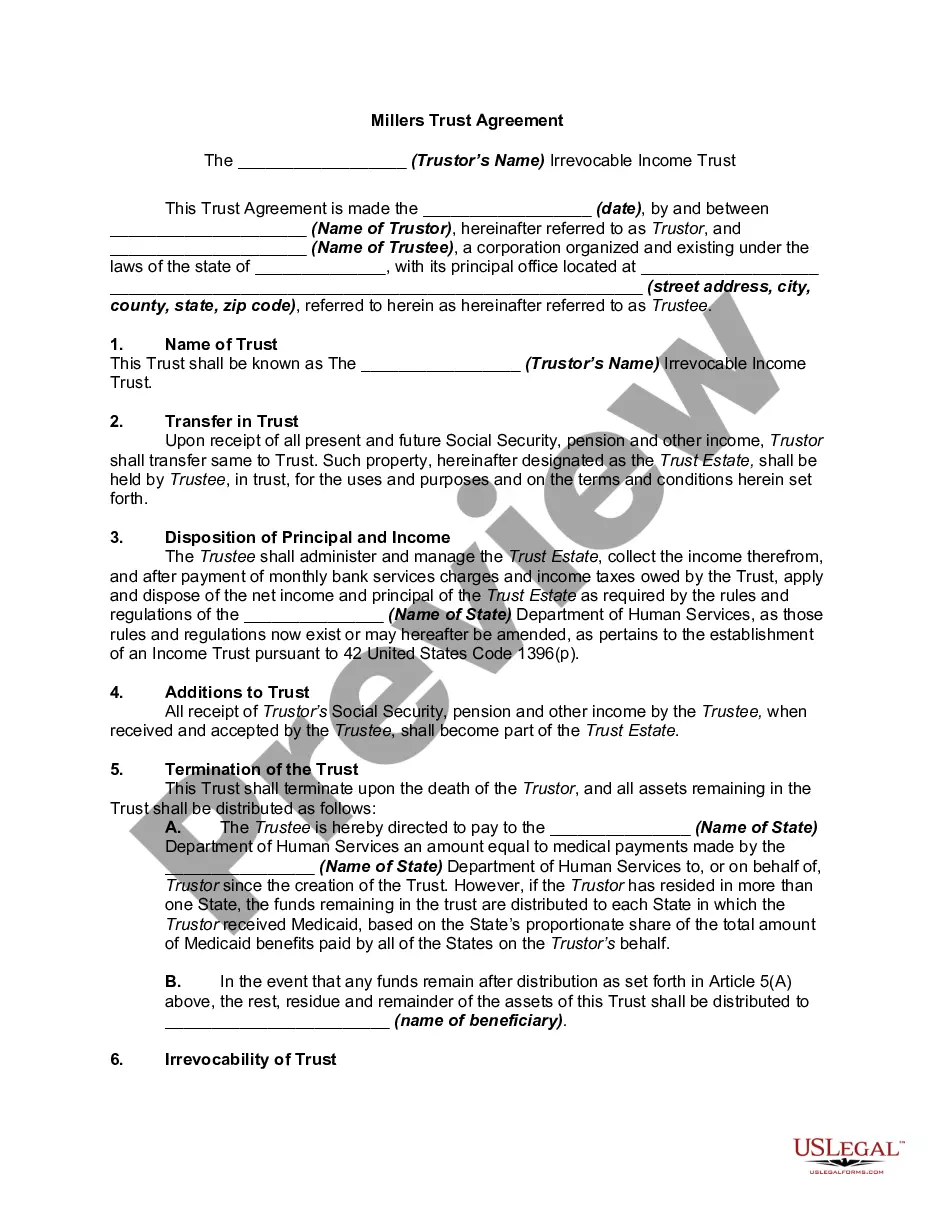
Qualified Trust Caps Statement With Multiple Conditions
Description

Get your form ready online
Our built-in tools help you complete, sign, share, and store your documents in one place.
Make edits, fill in missing information, and update formatting in US Legal Forms—just like you would in MS Word.
Download a copy, print it, send it by email, or mail it via USPS—whatever works best for your next step.
Sign and collect signatures with our SignNow integration. Send to multiple recipients, set reminders, and more. Go Premium to unlock E-Sign.
If this form requires notarization, complete it online through a secure video call—no need to meet a notary in person or wait for an appointment.
We protect your documents and personal data by following strict security and privacy standards.

Make edits, fill in missing information, and update formatting in US Legal Forms—just like you would in MS Word.

Download a copy, print it, send it by email, or mail it via USPS—whatever works best for your next step.

Sign and collect signatures with our SignNow integration. Send to multiple recipients, set reminders, and more. Go Premium to unlock E-Sign.

If this form requires notarization, complete it online through a secure video call—no need to meet a notary in person or wait for an appointment.

We protect your documents and personal data by following strict security and privacy standards.
Looking for another form?



How to fill out Qualified Income Miller Trust?
- Log in to your account at US Legal Forms. Ensure your subscription is active. If it's expired, renew it based on your payment plan.
- Review the form's preview and description before proceeding. Make sure it complies with your local jurisdiction's requirements.
- If necessary, search for alternative templates using the Search tab. Confirm that the template meets all your needs.
- Select your document by clicking the Buy Now button, and choose your desired subscription plan. You will need to create an account for complete access.
- Finalize your purchase by entering your payment details using a credit card or PayPal.
- Download the 'Qualified trust caps statement with multiple conditions' form to your device. It will be available for future access in the My Forms section of your account.
Following these steps will ensure that you can efficiently obtain the forms you need, thanks to US Legal Forms' robust collection and accessible resources.
Take advantage of our extensive library today! Visit US Legal Forms and simplify your legal documentation process now.
Form popularity
FAQ
While a family trust can provide various benefits, a notable disadvantage is the potential for family disagreements regarding asset distribution. Moreover, establishing a family trust may involve complicated tax implications and regulatory compliance, especially if it doesn't adhere to a qualified trust caps statement with multiple conditions. Consulting legal services like uslegalforms can help navigate these complexities more effectively.
A significant downfall of having a trust lies in its complexity and ongoing management requirements. Trusts can require regular updates, legal reviews, and compliance with stipulated conditions. Failing to meet the criteria in a qualified trust caps statement with multiple conditions can lead to unintended tax consequences, making it essential to have a knowledgeable adviser on your side.
The rules for a qualified trust include specific guidelines regarding income distribution, beneficiary designations, and limitations on excess contributions. Additionally, trusts must comply with the requirements detailed in the qualified trust caps statement with multiple conditions to ensure they remain tax-efficient. Understanding these rules is crucial, and utilizing services like uslegalforms can simplify this process.
A Qualified Subchapter S Trust (QSST) typically cannot have multiple beneficiaries at the same time. This is essential for maintaining its status and adhering to the requirements of a qualified trust caps statement with multiple conditions. However, this can vary, and it is advisable to consult with a legal expert who specializes in trusts to explore options.
Deciding whether your parents should place their assets in a trust often depends on their specific financial and family situations. A trust can help in avoiding probate and might provide tax benefits. If your parents have complex assets or wish to set specific conditions, a qualified trust caps statement with multiple conditions could be beneficial for them.
One downside of placing assets in a trust involves the costs associated with setting it up and maintaining it. Legal fees, tax preparations, and potential management fees can accumulate over time. Moreover, if the trust is not structured correctly, it may not meet the requirements of a qualified trust caps statement with multiple conditions, leading to additional complications.
The filing threshold for a complex trust depends on the amount of income generated during the year. Generally, if the trust's gross income exceeds a specific amount, it must file Form 1041. Being aware of these thresholds helps in maintaining compliance and understanding how they relate to your qualified trust caps statement with multiple conditions.
Yes, a trust can certainly have multiple EINs as needed. This allows for clear tracking of various activities or assets within the trust. When establishing your qualified trust caps statement with multiple conditions, ensure that you manage these EINs properly to avoid any complications.
Yes, a trust can hold multiple EIN numbers if it manages distinct activities or entities that require separate tax identification. Each EIN helps in keeping the trust’s financial records organized, especially when aligned with a qualified trust caps statement with multiple conditions. This organization is vital for efficient tax reporting and compliance.
Indeed, a trust can own multiple businesses, allowing for diversified investments and asset protection. This flexibility can be an enormous benefit when coordinating your financial interests under a qualified trust caps statement with multiple conditions. It’s advisable to consult a specialist to navigate ownership structures effectively.