Website Terms Privacy Without Permission
Description
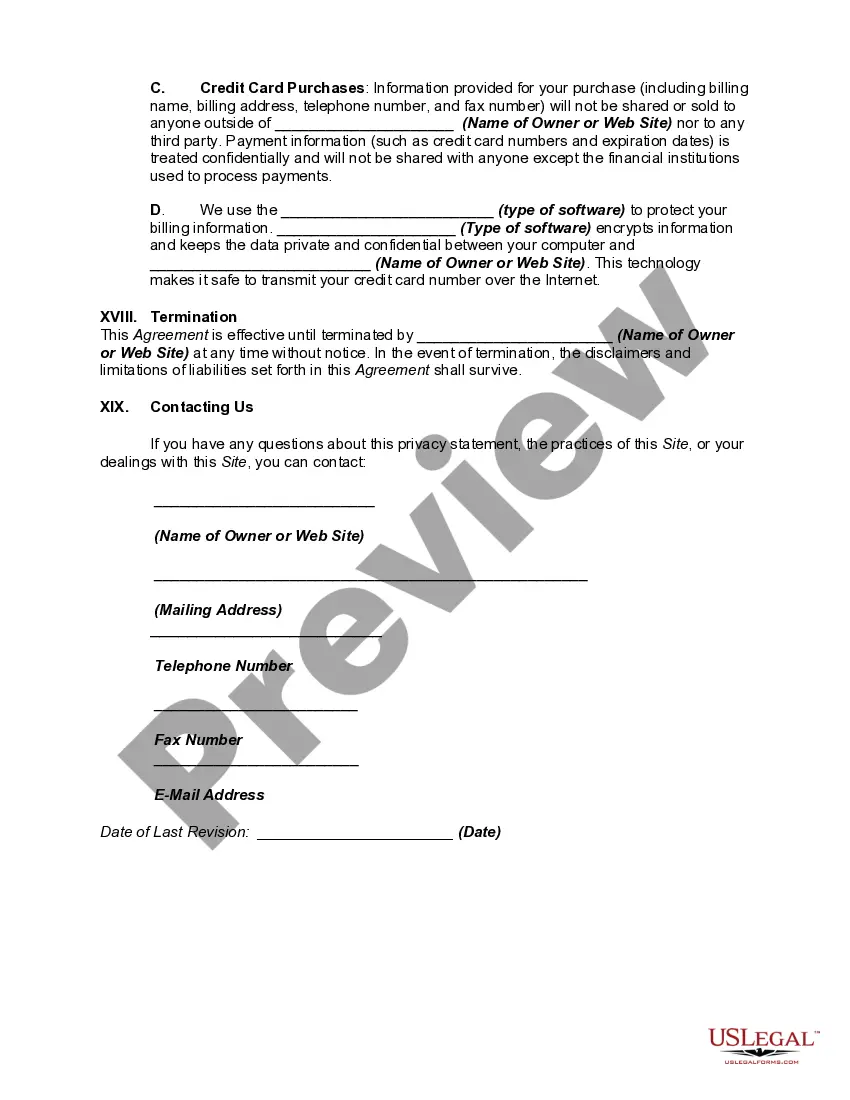
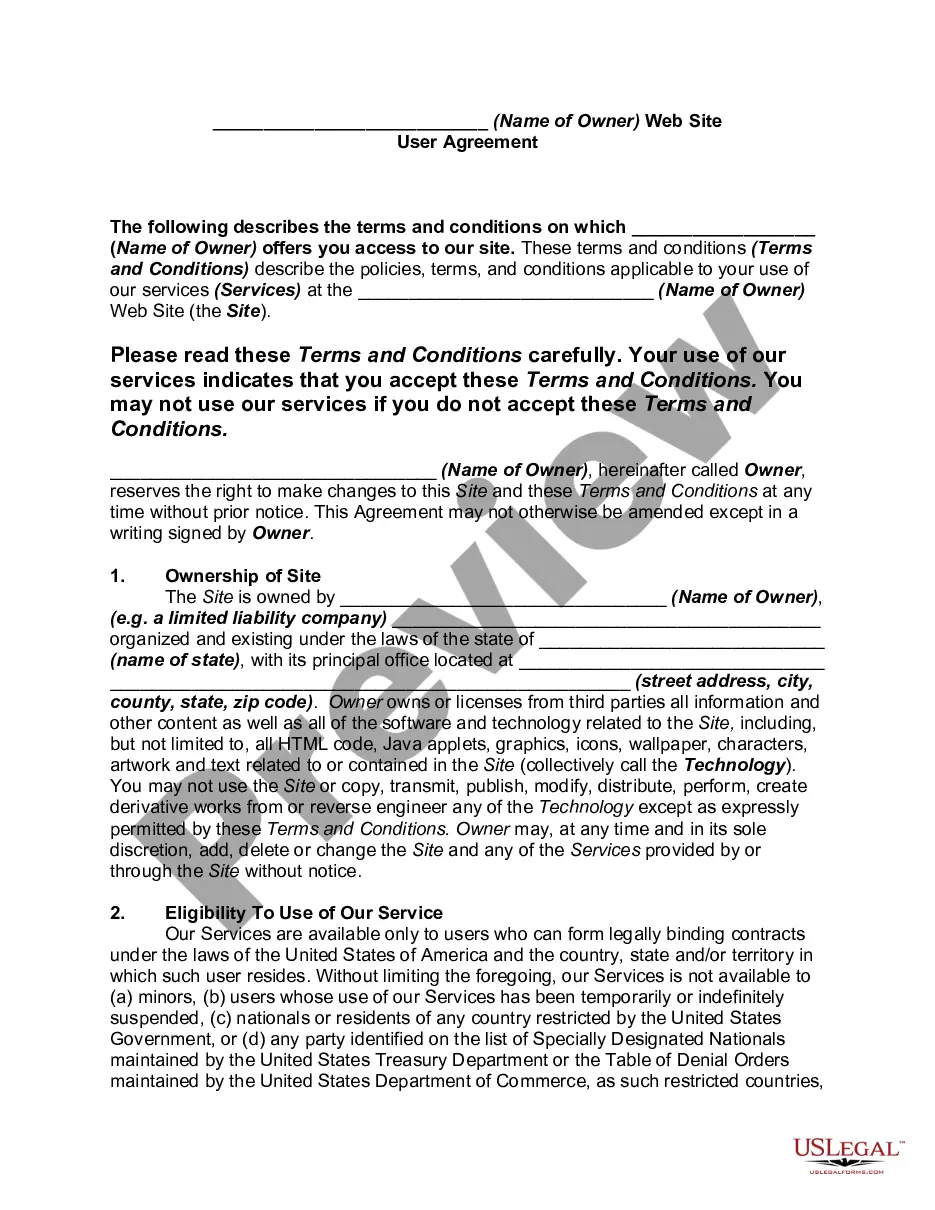
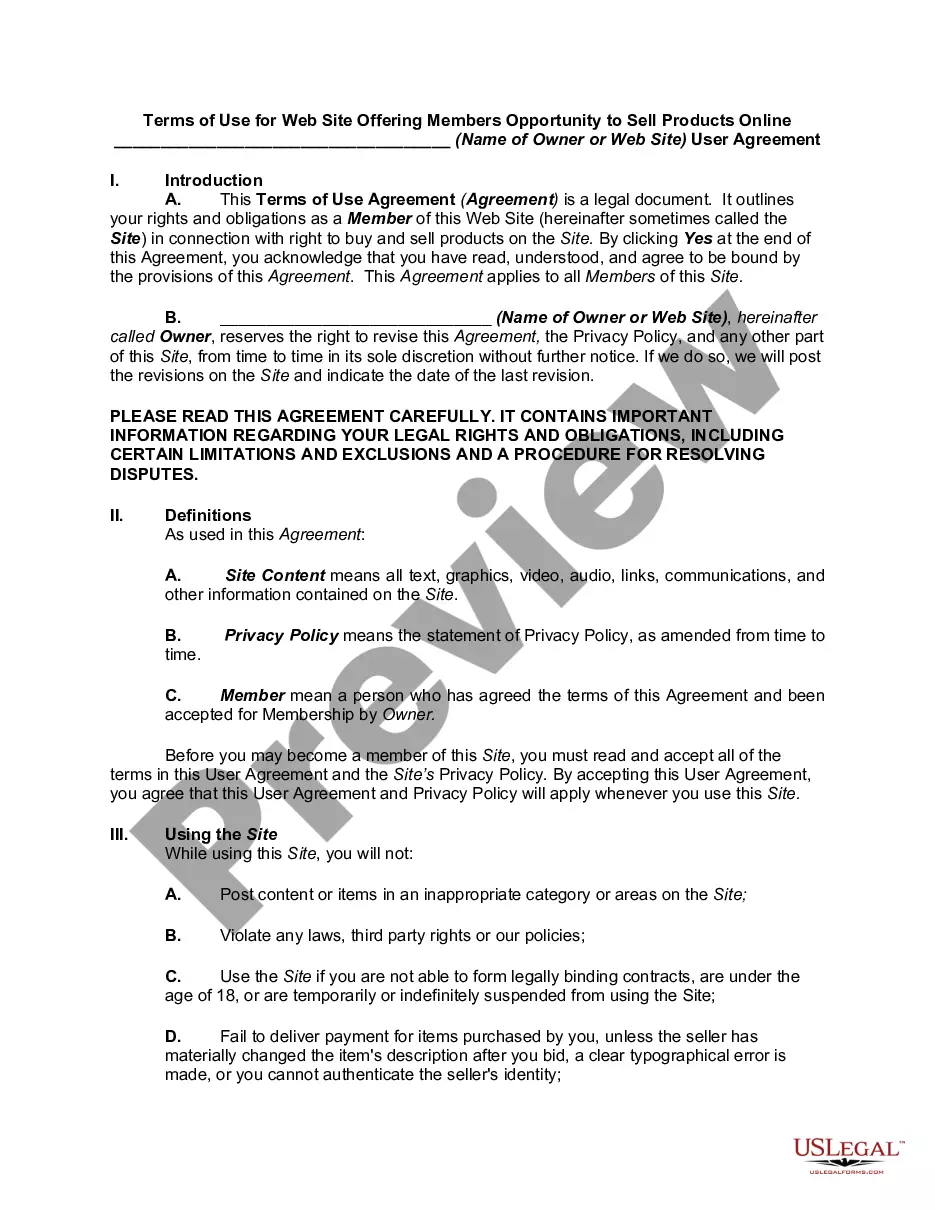
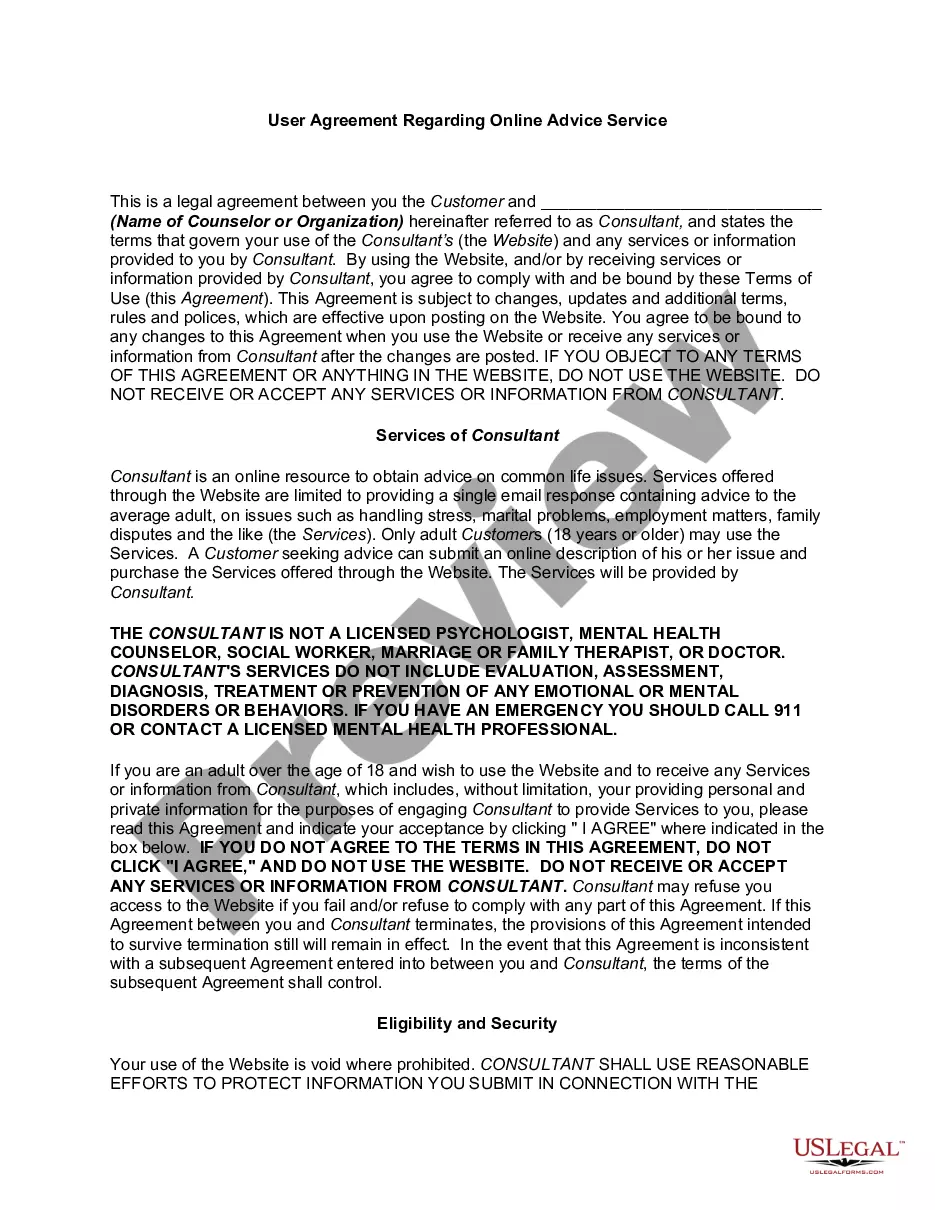
Get your form ready online
Our built-in tools help you complete, sign, share, and store your documents in one place.
Make edits, fill in missing information, and update formatting in US Legal Forms—just like you would in MS Word.
Download a copy, print it, send it by email, or mail it via USPS—whatever works best for your next step.
Sign and collect signatures with our SignNow integration. Send to multiple recipients, set reminders, and more. Go Premium to unlock E-Sign.
If this form requires notarization, complete it online through a secure video call—no need to meet a notary in person or wait for an appointment.
We protect your documents and personal data by following strict security and privacy standards.

Make edits, fill in missing information, and update formatting in US Legal Forms—just like you would in MS Word.

Download a copy, print it, send it by email, or mail it via USPS—whatever works best for your next step.

Sign and collect signatures with our SignNow integration. Send to multiple recipients, set reminders, and more. Go Premium to unlock E-Sign.

If this form requires notarization, complete it online through a secure video call—no need to meet a notary in person or wait for an appointment.

We protect your documents and personal data by following strict security and privacy standards.
Looking for another form?









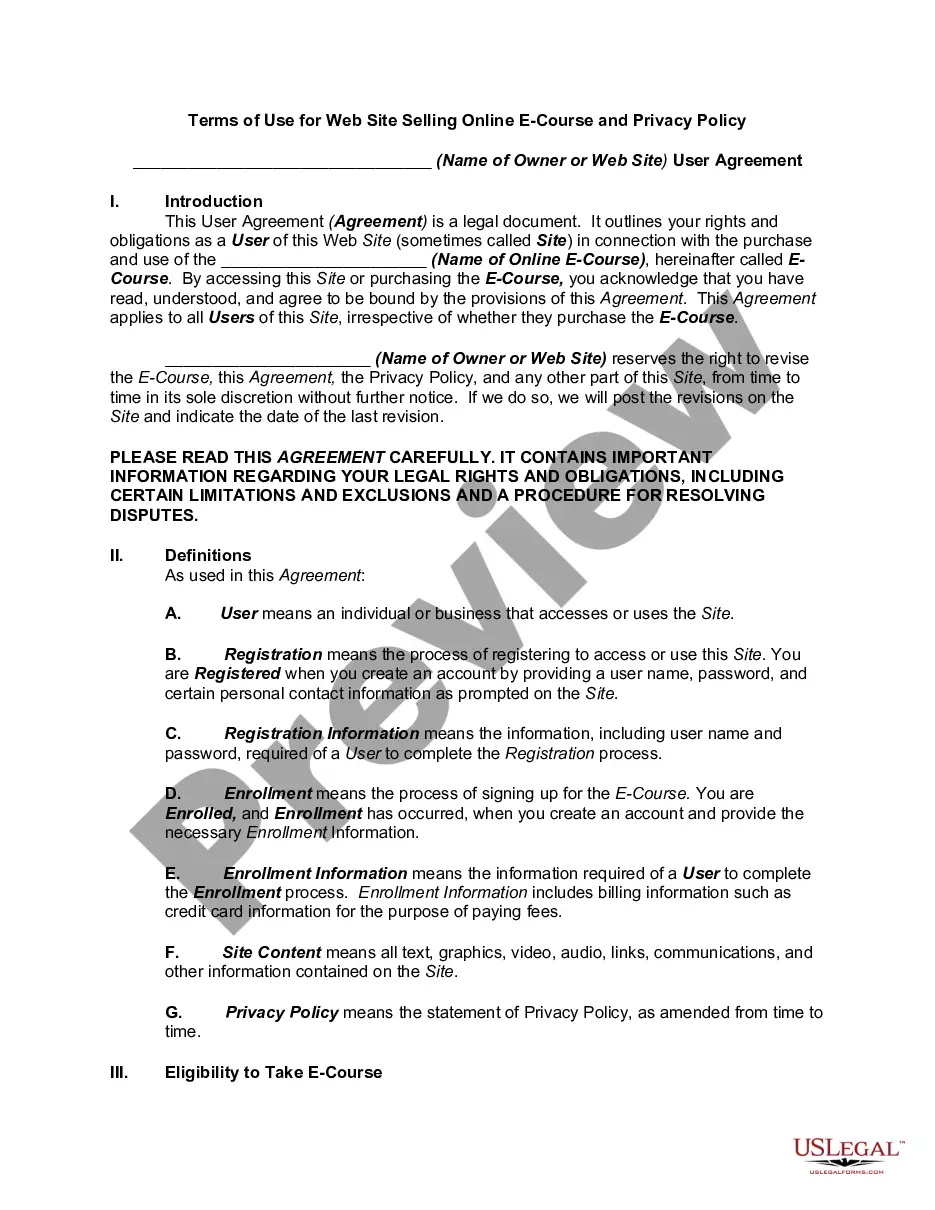
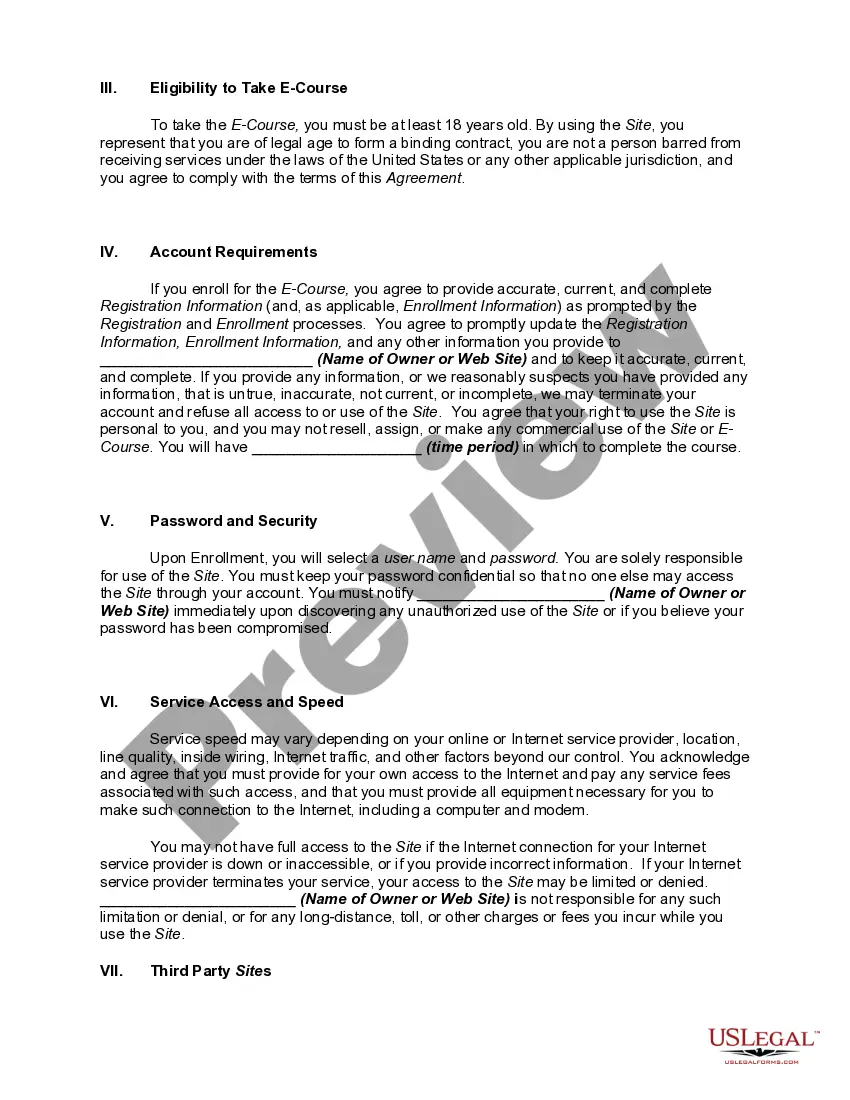
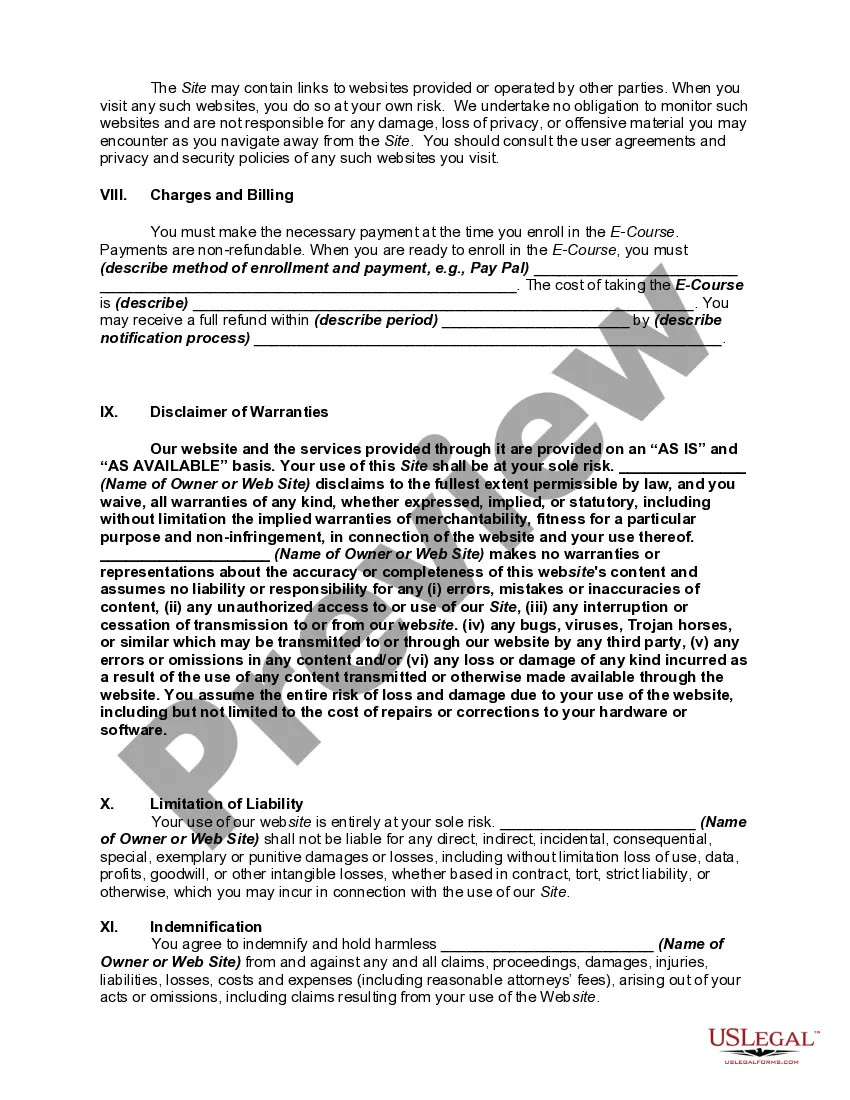
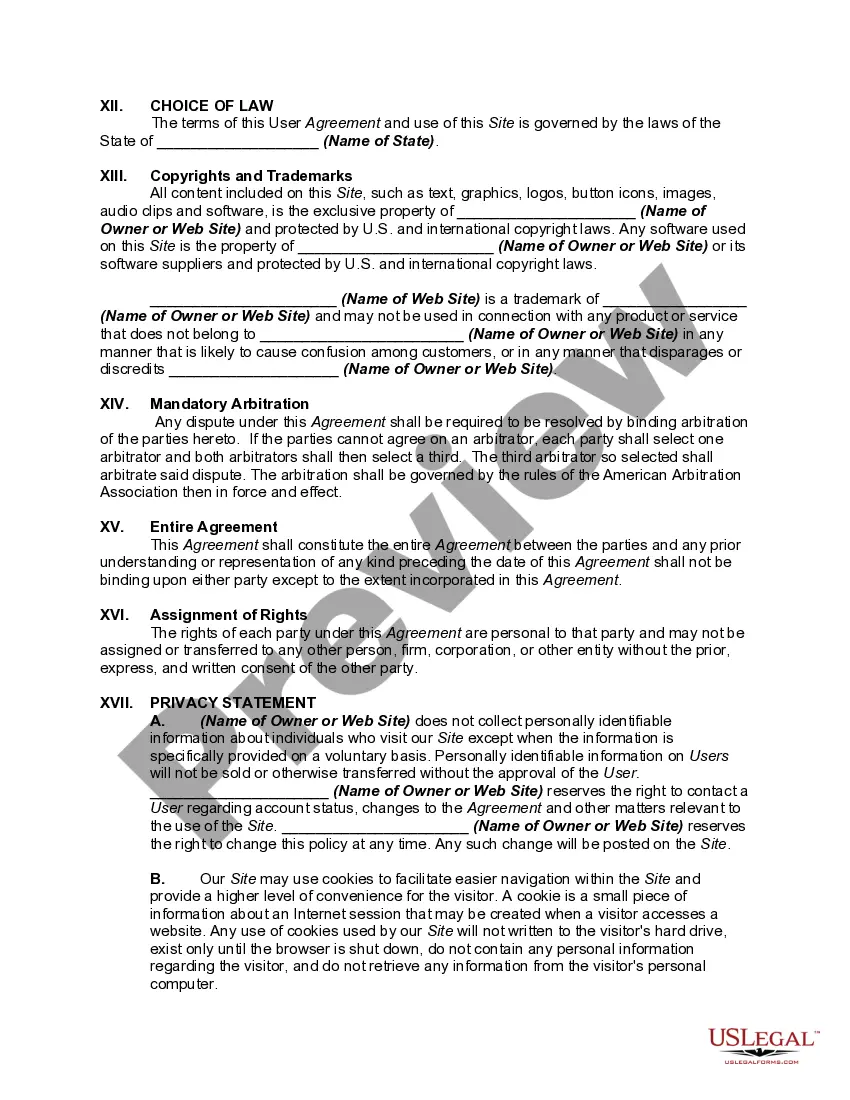
How to fill out Website Subscription User Agreement - Terms Of Use For Website Selling Online E-Course Privacy Policy?
Securing a reliable source to obtain the most up-to-date and pertinent legal templates is a significant part of dealing with bureaucracy. Accurately finding the appropriate legal documents requires precision and meticulousness, which is why it is crucial to source Website Terms Privacy Without Permission only from reputable providers, such as US Legal Forms. An incorrect template will squander your time and delay the situation you're facing. With US Legal Forms, you can rest easy. You can access and verify all details regarding the document’s applicability and relevance for your circumstance and within your state or region.
Follow these outlined steps to complete your Website Terms Privacy Without Permission.
Eliminate the hassle associated with your legal documentation. Discover the extensive US Legal Forms library to find legal samples, verify their relevance to your circumstances, and download them instantly.
- Utilize the library navigation or search bar to find your sample.
- Examine the document’s details to verify if it complies with your state's and region's regulations.
- Preview the form, if accessible, to ensure it is the template you require.
- Continue the search and identify the suitable document if the Website Terms Privacy Without Permission does not meet your specifications.
- If you are confident in the form’s applicability, proceed to download it.
- As a registered user, click Log in to verify and access your chosen templates in My documents.
- If you don’t have an account yet, click Buy now to purchase the template.
- Choose a pricing plan that suits your requirements.
- Proceed with registration to finalize your purchase.
- Complete your transaction by selecting a payment method (credit card or PayPal).
- Select the download format for the Website Terms Privacy Without Permission.
- Once the form is on your device, you may edit it using the provided editor or print it for manual completion.
Form popularity
FAQ
Yes, you can write your own privacy policy. You don't need to hire a lawyer to write a policy for your website or app ? using a privacy policy template will help you include all the clauses necessary to explain your data-handling practices to users.
How to write a privacy policy? Include your business name and contact information. Mention what type of information you collect. Explain how and why you collect data. Describe how users can opt-out. Mention if user data is shared with third-parties. Specify how long you will retain user data.
Yes, you need a privacy policy on your website. If you collect personal information from users, many laws require you to include a privacy policy on your site that explains your data-handling practices.
Your privacy statement must accurately reflect your site's data collection and use. Your privacy statement should be clear, direct, and easy to understand. Keep technical jargon and legal terminology to a minimum. If you decide to modify how you use personal information, you must inform your users.
How to write a privacy policy What data you'll collect and how you'll use it. Methods of collection. Customer communication. Redress and security information. Child privacy. Future changes. Contact information.