Affidavit For Court Example
Description

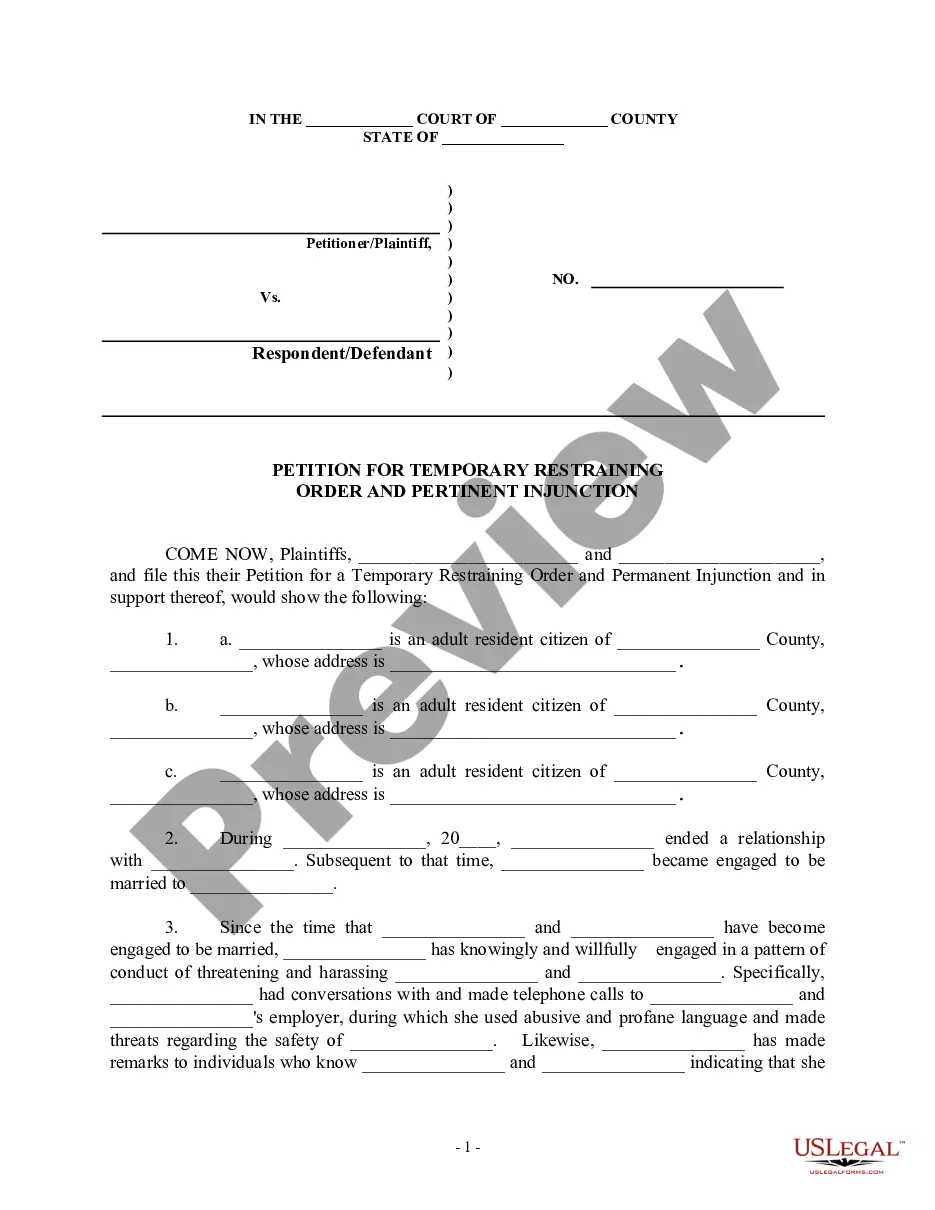
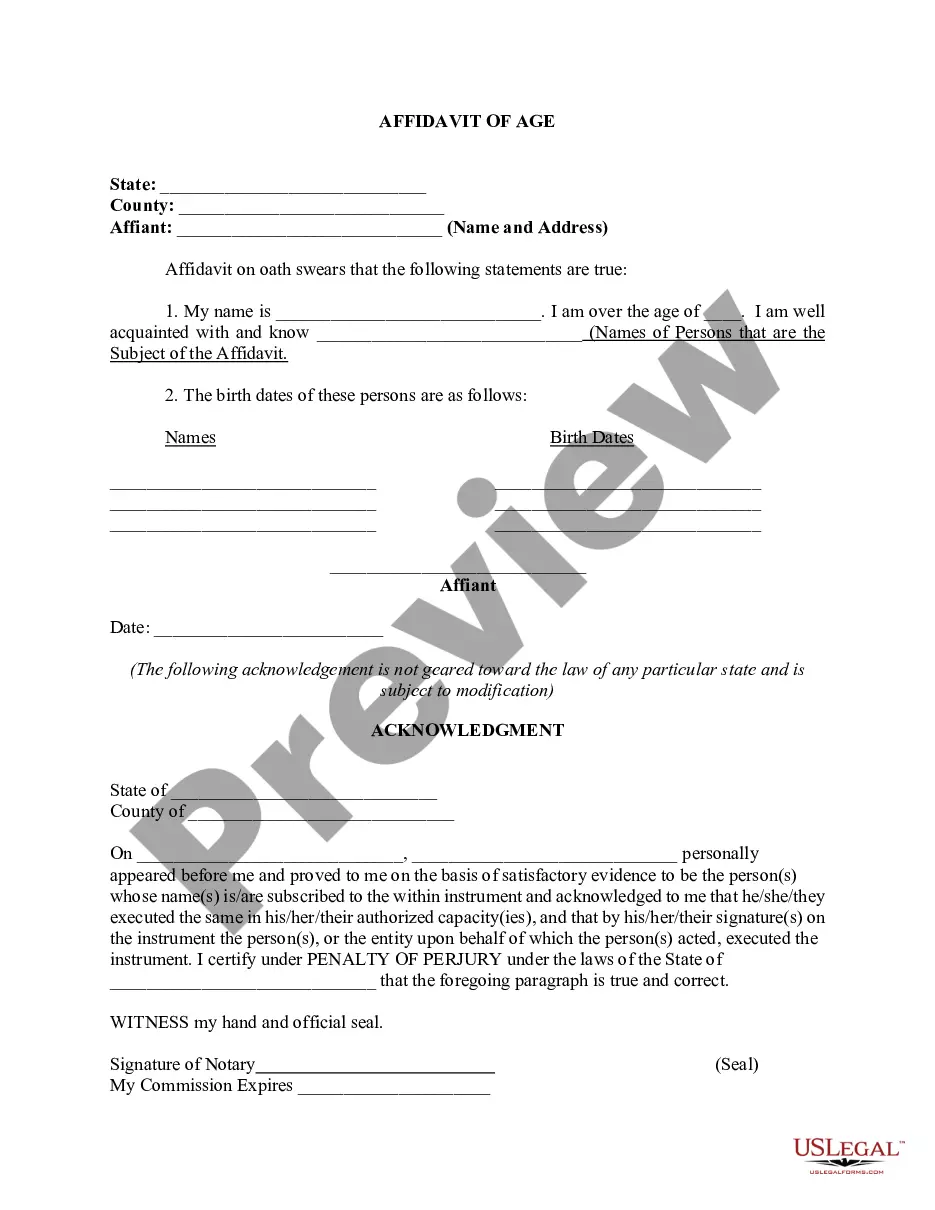
Get your form ready online
Our built-in tools help you complete, sign, share, and store your documents in one place.
Make edits, fill in missing information, and update formatting in US Legal Forms—just like you would in MS Word.
Download a copy, print it, send it by email, or mail it via USPS—whatever works best for your next step.
Sign and collect signatures with our SignNow integration. Send to multiple recipients, set reminders, and more. Go Premium to unlock E-Sign.
If this form requires notarization, complete it online through a secure video call—no need to meet a notary in person or wait for an appointment.
We protect your documents and personal data by following strict security and privacy standards.

Make edits, fill in missing information, and update formatting in US Legal Forms—just like you would in MS Word.

Download a copy, print it, send it by email, or mail it via USPS—whatever works best for your next step.

Sign and collect signatures with our SignNow integration. Send to multiple recipients, set reminders, and more. Go Premium to unlock E-Sign.

If this form requires notarization, complete it online through a secure video call—no need to meet a notary in person or wait for an appointment.

We protect your documents and personal data by following strict security and privacy standards.
Looking for another form?
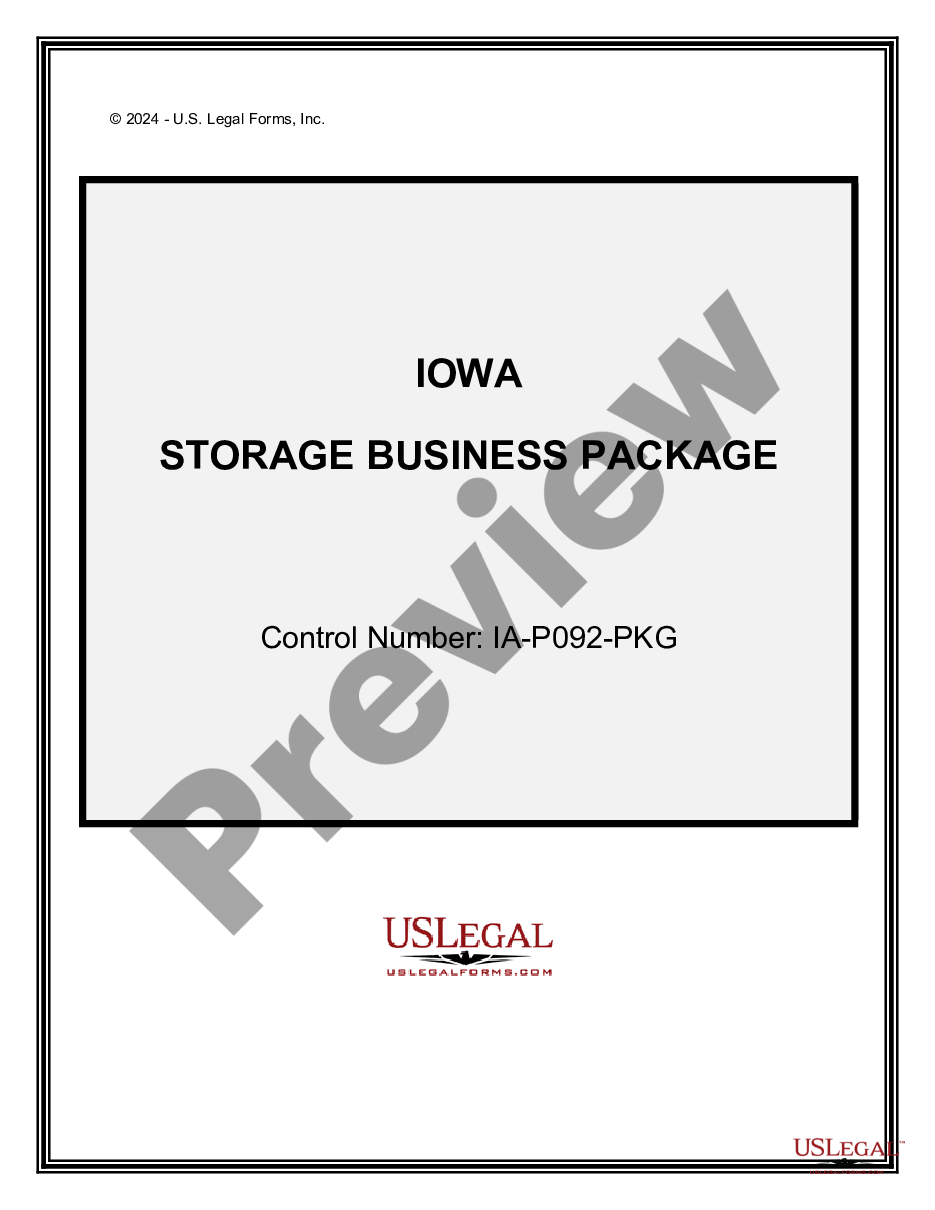
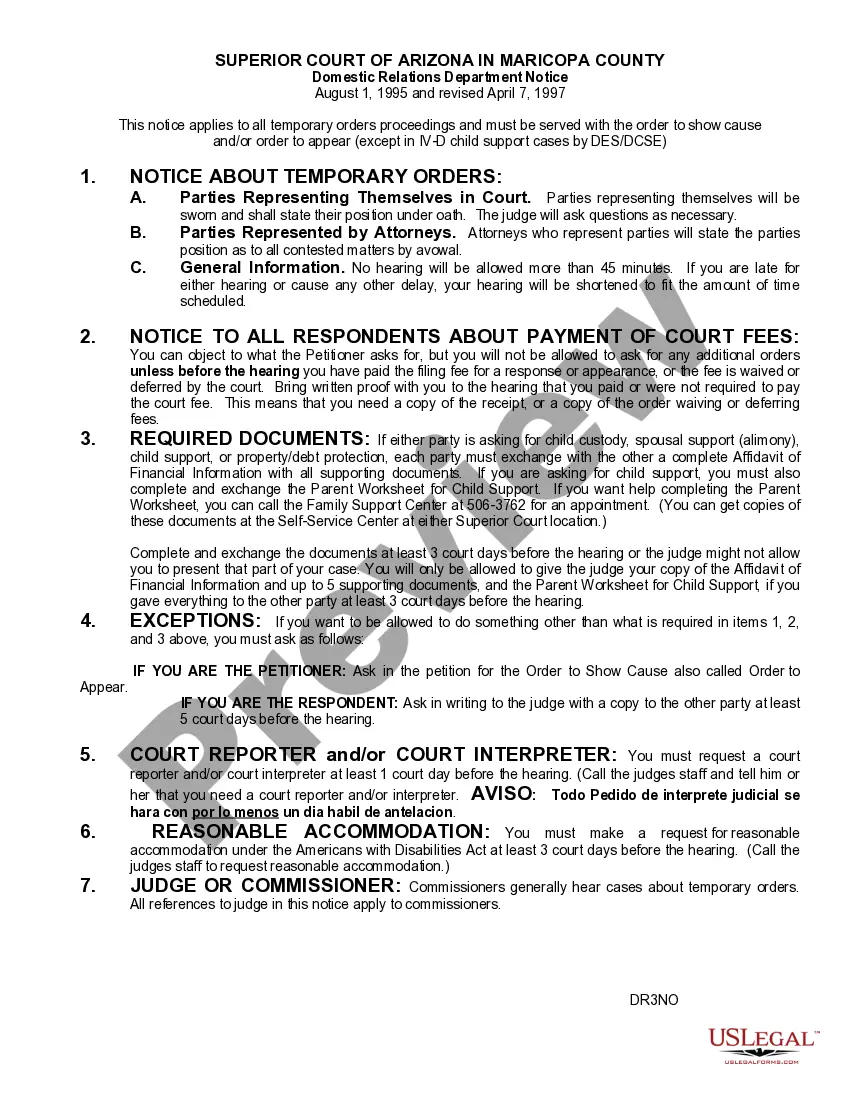
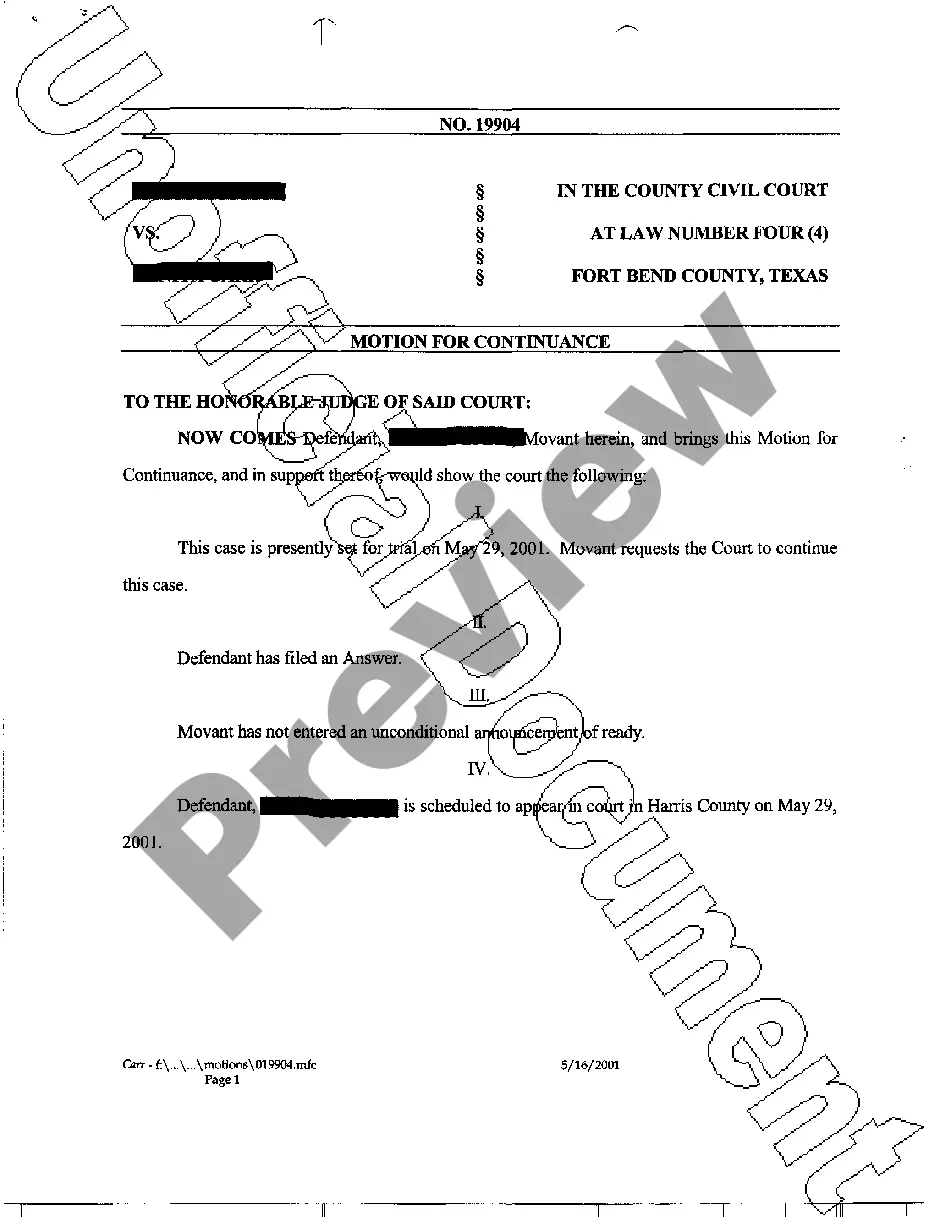
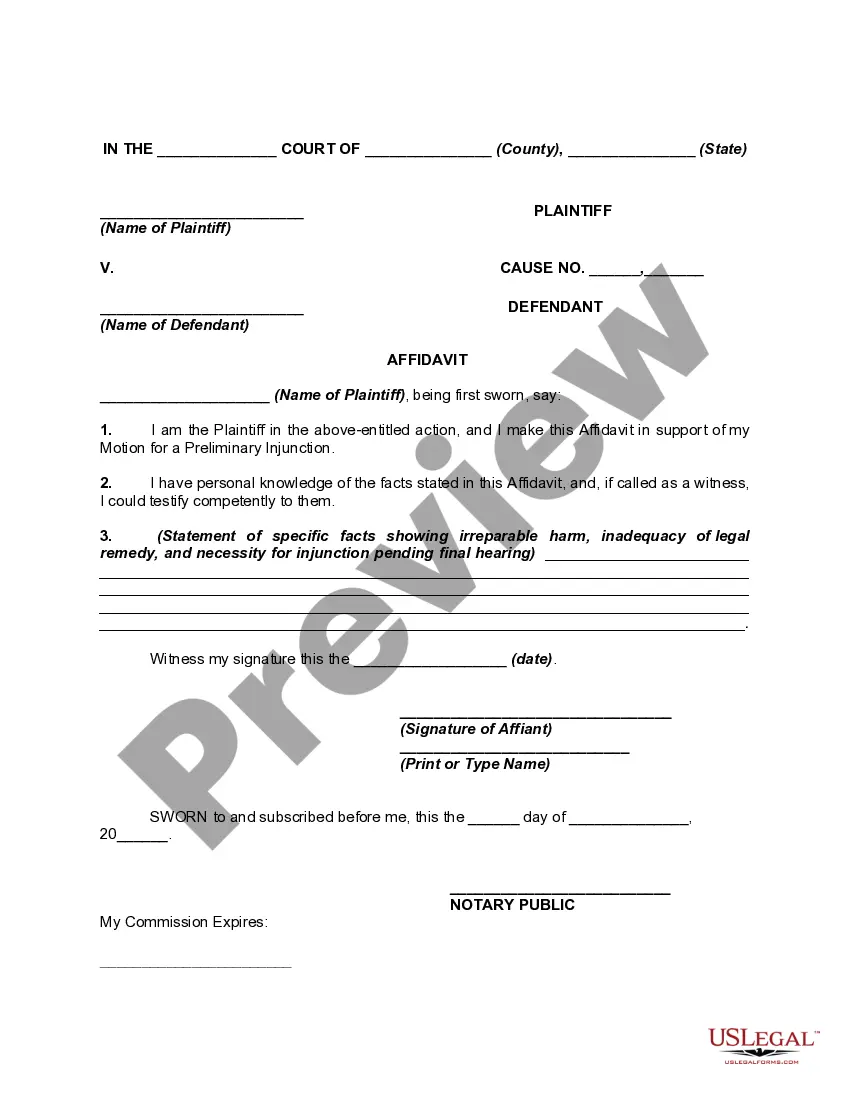
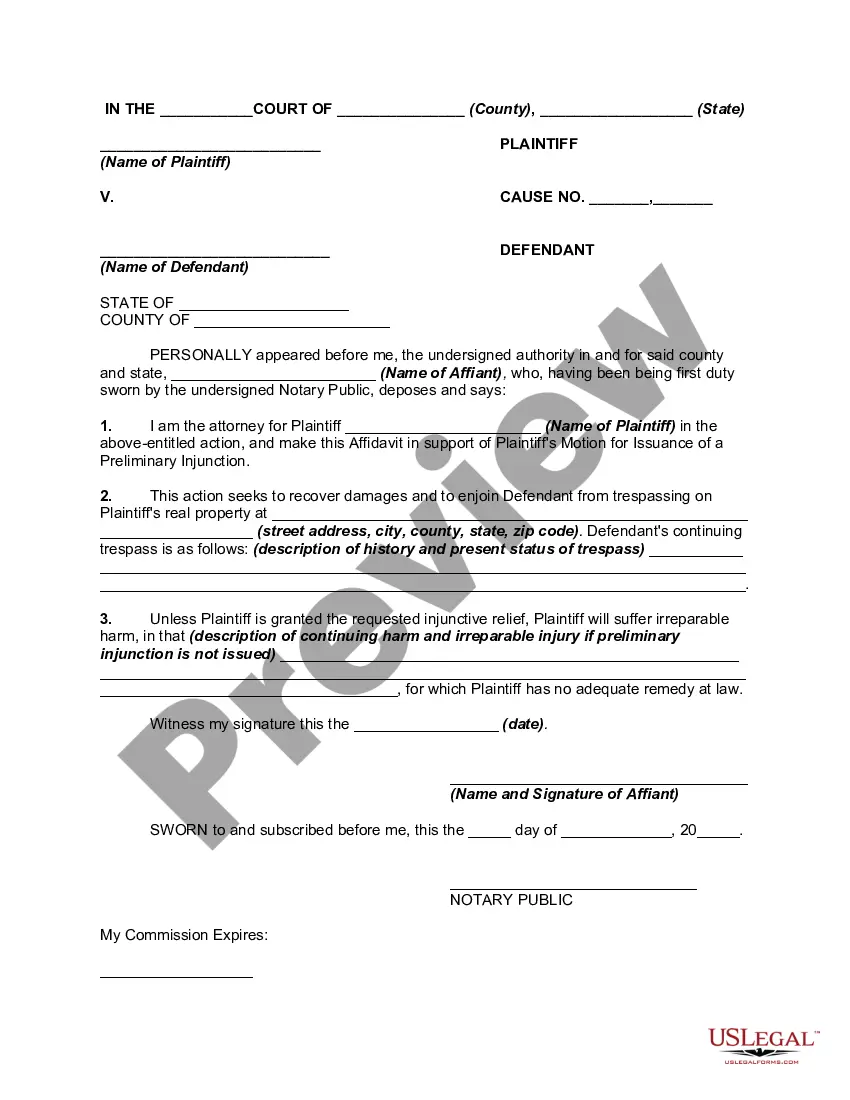
How to fill out Affidavit In Support Of Motion For Preliminary Injunction?
Managing legal documents can be daunting, even for experienced professionals.
If you are looking for an Affidavit For Court Example and lack the time to search for the correct and updated version, the tasks can become burdensome.
US Legal Forms meets any requirements you may have, from personal to business documents, all in one place.
Utilize advanced tools to complete and manage your Affidavit For Court Example.
Here are the steps to follow after downloading the form you require: Confirm it is the correct document by reviewing it and checking its description. Ensure that the template is accepted in your state or county. Click Buy Now when you are prepared. Select a subscription plan. Choose the desired format, and Download, complete, eSign, print, and submit your documents. Take advantage of the US Legal Forms online library, backed by 25 years of experience and trustworthiness. Streamline your daily document management into a straightforward and user-friendly process today.
- Access a resource library of articles, tutorials, and guides pertinent to your situation and requirements.
- Save time and effort locating the documents you need, and use US Legal Forms’ advanced search and Review tool to find and download the Affidavit For Court Example.
- If you hold a membership, Log In to your US Legal Forms account, search for the form, and download it.
- Check the My documents tab to view the documents you have previously downloaded and to organize your folders as needed.
- If this is your first experience with US Legal Forms, create a free account to enjoy unrestricted access to all platform benefits.
- A comprehensive online form repository can be transformative for anyone aiming to handle these matters effectively.
- US Legal Forms is a leading provider in the online legal form sector, offering over 85,000 state-specific legal forms available to you at any time.
- With US Legal Forms, you can access state- or county-specific legal and business forms.
Form popularity
FAQ
(Example: I, Jane Doe, solemnly swear that the contents of this document are true and correct, and that I agree to abide by the terms in this affidavit.)
Relationship History: Clearly describe the relationship between the affiant and the individual(s) in question. Include relevant details such as dates, places, and circumstances of meetings or interactions that establish the relationship.
An Affidavit of Support should include: The affiant's full name, address, birthdate, and place. Their relationship to you and your spouse. How they met you. Duration and frequency of their interactions with you. Date and signature.
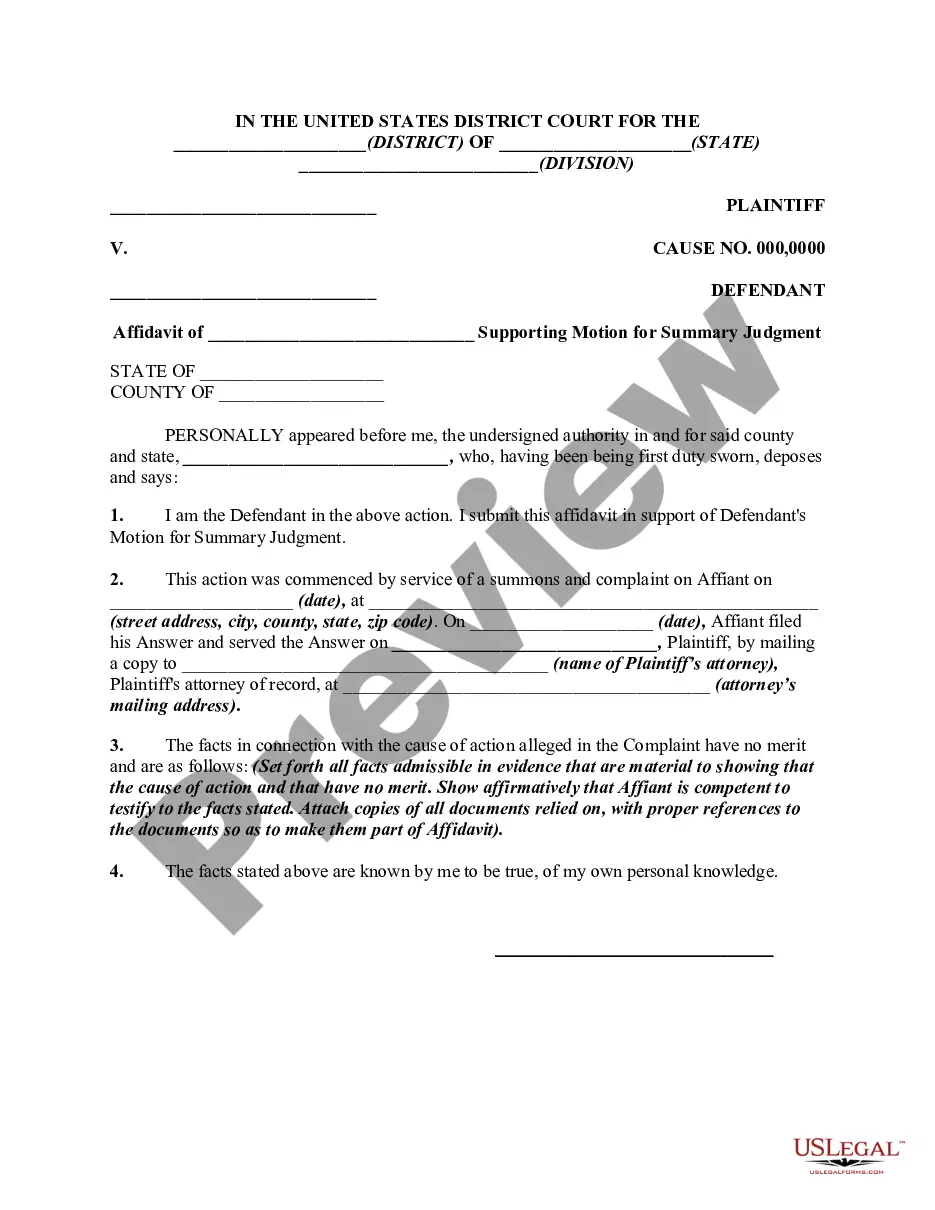
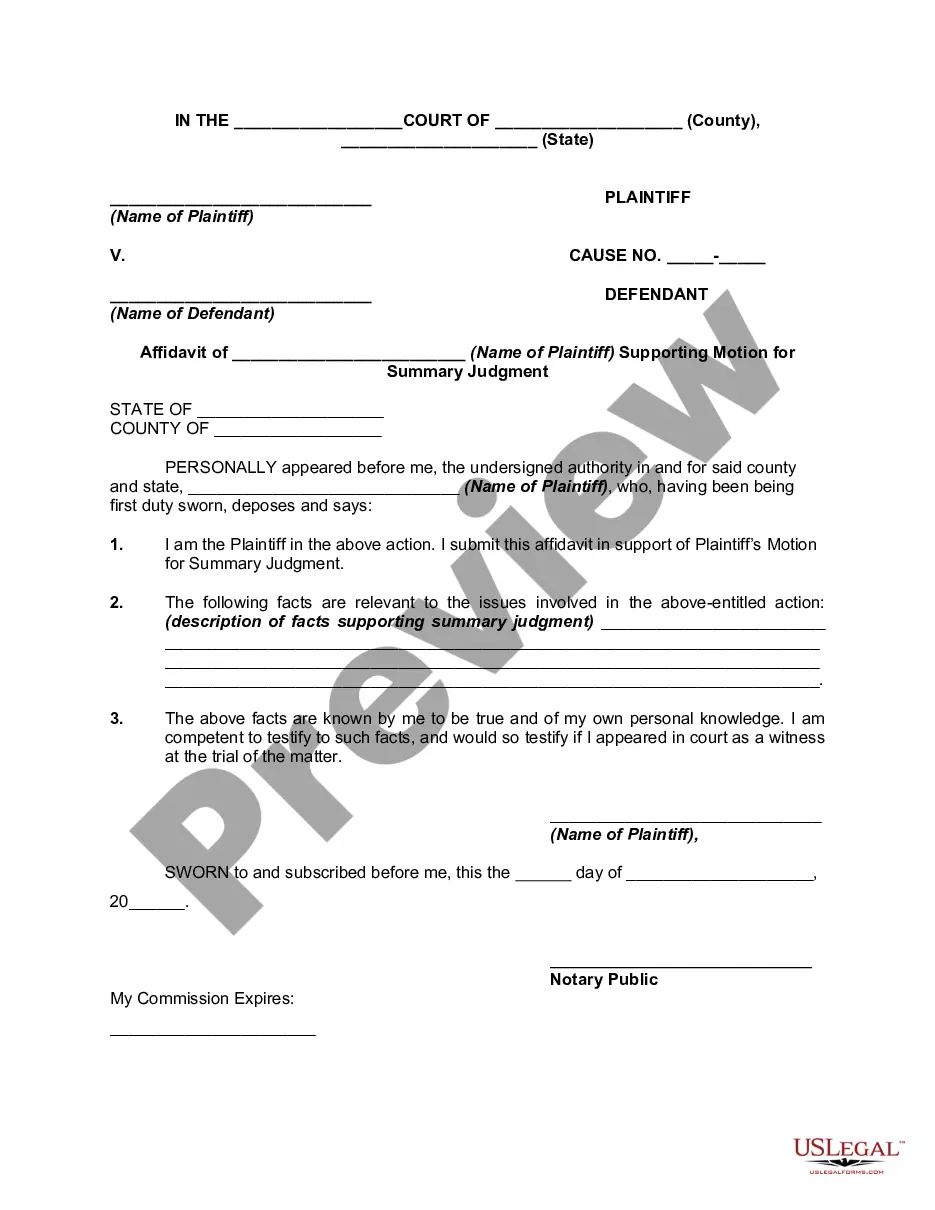
An affidavit is not written in typical paragraphs. Each paragraph should be numbered and usually each contains only one fact. To ensure that the affidavit is easily understood, follow these best practice tips: Keep legal language out of the affidavit as much as possible.
It should include the person's full name, relationship to the couple, how they know the couple, and details about their interaction and knowledge of the marriage. While family members are preferred, friends and religious leaders can also provide affidavits.