Term.000/4/
Description
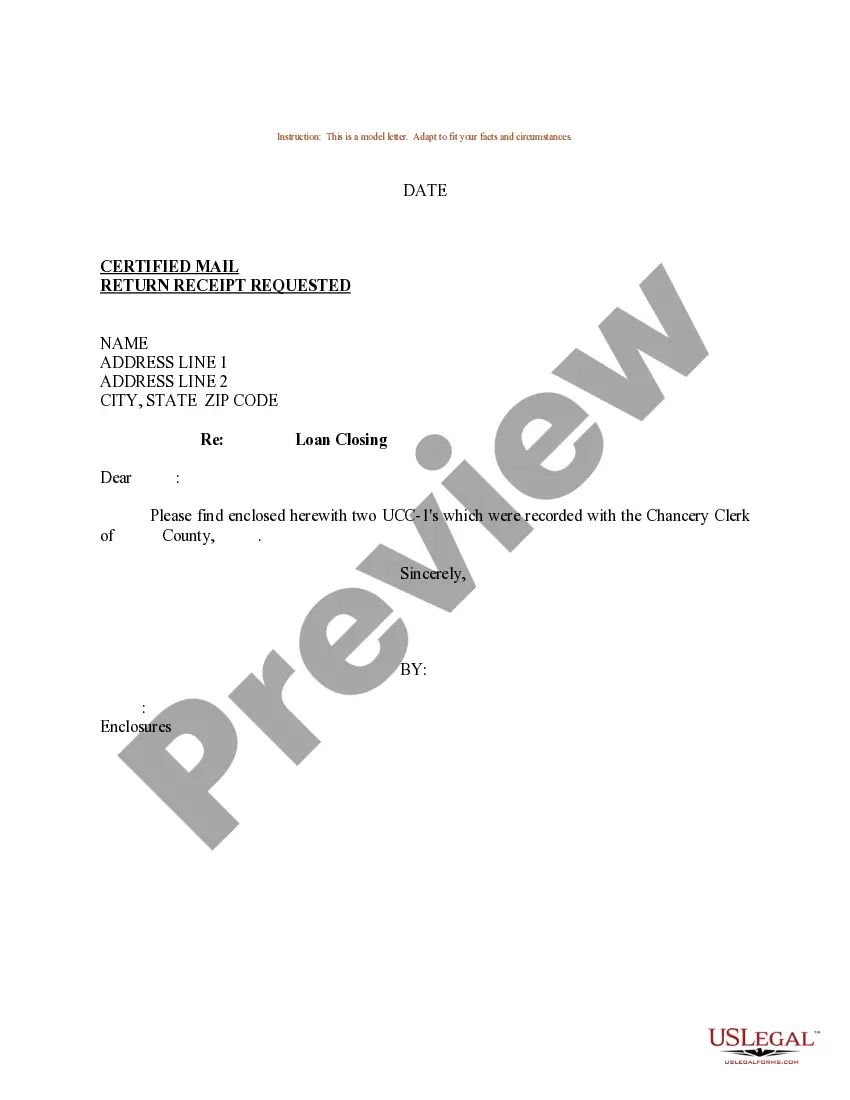
How to fill out Sample Letter For UCC-3 Termination Statement?
- If you're an existing user, log in to your account to download your required form. Ensure your subscription is current; renew it if necessary.
- For first-time users, start by checking the Preview mode to familiarize yourself with the form and its description. Confirm it meets your needs and adheres to your local jurisdiction.
- Use the Search tab if you need a different template. Ensure that it fits your criteria before proceeding.
- Purchase the form by clicking the Buy Now button and select your preferred subscription plan. You’ll need to create an account for full access.
- Complete your purchase by entering your credit card details or using your PayPal account for payment.
- Lastly, download your form to your device. You can access it anytime from the My Forms section of your profile.
US Legal Forms offers an extensive online library with over 85,000 fillable legal forms, ensuring that you find what you need quickly and efficiently.
Start your journey with US Legal Forms today to streamline your legal document management. Don't hesitate; explore the platform for seamless legal solutions!
Form popularity
FAQ
The formula to find a term in a sequence varies depending on the sequence type. For arithmetic sequences, the formula is often term equals first term plus (index minus one) multiplied by the common difference. Understanding these formulas enables you to determine terms quickly, and platforms like uslegalforms can help clarify this process as well.
A term formula defines how to calculate a term in a sequence based on its position or index. This formula varies depending on whether the sequence is arithmetic, geometric, or neither. Understanding these distinctions is crucial for effective calculations. For further assistance, you can always refer to tools available on uslegalforms.
To find the term-to-term rule in a sequence, analyze how each term relates to the previous one. This could involve simple addition, subtraction, multiplication, or even more complex operations. Identifying this pattern allows you to predict future terms easily. You might also find helpful guides or examples on uslegalforms to illustrate these concepts.
The formula to find the number of terms in a sequence often depends on the context of the sequence itself. In an arithmetic sequence, you can use the formula: number of terms equals (last term minus first term) divided by the common difference, plus one. This formula helps you easily quantify the number of terms, and you can further explore related resources on platforms like uslegalforms.
To find a term in binomial expansion, use the binomial theorem formula, which allows you to express a binomial raised to a power as a sum of terms. Identify the term you want by determining its position and using the factorial notation for calculation. This systematic approach will help you grasp the structure of binomial expansions more easily, and uslegalforms can provide additional explanations.
Calculating a term generally requires knowing the sequence's defining formula. After you have this, substitute the index number into the formula to obtain the term's value. You can also explore various examples to understand this calculation better, which is made easier through platforms like uslegalforms.
Finding a term in math often involves understanding the structure of the mathematical expression. Start by determining the formula that defines the sequence or series you are working with. Then, substitute the index or position of the term into this formula to compute its value. Resources like uslegalforms can guide you through related concepts effectively.
To find a specific term in a sequence, first, identify the pattern or rule that generates the sequence. After that, use the position of the term you seek to apply the rule effectively. If the sequence is arithmetic or geometric, using the appropriate formulas will lead you to the desired term. Consider using tools available on platforms like uslegalforms to simplify the process.
The yyyy-mm-dd format is typically referred to as the ISO 8601 format. This format organizes dates in a way that aligns with global standards, promoting clarity and reducing ambiguity. It is particularly useful in databases and programming, where consistent date representation is critical. Embracing such formats can enhance your experience on platforms like uslegalforms, where accuracy is paramount.
The format mm, dd, yyyy stands for month, day, and year written in a specific order. This structure is crucial for avoiding confusion, especially in official documents and interactions. Many countries use this format, but it is primarily endorsed in the United States. Familiarizing yourself with this can streamline your documentation process, particularly when using services like uslegalforms.