Child Custody Court
Description

Get your form ready online
Our built-in tools help you complete, sign, share, and store your documents in one place.
Make edits, fill in missing information, and update formatting in US Legal Forms—just like you would in MS Word.
Download a copy, print it, send it by email, or mail it via USPS—whatever works best for your next step.
Sign and collect signatures with our SignNow integration. Send to multiple recipients, set reminders, and more. Go Premium to unlock E-Sign.
If this form requires notarization, complete it online through a secure video call—no need to meet a notary in person or wait for an appointment.
We protect your documents and personal data by following strict security and privacy standards.

Make edits, fill in missing information, and update formatting in US Legal Forms—just like you would in MS Word.

Download a copy, print it, send it by email, or mail it via USPS—whatever works best for your next step.

Sign and collect signatures with our SignNow integration. Send to multiple recipients, set reminders, and more. Go Premium to unlock E-Sign.

If this form requires notarization, complete it online through a secure video call—no need to meet a notary in person or wait for an appointment.

We protect your documents and personal data by following strict security and privacy standards.
Looking for another form?








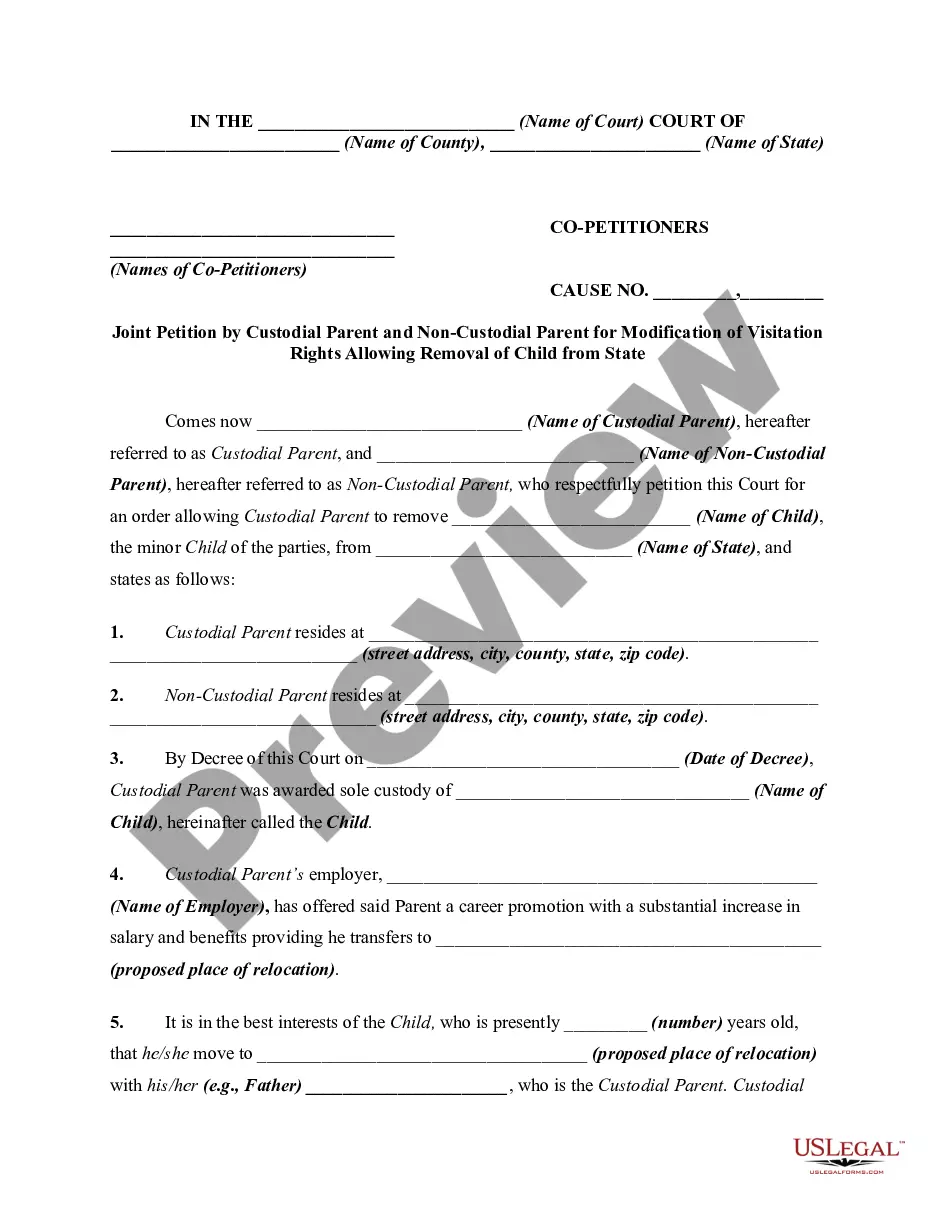
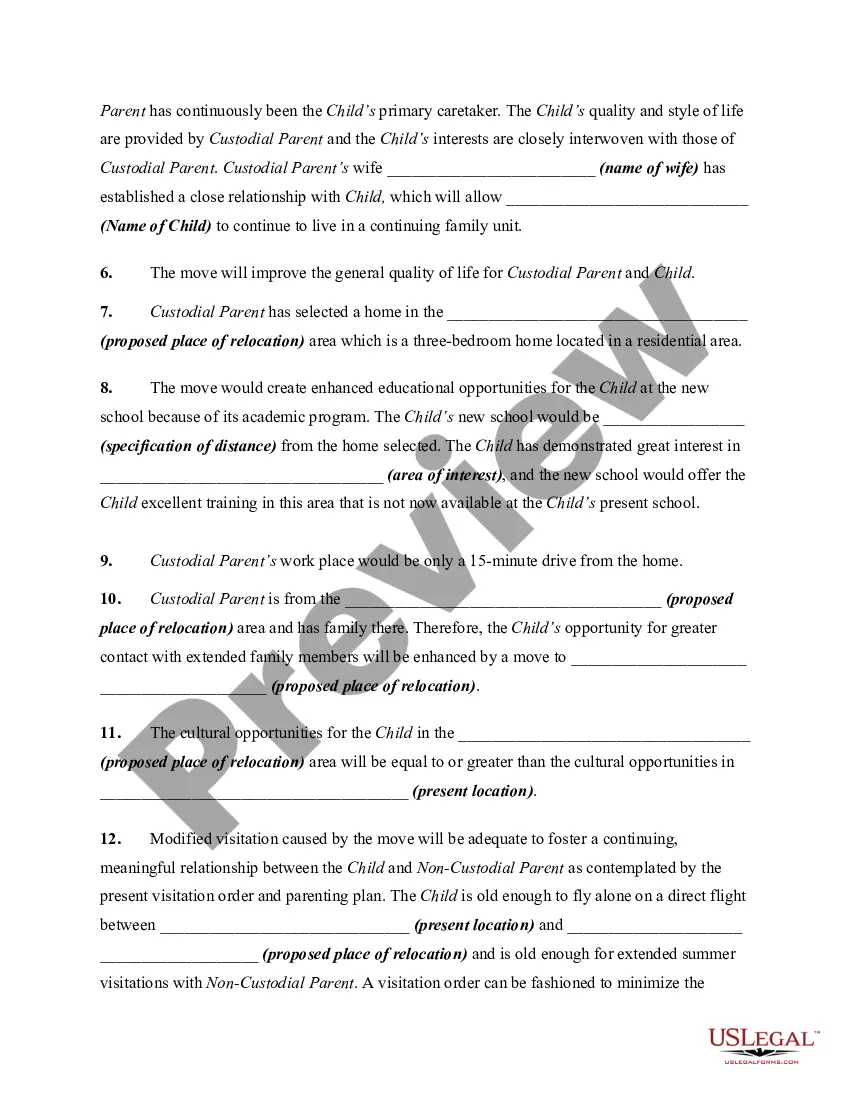
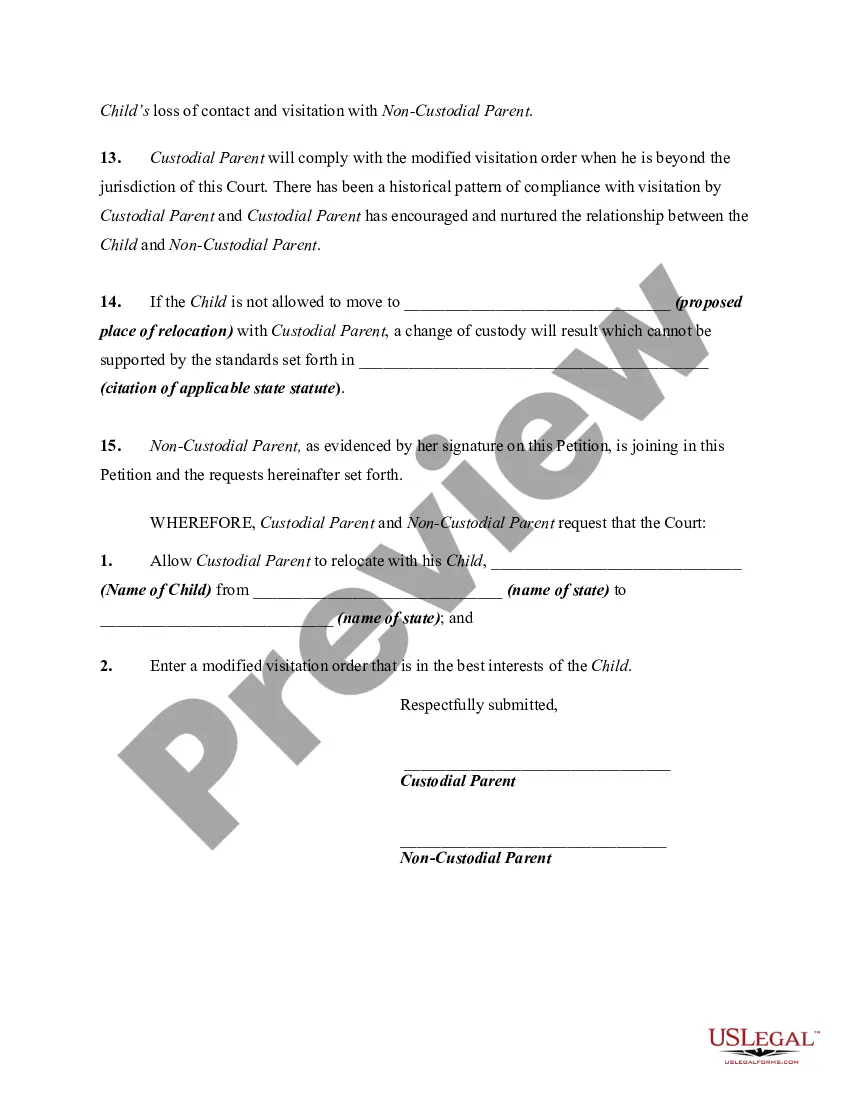
How to fill out Joint Petition By Custodial Parent And Non-Custodial Parent For Modification Of Visitation Rights Allowing Removal Of Child From State?
- If you already have an account, log in and ensure your subscription is valid. If expired, renew it before proceeding.
- Review the Preview mode and detailed description of the form to confirm it aligns with your requirements and local jurisdiction.
- If necessary, utilize the Search feature to locate alternative templates, ensuring the one you choose fits your needs.
- Click the Buy Now button to select your preferred subscription plan, which requires you to create a user account to access the library.
- Complete the purchase by entering your credit card details or opting for PayPal to finalize your subscription.
- Once your transaction is successful, download the necessary form to your device, and access it anytime via the My Forms section on your profile.
Using US Legal Forms not only gives you access to an extensive array of templates but also connects you with experts for accurate form completion. This ensures your documents are legally sound and tailored to your needs.
In conclusion, US Legal Forms is your essential partner in navigating child custody court documentation. Start easing your legal journey today by exploring their offerings!
Form popularity
FAQ
Judges in Georgia child custody cases primarily focus on the child's best interests. They assess the emotional, physical, and educational needs of the child, as well as each parent's ability to meet those needs. Relevant evidence, such as parenting plans and involvement in the child's life, can significantly influence the decision in child custody court.
In Georgia, primary custody is often awarded to the parent who has been the primary caregiver or who can provide a more stable environment for the child. The child custody court will make its decision based on the best interests of the child, considering factors such as living arrangements and emotional bonds. Using resources like US Legal Forms can help parents navigate the complexities of custody arrangements.
Winning custody often depends on demonstrating a stable and nurturing environment for the child. Both parents have equal rights, but the child custody court will lean towards the parent who shows the greatest commitment to the child’s welfare. Parents who maintain open communication and avoid conflict generally have a better chance of being awarded custody.
During a custody battle, it is crucial to avoid making derogatory comments about the other parent, as this can negatively impact the court's perception. Focus on the child's needs and emotions, rather than personal grievances. Expressing your commitment to co-parenting can be beneficial in child custody court.
The most common custody arrangement in Georgia is joint custody, where both parents share legal and physical custody of the child. This arrangement allows both parents to participate in important decision-making and spend substantial time with the child. The child custody court typically favors joint custody unless there are compelling reasons to award sole custody to one parent.
In Georgia, child custody is determined by evaluating the best interests of the child. Factors considered by the court include the emotional ties between the child and each parent, the parents' ability to provide for the child's needs, and, importantly, the child's preferences if they are of sufficient age. The child custody court aims to create a stable environment that supports the child's wellbeing.
In child custody court, various factors can be used against a parent, such as documented instances of neglect, substance abuse, or lack of involvement in the child’s life. Other issues like inconsistent parenting or failure to comply with court orders can also undermine your position. It's important to maintain clear and open communication with your child and co-parent to avoid misunderstandings. Engaging with uslegalforms can assist you in preparing documents that demonstrate your commitment to your child's well-being.
One of the most significant mistakes people make in child custody court is ignoring the emotional needs of the child. Focusing solely on winning can lead to decisions that negatively impact the child's welfare. Additionally, failing to communicate with your co-parent can create unnecessary conflict, which can harm your case. Seeking mediation or legal assistance can help you navigate these challenges more effectively.
In child custody court, the outcome often hinges on the evidence presented and the best interests of the child. Typically, the parent who can demonstrate stability, a nurturing environment, and a child-centered approach stands a better chance of winning custody. However, each case is unique, and courts consider various factors such as the child's preferences, the relationship with each parent, and parenting abilities. It's essential to consult with legal professionals who can guide you in presenting the strongest case possible.
During a child custody hearing, expect questions regarding your living situation, your relationship with your child, and your parenting skills. The court may also inquire about your employment and financial stability. Answer these questions honestly and thoughtfully, as transparency reinforces your commitment to your child’s welfare. It's important to prepare well, and platforms like uslegalforms can offer guidance.