Kansas Letter from Tenant to Landlord containing Notice to Cease Unjustified Nonacceptance of Rent
What this document covers
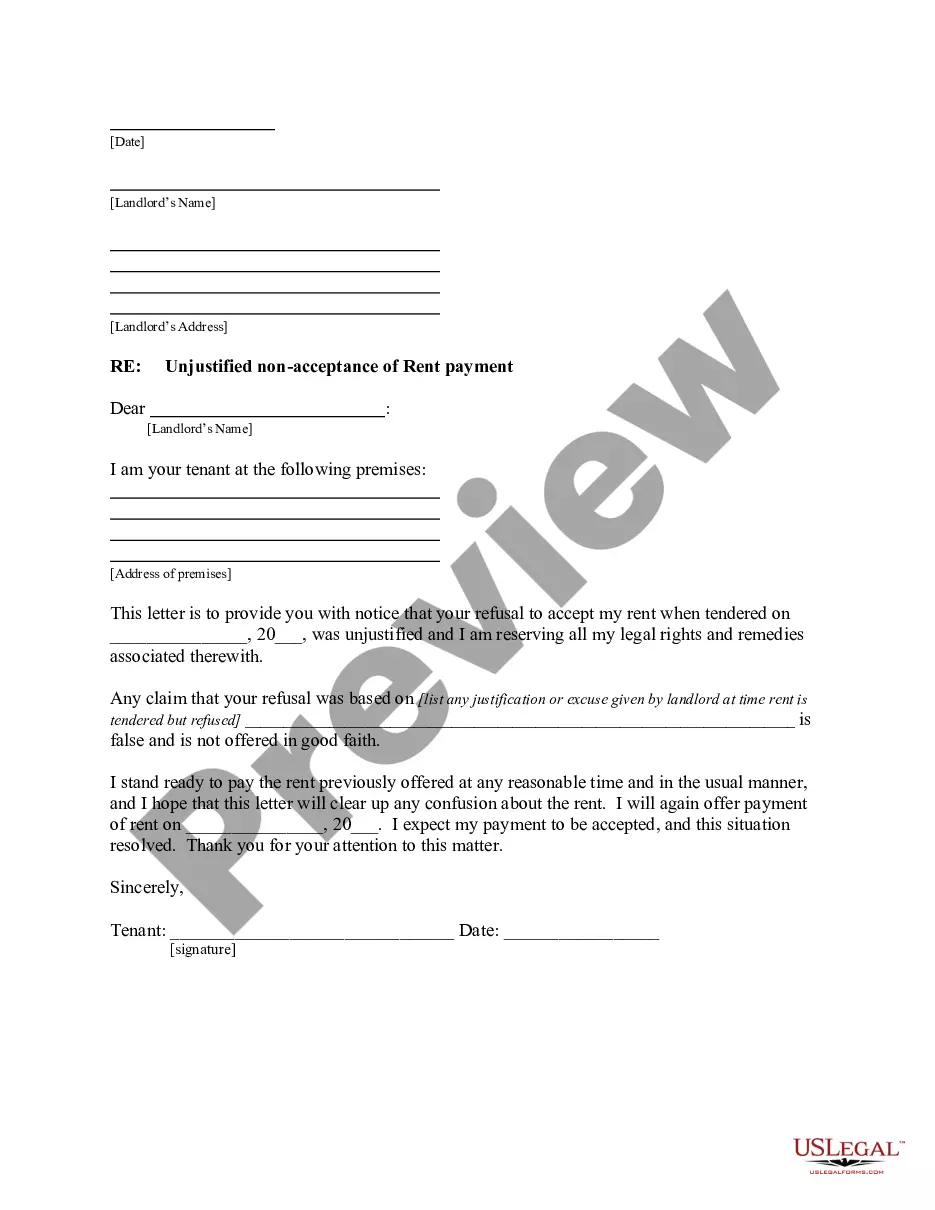
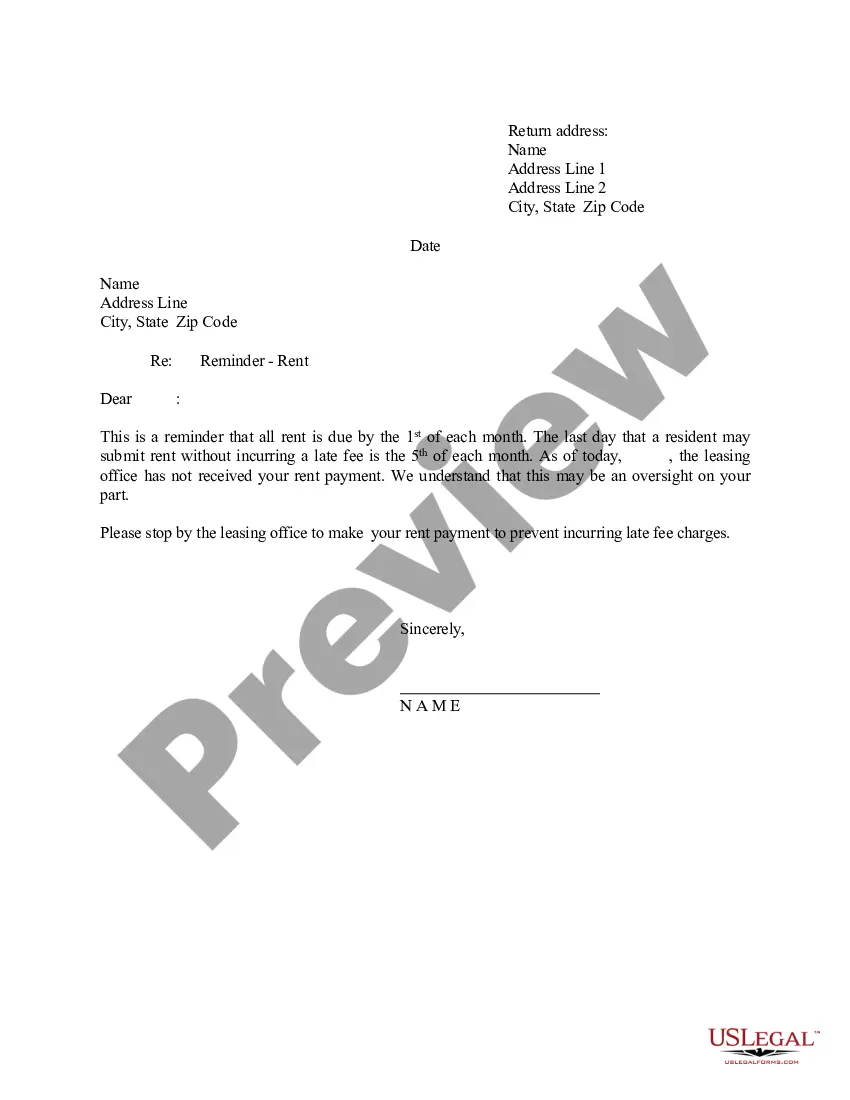
This Letter from Tenant to Landlord containing Notice to Cease Unjustified Nonacceptance of Rent is a legal document that allows tenants to formally notify their landlords of an unjust refusal to accept rent payments. This form underscores the tenant's readiness to fulfill their rental obligations and reserves their legal rights in light of the landlord's actions. It differs from other tenant-landlord correspondence by specifically addressing the refusal of rent acceptance and the tenant's demand for resolution.
What’s included in this form
- Identification of the tenant and landlord involved.
- Reference to the specific rent payment that was refused.
- A declaration that the refusal to accept rent was unjustified.
- Restatement of the tenant's willingness to pay the rent at a reasonable time.
- A specific date for the next rent payment offer.
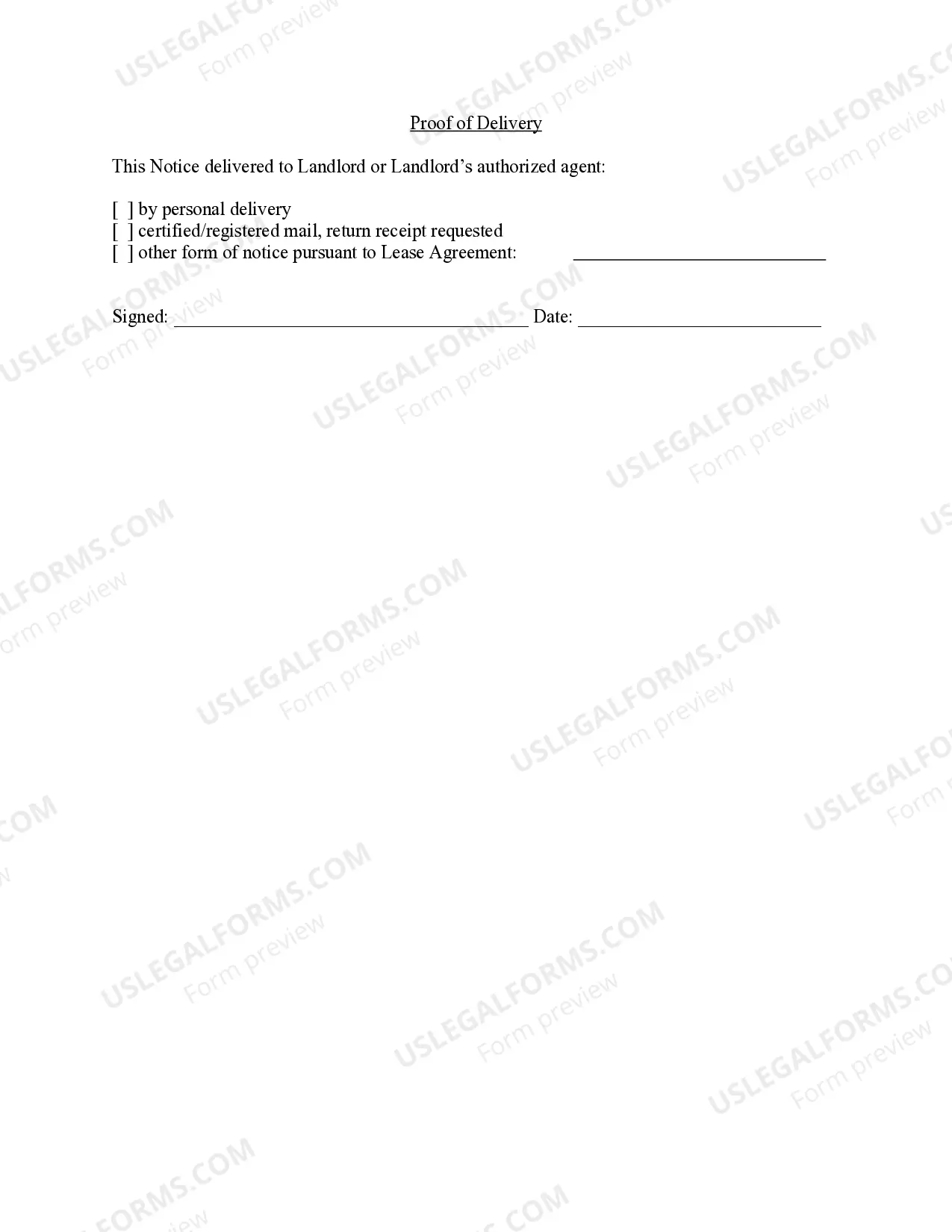
- Proof of delivery details to confirm the notice was received.

When to use this document
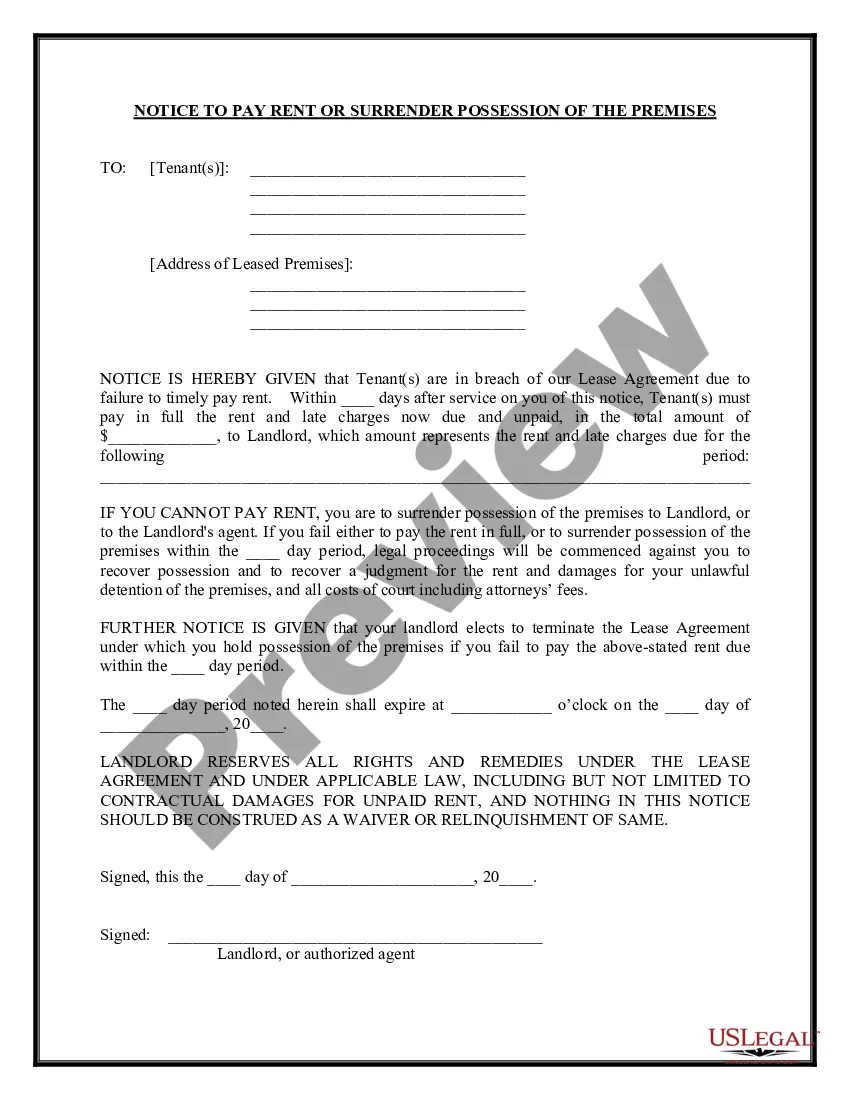
This form should be used when a landlord refuses to accept rent payments without a valid justification. It is important for tenants to formalize their position and clarify misunderstandings regarding rent payment to ensure their rights are protected. Situations may arise where a landlord cites reasons for refusing payment that the tenant believes are invalid or unreasonable. Using this letter can help initiate resolution and maintain documentation of the issue.
Who should use this form
- Tenants who have experienced unjustified refusals of rent payments from their landlords.
- Individuals seeking to clarify their rights concerning rental agreements.
- Renters who want to document their attempts to resolve disputes regarding payment acceptance.
- Tenants planning to take further legal action due to ongoing disputes regarding rent payments.
Instructions for completing this form
- Identify the tenantâs full name and address at the top of the letter.
- Include the landlordâs name and address for proper identification.
- Clearly state the date of the notice.
- Detail the specific instance of rent payment refusal, including any reasons the landlord provided.
- Indicate the date on which the tenant plans to offer the payment again.
- Sign and date the letter before delivering it to the landlord or their authorized agent.
Notarization requirements for this form
This form does not typically require notarization unless specified by local law. Ensure you check your stateâs requirements to confirm if notarization is necessary.
Get your form ready online
Our built-in tools help you complete, sign, share, and store your documents in one place.
Make edits, fill in missing information, and update formatting in US Legal Forms—just like you would in MS Word.
Download a copy, print it, send it by email, or mail it via USPS—whatever works best for your next step.
Sign and collect signatures with our SignNow integration. Send to multiple recipients, set reminders, and more. Go Premium to unlock E-Sign.
If this form requires notarization, complete it online through a secure video call—no need to meet a notary in person or wait for an appointment.
We protect your documents and personal data by following strict security and privacy standards.

Make edits, fill in missing information, and update formatting in US Legal Forms—just like you would in MS Word.

Download a copy, print it, send it by email, or mail it via USPS—whatever works best for your next step.

Sign and collect signatures with our SignNow integration. Send to multiple recipients, set reminders, and more. Go Premium to unlock E-Sign.

If this form requires notarization, complete it online through a secure video call—no need to meet a notary in person or wait for an appointment.

We protect your documents and personal data by following strict security and privacy standards.
Common mistakes
- Failing to properly identify the landlord and tenant in the letter.
- Not providing a clear explanation of the refusal and tenant's position.
- Omitting a specific date for the next rent payment offer.
- Not delivering the notice properly or keeping a record of delivery.
Advantages of online completion
- Convenience of downloading and editing the form at your own pace.
- Access to templates drafted by licensed attorneys, ensuring legal compliance.
- Immediate availability, allowing tenants to act quickly in addressing rental disputes.
- Secure storage options for completed forms and important documents.
Legal use & context
This letter is a critical document in disputes concerning rent payments. It provides evidence that a tenant has attempted to resolve issues amicably and maintains their readiness to fulfill rental obligations. Knowing your rights and properly documenting communications with your landlord can help in legal negotiations or proceedings.
Key takeaways
- This form is essential for tenants facing unjustified nonacceptance of rent.
- It helps in documenting the tenant's intent to pay and preserve legal rights.
- Ensure compliance with relevant state laws when using this form.
- Utilizing this form can streamline communication with landlords and potentially resolve disputes.
Looking for another form?

Form popularity
FAQ
Your landlord only needs to give 'reasonable notice' to quit. Usually this means the length of the rental payment period so if you pay rent monthly, you'll get one month's notice.
1 month's notice if your tenancy runs from month to month. 4 weeks' notice if your tenancy runs from week to week. If you live with your landlord. You don't have to give a set amount of notice (unless your tenancy agreement says otherwise).
Ending a periodic tenancy: A tenant must give the landlord at least 21 days' written notice to end the tenancy. A landlord must give the tenant at least 90 days' written notice to end the tenancy. In some situations, the landlord can give 42 days' written notice.
A landlord CAN evict you by giving you 3 days notice to leave the property. This could be for not paying rent or staying after your lease ends. If you do not leave or pay the rent within 3 days, the landlord will start the eviction lawsuit.
The notice required to end a month-to-month tenancy in California is typically 30 days for both the tenant and landlord.Unlike many states, tenants in California can give notice in the middle of a month and move out in the middle of the following month.
The 14-day/30-day notice must say how the tenant is breaching the lease and that the lease will automatically terminate 30 days (or more) from the date of the notice unless the tenant fixes the problem within 14 days of the date of the notice.
When the tenancy is month-to-month, the tenant must give the landlord 15 days' notice before the end of any monthly period. (In Miami, the tenant must give the landlord 30 days' notice before the end of the monthly period).
Kansas landlords must provide tenants with a 30-Day Notice to Comply, giving the tenant 14 days to correct the issue. If the issue isn't corrected within 14 days, the tenant will be required to move out at the end of the 30 day notice period.