Estate Order Pay With Example
Description
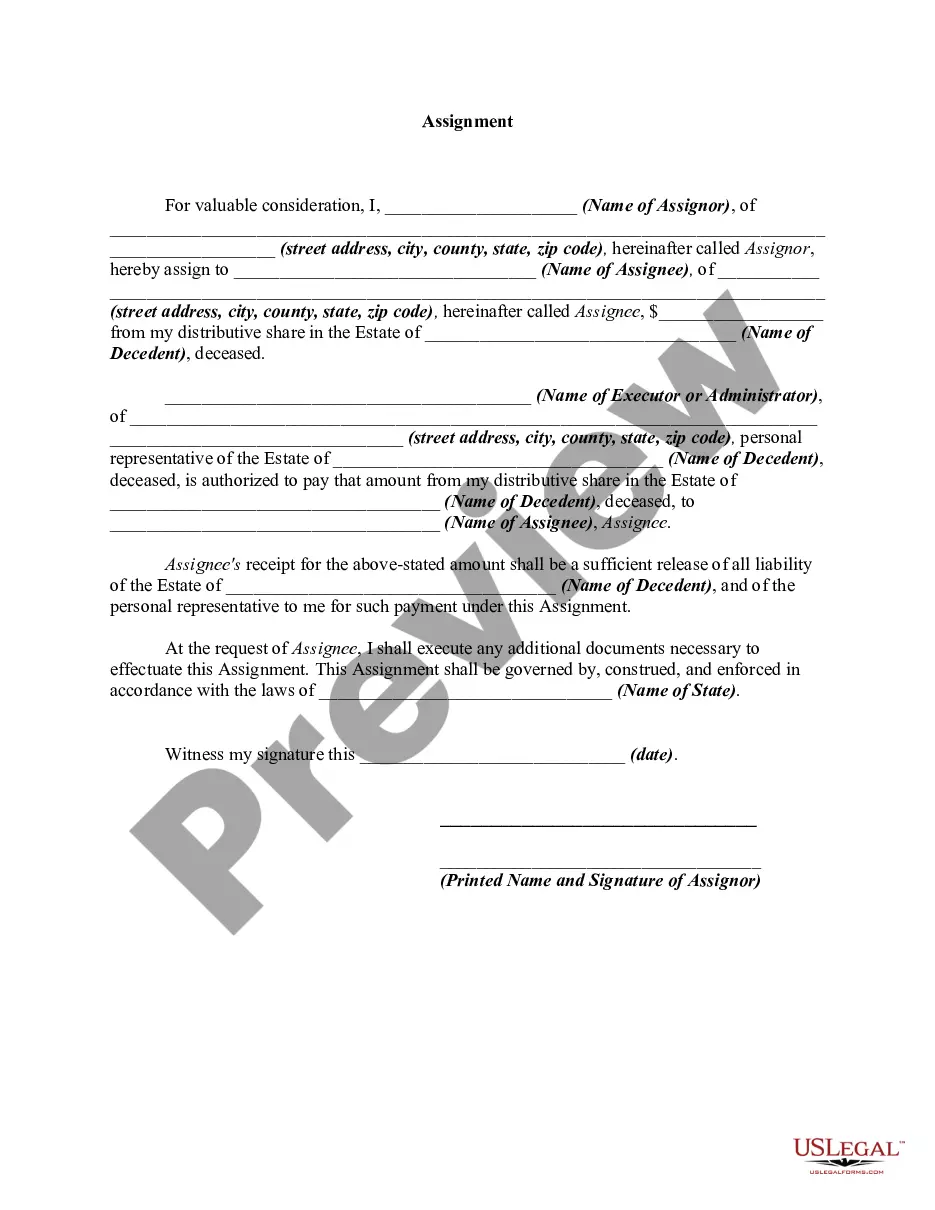
Get your form ready online
Our built-in tools help you complete, sign, share, and store your documents in one place.
Make edits, fill in missing information, and update formatting in US Legal Forms—just like you would in MS Word.
Download a copy, print it, send it by email, or mail it via USPS—whatever works best for your next step.
Sign and collect signatures with our SignNow integration. Send to multiple recipients, set reminders, and more. Go Premium to unlock E-Sign.
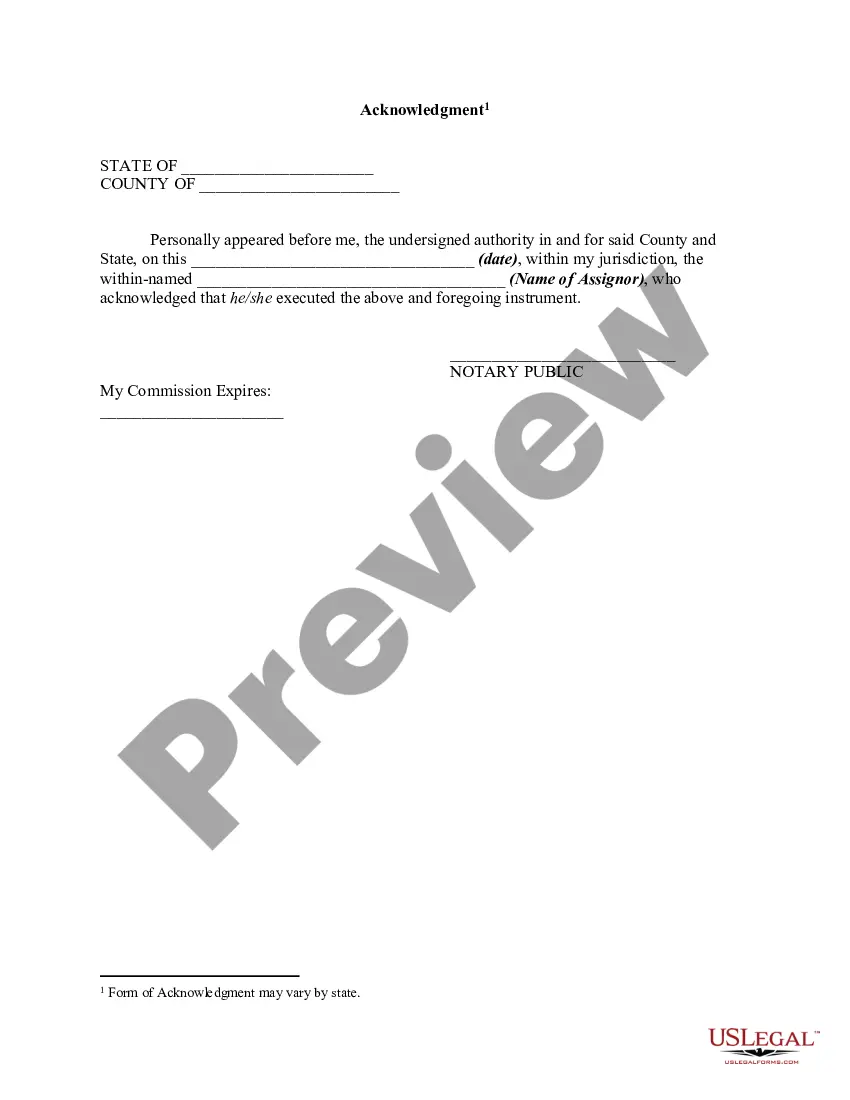
If this form requires notarization, complete it online through a secure video call—no need to meet a notary in person or wait for an appointment.
We protect your documents and personal data by following strict security and privacy standards.

Make edits, fill in missing information, and update formatting in US Legal Forms—just like you would in MS Word.

Download a copy, print it, send it by email, or mail it via USPS—whatever works best for your next step.

Sign and collect signatures with our SignNow integration. Send to multiple recipients, set reminders, and more. Go Premium to unlock E-Sign.

If this form requires notarization, complete it online through a secure video call—no need to meet a notary in person or wait for an appointment.

We protect your documents and personal data by following strict security and privacy standards.
Looking for another form?



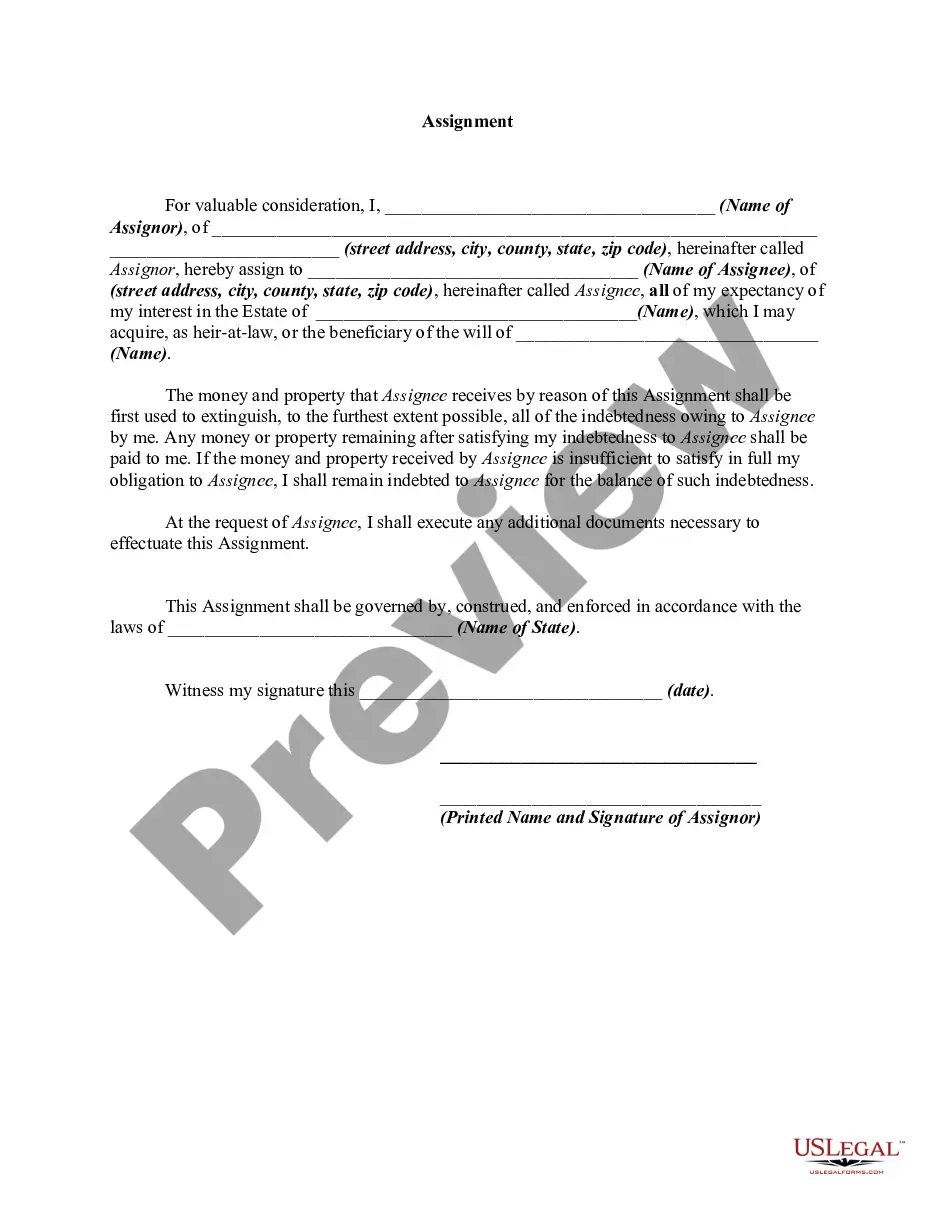
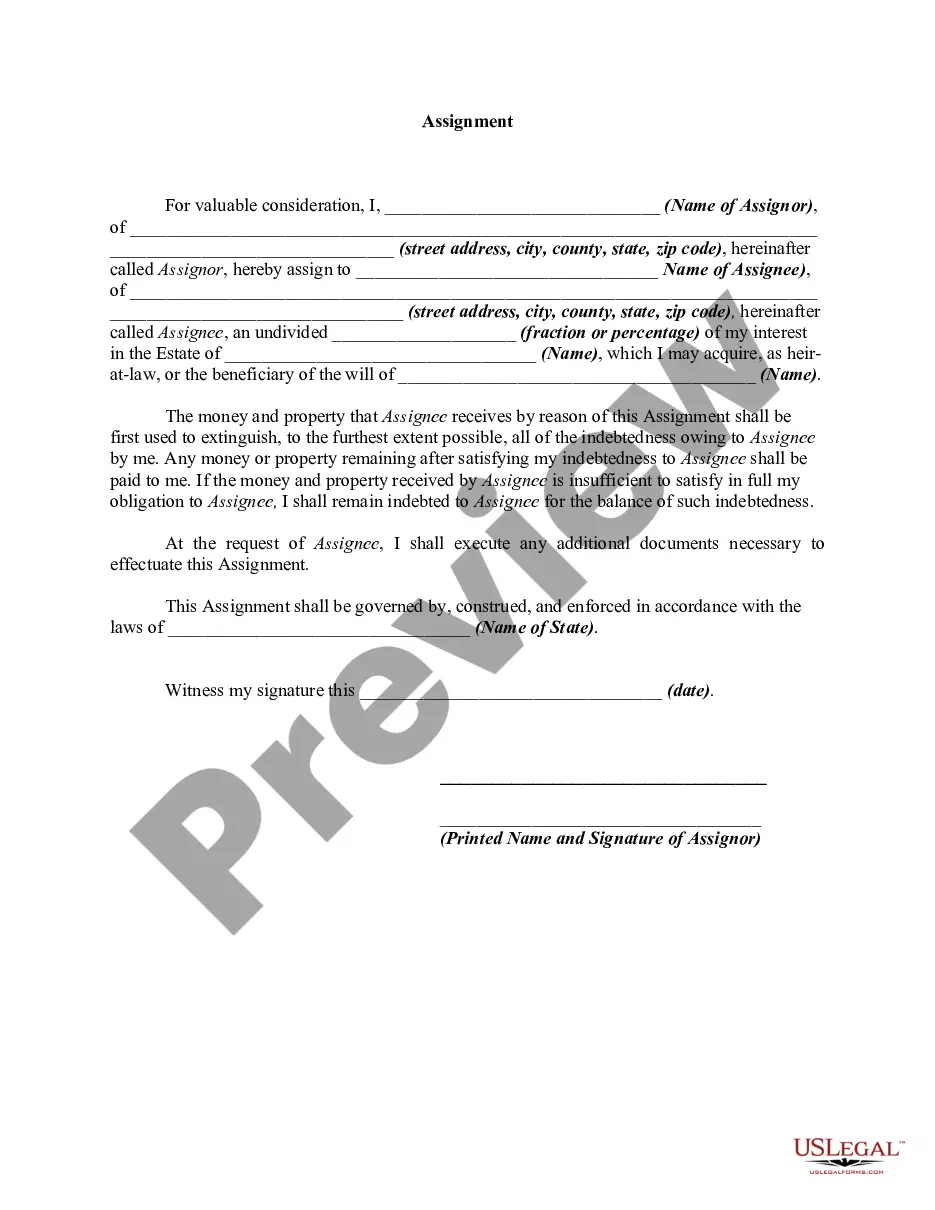
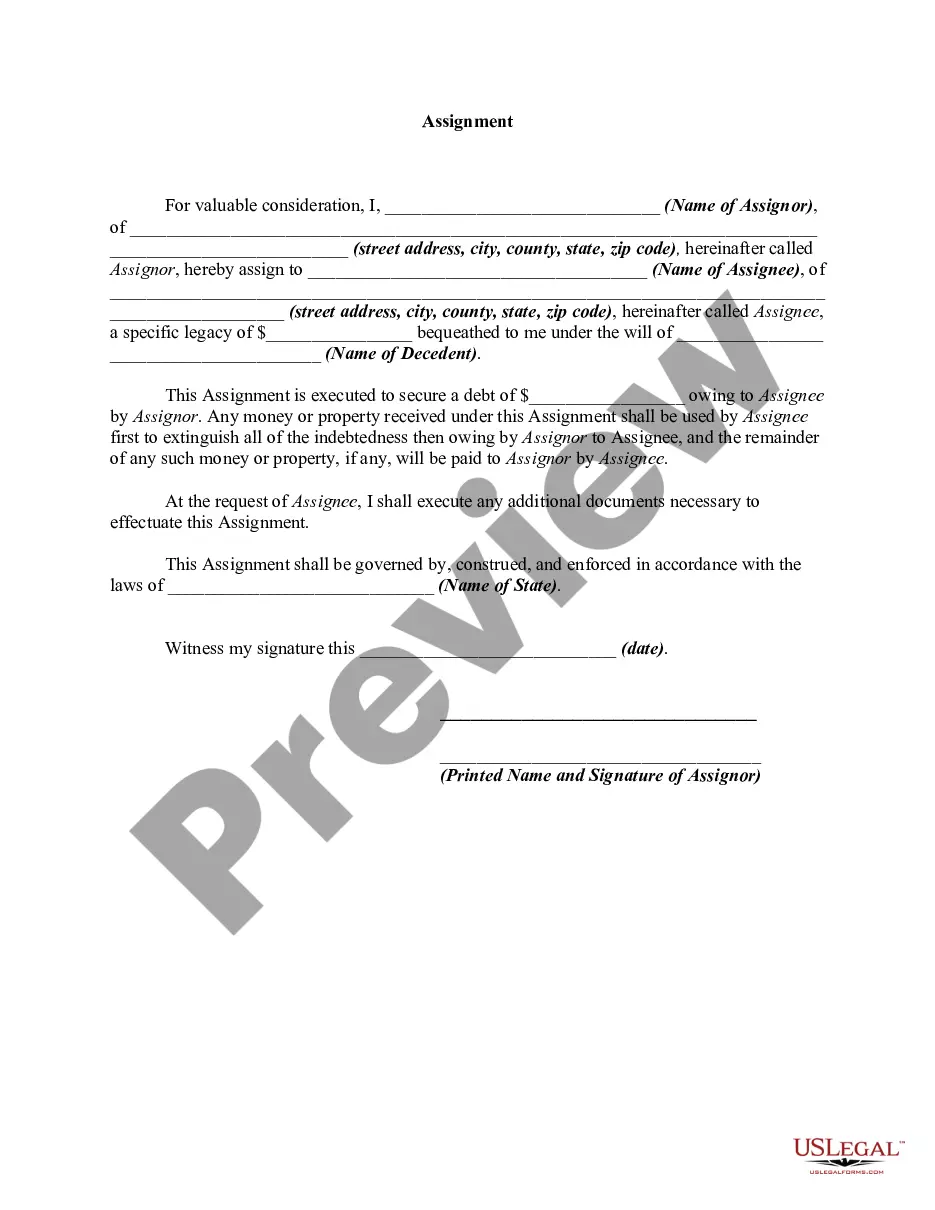
How to fill out Assignment Of All Of Expected Interest In Estate In Order To Pay Indebtedness?
Obtaining a reliable source to access the latest and suitable legal templates is a significant part of navigating bureaucracy.
Locating the appropriate legal documents requires precision and meticulousness, which is why it is crucial to obtain Estate Order Pay With Example samples solely from trustworthy providers, such as US Legal Forms. An incorrect template will squander your time and delay your current situation. With US Legal Forms, you have minimal worries.
Once you have the form on your device, you can modify it with the editor or print it out and fill it in by hand. Eliminate the stress associated with your legal documentation. Explore the extensive US Legal Forms collection to discover legal samples, verify their applicability to your situation, and download them instantly.
- Utilize the catalog navigation or search feature to locate your template.
- Examine the form’s description to confirm if it aligns with the requirements of your state and area.
- Review the form preview, if available, to ensure it is indeed the document you seek.
- Return to the search and look for the appropriate template if the Estate Order Pay With Example does not meet your specifications.
- If you are confident about the form’s suitability, download it.
- If you are a registered user, click Log in to verify and access your selected templates in My documents.
- If you do not yet have an account, click Buy now to acquire the template.
- Select the pricing plan that best fits your requirements.
- Continue to the registration to complete your purchase.
- Finalise your transaction by choosing a payment method (credit card or PayPal).
- Select the document format for downloading Estate Order Pay With Example.
Form popularity
FAQ
Every state sets the priority ing to which claims must be paid. The estate's beneficiaries only get paid once all the creditor claims have been satisfied. Usually, estate administration fees, funeral expenses, support payments, and taxes have priority over other claims.
If the personal administrator decides to pay creditors from an insolvent estate, they must do so in the following order. Secured creditors. Reasonable funeral, administration and testamentary expenses. Testamentary expenses can include things like probate fees and solicitor fees.
Typically, you need to make it known that you are the executor of the estate and are not taking responsibility for the transaction yourself. You can do this by simply signing your name and putting your title of executor of the estate afterward.
Simple estates might be settled within six months. Complex estates, those with a lot of assets or assets that are complex or hard to value can take several years to settle. If an estate tax return is required, the estate might not be closed until the IRS indicates its acceptance of the estate tax return.
Some of the most important expenses paid by the estate include: Outstanding debts, such as credit cards, medical bills or liens. Repairs or maintenance costs for estate property. Appraisals that are necessary to determine the value of estate assets. Closing costs associated with the sale of a home.