Living Trust With Will
Description
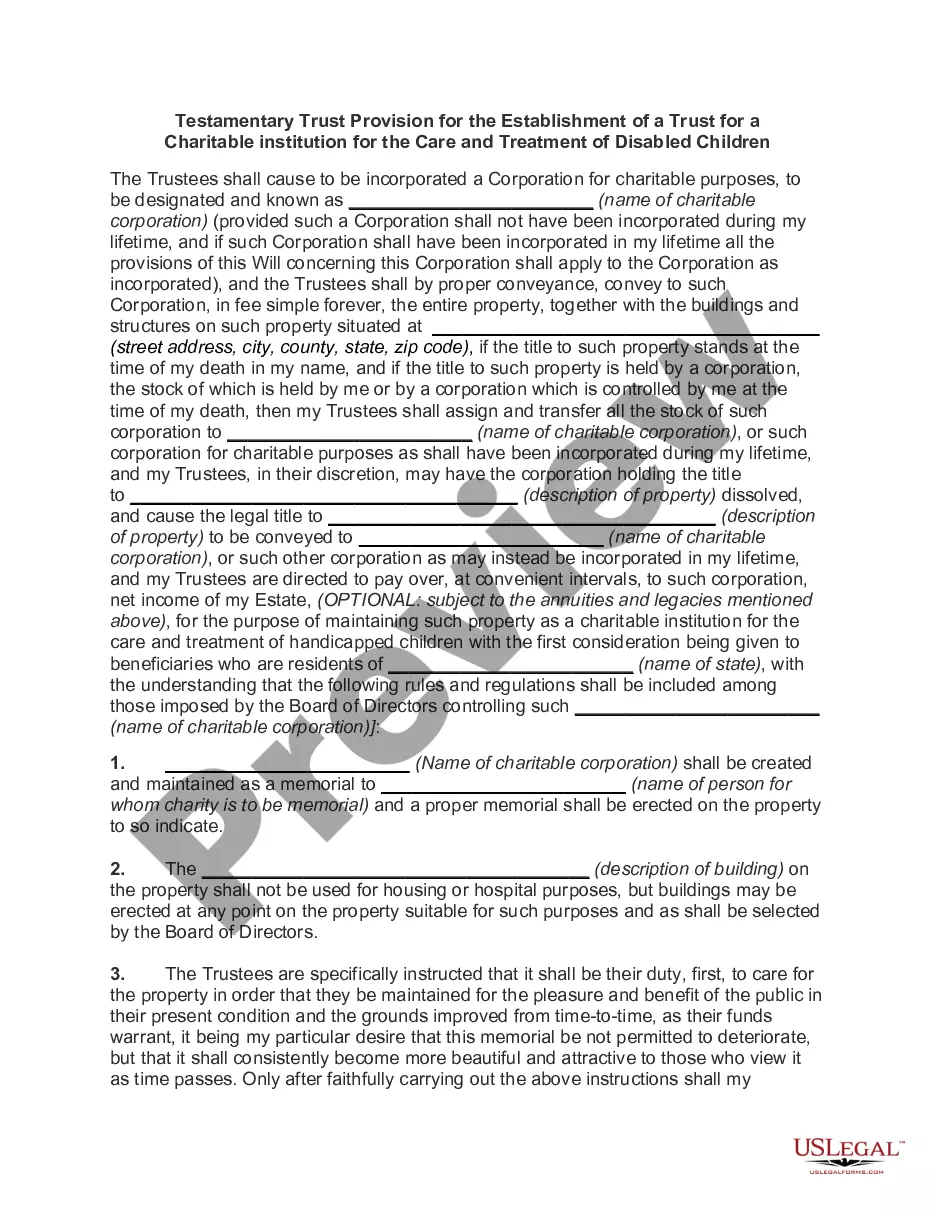

Get your form ready online
Our built-in tools help you complete, sign, share, and store your documents in one place.
Make edits, fill in missing information, and update formatting in US Legal Forms—just like you would in MS Word.
Download a copy, print it, send it by email, or mail it via USPS—whatever works best for your next step.
Sign and collect signatures with our SignNow integration. Send to multiple recipients, set reminders, and more. Go Premium to unlock E-Sign.
If this form requires notarization, complete it online through a secure video call—no need to meet a notary in person or wait for an appointment.
We protect your documents and personal data by following strict security and privacy standards.

Make edits, fill in missing information, and update formatting in US Legal Forms—just like you would in MS Word.

Download a copy, print it, send it by email, or mail it via USPS—whatever works best for your next step.

Sign and collect signatures with our SignNow integration. Send to multiple recipients, set reminders, and more. Go Premium to unlock E-Sign.

If this form requires notarization, complete it online through a secure video call—no need to meet a notary in person or wait for an appointment.

We protect your documents and personal data by following strict security and privacy standards.
Looking for another form?





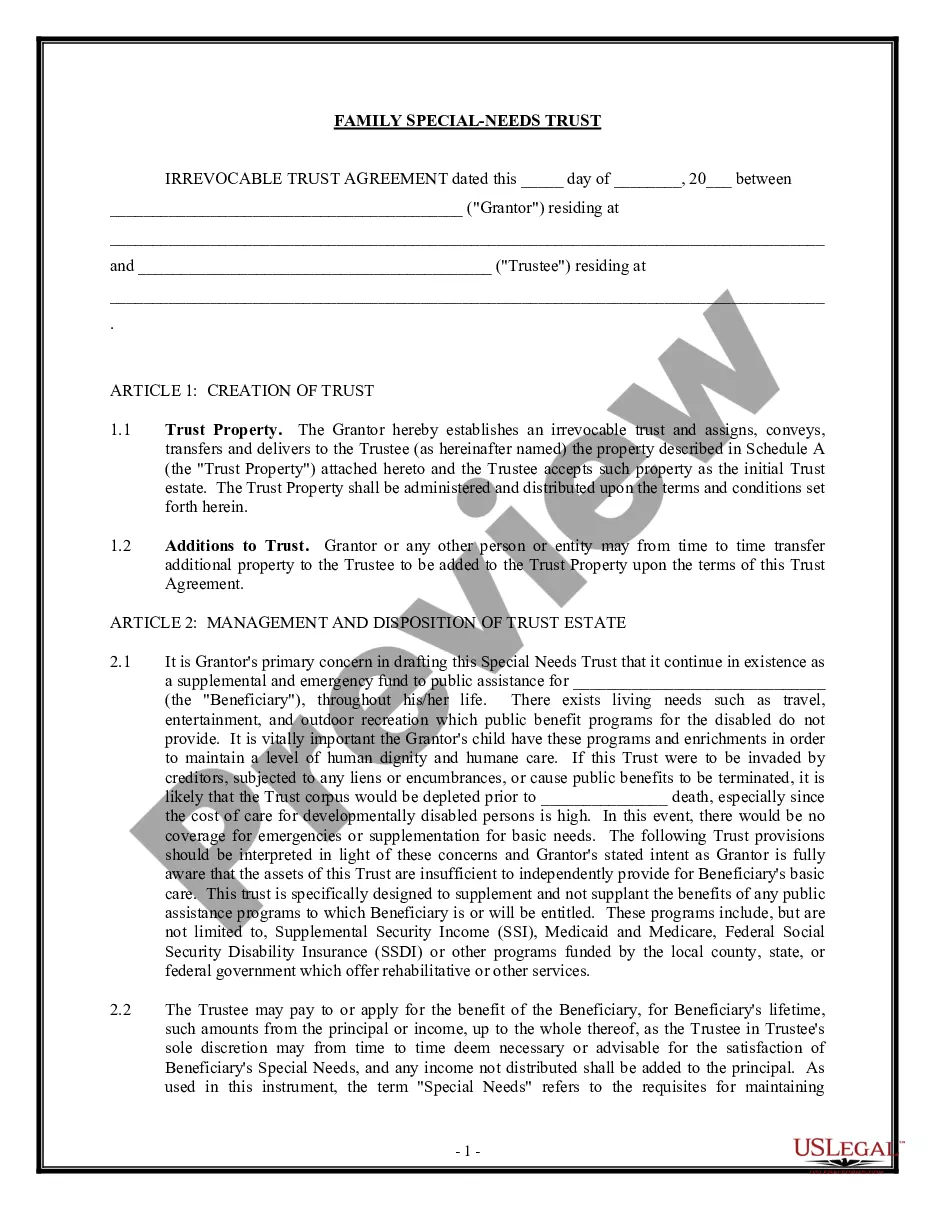


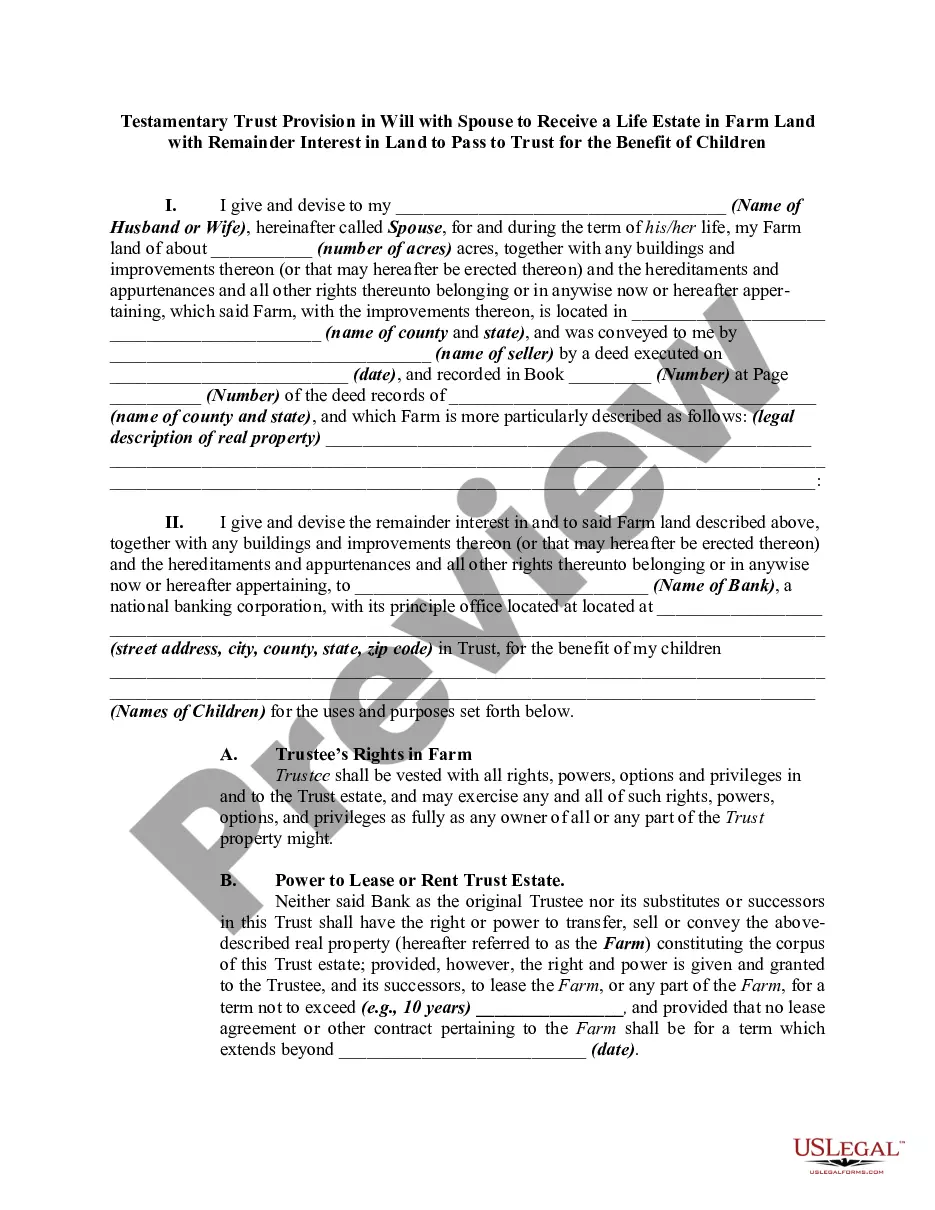
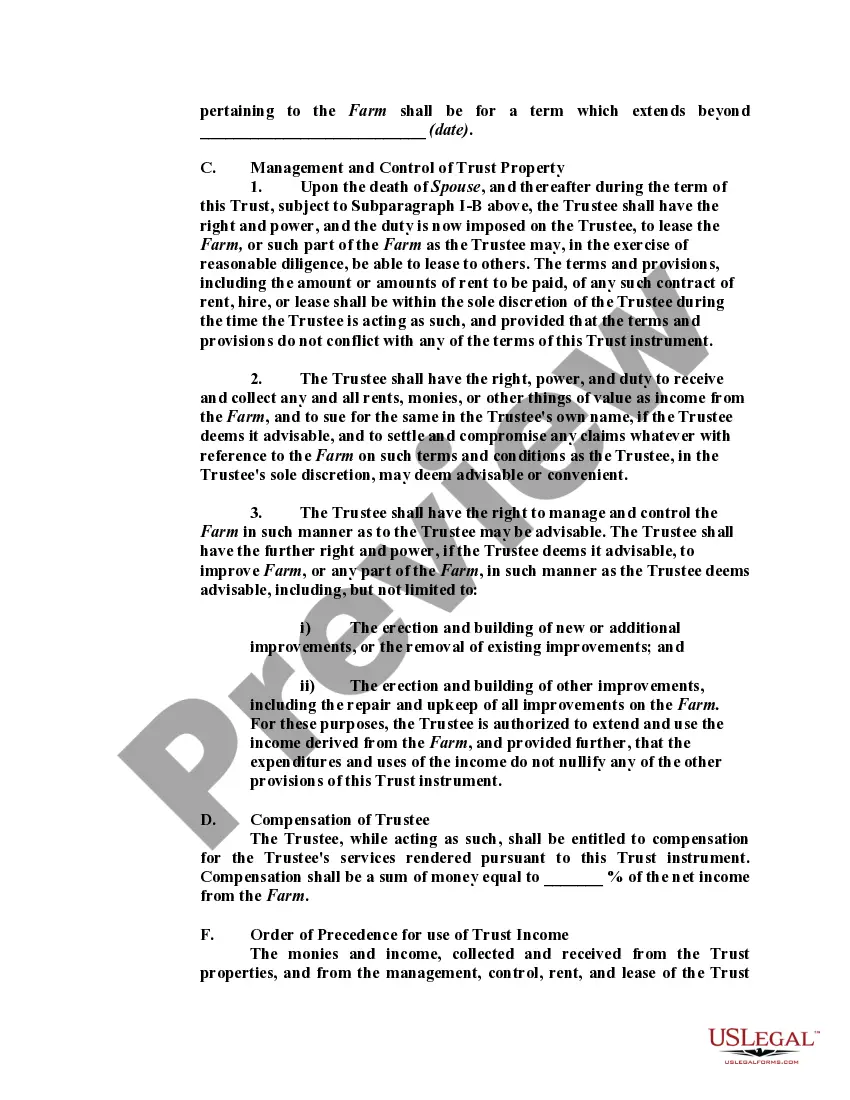
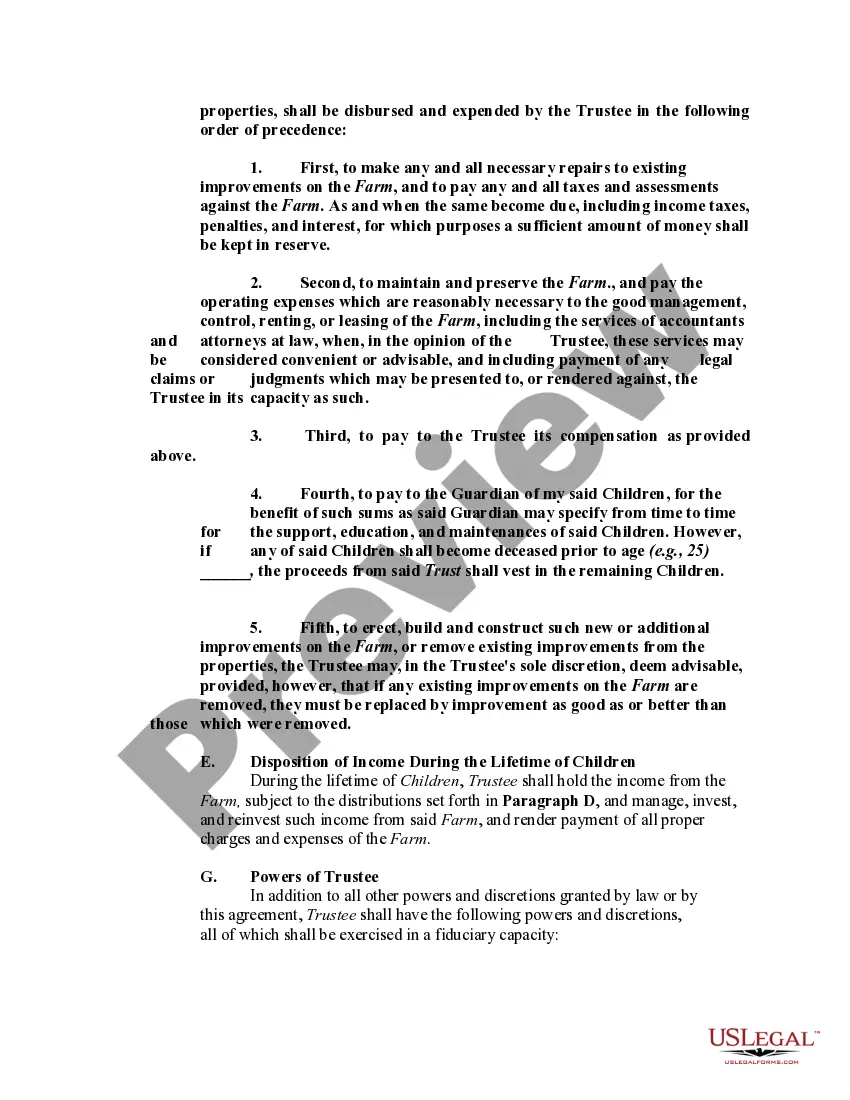
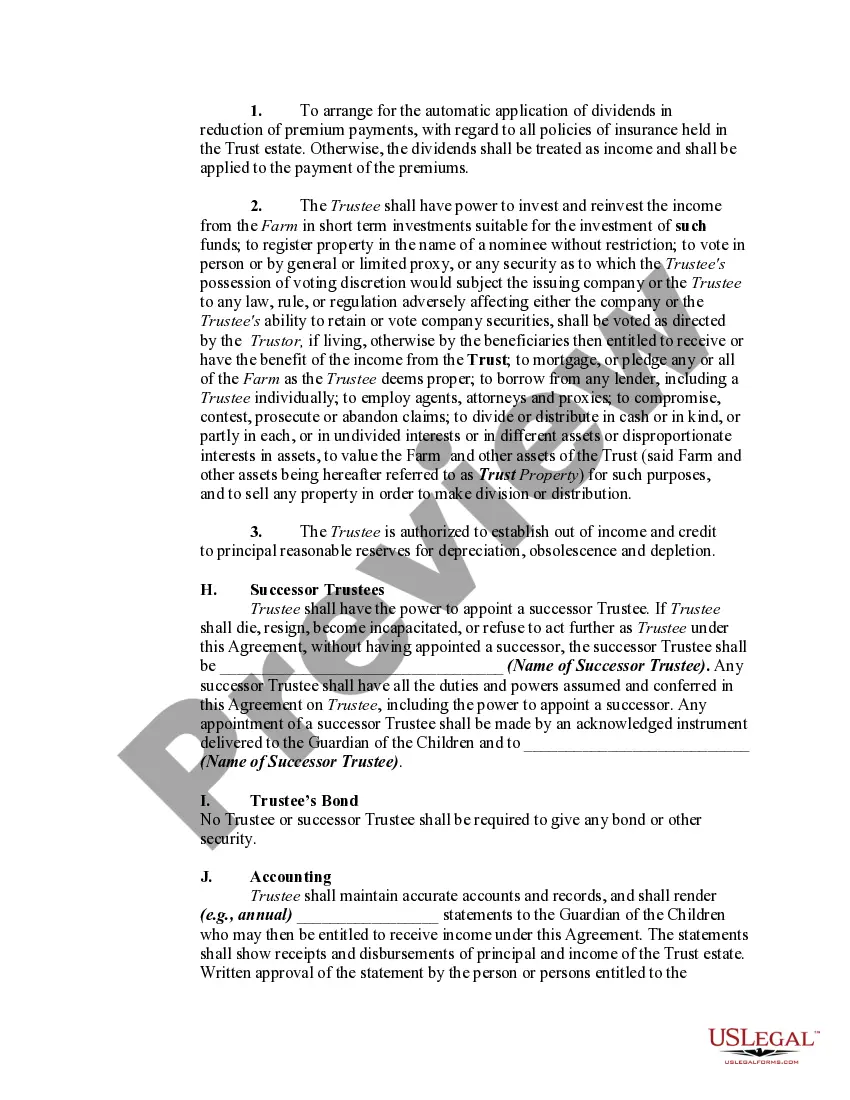
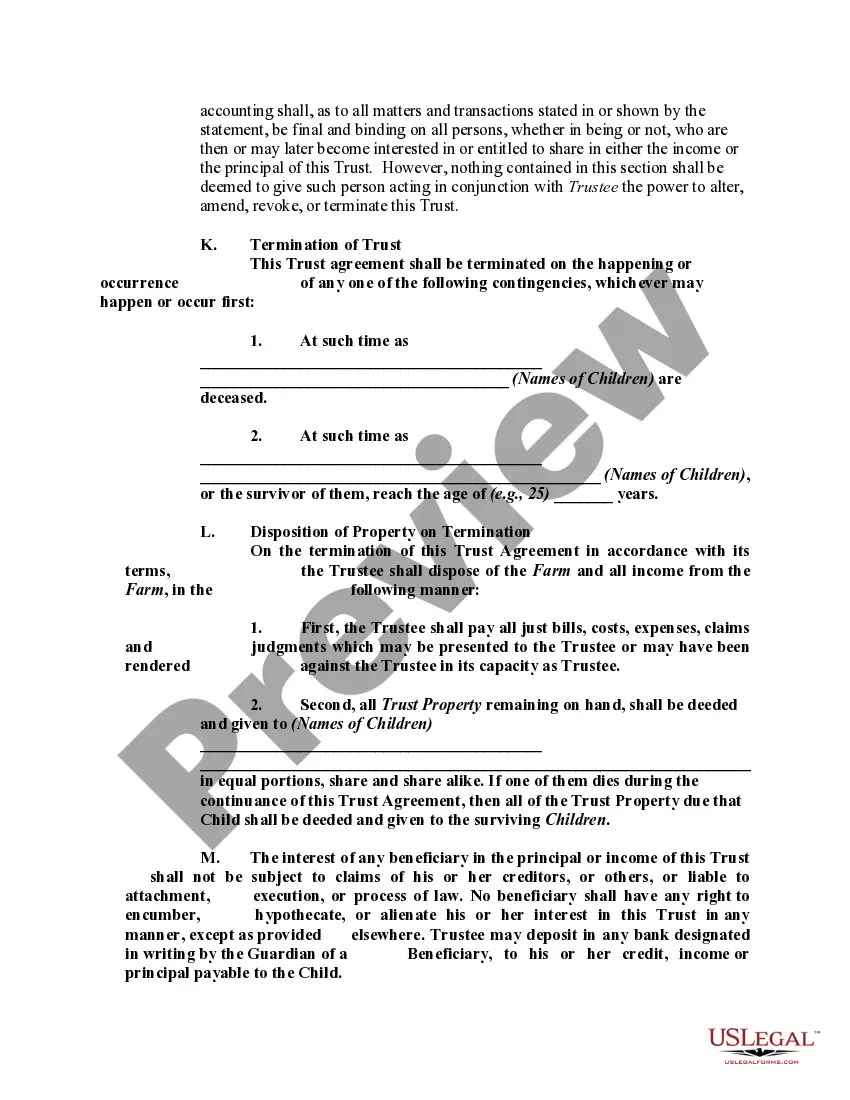
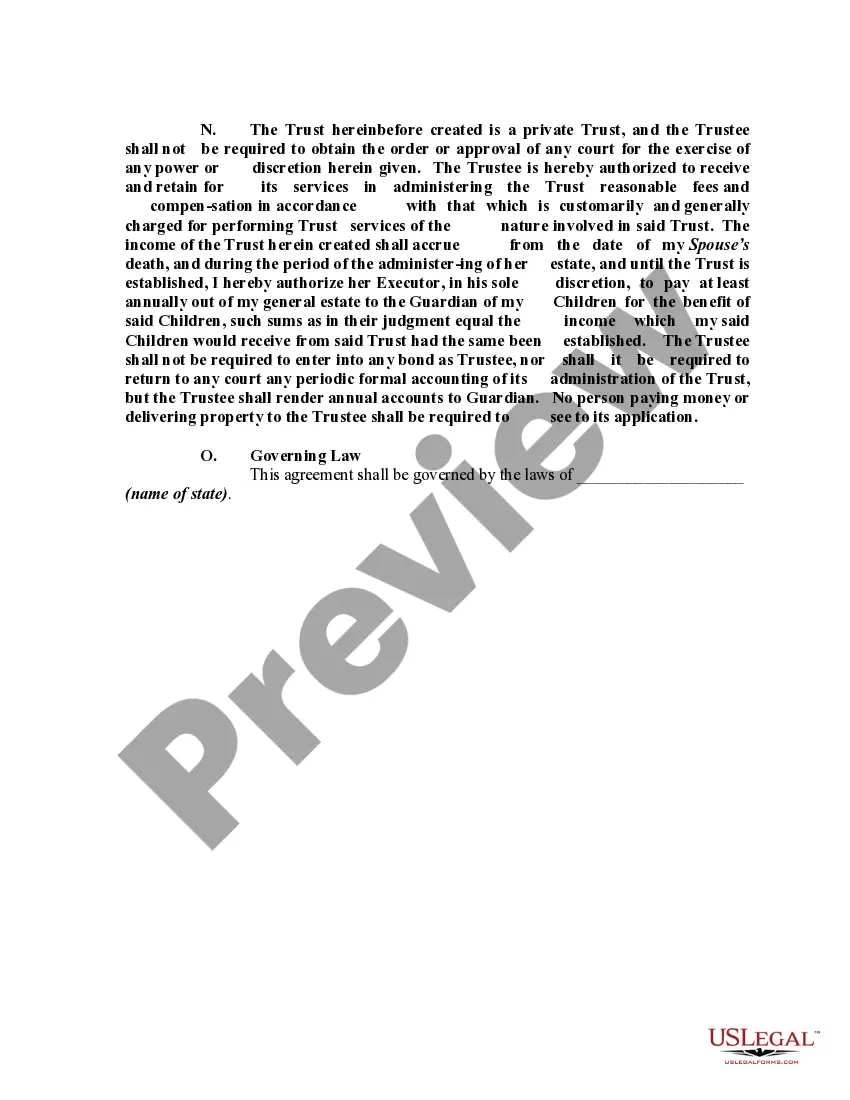
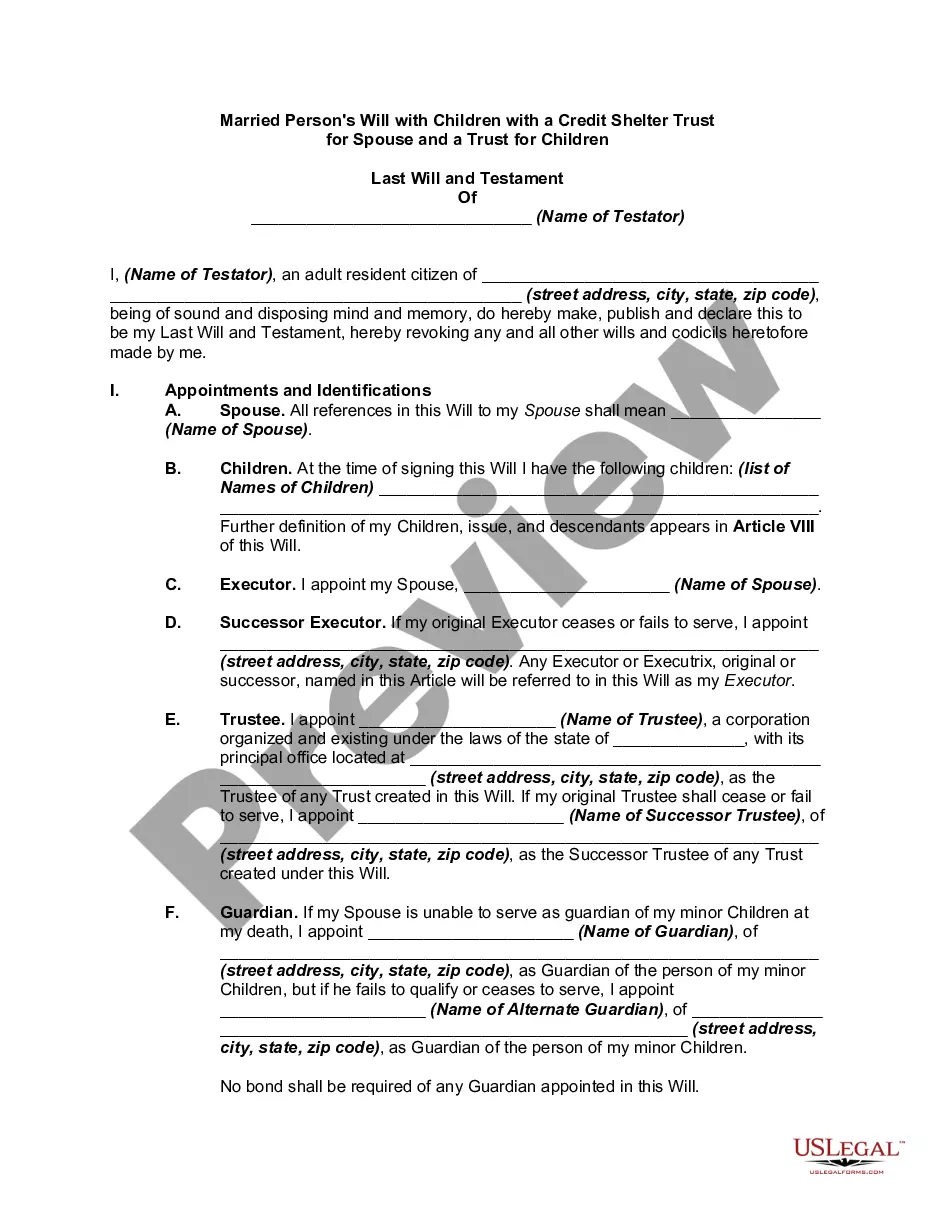
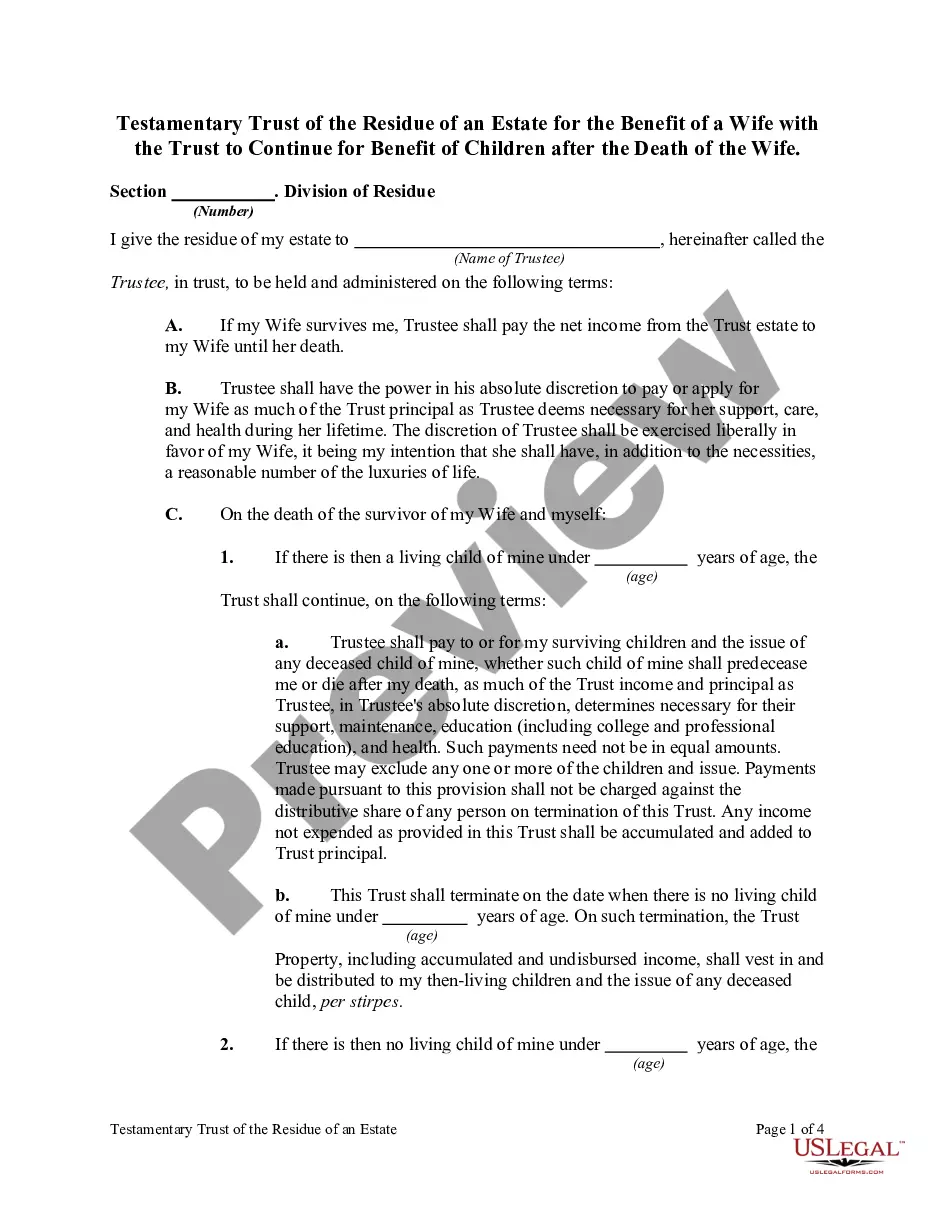
How to fill out Testamentary Trust Provision In Will With Spouse To Receive A Life Estate In Farm Land With Remainder Interest In Land To Pass To Trust For The Benefit Of Children?
- If you are an existing user, log into your account and select the desired document template. Ensure your subscription is active; if not, renew it as needed.
- For new users, start by reviewing the available forms. Check the preview mode and descriptions to ensure you select the right template for your situation and jurisdiction.
- If you find that the document doesn’t meet your needs, utilize the search feature to find an appropriate alternative.
- Once you find the correct document, click the Buy Now button and select your preferred subscription plan. You will need to create an account to access the full library.
- Complete the transaction by providing your payment details through credit card or PayPal to purchase the subscription.
- After purchase, download your form and save it to your device. You can access it anytime from the My Forms section in your profile.
In conclusion, leveraging US Legal Forms simplifies the process of obtaining a living trust with a will. With access to over 85,000 legal forms and the ability to seek expert assistance, users can ensure their documents are comprehensive and compliant.
Kick-start your estate planning journey today with US Legal Forms!
Form popularity
FAQ
The primary downfall of having a trust can be the complexity of management and potential ongoing costs. While a living trust with will can simplify the distribution of assets, it requires careful handling to ensure compliance with legal requirements. Individuals may also feel overwhelmed by the responsibility of managing the trust during their lifetime. Working with U.S. Legal Forms can help simplify this process and clarify any confusion.
Whether your parents should place their assets in a trust largely depends on their financial situation and goals. A living trust with will can provide security, privacy, and ease of transfer for their assets, ensuring that their wishes are fulfilled after they pass. It's essential to evaluate the long-term benefits against any possible drawbacks. Engaging with U.S. Legal Forms can provide guidance tailored to their needs.
A family trust, while beneficial for asset protection, can sometimes lead to disputes among beneficiaries regarding control and distribution. Furthermore, the management of the trust can impose ongoing costs and administrative responsibilities that need careful consideration. A living trust with will can mitigate probate issues, but keep in mind the importance of clear communication among family members to avoid misunderstandings.
Choosing the right person to set up a living trust with a will is crucial. Ideally, a qualified estate planning attorney can provide personalized advice tailored to your needs. Alternatively, you can use platforms like US Legal Forms, which offer resources and templates to help you create a trust efficiently. This way, you gain confidence that your trust will serve your best interests and protect your assets.
To set up a living trust with a will effectively, start by defining your assets and deciding how you want them distributed. Consider working with an attorney or a reliable online platform like US Legal Forms that provides step-by-step guidance. This helps ensure that your living trust with a will aligns with your specific wishes and follows state laws. Once established, regularly review and update the trust to reflect any changes in your life or assets.
Writing a living trust with will involves drafting a document that outlines your wishes regarding asset distribution and care for dependents. Begin by listing your assets and deciding how you want them to be managed during your lifetime and after your passing. It’s crucial to name a trustee who will manage the assets according to your instructions. You can simplify this process significantly using user-friendly tools and templates from US Legal Forms.
Putting your house in a living trust with will can come with disadvantages, such as potential tax implications and changes in title that could affect your mortgage. Additionally, homeowners might face challenges when dealing with insurance policies, as they may need to ensure coverage remains adequate. There can also be administrative work involved in transferring the title and updating records. Consulting resources like US Legal Forms can provide clarity on navigating these issues.
One significant mistake parents often make when creating a living trust with will is failing to fund the trust properly. They may establish the trust but forget to transfer assets into it, leaving them vulnerable to probate. Additionally, parents sometimes overlook updating their beneficiary designations, which can lead to unintended outcomes. Using platforms like US Legal Forms can help ensure that your living trust with will is set up and funded correctly.
Various legal documents can take precedence over a will in estate planning. A living trust with a will is one such arrangement, as it directs how assets are managed and distributed before relying on a will. Additionally, beneficiary designations on accounts and legally binding contracts can also supersede a will. For clarity and consistency in your estate planning, consider using services like US Legal Forms, which guide you through prioritizing your important documents.
Yes, a living trust generally takes precedence over a will when it comes to the distribution of assets placed within the trust. This means that if you have assets in both a living trust and a will, the trust's instructions will control how those specific assets are handled. This dynamic is why many individuals choose to establish a living trust with a will, to ensure a clear and organized estate plan. For guidance, US Legal Forms offers resources to help set up both documents effectively.