Foreclosure Legal Process
Description
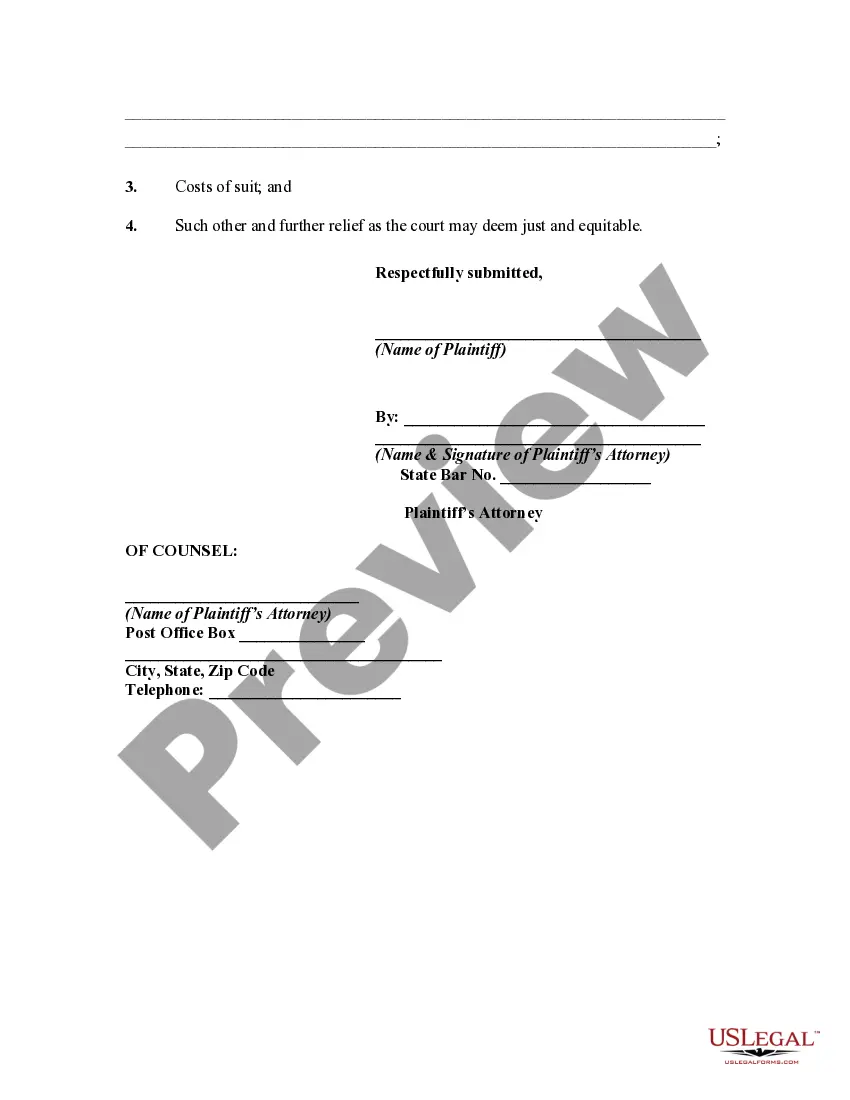
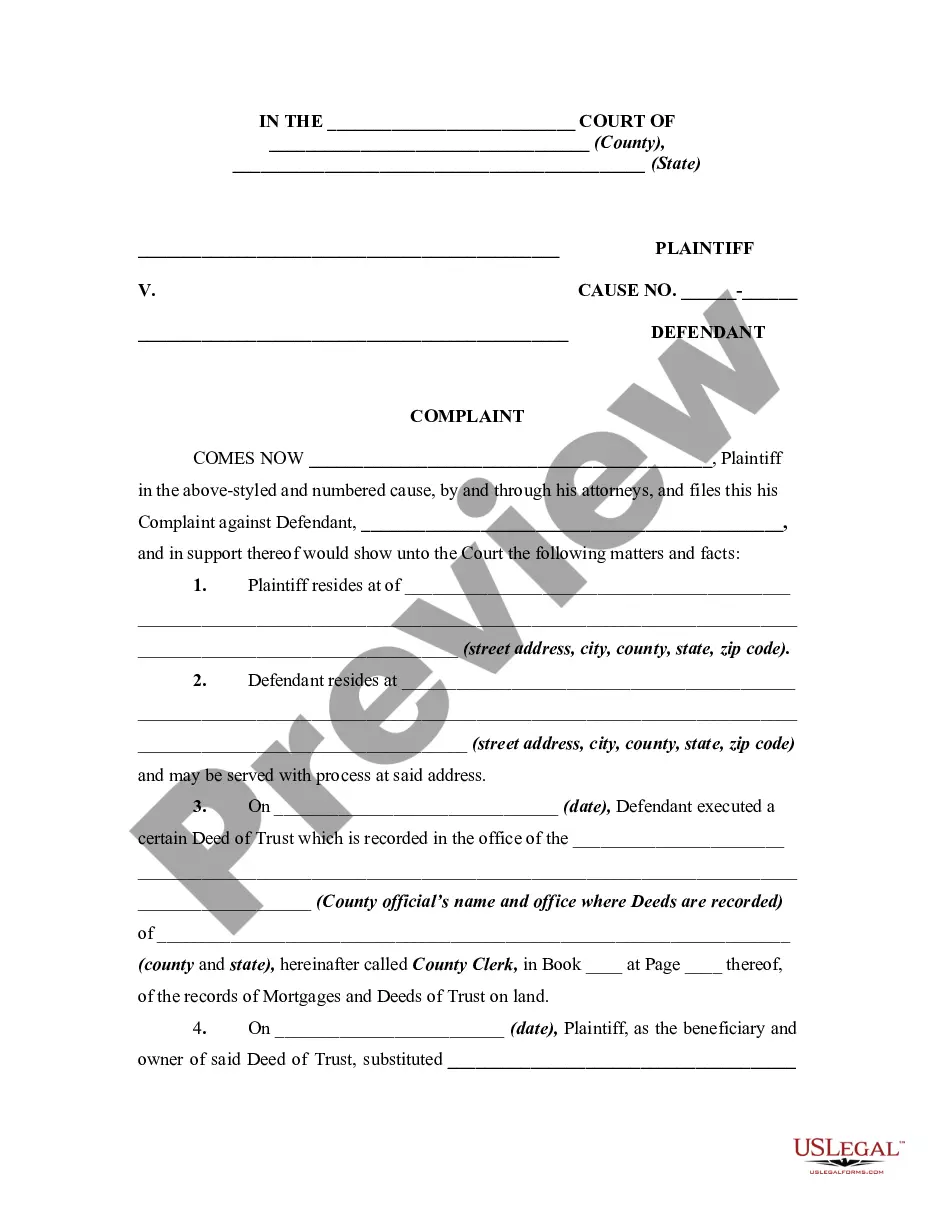
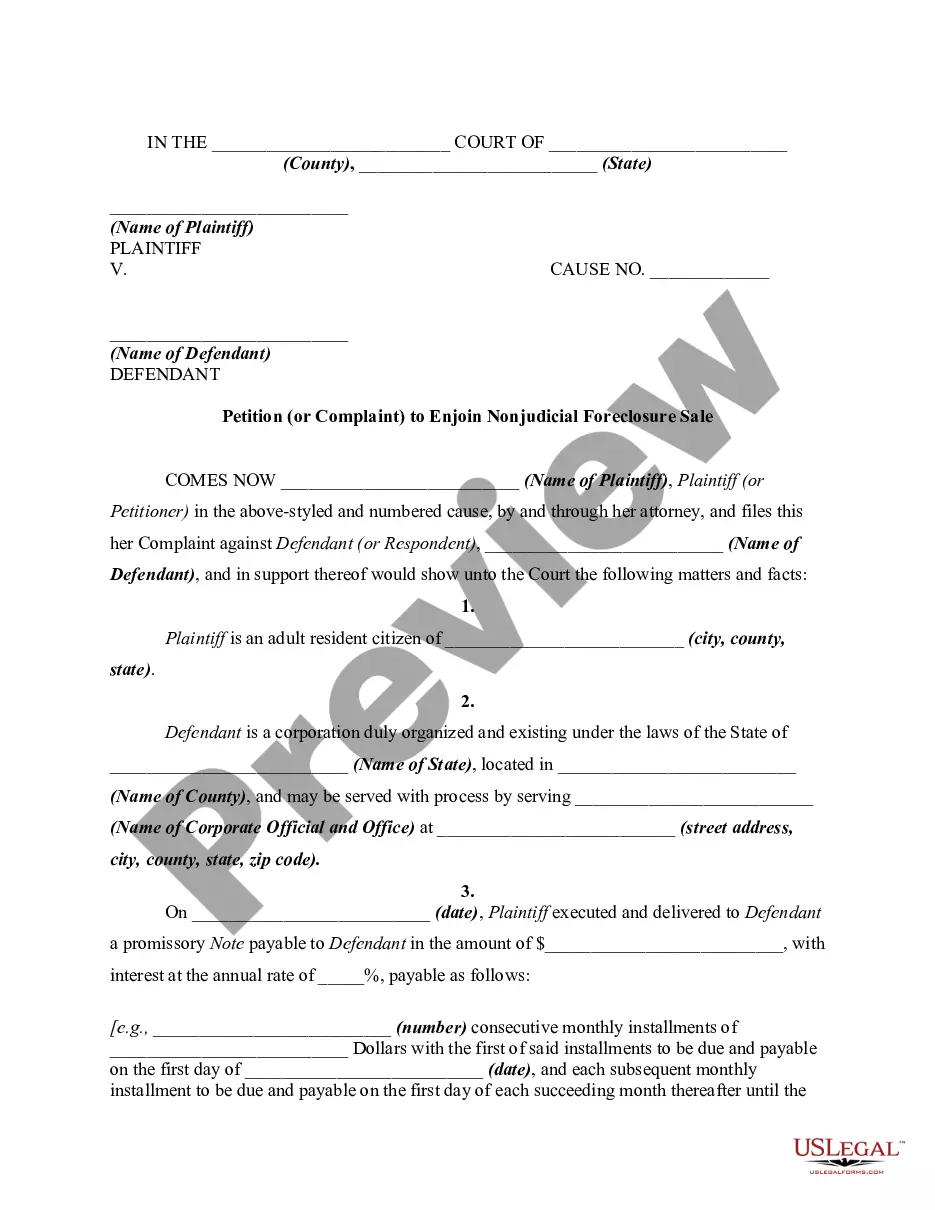
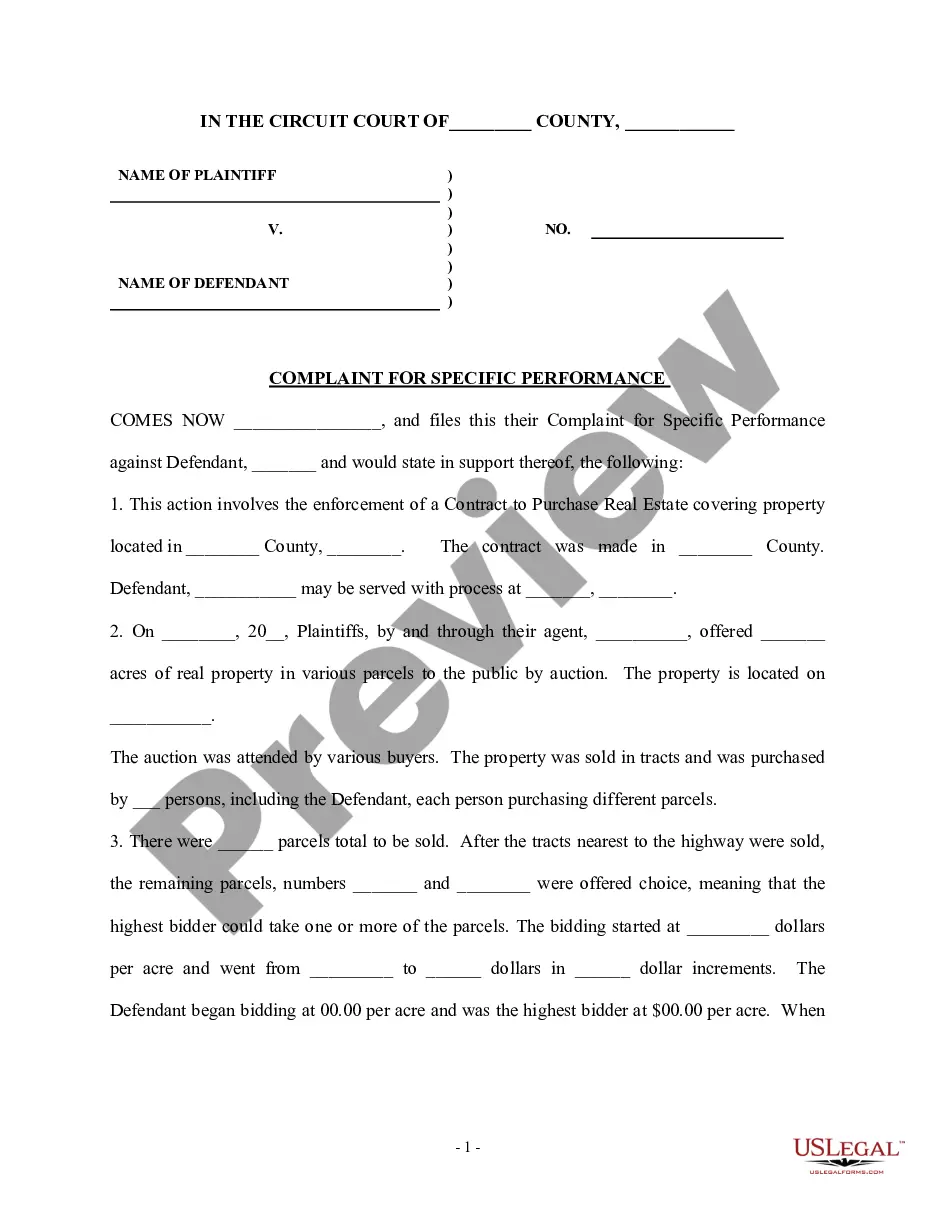

Get your form ready online
Our built-in tools help you complete, sign, share, and store your documents in one place.
Make edits, fill in missing information, and update formatting in US Legal Forms—just like you would in MS Word.
Download a copy, print it, send it by email, or mail it via USPS—whatever works best for your next step.
Sign and collect signatures with our SignNow integration. Send to multiple recipients, set reminders, and more. Go Premium to unlock E-Sign.
If this form requires notarization, complete it online through a secure video call—no need to meet a notary in person or wait for an appointment.
We protect your documents and personal data by following strict security and privacy standards.

Make edits, fill in missing information, and update formatting in US Legal Forms—just like you would in MS Word.

Download a copy, print it, send it by email, or mail it via USPS—whatever works best for your next step.

Sign and collect signatures with our SignNow integration. Send to multiple recipients, set reminders, and more. Go Premium to unlock E-Sign.

If this form requires notarization, complete it online through a secure video call—no need to meet a notary in person or wait for an appointment.

We protect your documents and personal data by following strict security and privacy standards.
Looking for another form?







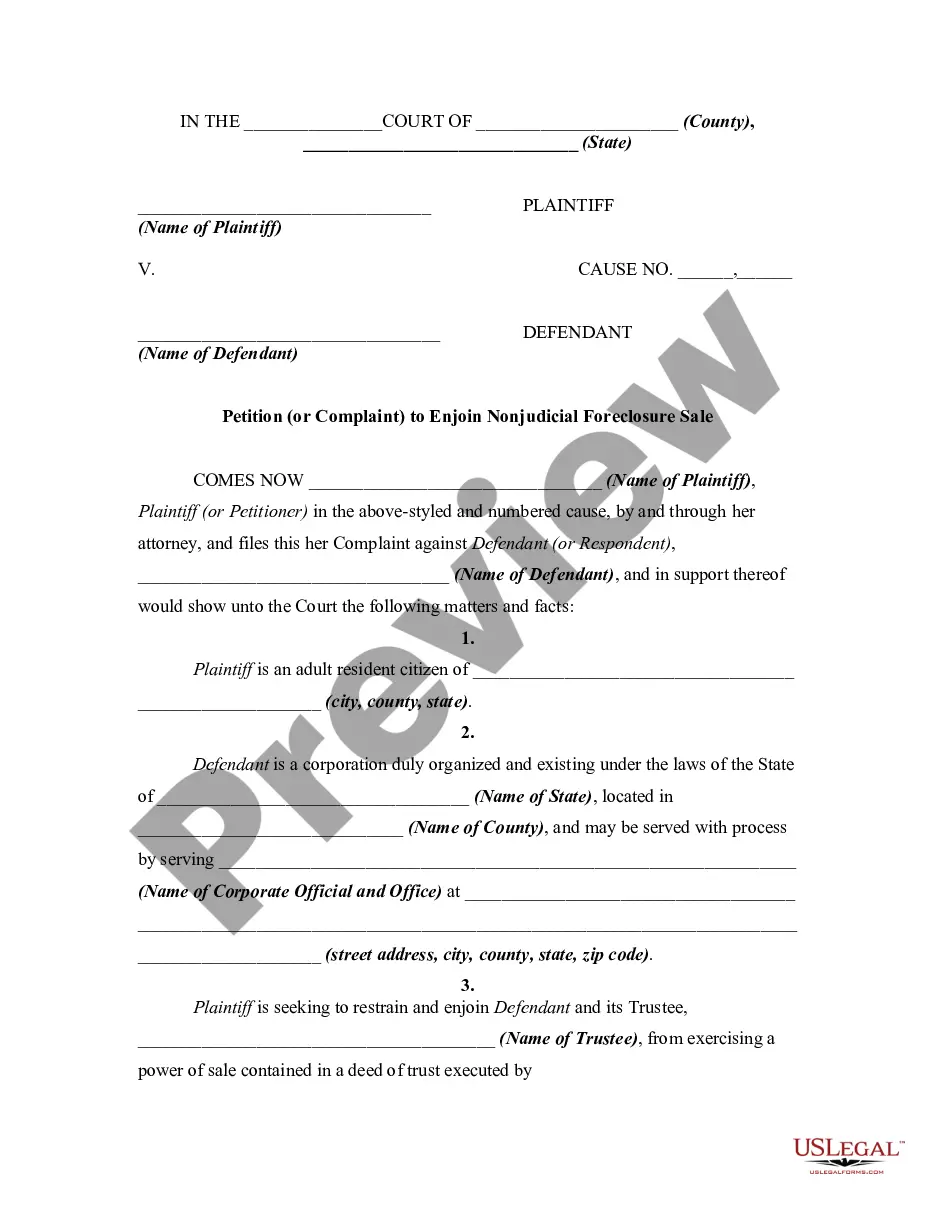
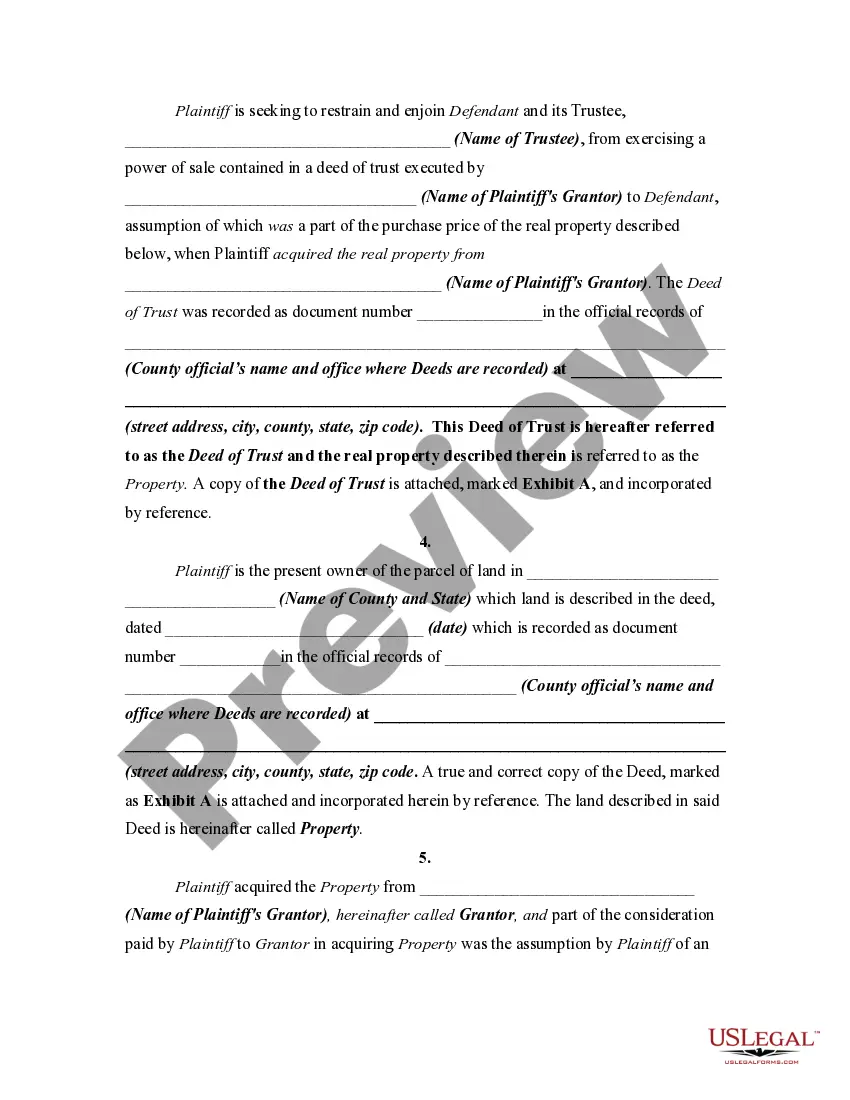
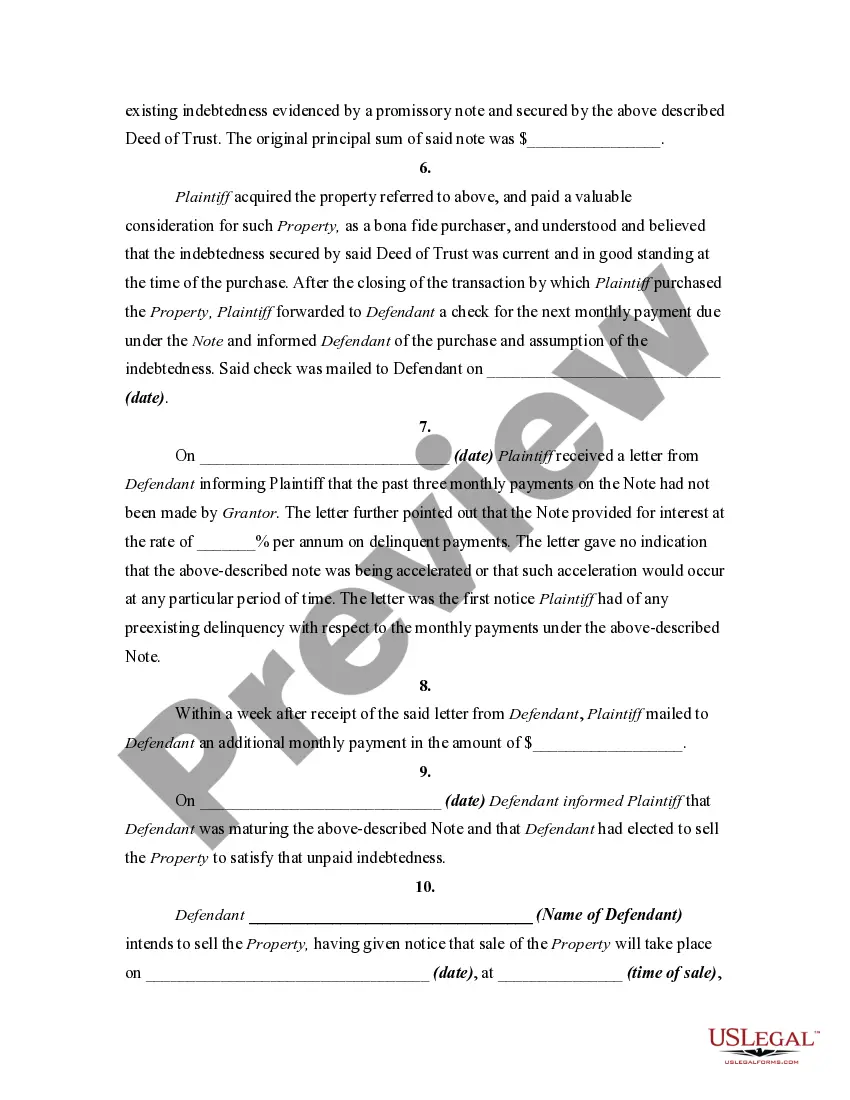
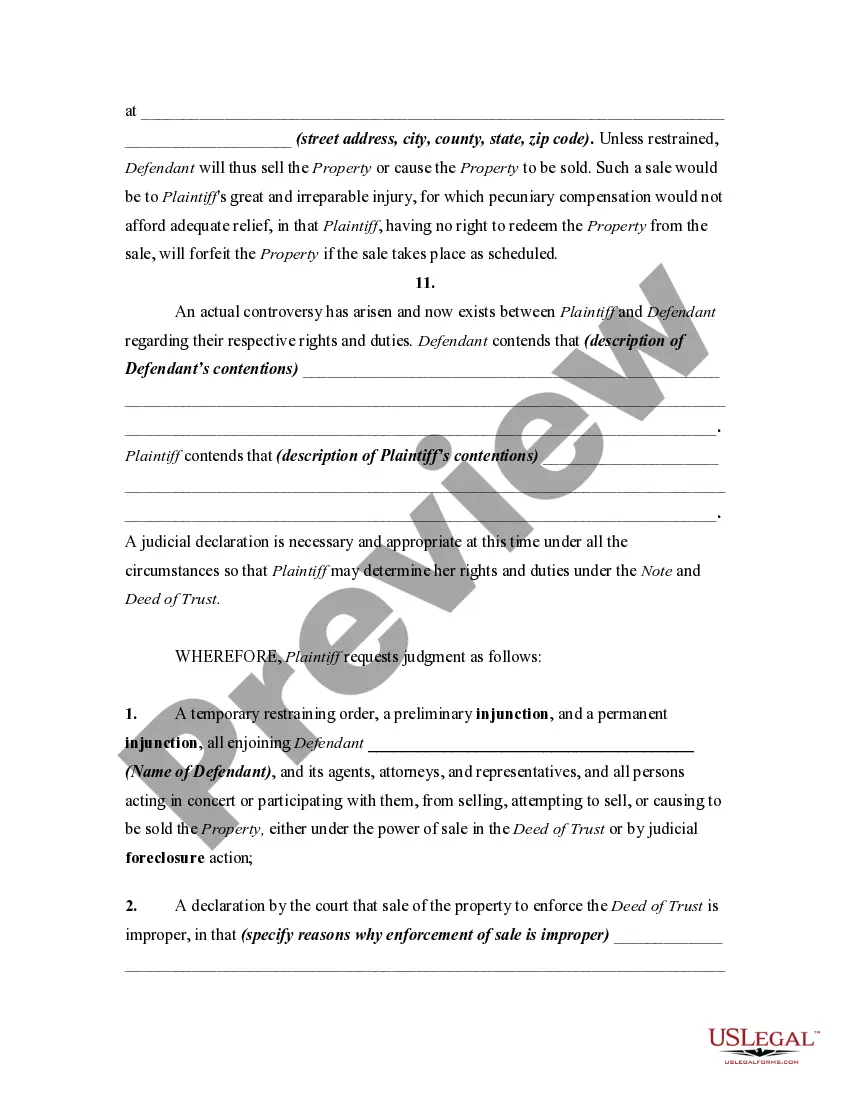
How to fill out Complaint Or Petition To Enjoin Foreclosure Sale Due To Misunderstanding As To Promissory Note's Terms Of Payment Upon Assumption Of Note?
Legal documents management can be perplexing, even for the most adept professionals.
When you are looking for a Foreclosure Legal Process and lack the opportunity to dedicate time to find the correct and updated version, the procedures can be challenging.
US Legal Forms addresses any needs you might have, from personal to business documents, all in one location.
Utilize sophisticated tools to complete and manage your Foreclosure Legal Process.
Here are the steps to follow after accessing the form you require: Validate that this is the correct document by previewing it and reading its description. Confirm that the template is accepted in your state or county. Select Buy Now when you are ready. Choose a monthly subscription plan. Select the format you need, and Download, fill out, sign, print, and submit your documents. Enjoy the US Legal Forms online library, backed by 25 years of experience and trustworthiness. Transform your daily document management into a straightforward and user-friendly process today.
- Access a database of articles, guidelines, manuals, and resources pertinent to your circumstances and needs.
- Save time and energy searching for the documents you require, and use US Legal Forms' advanced search and Preview feature to find and obtain Foreclosure Legal Process.
- If you possess a membership, Log In to your US Legal Forms account, locate the form, and download it.
- Check your My documents section to review the documents you have previously downloaded and manage your files as needed.
- If it's your first experience with US Legal Forms, create a free account and gain unlimited access to all the platform's benefits.
- A robust online form repository can be transformative for anyone aiming to navigate these matters effectively.
- US Legal Forms is a leading provider in online legal forms, boasting over 85,000 state-specific legal documents accessible at any time.
- With US Legal Forms, you can access state- or county-specific legal and business documents.
Form popularity
FAQ
The foreclosure legal process consists of several key stages, including the pre-foreclosure notice, the auction, and the post-foreclosure period. Initially, the lender sends a notice of default, allowing the homeowner time to resolve the issue. If unresolved, the property goes to auction, where it may be sold to the highest bidder. For further assistance in understanding these stages, you can explore US Legal Forms, which provides detailed information and support throughout the foreclosure legal process.
The foreclosure legal process in North Carolina typically takes about three to six months. However, several factors can influence this timeline, such as court schedules and whether the homeowner contests the foreclosure. Understanding this process is crucial for homeowners facing financial difficulties. For those seeking guidance, US Legal Forms offers resources to help navigate the foreclosure legal process effectively.
The 37 day foreclosure rule refers to a specific timeline within the foreclosure legal process in Arizona. After a notice of default is filed, homeowners have 37 days to take action before the lender can proceed with a foreclosure sale. This period allows you to explore options for restructuring your debt or negotiating with your lender. To better understand your rights and options during this critical time, consider accessing legal resources through US Legal Forms.
The foreclosure legal process in Arizona typically takes about six months. However, this duration can vary depending on several factors, including the lender's actions and any legal defenses you may raise. Understanding this timeline is crucial, as it can affect your options for preventing foreclosure. Utilizing resources like US Legal Forms can help you navigate this process more effectively.
California changed its law at the beginning of the 2023 to require that certain sellers of foreclosed properties containing one to four residential units only accept offers from eligible bidders during the first 30 days after a property is listed.
Under Michigan's Foreclosure by Advertisement Law, a company must publish a Notice of Sale once a week for four weeks, in a newspaper of general circulation in the county where the property is located. The notice must also be posted on the property at least 15 days after the first Notice of Sale is posted.
Foreclosure is a lengthy and costly process. Your lender will first file a Statement of Claim with the court, to which you have 20 days to respond with a defense. After that period, your mortgage may be declared in default. Your lender will next ask for a remedy in the form of a foreclosure order.
The process begins with an application submitted to the bank or non-banking financial institution requesting foreclosure of the loan. All relevant documents, including the current home loan account number, a copy of the PAN card, and proof of address need to be provided along with the application.
Judicial foreclosure requires the lender to file a lawsuit against the borrower to satisfy the unpaid mortgage loan. Lenders typically cannot take this step until 120 days after the first missed payment (in other words, after the fourth consecutive missed monthly payment).