Irrevocable Trust Agreement Benefit For Non Residents
Description


Get your form ready online
Our built-in tools help you complete, sign, share, and store your documents in one place.
Make edits, fill in missing information, and update formatting in US Legal Forms—just like you would in MS Word.
Download a copy, print it, send it by email, or mail it via USPS—whatever works best for your next step.
Sign and collect signatures with our SignNow integration. Send to multiple recipients, set reminders, and more. Go Premium to unlock E-Sign.
If this form requires notarization, complete it online through a secure video call—no need to meet a notary in person or wait for an appointment.
We protect your documents and personal data by following strict security and privacy standards.

Make edits, fill in missing information, and update formatting in US Legal Forms—just like you would in MS Word.

Download a copy, print it, send it by email, or mail it via USPS—whatever works best for your next step.

Sign and collect signatures with our SignNow integration. Send to multiple recipients, set reminders, and more. Go Premium to unlock E-Sign.

If this form requires notarization, complete it online through a secure video call—no need to meet a notary in person or wait for an appointment.

We protect your documents and personal data by following strict security and privacy standards.
Looking for another form?
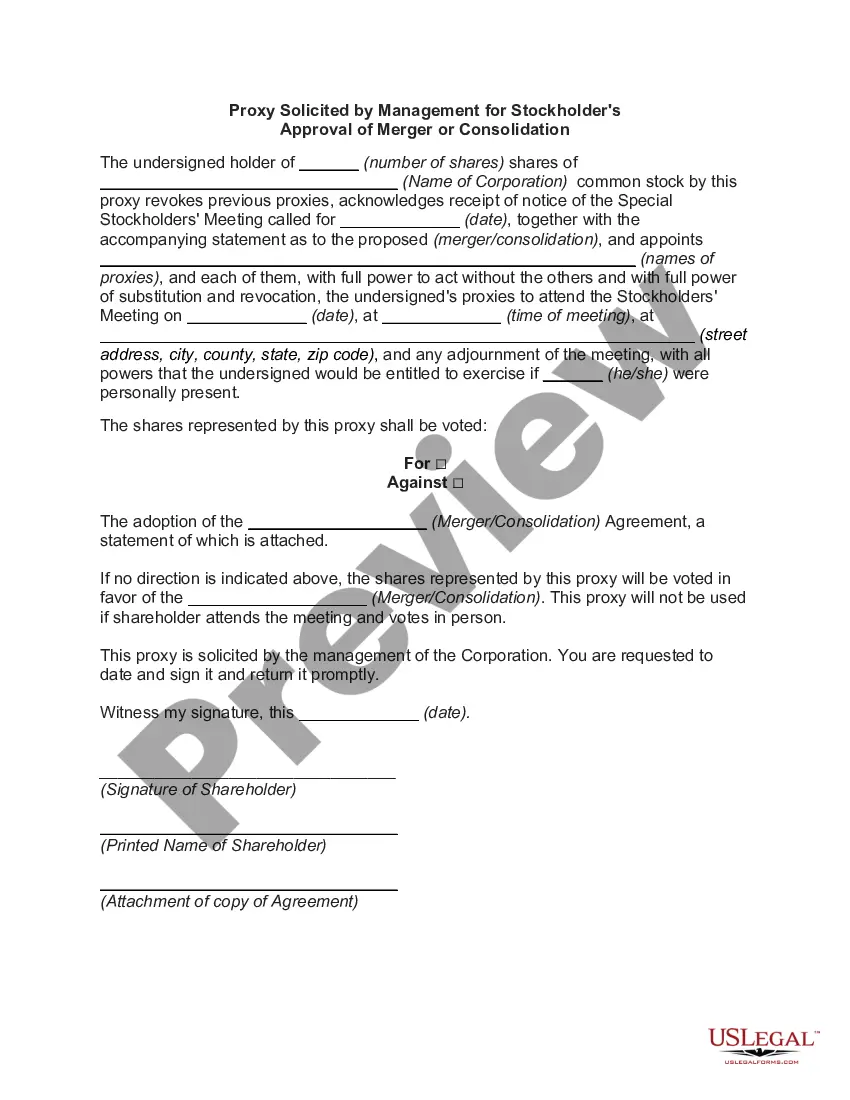


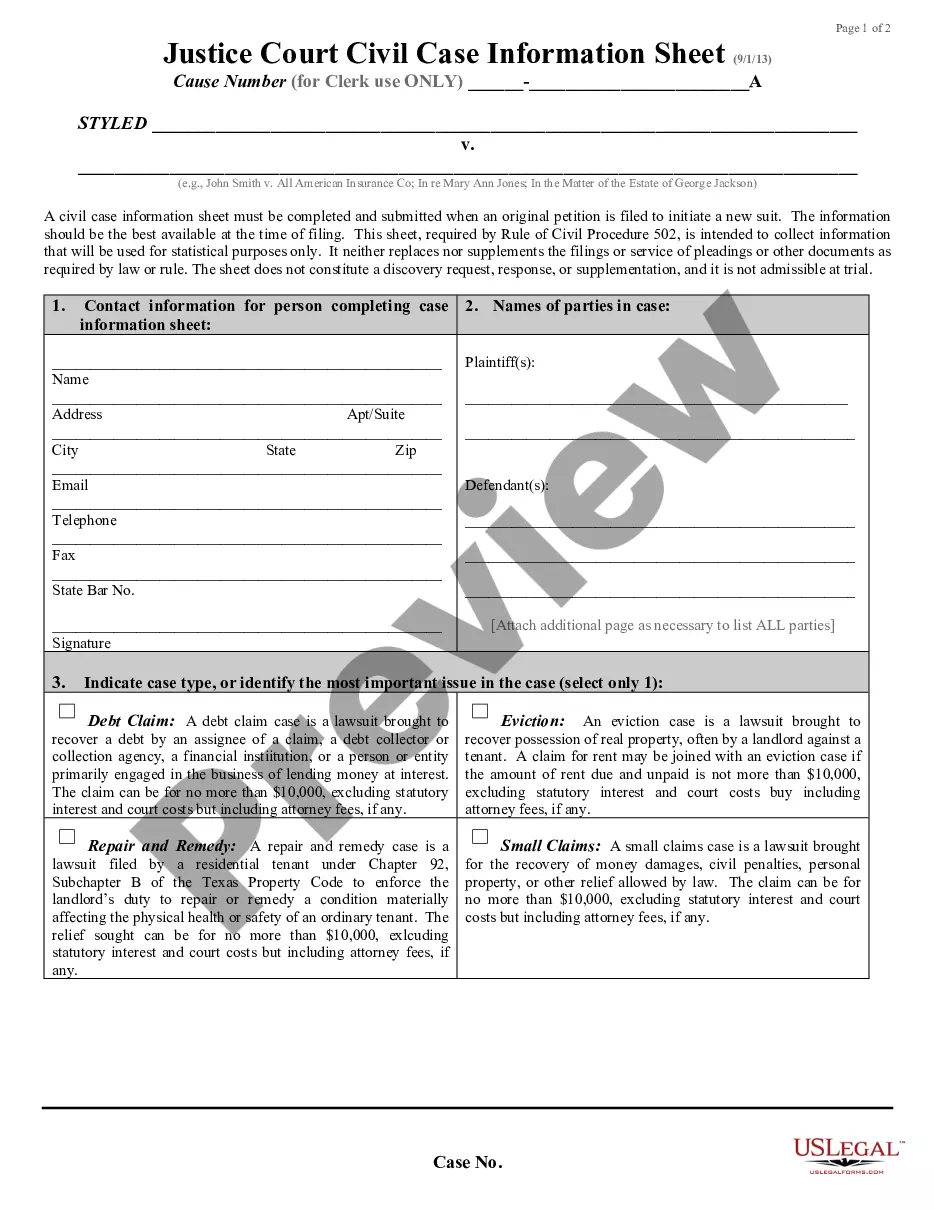


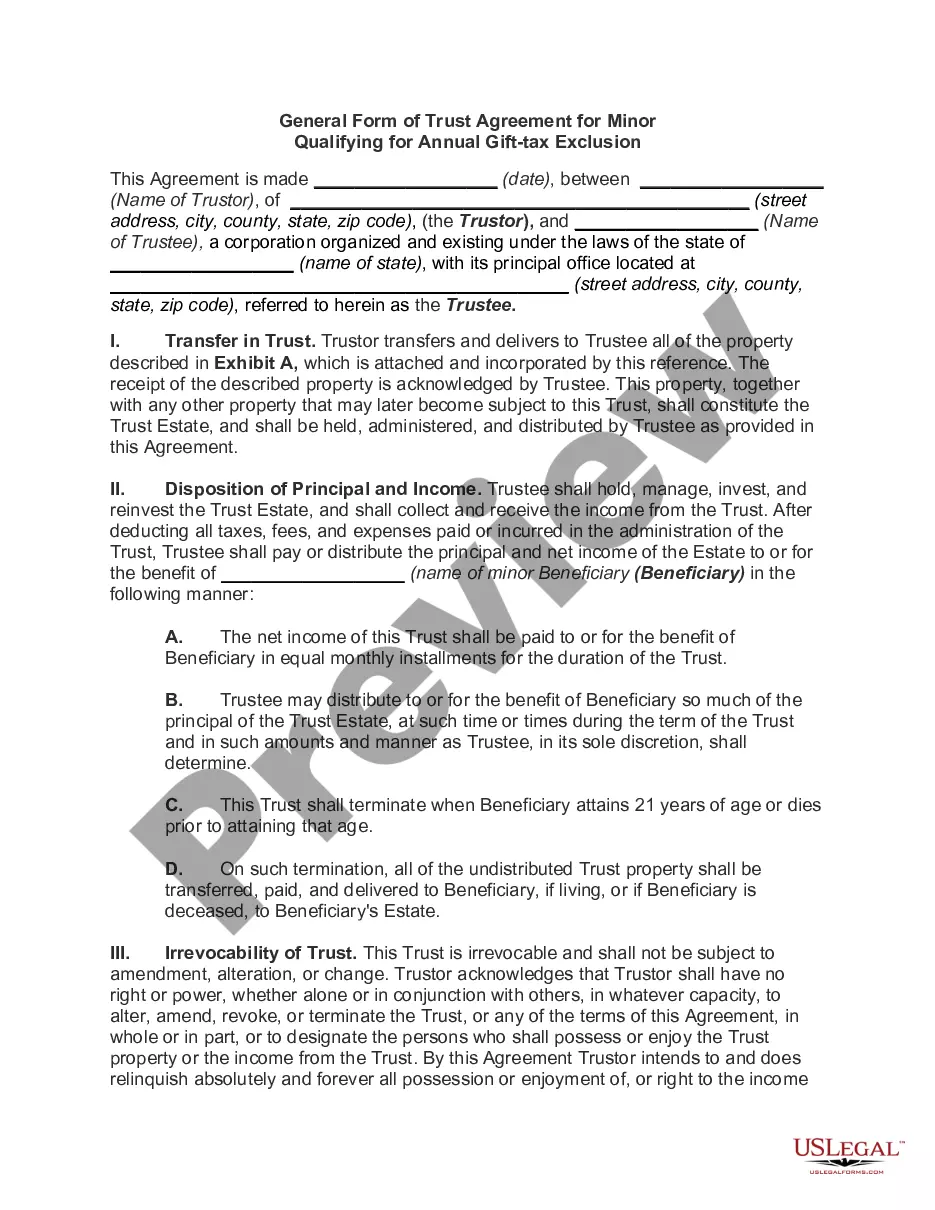

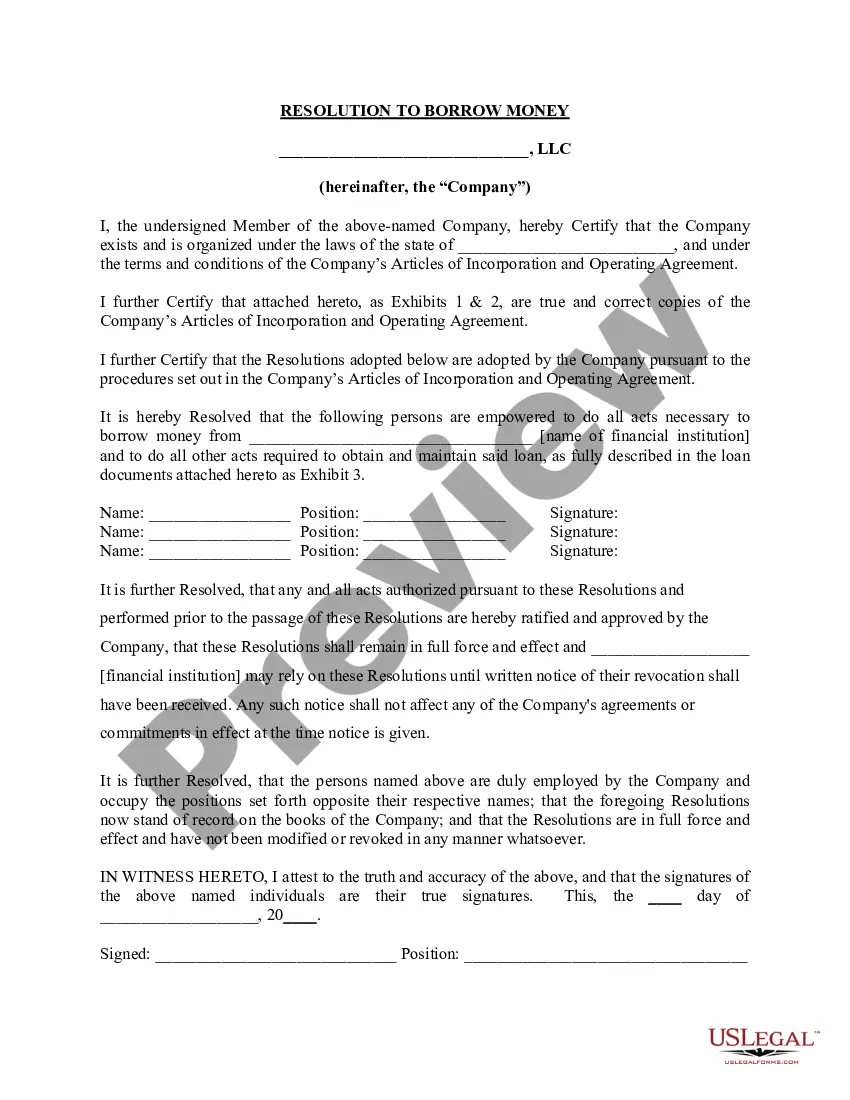
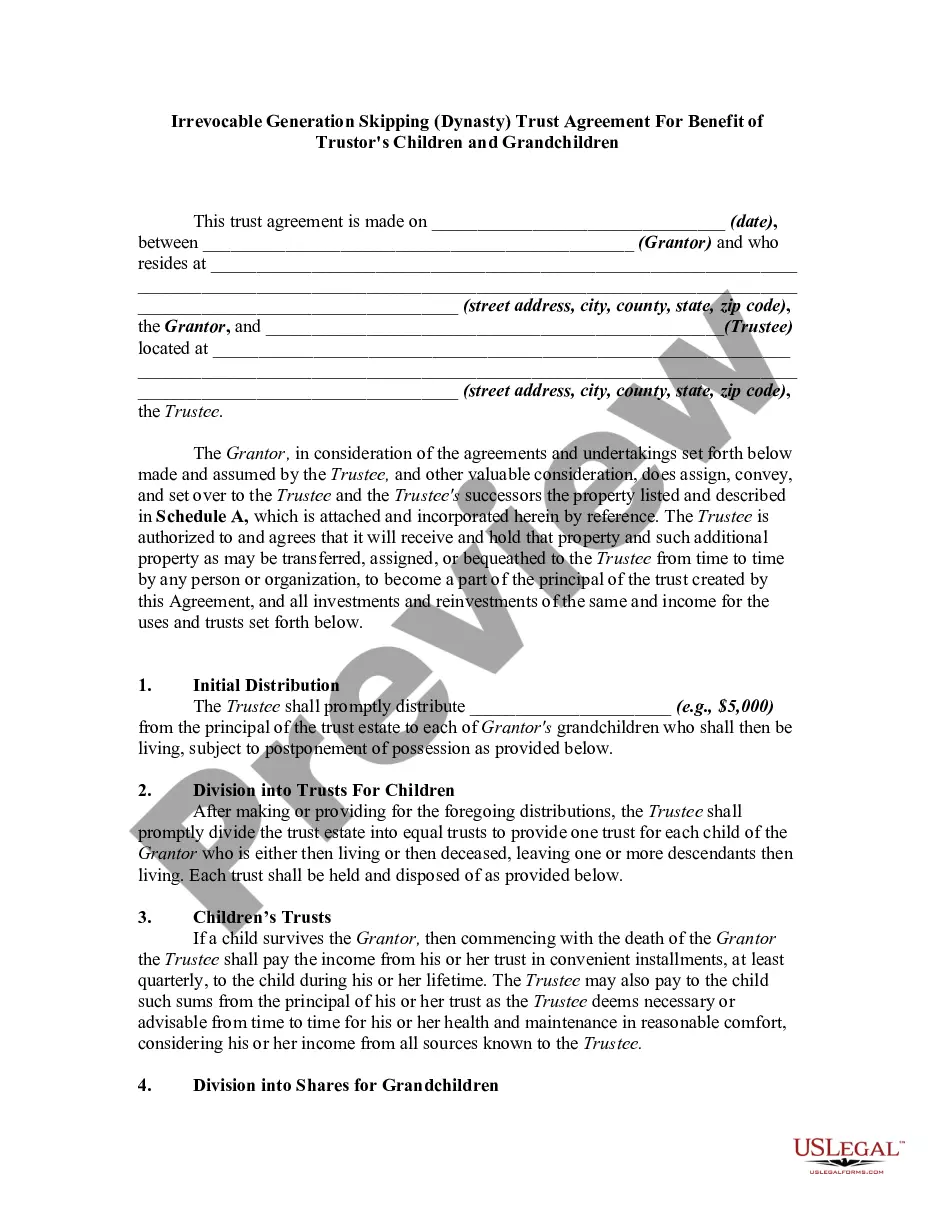
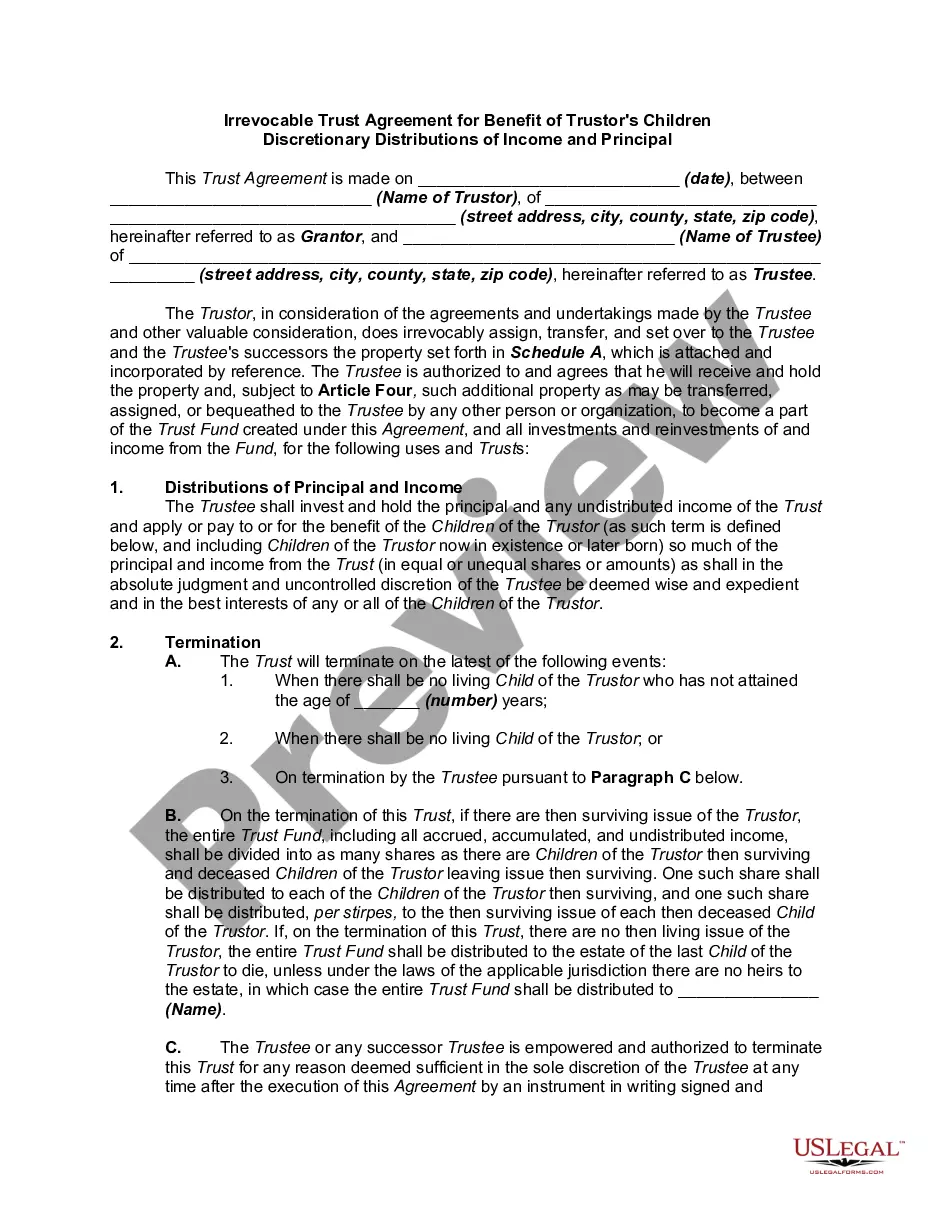
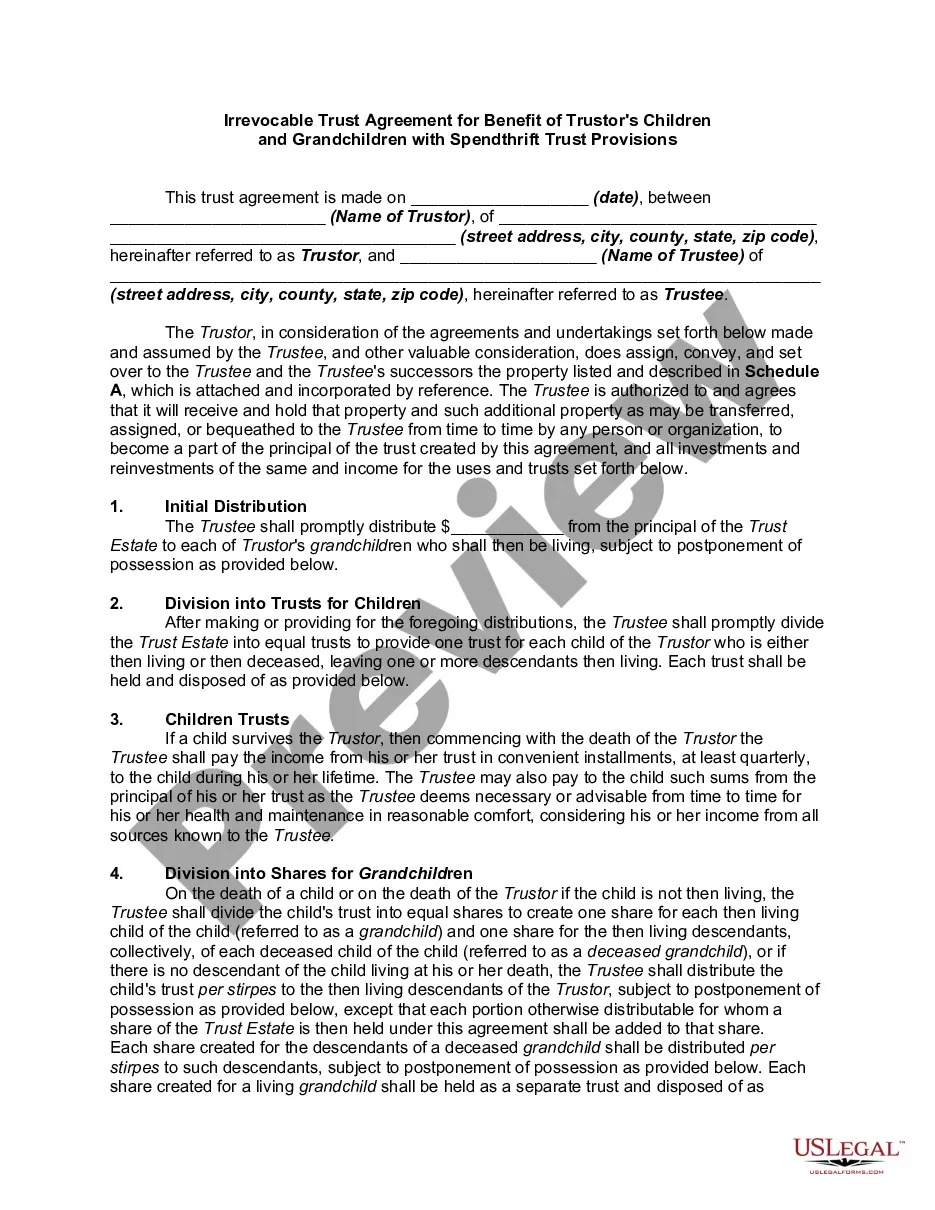
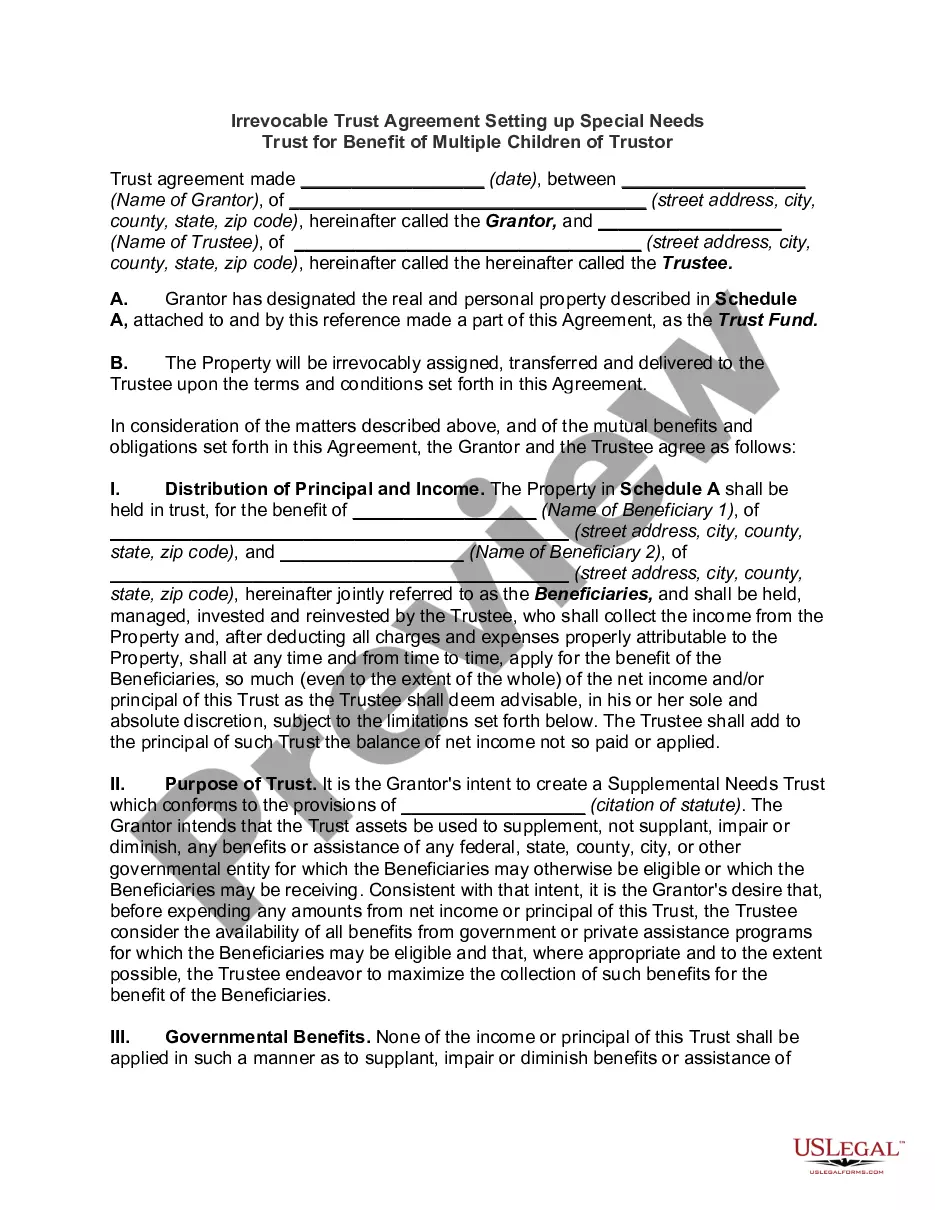
How to fill out Irrevocable Trust Agreement For Benefit Of Trustor's Children And Grandchildren?
- Start by logging into your US Legal Forms account. If you haven’t registered yet, create a new account to access the library.
- Review the available templates for the irrevocable trust agreement. Pay attention to each form's description and preview mode to ensure it meets your requirements.
- If you find discrepancies or additional needs, utilize the Search tab to locate the appropriate documents without hassle.
- Select your desired template and click on the 'Buy Now' button. Choose a subscription plan that fits your preferences, then register your account if you haven't done so already.
- Proceed with the purchase by entering your credit card information or selecting PayPal for payment. Don't forget to check the validity of your subscription before finalizing the purchase.
- After payment, download the document directly to your device for easy access and future revisions. You can also find your document in the 'My Forms' section of your profile whenever needed.
By following these straightforward steps, you can efficiently secure an irrevocable trust agreement tailored for non-residents. US Legal Forms not only streamlines the process but also provides access to premium legal resources and expert assistance.
Start taking charge of your financial future today—visit US Legal Forms to get started!
Form popularity
FAQ
Yes, a non US citizen can be a beneficiary of a trust. This includes both irrevocable and revocable trusts. It is important to ensure compliance with U.S. tax laws, which can be complex for non-residents. Utilizing an irrevocable trust agreement benefit for non residents can allow international beneficiaries to enjoy the protections and advantages of the trust while minimizing potential tax liabilities.
One major downside to an irrevocable trust is that once set up, you cannot easily change or revoke it. This can limit your control over your assets. Additionally, you may face gift tax implications at the time of transfer. However, understanding the irrevocable trust agreement benefit for non residents can help mitigate these concerns through proper planning.
Yes, an irrevocable trust can provide protection for your assets from nursing home costs. When you establish an irrevocable trust agreement benefit for non residents, you typically do not maintain control over the assets, which can help shield them from being used for care expenses. This strategy is vital for individuals seeking to preserve wealth for their heirs while managing potential healthcare costs.
The 5 year rule for irrevocable trusts refers to the timeframe in which assets transferred into the trust may be considered for Medicaid eligibility. Under this rule, any assets placed in the trust within five years of applying for Medicaid may affect your eligibility for benefits. Understanding this period is essential for those considering the irrevocable trust agreement benefit for non residents as they navigate healthcare planning.
Various individuals can benefit from an irrevocable trust, including family members, friends, and even charitable organizations. An irrevocable trust agreement benefit for non residents is particularly significant, as it allows those who do not reside in the U.S. to protect their assets and plan for future generations. This strategic planning aids in wealth preservation and efficient asset transfer.
Yes, a non-citizen can be a beneficiary of a trust. In fact, an irrevocable trust agreement benefit for non residents allows individuals from abroad to enjoy the advantages of estate planning. This inclusion provides flexibility, as non-citizens can receive distributions without jeopardizing their immigration status.
The new rule on irrevocable trusts emphasizes the importance of proper documentation and clarity in trust agreements. This is crucial because an irrevocable trust agreement benefit for non residents often involves complex regulations regarding estate taxes and asset protection. When setting up your trust, ensure you comply with current laws to maximize its benefits.
If your beneficiary is not a US citizen, it’s crucial to consider the specific implications of your trust. Non-citizens may have different tax liabilities or benefits when receiving trust assets. Consulting a legal expert can help you navigate these complexities while maximizing the irrevocable trust agreement benefit for non-residents. Platforms like USLegalForms can guide you through the process to ensure your trust functions as intended, regardless of your beneficiaries' citizenship status.
One of the biggest mistakes parents make is failing to update the trust fund as family circumstances change. Life events such as births, deaths, or changes in relationships can affect who should be included as beneficiaries. By regularly reviewing your trust with professionals, especially if you are a non-resident, you can reap the full irrevocable trust agreement benefit for non-residents, ensuring your wishes are respected.
Filling out an irrevocable trust requires you to provide essential information about your assets and beneficiaries. Begin by identifying the grantor, who creates the trust, and listing the assets you wish to transfer into it. USLegalForms offers templates that simplify this process and emphasize the irrevocable trust agreement benefit for non-residents, making your trust documentation both accessible and efficient.