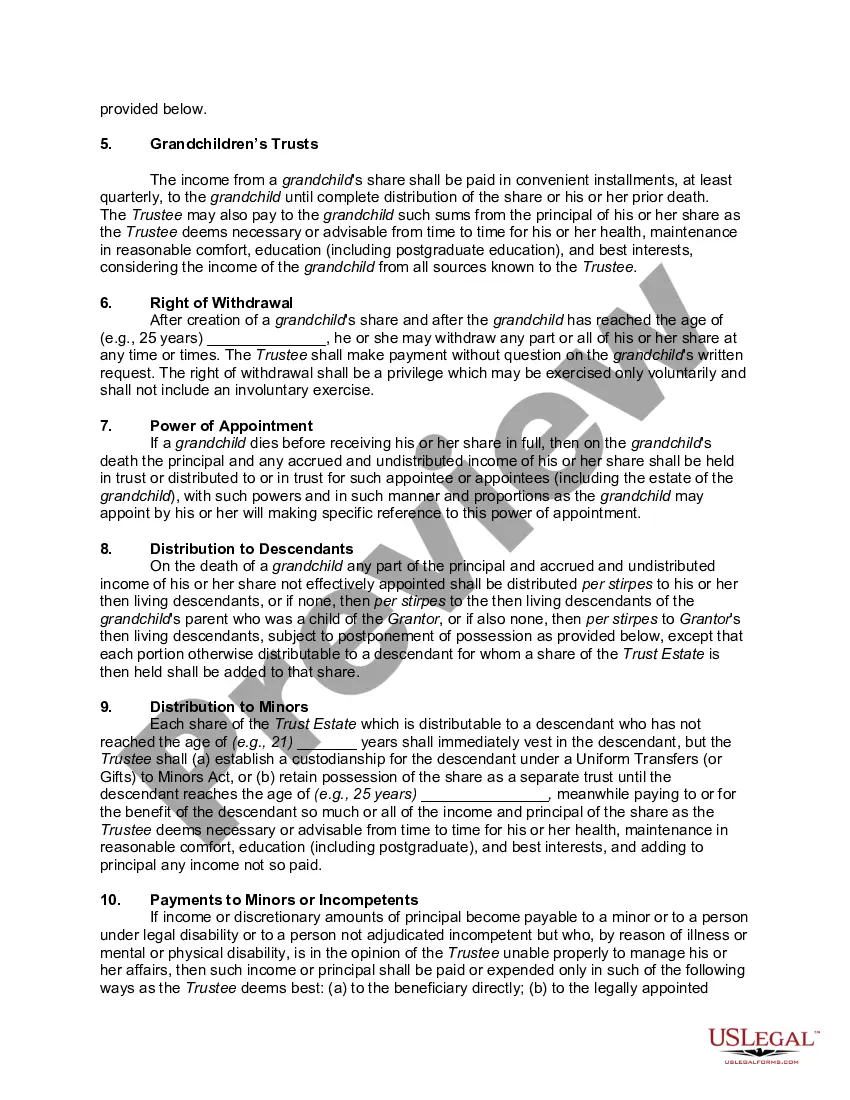
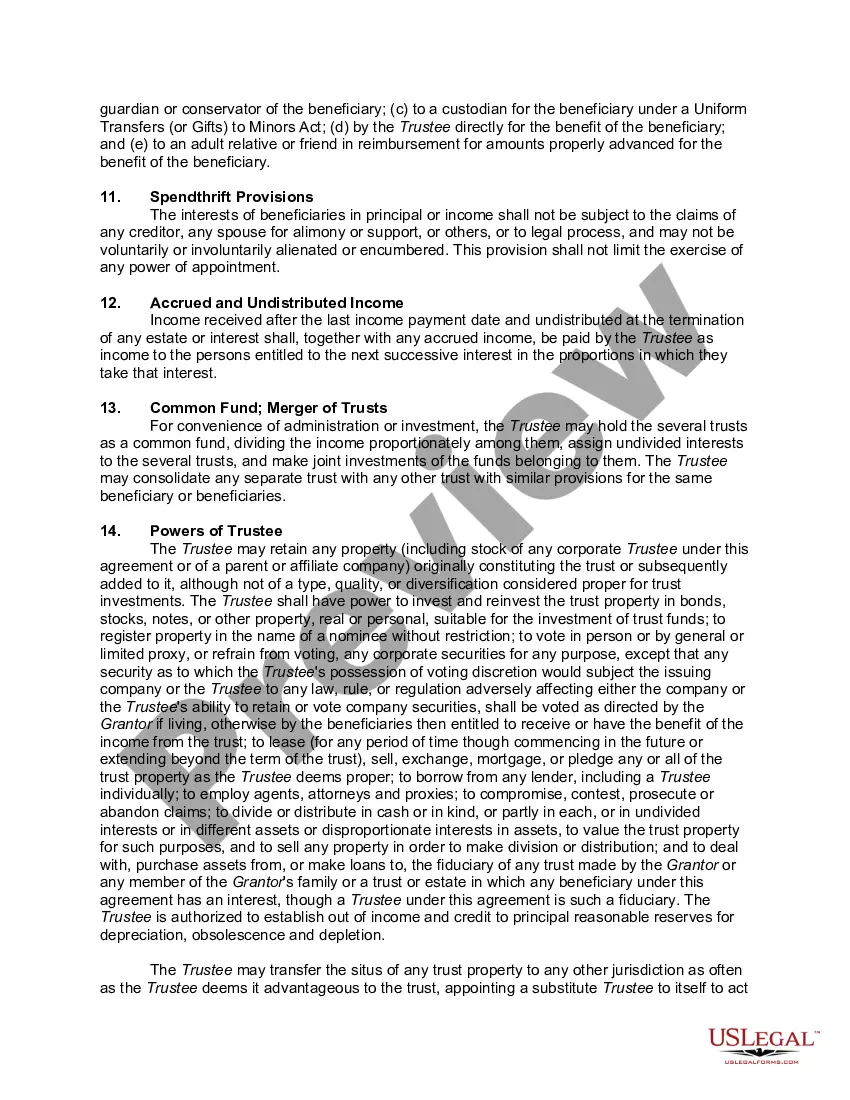
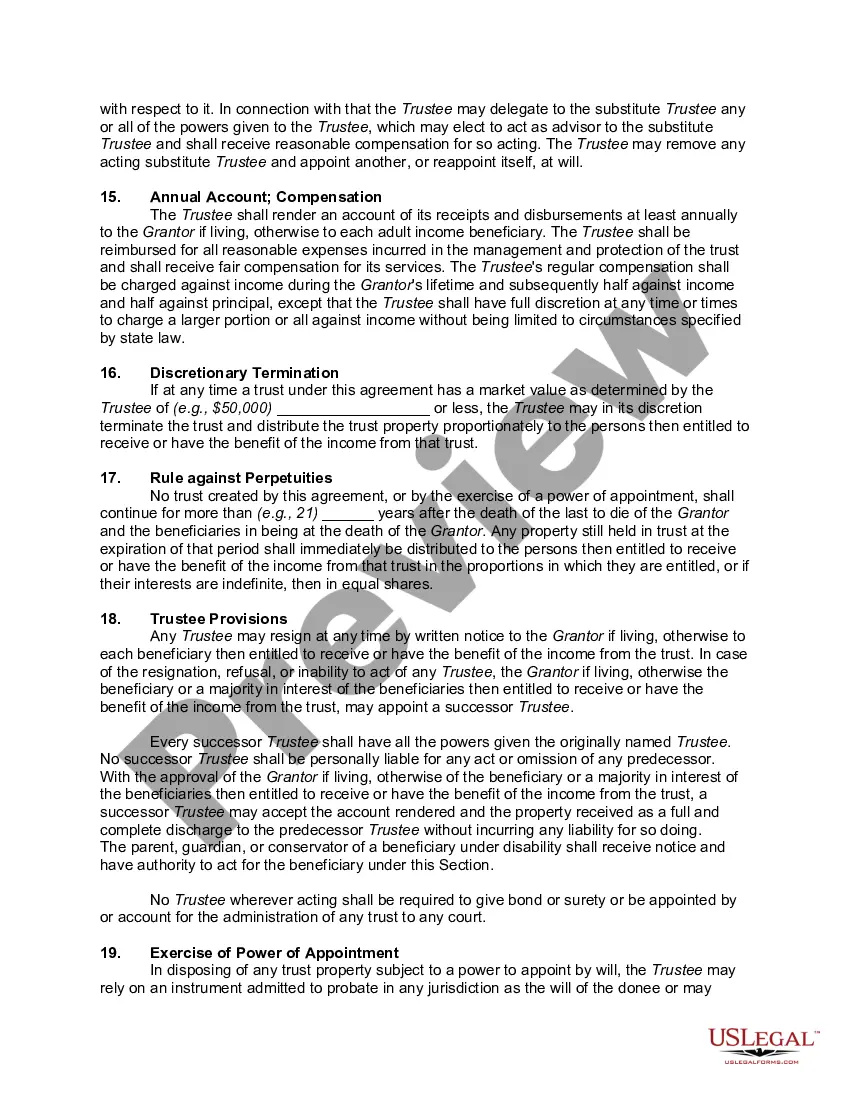
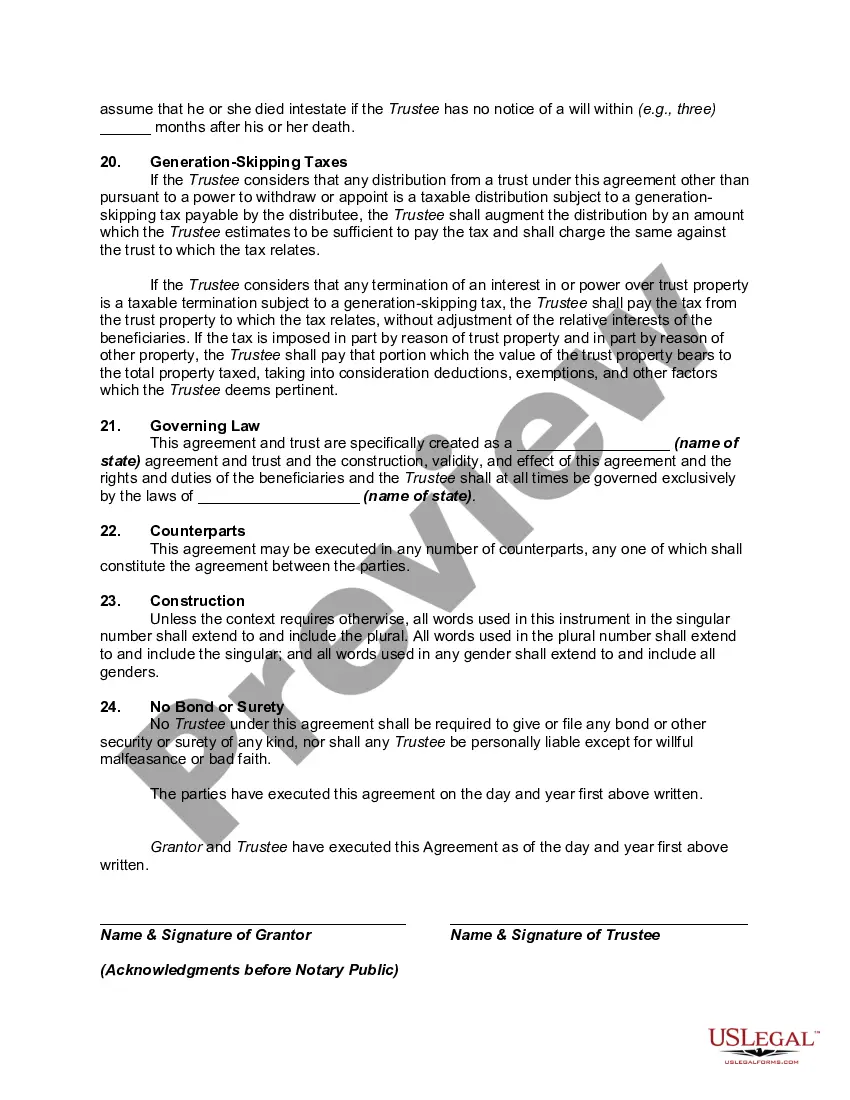
Grantor Trust
Description


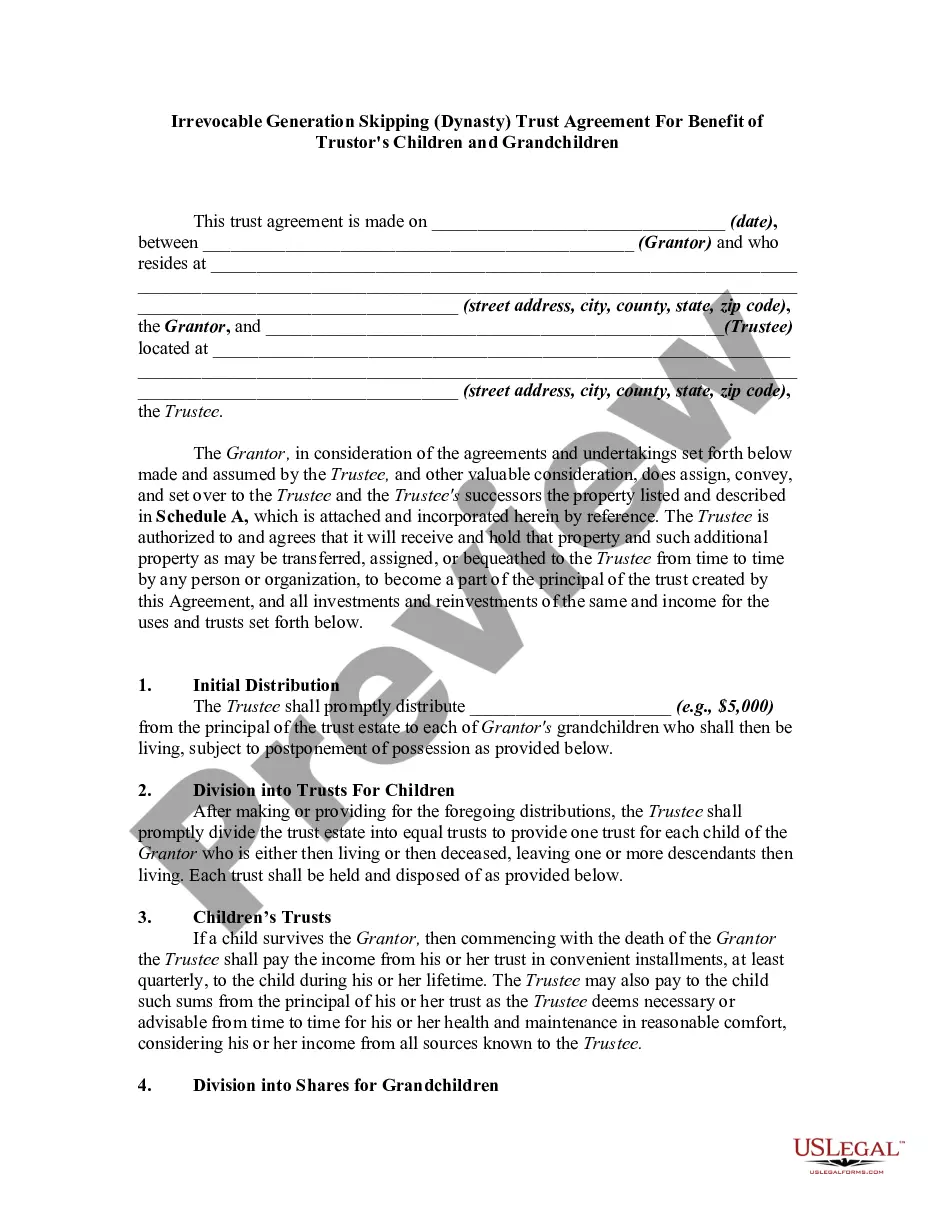


Get your form ready online
Our built-in tools help you complete, sign, share, and store your documents in one place.
Make edits, fill in missing information, and update formatting in US Legal Forms—just like you would in MS Word.
Download a copy, print it, send it by email, or mail it via USPS—whatever works best for your next step.
Sign and collect signatures with our SignNow integration. Send to multiple recipients, set reminders, and more. Go Premium to unlock E-Sign.
If this form requires notarization, complete it online through a secure video call—no need to meet a notary in person or wait for an appointment.
We protect your documents and personal data by following strict security and privacy standards.

Make edits, fill in missing information, and update formatting in US Legal Forms—just like you would in MS Word.

Download a copy, print it, send it by email, or mail it via USPS—whatever works best for your next step.

Sign and collect signatures with our SignNow integration. Send to multiple recipients, set reminders, and more. Go Premium to unlock E-Sign.

If this form requires notarization, complete it online through a secure video call—no need to meet a notary in person or wait for an appointment.

We protect your documents and personal data by following strict security and privacy standards.
Looking for another form?


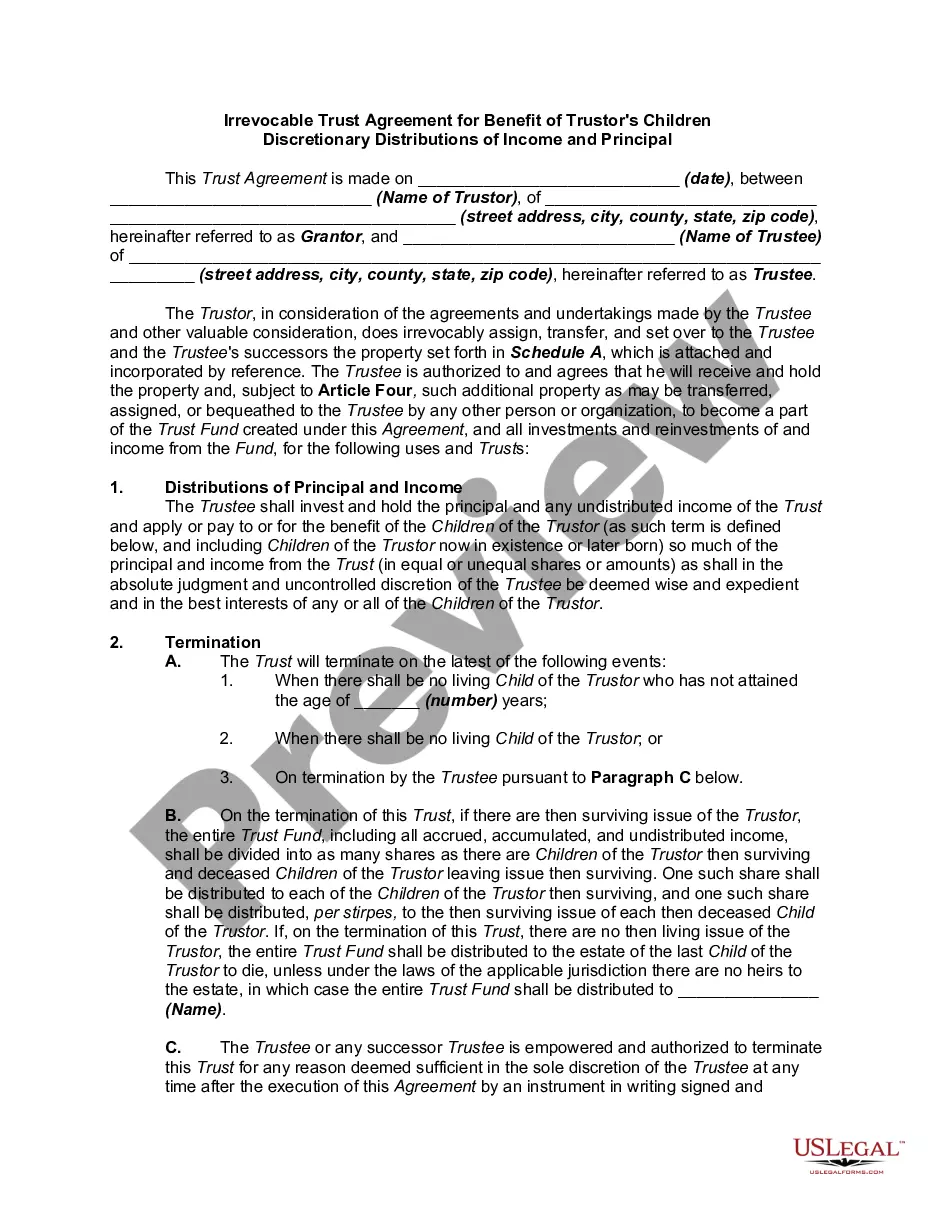
How to fill out Irrevocable Trust Agreement For Benefit Of Trustor's Children And Grandchildren?
- If you're a returning user, log in to your account and select the required form template. Click the Download button once verified that your subscription is active; if not, remember to renew it to continue your access.
- For first-time users, start by browsing the Preview mode and description of available forms. Confirm you've selected the correct one that meets your specific needs and complies with your local jurisdiction.
- If necessary, search for alternative templates using the Search tab at the top. If you find something more aligned with your needs, select it to move forward.
- Purchase the document by clicking the Buy Now button and selecting your subscription plan. You will need to register for an account for full access to the library.
- Complete your purchase by entering your payment information using your credit card or PayPal account.
- Finally, download the form to your device. You can complete it at your convenience and access it anytime from the My Forms section in your profile.
In conclusion, creating a grantor trust becomes a hassle-free process with US Legal Forms, renowned for its vast collection of legal forms and expert assistance in form completion.
Get started now to protect your assets and ensure your peace of mind!
Form popularity
FAQ
A grantor trust does not have to file a tax return during the grantor's lifetime since the income is reported on your individual tax return. Still, it's essential to monitor the trust’s status, as legal changes could alter filing needs. If the trust turns irrevocable, the requirements may shift, and you would need to file IRS Form 1041. Consulting a tax professional can help clarify your obligations.
Generally, you do not need to file a separate tax return for a grantor trust while you are alive. Instead, any income generated by the trust is reported on your personal tax return. However, if the trust becomes irrevocable or if you pass away, different rules may apply regarding filing requirements.
Setting up a grantor trust involves choosing a title for the trust, designating beneficiaries, and transferring assets into it. You can create this trust through a legal document, typically prepared by an attorney knowledgeable in estate planning. Platforms like US Legal Forms can provide you with the necessary templates and guidance to streamline the process. Once the trust is established, remember to amend your estate plan as needed.
Failing to file a required trust tax return can lead to penalties and interest charges from the IRS. If the trust is classified as a separate entity and needed to file, it may face severe consequences. Moreover, the IRS could scrutinize the trust's financial activities more closely, causing further complications. It's always best to comply with these requirements to ensure peace of mind.
To report income from an irrevocable grantor trust, you will need to file IRS Form 1041 if required. This form will detail the income, deductions, and credits associated with the trust. It's important to keep accurate records of the trust’s activities, as they may affect tax liability. Consulting with a tax advisor can help you navigate this process efficiently.
Generally, a tax return does not need to be filed for a grantor trust while the grantor is alive. You, as the grantor, will include the trust’s income on your personal tax return instead. However, if the trust becomes irrevocable after your passing, it may then be required to file its own tax return using IRS Form 1041.
In a grantor trust, the grantor is responsible for reporting the income on their personal tax return. This income is included in the grantor’s adjusted gross income, making it essential for accurate tax reporting. Since the grantor and the trust are treated as one for tax purposes, you will report all income, deductions, and credits directly on your return.
Typically, you do not need an Employer Identification Number (EIN) for a grantor trust. The Internal Revenue Service (IRS) treats the grantor and the trust as the same entity for tax purposes. This means you can use your Social Security Number instead. However, certain circumstances may require an EIN, so it's wise to consult a tax professional.
A common example of a grantor trust is a revocable living trust. This type of trust allows the grantor to retain control over the assets during their lifetime, making it flexible for adjustments as life circumstances change. Upon the grantor's death, the assets transfer to designated beneficiaries without going through probate. Using resources like USLegalForms can help you create your own grantor trust and tailor it to meet your personal needs.
Yes, you can be both the grantor and trustee of a grantor trust. This arrangement allows you to maintain control over the trust assets while benefiting from the trust’s legal framework. However, consider speaking with a trust attorney to ensure that it aligns with your estate planning goals. Balancing these roles effectively can help achieve your desired outcomes.