Agreement Irrevocable Trust With A Trustee
Description


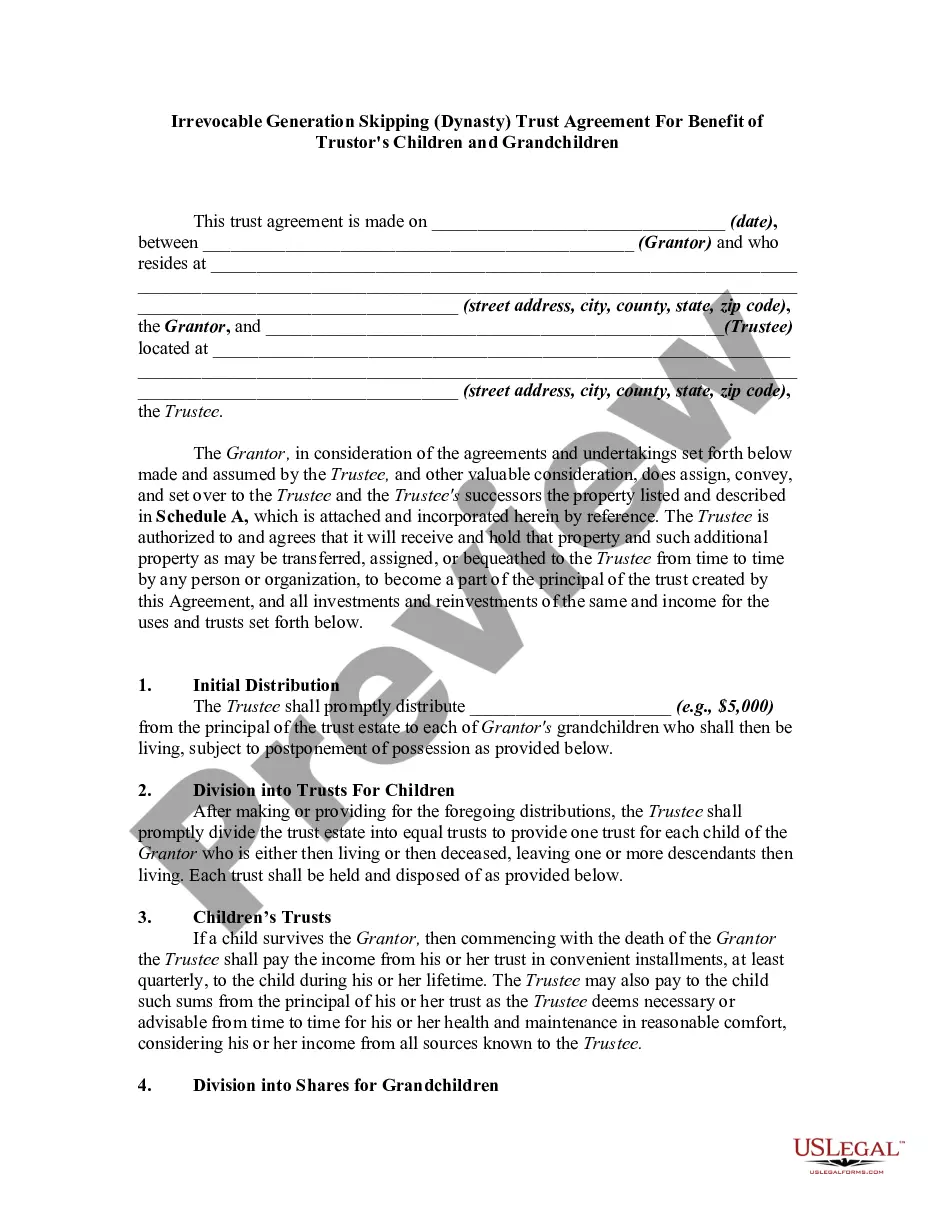
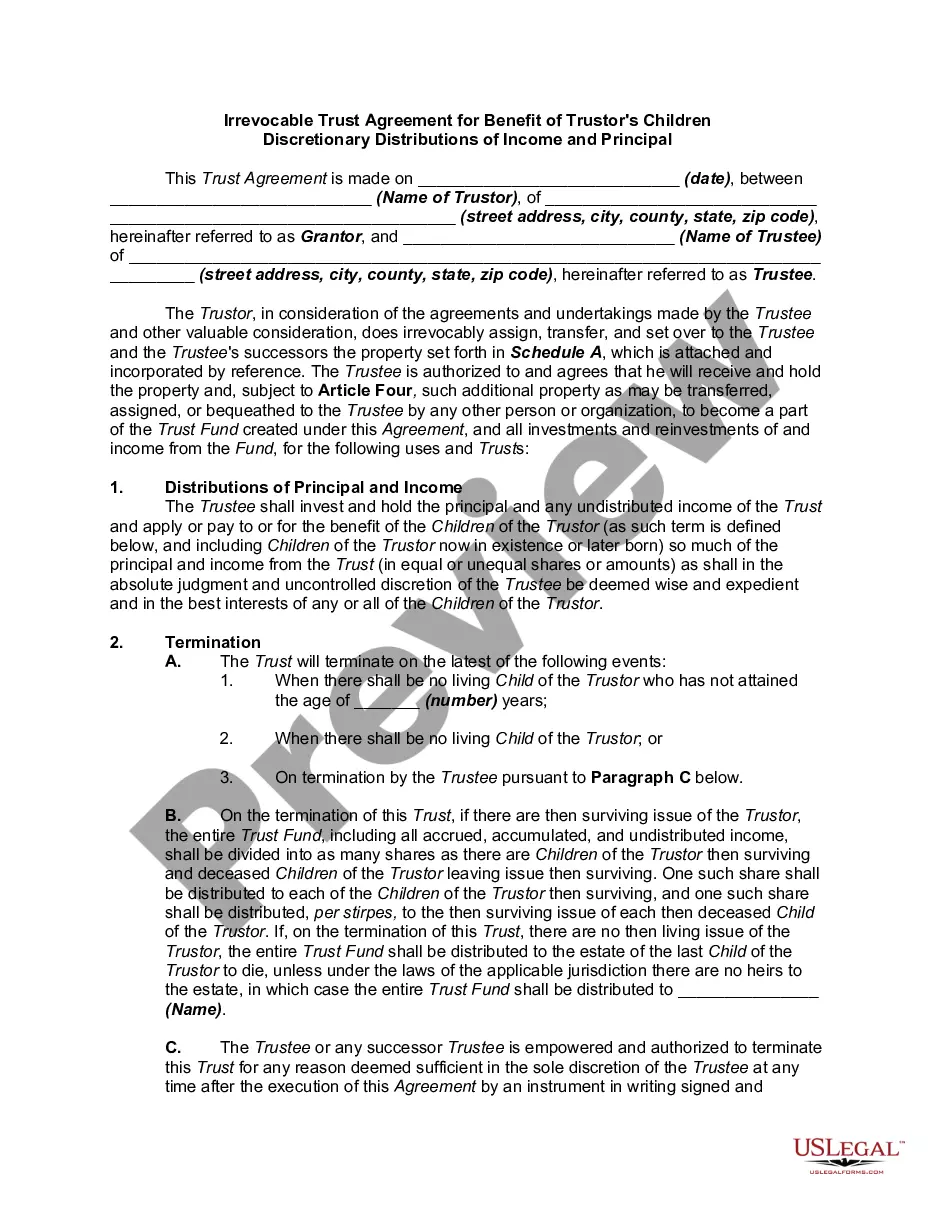


Get your form ready online
Our built-in tools help you complete, sign, share, and store your documents in one place.
Make edits, fill in missing information, and update formatting in US Legal Forms—just like you would in MS Word.
Download a copy, print it, send it by email, or mail it via USPS—whatever works best for your next step.
Sign and collect signatures with our SignNow integration. Send to multiple recipients, set reminders, and more. Go Premium to unlock E-Sign.
If this form requires notarization, complete it online through a secure video call—no need to meet a notary in person or wait for an appointment.
We protect your documents and personal data by following strict security and privacy standards.

Make edits, fill in missing information, and update formatting in US Legal Forms—just like you would in MS Word.

Download a copy, print it, send it by email, or mail it via USPS—whatever works best for your next step.

Sign and collect signatures with our SignNow integration. Send to multiple recipients, set reminders, and more. Go Premium to unlock E-Sign.

If this form requires notarization, complete it online through a secure video call—no need to meet a notary in person or wait for an appointment.

We protect your documents and personal data by following strict security and privacy standards.
Looking for another form?









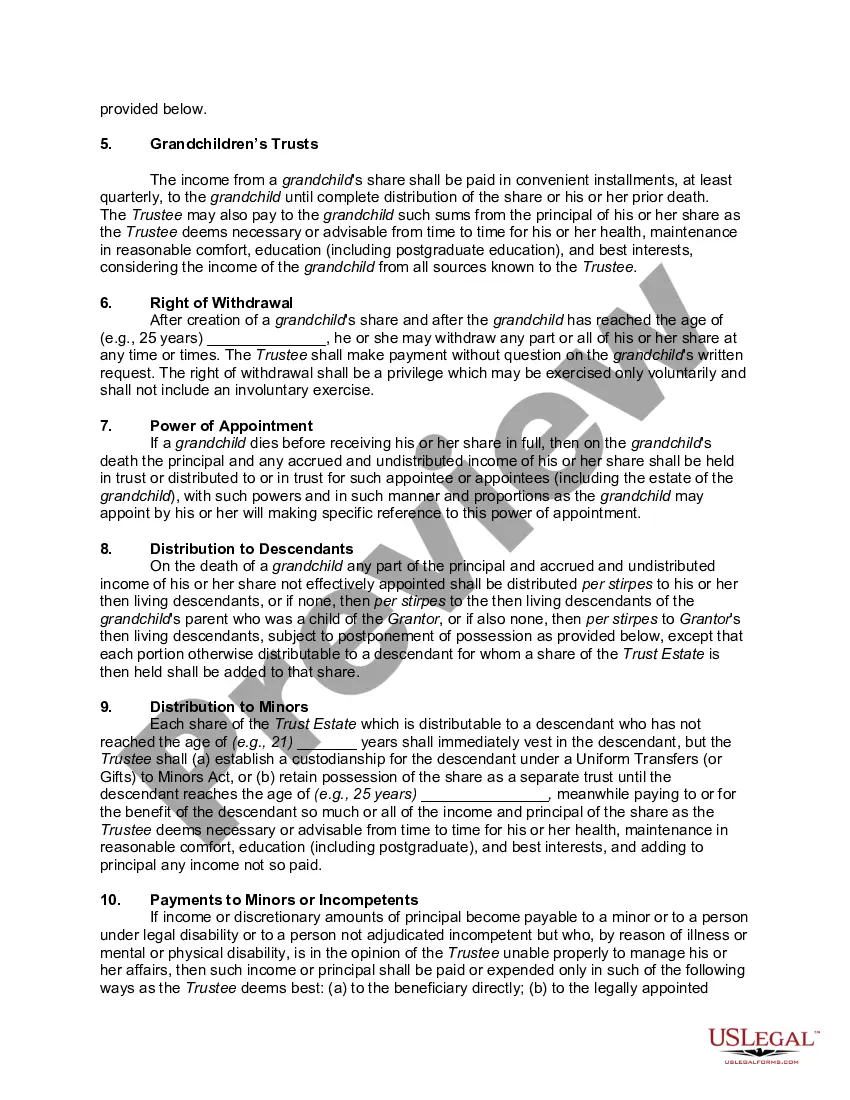
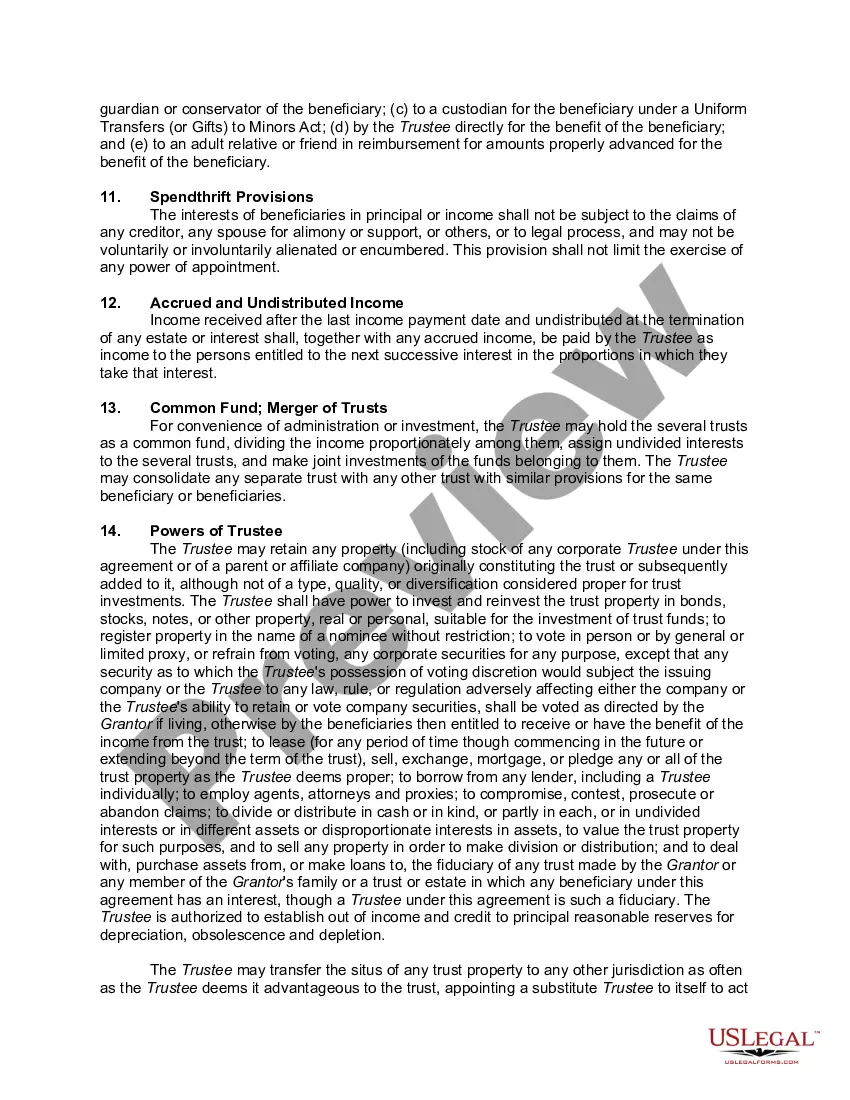
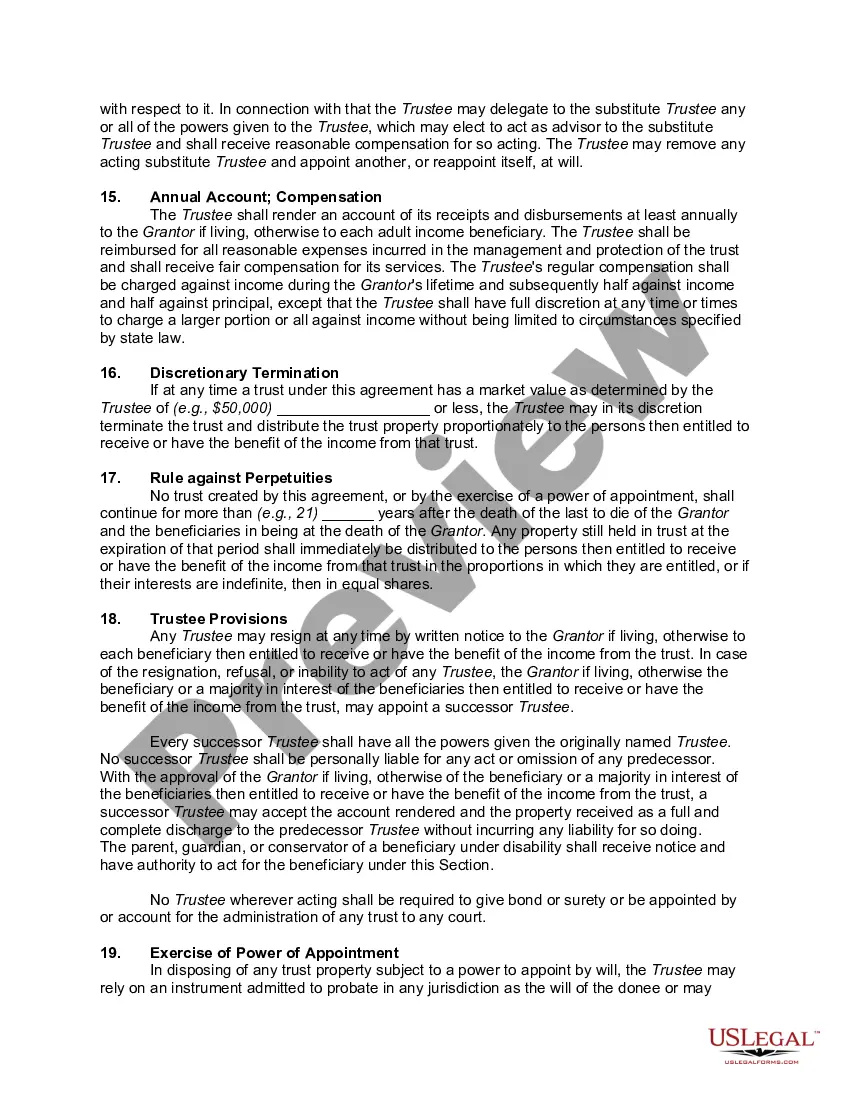
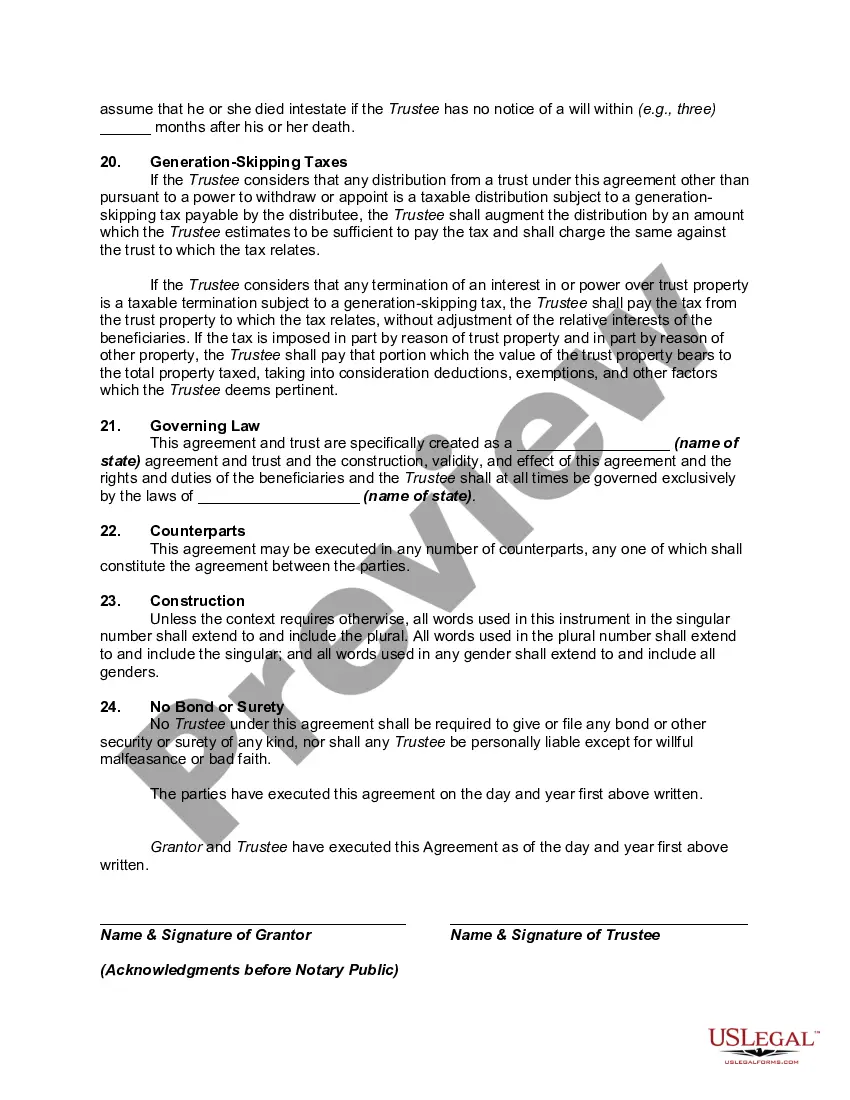
How to fill out Irrevocable Trust Agreement For Benefit Of Trustor's Children And Grandchildren?
- Log in to your US Legal Forms account. If you're a returning user, ensure your subscription remains active by clicking the Download button to retrieve your template.
- For new users, start by previewing the legal forms available. Choose one that aligns with your specific needs and complies with your local jurisdiction.
- If necessary, utilize the search feature to find alternative templates. Make sure that the selected form meets all your requirements before proceeding.
- Purchase the document by clicking the Buy Now button and selecting your preferred subscription plan. Registration is required to access the library.
- Complete your purchase by entering your payment details via credit card or PayPal to gain full access to the documents.
- Finally, download the selected form onto your device. You can revisit it anytime through the My Forms section in your profile.
In conclusion, US Legal Forms simplifies the process of creating legal documentation, ensuring that you have the necessary tools at your fingertips. With an extensive library of over 85,000 editable forms, you can confidently draft your agreement irrevocable trust with a trustee.
Get started today by visiting US Legal Forms and streamline your legal processes!
Form popularity
FAQ
To write an effective irrevocable trust document, begin by outlining your objectives and the assets you wish to include. Using a well-structured template or platform like US Legal Forms can simplify this process significantly. Clearly define the roles of trustees and beneficiaries within the document, and ensure compliance with state laws. Consulting a legal professional can further enhance the document's validity and effectiveness.
In a trust agreement, a trustee is the individual or entity chosen to manage the trust. Their responsibilities encompass administering the agreement irrevocable trust with a trustee, ensuring assets are managed in line with the document's terms. The trustee acts on behalf of the beneficiaries and is legally bound to protect the trust's assets. Properly defining this role is essential for smooth trust operations.
Yes, a beneficiary can serve as a trustee in an agreement irrevocable trust with a trustee. This can simplify decision-making and promote trust, as beneficiaries are typically motivated to act in their own best interest. However, it is essential to be aware of potential conflicts of interest that may arise. Maintaining transparency and open communication can help to mitigate these issues.
The trustee's role in an agreement irrevocable trust with a trustee is multifaceted. They are responsible for executing the terms of the trust, managing its assets, and ensuring compliance with legal obligations. Additionally, the trustee acts as the point of contact for beneficiaries and keeps them informed about trust activities. Ultimately, their primary goal is to carry out the wishes of the grantor.
Yes, a family member can serve as a trustee for your agreement irrevocable trust with a trustee. This choice can create a sense of trust as they may have a personal stake in the trust’s success. However, it is important to evaluate their skills in managing assets and making impartial decisions. Additionally, clear communication about the trustee’s role can prevent potential conflicts.
A trustee holds significant authority over the agreement irrevocable trust with a trustee. This power includes managing trust assets, making investment decisions, and distributing funds to beneficiaries. However, the trustee must always act in accordance with the trust document and uphold their fiduciary responsibilities. Their primary duty is to serve the best interests of the beneficiaries.
Selecting the right trustee for your agreement irrevocable trust with a trustee is crucial. Ideally, you want someone who is responsible, trustworthy, and knowledgeable about financial matters. Many individuals choose a family member, a trusted friend, or a professional like an attorney or financial advisor. Whichever option you select, ensure they understand their duties and can act in the best interest of the trust.
One downside of an agreement irrevocable trust with a trustee is the loss of control over the assets placed into the trust. Once you create this type of trust, you cannot modify it without the consent of the trustee, which can limit your flexibility if your financial situation changes. Additionally, an irrevocable trust may have tax implications that require careful consideration, so working with a legal expert is advisable. Ultimately, while an agreement irrevocable trust has benefits, it is essential to understand these potential drawbacks.
An agreement irrevocable trust with a trustee is a legal document that establishes a trust that cannot be modified or revoked once created. It outlines the terms under which assets are transferred to the trust and identifies the beneficiaries who will benefit from it. This type of trust offers certain tax advantages and can protect assets from creditors. Understanding these elements can help you make informed decisions about estate planning.
Yes, an agreement irrevocable trust with a trustee is crucial for its proper management. The trustee acts as the responsible party who administers the trust according to its terms. This role includes managing trust assets, distributing funds to beneficiaries, and ensuring compliance with legal obligations. Without a trustee, the irrevocable trust cannot operate effectively.