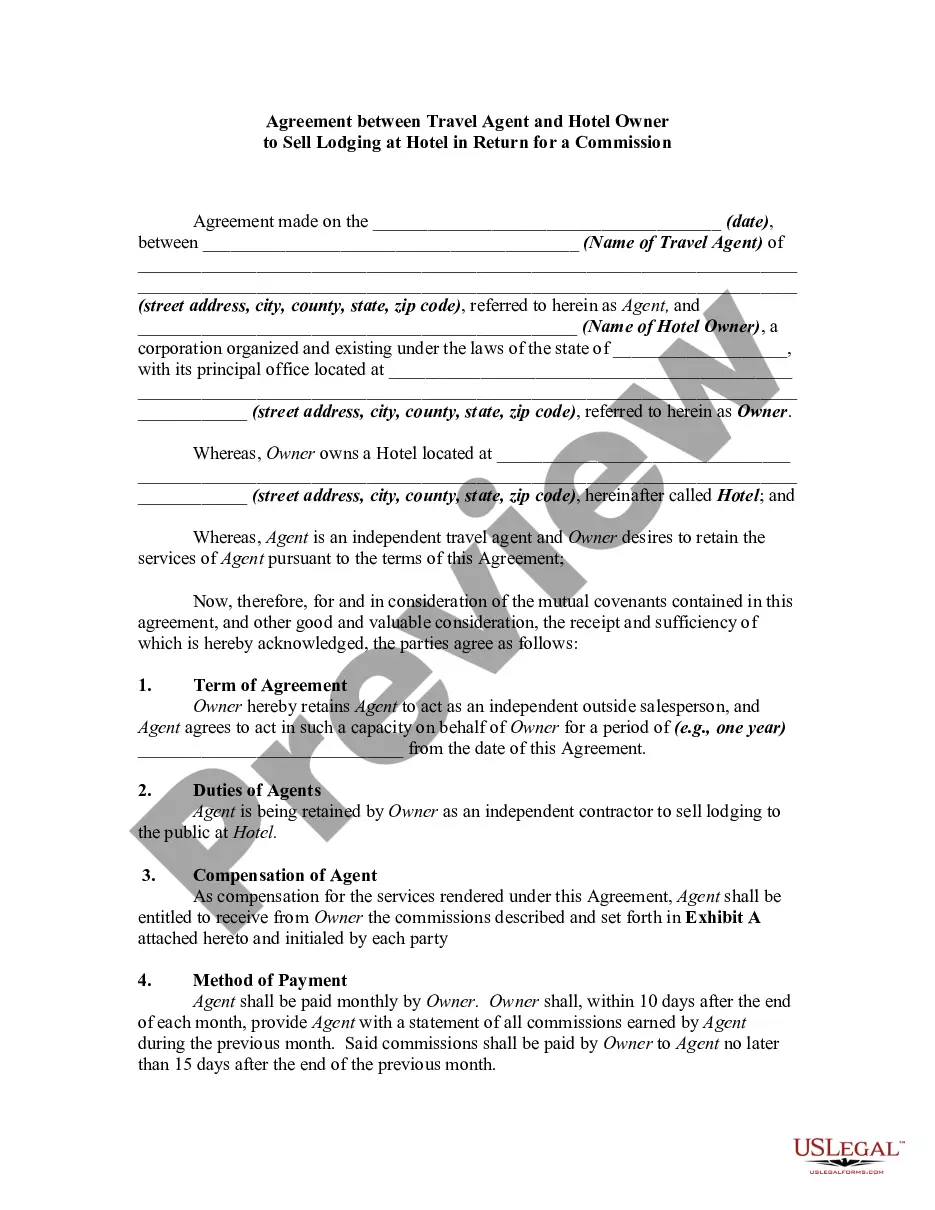
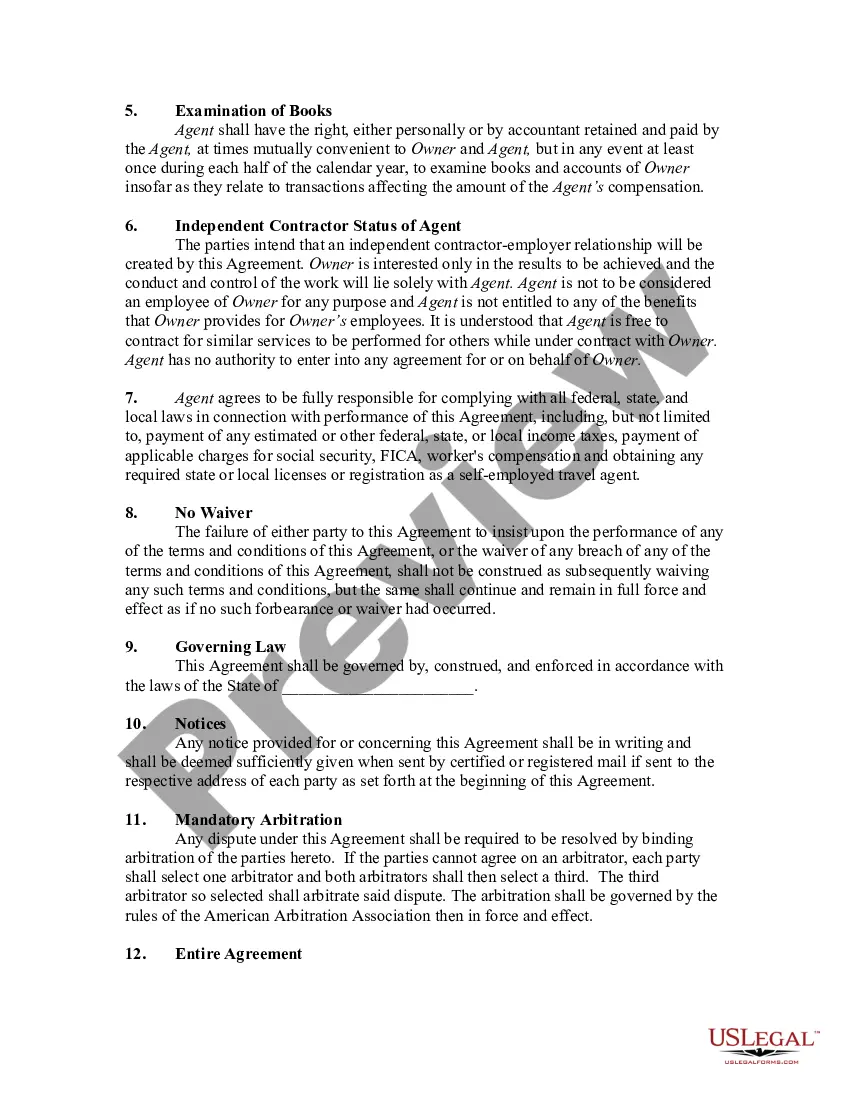
Travel Agent Commission Agreement With Client
Description
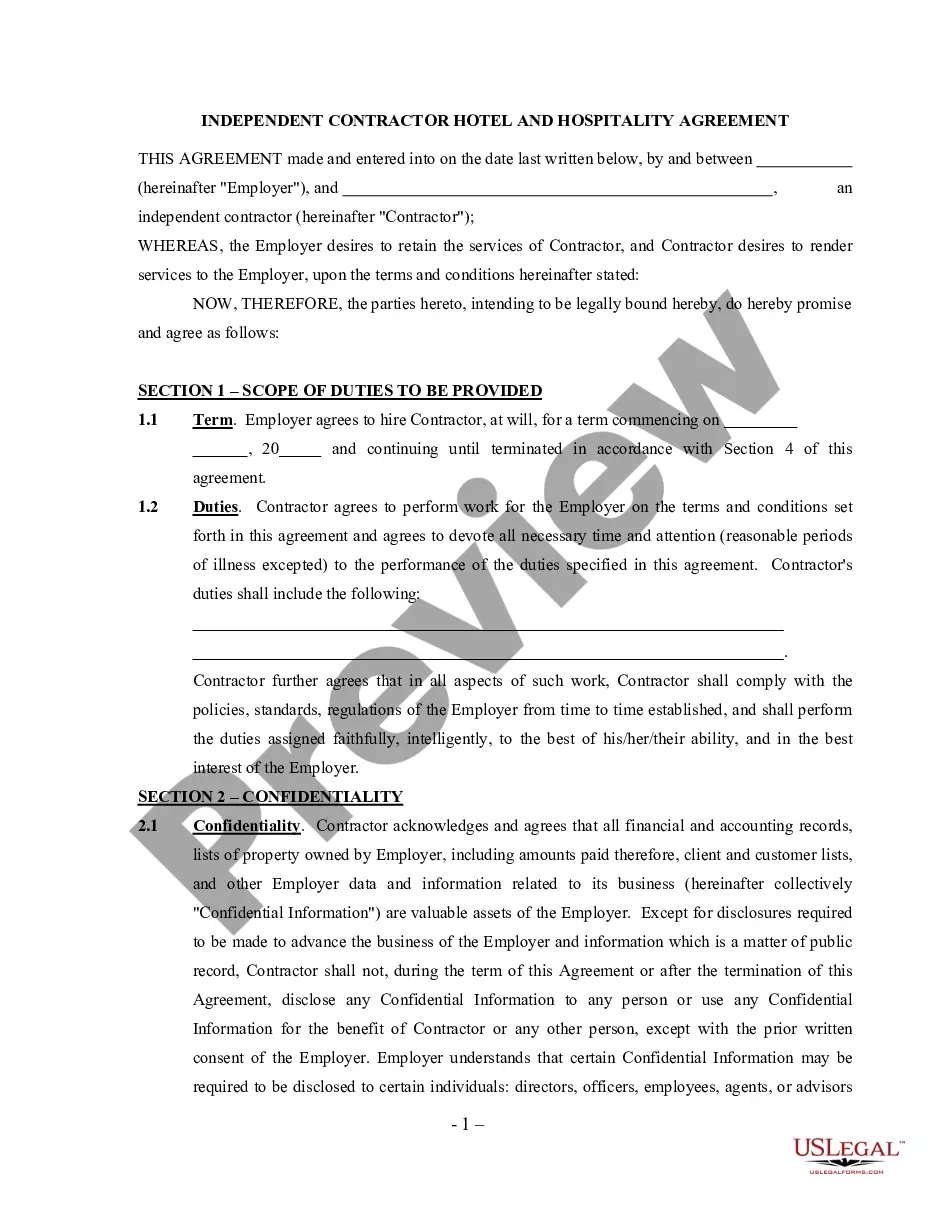
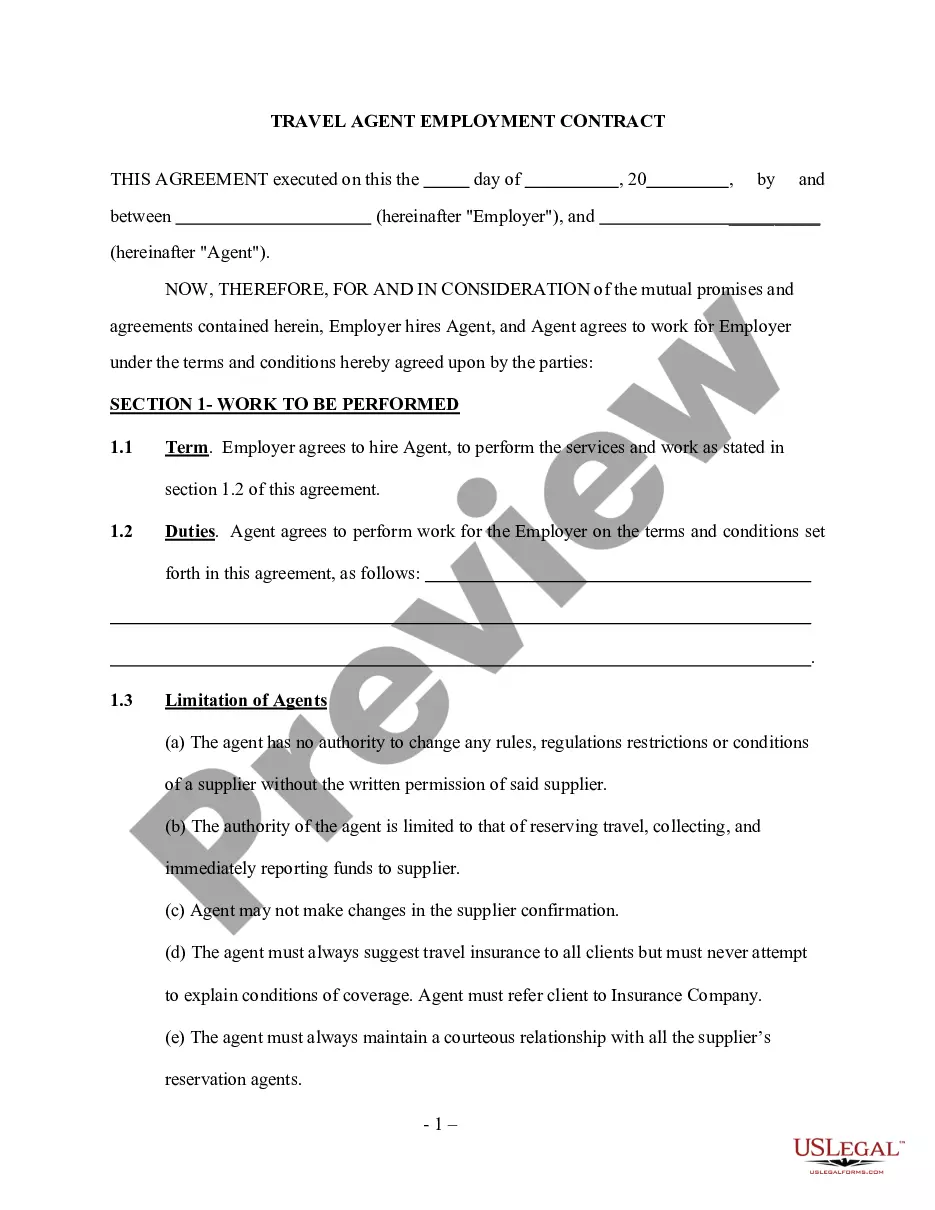

How to fill out Agreement Between Travel Agent And Hotel Owner To Sell Lodging At Hotel In Return For A Commission?
Locating a reliable source for the latest and suitable legal templates is a significant part of navigating bureaucracy.
Selecting the correct legal documents requires accuracy and careful consideration, which is why it’s crucial to obtain samples of the Travel Agent Commission Agreement With Client solely from reputable sources, such as US Legal Forms.
Eliminate the complications that come with your legal paperwork. Investigate the vast library of US Legal Forms to discover legal templates, verify their suitability for your circumstances, and download them instantly.
- Utilize the library navigation or search bar to locate your template.
- Examine the form’s details to verify if it meets the standards of your state and locality.
- Check the form preview, if available, to confirm that the form is indeed what you are looking for.
- If the Travel Agent Commission Agreement With Client does not meet your needs, return to your search and find the correct template.
- Once you are certain about the form’s applicability, download it.
- If you are a registered user, click Log in to verify and access your selected templates in My documents.
- If you don’t possess an account yet, click Buy now to acquire the form.
- Choose the pricing package that aligns with your needs.
- Proceed to the checkout to complete your acquisition.
- Conclude your purchase by selecting a payment method (credit card or PayPal).
- Choose the document format for downloading the Travel Agent Commission Agreement With Client.
- Once you have the form saved on your device, you can modify it using the editor or print it and fill it out by hand.
Form popularity
FAQ
The standard commission for a travel agent generally falls around 10% to 20% for most bookings, depending on the industry norm and specific services involved. In a travel agent commission agreement with client, it is essential to define these rates clearly to ensure everyone is on the same page. Some travel agents also might earn additional bonuses or incentives based on performance. Knowing the standard commission helps clients set realistic expectations for their travel costs.
A typical commission for a travel agent often ranges between 10% to 15% of the total booking value. This percentage can vary based on the type of travel services offered and the agreements made in the travel agent commission agreement with client. For personalized services or high-end travel packages, some agents may negotiate even higher commissions. This system encourages travel agents to deliver exceptional experiences for their clients.
Filling out a commission agreement involves providing specific details such as the names of the parties involved, the commission percentage, and any terms related to payment schedules. You must also ensure that both parties understand their rights and obligations under the agreement. To streamline this process, using platforms like US Legal Forms can guide you in creating a professional travel agent commission agreement with a client that meets legal standards.
Marriott offers a competitive travel agent commission rate that generally falls within the industry standard. Currently, this rate is typically around 10% for most bookings. However, it is essential to check specific promotions or agreements, as they may influence the final rate. A detailed travel agent commission agreement with a client should outline these rates clearly.
The agreement between a travel agency and a client typically outlines the services provided, costs, and payment structures. A travel agent commission agreement with a client specifies how the agent will be compensated for their services. This document should clarify what clients can expect and any limitations or responsibilities involved. Having such an agreement reduces misunderstandings and builds trust between both parties.
To earn commission as a travel agent, you need to build a good relationship with suppliers, such as airlines and hotels. After making a booking, ensure you document all terms in a travel agent commission agreement with your client. This written agreement guarantees that all parties are aware of their responsibilities regarding payment. Consistent communication and service excellence can also help boost your commission opportunities.
A Travel Agency Agreement will make it clear that: The client authorises the travel agent to make bookings on their behalf. The terms and conditions of the travel service provider will apply to all bookings made by the travel agent on behalf of the client, including terms relating to cancellations and refunds.
Discuss the scope of the agreement and the duties of both parties Determine what services or goods are being provided by the commissioning party. Agree on a timeline for services or goods to be provided. Define the duties of the commissioning party. Define the duties of the party receiving the commission.
The commission is paid to the travel agent. For most trips, the vendor pays a commission to the travel agent after the client has traveled. For most cruises, the travel agent is paid their commission after final payment (typically about 60-90 days before the sailing).
Some of these fees are paid by businesses, and others are paid by the vendors themselves. Most of the time, when travel agents take trips, they pay the same way that you do for their personal travel, out of their own pockets, although they may be able to book their own travel and earn a commission.