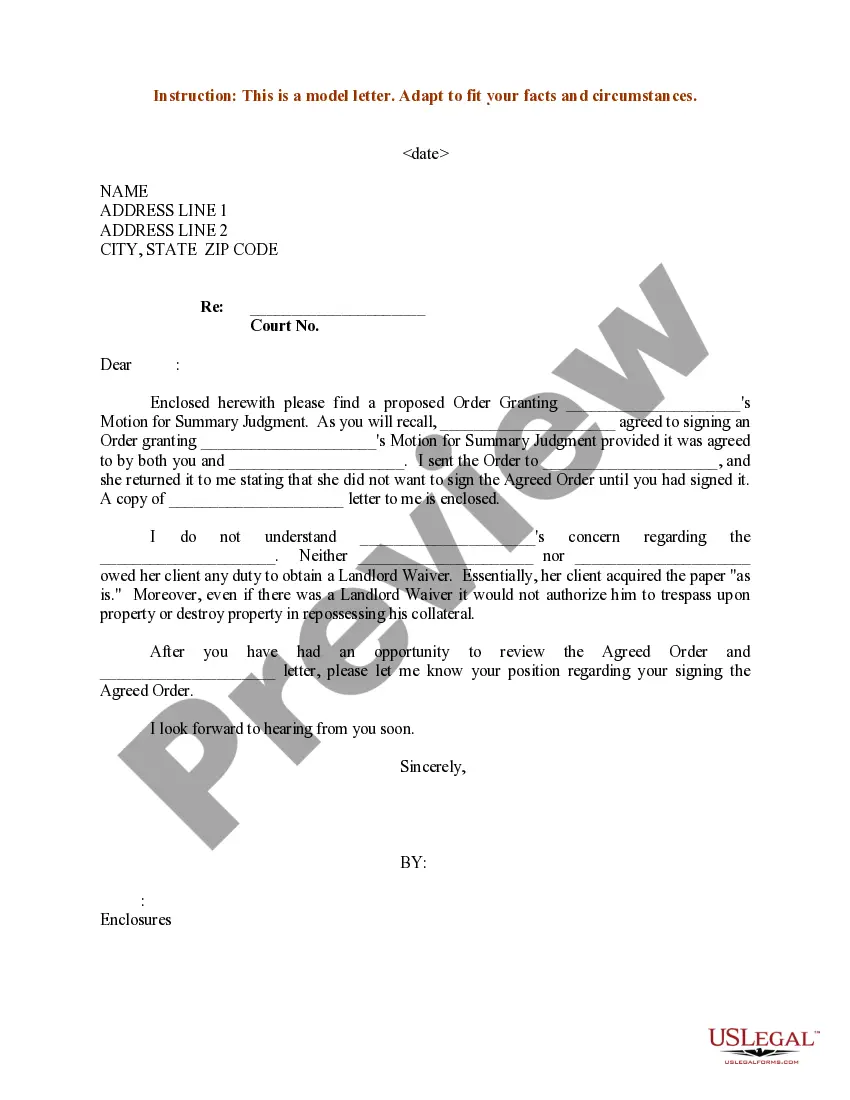
Proposed Order With Alternative Relief
Description
Get your form ready online
Our built-in tools help you complete, sign, share, and store your documents in one place.
Make edits, fill in missing information, and update formatting in US Legal Forms—just like you would in MS Word.
Download a copy, print it, send it by email, or mail it via USPS—whatever works best for your next step.
Sign and collect signatures with our SignNow integration. Send to multiple recipients, set reminders, and more. Go Premium to unlock E-Sign.
If this form requires notarization, complete it online through a secure video call—no need to meet a notary in person or wait for an appointment.
We protect your documents and personal data by following strict security and privacy standards.

Make edits, fill in missing information, and update formatting in US Legal Forms—just like you would in MS Word.

Download a copy, print it, send it by email, or mail it via USPS—whatever works best for your next step.

Sign and collect signatures with our SignNow integration. Send to multiple recipients, set reminders, and more. Go Premium to unlock E-Sign.

If this form requires notarization, complete it online through a secure video call—no need to meet a notary in person or wait for an appointment.

We protect your documents and personal data by following strict security and privacy standards.
Looking for another form?
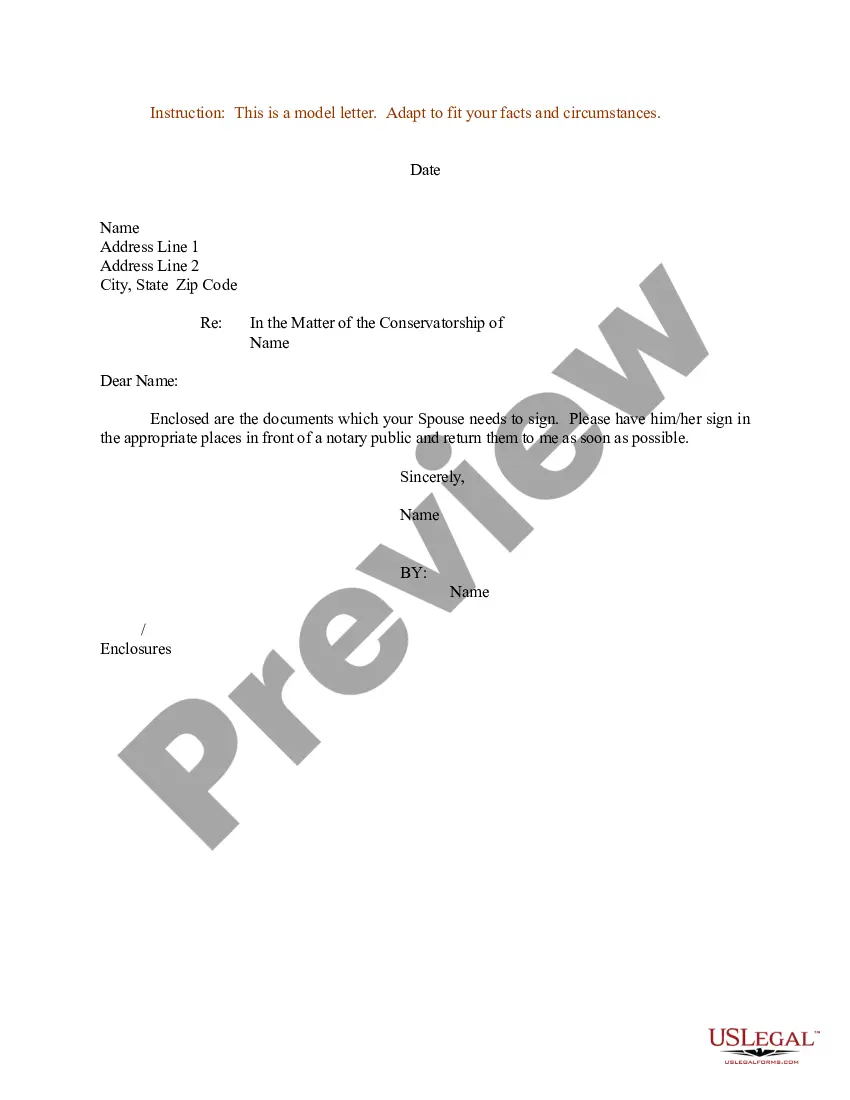
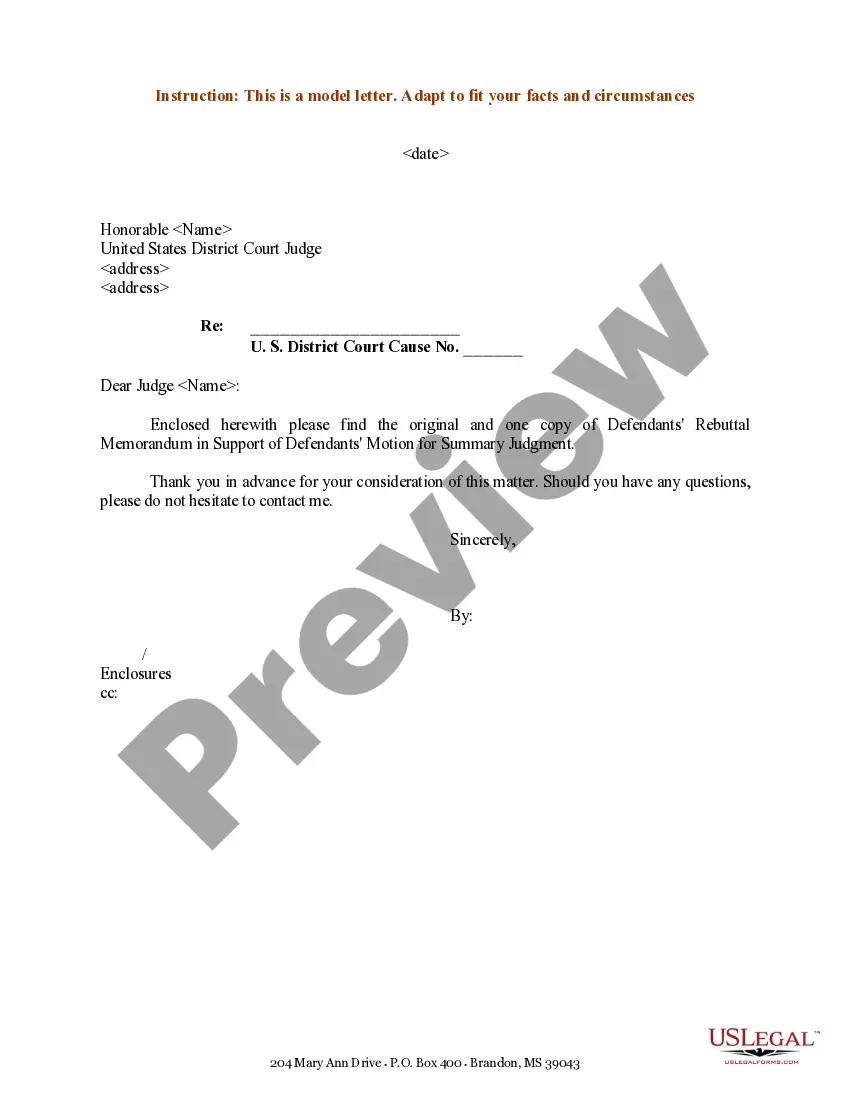
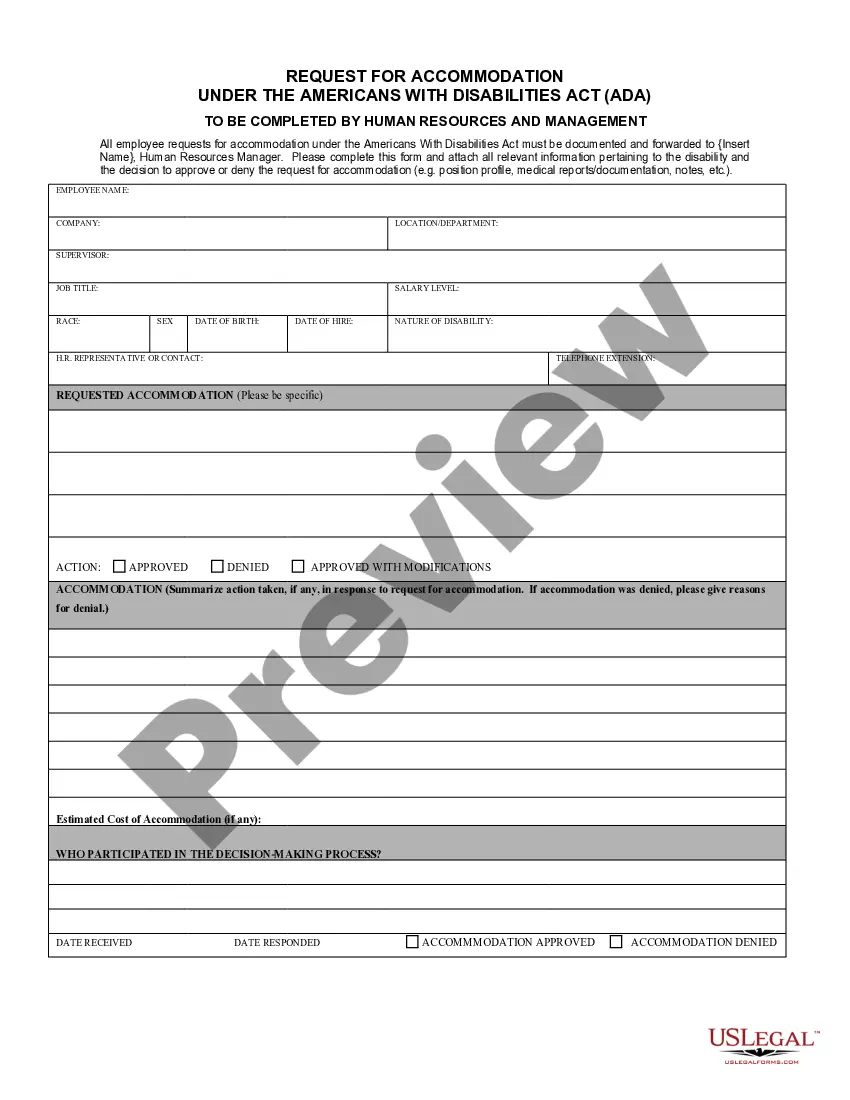
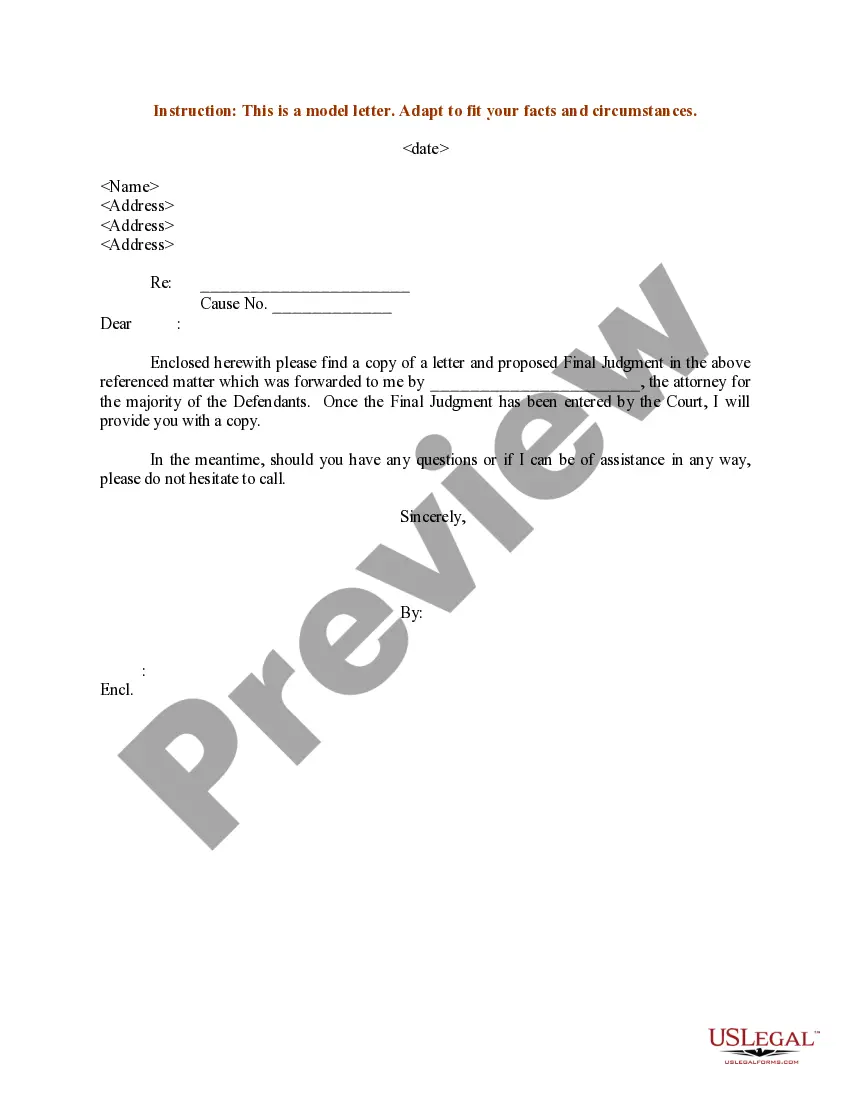
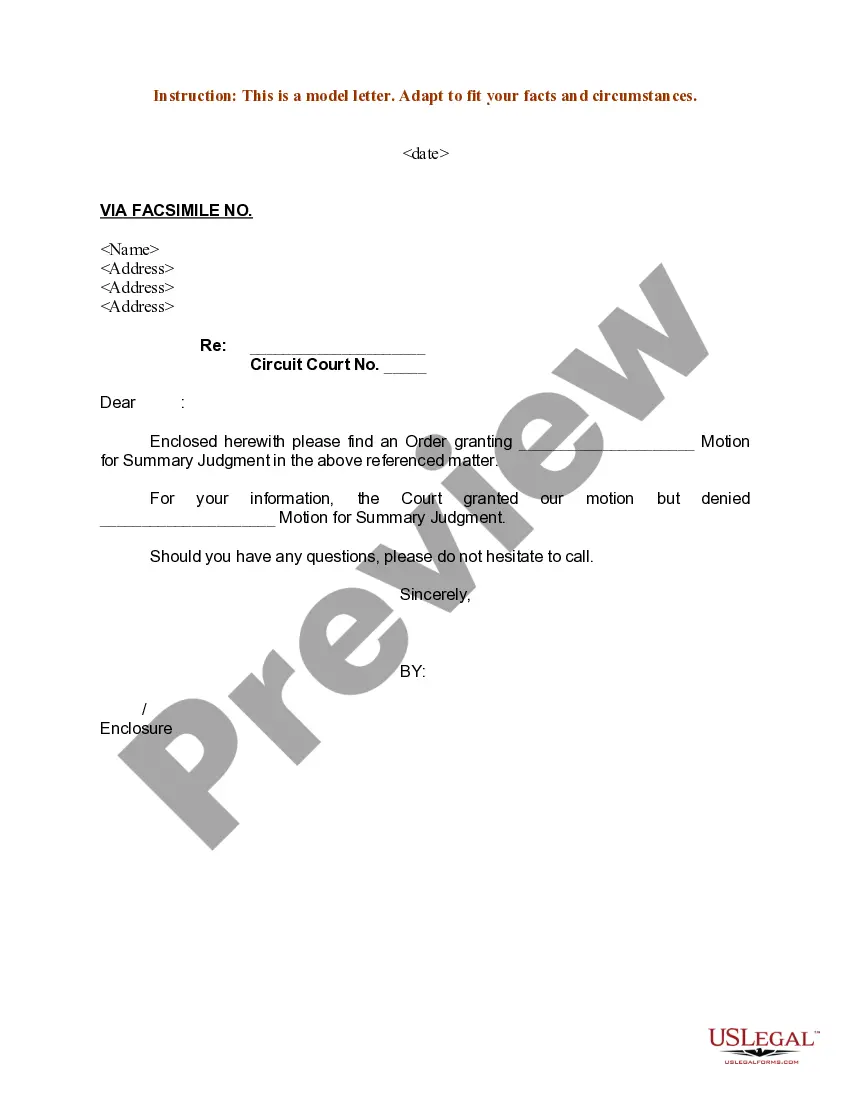
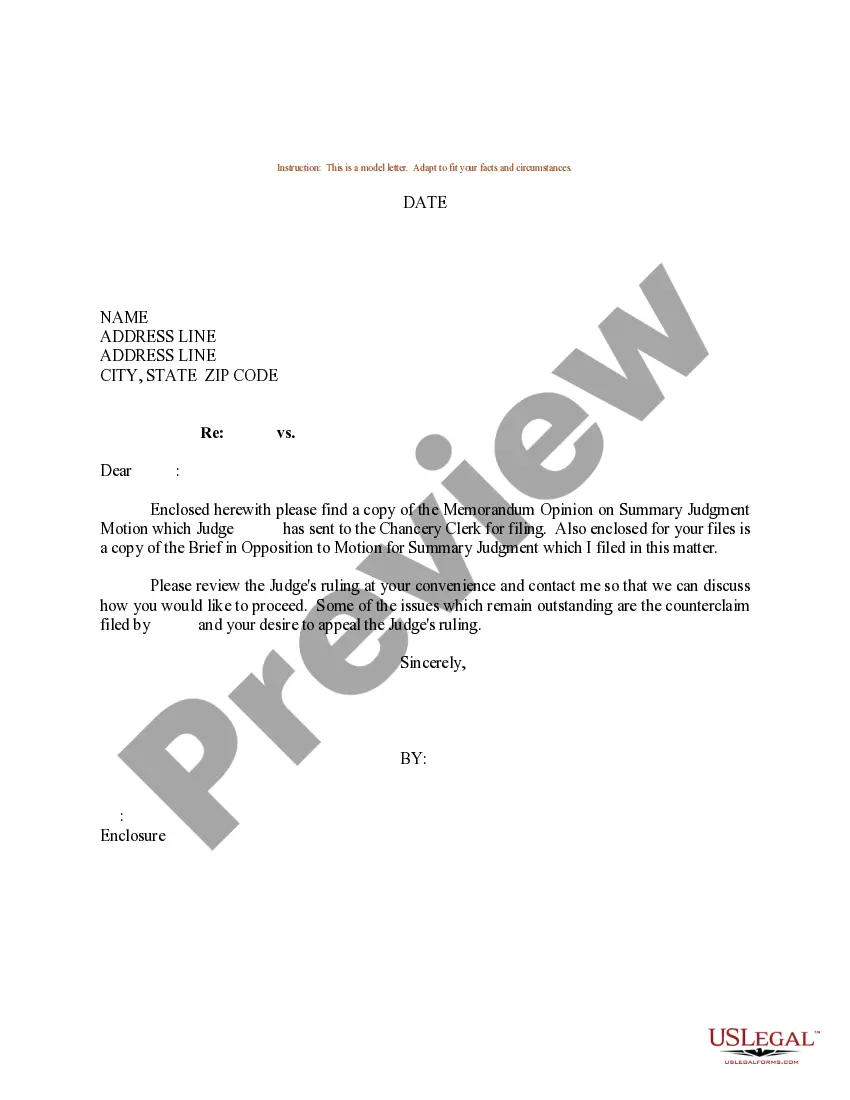
How to fill out Sample Letter For Proposed Order Granting Summary Judgment?
Finding a reliable location to obtain the latest and suitable legal templates is a significant part of dealing with bureaucracy.
Selecting the correct legal documents requires accuracy and meticulousness, which is why it is crucial to derive samples of Proposed Order With Alternative Relief solely from trustworthy sources, such as US Legal Forms.
Eliminate the complications that come with your legal documents. Explore the comprehensive US Legal Forms library to discover legal samples, ensure their relevance to your situation, and download them instantly.
- Utilize the catalog navigation or search box to locate your template.
- Examine the form's description to confirm if it aligns with the requirements of your state and region.
- View the form preview, if available, to verify that the template is indeed the one you seek.
- Return to your search and identify the correct document if the Proposed Order With Alternative Relief does not meet your needs.
- If you are confident about the form’s applicability, download it.
- If you are a registered user, click Log in to verify and access your chosen templates in My documents.
- If you do not have an account yet, click Buy now to acquire the form.
- Select the payment plan that suits your preferences.
- Proceed with the registration to complete your transaction.
- Finalize your purchase by choosing a payment method (credit card or PayPal).
- Select the file format for downloading Proposed Order With Alternative Relief.
- After acquiring the form on your device, you can edit it using the editor or print it and fill it out by hand.
Form popularity
FAQ
A proposed order for child custody is a document that outlines your request regarding the care and parental responsibilities for your child. This order can include specific arrangements for visitation, decision-making authority, and other important considerations. When drafting this document, it’s beneficial to include alternative relief options, which can help the court find a solution that serves the child's best interests. Utilizing resources like uslegalforms can help you create a well-structured proposed order with alternative relief that addresses your unique circumstances.
To respond to a proposed order, carefully review the document and assess its terms and implications. You should consider whether the suggested order is appropriate or if you need to propose changes. If you wish to challenge the proposed order or suggest an alternative relief, it is vital to act swiftly and submit your response to the court. Platforms like uslegalforms can assist you in drafting a clear and effective response to ensure your voice is heard.
Proposing your order means submitting a suggested legal decision to the court for review. This action allows you to present your viewpoint clearly and formally. Specifically, a proposed order with alternative relief showcases not only your primary request but also other options if the primary request cannot be fulfilled. It encourages the court to evaluate multiple pathways to address your legal matter.
The purpose of a proposed order is to seek judicial approval for a specific legal request. This document outlines the details of what you want the court to determine, making it easier for judges to understand your needs. In cases where you seek alternative relief, a proposed order with alternative relief provides options for the court to consider. It streamlines the process and increases your chances of attaining a favorable outcome.
In California, a request for judicial notice allows a party to ask the court to recognize certain facts as true based on their legal significance. These facts can come from public records, statutes, or well-established facts that are universally acknowledged. Filing this request often works best when coupled with a proposed order with alternative relief, giving the court clear guidance on how to proceed. Utilizing this approach can streamline your legal arguments and enhance your chances of a favorable outcome.
While a request for judicial notice may not strictly require a proposed order, including one can improve the clarity and effectiveness of your request. A proposed order with alternative relief gives the court a clear direction on how to proceed. It not only strengthens your case but also helps the court navigate through the complex details. Therefore, incorporating a proposed order is often a wise step.
You can absolutely oppose a request for judicial notice if you believe the facts are not appropriate for judicial notice. This opposition should be formally presented, ideally accompanied by a proposed order with alternative relief. By outlining your position clearly, you can assist the court in understanding your perspective. It’s essential to engage in this dialogue thoughtfully to protect your interests.
Yes, a court can take judicial notice on its own without a formal request. This action allows the court to recognize certain facts as unquestionably true. However, if you wish to have specific facts acknowledged, it is helpful to file a proposed order with alternative relief to guide the court’s decision. This step can enhance the clarity of your request and streamline the court's proceedings.
A proposed order is a document submitted to the court that outlines the specific relief a party seeks. It serves as a recommendation for the judge, suggesting how to resolve the matter at hand. In many cases, parties will include a proposed order with alternative relief to provide the court with options for resolution. This approach can ease the court’s decision-making process and ensure all potential outcomes are considered.
A request for order to set aside based on equitable relief is a legal motion asking a court to overturn a previous decision due to fairness concerns. This may happen when a party feels that the prior ruling was unjust or based on incomplete information. Understanding how to file such a request, especially in connection to a proposed order with alternative relief, can lead to a more favorable outcome. Legal platforms like USLegalForms can provide the resources needed for this process.