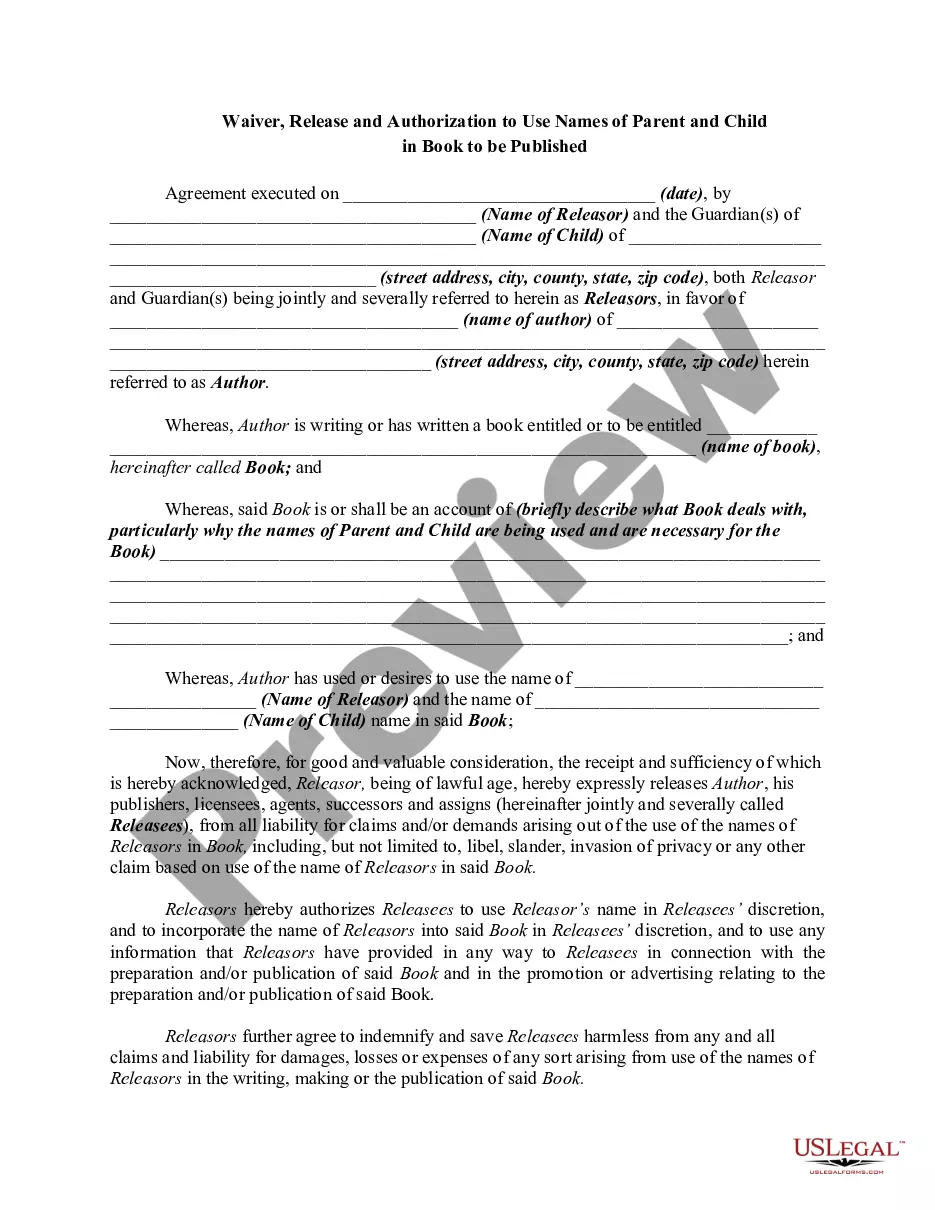
Waiver Release Parent With Child
Description
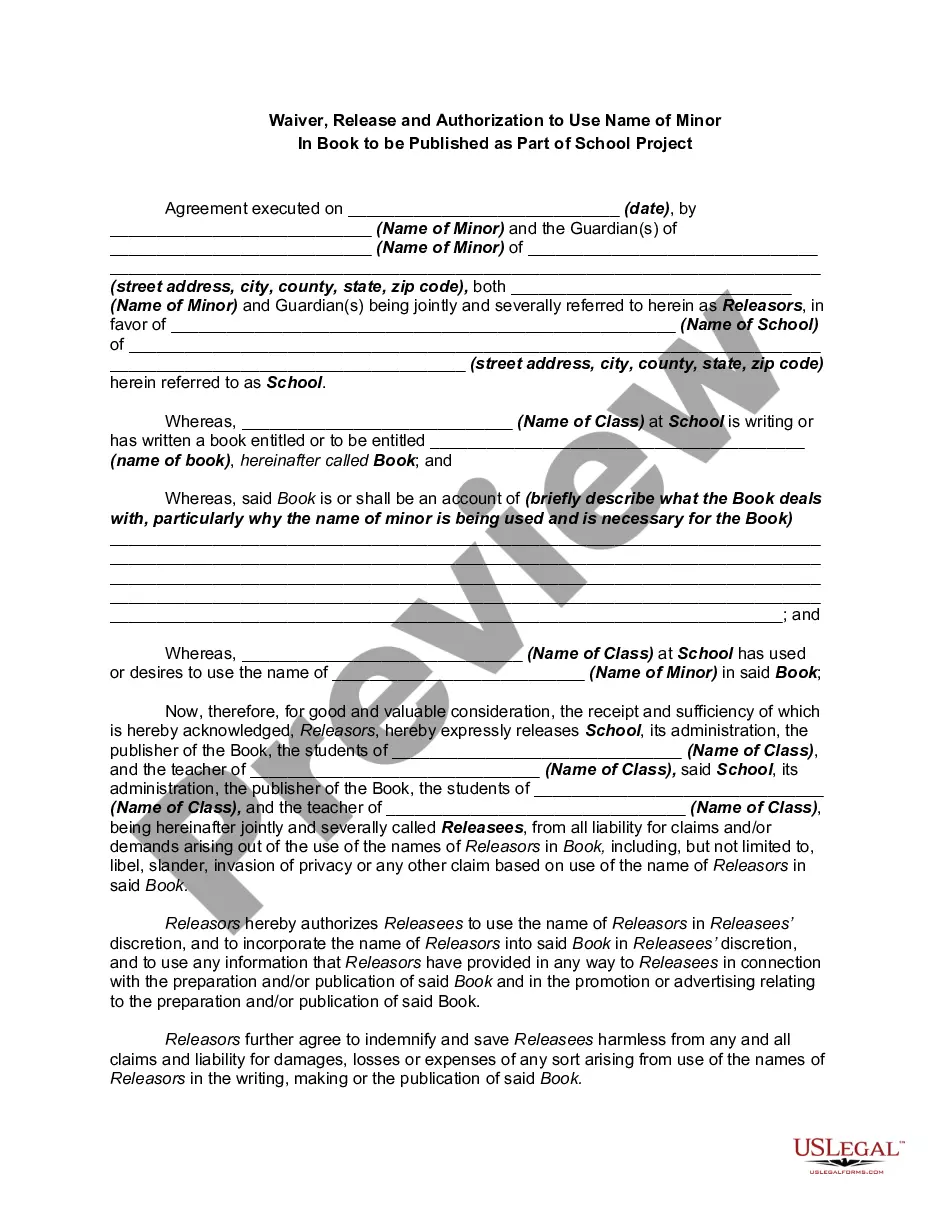
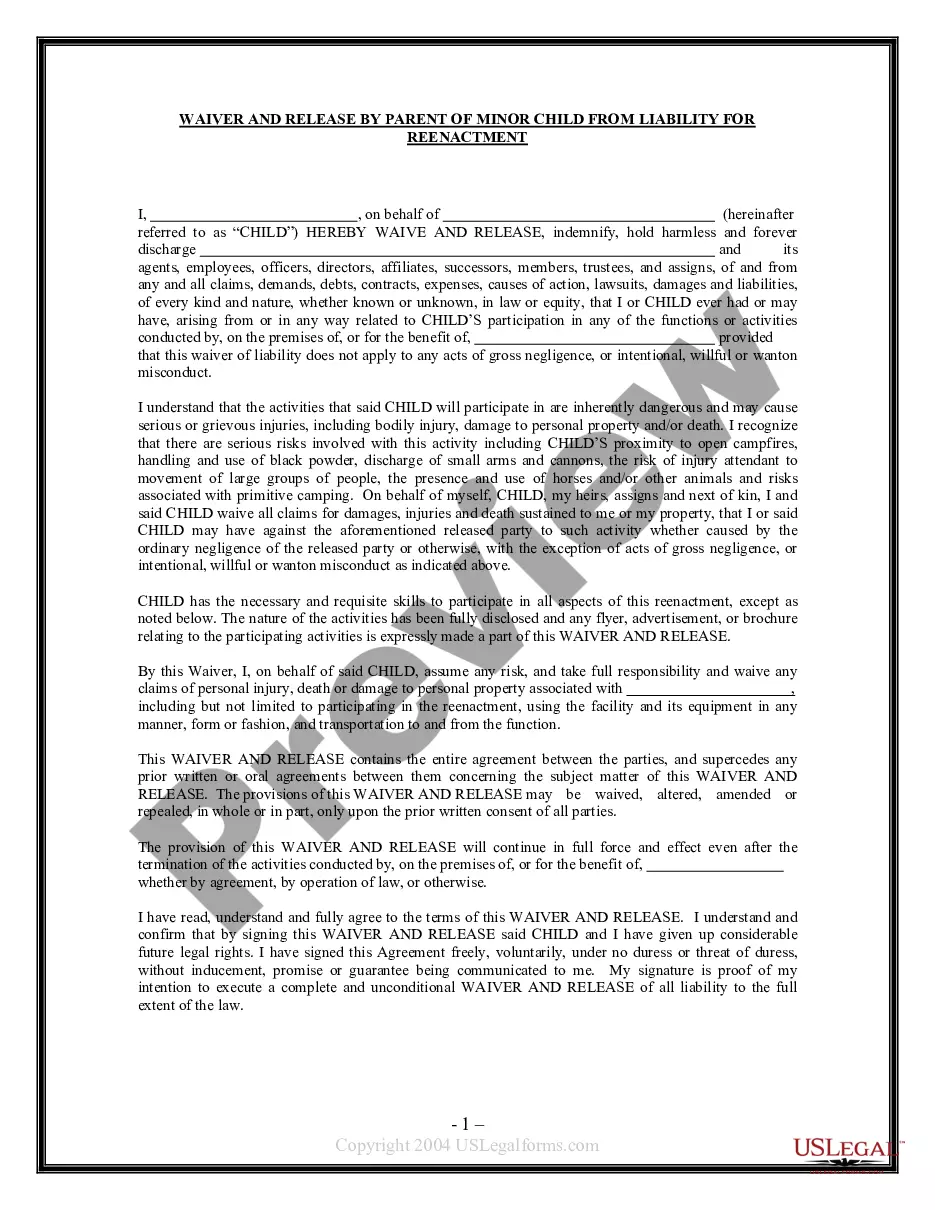
Get your form ready online
Our built-in tools help you complete, sign, share, and store your documents in one place.
Make edits, fill in missing information, and update formatting in US Legal Forms—just like you would in MS Word.
Download a copy, print it, send it by email, or mail it via USPS—whatever works best for your next step.
Sign and collect signatures with our SignNow integration. Send to multiple recipients, set reminders, and more. Go Premium to unlock E-Sign.
If this form requires notarization, complete it online through a secure video call—no need to meet a notary in person or wait for an appointment.
We protect your documents and personal data by following strict security and privacy standards.

Make edits, fill in missing information, and update formatting in US Legal Forms—just like you would in MS Word.

Download a copy, print it, send it by email, or mail it via USPS—whatever works best for your next step.

Sign and collect signatures with our SignNow integration. Send to multiple recipients, set reminders, and more. Go Premium to unlock E-Sign.

If this form requires notarization, complete it online through a secure video call—no need to meet a notary in person or wait for an appointment.

We protect your documents and personal data by following strict security and privacy standards.
Looking for another form?


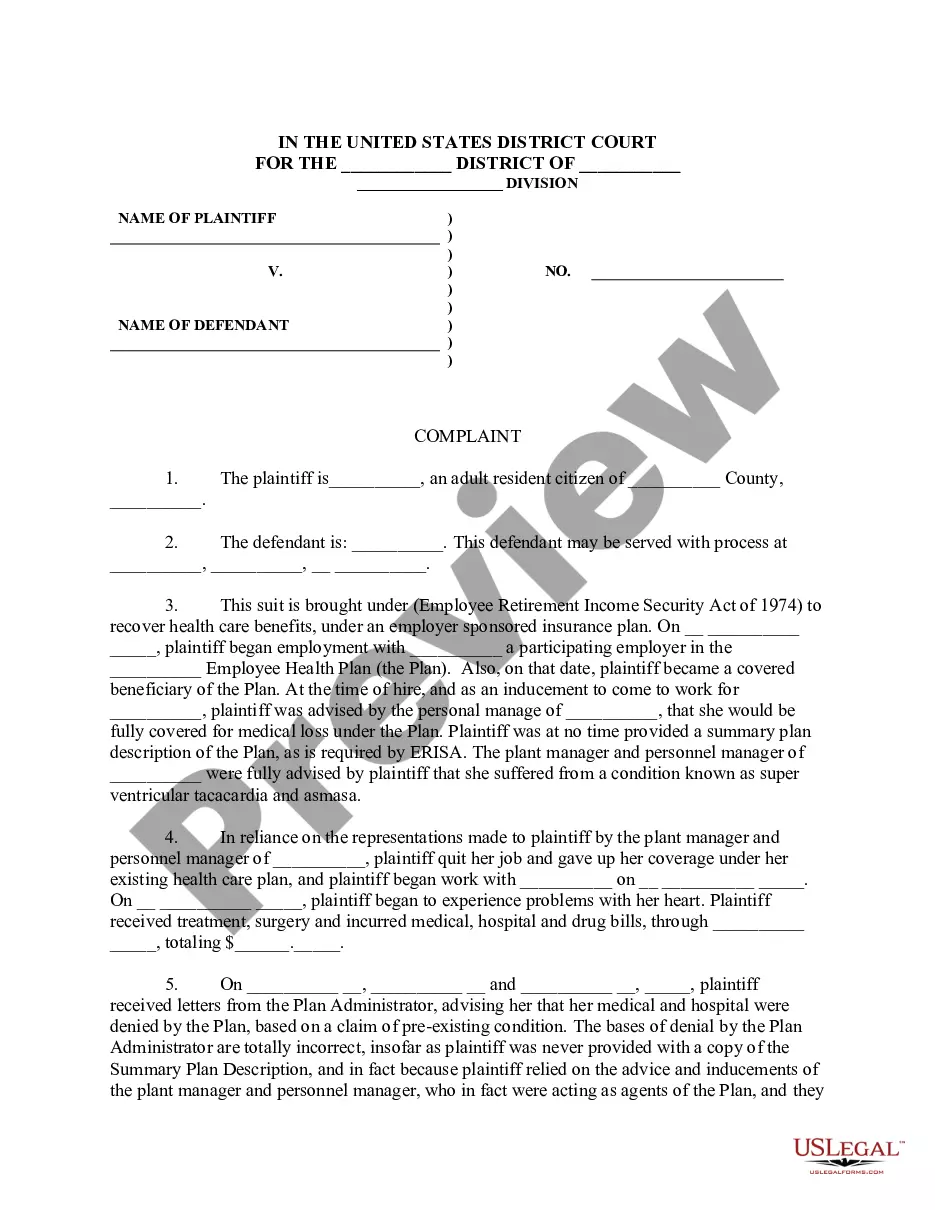

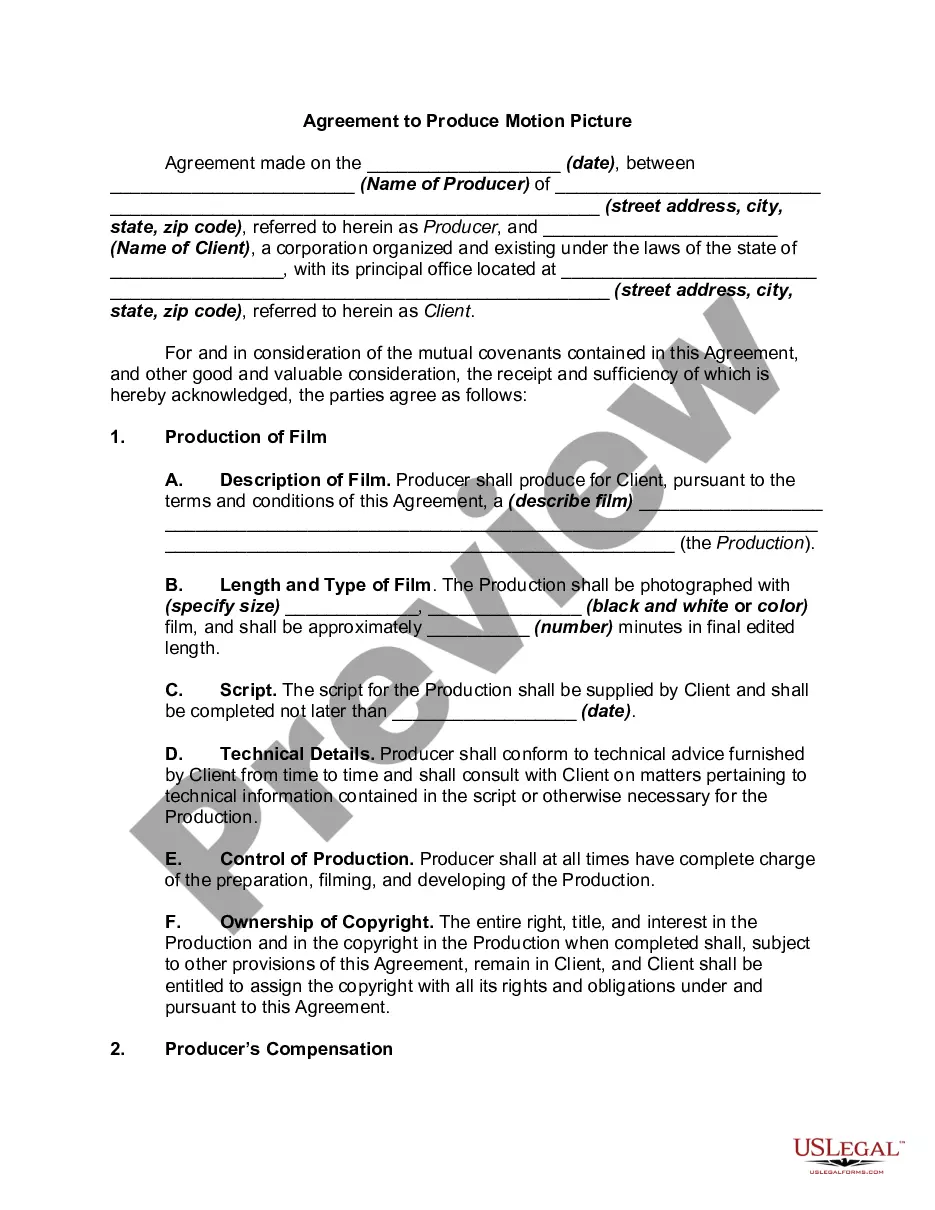




How to fill out Waiver, Release And Authorization To Use Names Of Parent And Child In Book To Be Published?
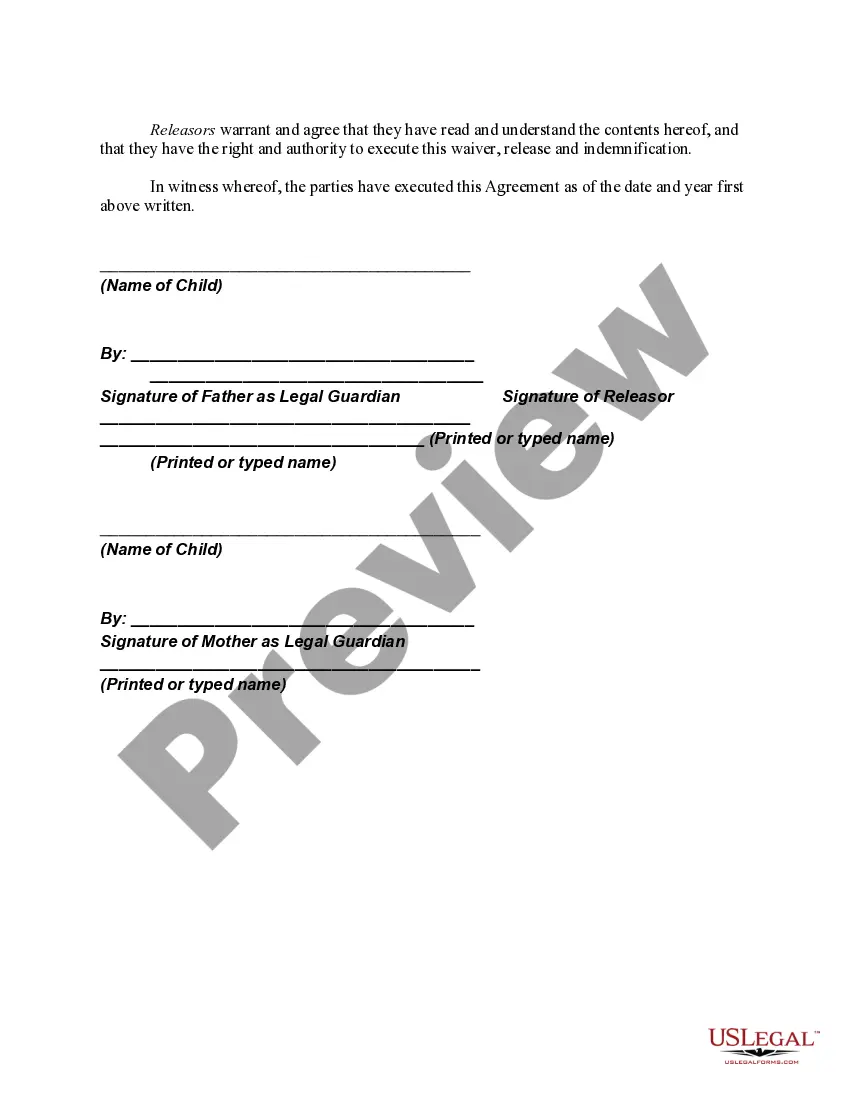
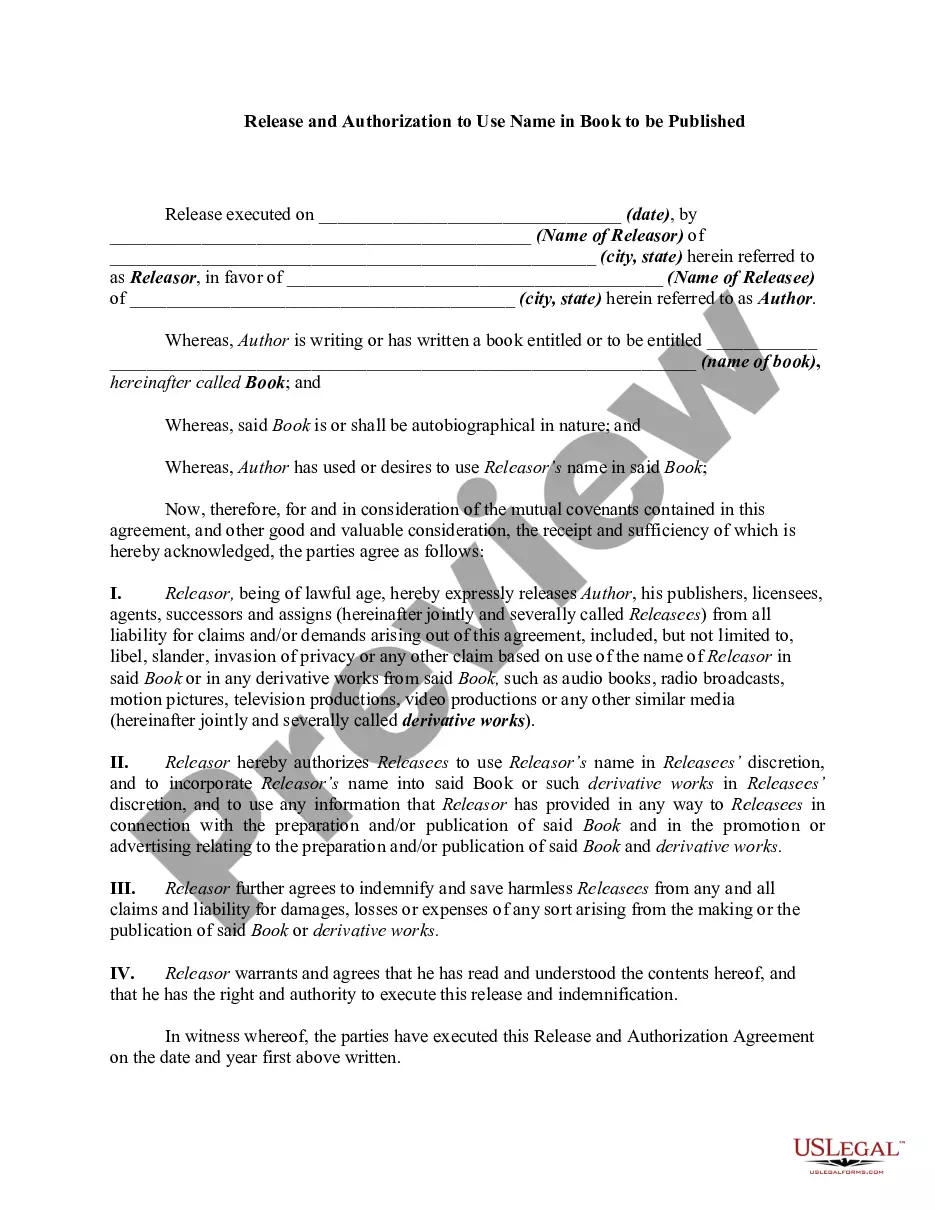
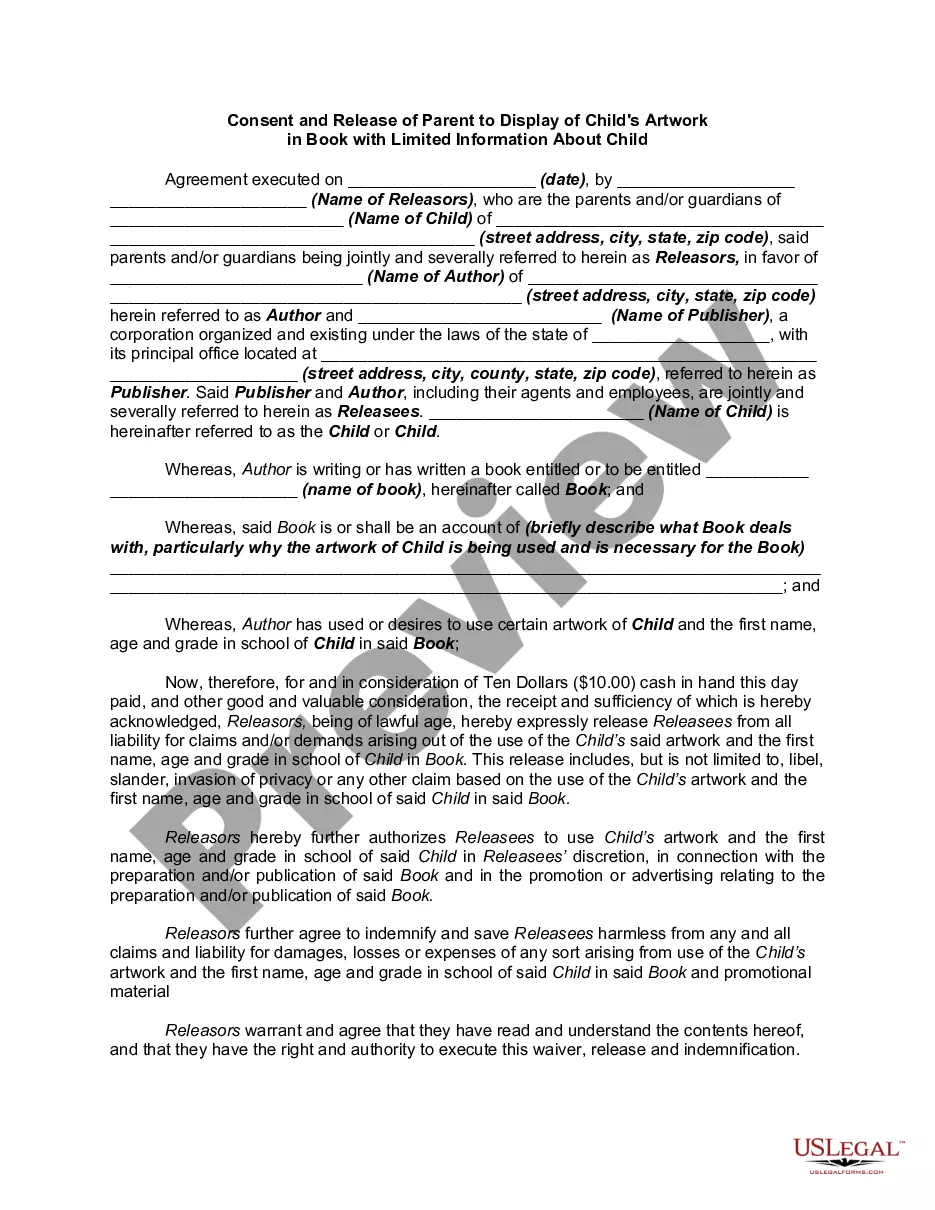
The Waiver Release Parent With Child presented on this page is a reusable legal template crafted by qualified attorneys in accordance with federal and local laws and regulations.
For over 25 years, US Legal Forms has supplied individuals, businesses, and lawyers with more than 85,000 verified, state-specific forms for any business and personal situation. It’s the fastest, simplest, and most reliable method to acquire the documents you require, as the service guarantees the utmost level of data security and anti-malware safeguards.
Subscribe to US Legal Forms to have verified legal templates for all of life’s situations at your fingertips.
- Search for the document you need and review it. Browse through the sample you looked for and preview it or examine the form description to ensure it meets your needs. If it doesn’t, use the search function to find the correct one. Click Buy Now once you have found the template you require.
- Subscribe and Log In. Choose the pricing plan that fits you and sign up for an account. Utilize PayPal or a credit card for a swift payment. If you possess an account, Log In and verify your subscription to continue.
- Get the fillable template. Select the format you desire for your Waiver Release Parent With Child (PDF, Word, RTF) and save the sample on your device.
- Complete and sign the document. Print the template to fill it out manually. Alternatively, employ an online multifunctional PDF editor to quickly and accurately complete and sign your form electronically.
- Download your paperwork again. Reuse the same document whenever necessary. Access the My documents tab in your profile to redownload any forms you have previously purchased.
Form popularity
FAQ
Generally, a child cannot independently execute a waiver for a parent without proper legal capacity, as waivers usually require adult comprehension. However, in certain situations, a child may be able to participate in the waiver process, particularly if acting on behalf of a legal guardian. It is wise to seek professional legal advice to determine the best course of action. Consider exploring the solutions offered by US Legal Forms to assist you with waiver release parent with child.
Key Takeaways On How To Write A Waiver Choose a waiver template. Determine the type of activity or service. State the purpose of the waiver. Identify the risks. Include a title. Include customer information. Include waiver terms. Include a statement of understanding.
The main purpose of a waiver or parental / guardian consent form is to inform participants of the potential risks associated with the activity and that the participants (or parents/guardians of minor participants) understand the risks and agree to assume the possible foreseen or unforeseen risks.
Examples of waivers include the waiving of parental rights, waiving liability, tangible goods waivers, and waivers for grounds of inadmissibility. Waivers are common when finalizing lawsuits, as one party does not want the other pursuing them after a settlement is transferred.
At common law, it would appear that a parental waiver of liability clause is not enforceable or legally binding on the child's right to sue for negligence. At law, minors are children and teenagers under the age of majority (eighteen years in Ontario). Minors lack full legal capacity to sign binding contracts.
Key Takeaways On How To Write A Waiver Choose a waiver template. Determine the type of activity or service. State the purpose of the waiver. Identify the risks. Include a title. Include customer information. Include waiver terms. Include a statement of understanding.