Surrogate Surrogacy Artificial For Babies
Description
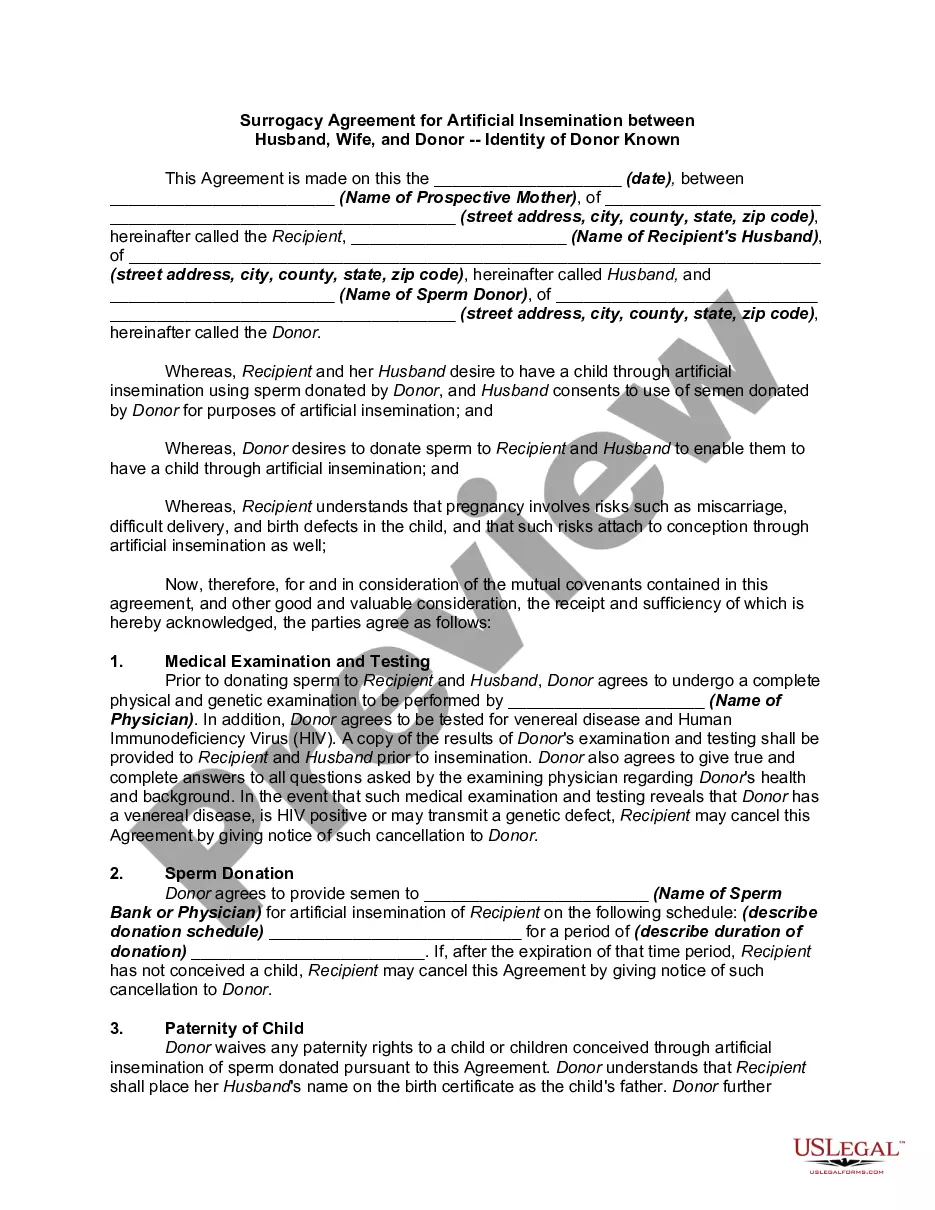
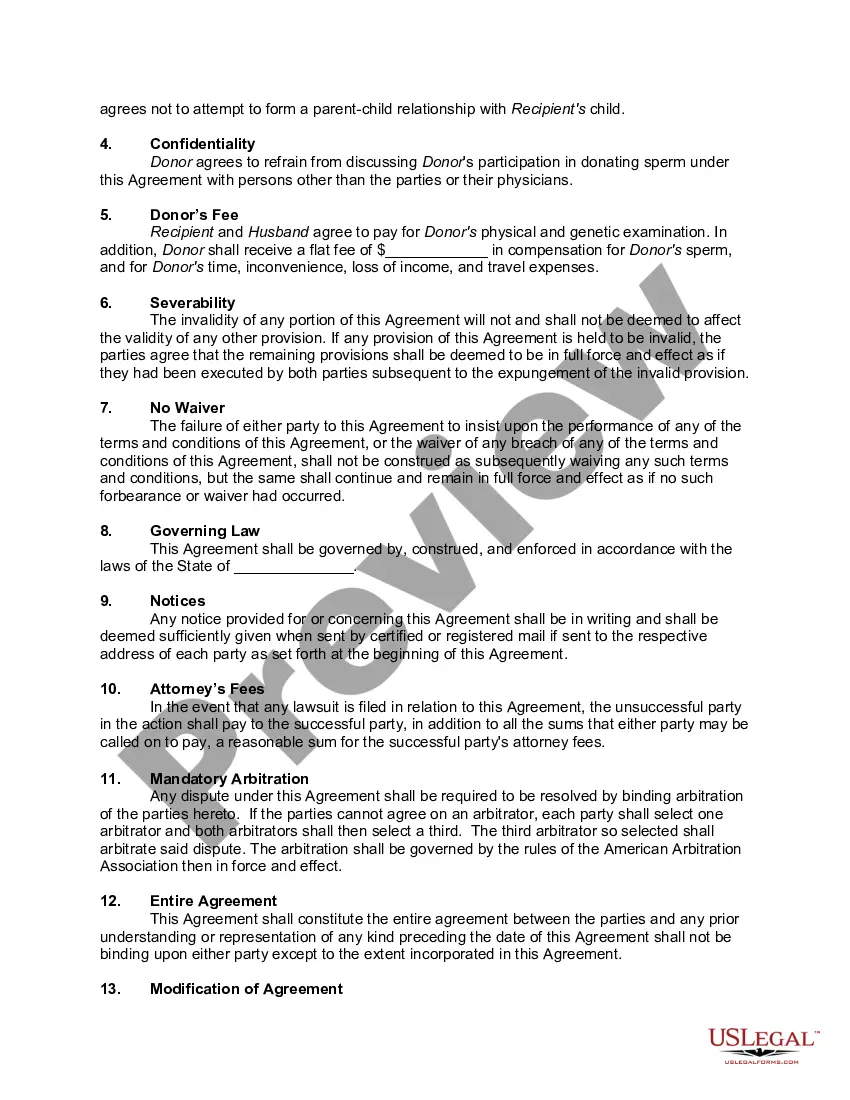
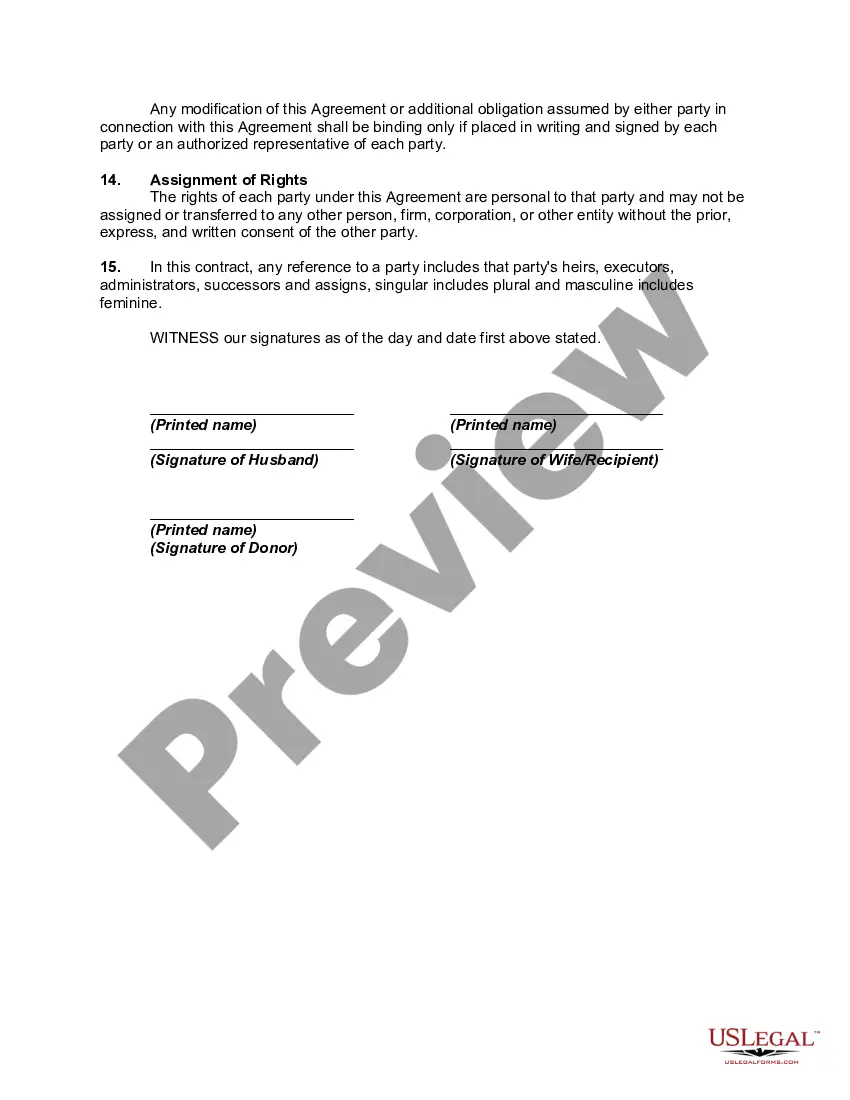
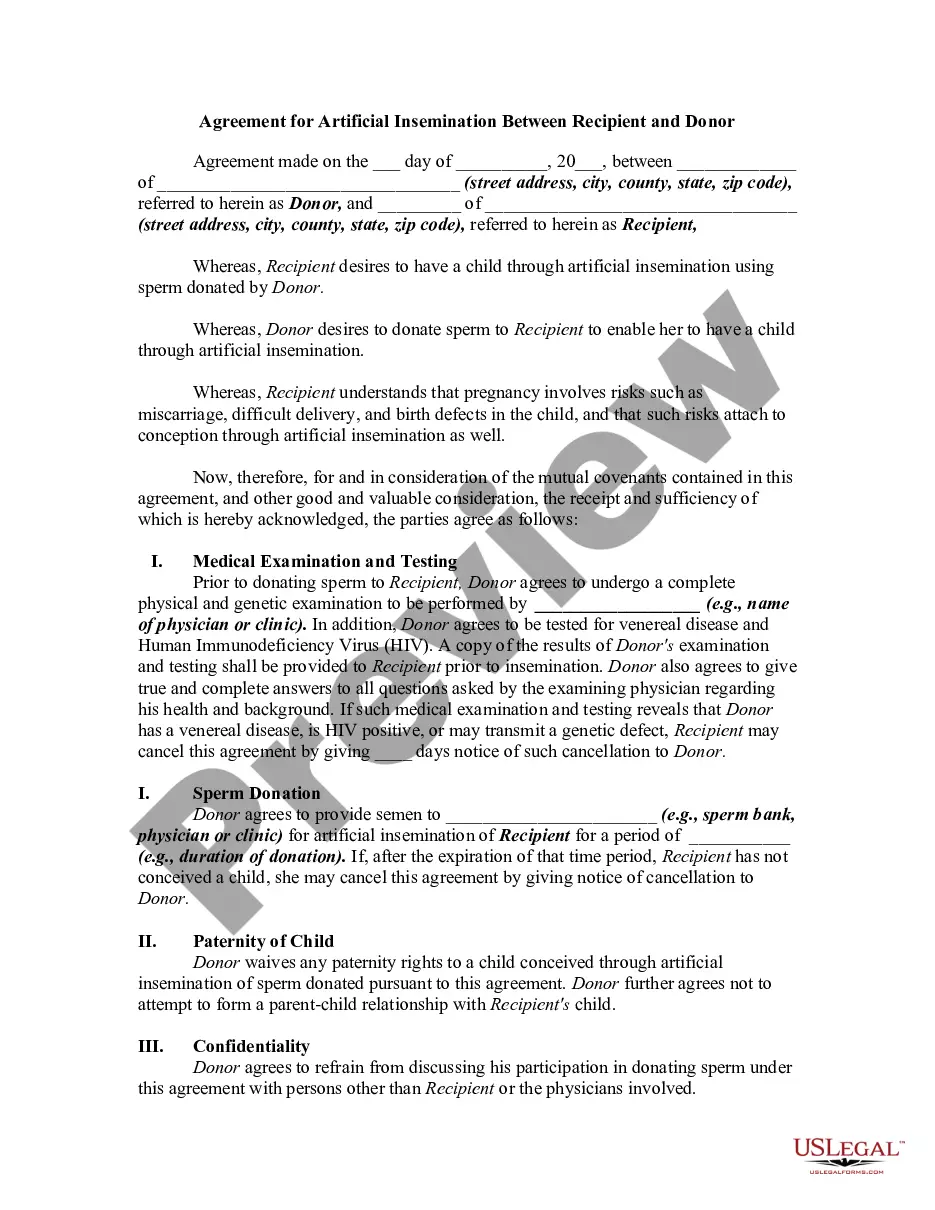



How to fill out Surrogate Or Surrogacy Agreement For Artificial Insemination Between Husband, Wife, And Donor - Identity Of Donor Known?
Whether for corporate aims or for individual reasons, everyone must confront legal issues at some point in their lives.
Filling out legal papers requires meticulous care, starting with choosing the appropriate form template.
With an extensive US Legal Forms catalog available, you don’t need to waste time searching for the right template on the internet. Use the library’s user-friendly navigation to find the appropriate template for any circumstance.
- Locate the template you require using the search bar or catalog browsing.
- Review the form’s details to ensure it aligns with your circumstances, state, and county.
- Click on the form’s preview to view it.
- If it is the wrong document, return to the search option to find the Surrogate Surrogacy Artificial For Babies template you need.
- Download the template once it satisfies your criteria.
- If you have a US Legal Forms account, click Log in to access previously saved templates in My documents.
- If you do not yet have an account, you can download the form by clicking Buy now.
- Choose the appropriate pricing option.
- Complete the profile registration form.
- Select your payment method: you can use a credit card or PayPal account.
- Choose the file format you desire and download the Surrogate Surrogacy Artificial For Babies.
- Once saved, you can fill out the form using editing software or print it and complete it by hand.
Form popularity
FAQ
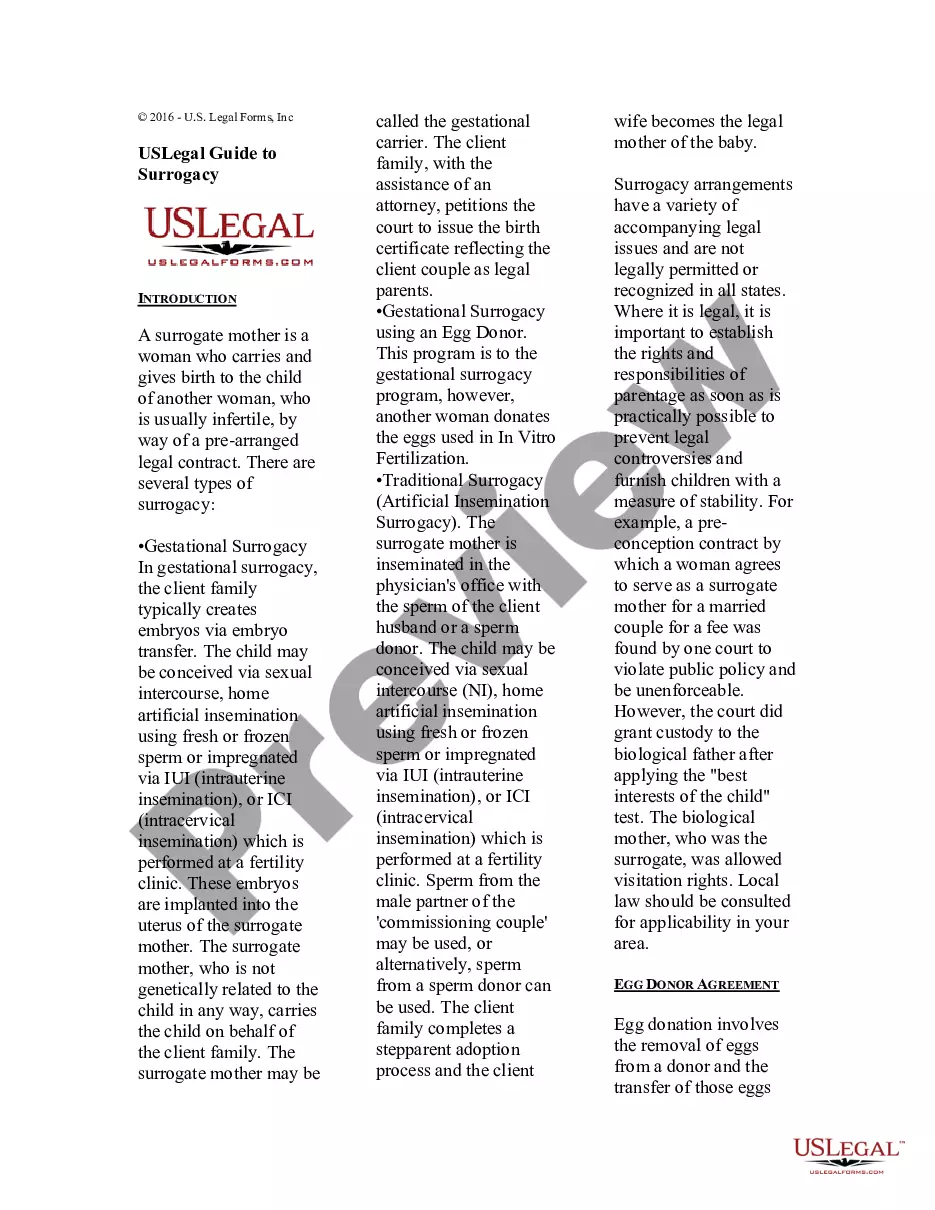
Surrogacy is of two types: traditional and gestational. Traditional (genetic/partial/straight) surrogacy is the result of artificial insemination of the surrogate mother with the intended father's sperm, making her a genetic parent along with the intended father.
The father's sperm and the mother's egg create the embryo in a lab. The fertilized egg is implanted into the surrogate's uterus. The surrogate carries the pregnancy to full term. Compared to traditional surrogacies, gestational surrogacies are much more time-consuming and expensive.
Women who act as surrogate mothers have been found to pass minute amounts of mitochondrial DNA to the babies they carry for nine months.
A baby born through gestational surrogacy only inherits DNA from the sperm source and the egg provider and not the surrogate mother. This means that if the eggs used in the surrogacy process are intended mother's, then yes; a surrogate baby will have the mother's DNA. This is not the case when donor eggs are used.
How to write your letter to your future surrogate Starting your letter. Before you dive into family history or personal information, start by thanking your potential surrogate. ... Share stories of your life and experiences. ... Describe what your surrogate can expect. ... Share pictures. ... Get creative!