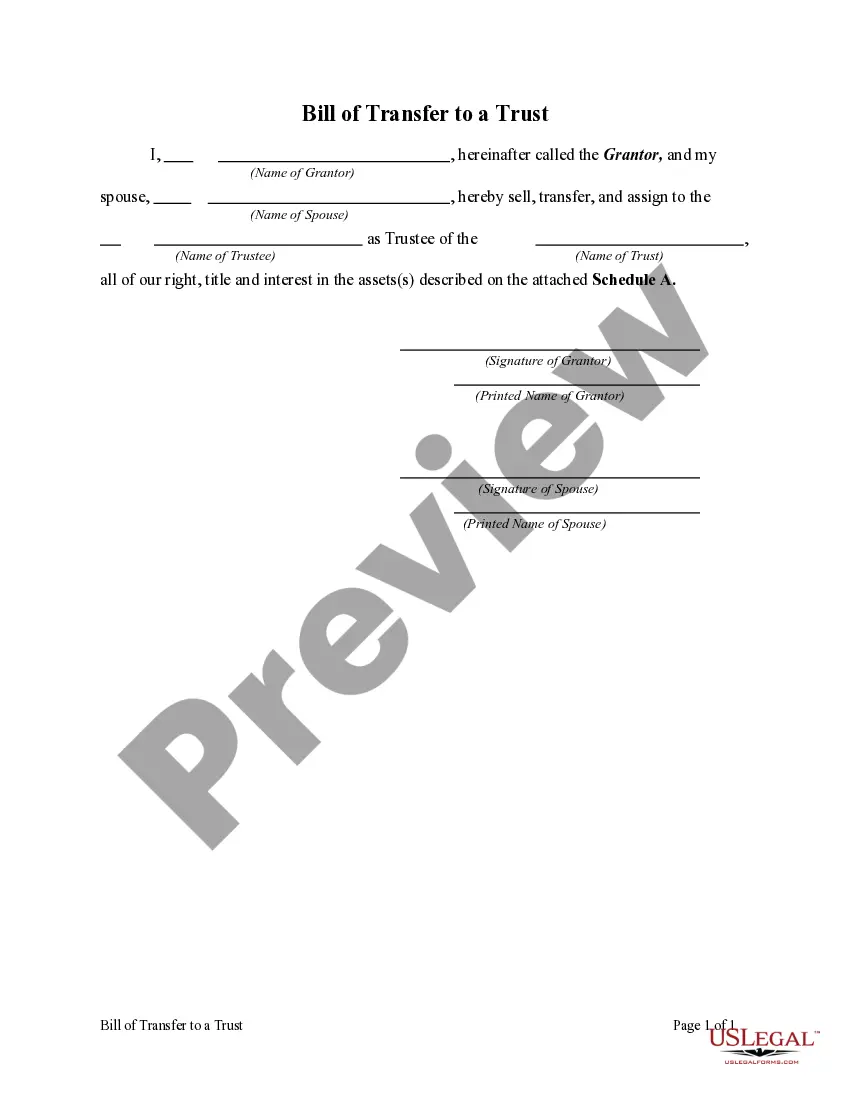
Trust Transfer Deed Sample With Trust
Description

Get your form ready online
Our built-in tools help you complete, sign, share, and store your documents in one place.
Make edits, fill in missing information, and update formatting in US Legal Forms—just like you would in MS Word.
Download a copy, print it, send it by email, or mail it via USPS—whatever works best for your next step.
Sign and collect signatures with our SignNow integration. Send to multiple recipients, set reminders, and more. Go Premium to unlock E-Sign.
If this form requires notarization, complete it online through a secure video call—no need to meet a notary in person or wait for an appointment.
We protect your documents and personal data by following strict security and privacy standards.

Make edits, fill in missing information, and update formatting in US Legal Forms—just like you would in MS Word.

Download a copy, print it, send it by email, or mail it via USPS—whatever works best for your next step.

Sign and collect signatures with our SignNow integration. Send to multiple recipients, set reminders, and more. Go Premium to unlock E-Sign.

If this form requires notarization, complete it online through a secure video call—no need to meet a notary in person or wait for an appointment.

We protect your documents and personal data by following strict security and privacy standards.
Looking for another form?







How to fill out Bill Of Transfer To A Trust?
Handling legal documents and processes can be a laborious addition to your whole day. Trust Transfer Deed Sample With Trust and similar forms typically necessitate you to search for them and find the optimal way to fill them out accurately.
Consequently, if you are managing financial, legal, or personal issues, utilizing a comprehensive and user-friendly online repository of forms whenever you require will significantly help.
US Legal Forms is the leading online platform for legal templates, showcasing over 85,000 state-specific documents and a range of tools to assist you in completing your paperwork with ease.
Discover the collection of relevant documents available to you with just one click.
Then, follow the steps below to complete your form: Ensure you have found the correct form using the Review feature and examining the form details. Select Buy Now when prepared, and choose the subscription plan that suits your requirements. Click Download, then complete, eSign, and print the form. US Legal Forms boasts twenty-five years of experience aiding clients in managing their legal documents. Acquire the form you need today and simplify any process effortlessly.
- US Legal Forms provides you with state- and county-specific forms accessible at any time for download.
- Safeguard your document management tasks with a premium service that allows you to compile any form within moments without any extra or concealed fees.
- Simply Log In to your account, locate Trust Transfer Deed Sample With Trust, and retrieve it instantly from the My documents section.
- You can also access previously saved forms.
- Is this your first instance using US Legal Forms? Sign up and create your account in just a few minutes to gain entry to the form library and Trust Transfer Deed Sample With Trust.
Form popularity
FAQ
Yes, a deed of trust can serve as proof of ownership in certain contexts, particularly when it details the rights associated with a property. This document outlines the relationship between the property owner and the lender, making it an essential piece of evidence. To ensure you have the right documentation, look for a Trust transfer deed sample with trust on US Legal Forms, which can provide clarity and security for your ownership claims.
Creating a trust format requires you to outline the purpose of the trust, the assets involved, and the beneficiaries. You should clearly define the roles of the trustee and any specific terms for asset management. For a comprehensive Trust transfer deed sample with trust, consider utilizing US Legal Forms, where you can access pre-made templates tailored to your needs.
Transferring property from one trust to another involves creating a new deed that specifies the transfer. You will need to identify the properties in question and ensure the new trust is valid. A Trust transfer deed sample with trust can guide you through this process. Using resources from US Legal Forms can simplify the creation of the necessary documents.
Yes, a deed of trust typically needs to be filed with the appropriate county recorder's office. This filing provides public notice of the trust's existence and the terms of the trust. If you need a reliable Trust transfer deed sample with trust, consider using templates available on platforms like US Legal Forms. These resources can help ensure that you meet all legal requirements.
The cost to prepare and file a Short Form Deed of Trust in California is $375.00* total. The flat rate pricing includes filing fees. *Our flat rate pricing covers filing fees for up to 5 pages and do not include notary fees. Additional pages or non-conforming documents will accrue an additional filing fee.
There are two basic types of Deeds of Trust, the Long Form and the Short Form. The Long Form, which could be 20-30 pages long, is the one used by institutional lenders. The Short Form is the one that is most usually prepared by your Escrow Officer.
Real-World Example of a Trust Deed The amount being borrowed and the address of the property are also required. After this section, the document goes on to specify the transfer of rights in the property and uniform covenants including: Details about payment of principal and interest.
To transfer real property into your Trust, a new deed reflecting the name of the Trust must be executed, notarized and recorded with the County Recorder in the County where the property is located. Care must be taken that the exact legal description in the existing deed appears on the new deed.
You will usually be discharged after four years, but some trust deeds can last for longer. This information will be included in the terms of the trust deed. If the trust deed does not become protected, your discharge will only be binding on those creditors who agreed to the arrangement.