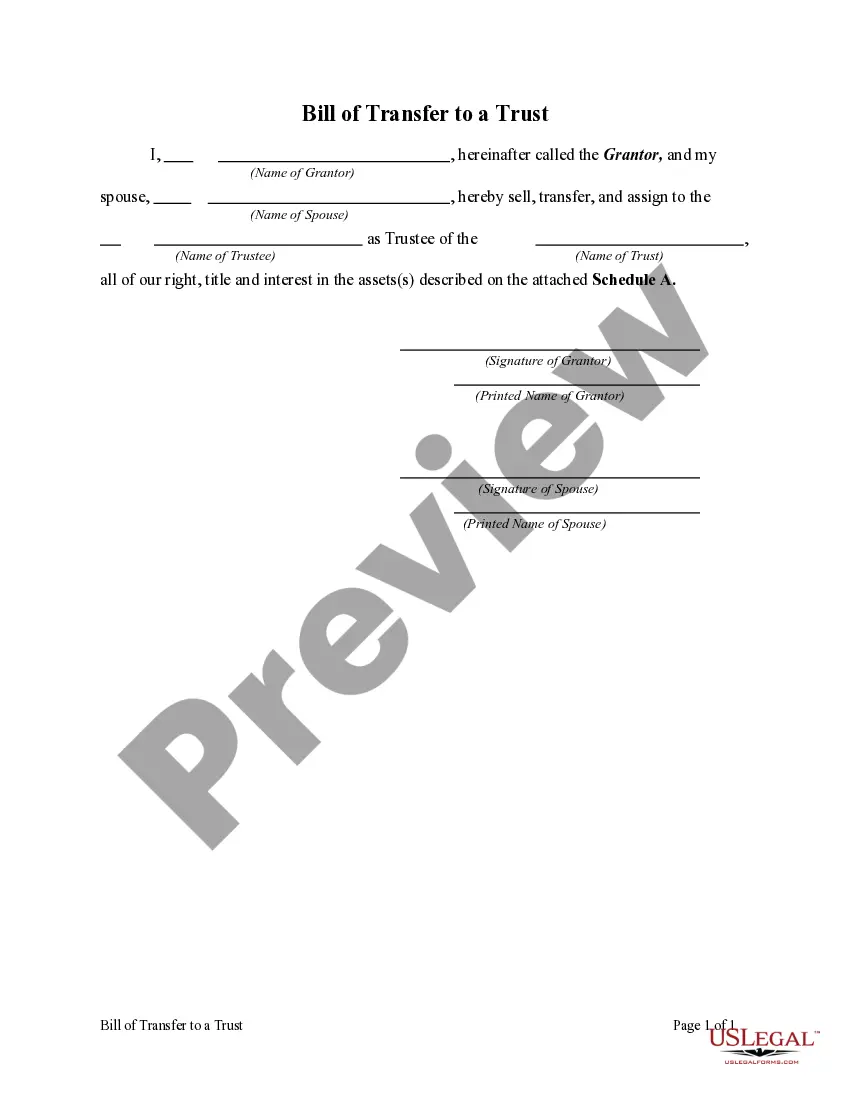
Transfer Trust Agreement For A Property
Description

Get your form ready online
Our built-in tools help you complete, sign, share, and store your documents in one place.
Make edits, fill in missing information, and update formatting in US Legal Forms—just like you would in MS Word.
Download a copy, print it, send it by email, or mail it via USPS—whatever works best for your next step.
Sign and collect signatures with our SignNow integration. Send to multiple recipients, set reminders, and more. Go Premium to unlock E-Sign.
If this form requires notarization, complete it online through a secure video call—no need to meet a notary in person or wait for an appointment.
We protect your documents and personal data by following strict security and privacy standards.

Make edits, fill in missing information, and update formatting in US Legal Forms—just like you would in MS Word.

Download a copy, print it, send it by email, or mail it via USPS—whatever works best for your next step.

Sign and collect signatures with our SignNow integration. Send to multiple recipients, set reminders, and more. Go Premium to unlock E-Sign.

If this form requires notarization, complete it online through a secure video call—no need to meet a notary in person or wait for an appointment.

We protect your documents and personal data by following strict security and privacy standards.
Looking for another form?







How to fill out Bill Of Transfer To A Trust?
- Log into your US Legal Forms account or create a new one if this is your first time.
- Search for the 'Transfer Trust Agreement' form in the extensive online library of over 85,000 legal templates.
- Check the form preview and description to confirm it aligns with your specific needs and local jurisdiction.
- Select the form and choose your preferred subscription plan to access the document.
- Complete your purchase by entering your payment details or using PayPal.
- Download the form directly to your device and access it anytime through the 'My Forms' section.
By following these steps, you can quickly obtain your trust agreement transfer, ensuring that your paperwork is accurate and legally sound.
Start your journey with US Legal Forms today and simplify the process of transferring your trust agreement!
Form popularity
FAQ
To transfer property while minimizing tax liabilities, consider using a transfer trust agreement for a property. This method can help shield your assets from estate taxes, provided you follow the proper steps. It’s essential to consult with a tax professional who can guide you in structuring the transfer effectively. Platforms like USLegalForms provide templates and resources to assist you in creating a compliant trust agreement.
When you create a transfer trust agreement for a property, you might face some challenges. One concern is the initial costs involved in setting up the trust, which can include legal fees and administrative expenses. Additionally, you may lose some control over your property, as the trustee will manage it according to the terms of the trust. Also, transferring a house into a trust may affect eligibility for certain financial benefits.
One of the main disadvantages of putting property in trust is the potential costs involved, including setup fees and ongoing maintenance. Additionally, once you use a transfer trust agreement for a property, you may lose some degree of control over its management. Families should consider these factors when determining if a trust aligns with their broader estate planning.
Holding property in a trust offers benefits like avoiding probate and protecting assets, but it also has its drawbacks. A transfer trust agreement for a property can entail ongoing expenses and administrative duties. Thus, it's essential to evaluate your situation carefully, as the decision should align with your financial and familial needs.
The best way to transfer property between families often involves using a transfer trust agreement for a property. This method allows for a structured transfer process while providing protection and guidance for future generations. Additionally, consulting a legal expert can help ensure the transfer meets all legal requirements and aligns with family goals.
While trusts provide many benefits, there are some downsides as well. A transfer trust agreement for a property may come with upfront costs, such as legal fees and maintenance expenses. Moreover, complex tax implications can arise, potentially complicating your estate planning. It's essential to weigh the positives and negatives before proceeding.
When you create a transfer trust agreement for a property, the basis of the property typically carries over to the trust. It means that the property's taxable value remains the same as when it was transferred. Understanding this concept is vital for beneficiaries, as it plays a crucial role in capital gains calculations when the property is eventually sold.
Deciding between gifting a house or using a transfer trust agreement for a property depends on your goals. Gifting may incur gift taxes and offer less control over the property, while a trust can provide long-term protection and clear instructions on asset distribution. By weighing the consequences of both options, you can choose the best approach for your family.
One major mistake parents make is not clearly defining the terms of the trust in a transfer trust agreement for a property. Failing to outline specific conditions and expectations can lead to confusion and conflict among beneficiaries. Additionally, neglecting to communicate their intentions with family members may cause misunderstandings later on.
Wealthy individuals often use a transfer trust agreement for a property to help manage their assets, avoid probate, and maintain privacy. By placing their homes in a trust, they ensure a smoother transition of ownership upon death. This strategy can also protect assets from creditors and may provide tax advantages, making it a wise decision for estate planning.