Estate Property
Description

Get your form ready online
Our built-in tools help you complete, sign, share, and store your documents in one place.
Make edits, fill in missing information, and update formatting in US Legal Forms—just like you would in MS Word.
Download a copy, print it, send it by email, or mail it via USPS—whatever works best for your next step.
Sign and collect signatures with our SignNow integration. Send to multiple recipients, set reminders, and more. Go Premium to unlock E-Sign.
If this form requires notarization, complete it online through a secure video call—no need to meet a notary in person or wait for an appointment.
We protect your documents and personal data by following strict security and privacy standards.

Make edits, fill in missing information, and update formatting in US Legal Forms—just like you would in MS Word.

Download a copy, print it, send it by email, or mail it via USPS—whatever works best for your next step.

Sign and collect signatures with our SignNow integration. Send to multiple recipients, set reminders, and more. Go Premium to unlock E-Sign.

If this form requires notarization, complete it online through a secure video call—no need to meet a notary in person or wait for an appointment.

We protect your documents and personal data by following strict security and privacy standards.
Looking for another form?





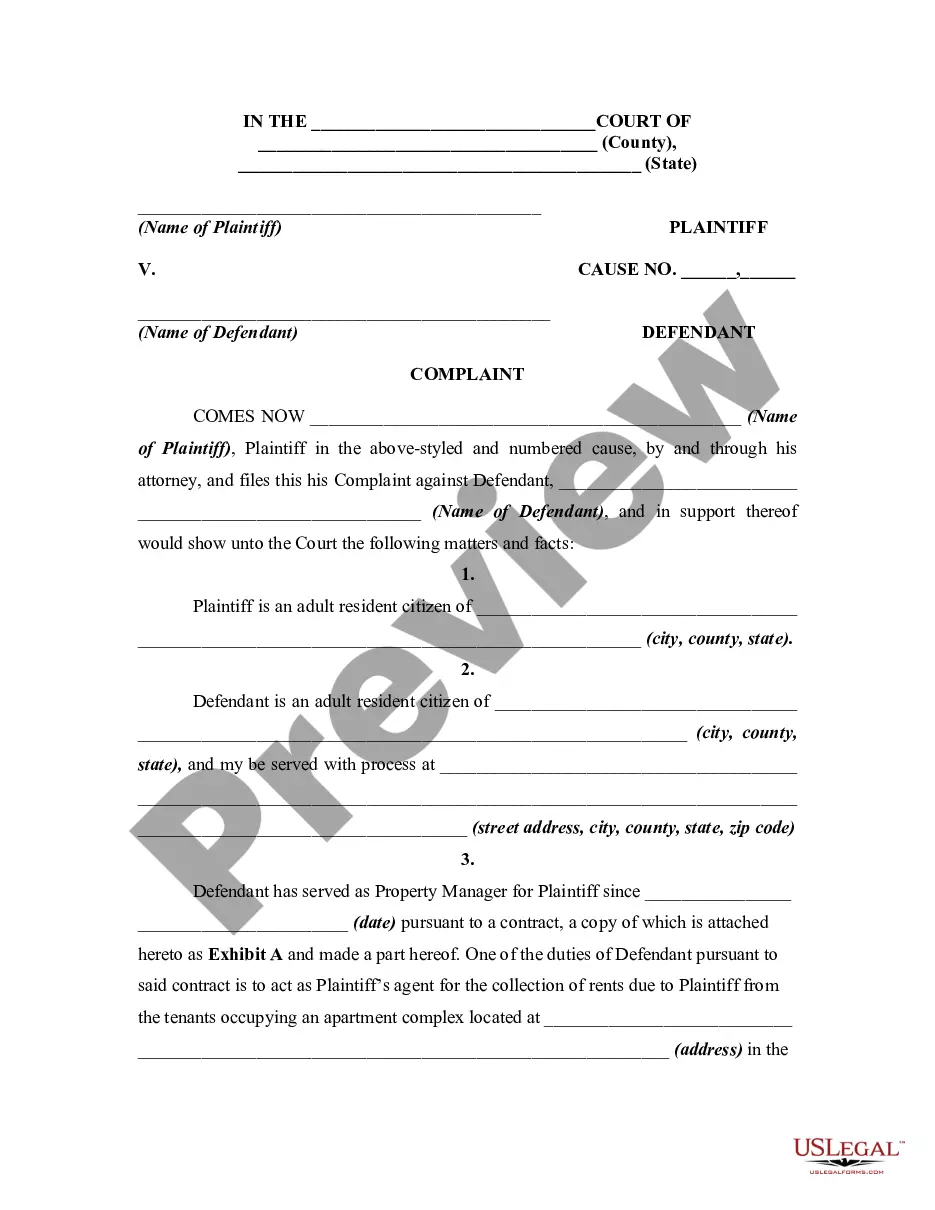
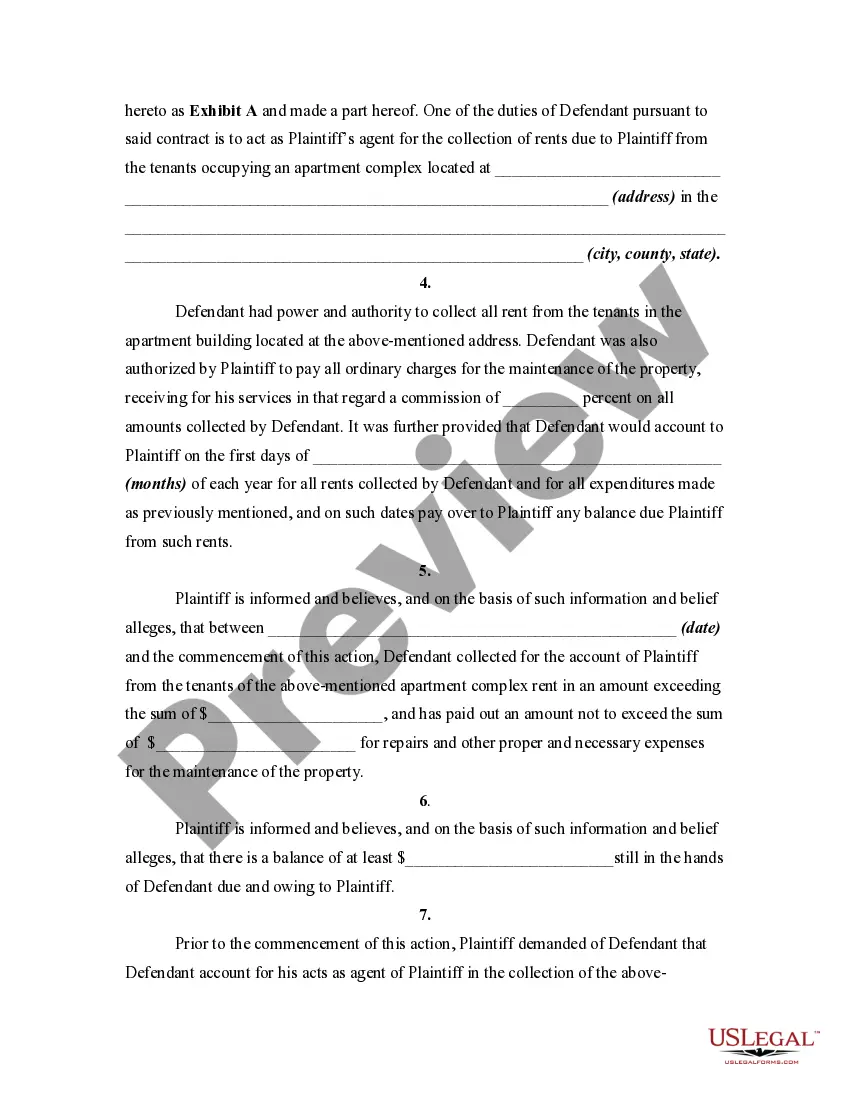
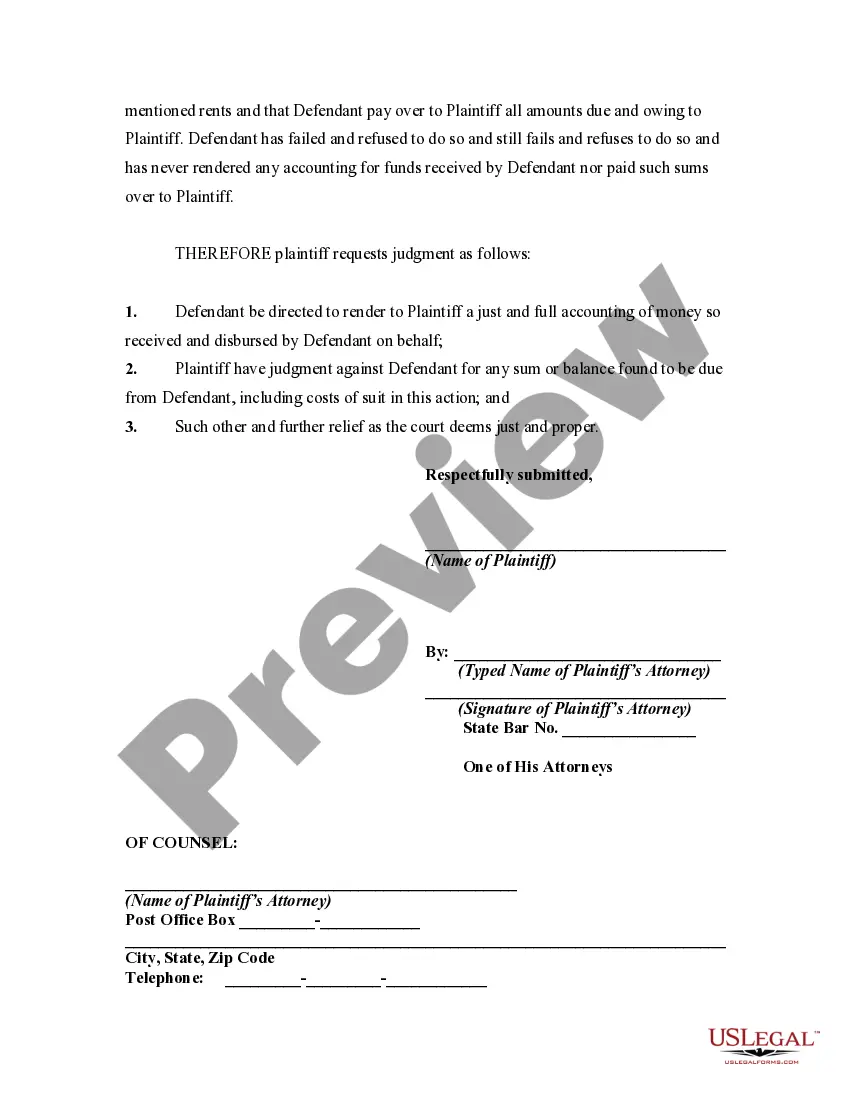
How to fill out Complaint By Owner Of Real Estate For Accounting And Payment Of Amount Due From Property Manager?
- If you're a returning user, log in to your account and download the desired form template directly by clicking the Download button. Make sure your subscription is active; renew it if necessary.
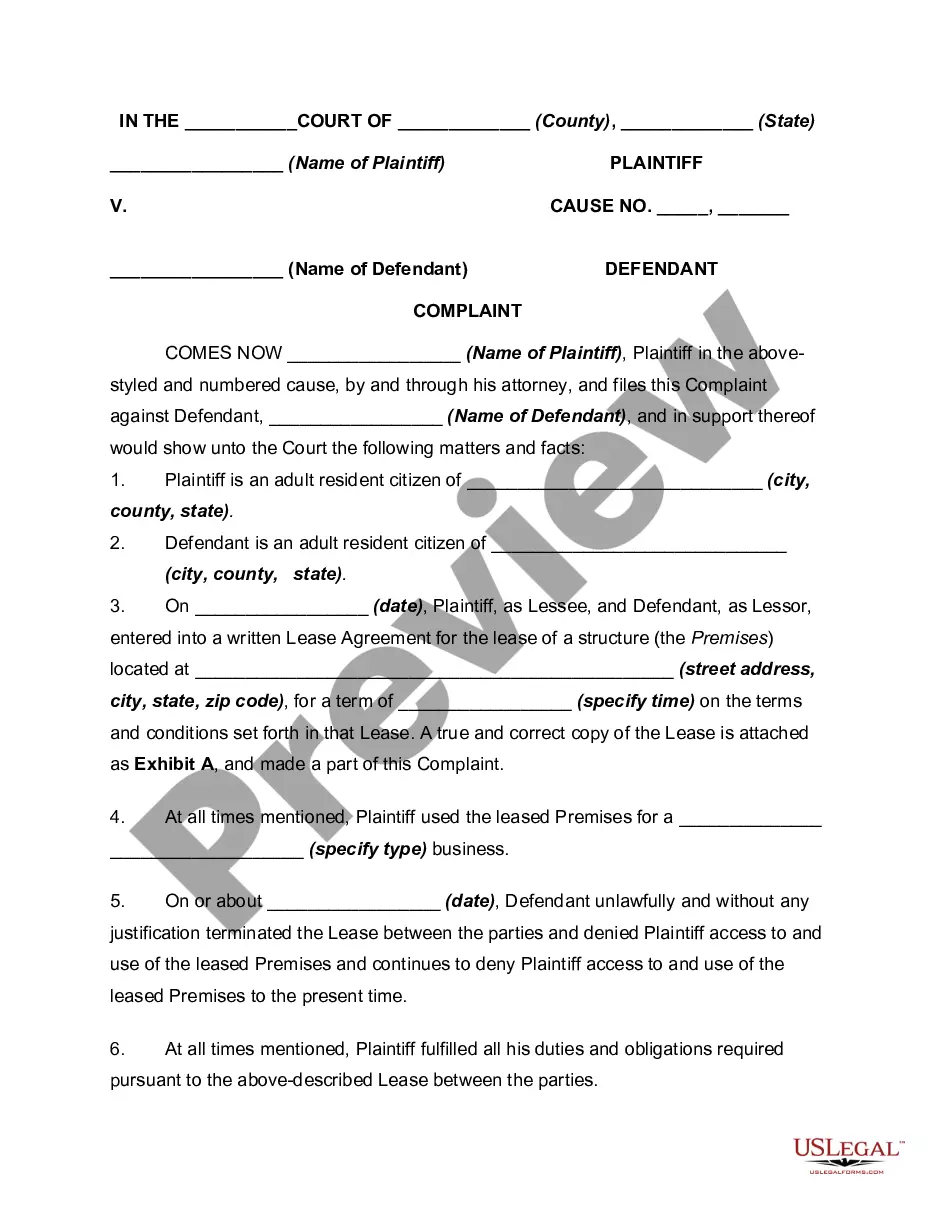
- For first-time users, begin by checking the Preview mode and read the form description carefully. Confirm that it aligns with your needs and complies with your local jurisdiction's regulations.
- If the needed document isn’t right, use the Search tab at the top of the page to find the correct form. This ensures you have exactly what you need.
- Once you identify the right form, click on the Buy Now button to select your preferred subscription plan. You'll need to create an account to access the extensive legal resources.
- Complete your purchase by providing your credit card information or opting to use your PayPal account.
- Finally, download your completed form and save it on your device. You can also access it anytime from the My Forms section in your profile.
In conclusion, US Legal Forms empowers users by providing a robust library with over 85,000 legal forms, ensuring that you can obtain the necessary documents for your estate property with ease and confidence.
Don't hesitate to get started; visit US Legal Forms today and simplify your estate documentation process!
Form popularity
FAQ
An estate is determined by conducting a thorough assessment of all your assets and liabilities upon death. This process typically involves cataloging property, evaluating its value, and accounting for any debts. By using resources from platforms like US Legal Forms, you can smoothly navigate the estate determination process and address any concerns.
You have an estate if you own any property or assets. This includes tangible items like homes and vehicles, as well as intangible assets like bank accounts and stocks. Recognizing the breadth of your estate property empowers you to create a comprehensive estate plan.
While you do not legally need a lawyer to set up an estate account, it is highly recommended to consult one. An estate attorney can provide valuable guidance on how to manage your estate property effectively and ensure compliance with legal requirements. Using a platform like US Legal Forms can simplify the process, offering templates and resources tailored to your needs.
Certain assets are not classified as estate property. For instance, assets held in a living trust, life insurance payouts, and retirement accounts with designated beneficiaries typically bypass the probate process. Understanding these exclusions can help streamline the estate management process.
Yes, everyone has an estate when they pass away, regardless of the size or value. Your estate property reflects what you own at the time of your death, which can be as simple as a few personal items or as complex as multiple properties and financial accounts. Recognizing this fact is essential for effective estate planning and ensuring your wishes are followed.
An estate is defined as the total property, assets, and liabilities you leave behind upon your death. This includes real estate, bank accounts, investments, personal belongings, and any debts you may have. Understanding what constitutes your estate property allows you to plan effectively for its management and distribution.
The timeframe to settle an estate can vary greatly, often spanning from several months to a few years. This period depends on the complexity of the estate property, the number of beneficiaries, and any potential disputes. Settling the estate promptly can ease the burden on heirs and ensure compliance with legal requirements. Tools and resources from US Legal Forms can assist in this process.
The 3 year rule means that any gifts made within three years before the donor's death are included in the estate property for tax purposes. This rule ensures that large gifts do not evade taxation. If you are planning your estate, understanding this rule can help in making informed decisions. Consider utilizing services from US Legal Forms to help outline your strategy.
To claim an estate, you must typically initiate probate proceedings and present valid documents such as the will. You will also need to identify the estate property and any assets involved. Resources such as US Legal Forms can guide you through the necessary steps and documentation. This preparation can simplify the claims process and help protect your rights.
Yes, you can file for probate years after a person dies, but there may be complications. Delayed filings can lead to issues regarding estate property distribution, especially if claims against the estate arise. It is advisable to seek legal guidance to understand the implications of late probate. US Legal Forms provides helpful information on the potential consequences of late filings.