Employer Forfeiture
Description
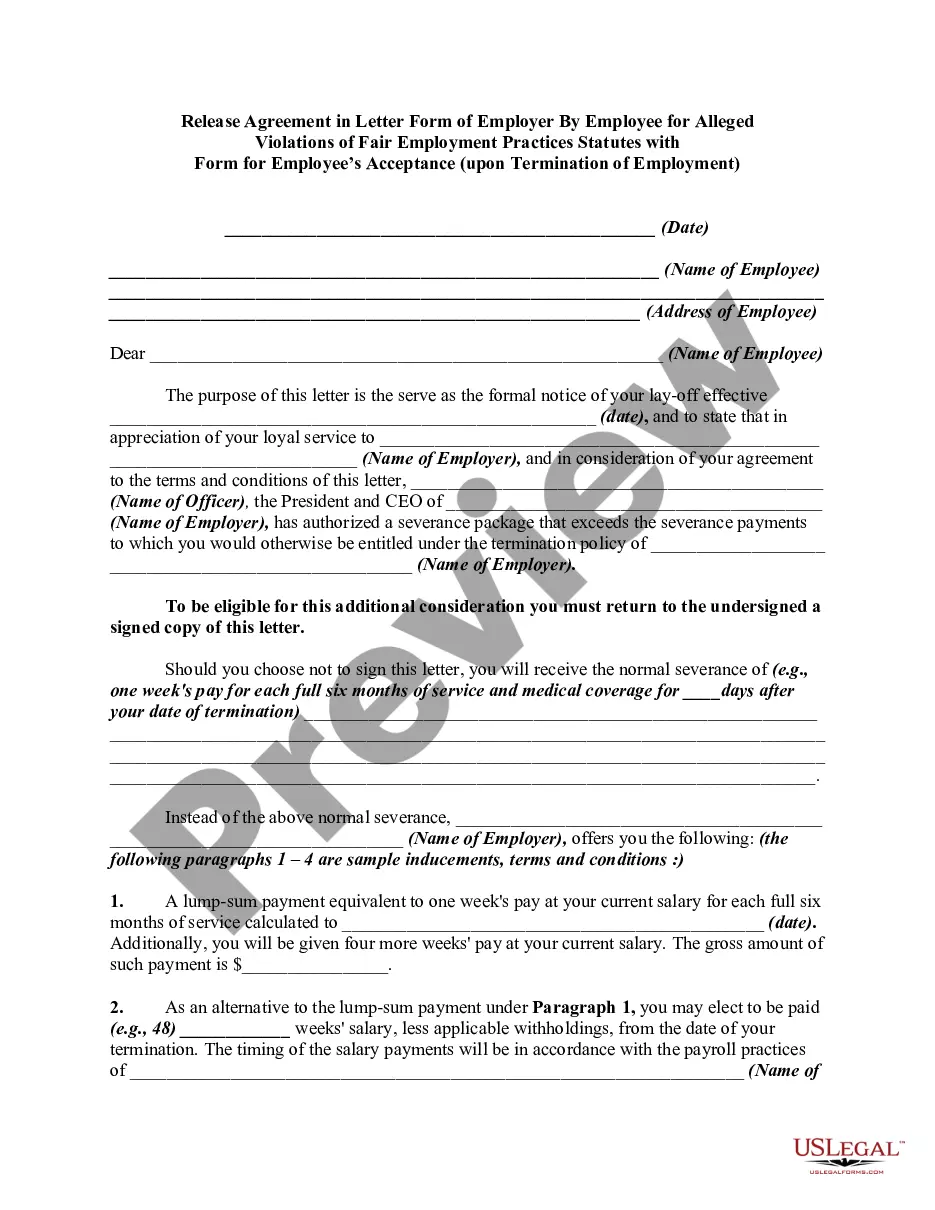
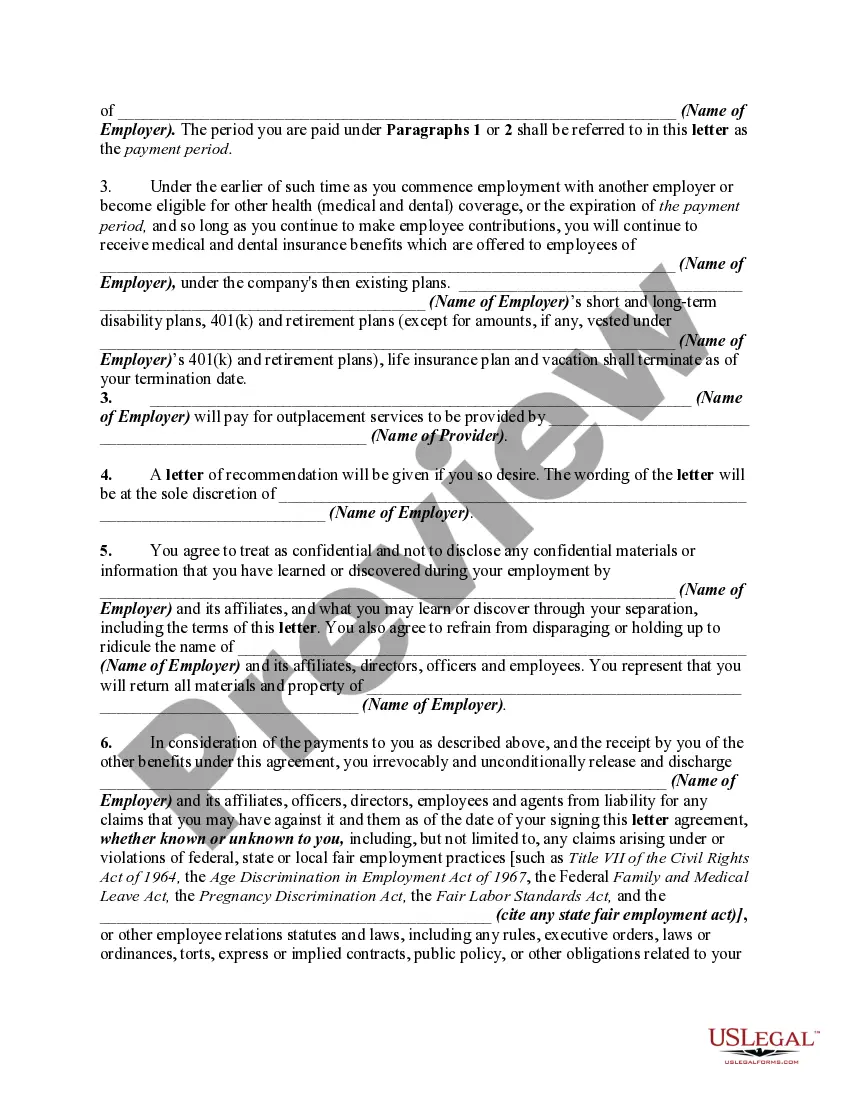
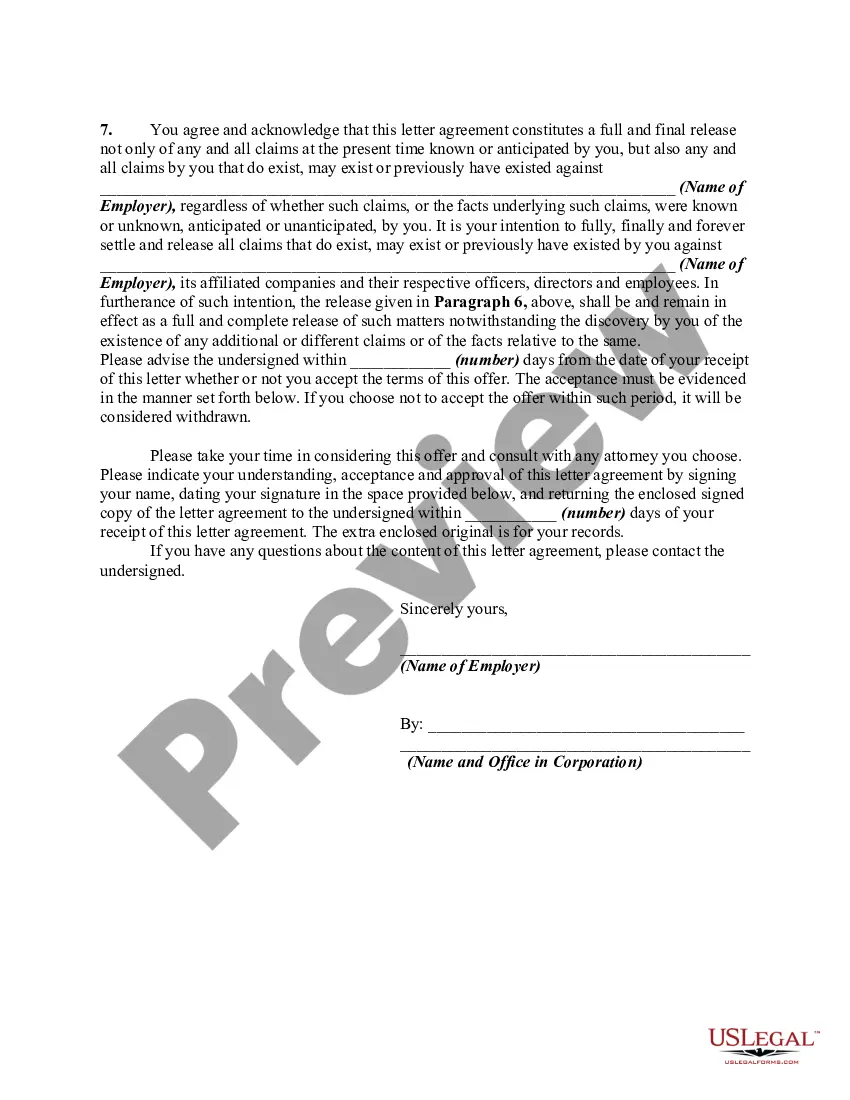
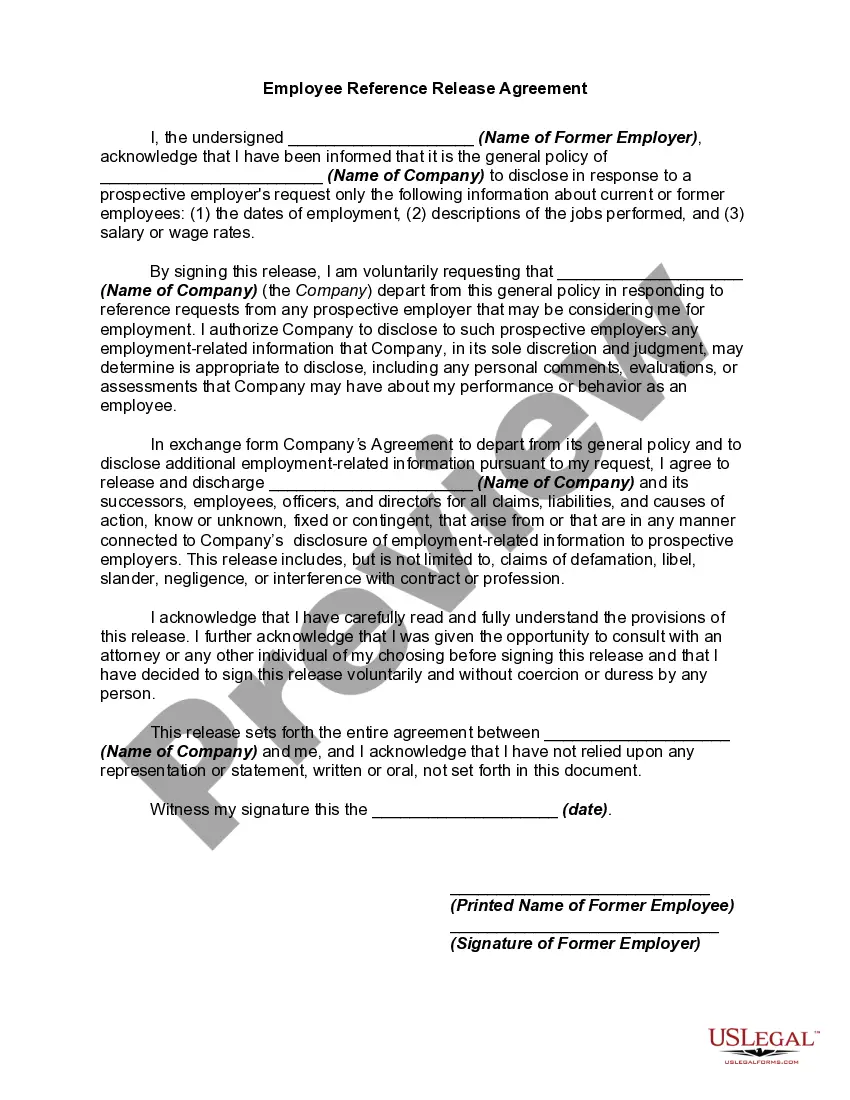
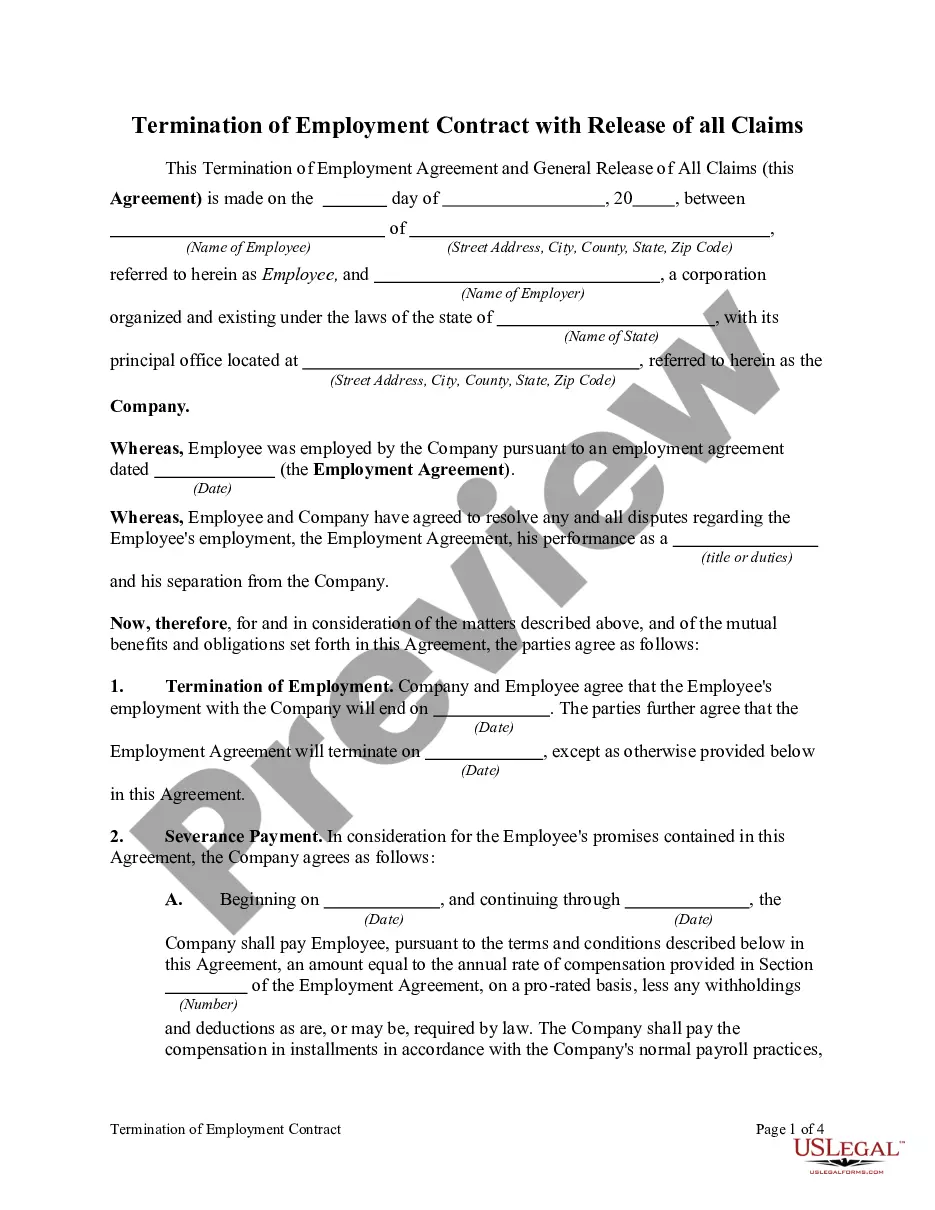
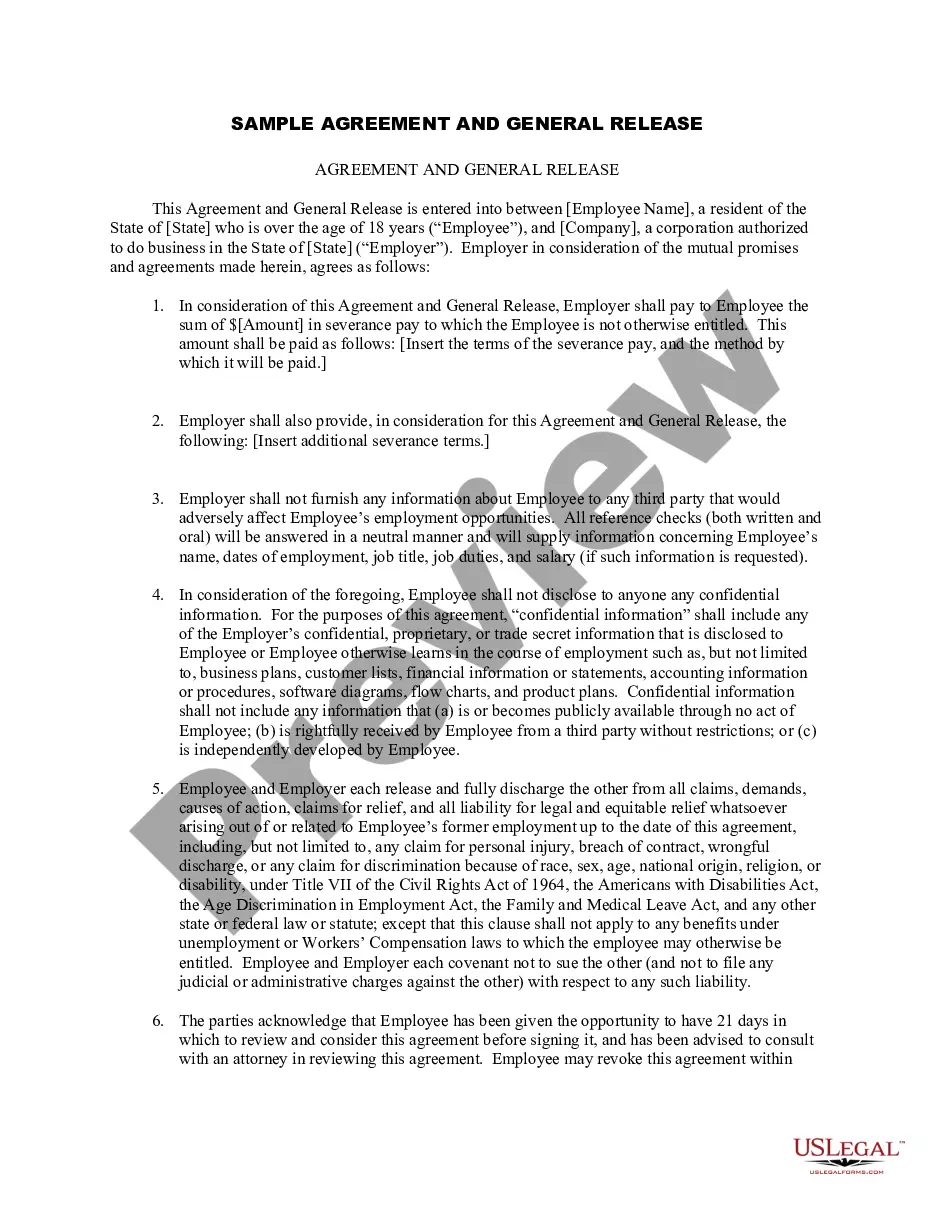


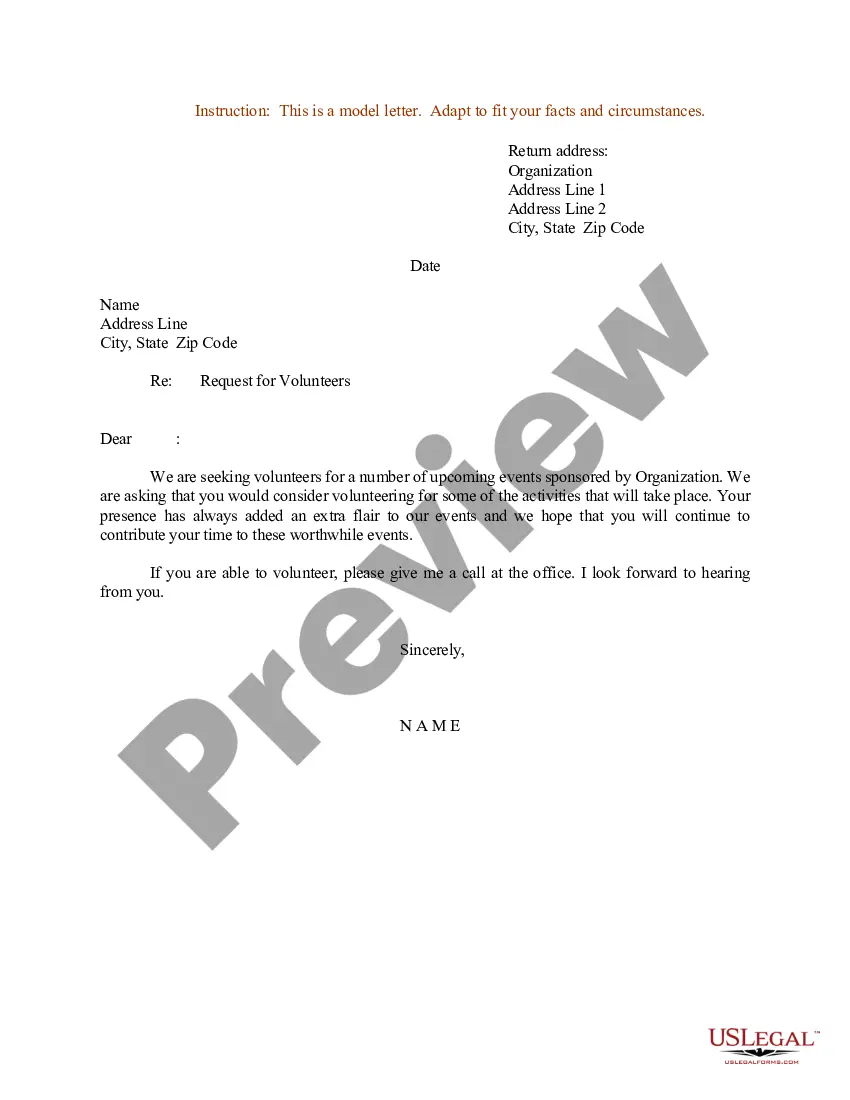
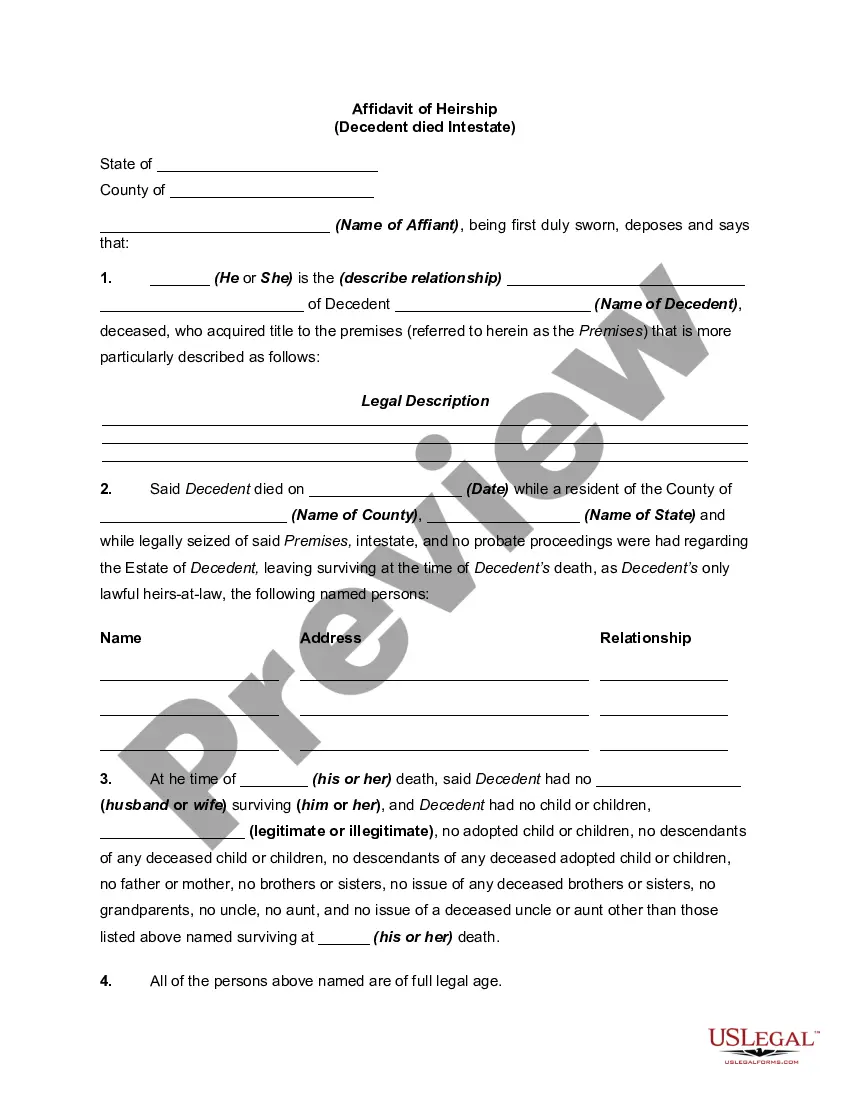
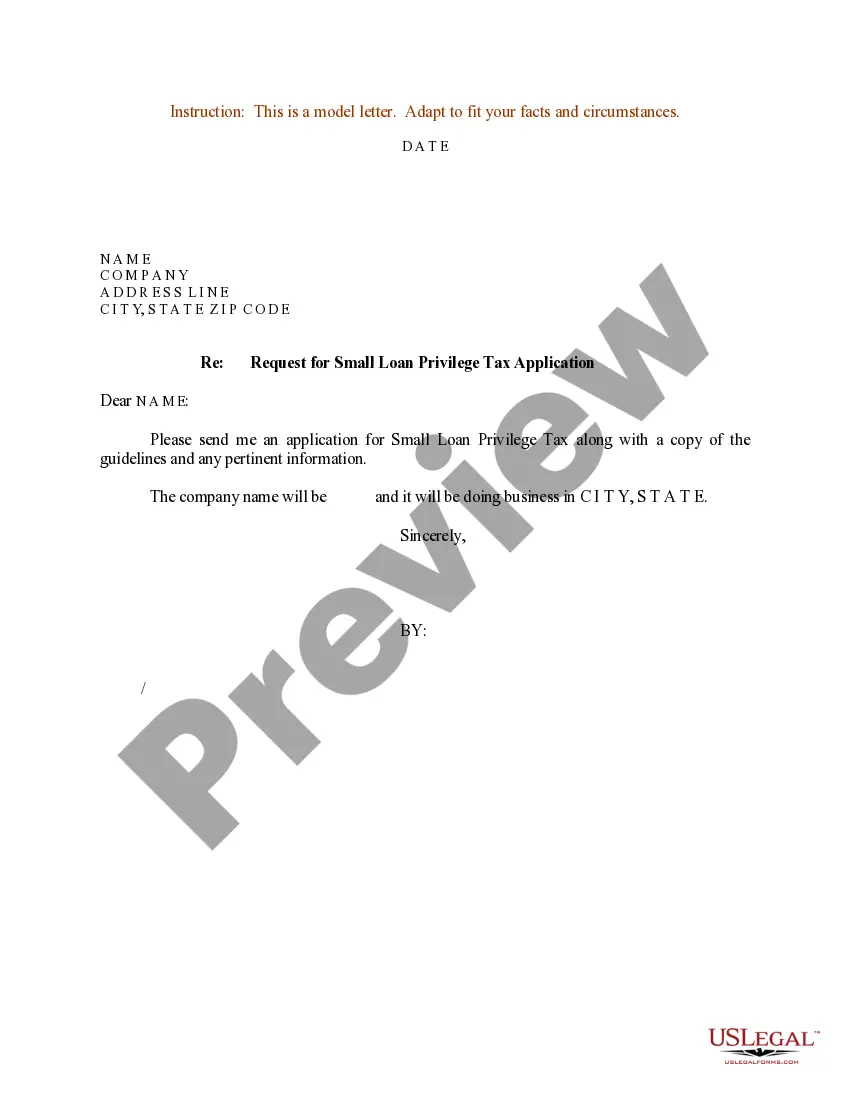
How to fill out Release Agreement In Letter Form Of Employer By Employee For Alleged Violations Of Fair Employment Practices Statutes With Form For Employee's Acceptance Upon Termination Of Job Or Employment?
Identifying a reliable location to obtain the latest and suitable legal forms is half the battle of managing bureaucracy.
Finding the appropriate legal documents requires precision and meticulousness, which is why it is crucial to obtain samples of Employer Forfeiture exclusively from trustworthy sources, such as US Legal Forms.
Once you have the form on your device, you can modify it using the editor or print it out and complete it by hand. Eliminate the hassle associated with your legal paperwork. Explore the extensive US Legal Forms catalog where you can discover legal templates, verify their applicability to your situation, and download them instantly.
- Utilize the catalog navigation or search bar to find your template.
- Review the form’s details to ensure it meets the criteria of your state and locality.
- Examine the form preview, if available, to confirm that the template is what you need.
- Return to the search to find the correct document if the Employer Forfeiture does not meet your requirements.
- If you are confident about the form’s applicability, download it.
- If you are an existing customer, click Log in to verify and access your selected templates in My documents.
- If you do not yet have an account, click Buy now to acquire the template.
- Choose the pricing option that aligns with your needs.
- Proceed to register to finalize your purchase.
- Complete your transaction by selecting a payment method (credit card or PayPal).
- Choose the document format for downloading the Employer Forfeiture.
Form popularity
FAQ
They must be used for one of the following 401(k) plan purposes: Reduce employer contributions; Pay reasonable plan expenses; or. Allocate as an additional employer contribution.
Most 401(k) plan documents require forfeitures to be used no later than the end of the plan year following the plan year during which the forfeiture occurred. In their proposed regulation, the IRS confirmed this deadline is the requirement.
The term ?forfeiture? refers to the non-vested portion of a former employee's account balance in the plan. For example, if a participant is 40% vested in their profit-sharing account source when he or she terminates, the remaining 60% of his or her profit-sharing account balance will become a forfeiture.
Most typically, forfeitures are used to pay plan expenses. Any remaining forfeitures are then allocated to participants as an employer contribution offset or a separate contribution all together.
The Employer Contributions Forfeiture Credit allows eligible reporting units to use forfeited employer contributions as a credit for future employer contribution payments.