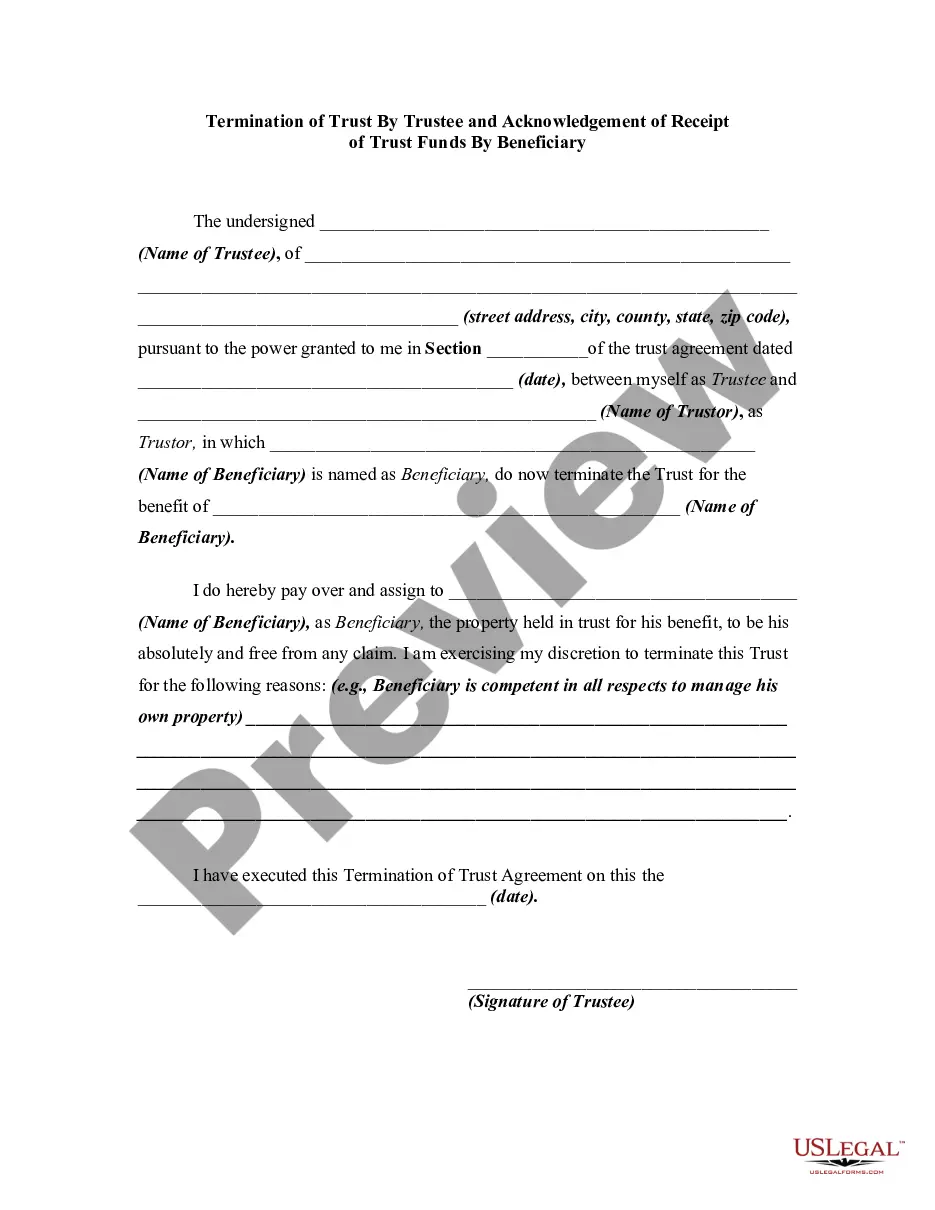
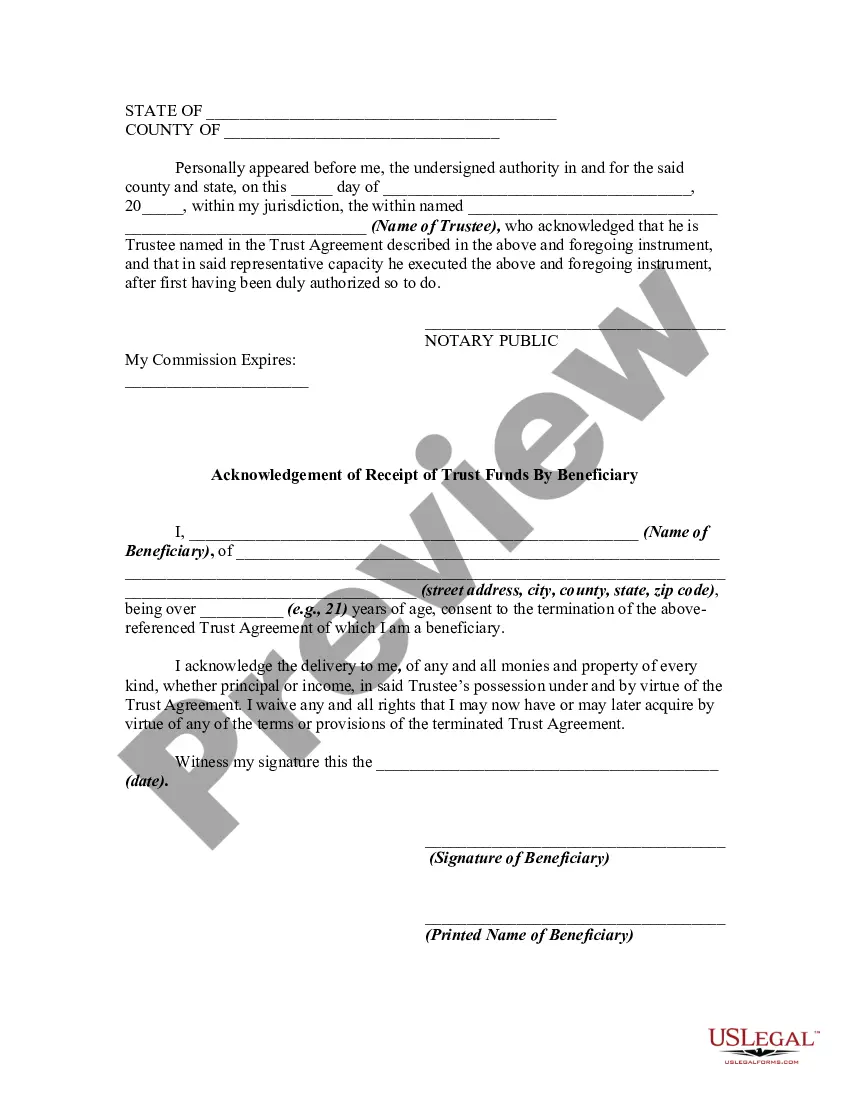
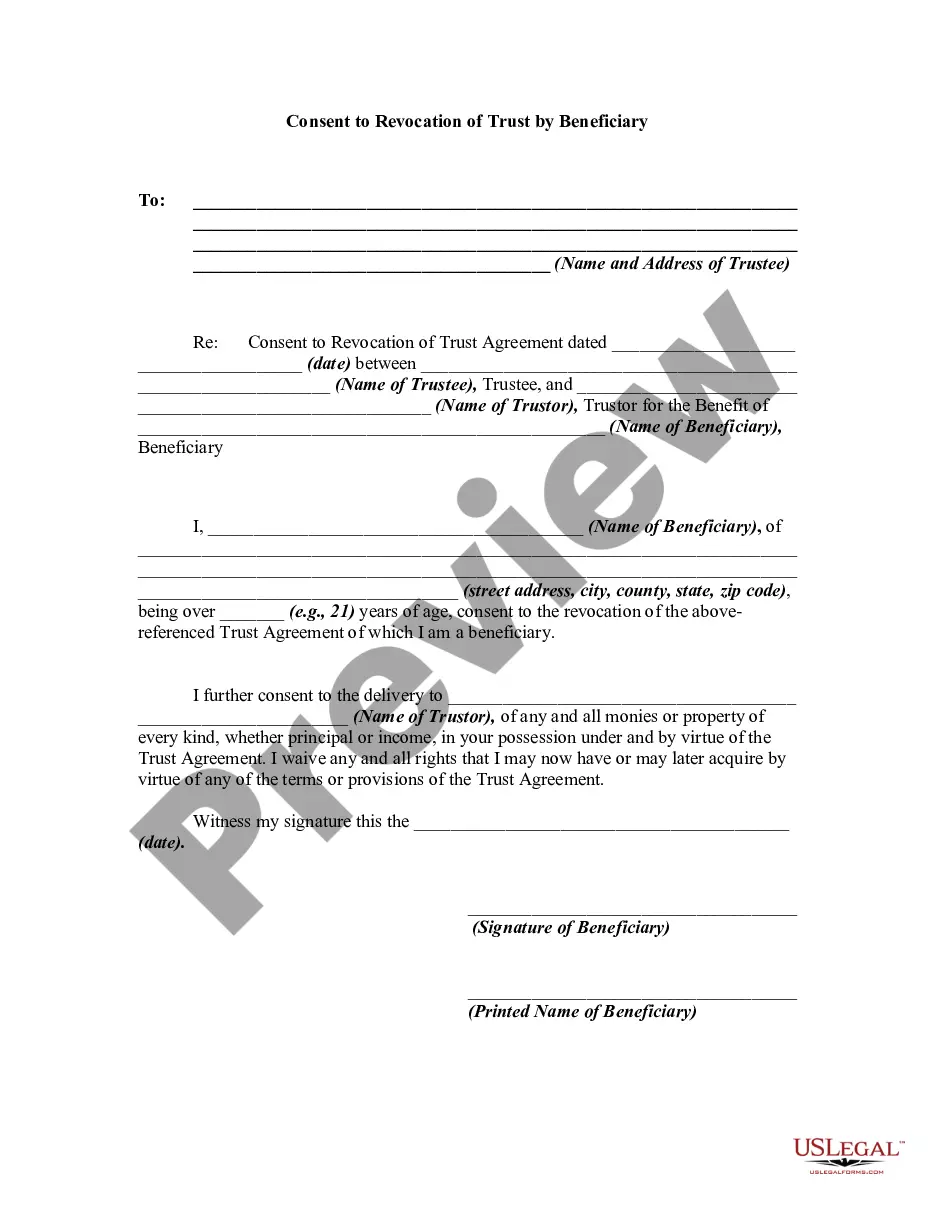
Irrevocable Trust Termination
Description
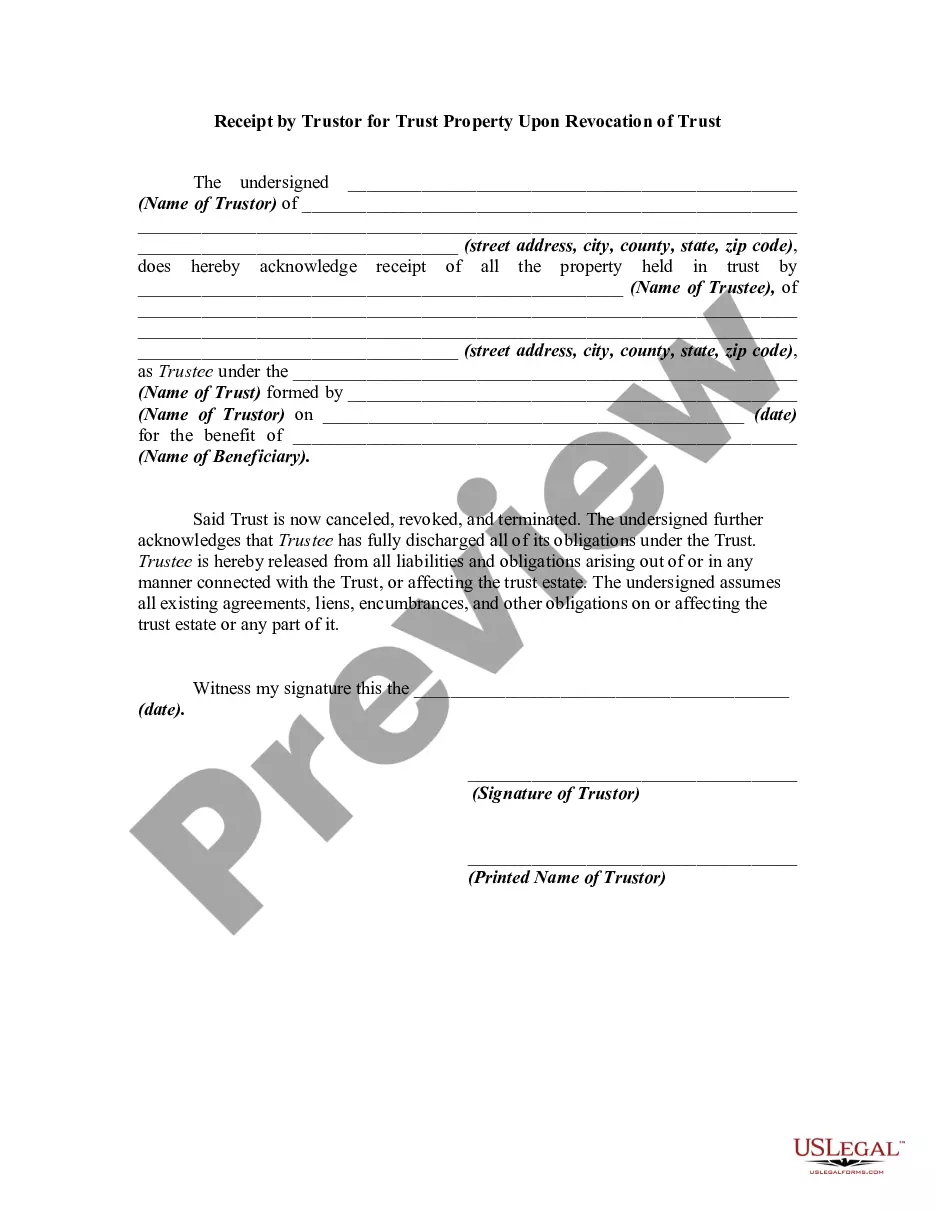
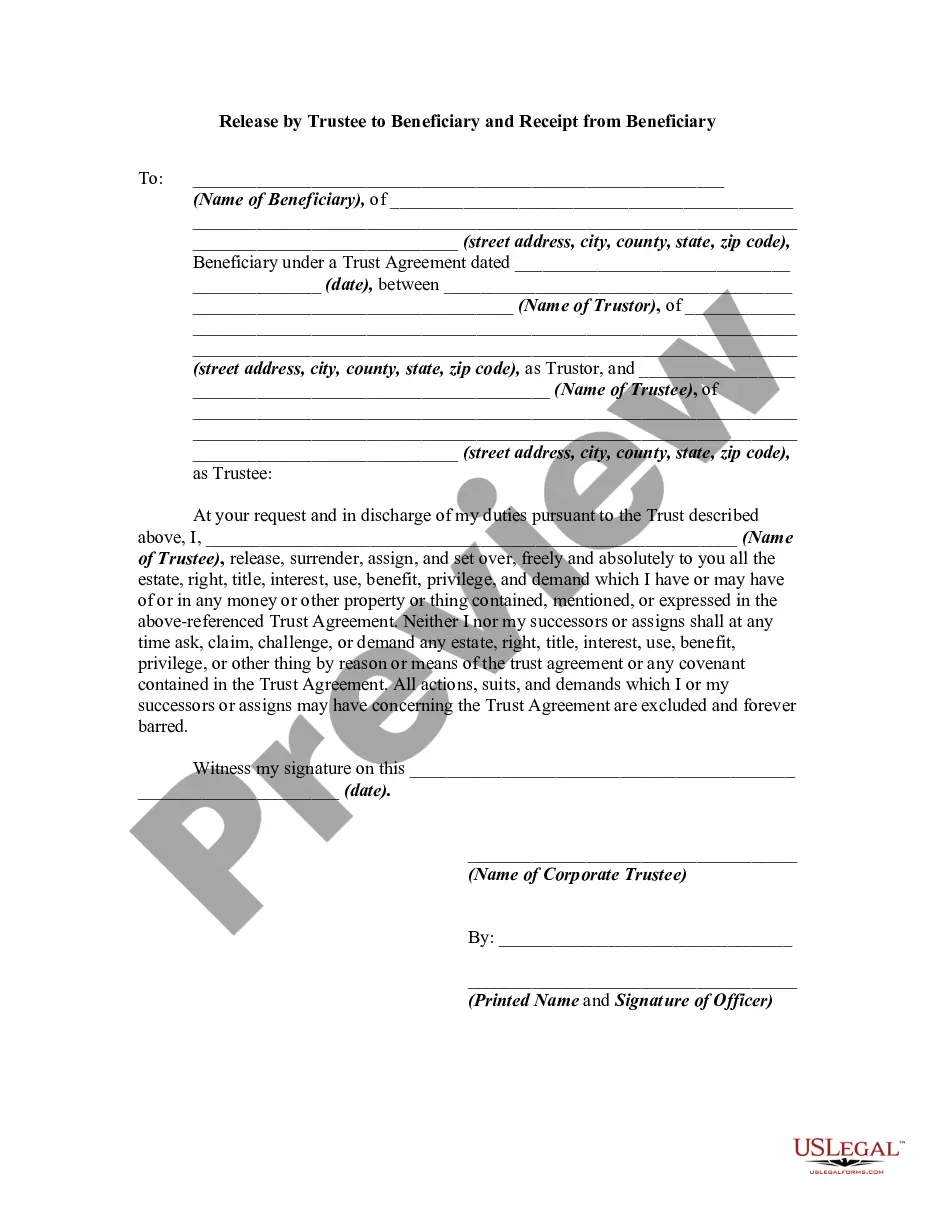
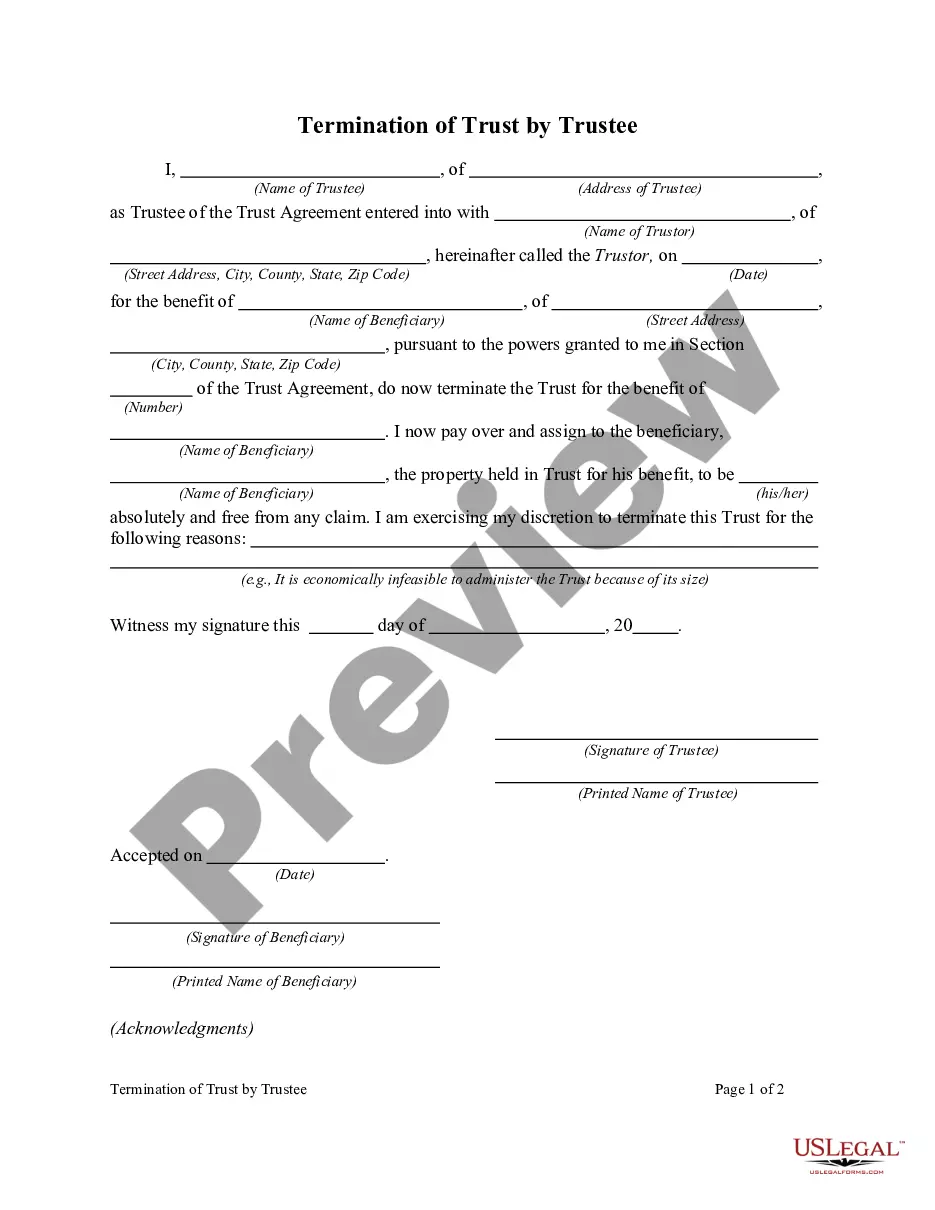
Get your form ready online
Our built-in tools help you complete, sign, share, and store your documents in one place.
Make edits, fill in missing information, and update formatting in US Legal Forms—just like you would in MS Word.
Download a copy, print it, send it by email, or mail it via USPS—whatever works best for your next step.
Sign and collect signatures with our SignNow integration. Send to multiple recipients, set reminders, and more. Go Premium to unlock E-Sign.
If this form requires notarization, complete it online through a secure video call—no need to meet a notary in person or wait for an appointment.
We protect your documents and personal data by following strict security and privacy standards.

Make edits, fill in missing information, and update formatting in US Legal Forms—just like you would in MS Word.

Download a copy, print it, send it by email, or mail it via USPS—whatever works best for your next step.

Sign and collect signatures with our SignNow integration. Send to multiple recipients, set reminders, and more. Go Premium to unlock E-Sign.

If this form requires notarization, complete it online through a secure video call—no need to meet a notary in person or wait for an appointment.

We protect your documents and personal data by following strict security and privacy standards.
Looking for another form?







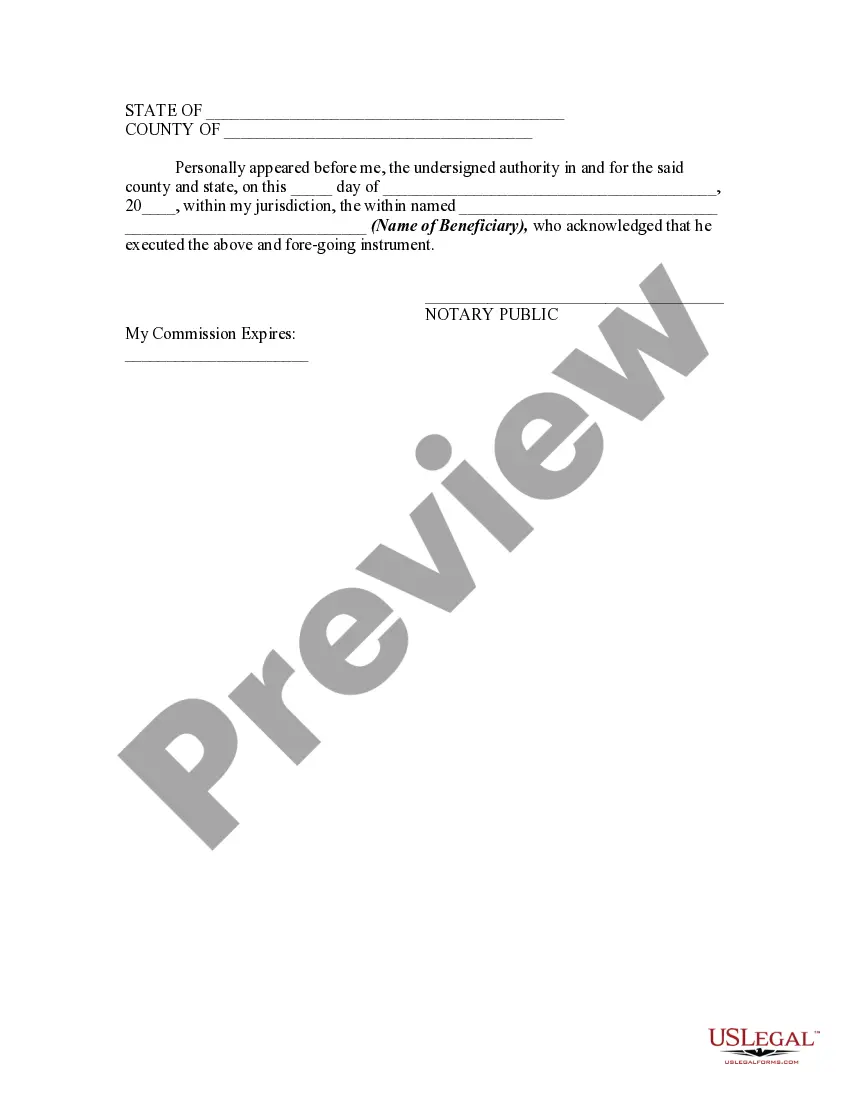
How to fill out Termination Of Trust By Trustee And Acknowledgment Of Receipt Of Trust Funds By Beneficiary?
- Log in to your existing US Legal Forms account. Ensure your subscription is active; if not, renew it as specified in your payment plan.
- Preview the available forms and their descriptions. Confirm that you have selected the correct document that aligns with your needs and meets local jurisdiction standards.
- If necessary, use the Search feature to locate a different template if you encounter any discrepancies in your first choice.
- Purchase the selected document by clicking the Buy Now button. Choose your preferred subscription plan and create an account to gain full access to the document library.
- Complete the payment process by entering your credit card information or utilizing your PayPal account.
- Download the finalized form to your device. You can also access it anytime through the My Forms section of your account.
Once you've successfully completed these steps, you'll have your irrevocable trust termination form ready to use. US Legal Forms makes it easier than ever to handle your legal documents accurately and efficiently.
Ready to simplify your legal processes? Start your journey with US Legal Forms today!
Form popularity
FAQ
Creditors generally cannot access the assets held in an irrevocable trust, provided the trust was established correctly and according to state laws. This feature is one of the primary benefits of setting up such a trust, protecting your assets from potential claims. However, it is essential to consult a legal expert to navigate the intricacies of each case, especially concerning irrevocable trust termination and its implications.
Yes, an irrevocable trust can indeed end, but this typically happens under specific circumstances. Common reasons include the trust fulfilling its intended purpose, the mutual agreement of all beneficiaries, or a court order. Understanding the reasons for irrevocable trust termination allows you to plan accordingly, ensuring that your estate is handled as you desire.
An irrevocable trust terminates primarily through the terms outlined in the trust document itself. Depending on the trust's provisions, it may end when its purpose is fulfilled or at a specific date. Additionally, trust termination can occur when all beneficiaries agree, which can be a simple process if all parties are aligned and understand the implications of irrevocable trust termination.
The 5 year rule in an irrevocable trust refers to a period when assets transferred into the trust may be shielded from taxes or creditors. Essentially, if the grantor lives for five years after making gifts to the trust, those assets generally gain protection from estate taxes. This rule ties closely to the overall concept of irrevocable trust termination, as understanding this timeframe can help you plan your estate more effectively.
A trust can be terminated in three primary ways: through the trust's terms, mutual agreement among the beneficiaries, or by court order. Firstly, if the trust document specifies conditions for termination, these must be adhered to. Secondly, when all beneficiaries agree, they may petition the court for termination. Lastly, a court may intervene if valid reasons exist that warrant termination, emphasizing the need for legal guidance in such cases.
Yes, an irrevocable trust can be terminated under certain conditions. The general consensus among beneficiaries and valid reasons for termination, such as significant changes in circumstances, play a crucial role in this process. However, it often requires formal processes, including legal proceedings, to ensure everything complies with state laws. Seeking legal counsel can help navigate this often complicated terrain.
Removing someone from an irrevocable trust is not a straightforward task, as the trust generally can't be changed easily. To pursue this, you may need the consent of all beneficiaries or a compelling reason to convince a court to approve the removal. Approaching this delicately and legally is essential, as disputes can affect trust termination. Consider using platforms like uslegalforms for guidance tailored to your specific situation.
Terminating an irrevocable trust usually requires the agreement of all beneficiaries and may involve court approval. The process typically includes filing a petition for irrevocable trust termination with the appropriate court. Additionally, you may need to provide valid reasons for the termination, such as changes in circumstances or goals. Remember, consulting a legal expert can provide guidance through this complex process.
Removing a trustee from an irrevocable trust can be a challenging process. Typically, the trust document outlines the specific procedures for removal, which may require court involvement. To ensure a smooth irrevocable trust termination, consider consulting with an attorney who specializes in trust law. Platforms like US Legal Forms can provide valuable resources and templates to help navigate these complexities.
Terminating an irrevocable trust typically requires a multi-step process, as the trust is designed to be permanent. You can seek the consent of all beneficiaries involved or provide a legal reason supported by state laws. Sometimes, the court may allow termination if it serves the best interest of the beneficiaries. For assistance with irrevocable trust termination, consider using USLegalForms, which offers resources and guidance to navigate this complex process.