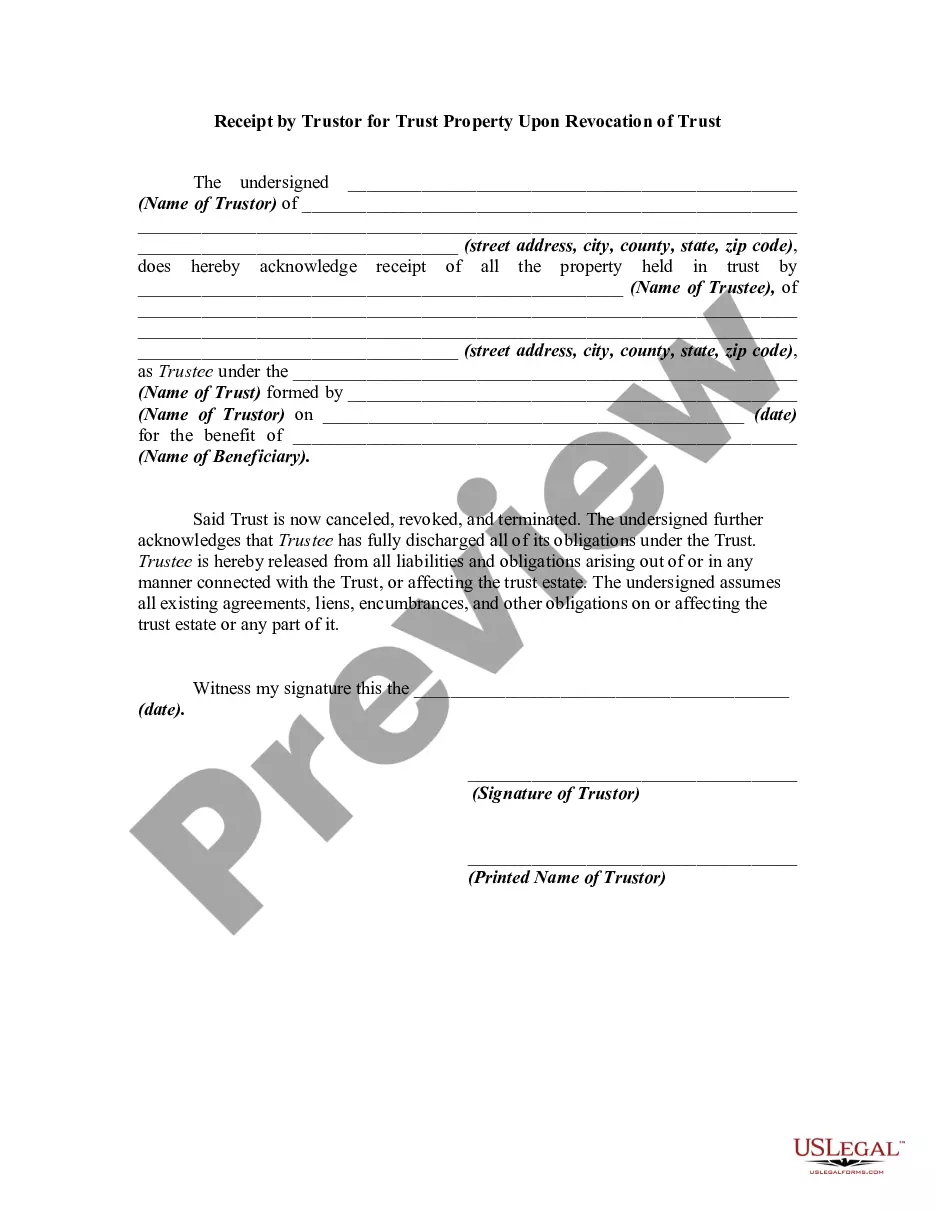
Revocation Acknowledgment Trustee With Death Deed
Description
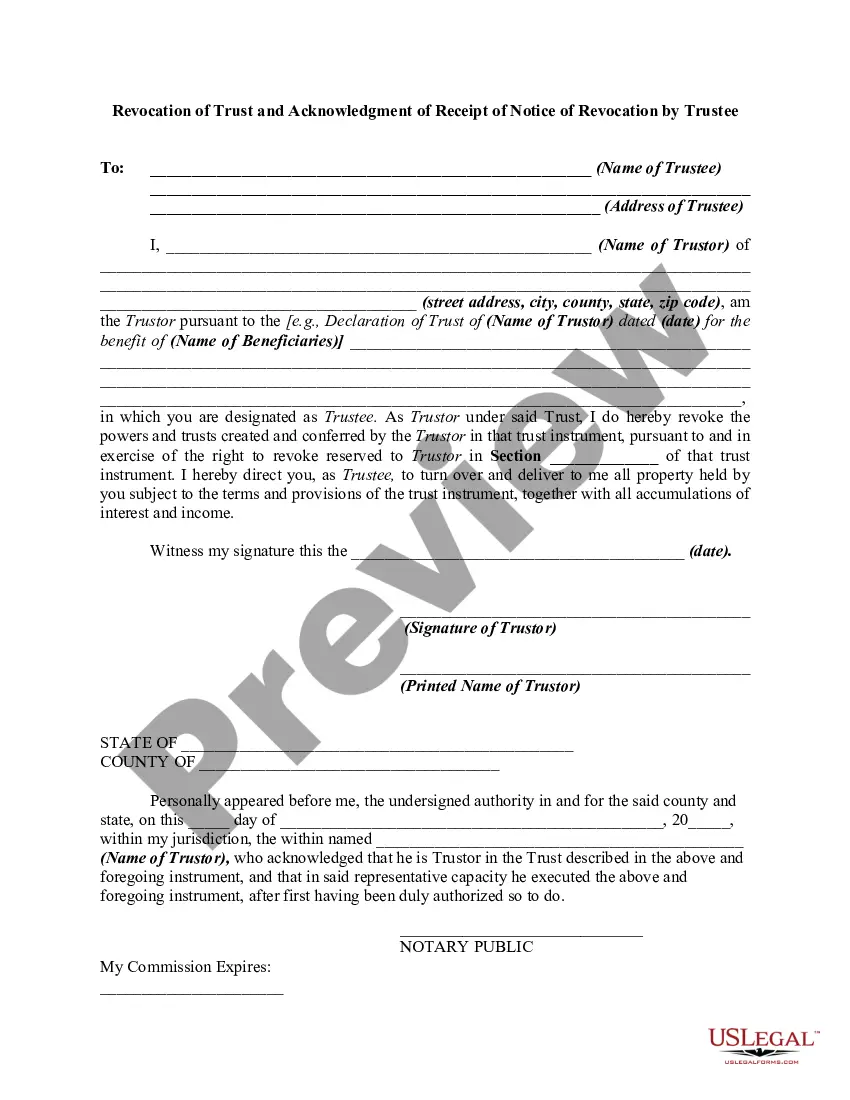
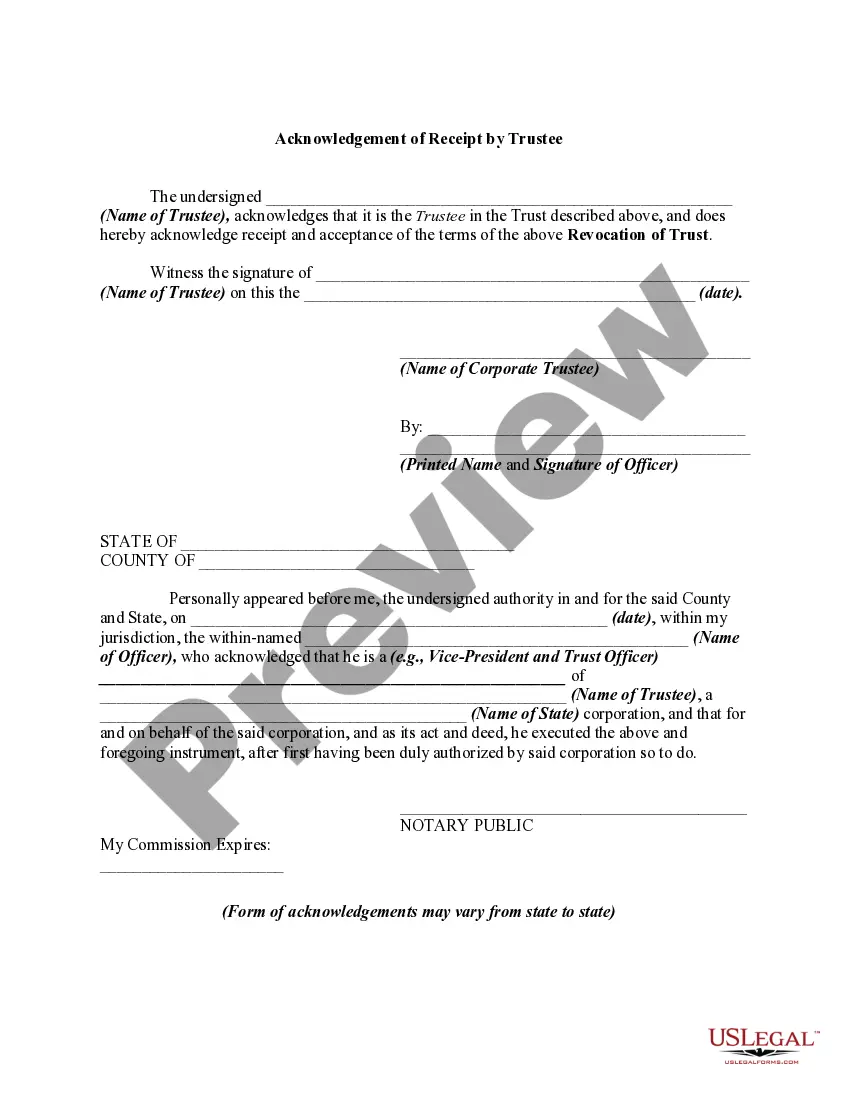
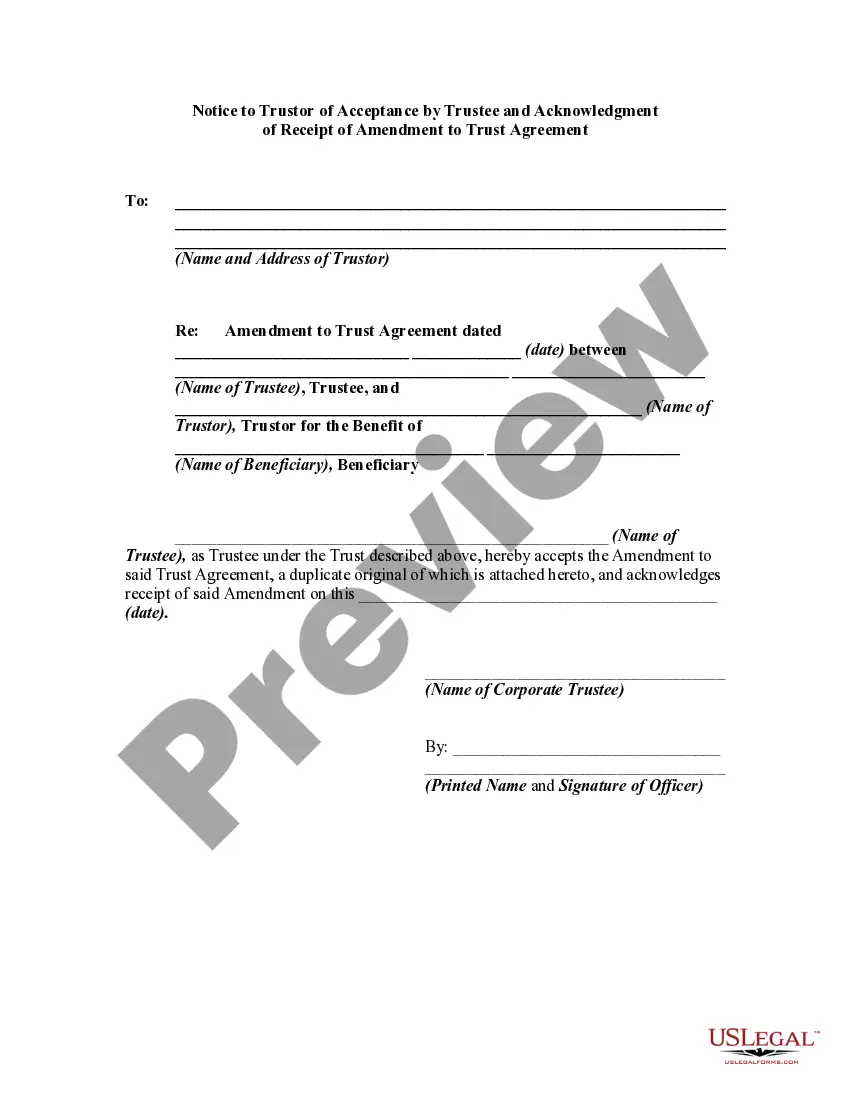
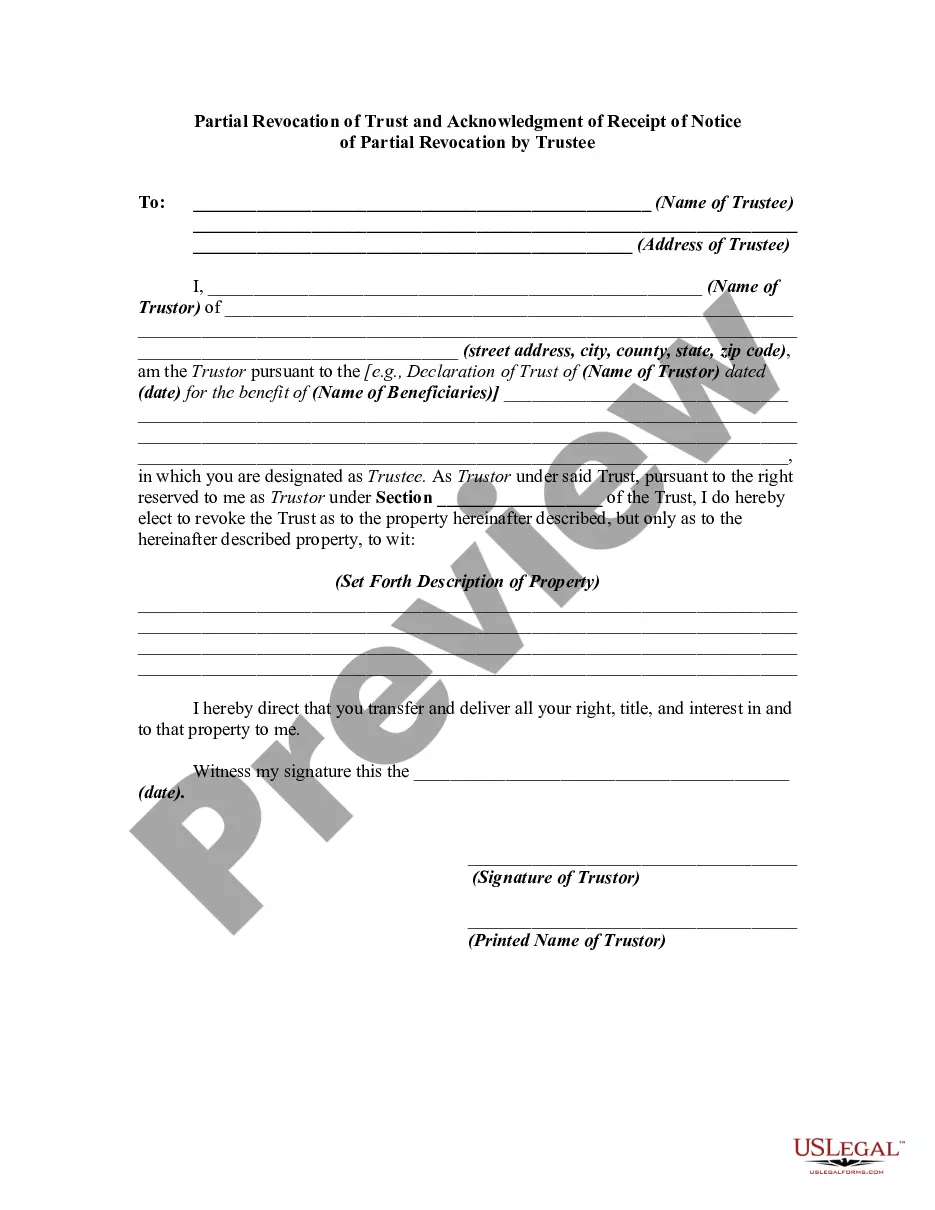
Get your form ready online
Our built-in tools help you complete, sign, share, and store your documents in one place.
Make edits, fill in missing information, and update formatting in US Legal Forms—just like you would in MS Word.
Download a copy, print it, send it by email, or mail it via USPS—whatever works best for your next step.
Sign and collect signatures with our SignNow integration. Send to multiple recipients, set reminders, and more. Go Premium to unlock E-Sign.
If this form requires notarization, complete it online through a secure video call—no need to meet a notary in person or wait for an appointment.
We protect your documents and personal data by following strict security and privacy standards.

Make edits, fill in missing information, and update formatting in US Legal Forms—just like you would in MS Word.

Download a copy, print it, send it by email, or mail it via USPS—whatever works best for your next step.

Sign and collect signatures with our SignNow integration. Send to multiple recipients, set reminders, and more. Go Premium to unlock E-Sign.

If this form requires notarization, complete it online through a secure video call—no need to meet a notary in person or wait for an appointment.

We protect your documents and personal data by following strict security and privacy standards.
Looking for another form?






How to fill out Revocation Of Trust And Acknowledgment Of Receipt Of Notice Of Revocation By Trustee?
- If you are an existing user of US Legal Forms, log in to your account and click on the Download button to access your required form template. Ensure your subscription remains valid.
- For first-time users, start by browsing the extensive library. Check the Preview mode and form descriptions thoroughly to select the one that fits your legal requirements.
- If necessary, utilize the Search tab to find alternative templates based on your specific needs.
- Select the desired document by clicking the Buy Now button and choose your preferred subscription plan. Registration is essential to unlock access to the complete library.
- Complete your purchase by providing your payment information via credit card or PayPal.
- Finally, download the form to your device. You can always access it later in the My Forms section of your profile.
Using US Legal Forms offers significant advantages, including a robust collection of over 85,000 legal forms that surpasses many competitors. This is coupled with access to premium experts who can aid in form completion.
Start your journey today by exploring the vast resources available at US Legal Forms and ensure your legal documents are accurate and compliant.
Form popularity
FAQ
While transfer on death deeds offer benefits, they also have disadvantages. One major drawback is that Tod deeds do not provide the same level of control over the property during the grantor's lifetime. This can lead to unintended consequences if the grantor's circumstances change. Relying solely on a Tod deed without involving the revocation acknowledgment trustee with death deed can increase risks, making it wise to seek professional guidance.
Yes, a transfer on death deed can be contested in Texas. Contesting such a deed typically involves proving that the grantor lacked mental capacity at the time of signing or that the deed was obtained through fraud. Engaging the services of a knowledgeable attorney familiar with the revocation acknowledgment trustee with death deed can help navigate this process effectively. Legal disputes often arise, so proper guidance is essential.
To revoke a transfer on death deed in Texas, you must execute a new deed clearly stating the revocation. You should file this new deed with the appropriate county clerk office where the original Tod deed was recorded. This process ensures that all parties are aware of the changes, especially the revocation acknowledgment trustee with death deed. Proper documentation is crucial to prevent future disputes.
Transfer on death (Tod) deeds can present various issues. One common problem is that these deeds may not account for changes in relationships or family dynamics, leading to disputes. Additionally, if the grantor does not properly execute the deed, the revocation acknowledgment trustee with death deed may not be valid, causing complications in property transfer. It's essential to consider these factors when utilizing Tod deeds.
To revoke a transfer on death deed in California, you need to file a new deed that expressly states the revocation. This newly drafted document must be signed and notarized before it is recorded with the county recorder’s office. Following the correct process ensures that the revocation is legally binding. For guidance on these steps, utilize resources from US Legal Forms.
In most cases, a power of attorney can change a deed if the principal grants such authority in the power of attorney document. However, once the principal passes away, the power of attorney is no longer valid, and any previously established arrangements cannot be altered. It's vital to understand these distinctions to avoid legal issues. US Legal Forms can help clarify these legal matters.
The primary difference between power of attorney (POA) and transfer on death (TOD) lies in the authority granted and timing. A POA allows an individual to make decisions for another person regarding various matters while they are alive, but it ceases upon death. Conversely, a TOD enables the transfer of assets directly to beneficiaries after the owner passes. For a clear comparison, explore information on US Legal Forms.
A power of attorney cannot change a beneficiary deed because this type of deed is irrevocable upon the grantor's death. The authority given through power of attorney ends upon death, which means the original grantee must act independently. Understanding these limits is essential for effective estate planning. US Legal Forms offers guidance on these legal subjects.
To revoke a transfer on death deed in California, you must create a new deed stating your intent to revoke the existing one. This new deed should be signed and notarized before filing it with the county recorder's office. Ensure that the revocation deed complies with state laws to avoid complications. For assistance during this process, consider using resources from US Legal Forms.
No, a power of attorney cannot revoke a transfer on death deed as it does not grant authority over such legal documents. The principal person must take direct action to revoke the deed. This requirement emphasizes the importance of understanding legal boundaries surrounding property management. US Legal Forms can provide helpful insights into these legalities.