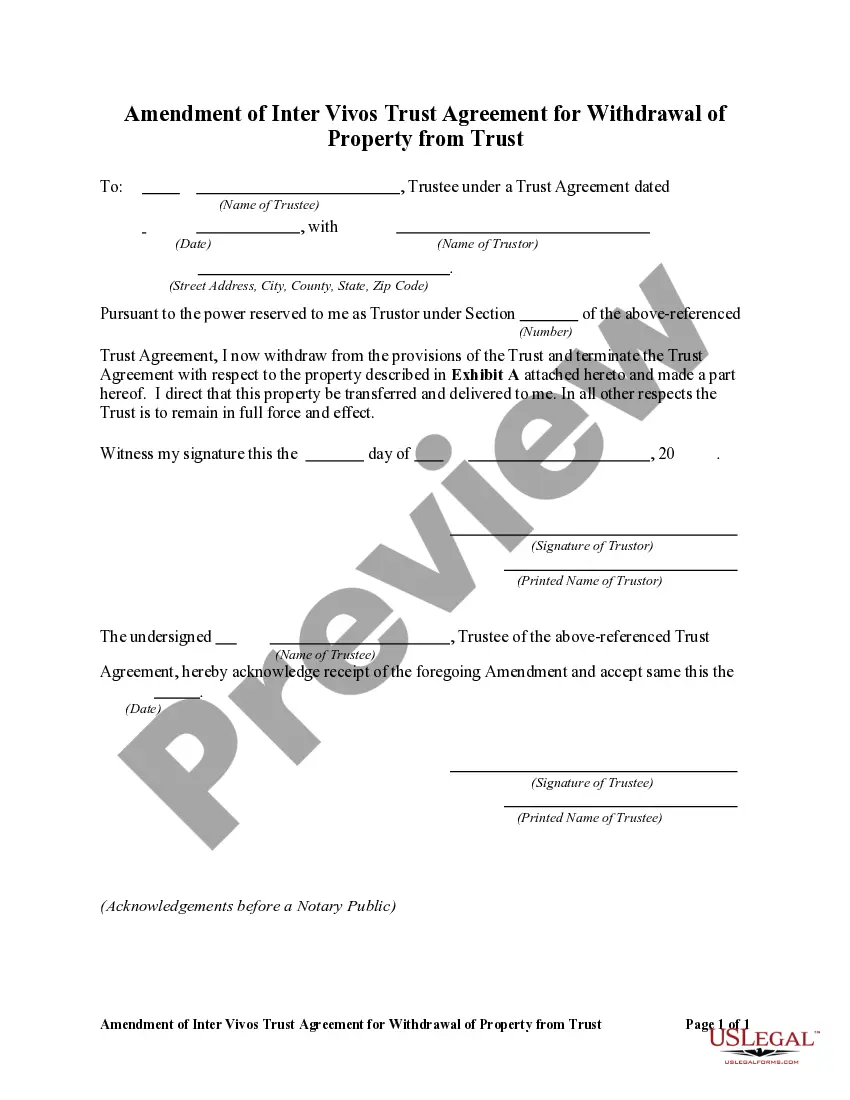
Revoke A Trust With The Client
Description
Get your form ready online
Our built-in tools help you complete, sign, share, and store your documents in one place.
Make edits, fill in missing information, and update formatting in US Legal Forms—just like you would in MS Word.
Download a copy, print it, send it by email, or mail it via USPS—whatever works best for your next step.
Sign and collect signatures with our SignNow integration. Send to multiple recipients, set reminders, and more. Go Premium to unlock E-Sign.
If this form requires notarization, complete it online through a secure video call—no need to meet a notary in person or wait for an appointment.
We protect your documents and personal data by following strict security and privacy standards.

Make edits, fill in missing information, and update formatting in US Legal Forms—just like you would in MS Word.

Download a copy, print it, send it by email, or mail it via USPS—whatever works best for your next step.

Sign and collect signatures with our SignNow integration. Send to multiple recipients, set reminders, and more. Go Premium to unlock E-Sign.

If this form requires notarization, complete it online through a secure video call—no need to meet a notary in person or wait for an appointment.

We protect your documents and personal data by following strict security and privacy standards.
Looking for another form?





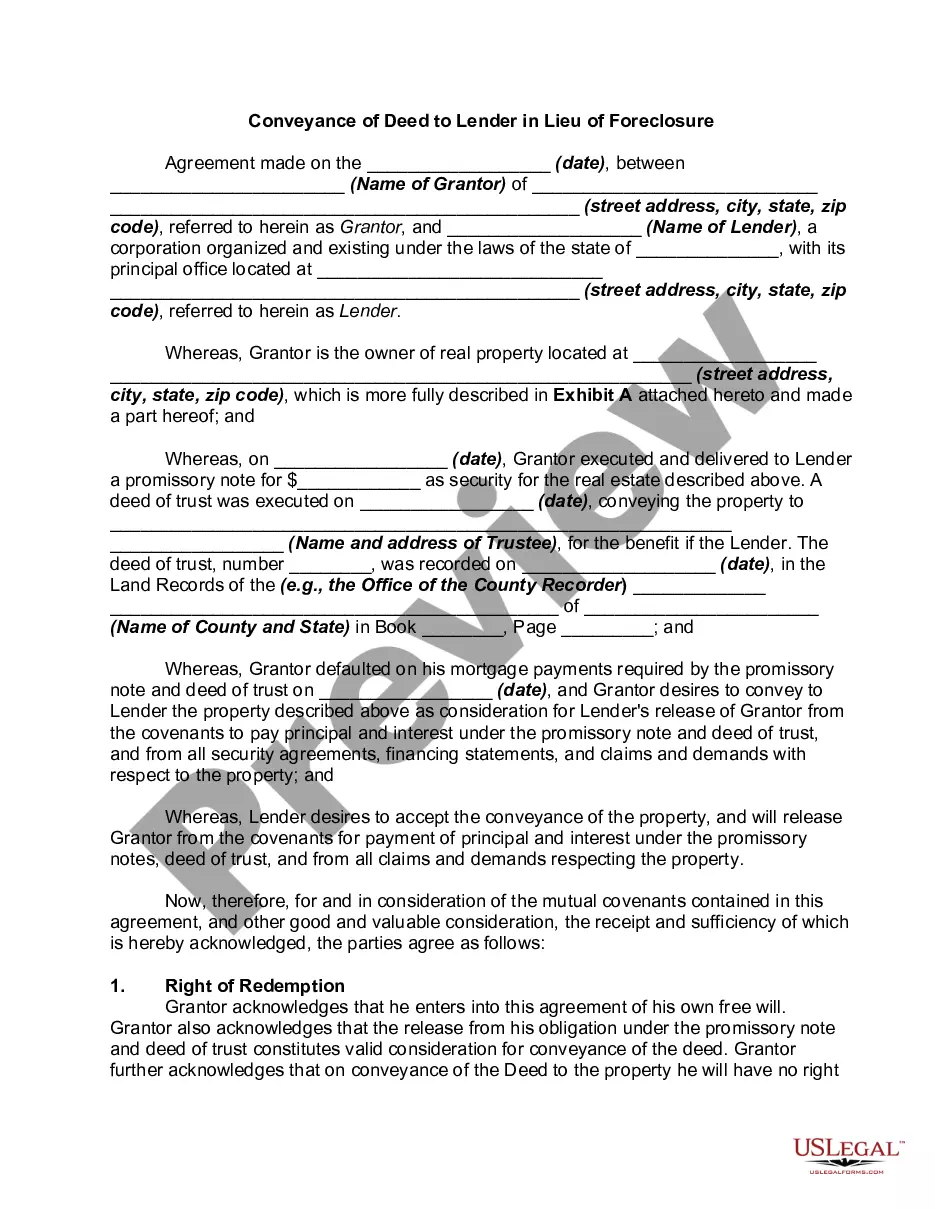
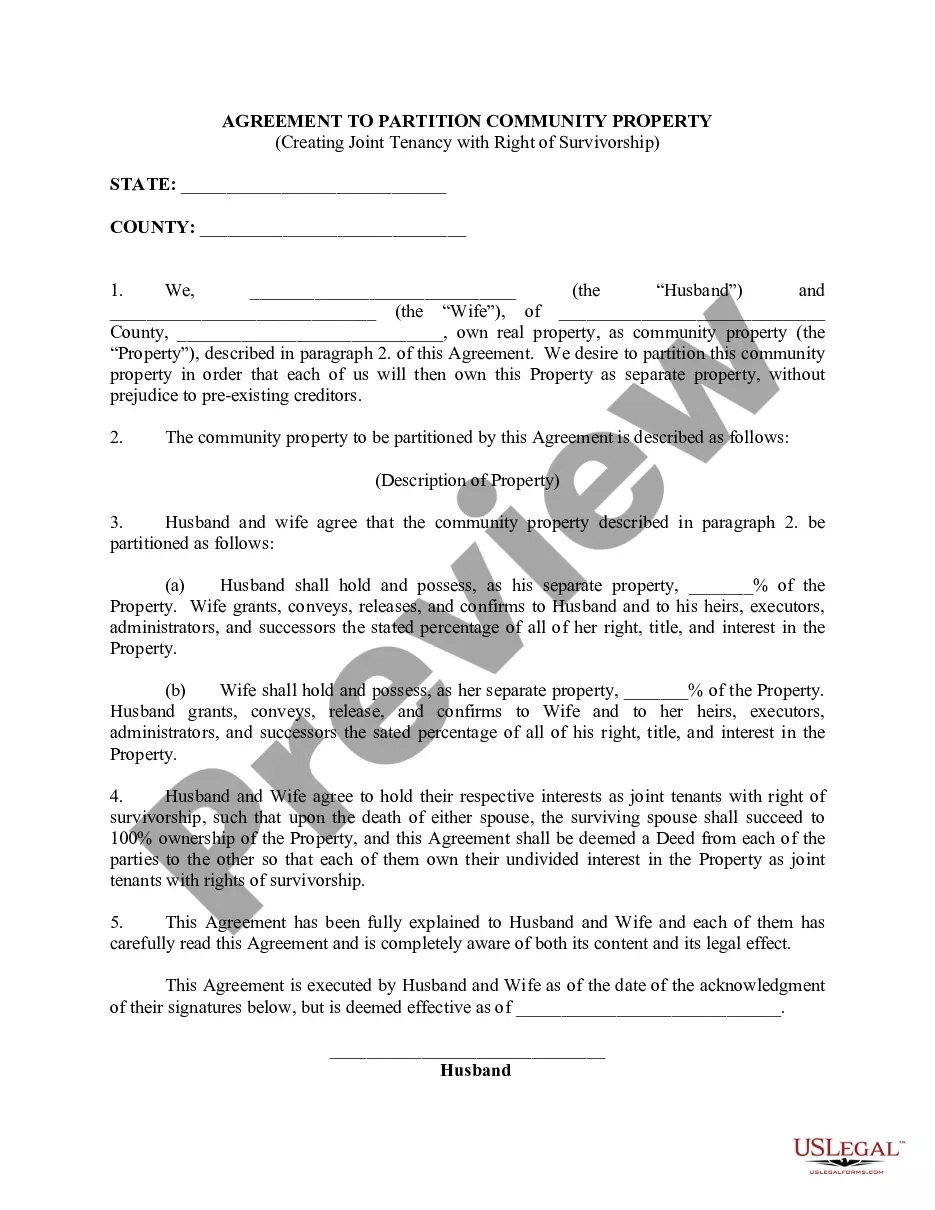
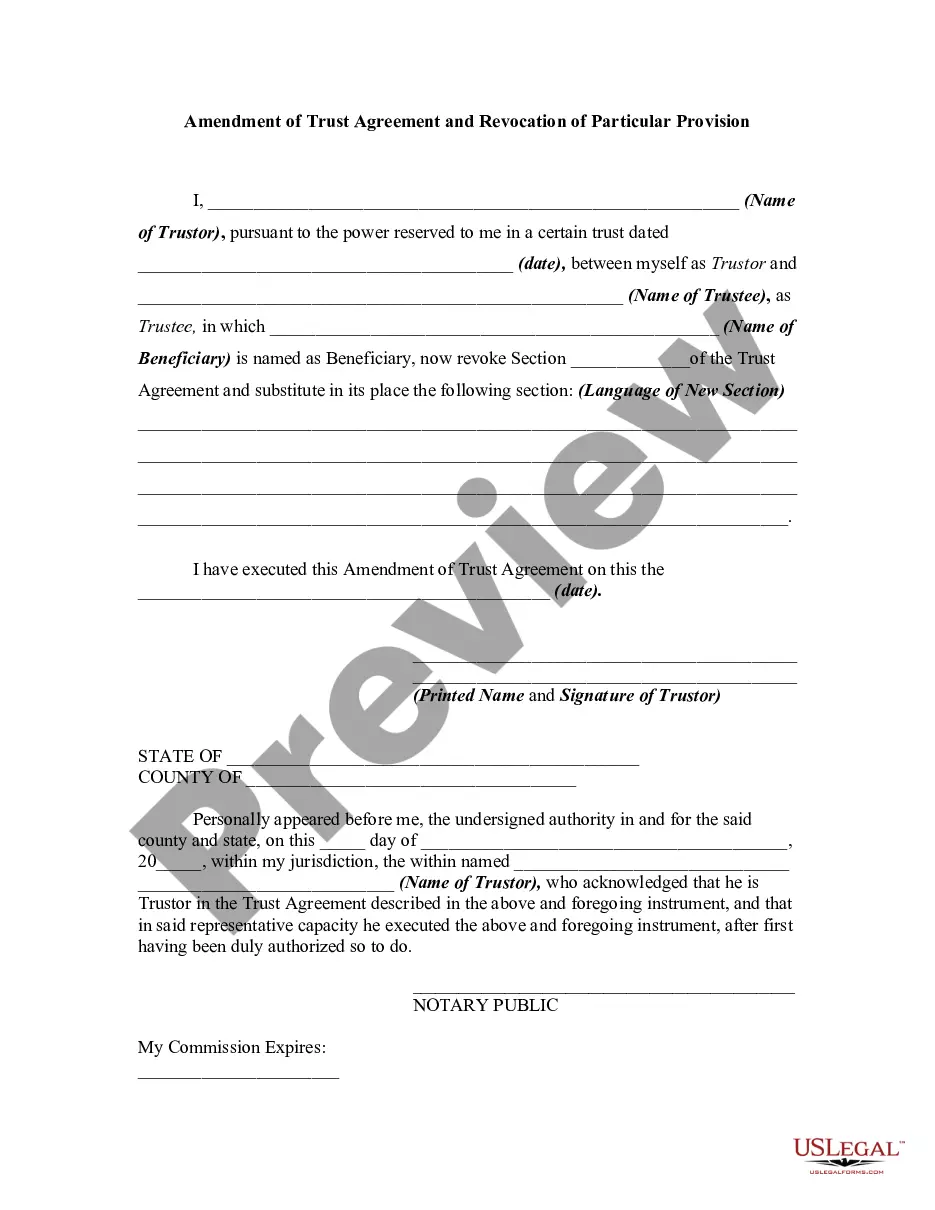
How to fill out Amendment Of Trust Agreement And Revocation Of Particular Provision?
- Log into your US Legal Forms account. If you're a returning user, simply log in to download the appropriate form template for revoking a trust. Make sure your subscription is active, and renew it if necessary.
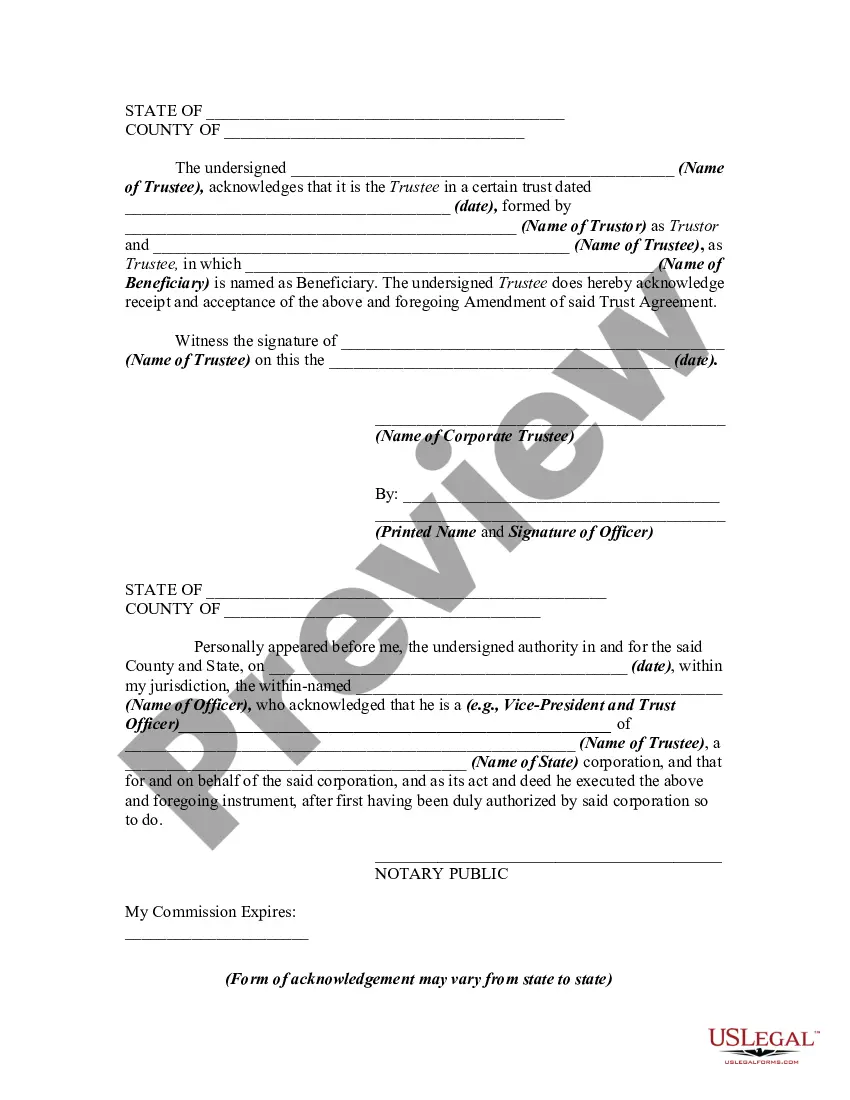
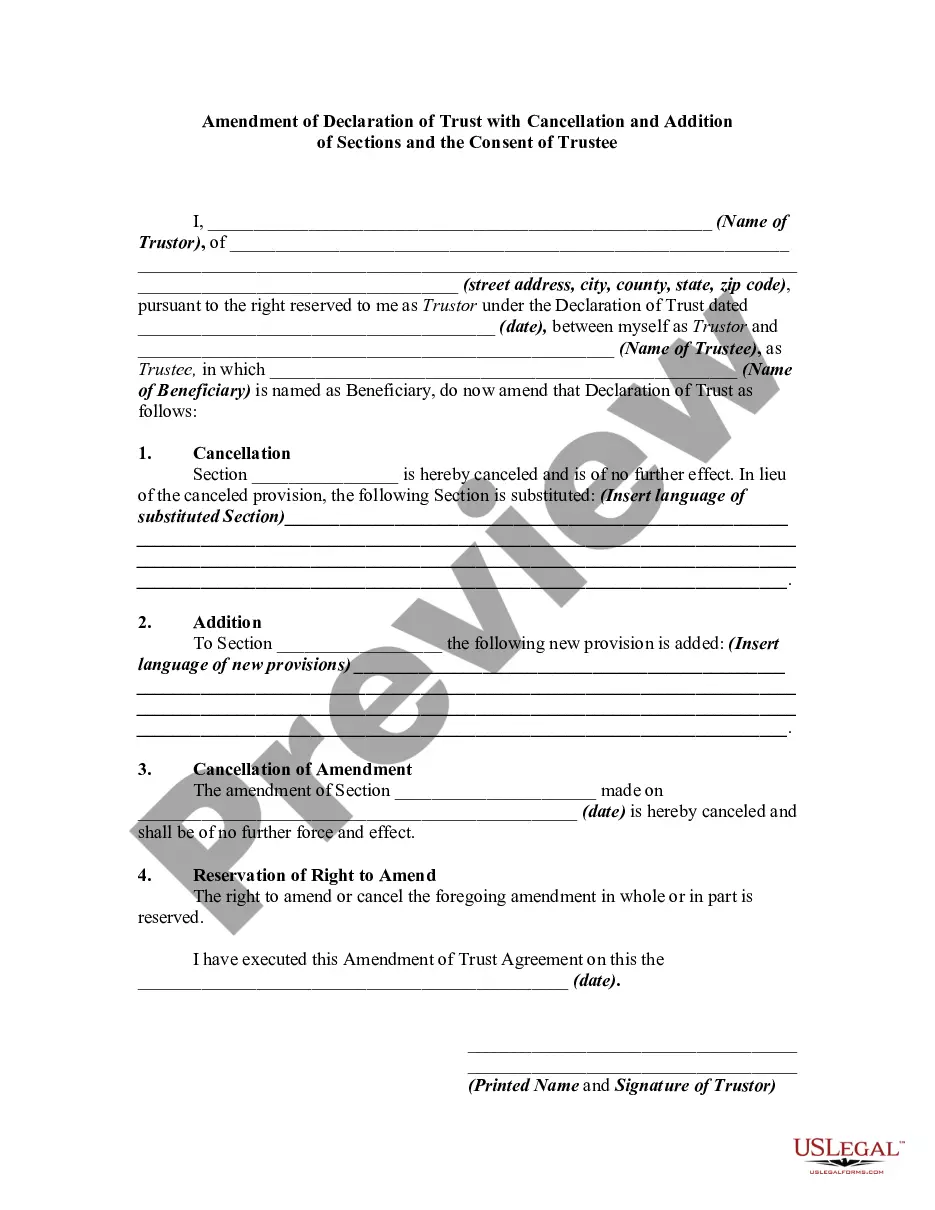
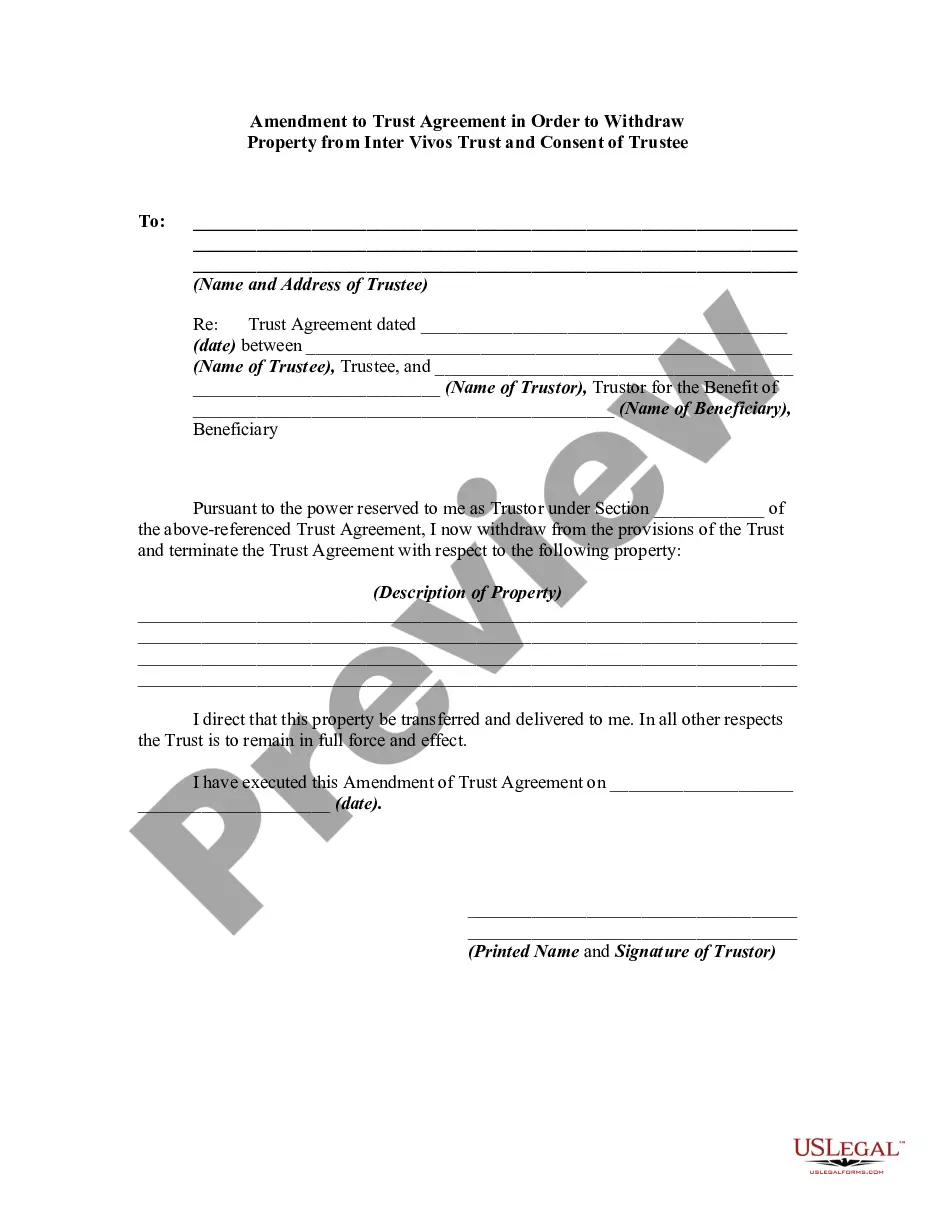
- Preview the form you need. Review the form's description carefully to confirm that it meets your requirements and aligns with your local jurisdiction's standards.
- Search for additional templates if required. Use the Search tab to explore other options if the selected form does not match your needs.
- Purchase the document. Click 'Buy Now' and select your desired subscription plan. You’ll need to create an account to access the form library.
- Complete your transaction. Enter your payment details, either via credit card or PayPal, to finalize your purchase.
- Download the form. Save the document to your device. You can access it anytime from the My Forms section of your profile.
Following these steps will ensure you can effectively revoke a trust while accessing the legal forms you need with confidence.
Don't hesitate to visit US Legal Forms today and simplify your legal document execution! Get started now!
Form popularity
FAQ
A trust can be deemed null and void for reasons such as lack of legal capacity of the grantor, failure to comply with statutory formalities, or if it contains illegal purposes. It's essential to ensure that all requirements are met to avoid creating an invalid trust. If you're concerned about the validity of a trust, considering how to revoke a trust with the client involves getting detailed advice on necessary legal steps.
In general, assets held in a revocable trust can be accessed for nursing home expenses, because the trustor retains control over these assets. Therefore, when facing nursing home costs, it is crucial to plan accordingly. Consulting with an attorney about how to revoke a trust with the client can provide strategies to protect their assets from such expenses.
Individuals may choose to revoke a trust for various reasons, such as changes in personal circumstances, the need to clarify asset distribution, or the desire to change beneficiaries. Additionally, if the grantor's financial situation alters significantly, revocation may provide more flexibility in managing assets. Discussing how to revoke a trust with the client can help in choosing the best approach for their specific needs.
A trust can be terminated in three main ways: by the grantor's explicit revocation, by the expiration of the trust term as stated in the trust document, or by a court ruling. Each method has its own procedural requirements. Understanding how to effectively revoke a trust with the client is essential to ensure that all legal aspects are appropriately covered.
A trust becomes revoked typically through explicit written notice from the trust creator, also known as the grantor. The notice should clearly state the intention to revoke, and it usually requires the signature of the grantor. Keep in mind, the process to revoke a trust with the client must be executed according to state laws to avoid any potential disputes.
To invalidate a trust, you generally need to follow the procedures outlined in the trust document or applicable state laws. This often involves drafting a formal revocation document and notifying the trustee and beneficiaries. It is crucial to consult with a legal expert to ensure that you effectively revoke a trust with the client, adhering to all necessary legal requirements.
To revoke a trust, prepare a written revocation document stating your intention to end the trust. You should outline the details clearly and include your signature and date. Using uslegalforms can simplify this process, providing you with the correct forms and guidance to help you successfully revoke a trust with the client.
To shut down a trust, you must formally revoke it and ensure that all assets have been appropriately distributed or transferred. When you revoke a trust with the client, having clear documentation is crucial to protect your interests. You also want to ensure that all beneficiaries understand the closure and consent to the termination, preventing future disputes.
A form to dissolve a revocable trust usually includes a trust revocation statement that must be signed by the trust creator. This document typically states your intent to revoke the trust with the client and should detail the assets involved. You can find various templates on platforms like uslegalforms that ensure compliance with your state's legal requirements.
You can terminate a trust by revoking it directly, reaching a mutual agreement with beneficiaries, or through court intervention. When you revoke a trust with the client, you typically ensure all assets are distributed according to your wishes. Additionally, specific state laws may outline procedures for termination, so it is essential to consult a legal professional.