Served With Writ Garnishment
Description
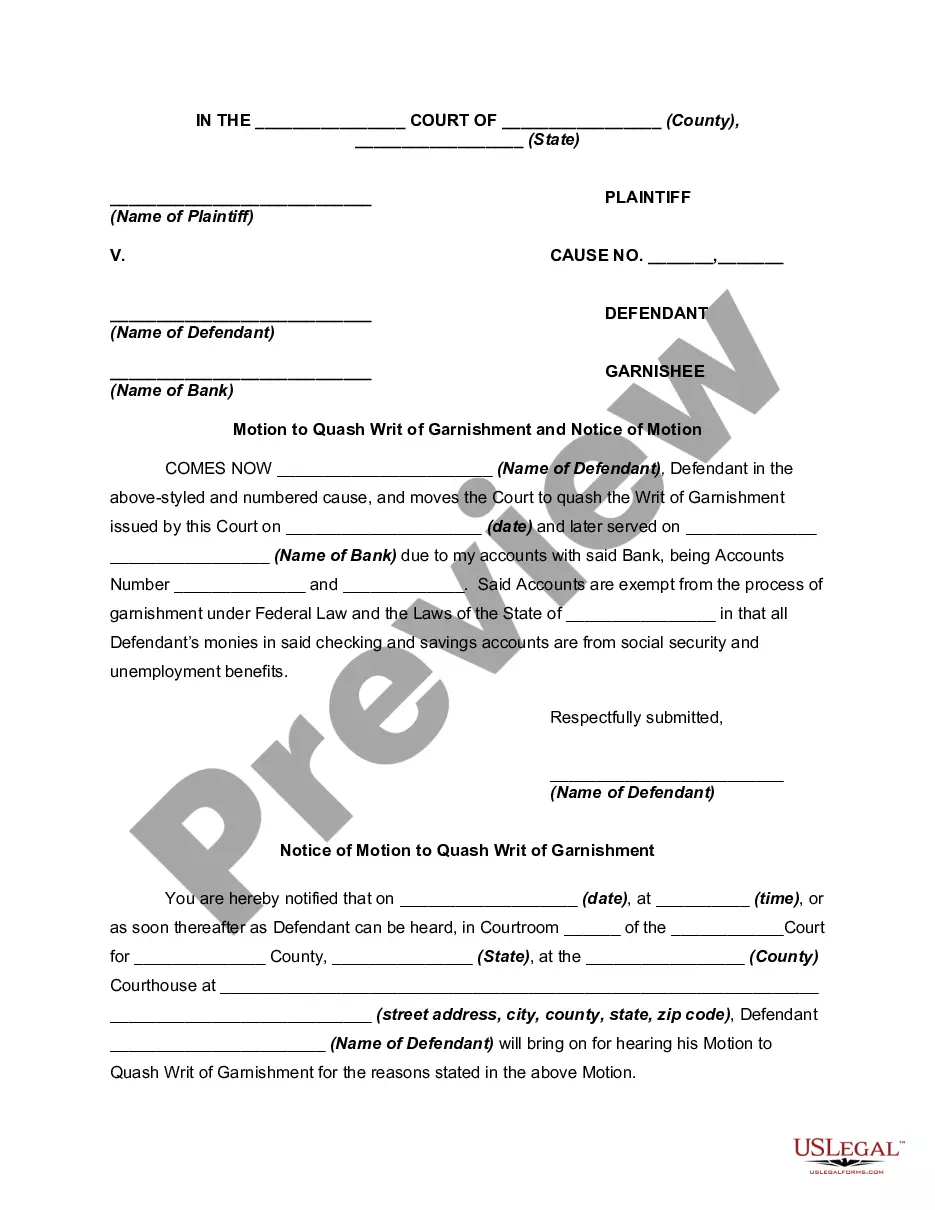
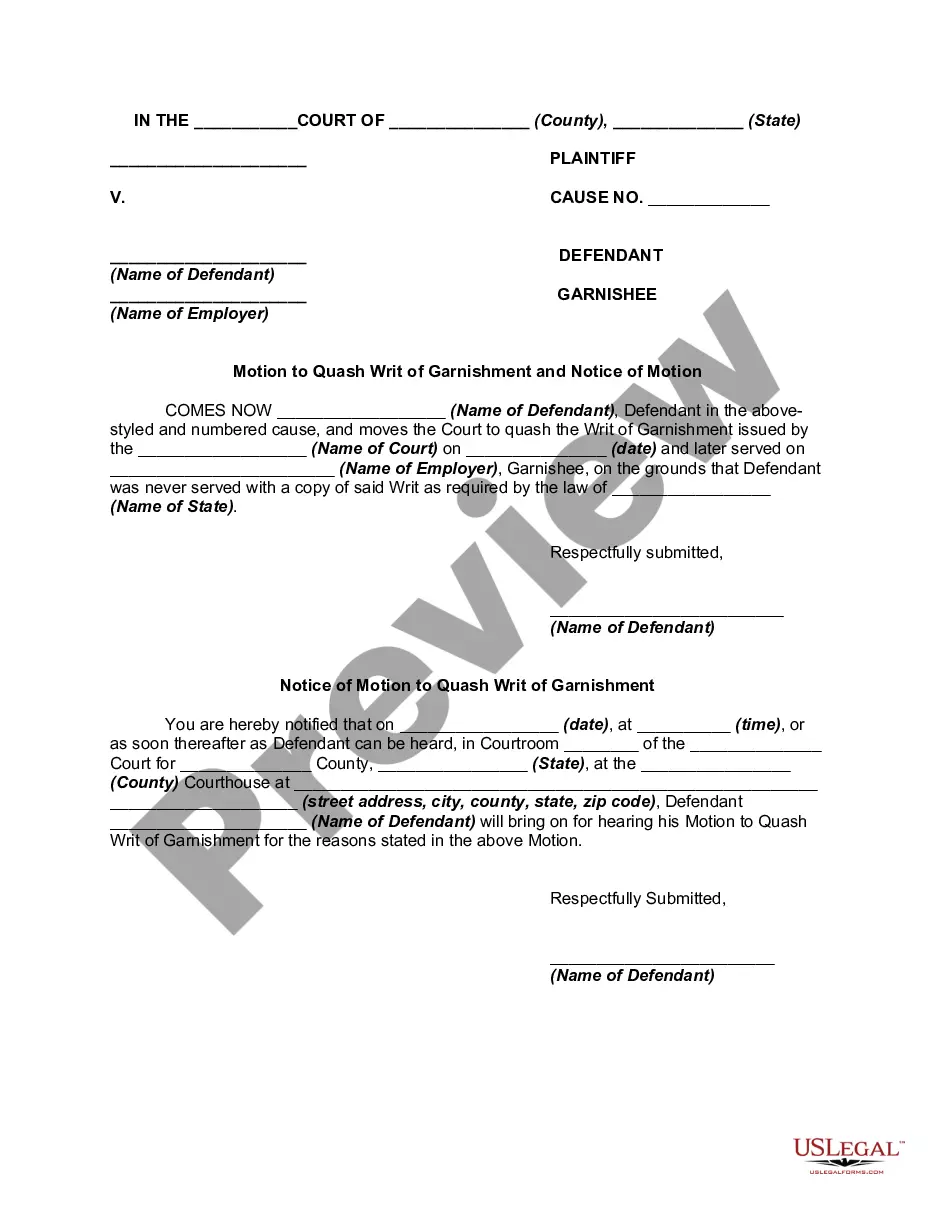
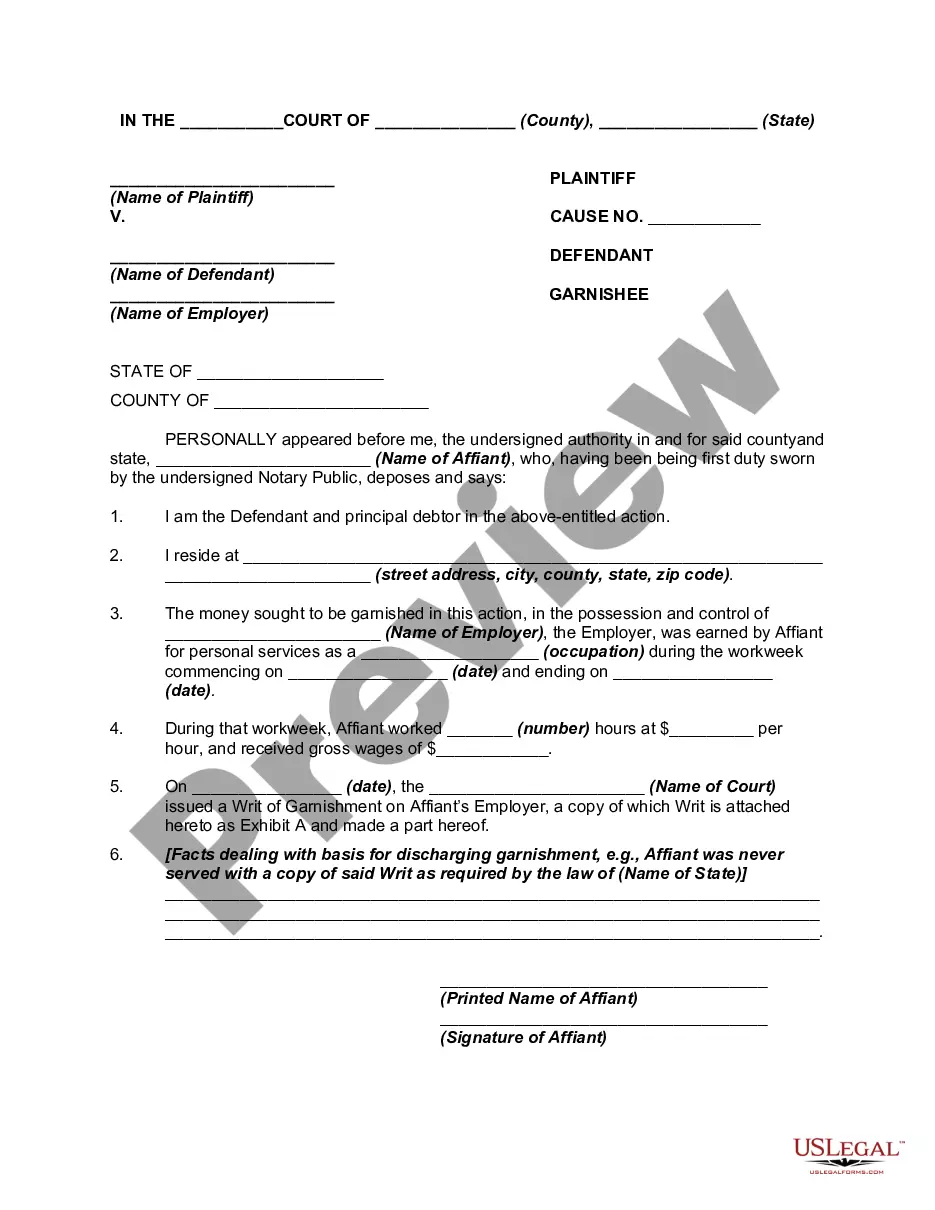
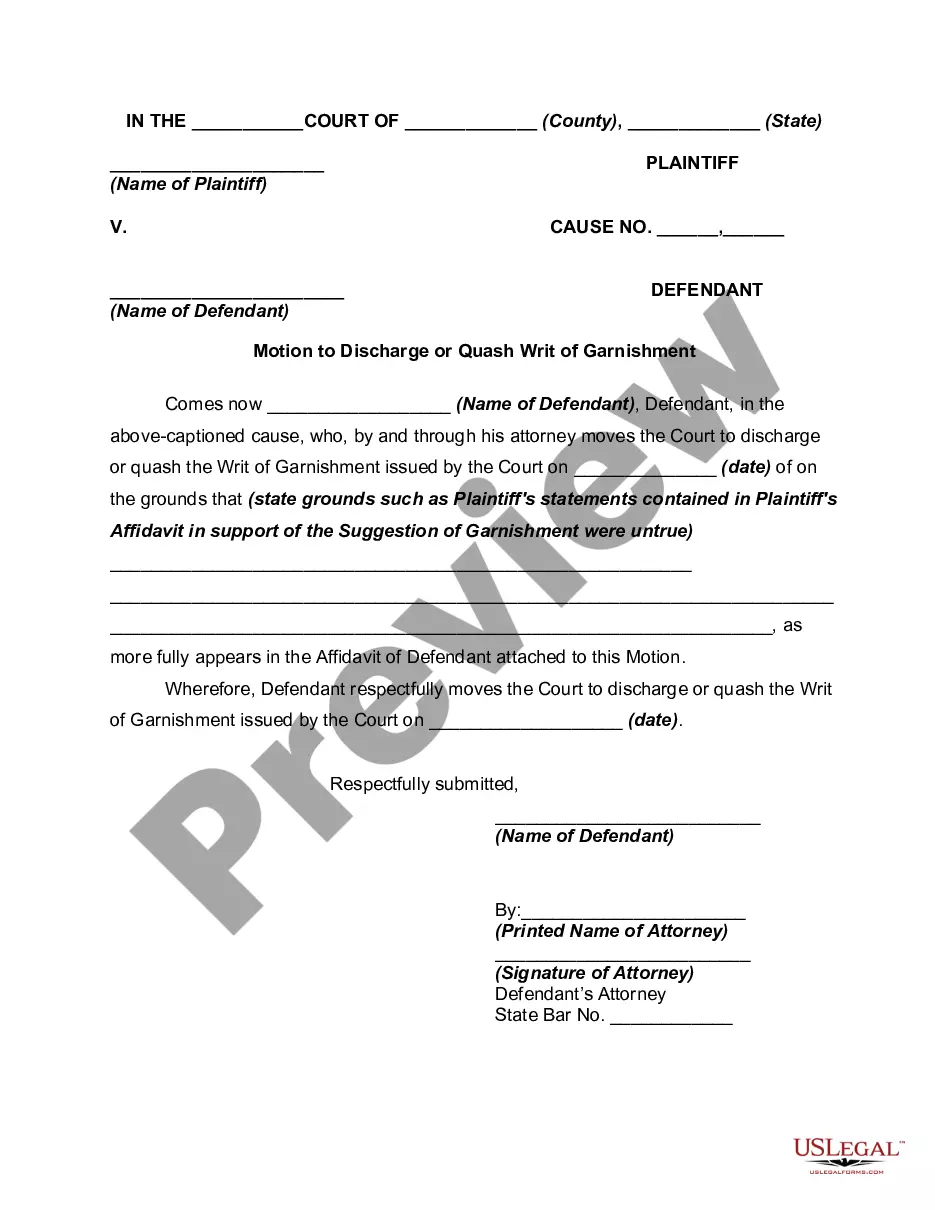
Get your form ready online
Our built-in tools help you complete, sign, share, and store your documents in one place.
Make edits, fill in missing information, and update formatting in US Legal Forms—just like you would in MS Word.
Download a copy, print it, send it by email, or mail it via USPS—whatever works best for your next step.
Sign and collect signatures with our SignNow integration. Send to multiple recipients, set reminders, and more. Go Premium to unlock E-Sign.
If this form requires notarization, complete it online through a secure video call—no need to meet a notary in person or wait for an appointment.
We protect your documents and personal data by following strict security and privacy standards.

Make edits, fill in missing information, and update formatting in US Legal Forms—just like you would in MS Word.

Download a copy, print it, send it by email, or mail it via USPS—whatever works best for your next step.

Sign and collect signatures with our SignNow integration. Send to multiple recipients, set reminders, and more. Go Premium to unlock E-Sign.

If this form requires notarization, complete it online through a secure video call—no need to meet a notary in person or wait for an appointment.

We protect your documents and personal data by following strict security and privacy standards.
Looking for another form?







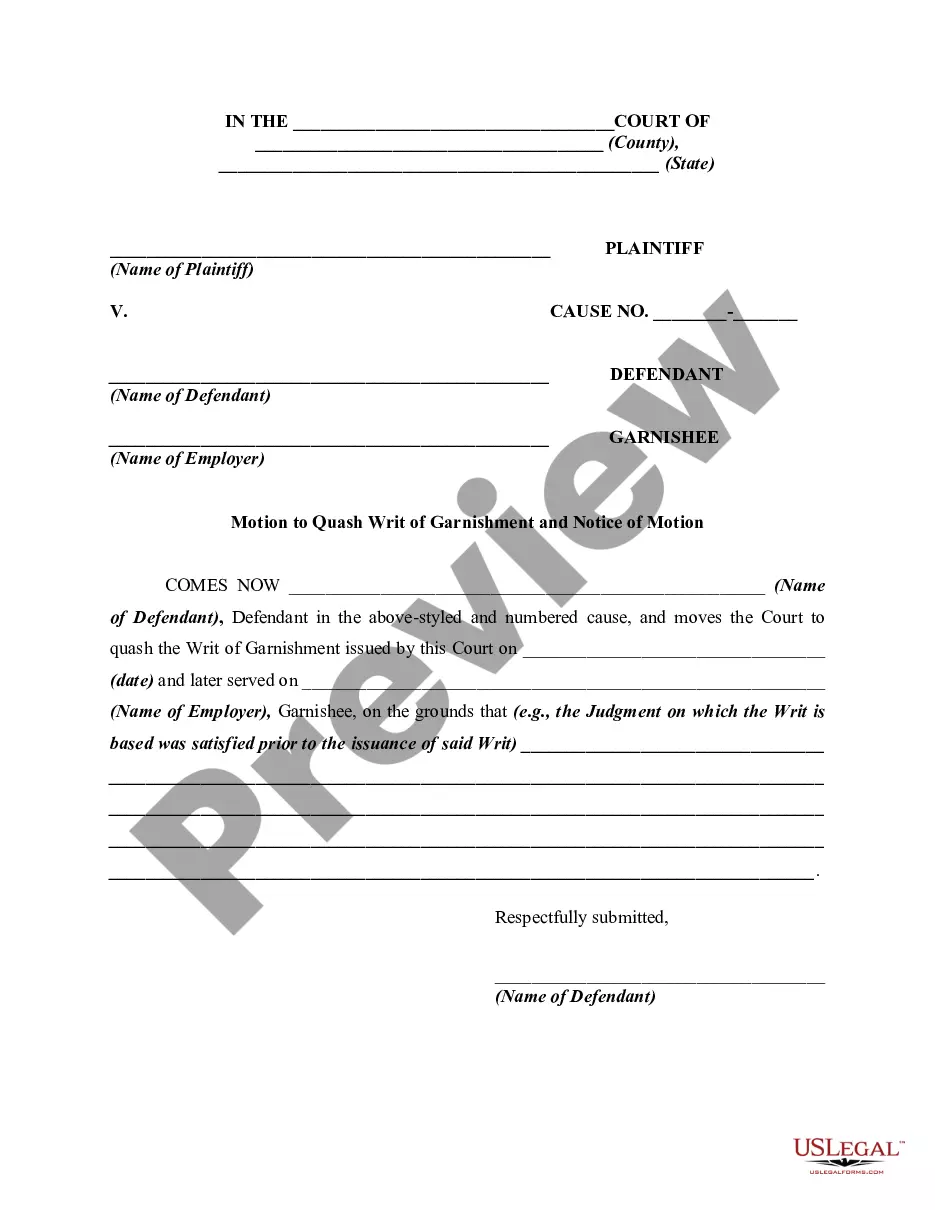
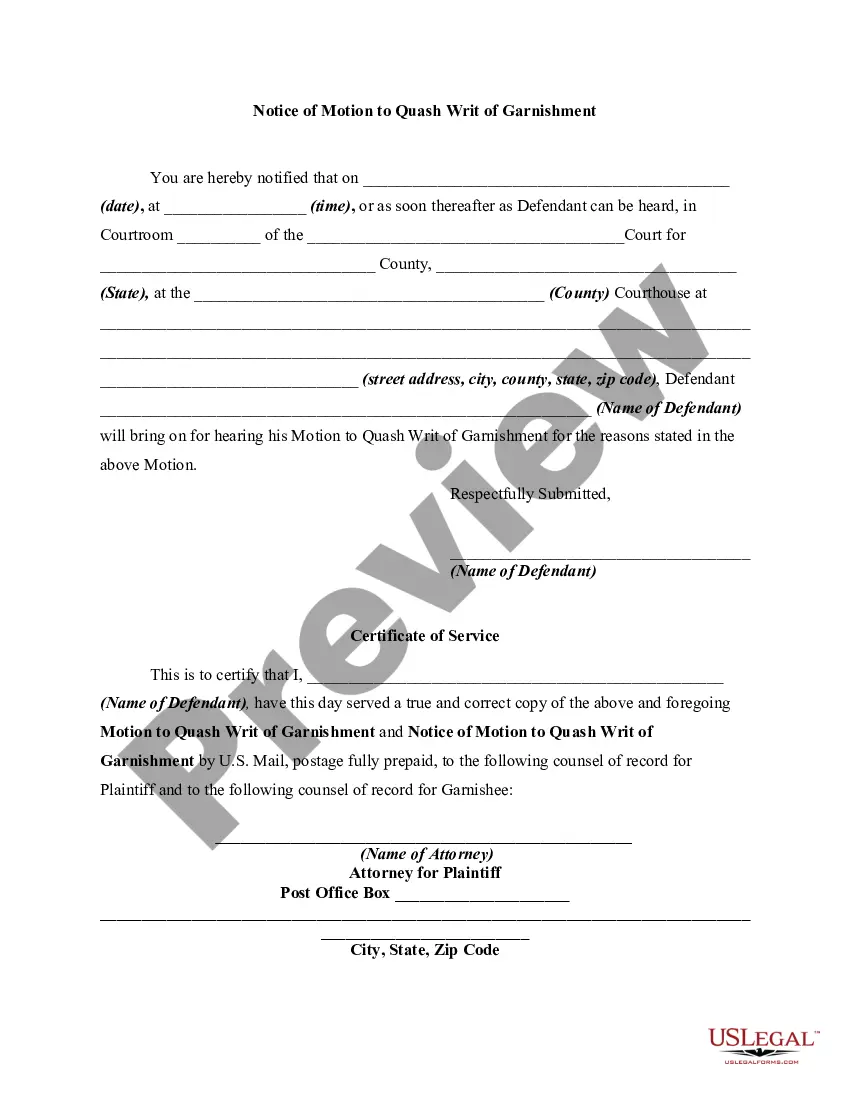
How to fill out Motion Of Defendant To Discharge Or Quash Writ Of Garnishment And Notice Of Motion?
Finding a reliable resource to obtain the latest and pertinent legal templates is a significant part of navigating bureaucracy. Selecting the appropriate legal documents requires accuracy and careful consideration, which is why it's essential to obtain samples of Served With Writ Garnishment exclusively from reputable sources, such as US Legal Forms. An incorrect template could squander your time and delay your situation.
With US Legal Forms, there is little to worry about. You can access and review all information regarding the document’s applicability and significance for your situation and in your state or area.
Eliminate the stress associated with your legal documents. Explore the extensive US Legal Forms catalog where you can discover legal templates, assess their applicability to your circumstances, and download them immediately.
- Utilize the catalog navigation or search function to find your template.
- Examine the form’s description to determine if it meets the requirements of your state and locality.
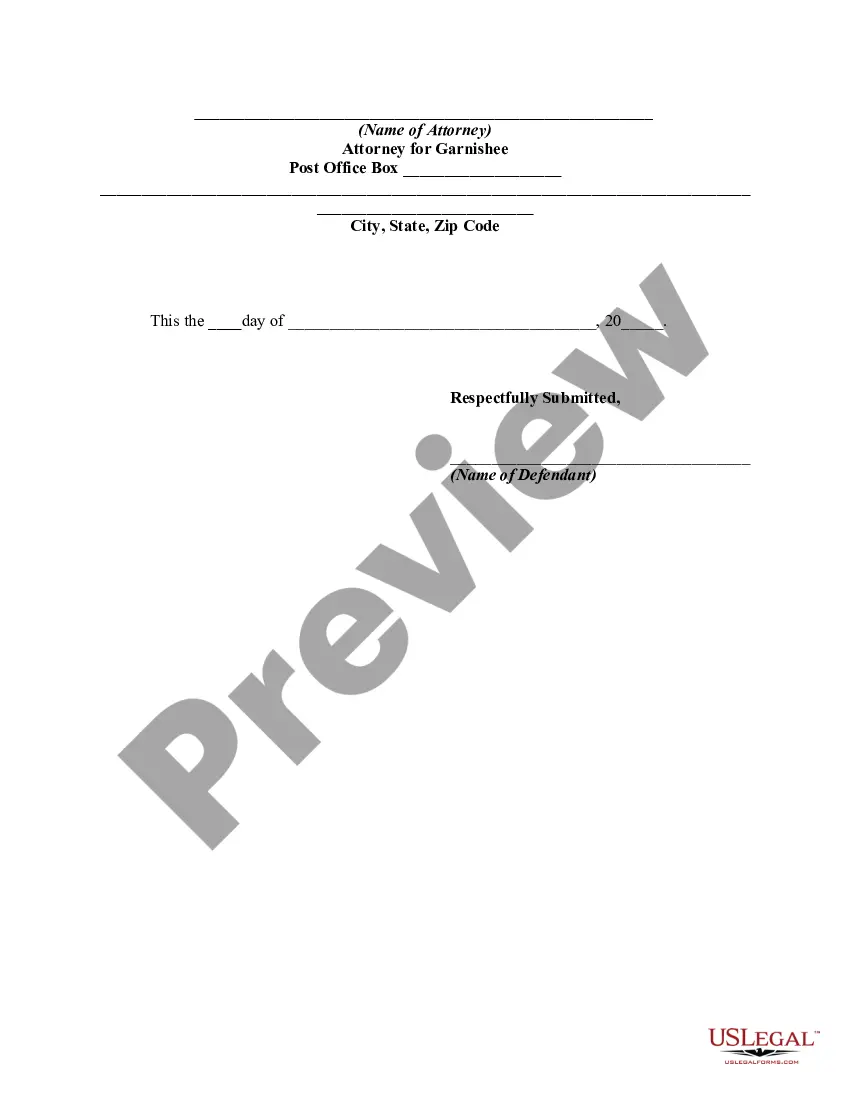
- Review the form preview, if available, to ensure the template is indeed what you need.
- Return to the search to find the appropriate document if the Served With Writ Garnishment does not meet your requirements.
- If you are confident about the form’s applicability, download it.
- As a registered user, click Log in to verify and access your selected forms in My documents.
- If you lack a profile, click Buy now to obtain the form.
- Choose the pricing option that fits your needs.
- Proceed with the registration to complete your purchase.
- Conclude your purchase by selecting a payment method (credit card or PayPal).
- Choose the file format for downloading Served With Writ Garnishment.
- Once you have the form on your device, you can alter it with the editor or print it out and fill it out manually.
Form popularity
FAQ
The process begins when a creditor files a request in court to garnish your wages or bank account. If the court approves the request, you will be served with notification of the garnishment. This notifies you of the action and informs you about your rights. Following this, the garnishment takes effect, and funds are withheld until the debt is resolved, making it crucial to understand each step involved.
After you are served with a writ of garnishment, it’s important to review the documents you receive carefully. You should determine the validity of the garnishment and assess your financial situation. If you believe the garnishment is incorrect or unfair, consider consulting with a legal expert who can guide you through your options. Additionally, using platforms like USLegalForms can provide you with necessary legal documentation and support.
To respond to a writ of garnishment, you should act quickly to protect your rights. Start by identifying the specific issues with the garnishment, such as incorrect amounts or exemptions that apply to your case. Then, prepare your written response and submit it to the appropriate court. Uslegalforms can assist you by providing the necessary forms and guidance tailored to your situation.
Responding to a garnishment order requires immediate attention. First, verify the details of the order and gather any supporting documents that demonstrate your position. You may need to file an objection with the court if you believe the garnishment is unjust. To simplify this process, consider using uslegalforms, which provides helpful tools and templates for your response.
When you are served with a writ of garnishment, it’s important to respond promptly. First, review the document thoroughly to understand the amount being claimed and the deadline for your response. You may need to file a written answer with the court, explaining why the garnishment should not proceed. Uslegalforms offers templates that can guide you through crafting a suitable response.
Responding to a writ of garnishment requires prompt action. You should file a response with the court that issued the writ, addressing the claims made by the creditor. Clearly outline your position, and if needed, include any supporting documents. Utilizing resources from US Legal Forms can help you create a strong response after being served with writ garnishment.
To write a letter to stop garnishment, begin by addressing the creditor or the court that issued the writ. Clearly state your case, including any reasons for stopping the garnishment, such as making payments or disputing the debt. Include your contact information, and consider using templates from platforms like US Legal Forms for guidance. This can streamline your efforts to halt the garnishment process.
Yes, a writ of garnishment must be served to the individual against whom it is issued. This ensures that you, as the recipient, are aware of the legal action being taken. Proper service gives you the opportunity to respond and potentially dispute the garnishment. Familiarizing yourself with the procedures can help you take the right steps after being served with writ garnishment.
After you are served with writ garnishment, the first step is to carefully read the document. Understand the details, including the creditor's information and the amount owed. You have options, such as filing a response or seeking a resolution with the creditor. Consider using resources like US Legal Forms to find templates that can help you navigate the process.