Generation Trust
Description






Get your form ready online
Our built-in tools help you complete, sign, share, and store your documents in one place.
Make edits, fill in missing information, and update formatting in US Legal Forms—just like you would in MS Word.
Download a copy, print it, send it by email, or mail it via USPS—whatever works best for your next step.
Sign and collect signatures with our SignNow integration. Send to multiple recipients, set reminders, and more. Go Premium to unlock E-Sign.
If this form requires notarization, complete it online through a secure video call—no need to meet a notary in person or wait for an appointment.
We protect your documents and personal data by following strict security and privacy standards.

Make edits, fill in missing information, and update formatting in US Legal Forms—just like you would in MS Word.

Download a copy, print it, send it by email, or mail it via USPS—whatever works best for your next step.

Sign and collect signatures with our SignNow integration. Send to multiple recipients, set reminders, and more. Go Premium to unlock E-Sign.

If this form requires notarization, complete it online through a secure video call—no need to meet a notary in person or wait for an appointment.

We protect your documents and personal data by following strict security and privacy standards.
Looking for another form?
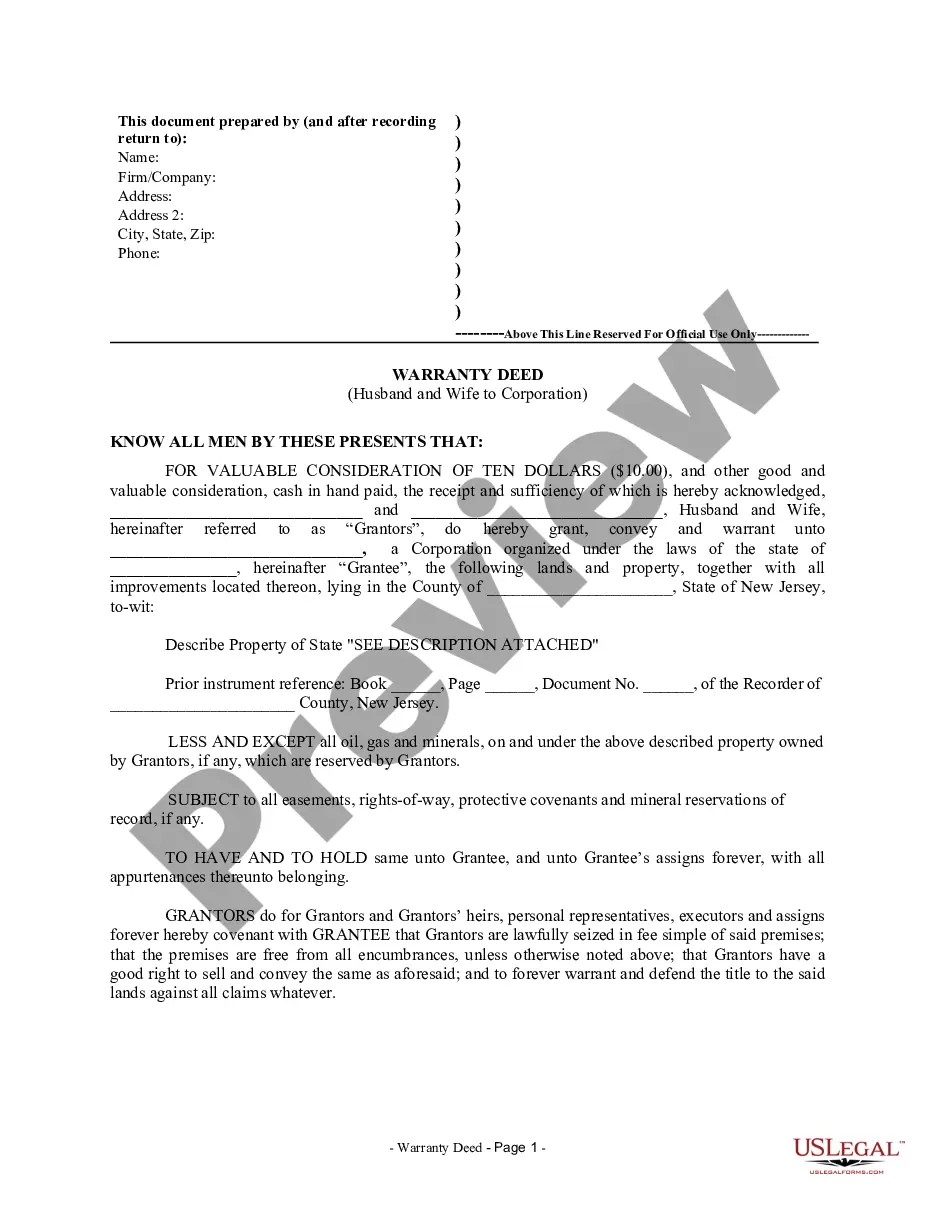


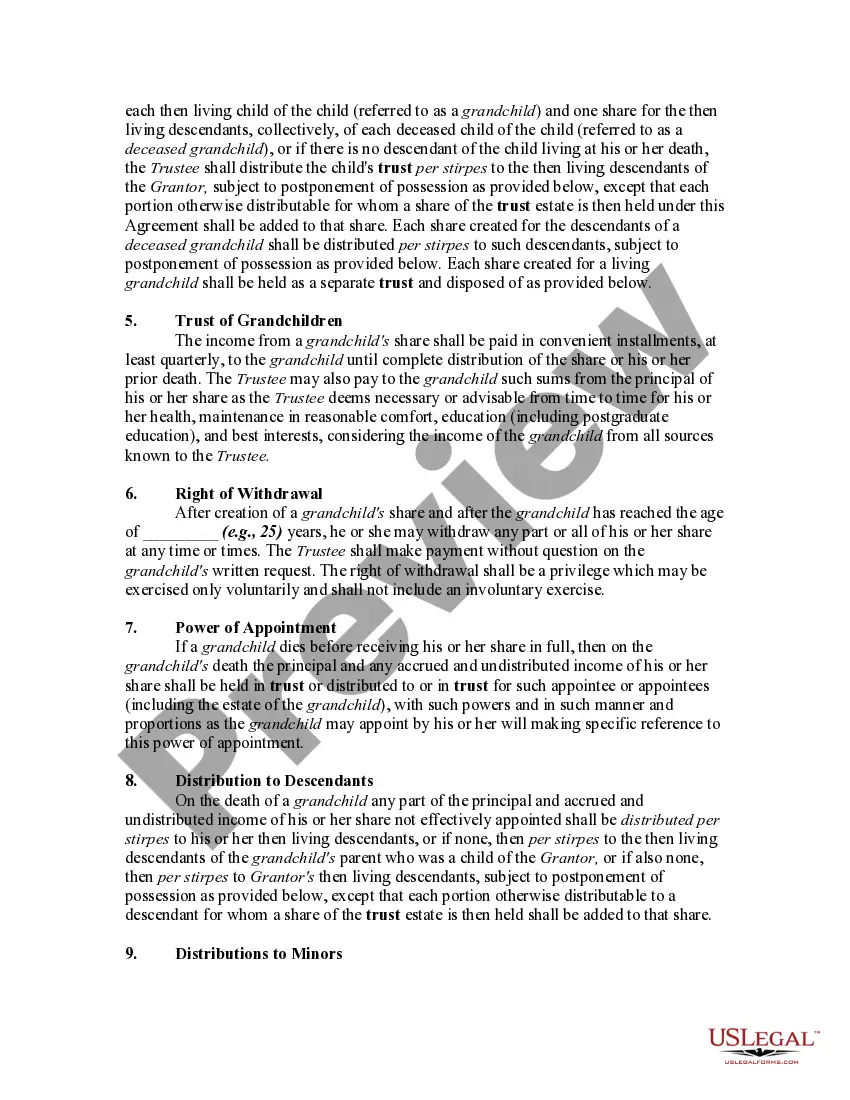
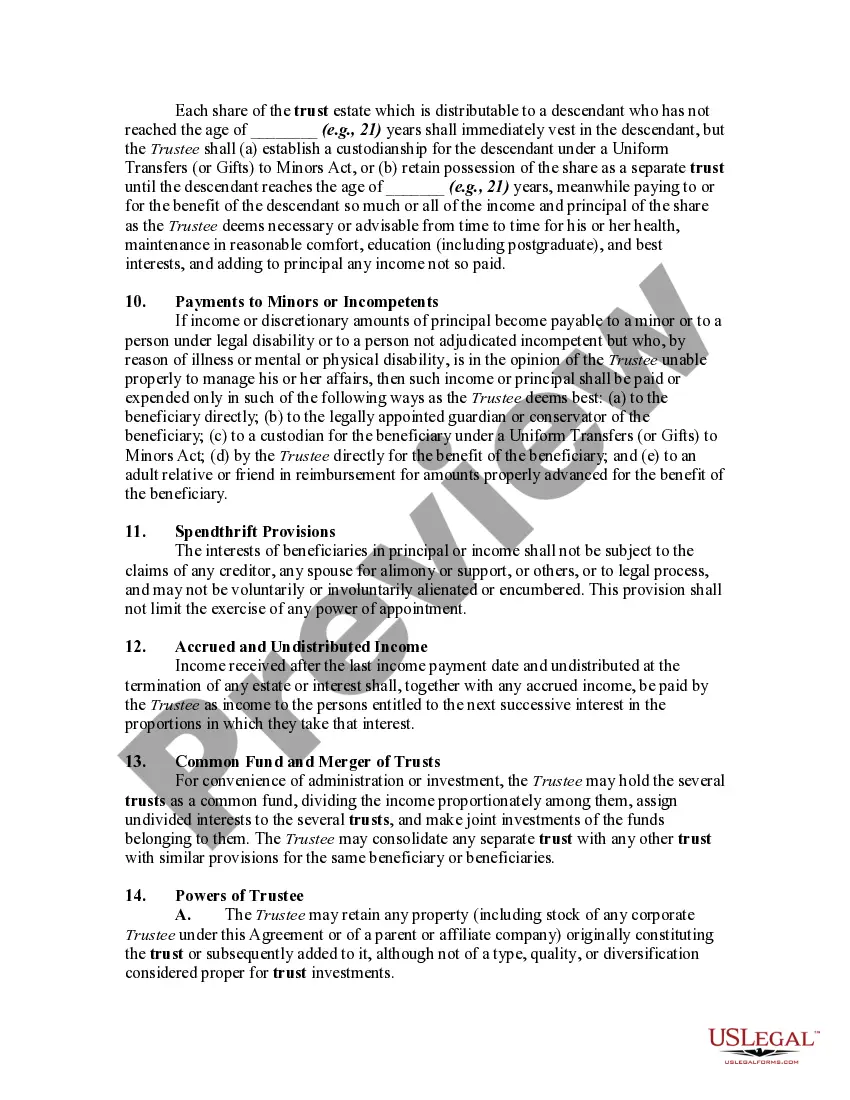
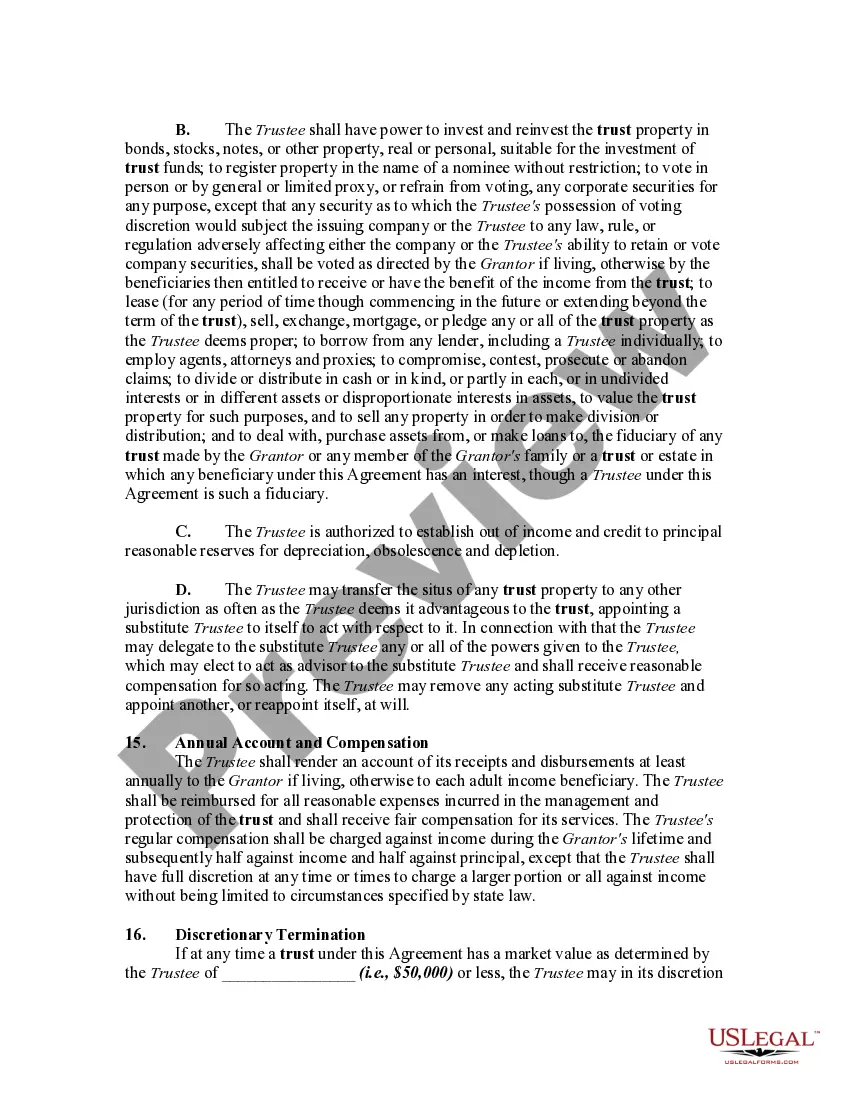
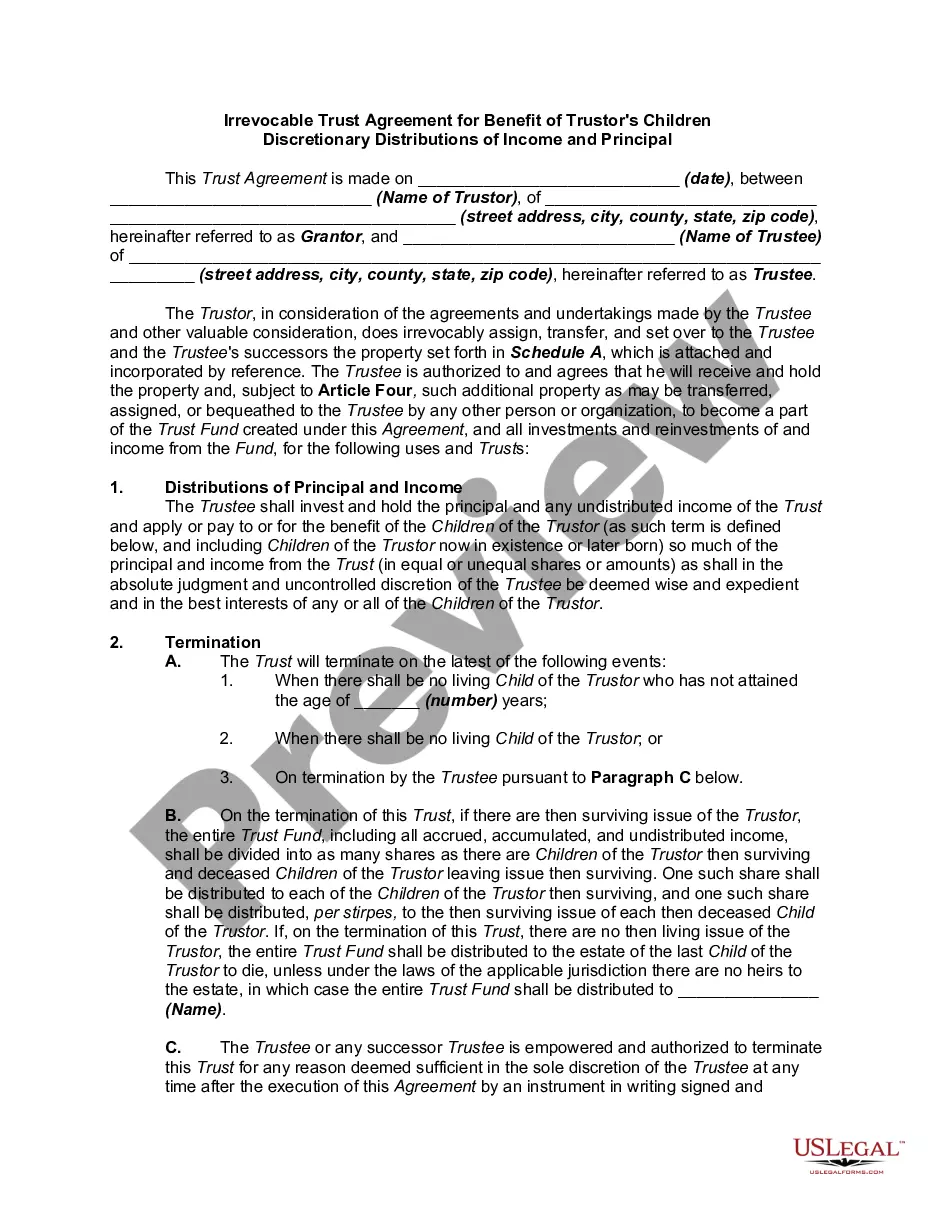
How to fill out Irrevocable Generation Skipping Or Dynasty Trust Agreement For Benefit Of Trustor's Children And Grandchildren?
- If you're a returning user, log in to your account and download your desired form template by clicking the Download button, ensuring your subscription is active. If it has lapsed, renew it according to your payment plan.
- For first-time users, begin by previewing the available templates and descriptions. Make sure to select the one that best suits your needs and complies with your local laws.
- If necessary, search for alternatives using the Search tab to ensure you've found the correct form. Once you identify the right document, proceed to the next step.
- Purchase the document by clicking the Buy Now button and select your preferred subscription plan. You'll need to create an account to access the extensive library of resources.
- Complete your purchase by entering your payment details, either through credit card or PayPal.
- Finally, download your form to your device for completion, and access it anytime from the My Forms section of your profile.
Utilizing US Legal Forms not only simplifies the process of creating your generation trust but also provides access to high-quality legal resources.
Start your journey towards effective legal documentation today with US Legal Forms!
Form popularity
FAQ
A revocable living trust often stands out as the best option to avoid probate. By placing your assets within this trust, you allow for a smoother transition to your beneficiaries without the need for court intervention. This trust provides flexibility, as you can modify it as your circumstances change. Pairing it with a generation trust can enhance your estate planning strategy and ensure your wishes are honored efficiently.
Yes, generation-skipping trusts continue to exist and are utilized by many families today. They remain a viable option for those looking to efficiently transfer wealth across generations. Despite changes in tax laws, these trusts help manage significant asset transfers while minimizing tax burdens for the beneficiaries. Engaging with a legal platform like USLegalForms can aid you in setting up a generation-skipping trust tailored to your needs.
Bloodline trusts offer several advantages, such as asset protection and control over how assets are distributed. You can set specific terms to guide how and when beneficiaries access their inheritance. Additionally, these trusts can help minimize estate taxes as they eliminate the potential for unwanted claims. Establishing a bloodline trust alongside a generation trust can enhance your long-term financial planning.
Bloodline trusts serve as a protective measure, ensuring that assets remain within your family lineage. They prevent inheritance from being claimed by ex-spouses or other outsiders, providing peace of mind for many individuals. If your primary concern is to keep assets within the bloodline, a bloodline trust is certainly worth considering. This trust may also work well in conjunction with a generation trust strategy.
A generation-skipping trust can be a smart choice for families looking to pass wealth to future generations. This type of trust allows you to allocate assets to grandchildren or even great-grandchildren, skipping over their parents. By doing so, you can potentially reduce estate taxes for those generations. However, it is crucial to evaluate your specific family dynamics and financial goals to determine if this trust aligns with your objectives.
Filling out a trust fund involves drafting a trust document that outlines the terms, beneficiaries, and assets of the trust. You will need to include details such as the trustee's responsibilities, distribution guidelines, and any specific conditions for accessing the trust. Using platforms like US Legal Forms can simplify this process by providing templates and guidance tailored to your needs.
Generation skipping trusts often have specific restrictions that include limits on distributions to beneficiaries. These trusts may also have age or dependency requirements, where children need to reach a certain age before they can access the funds. Understanding these restrictions is essential for effective estate planning and managing beneficiaries' expectations.
Placing your home in a trust can complicate matters during property transactions, as additional paperwork may be necessary. You might also face unexpected tax implications when transferring the property into the trust. Furthermore, beneficiaries may have restricted access, which can lead to frustration if they wish to occupy or sell the property.
Yes, a generation skipping trust can be altered or broken under specific circumstances, but the process usually requires the consent of the grantor and all beneficiaries. Additionally, you may need to navigate legal steps, which can be complex and time-consuming. It is advisable to consult with legal professionals to understand the implications of changing or dissolving the trust.
A bypass trust can complicate estate planning, as it requires ongoing management and legal oversight. This type of trust may also create misunderstandings among heirs about their inheritance, as it can separate assets from beneficiaries. Additionally, it can lead to higher administrative costs due to the need for professional management.