Generation Skipping Trust Rules
Description






Get your form ready online
Our built-in tools help you complete, sign, share, and store your documents in one place.
Make edits, fill in missing information, and update formatting in US Legal Forms—just like you would in MS Word.
Download a copy, print it, send it by email, or mail it via USPS—whatever works best for your next step.
Sign and collect signatures with our SignNow integration. Send to multiple recipients, set reminders, and more. Go Premium to unlock E-Sign.
If this form requires notarization, complete it online through a secure video call—no need to meet a notary in person or wait for an appointment.
We protect your documents and personal data by following strict security and privacy standards.

Make edits, fill in missing information, and update formatting in US Legal Forms—just like you would in MS Word.

Download a copy, print it, send it by email, or mail it via USPS—whatever works best for your next step.

Sign and collect signatures with our SignNow integration. Send to multiple recipients, set reminders, and more. Go Premium to unlock E-Sign.

If this form requires notarization, complete it online through a secure video call—no need to meet a notary in person or wait for an appointment.

We protect your documents and personal data by following strict security and privacy standards.
Looking for another form?









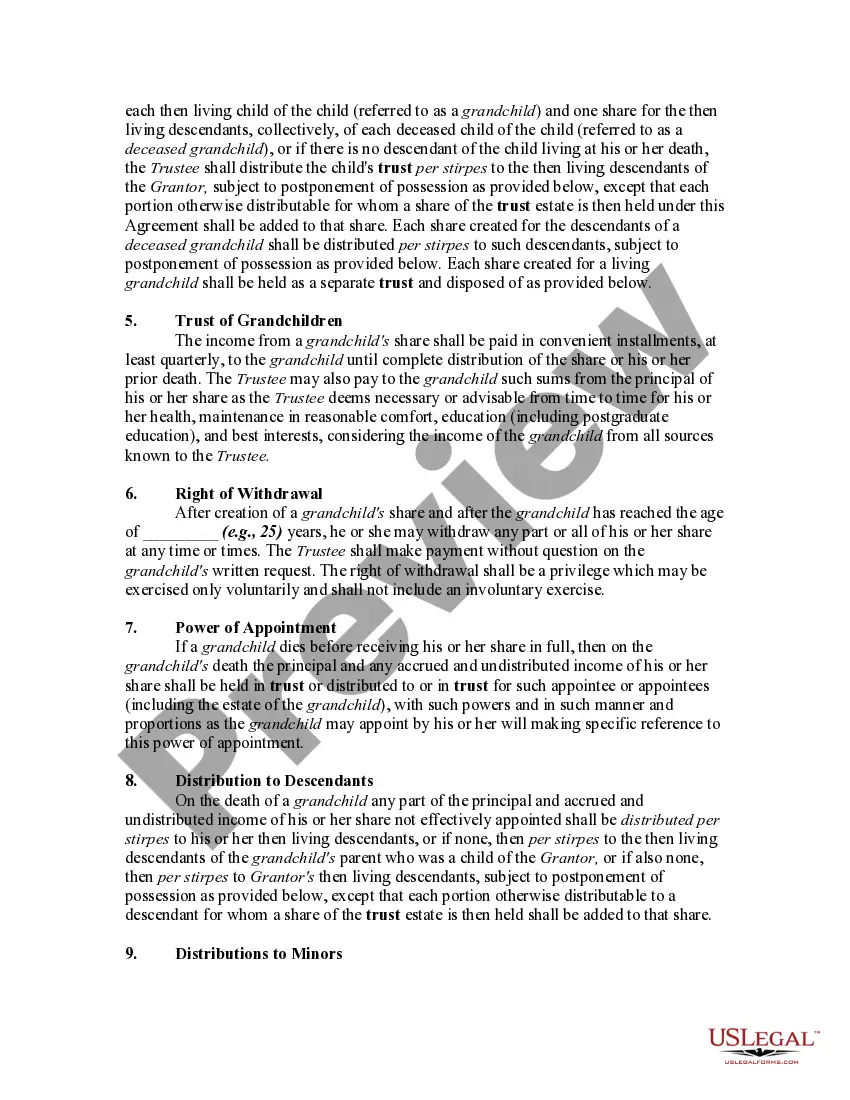
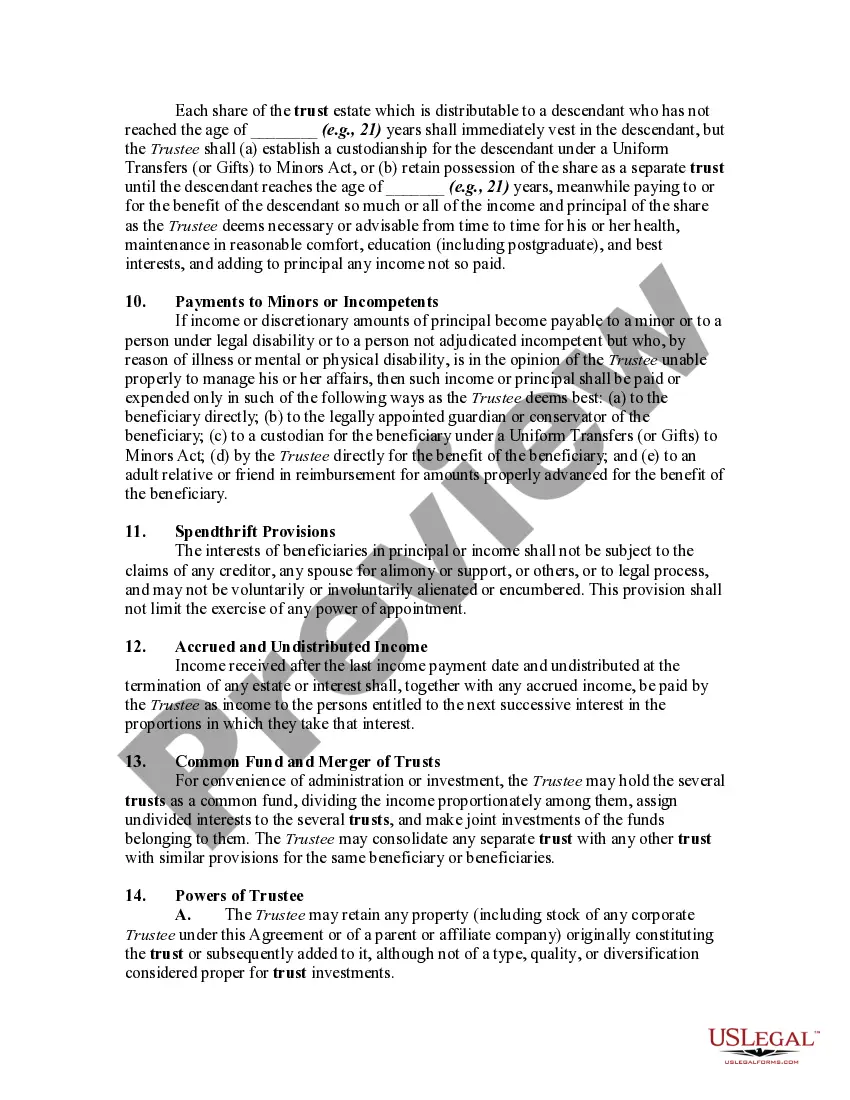
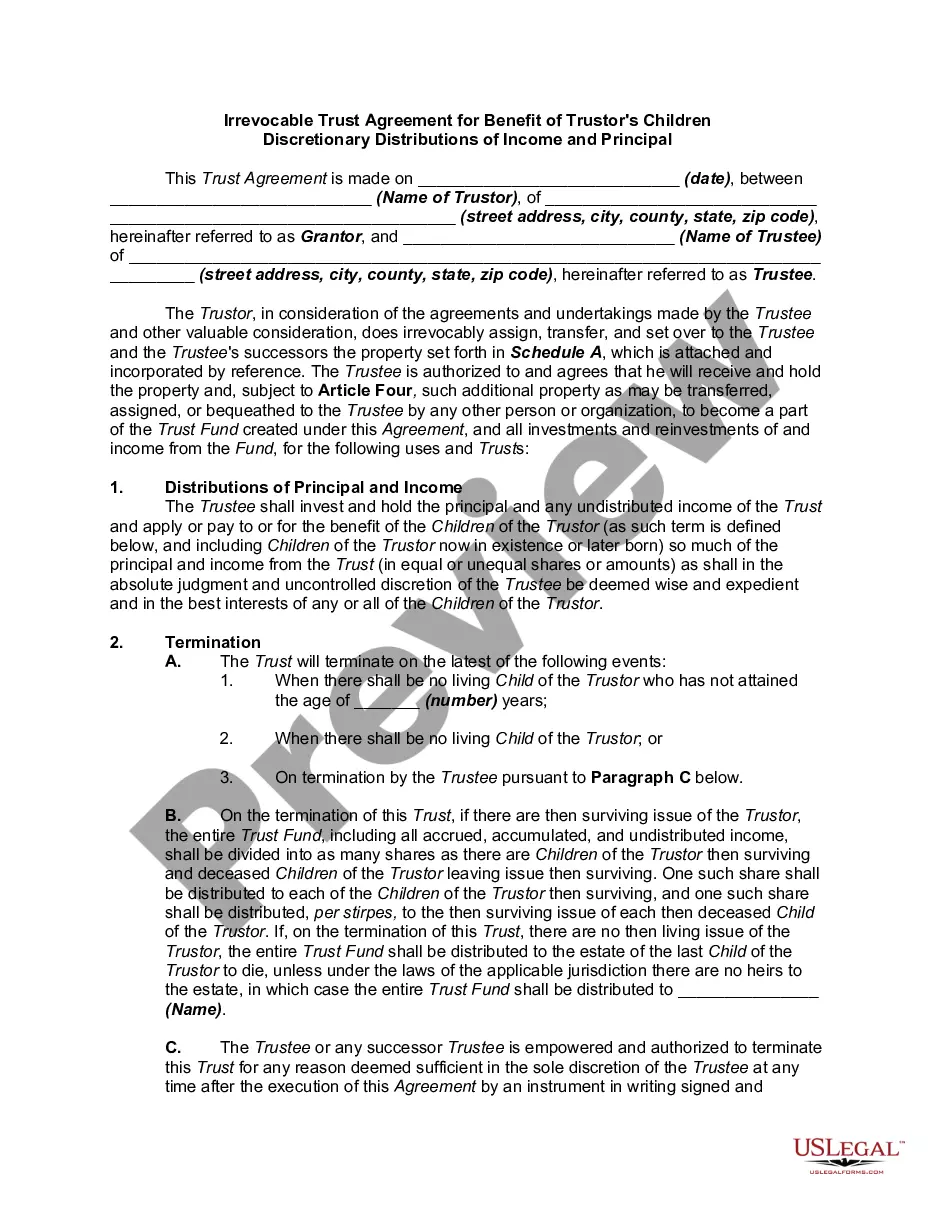
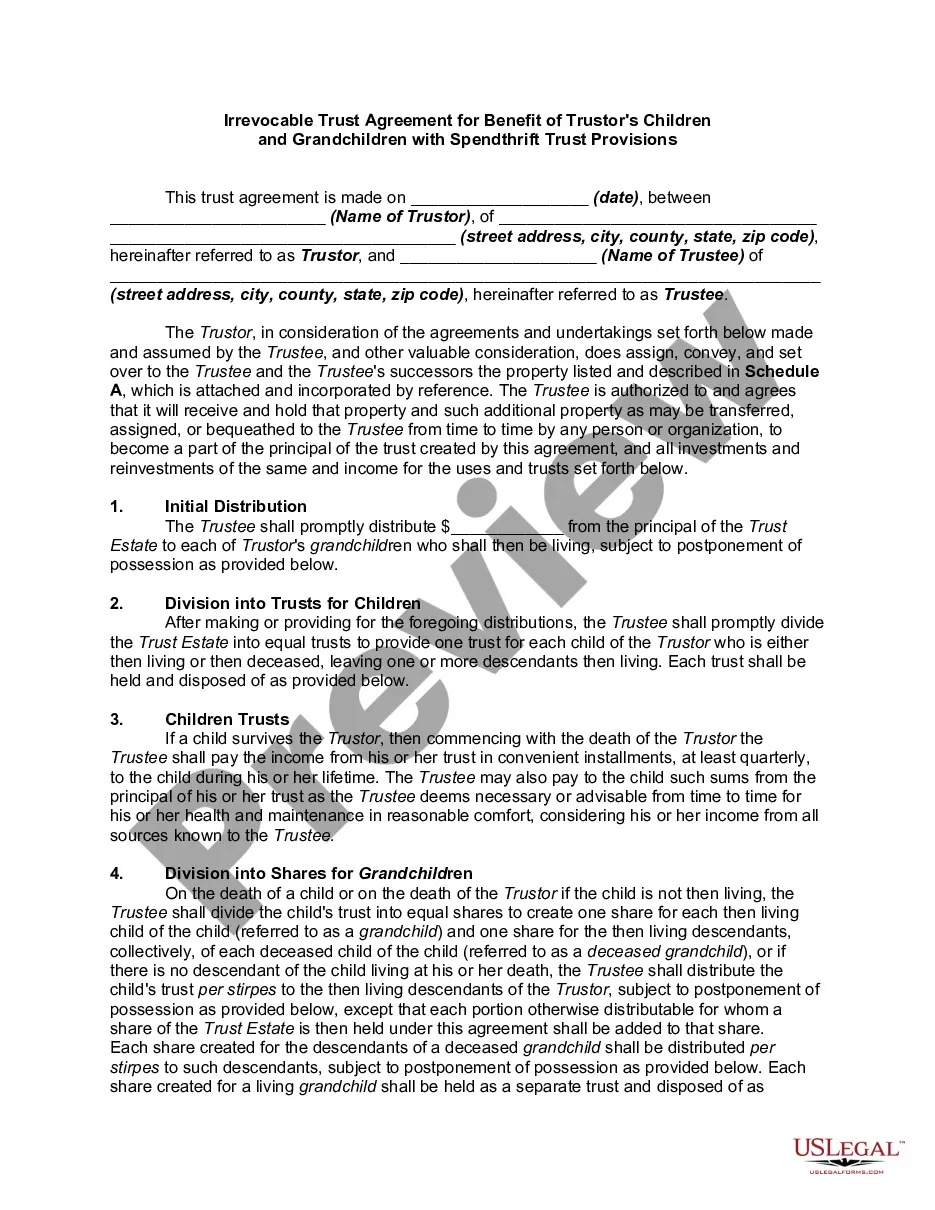
How to fill out Irrevocable Generation Skipping Or Dynasty Trust Agreement For Benefit Of Trustor's Children And Grandchildren?
Managing legal documents and processes can be a lengthy addition to your day. Generation Skipping Trust Regulations and forms like these usually require you to search for them and comprehend how to fill them out correctly.
Therefore, if you are overseeing financial, legal, or personal affairs, possessing a comprehensive and convenient online repository of forms at your fingertips will be extremely beneficial.
US Legal Forms is the premier online platform for legal documents, featuring over 85,000 state-specific forms and various resources designed to assist you in completing your paperwork effortlessly.
Explore the collection of relevant documents available to you with just one click.
Then, follow the steps below to complete your form: Ensure you have the correct form by using the Preview feature and reviewing the form details. Select Buy Now when ready, and choose the monthly subscription plan that fits you. Click Download, then fill out, sign, and print the document. US Legal Forms has twenty-five years of experience assisting consumers in managing their legal documents. Find the form you need today and streamline any process effortlessly.
- US Legal Forms provides you with state- and county-specific forms accessible at any time for download.
- Protect your document management processes by utilizing a high-quality service that enables you to prepare any form in minutes without incurring additional or hidden fees.
- Simply Log In to your account, find the Generation Skipping Trust Regulations, and download it instantly under the My documents section.
- You can also access previously saved forms.
- Is this your first time using US Legal Forms? Sign up and establish your account in a few minutes and you’ll gain entry to the form library and Generation Skipping Trust Regulations.
Form popularity
FAQ
Yes, assets in a generation skipping trust usually receive a step up in basis upon the grantor’s death. This means that the value of the assets is adjusted to their current market value, which can significantly reduce capital gains tax for beneficiaries. However, understanding the specifics related to generation skipping trust rules is important, as this can influence your decision-making. Consulting professionals can clarify any uncertainties.
The beneficiaries of a generation skipping trust typically include grandchildren or other relatives who are multiple generations younger than the grantor. The main goal is to pass wealth without incurring hefty taxes. Having clearly defined beneficiaries in your trust documentation ensures that your intentions are honored. Familiarity with generation skipping trust rules helps you structure your trust effectively.
Generation skipping transfer tax gets triggered when wealth is transferred to beneficiaries who are two or more generations younger than the grantor. Specific transactions, such as gifts or bequests to skip persons, are commonly affected by this tax. Understanding the nuances of generation skipping trust rules can help you strategize your estate planning. Proper planning can often minimize or even eliminate this tax.
Yes, you can dissolve a GST trust, but the process requires careful consideration. All beneficiaries must agree to the dissolution, and legal formalities may need to be followed. Engaging with an attorney familiar with generation skipping trust rules is wise, as they can help facilitate the process while minimizing tax liabilities. This ensures everyone involved understands their rights and obligations.
Breaking a generation-skipping trust typically involves legal processes that may differ based on your jurisdiction. Generally, modification or termination requires the consent of all beneficiaries and may need court approval. It is advisable to consult an estate planning attorney to navigate the specifics effectively. Understanding the generation skipping trust rules helps ensure compliance during this process.
The amount you can place in a generation skipping trust depends on the current exemption limits set by the IRS. As of 2023, this limit is quite substantial, often exceeding $12 million per individual. However, it's crucial to stay updated on these figures, as they can change with new tax laws. Utilizing a generation skipping trust can offer significant tax benefits for transferring wealth across generations.
Dissolving a generation-skipping trust generally requires the consent of all beneficiaries and a formal process, potentially with court involvement. You should formally document the decision to dissolve the trust and comply with state-specific regulations. Always consult an attorney familiar with generation skipping trust rules to ensure a smooth and compliant dissolution.
Yes, generation-skipping trusts continue to be popular estate planning tools today. Many families utilize this strategy to efficiently pass wealth down to future generations while taking advantage of tax benefits. As you consider your options, understanding generation skipping trust rules can help maximize the effectiveness of your trust.
Qualifying for a generation-skipping trust typically involves having a clear estate plan that outlines your intent to benefit multiple generations. You must also adhere to specific regulations set forth by generation skipping trust rules, which include tax exemptions and limitations. Additionally, working with a legal professional can ensure your trust meets all necessary qualifications.
An example of a generation-skipping trust is one that benefits your grandchildren directly, rather than your children. For instance, if you establish a trust that pays for your grandchildren's education, it represents a clear application of generation skipping trust rules. This approach allows you to support future generations while minimizing estate taxes at the same time.