Dynasty Trust Sample Withdrawal
Description





Get your form ready online
Our built-in tools help you complete, sign, share, and store your documents in one place.
Make edits, fill in missing information, and update formatting in US Legal Forms—just like you would in MS Word.
Download a copy, print it, send it by email, or mail it via USPS—whatever works best for your next step.
Sign and collect signatures with our SignNow integration. Send to multiple recipients, set reminders, and more. Go Premium to unlock E-Sign.
If this form requires notarization, complete it online through a secure video call—no need to meet a notary in person or wait for an appointment.
We protect your documents and personal data by following strict security and privacy standards.

Make edits, fill in missing information, and update formatting in US Legal Forms—just like you would in MS Word.

Download a copy, print it, send it by email, or mail it via USPS—whatever works best for your next step.

Sign and collect signatures with our SignNow integration. Send to multiple recipients, set reminders, and more. Go Premium to unlock E-Sign.

If this form requires notarization, complete it online through a secure video call—no need to meet a notary in person or wait for an appointment.

We protect your documents and personal data by following strict security and privacy standards.
Looking for another form?


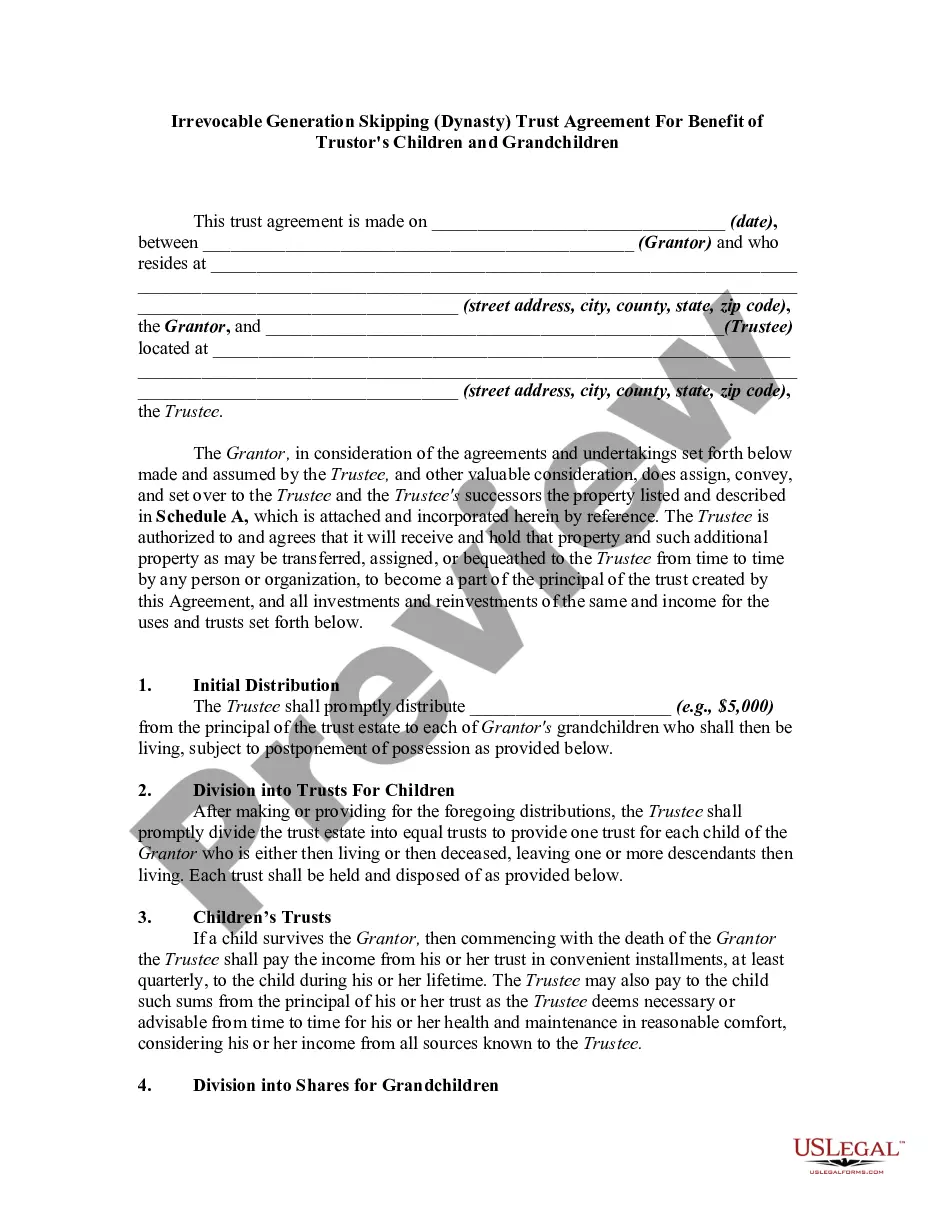
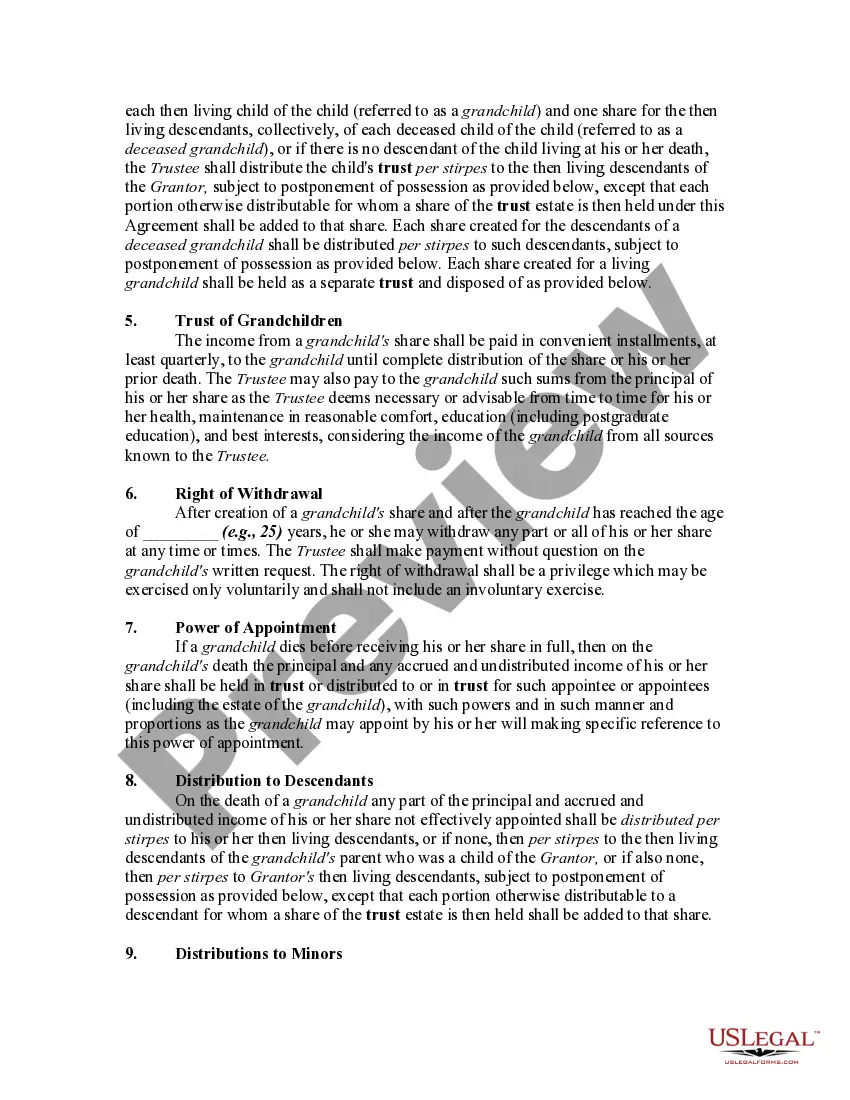
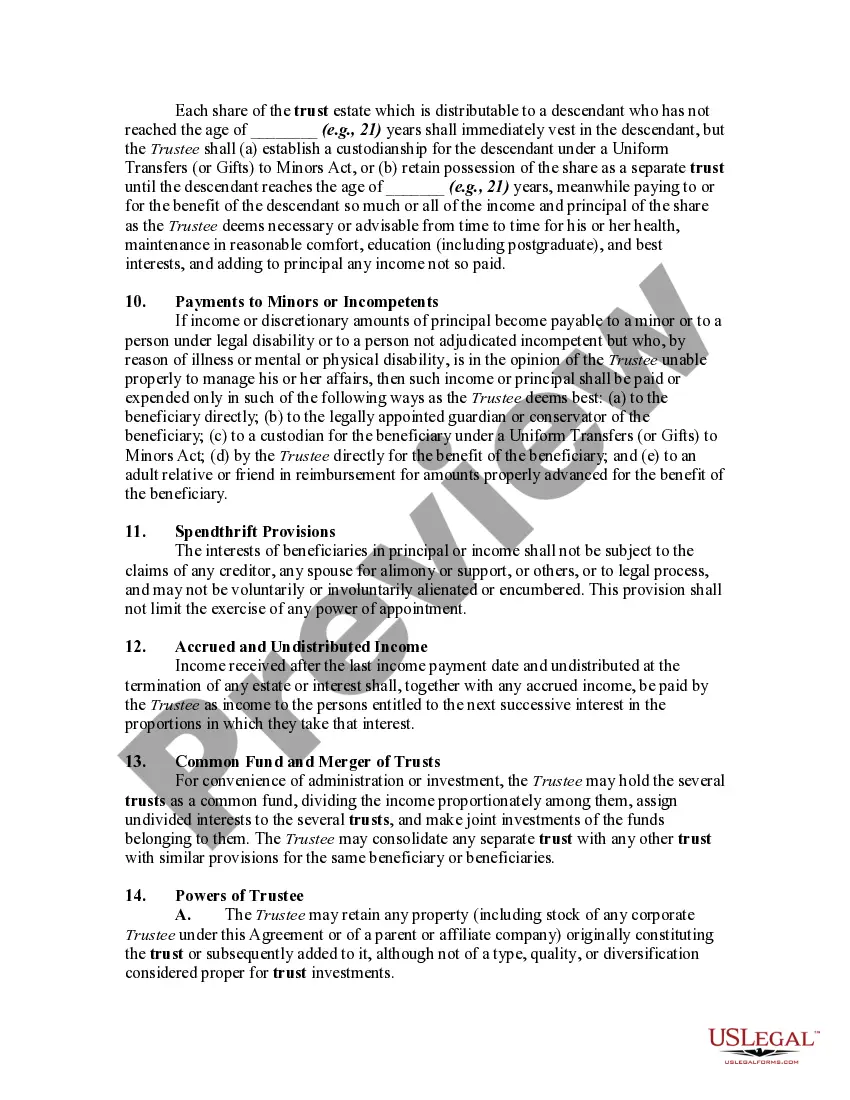
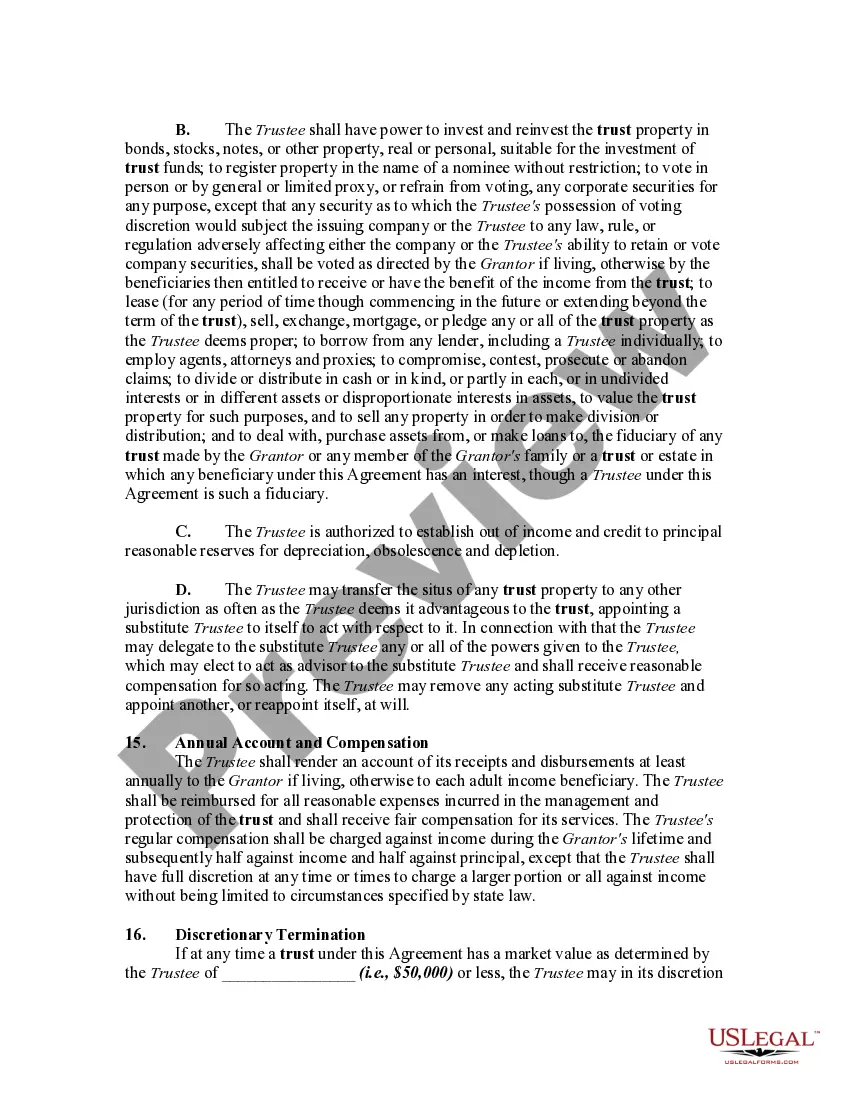
How to fill out Irrevocable Generation Skipping Or Dynasty Trust Agreement For Benefit Of Trustor's Children And Grandchildren?
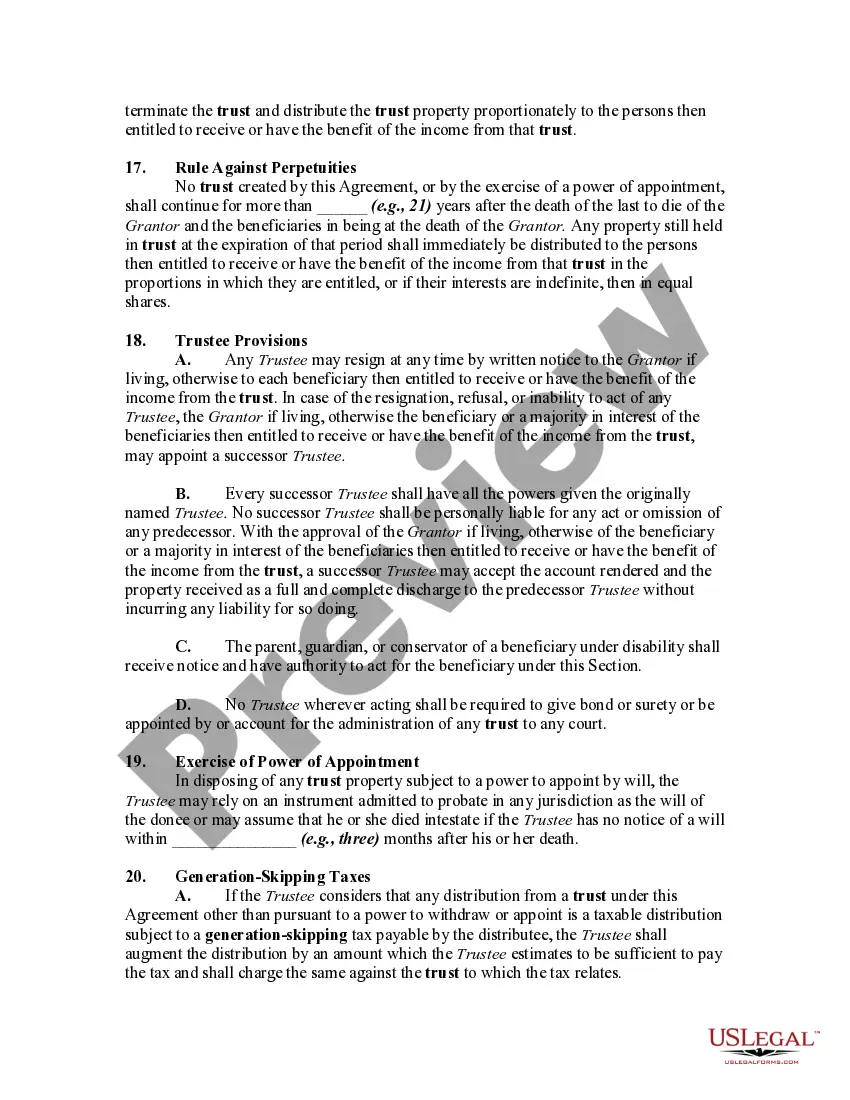
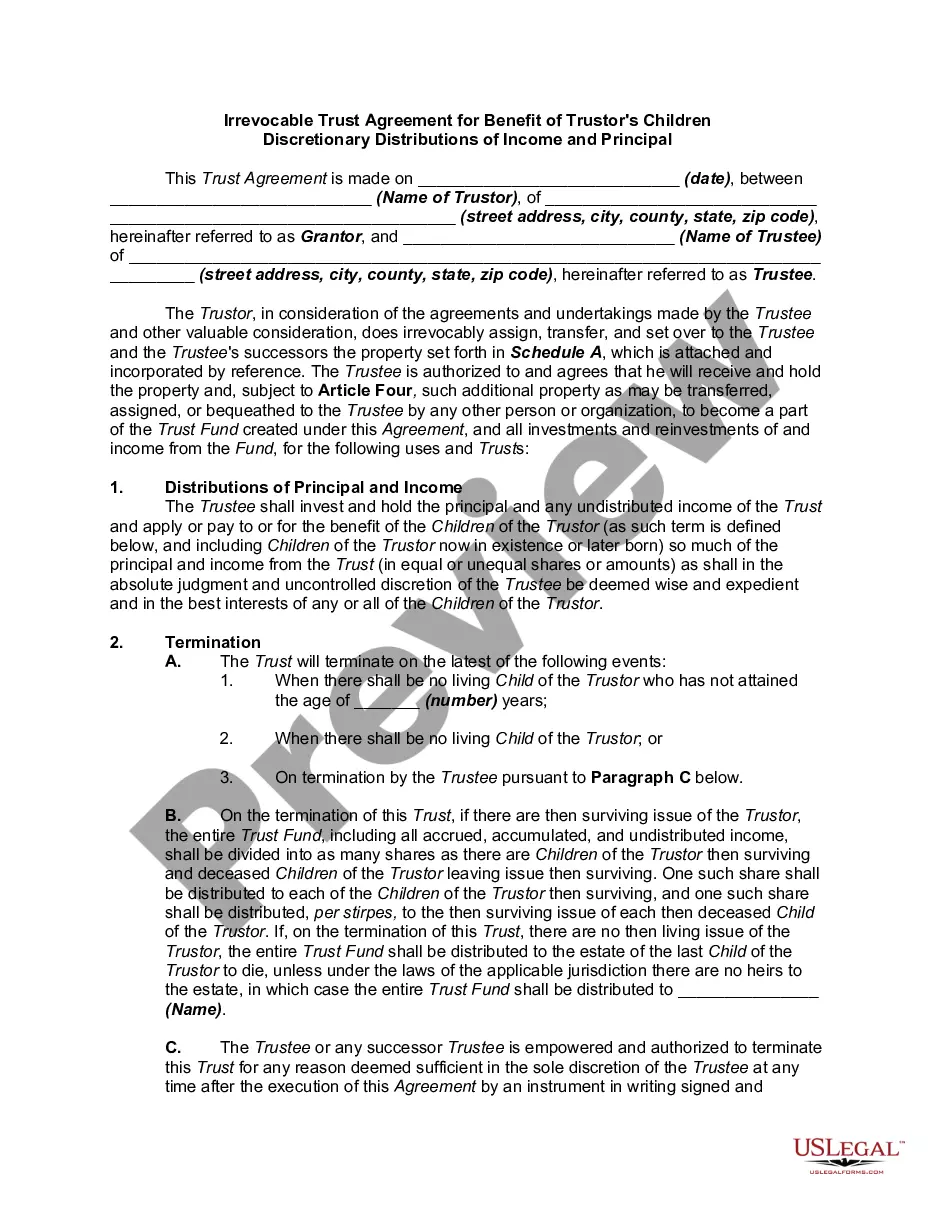
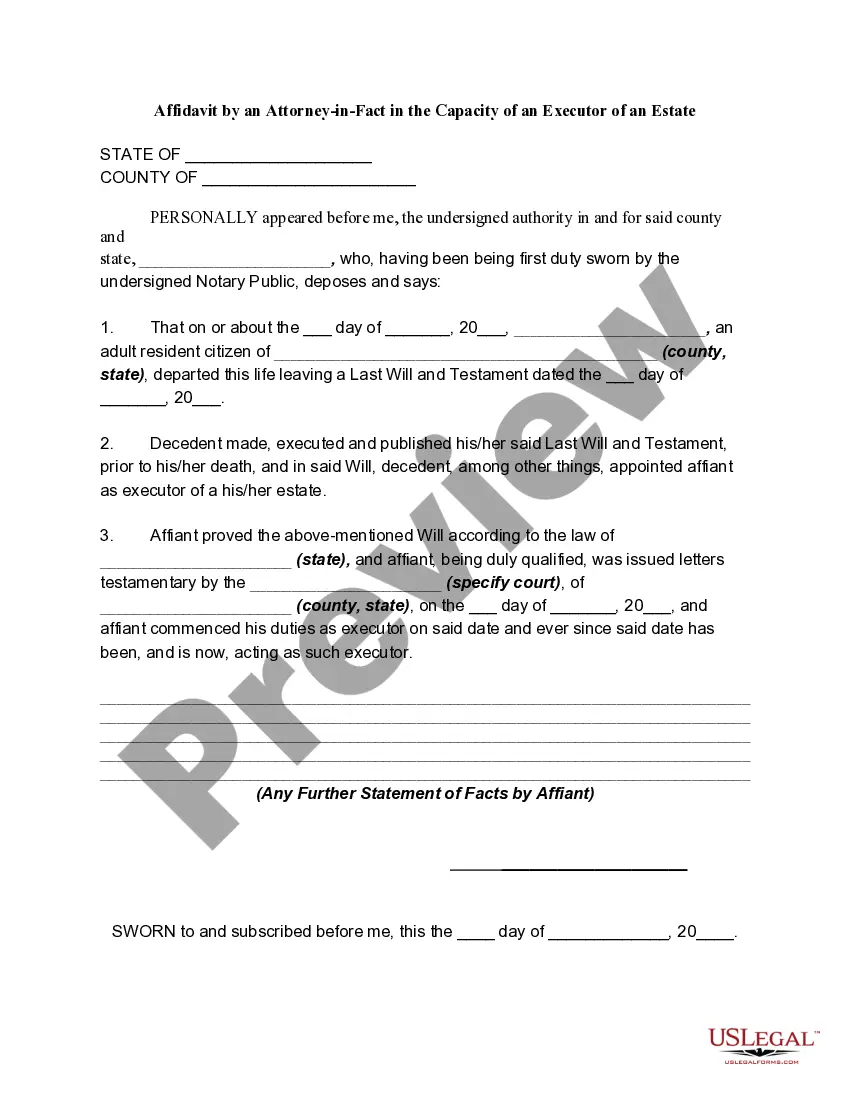
It’s well-known that becoming a legal authority isn’t possible in a day, nor can you swiftly learn to prepare Dynasty Trust Sample Withdrawal without having a focused education. Assembling legal documents is a lengthy endeavor that demands specific training and expertise. So why not delegate the drafting of the Dynasty Trust Sample Withdrawal to the experts.
With US Legal Forms, one of the most extensive legal template repositories, you can discover anything from court documents to templates for in-office correspondence. We recognize the significance of adhering to federal and local regulations. That’s why, on our site, all templates are tailored to specific regions and current.
Here’s how you can initiate your journey on our website and acquire the form you require in just moments.
You can regain access to your forms from the My documents section at any time. If you’re a current customer, you can simply Log In, and find and download the template from the same section.
Regardless of the intent of your forms-whether for financial, legal, or personal matters-our website has you covered. Experience US Legal Forms today!
- Find the document you need by utilizing the search feature at the top of the page.
- Preview it (if this option is available) and read the accompanying description to determine if Dynasty Trust Sample Withdrawal is what you’re looking for.
- Start your search anew if you require any other template.
- Create a complimentary account and select a subscription plan to purchase the form.
- Click Buy now. Once your payment is processed, you can obtain the Dynasty Trust Sample Withdrawal, complete it, print it, and send or mail it to the relevant individuals or organizations.
Form popularity
FAQ
While dynasty trusts can provide financial security across generations, they also come with several downsides. These include potential tax implications and the risk of over-controlling beneficiaries' decisions. It’s important to strike a balance between providing support and allowing independence for your heirs. Understanding these aspects will prepare you for any considerations regarding a dynasty trust sample withdrawal in the future.
The biggest mistake parents often make is failing to clearly define their goals when establishing a trust fund. Without a clear purpose, the trust can become ineffective or create confusion among beneficiaries. It's essential to consider the long-term impact and ensure the terms align with your family's future needs. This ensures that the trust can operate smoothly and facilitates easier dynasty trust sample withdrawal when needed.
Breaking a dynasty trust often requires legal intervention and a thorough understanding of the trust's terms. Generally, this process involves showing valid reasons, such as changes in circumstances that warrant this action. Consulting with a legal professional experienced in trust law is crucial. They can provide guidance and options related to a dynasty trust sample withdrawal.
To withdraw from a trust, you need to follow the procedures outlined in the trust agreement. Start by reviewing the document to understand your rights as a beneficiary. Once familiar with the rules, you can submit a request for withdrawal to the trustee, who will evaluate it based on the trust's conditions. This process reflects the principles of a dynasty trust sample withdrawal, emphasizing proper management and oversight.
You can make withdrawals from a trust fund, but the process is governed by the trust's terms. Trust funds often specify conditions for disbursement, which can vary depending on the type of trust. If you're a beneficiary, you should review these terms carefully to understand your access to the funds. This inquiry is closely related to the concept of dynasty trust sample withdrawal, as it often involves similar rules.
Yes, you can withdraw from a dynasty trust, but it depends on the terms set by the trust creator. Generally, the trust document outlines specific conditions for withdrawals, such as age or milestone-based distributions. As the beneficiary, you can request a withdrawal according to these guidelines, facilitating your access to funds when necessary. Remember, this process demonstrates the flexibility offered by a dynasty trust sample withdrawal.
A dynasty trust is a long-term estate planning tool designed to pass wealth across multiple generations without incurring estate taxes. For instance, you might set up a dynasty trust to provide for your children, grandchildren, and even great-grandchildren. The trust can include guidelines for distributions, ensuring that funds are available for education or other needs. This allows families to maintain wealth over time, highlighting the efficiency of a dynasty trust sample withdrawal.
The downside of putting assets in a trust often involves limitations on control and flexibility. Once assets are transferred, the trust terms govern how they can be accessed and distributed. In scenarios involving dynasty trust sample withdrawal, beneficiaries might find it challenging to retrieve funds if the trust's rules are too strict or outdated, hindering their financial independence.
Determining whether to place assets in a trust depends on the family's specific needs and goals. A trust may help protect assets and provide structured distribution. However, it’s essential to weigh the advantages against potential drawbacks, especially when considering options like a dynasty trust sample withdrawal, which might complicate access to funds.
While trusts provide many benefits, they also have downsides. Establishing a trust can be time-consuming and costly due to legal fees and ongoing administration expenses. Moreover, the rigidity of a dynasty trust sample withdrawal can limit future changes, which might not be ideal for families who anticipate evolving financial situations.