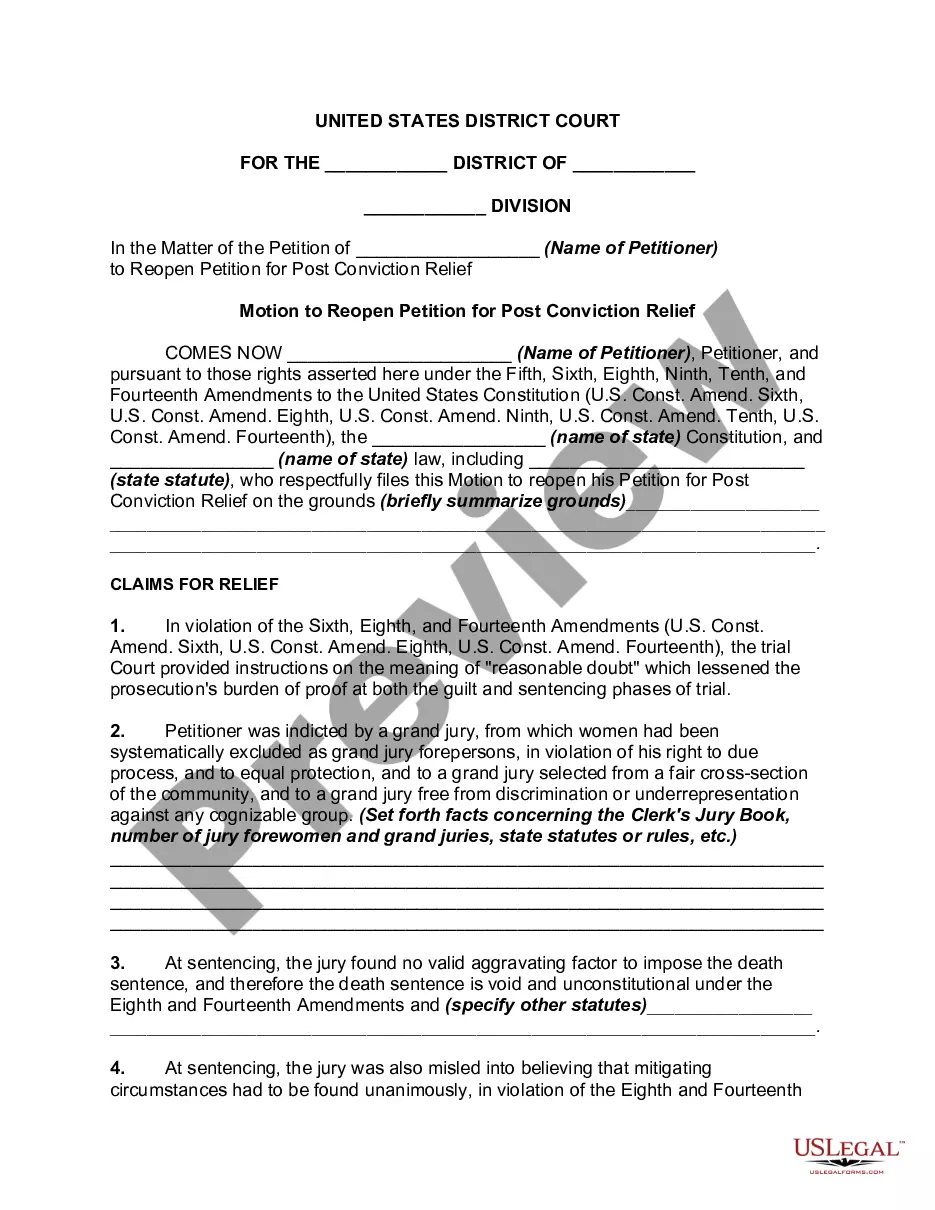
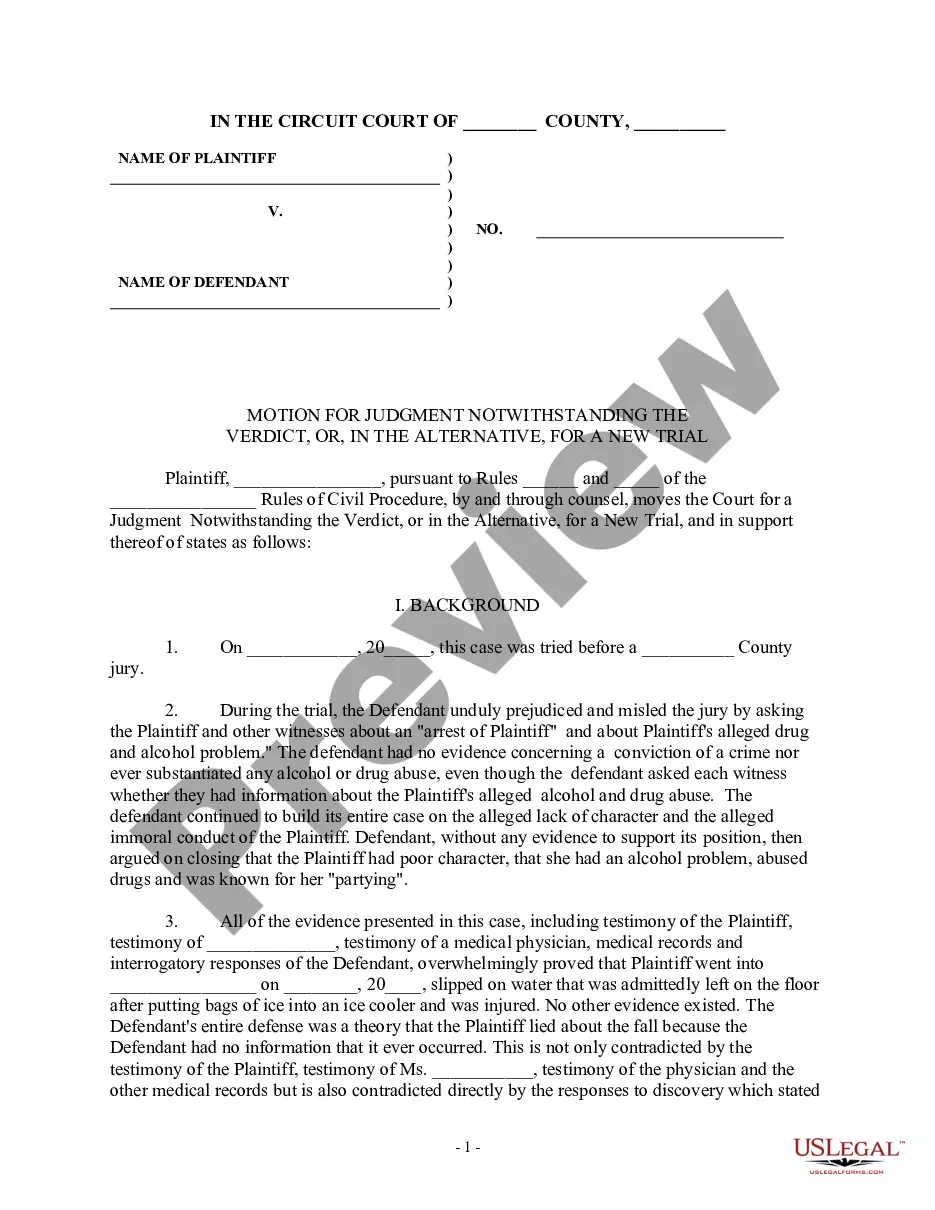
Motion For New Trial Sample
Description
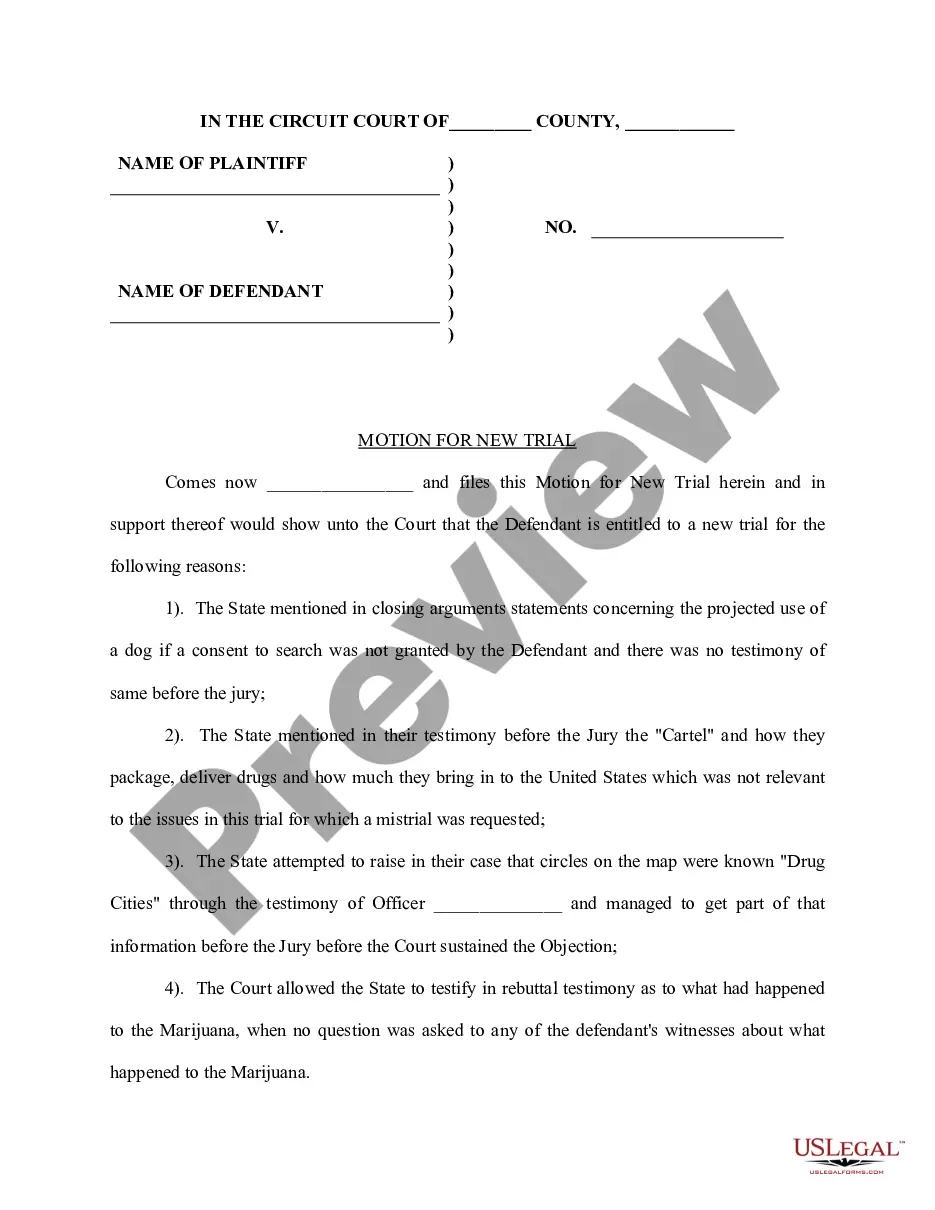
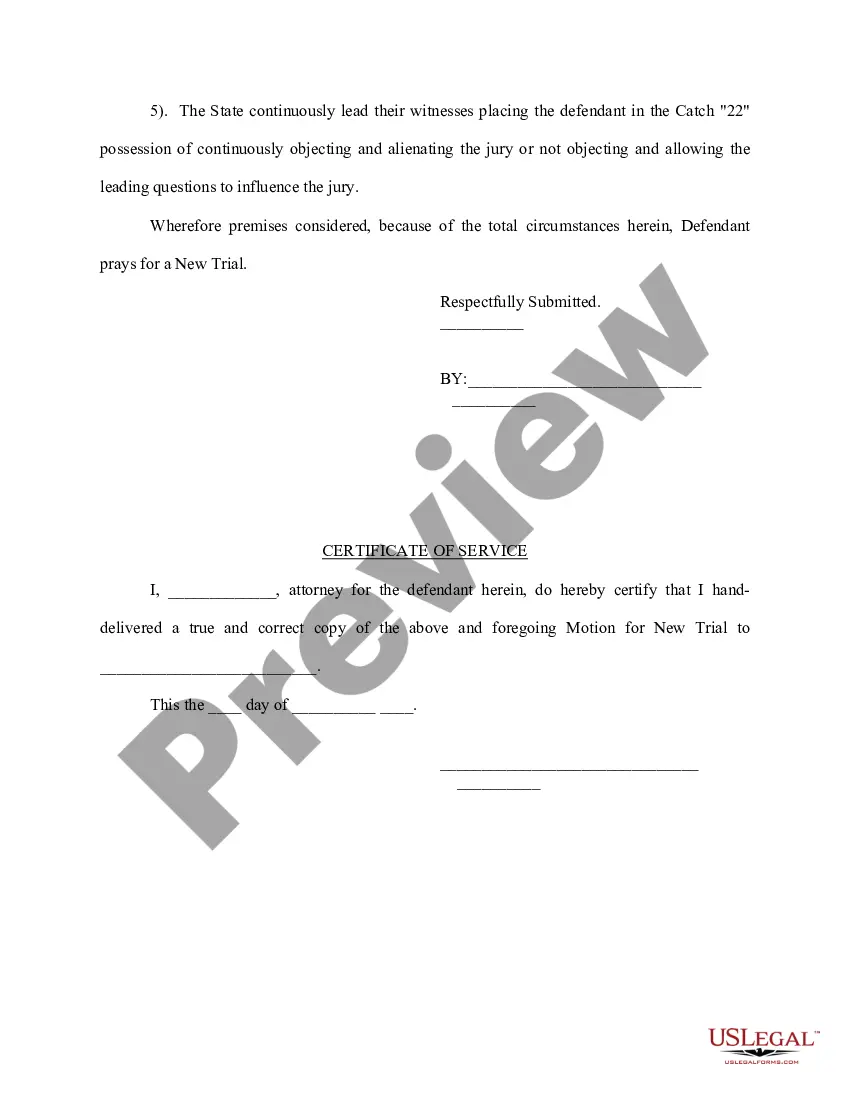
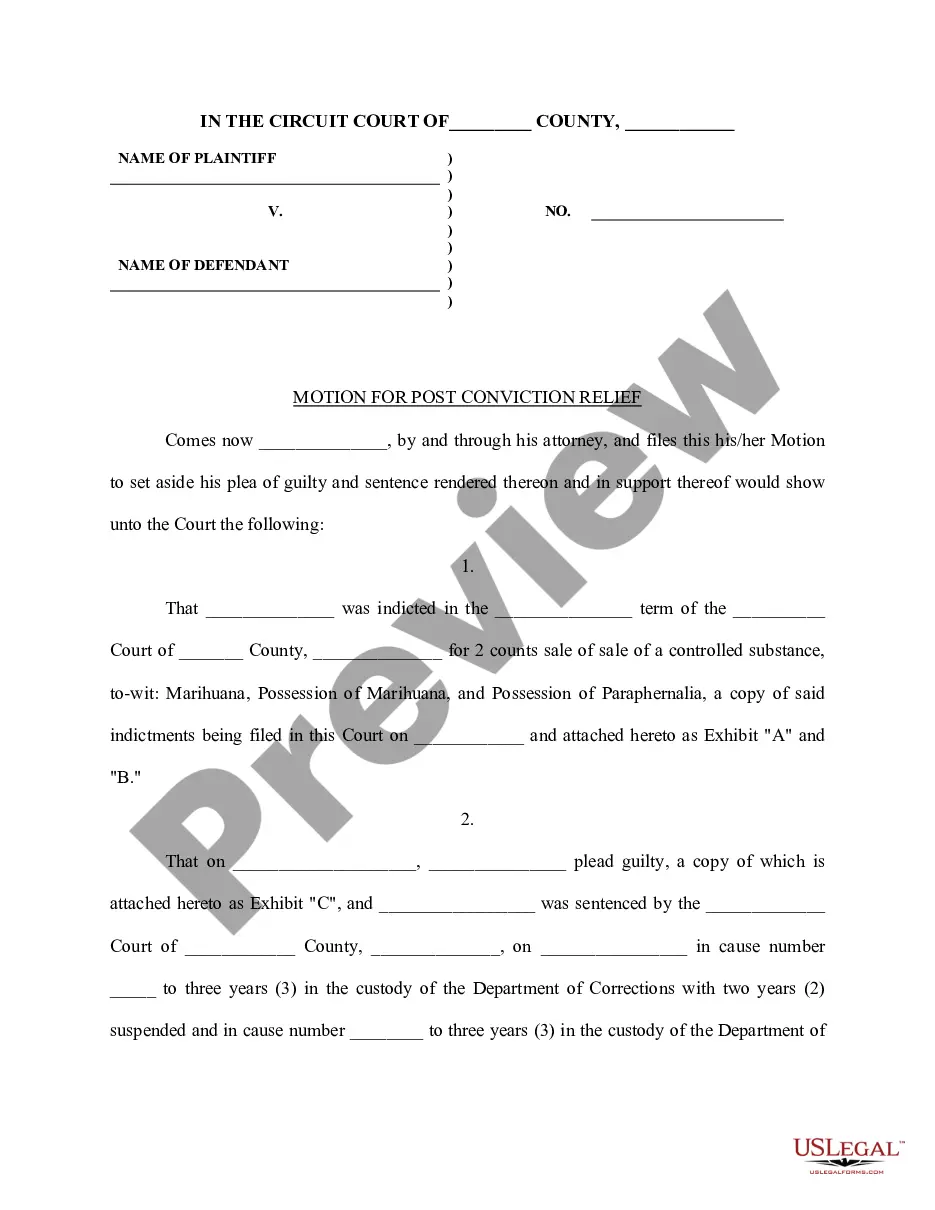
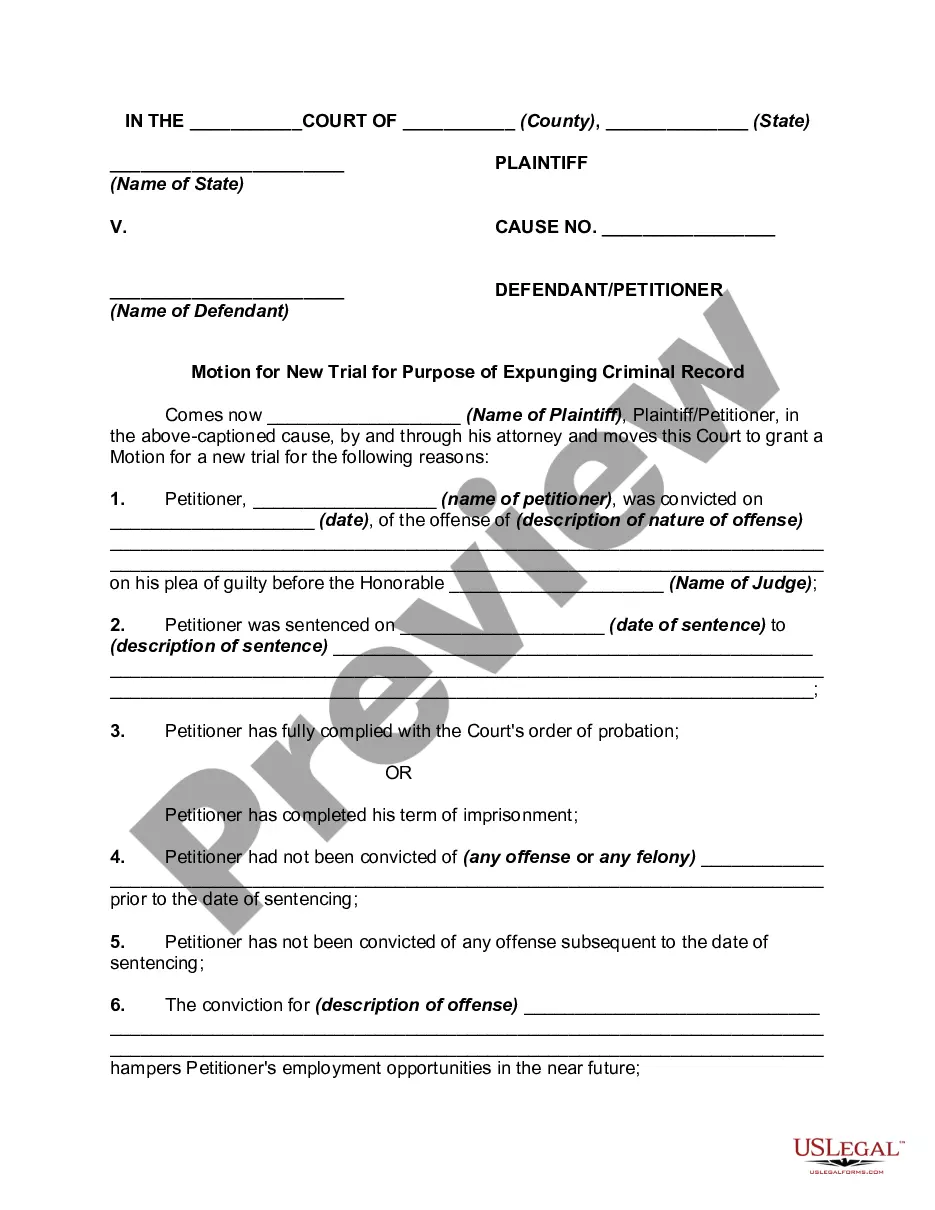
Get your form ready online
Our built-in tools help you complete, sign, share, and store your documents in one place.
Make edits, fill in missing information, and update formatting in US Legal Forms—just like you would in MS Word.
Download a copy, print it, send it by email, or mail it via USPS—whatever works best for your next step.
Sign and collect signatures with our SignNow integration. Send to multiple recipients, set reminders, and more. Go Premium to unlock E-Sign.
If this form requires notarization, complete it online through a secure video call—no need to meet a notary in person or wait for an appointment.
We protect your documents and personal data by following strict security and privacy standards.

Make edits, fill in missing information, and update formatting in US Legal Forms—just like you would in MS Word.

Download a copy, print it, send it by email, or mail it via USPS—whatever works best for your next step.

Sign and collect signatures with our SignNow integration. Send to multiple recipients, set reminders, and more. Go Premium to unlock E-Sign.

If this form requires notarization, complete it online through a secure video call—no need to meet a notary in person or wait for an appointment.

We protect your documents and personal data by following strict security and privacy standards.
Looking for another form?






How to fill out Motion For New Trial?
Locating a reliable source for the most recent and suitable legal samples is a significant part of navigating bureaucracy.
Finding the correct legal documents demands accuracy and meticulousness, which highlights the need to obtain Motion For New Trial Sample solely from trustworthy sources, like US Legal Forms.
Once you have the form on your device, you can edit it using the editor or print it for manual completion. Eliminate the difficulties associated with your legal documents. Explore the extensive US Legal Forms collection where you can locate legal samples, assess their applicability to your circumstances, and download them immediately.
- Utilize the library navigation or search bar to locate your sample.
- Review the form’s description to confirm its suitability for the requirements of your state and region.
- Access the form preview, if available, to ensure it is indeed the template you need.
- Return to the search and find the correct template if the Motion For New Trial Sample does not meet your criteria.
- Once you are confident in the form’s relevance, download it.
- If you are a registered user, click Log in to verify your identity and access your selected templates in My documents.
- If you do not possess an account yet, click Buy now to acquire the form.
- Select the pricing plan that best fits your requirements.
- Proceed with the registration to finalize your purchase.
- Complete your purchase by choosing a payment method (credit card or PayPal).
- Select the format for downloading the Motion For New Trial Sample.
Form popularity
FAQ
Writing a legal motion involves several important steps. Start by identifying the purpose of your motion and the relief you are seeking. Use a motion for new trial sample to structure your document, ensuring it includes all necessary sections like facts, legal arguments, and a conclusion. Be precise in your language and present your case clearly to enhance its effectiveness in court.
Motions can vary widely, but examples include a motion to dismiss, a motion for summary judgment, and a motion for a new trial. A motion for new trial sample is specifically used when a party believes errors occurred during a trial that warrant a review. Each motion serves a distinct purpose, helping to advocate for your position in legal proceedings. Knowing these examples can help you determine which motion is appropriate for your case.
Filling out a motion requires clear steps. First, gather all relevant information about your case, including case numbers and parties involved. Next, use a motion for new trial sample as a reference, ensuring your document includes necessary elements like the title, introduction, and body. Finally, review your motion for clarity and accuracy before filing it with the appropriate court.
The federal rule for a motion for a new trial is outlined in Rule 59 of the Federal Rules of Civil Procedure. This rule allows a party to request a new trial under specific conditions, such as when there were errors in the trial process that could have affected the outcome. If you are looking to understand how to draft a motion for a new trial, a motion for new trial sample can guide you through the necessary components. Consider using platforms like US Legal Forms to access templates and additional resources that simplify this process.
When you ask for a new trial, it is officially referred to as filing a motion for a new trial. This legal request seeks to have a previous judgment overturned due to reasons such as legal errors, juror misconduct, or new evidence. The process requires a formal submission to the court outlining the basis for your request. By reviewing a comprehensive motion for new trial sample, you can better navigate this complex legal procedure.
A motion for a trial is a request made to a court to schedule a trial for a case that has yet to be resolved. This motion can be filed after parties have engaged in preliminary procedures like discovery. The court will consider the motion's validity based on legal criteria and case specifics. It is essential to understand the distinction and use an appropriate motion for new trial sample to facilitate your request.
Motions for a new trial are not granted frequently, as courts typically uphold original verdicts unless clear errors are demonstrated. The success rate can depend on various factors, including the strength of the arguments presented and the evidence cited. Generally, courts grant these motions when they identify errors that materially impacted the trial's outcome. Utilizing a motion for new trial sample can help you present a compelling case.
Filing a motion to appear in court involves preparing a written request that outlines your reasons for wanting to appear. You must submit your motion to the appropriate court along with any required documents or fees. After filing, you may need to serve the motion to other parties involved in the case. A motion for new trial sample can help you format your request correctly.
A motion for a new trial is a formal request asking the court to annul a prior ruling and conduct a new trial. This motion typically arises when one party believes that significant errors occurred during the original trial, affecting the verdict. Courts may grant such motions for various reasons, including legal mistakes or new evidence. Understanding the nuances of a motion for new trial sample is essential for effective legal representation.
Winning a motion for a new trial requires presenting compelling reasons why the previous trial was flawed. You should clearly outline errors that impacted the outcome, such as jury misconduct or ineffective legal representation. Additionally, providing new evidence that was not available during the original trial can strengthen your case. An effective motion for new trial sample can serve as a strong guide to articulate your arguments.