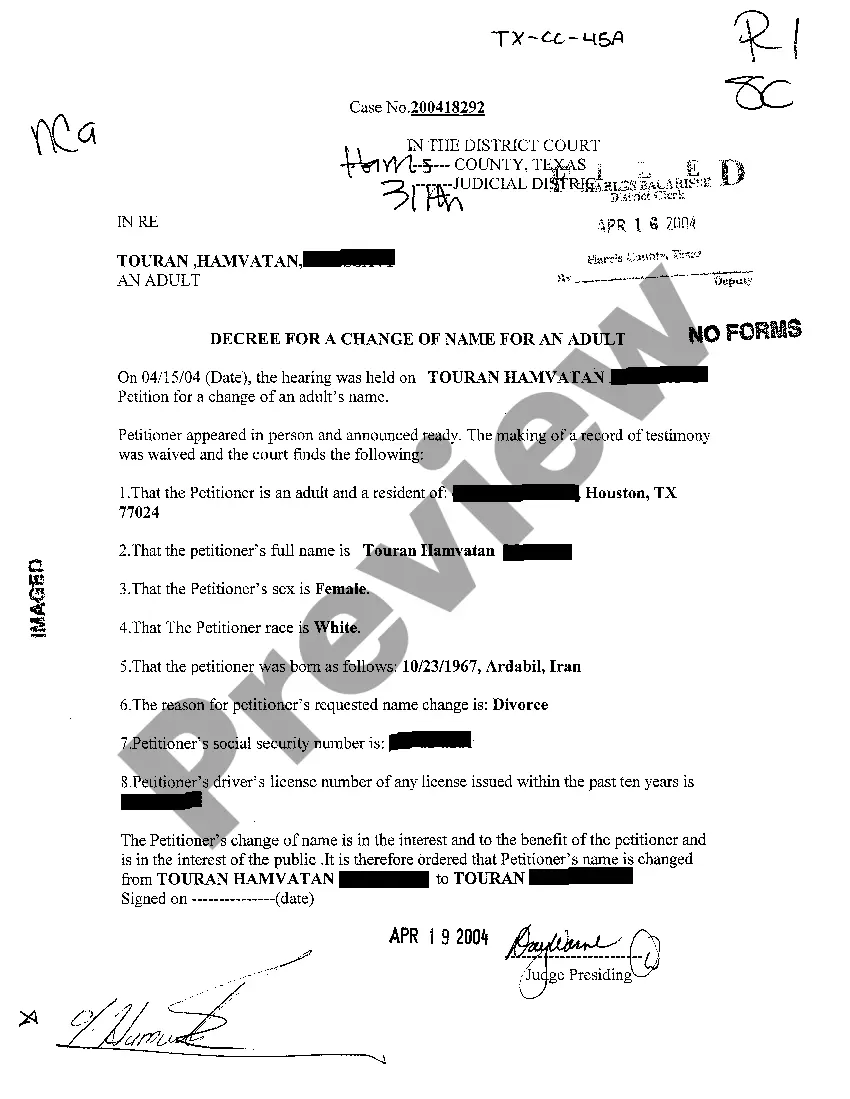
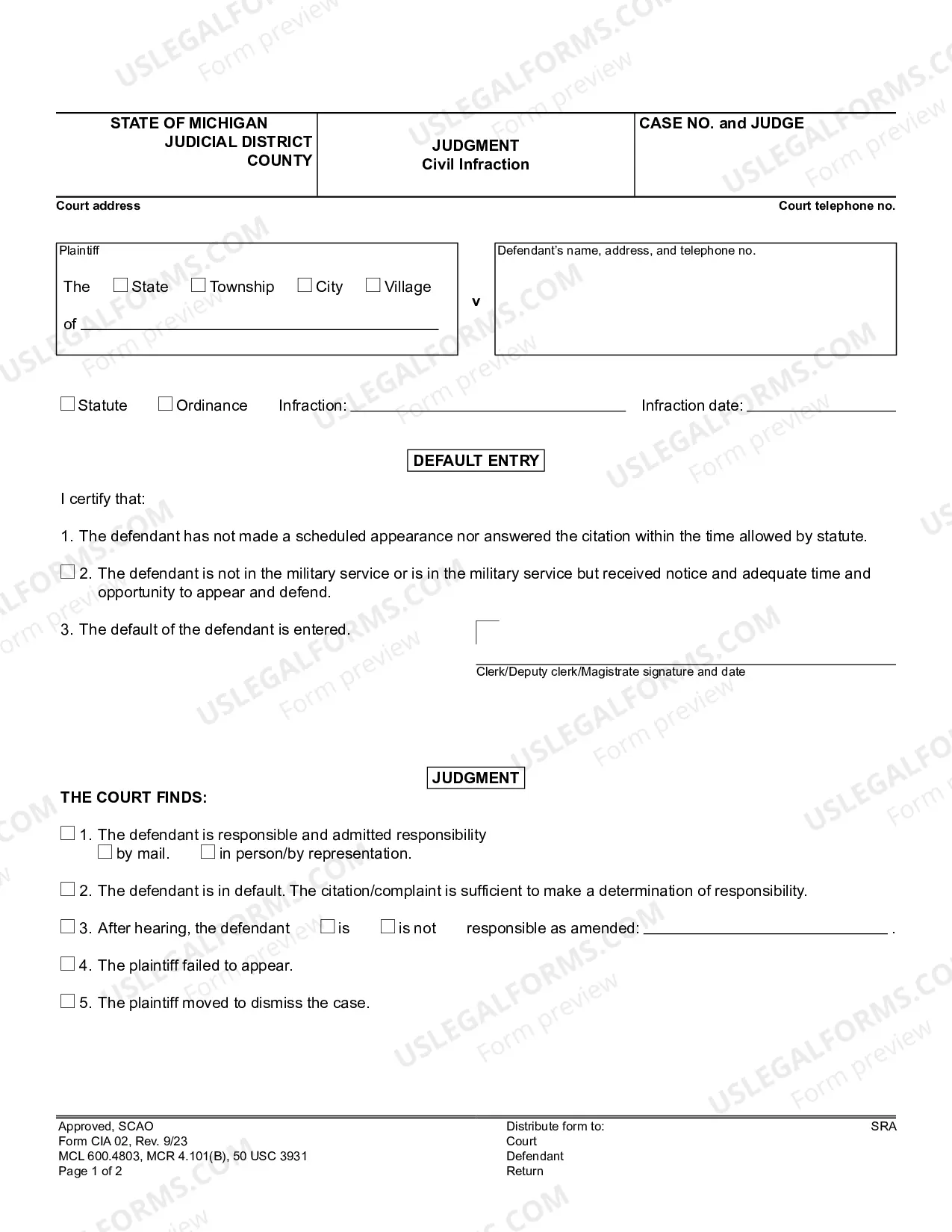
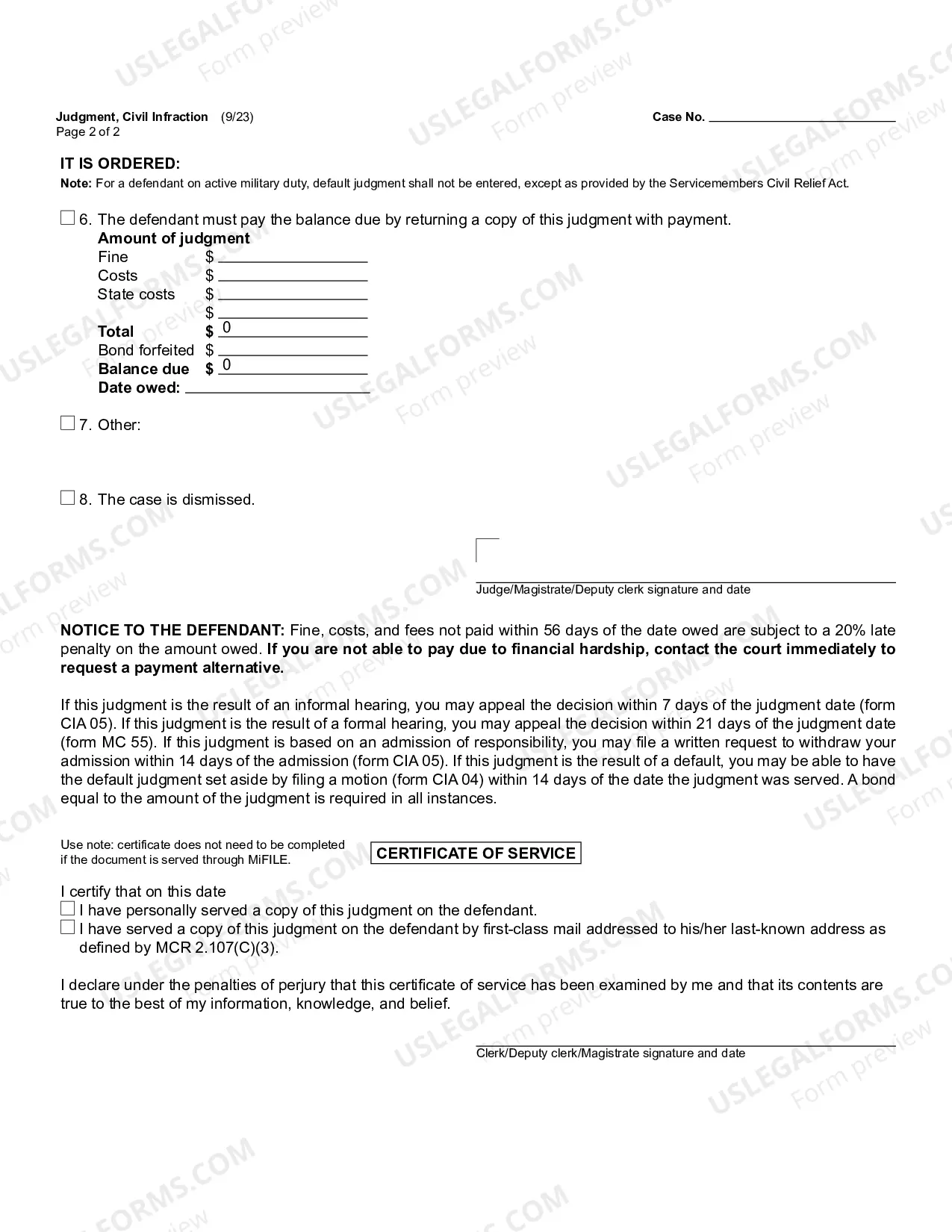
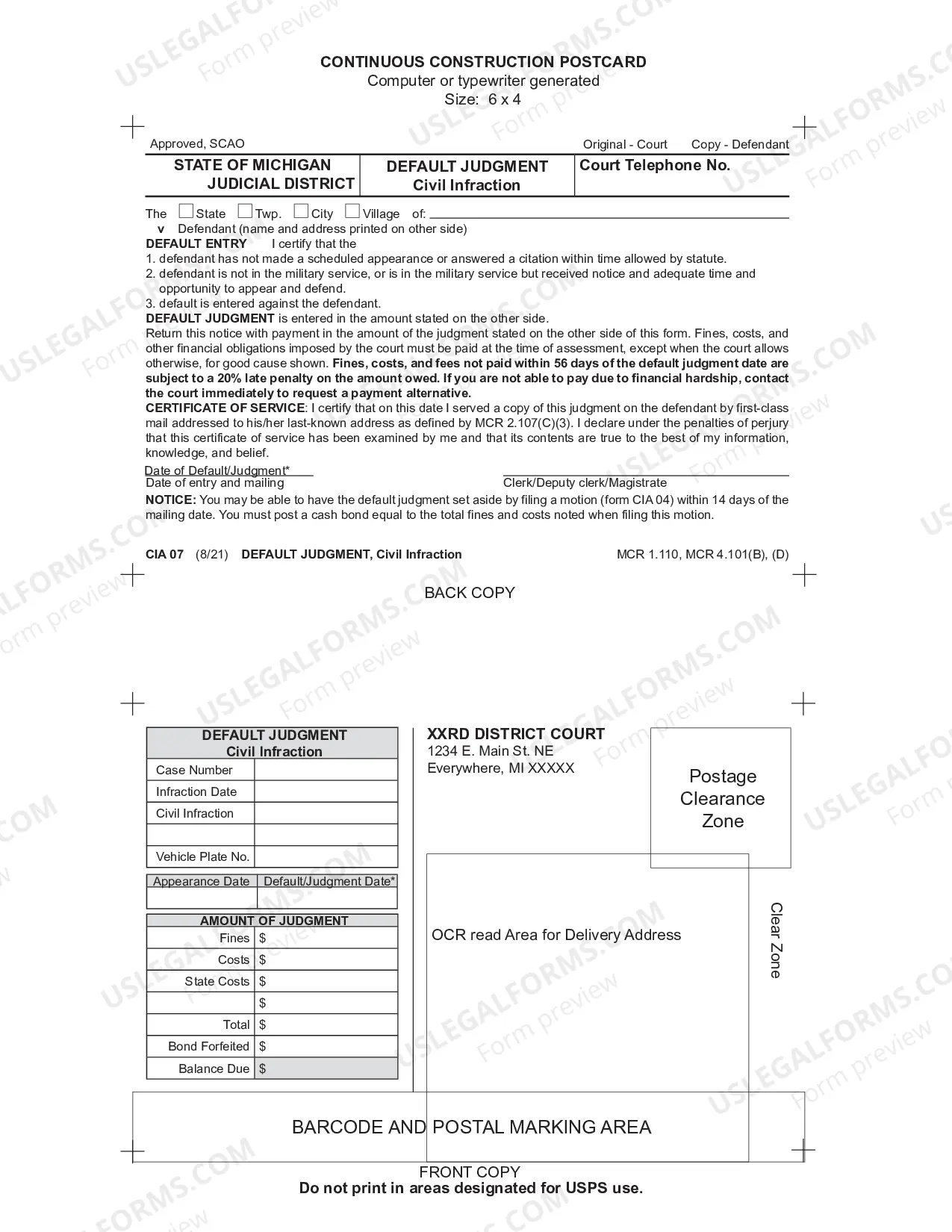
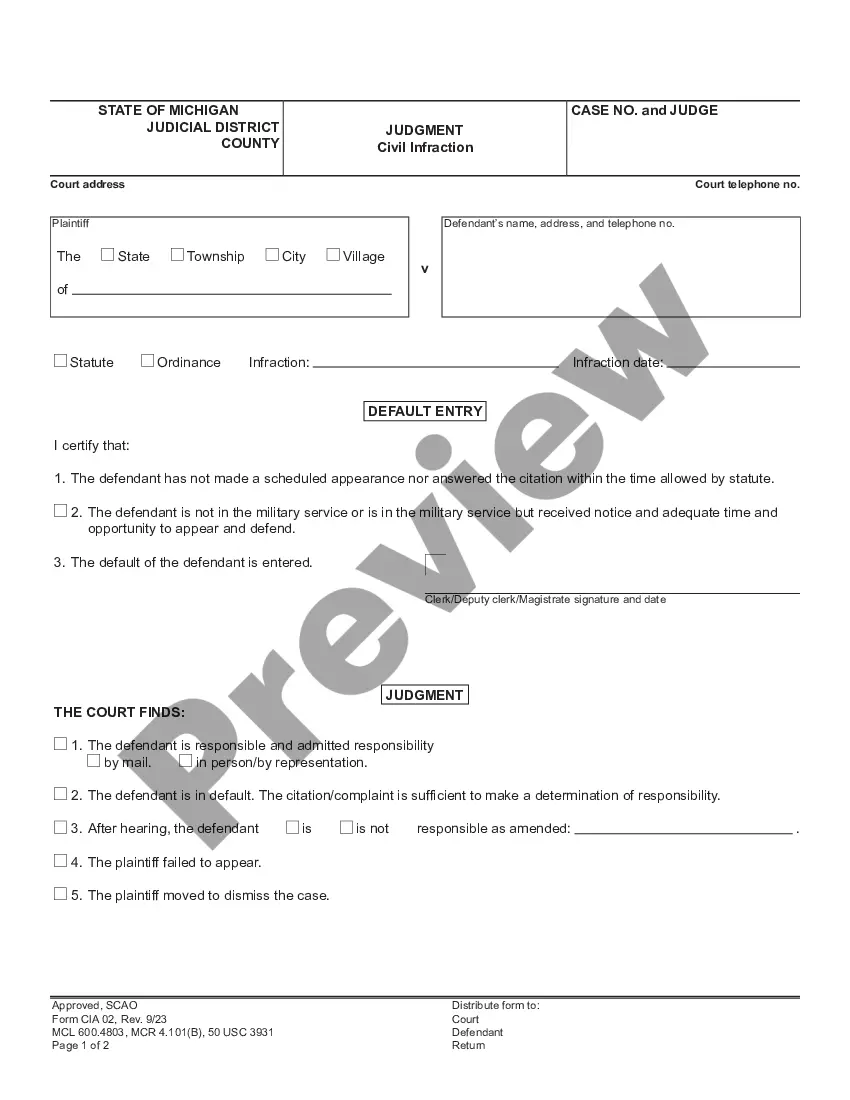
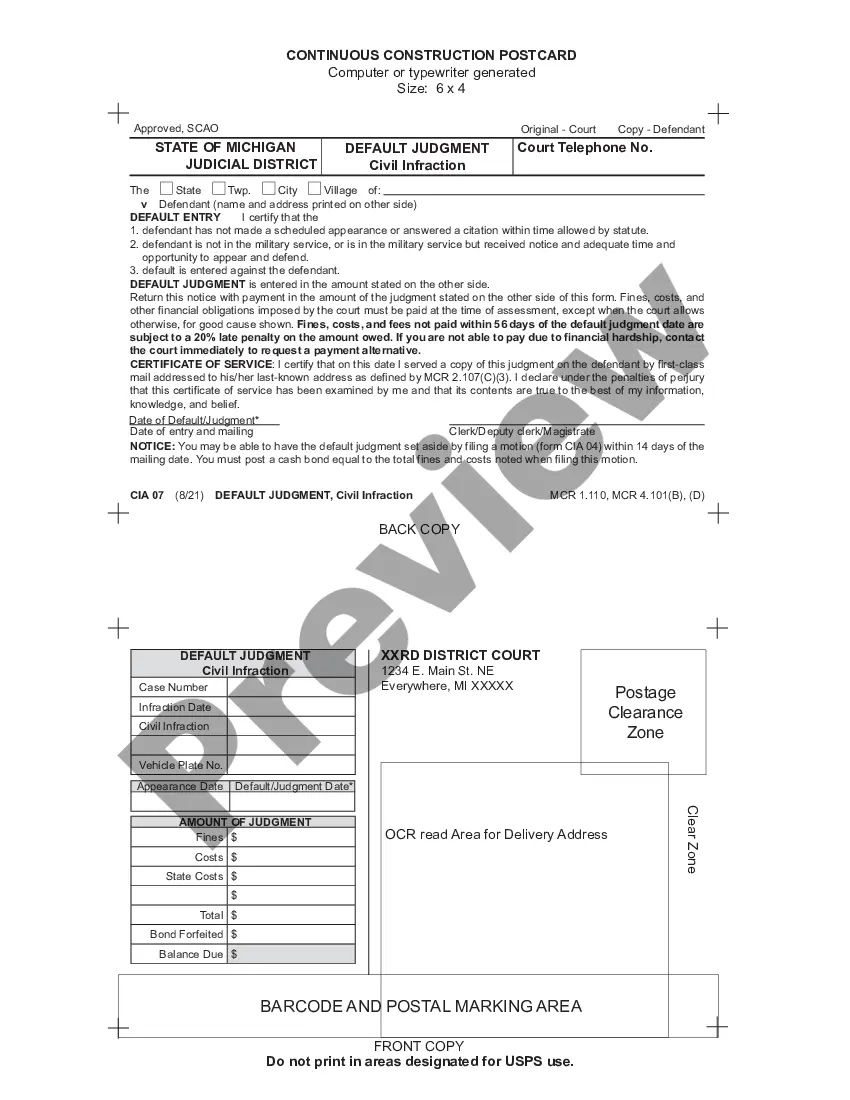
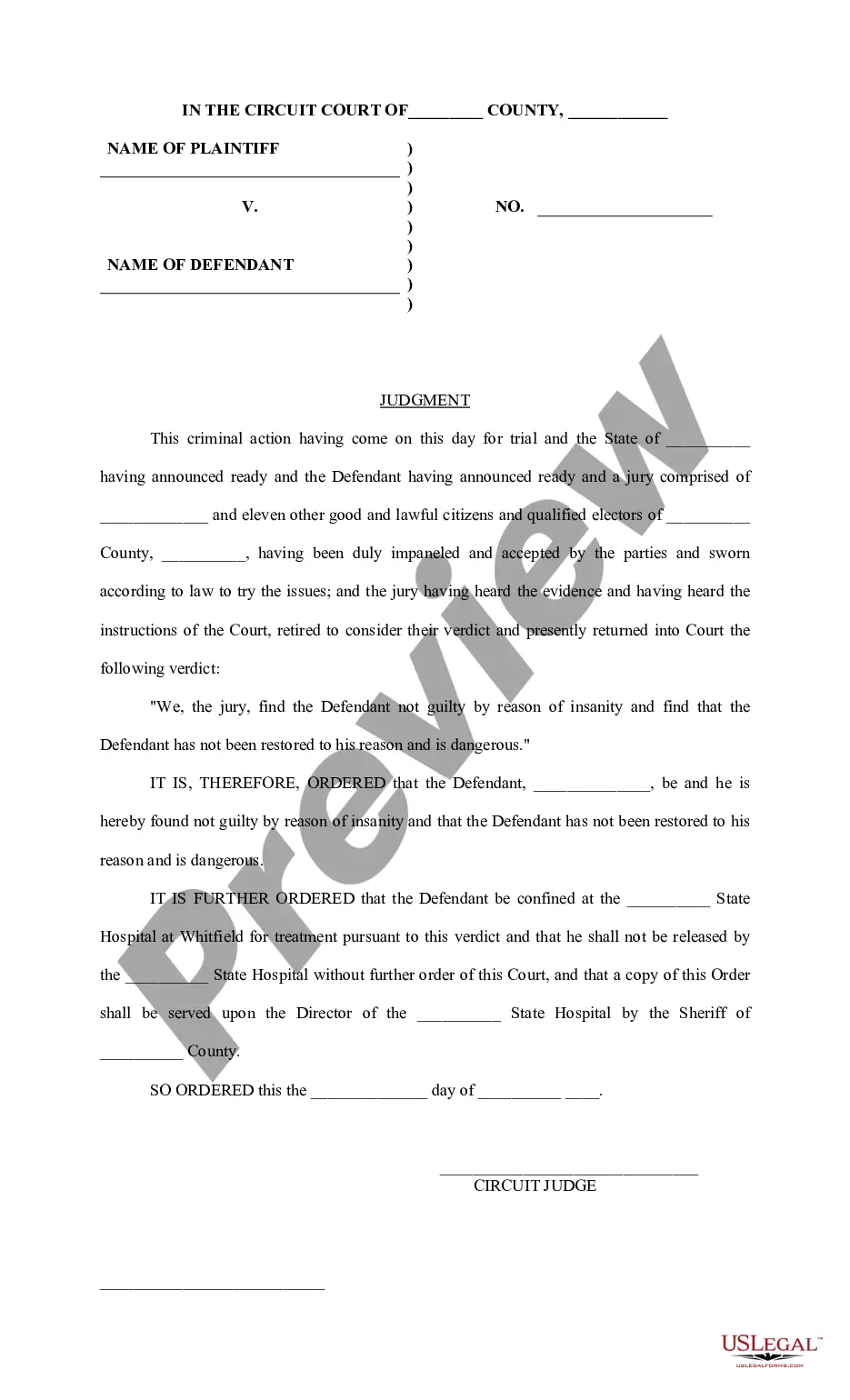
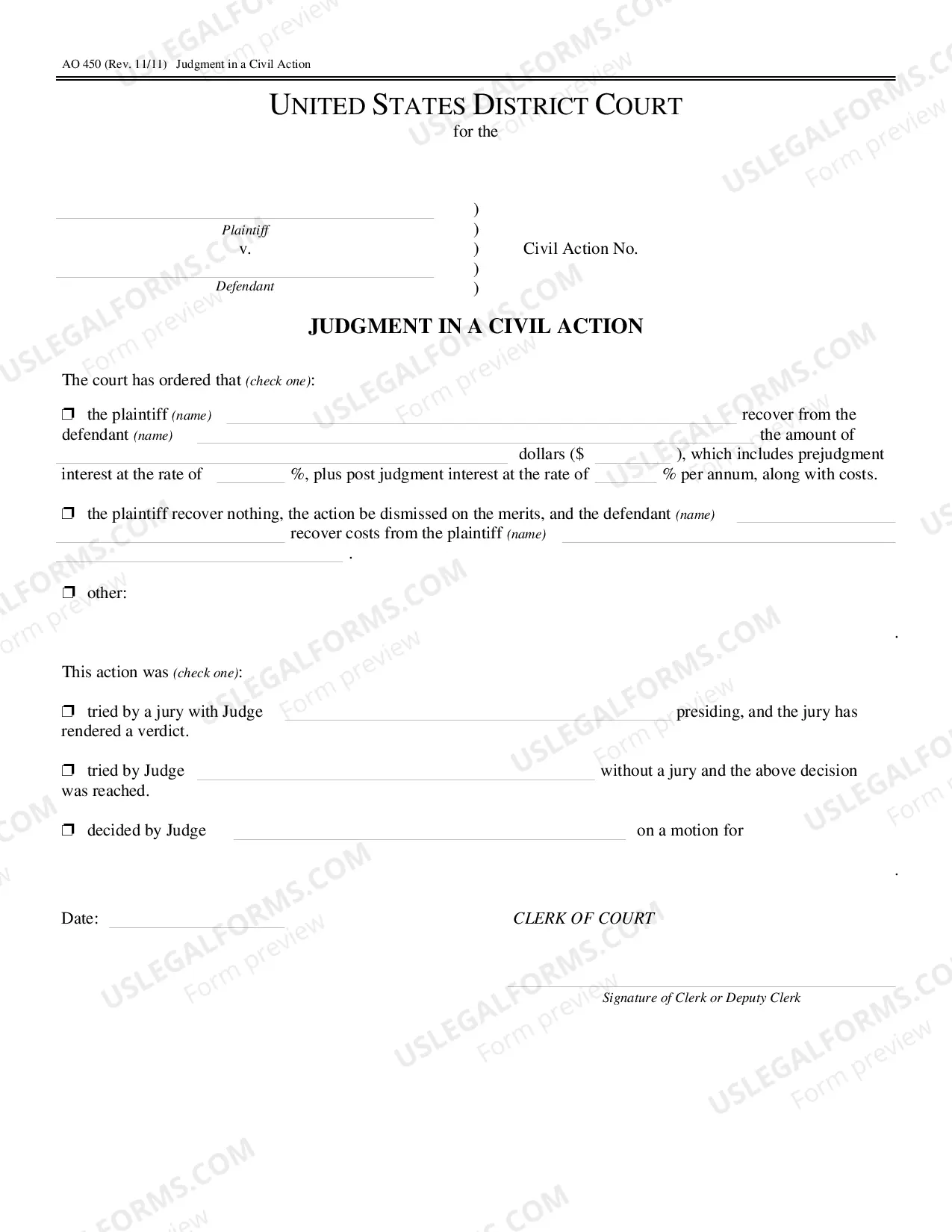
Michigan Judgment is a legal order issued by a court of law. It is a court-ordered payment of money owed to a creditor by a debtor. The creditor is usually a bank, credit union, or other financial institution, and the debtor is the person or company that owes the money. There are two types of judgments in Michigan — a judgment of conviction and a judgment of foreclosure. A judgment of conviction is a ruling that finds the debtor guilty of a crime, such as failing to pay a debt. A judgment of foreclosure is a ruling that allows a creditor to seize and sell a debtor’s property in order to pay off the debt. In either case, the judgment is binding and must be paid in full or else the debtor will face penalties, such as wage garnishment, bank account seizure, or property repossession.
Michigan Judgment
Description
Get your form ready online
Our built-in tools help you complete, sign, share, and store your documents in one place.
Make edits, fill in missing information, and update formatting in US Legal Forms—just like you would in MS Word.
Download a copy, print it, send it by email, or mail it via USPS—whatever works best for your next step.
Sign and collect signatures with our SignNow integration. Send to multiple recipients, set reminders, and more. Go Premium to unlock E-Sign.
If this form requires notarization, complete it online through a secure video call—no need to meet a notary in person or wait for an appointment.
We protect your documents and personal data by following strict security and privacy standards.

Make edits, fill in missing information, and update formatting in US Legal Forms—just like you would in MS Word.

Download a copy, print it, send it by email, or mail it via USPS—whatever works best for your next step.

Sign and collect signatures with our SignNow integration. Send to multiple recipients, set reminders, and more. Go Premium to unlock E-Sign.

If this form requires notarization, complete it online through a secure video call—no need to meet a notary in person or wait for an appointment.

We protect your documents and personal data by following strict security and privacy standards.
Looking for another form?
How to fill out Michigan Judgment?
If you’re looking for a method to properly prepare the Michigan Judgment without engaging a legal expert, you’ve come to the ideal place.
US Legal Forms has established itself as the most comprehensive and trustworthy collection of official templates for all individual and business circumstances.
Upload your template to an online editor to efficiently complete and sign it, or print it out to prepare your physical copy manually.
- Every document you find on our online platform is crafted in compliance with national and state laws, ensuring your paperwork is accurate.
- Verify that the document displayed on the page fits your legal needs and state laws by reviewing its text description or utilizing the Preview mode.
- Enter the document title in the Search tab at the top of the page and select your state from the dropdown list to locate additional templates in case of discrepancies.
- Repeat the content verification and click Buy now when you are assured that the documents meet all requirements.
- Log in to your account and select Download. If you don't have an account, create one with the service and choose a subscription plan.
- Utilize your credit card or the PayPal option to buy your US Legal Forms subscription. The document will be accessible for download immediately afterward.
- Select the format in which you wish to save your Michigan Judgment and download it by clicking the corresponding button.
Form popularity
FAQ
Filing a lawsuit in Michigan involves several important steps to ensure your case is properly presented. First, you must determine the correct court for your case and prepare the necessary paperwork, including the complaint and summons. After filing these documents, you will need to serve them to the defendant, allowing them to respond. For a streamlined experience, you can utilize US Legal Forms, which offers templates and resources tailored for filing lawsuits in Michigan.
The 7 day rule in Michigan pertains to the timeframe within which a defendant must respond to a judgment or a court order. This rule allows the defendant seven days to file an appeal or take action against a judgment. Understanding this rule is essential for anyone involved in a legal matter, as it directly affects your rights. If you need assistance navigating through these legal processes, consider using the tools available on the US Legal Forms platform to simplify your experience.
Enforcing a judgment in Michigan involves several steps to ensure compliance from the debtor. First, you need to obtain a judgment from the court, then you can utilize tools such as wage garnishment or property liens. It is essential to follow the legal procedures accurately to avoid issues. For a smooth process, consider using US Legal Forms, which offers resources and templates to help you effectively enforce your Michigan judgment.
The 7 day order rule in Michigan refers to a time frame established by the court for certain actions related to Michigan judgments. After a judgment is entered, the opposing party has seven days to file a motion to stay or vacate the judgment. This rule ensures that both parties have a fair opportunity to address any immediate concerns regarding the judgment. Understanding this rule is crucial for anyone navigating the legal landscape in Michigan.
To file a judgment lien in Michigan, you must first obtain a certified copy of the judgment from the court. Next, complete the necessary forms and file them with the county clerk in the county where the property is located. This process establishes your Michigan judgment as a lien against the debtor’s property, allowing you to secure your interest. US Legal Forms offers resources to help you navigate these steps and ensure proper filing.
Writing a good judgment in Michigan requires clarity and precision. Start by outlining the facts of the case, detailing the evidence presented, and explaining the legal principles applied. Ensure your conclusion directly addresses the issues at hand and reflects a fair application of Michigan law. For a streamlined process, consider using US Legal Forms, which provides templates to assist you in drafting effective Michigan judgment documents.
Collecting a Michigan judgment can be challenging, depending on the debtor's financial situation. If the debtor has assets or income, collection may be straightforward. However, if the debtor lacks resources, it may require legal assistance to pursue collection. Utilizing platforms like US Legal Forms can help you explore effective collection strategies and ensure you understand the legal avenues available.
Collecting a Michigan Judgment involves several steps to ensure you receive the amount owed to you. First, confirm that the judgment is properly documented and filed with the court. Next, consider resources like garnishment of wages or bank accounts, or placing a lien on the debtor’s property. Utilizing a platform like US Legal Forms can simplify the process, providing you with the necessary forms and guidance to efficiently collect your Michigan Judgment.
To file a judgment lien in Michigan, you must first obtain a formal judgment from the court. After securing the judgment, complete a lien form and file it with the county clerk where the property is located. The filing establishes the lien against the property and provides public notice of your claim. Utilizing platforms like US Legal Forms can simplify this process, guiding you through the necessary steps and ensuring everything is filed correctly.
A judgment lien can be issued in Michigan after a court has ruled in favor of a creditor and awarded a judgment amount. The creditor can then record the lien against the debtor's property to secure their claim. This lien ensures that if the property is sold, the creditor receives payment from the sale proceeds. It is essential to understand the timing and process involved in securing a Michigan judgment lien to protect your financial interests.