Agreement For Damages
Description


Get your form ready online
Our built-in tools help you complete, sign, share, and store your documents in one place.
Make edits, fill in missing information, and update formatting in US Legal Forms—just like you would in MS Word.
Download a copy, print it, send it by email, or mail it via USPS—whatever works best for your next step.
Sign and collect signatures with our SignNow integration. Send to multiple recipients, set reminders, and more. Go Premium to unlock E-Sign.
If this form requires notarization, complete it online through a secure video call—no need to meet a notary in person or wait for an appointment.
We protect your documents and personal data by following strict security and privacy standards.

Make edits, fill in missing information, and update formatting in US Legal Forms—just like you would in MS Word.

Download a copy, print it, send it by email, or mail it via USPS—whatever works best for your next step.

Sign and collect signatures with our SignNow integration. Send to multiple recipients, set reminders, and more. Go Premium to unlock E-Sign.

If this form requires notarization, complete it online through a secure video call—no need to meet a notary in person or wait for an appointment.

We protect your documents and personal data by following strict security and privacy standards.
Looking for another form?

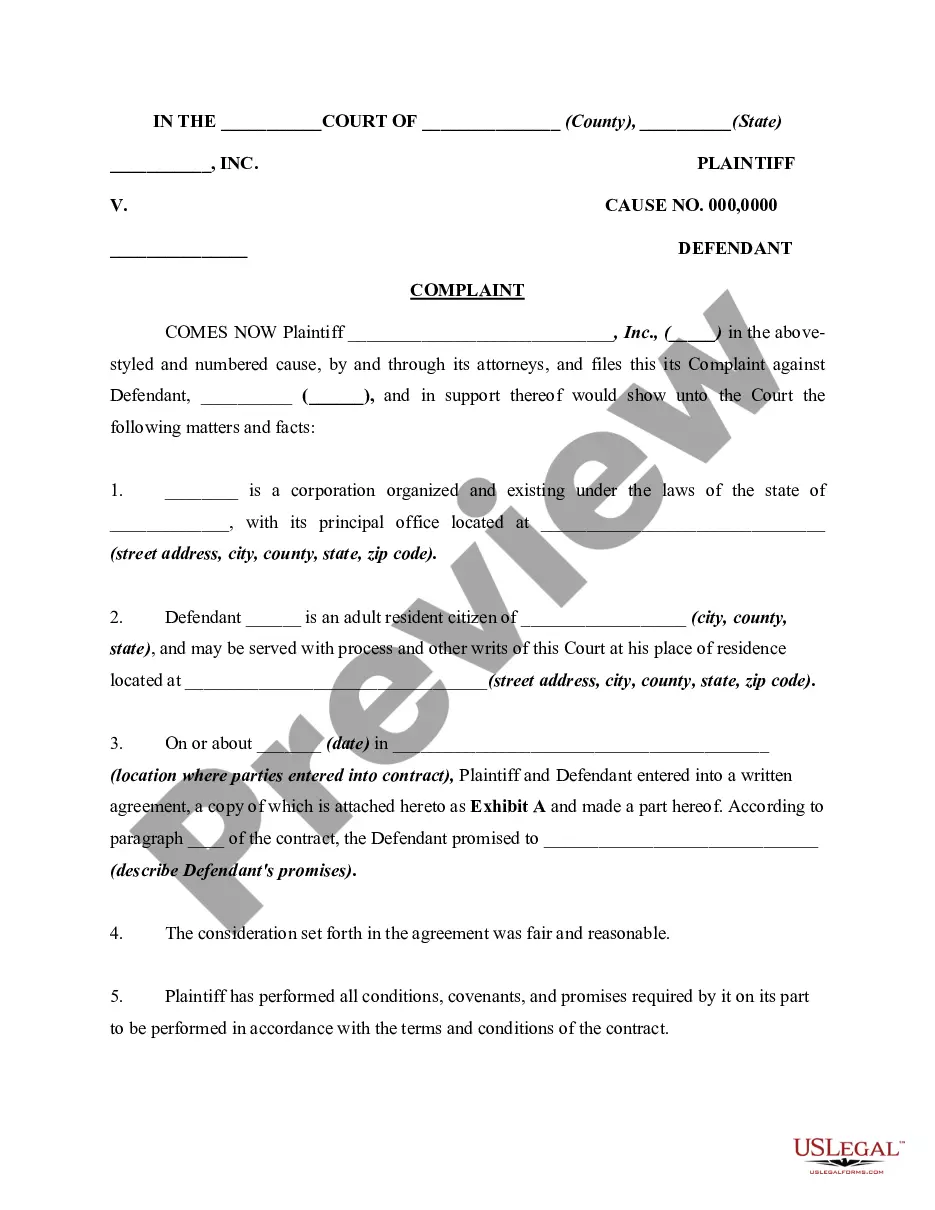
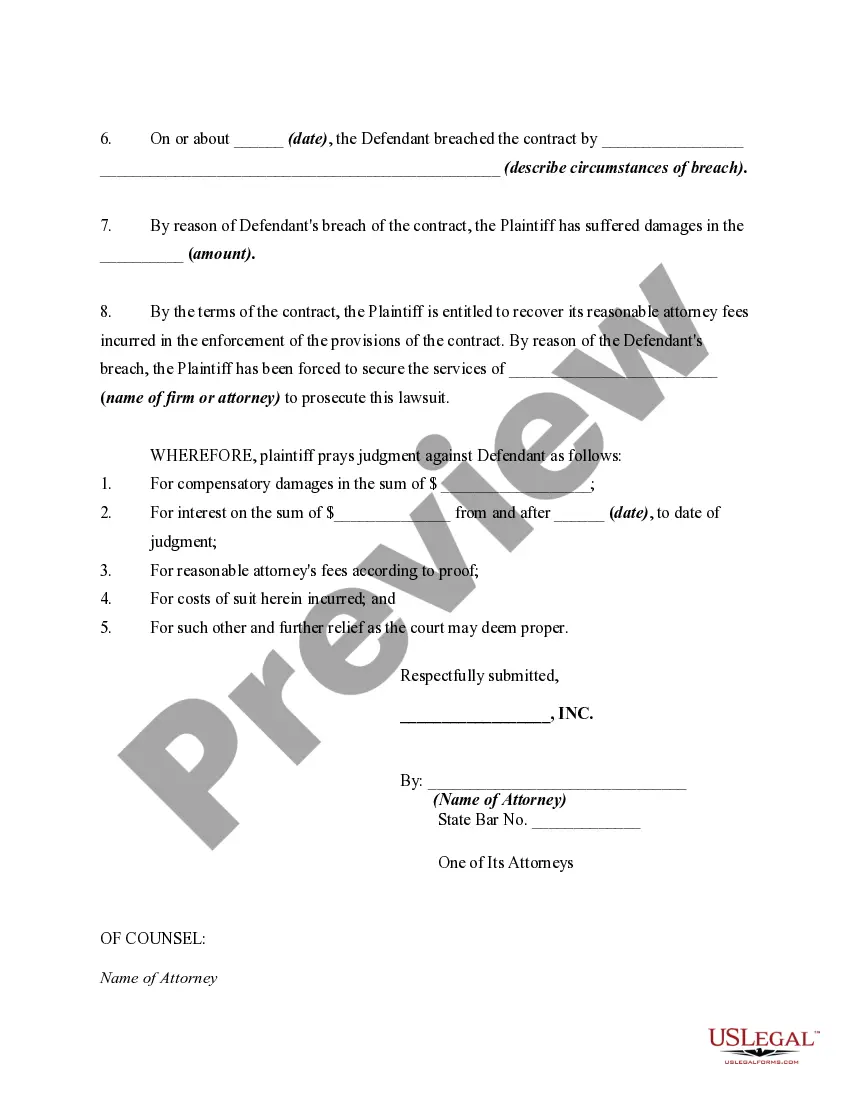
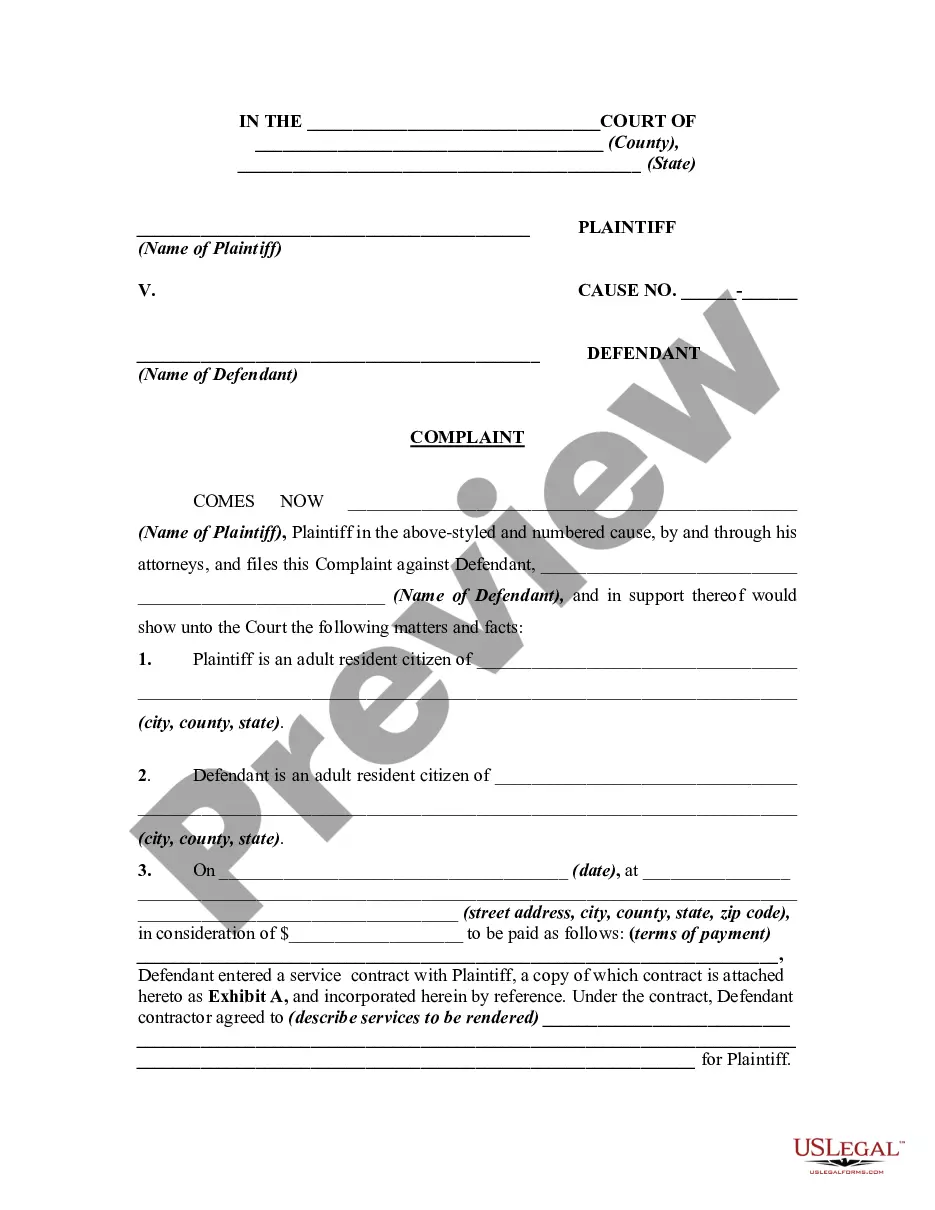
How to fill out Complaint For Breach Of Written Contract Seeking Damages And Attorneys Fees?
Engaging with legal documents and processes can be a lengthy addition to your routine.
Contracts for Damages and similar forms typically necessitate searching for them and comprehending how to complete them correctly.
Consequently, whether you are managing financial, legal, or personal affairs, having a comprehensive and functional online directory of forms readily available will greatly assist you.
US Legal Forms is the premier online platform for legal templates, featuring over 85,000 state-specific documents and various resources to help you finalize your paperwork swiftly.
Simply Log In to your account, locate the Contract for Damages, and download it immediately from the My documents section. You can also access forms you've previously saved.
- Explore the collection of relevant documents accessible to you with just a single click.
- US Legal Forms provides state- and county-specific forms available for download at any time.
- Safeguard your document management procedures with a high-quality service that empowers you to prepare any form in minutes without extra or hidden fees.
Form popularity
FAQ
Writing a claim for damages requires clarity and structure. Start by clearly stating the facts of the situation, followed by a concise description of how the damages occurred. Include your Agreement for damages, which specifies the amount you are requesting and any supporting evidence. This organized approach enhances your chances of receiving a fair resolution, whether through negotiation or legal action.
Suing a tenant for damages can be worthwhile, especially if you have clear evidence of the harm caused. An Agreement for damages outlines the terms and compensation you seek, providing a strong foundation for your case. By filing a suit, you may recover costs associated with repairs and lost rental income. Assess the situation carefully, considering both the potential expenses of legal action and the resolution you aim to achieve.
A damage clause in a contract typically outlines the obligations of each party in the event of damage occurring due to negligence or other violations. An example might state that 'Party A agrees to compensate Party B for any damages up to $10,000 resulting from Party A's negligence.' This clear framework ensures both parties understand their responsibilities and can be effectively included in any agreement for damages.
Writing a good claim statement requires clarity and detail. Start by stating the facts surrounding the incident, followed by a clear explanation of the damages you incurred. Include specific amounts and supporting documentation to strengthen your case. This process will be crucial when you formalize your case through an agreement for damages.
To write a damage claim, start by identifying the type of damage and the amount you are claiming. Describe the incident leading to the damages and include any relevant documentation to support your claim, such as receipts or repair estimates. Clearly state your expectations for compensation, and be sure to keep a copy for your records. An effective agreement for damages includes detailed claims to ensure clarity.
Writing a damage statement begins with a clear description of the incident that caused the damages. Include all relevant facts, such as dates, locations, and involved parties. Be concise yet thorough in detailing the extent of the damages and any supporting evidence, like photos or estimates. This statement can be an essential component when drafting an agreement for damages.
To write a simple agreement for damages, start with a clear heading that states the agreement’s purpose. Outline the parties involved, the specific damages being addressed, and the compensation terms. Always ensure both parties sign and date the agreement to validate it. Using a platform like uslegalforms can help you find templates to create a straightforward and effective agreement for damages.
The most common damage claim often involves property damage, where a party seeks compensation for losses incurred due to another party's actions. Typically, this includes repair costs, replacement costs, and loss of use. Such claims can arise from various situations, from car accidents to contractor negligence. When entering an agreement for damages, it is crucial to specify how these damages will be calculated.
No, a DBA is not the same as a CFA. While both are types of legal agreements related to compensation, a DBA focuses on damages awarded, and a CFA pertains to the payment of legal fees based on case outcomes. Thus, they serve different purposes within the legal framework. If you are unsure which agreement fits your needs, consider consulting platforms like USLegalForms for guidance and solutions.
In the context of an Agreement for damages, the three primary types are compensatory, punitive, and nominal damages. Compensatory damages aim to cover actual losses incurred. Punitive damages serve to punish the wrongdoer and deter future misconduct, while nominal damages acknowledge a legal wrong, even if no financial loss occurred. Understanding these distinctions can help you better navigate your legal options.