Trust And Nominee Accounts
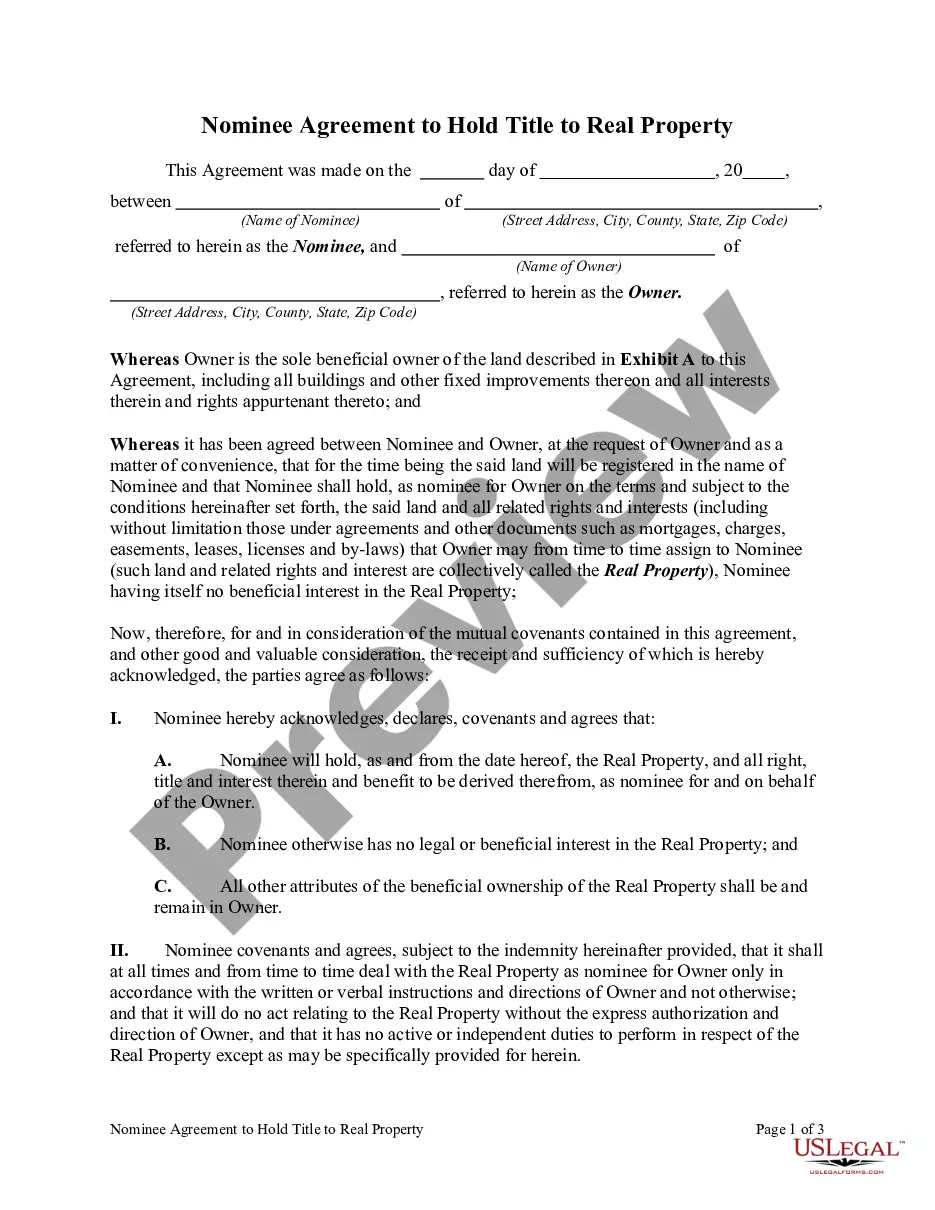
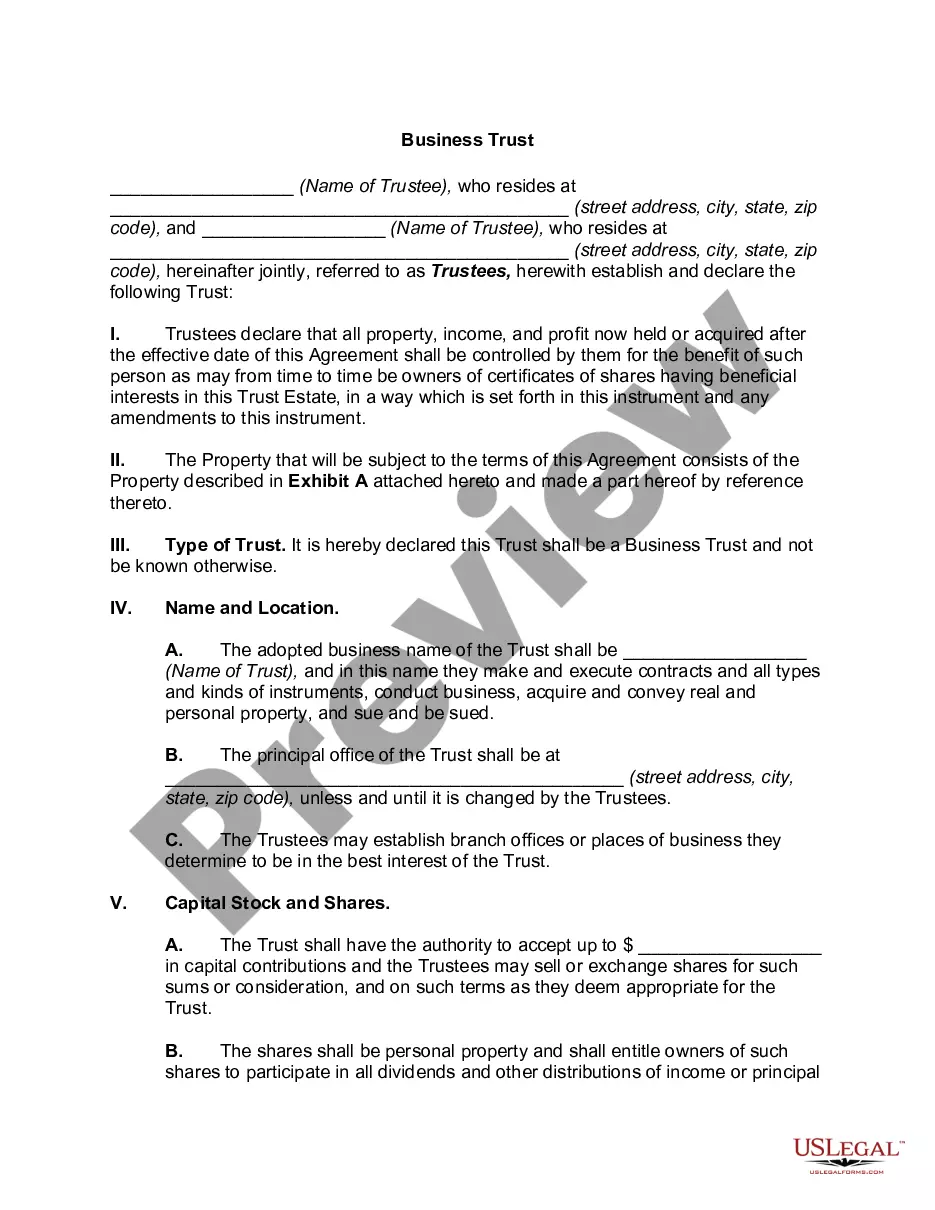
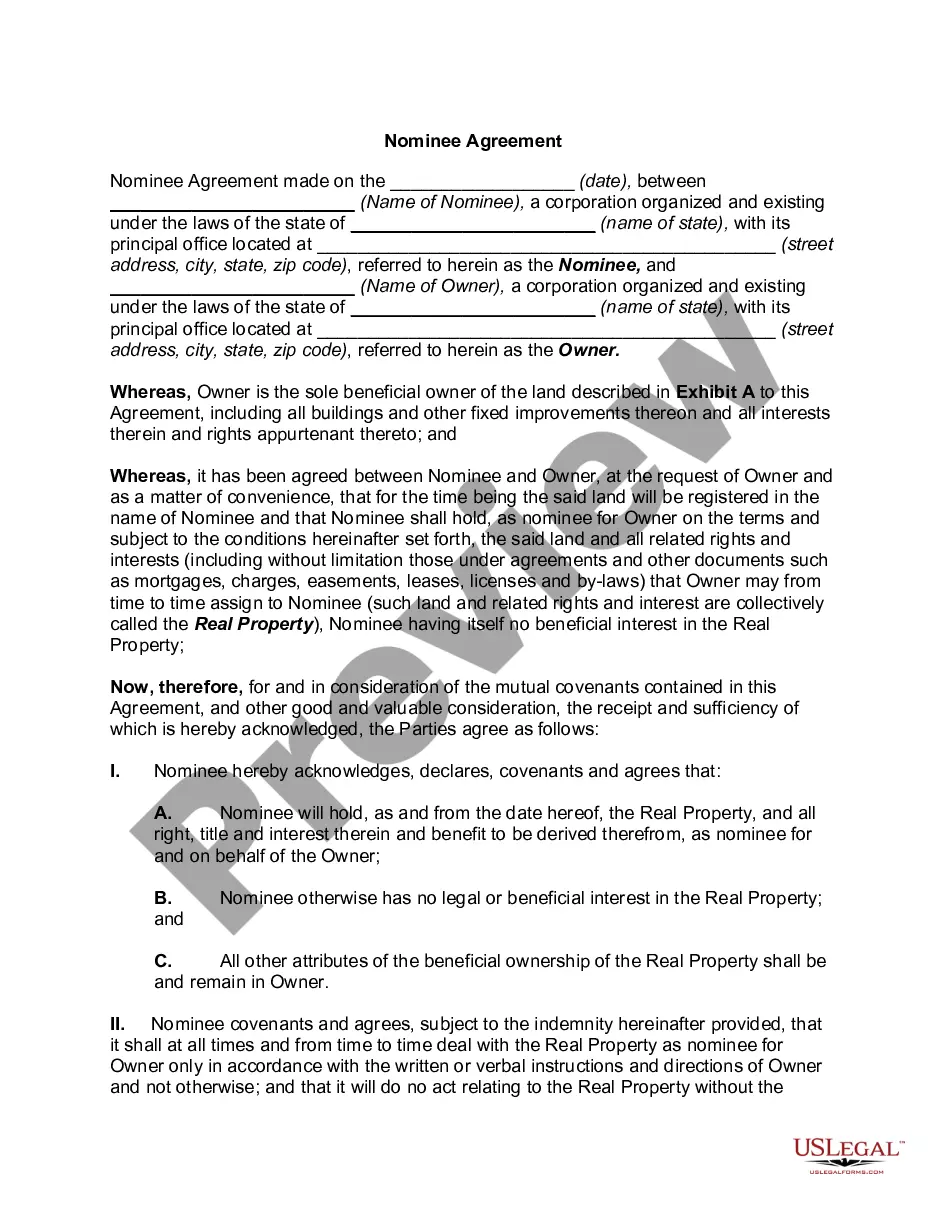
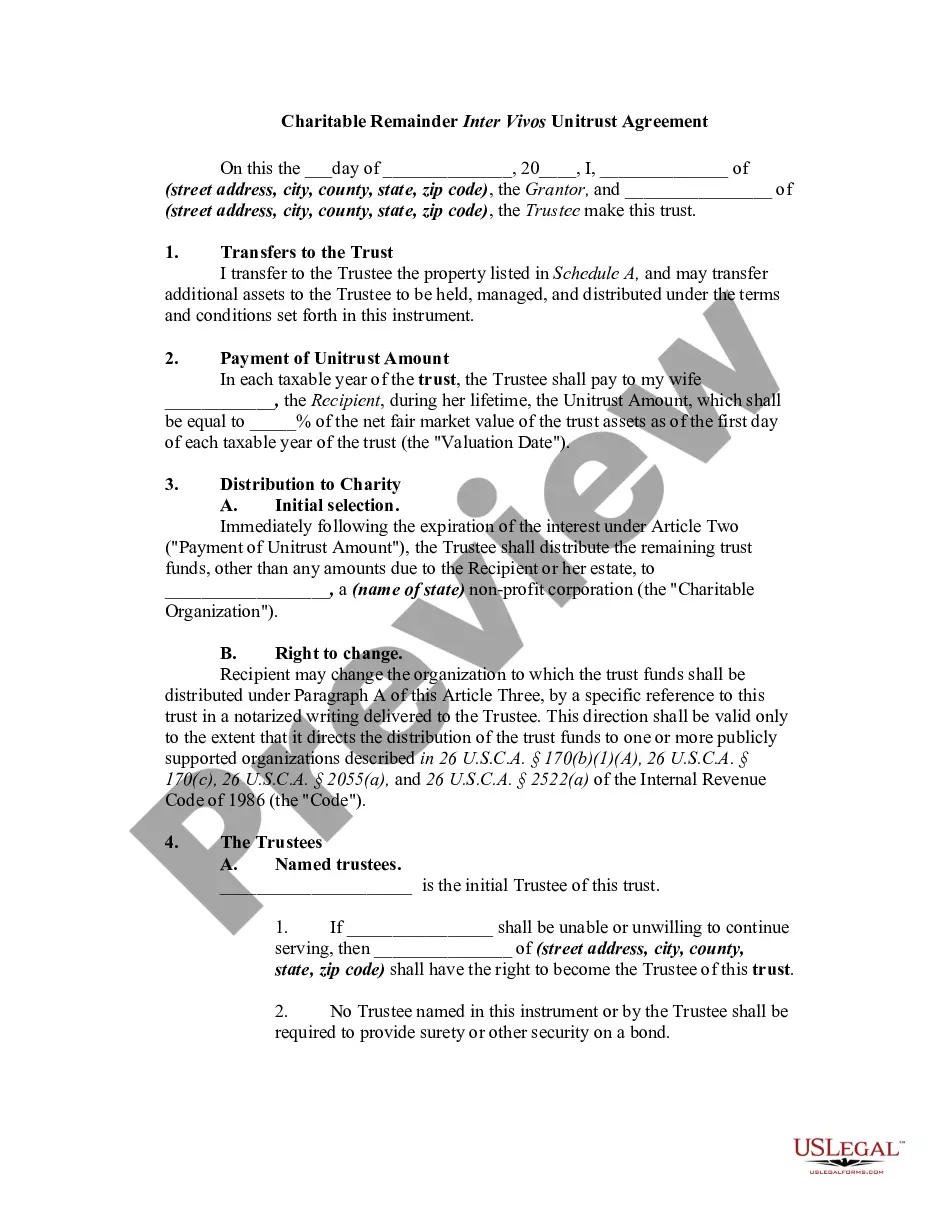
Description

Get your form ready online
Our built-in tools help you complete, sign, share, and store your documents in one place.
Make edits, fill in missing information, and update formatting in US Legal Forms—just like you would in MS Word.
Download a copy, print it, send it by email, or mail it via USPS—whatever works best for your next step.
Sign and collect signatures with our SignNow integration. Send to multiple recipients, set reminders, and more. Go Premium to unlock E-Sign.
If this form requires notarization, complete it online through a secure video call—no need to meet a notary in person or wait for an appointment.
We protect your documents and personal data by following strict security and privacy standards.

Make edits, fill in missing information, and update formatting in US Legal Forms—just like you would in MS Word.

Download a copy, print it, send it by email, or mail it via USPS—whatever works best for your next step.

Sign and collect signatures with our SignNow integration. Send to multiple recipients, set reminders, and more. Go Premium to unlock E-Sign.

If this form requires notarization, complete it online through a secure video call—no need to meet a notary in person or wait for an appointment.

We protect your documents and personal data by following strict security and privacy standards.
Looking for another form?









How to fill out Nominee Trust?
Managing legal documents and procedures can be a lengthy addition to your day.
Trust and Nominee Accounts, along with similar forms, frequently require you to search for them and comprehend how to fill them out properly.
Therefore, whether you are handling financial, legal, or personal matters, having a comprehensive and easy-to-navigate online directory of forms readily available will be immensely beneficial.
US Legal Forms is the leading online resource for legal templates, featuring over 85,000 state-specific documents and a variety of tools to assist you in completing your paperwork effortlessly.
Simply Log In to your account, search for Trust and Nominee Accounts, and download it immediately from the My documents section. You can also access previously downloaded documents.
- Browse the directory of pertinent documents accessible to you with just a click.
- US Legal Forms gives you access to state- and county-specific documents that can be downloaded at any time.
- Safeguard your document management tasks by utilizing a high-quality service that enables you to compile any form in minutes without incurring extra or hidden fees.
Form popularity
FAQ
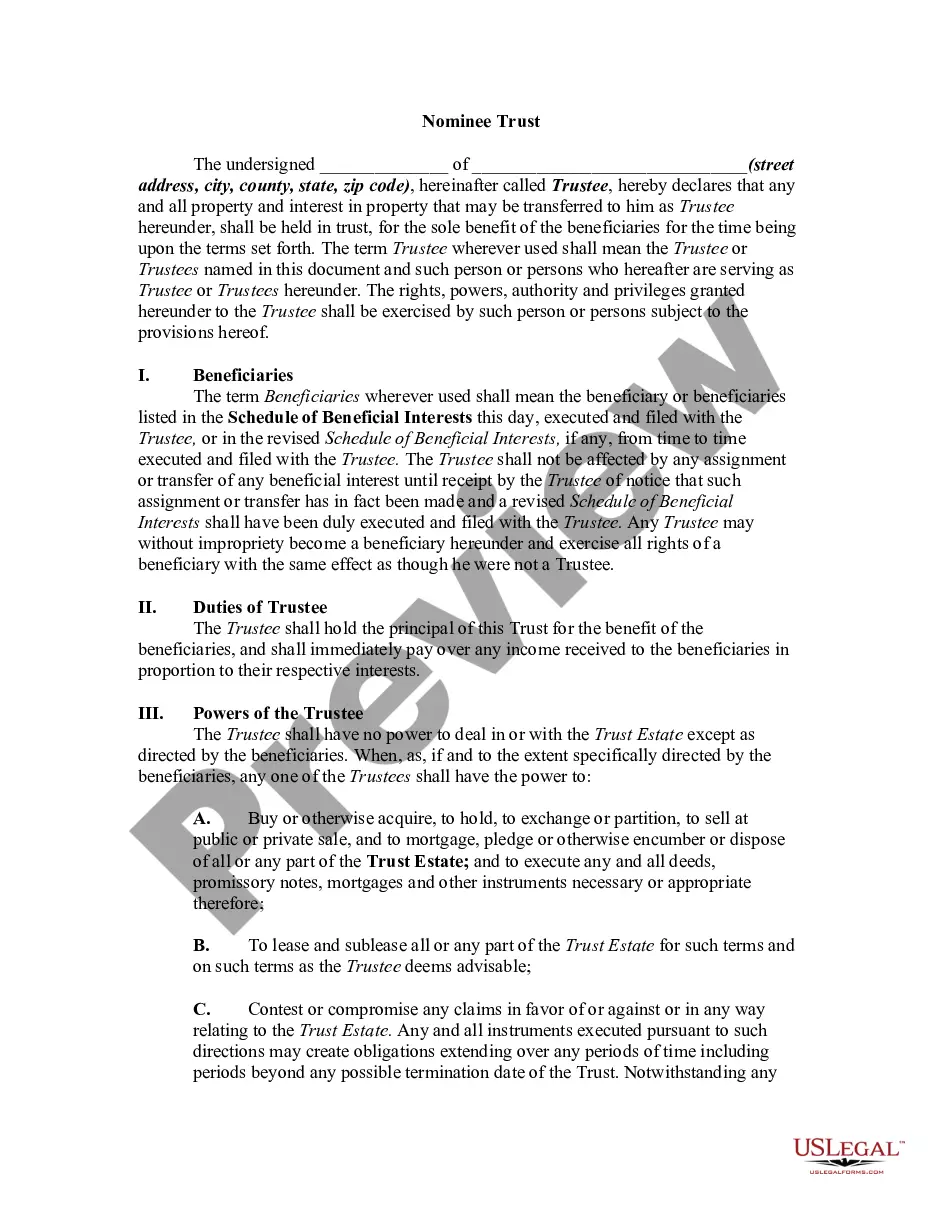
The Nominee Structure The principle of a nominee structure is that the shareholdings of individual minor shareholders are transferred to a single shareholder entity with the sole purpose of holding those shares on trust for the shareholders.
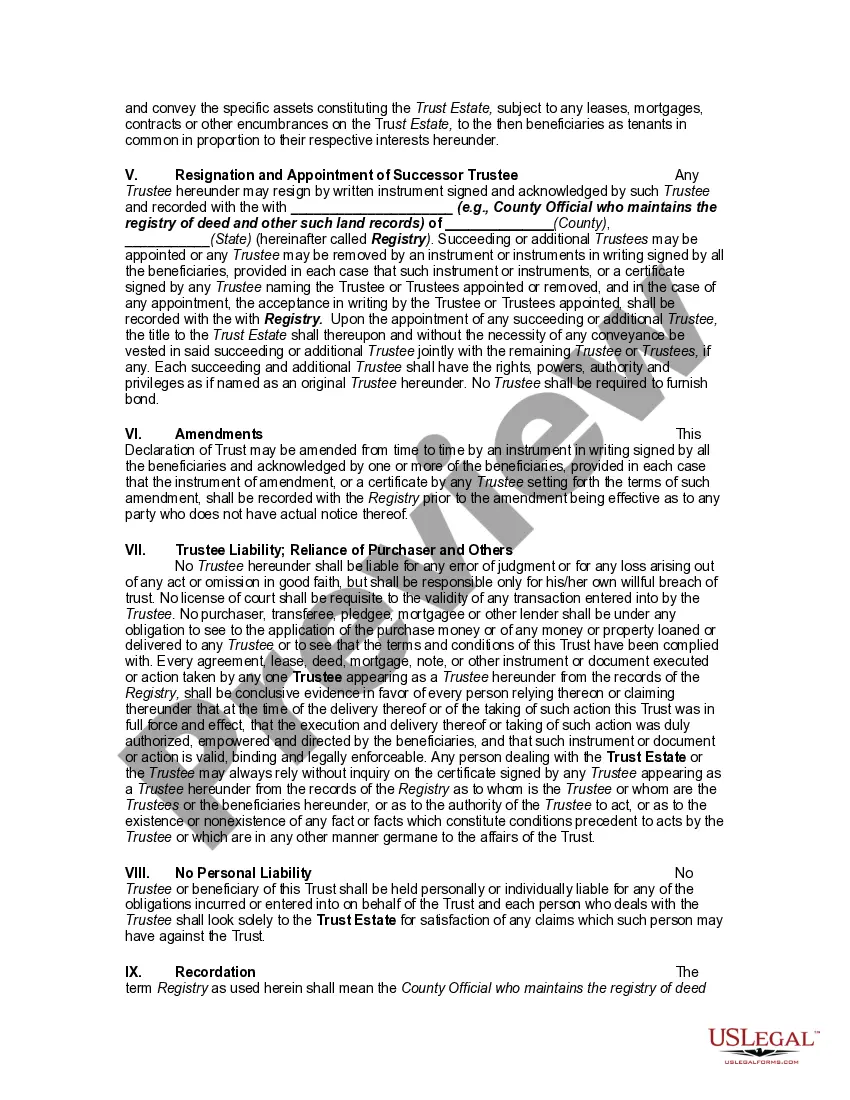
Unlike a real trust, where the power and duty to appropriately control the trust property lies with the trustee, in a nominee trust the beneficiaries actually retain all decision-making power. In fact, the trustee is really just an agent of the beneficiaries, who essentially act as the principal.
It is settled law that a nominee does not become the owner of the property. Nominee holds the property in trust for the legal heirs. Can a person become the owner of a flat or property merely by the virtue of being made a nominee in the form submitted to a housing society?
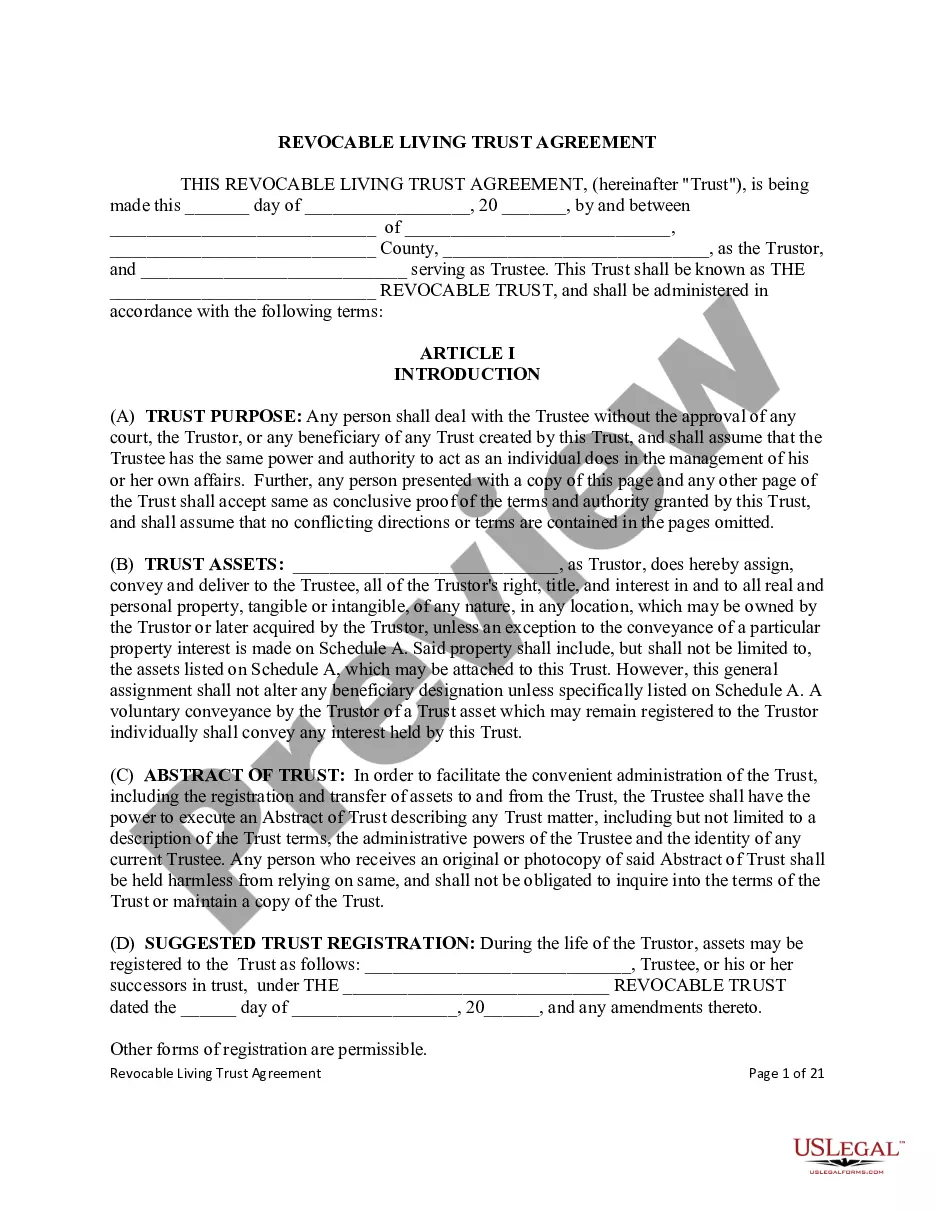
Nominee accounts are a form of trust similar to a bare trust. If a person invests in their own name with the intention of holding the money for someone else (perhaps their grandchildren) and they can prove their intent, then HMRC will usually accept that a trust was created.
A nominee is a person who will hold an owner's assets in trust after the latter's death. They will be the custodian of the asset till it is transferred to the legal heirs. They are not the owners of the asset and are dutybound to make sure the asset goes to the rightful beneficiary.