Accidental Injuries For The Elderly
Description
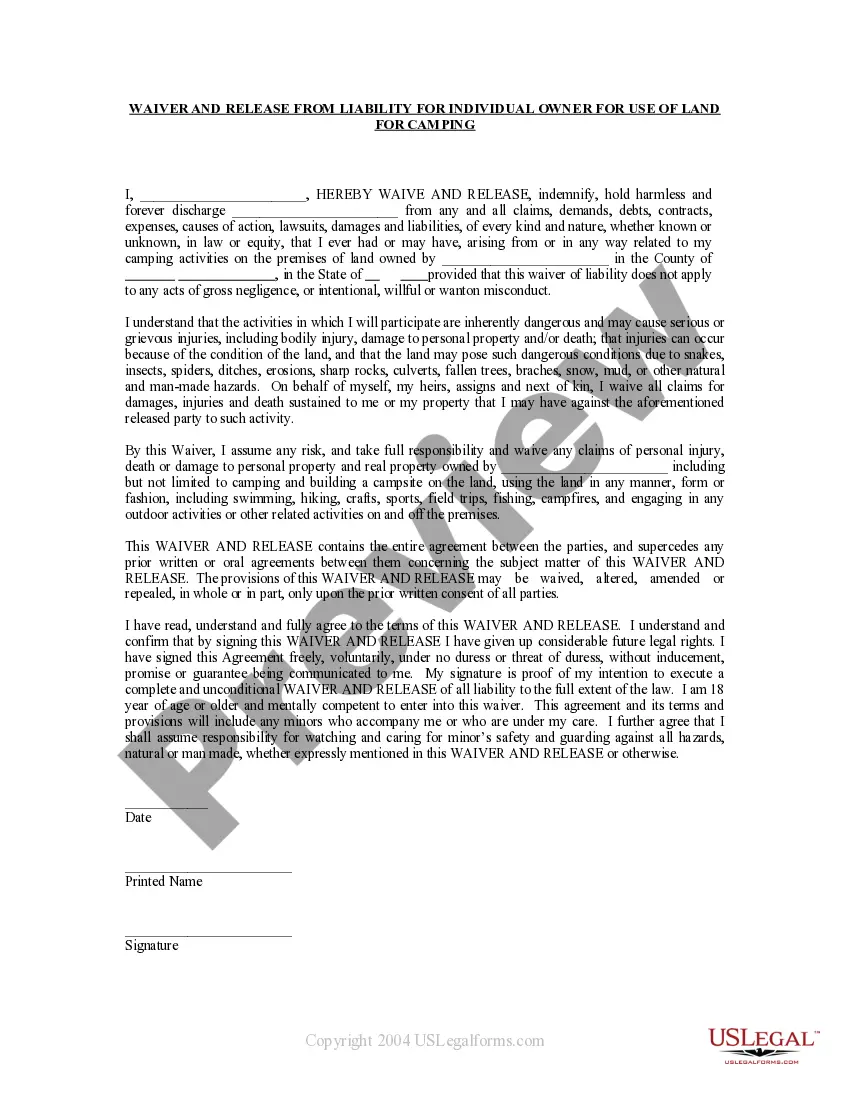
Get your form ready online
Our built-in tools help you complete, sign, share, and store your documents in one place.
Make edits, fill in missing information, and update formatting in US Legal Forms—just like you would in MS Word.
Download a copy, print it, send it by email, or mail it via USPS—whatever works best for your next step.
Sign and collect signatures with our SignNow integration. Send to multiple recipients, set reminders, and more. Go Premium to unlock E-Sign.
If this form requires notarization, complete it online through a secure video call—no need to meet a notary in person or wait for an appointment.
We protect your documents and personal data by following strict security and privacy standards.

Make edits, fill in missing information, and update formatting in US Legal Forms—just like you would in MS Word.

Download a copy, print it, send it by email, or mail it via USPS—whatever works best for your next step.

Sign and collect signatures with our SignNow integration. Send to multiple recipients, set reminders, and more. Go Premium to unlock E-Sign.

If this form requires notarization, complete it online through a secure video call—no need to meet a notary in person or wait for an appointment.

We protect your documents and personal data by following strict security and privacy standards.
Looking for another form?






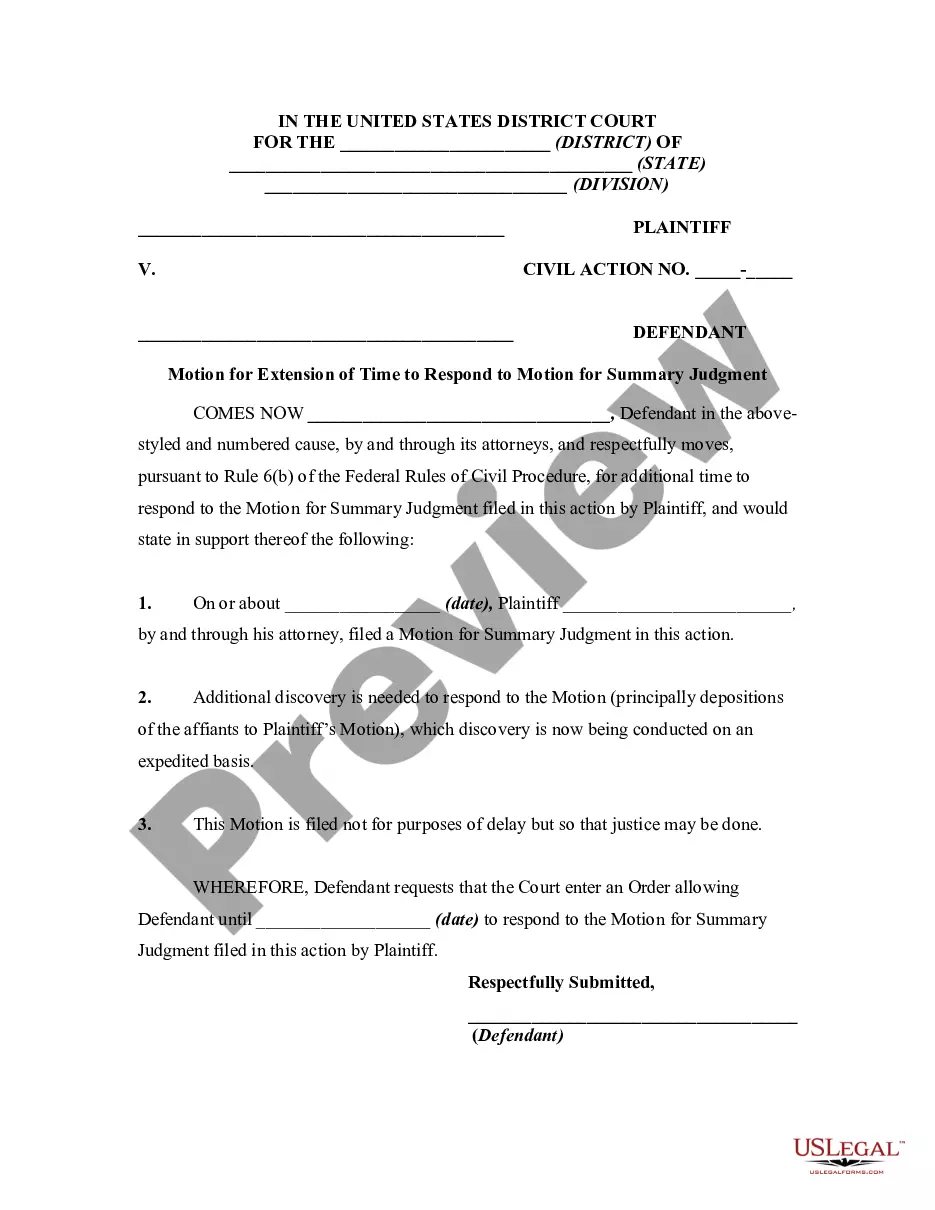



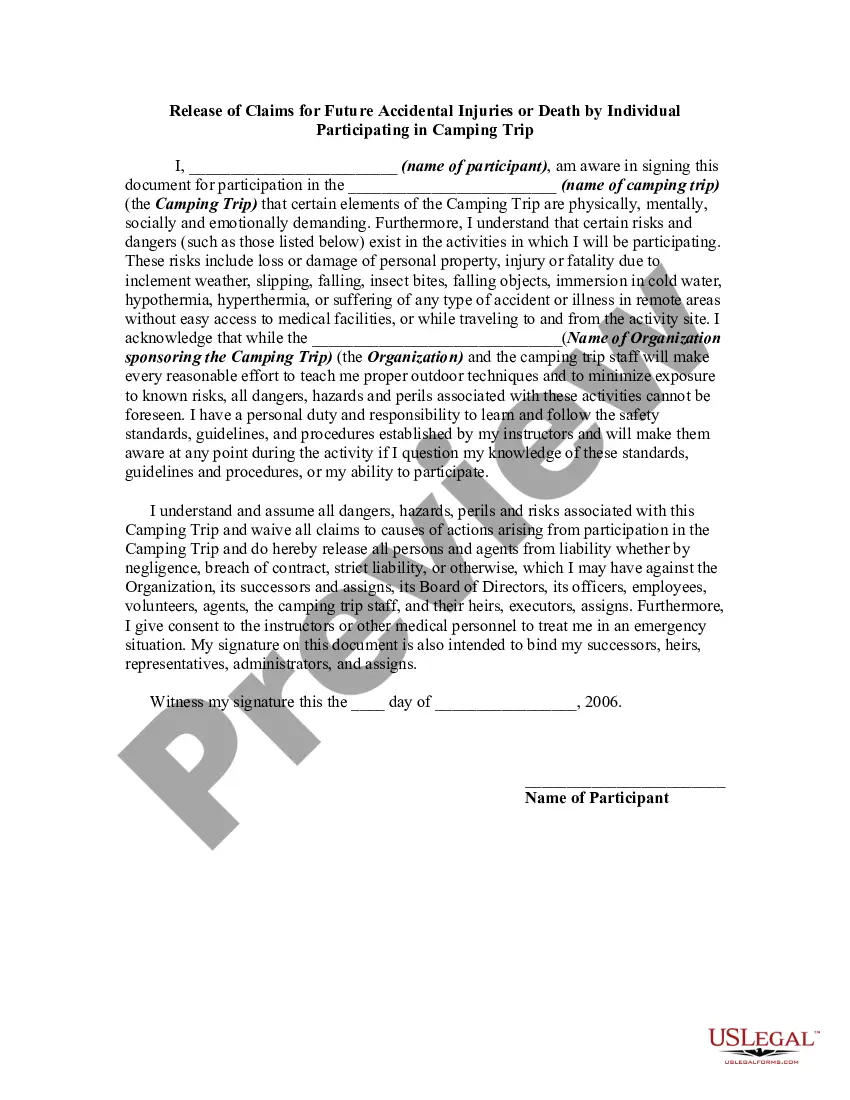
How to fill out Release Of Claims For Future Accidental Injuries Or Death By Individual Participating In Camping Trip?
- If you have used US Legal Forms before, log into your account and download the required template by clicking the Download button. Ensure your subscription is active; otherwise, renew it as per your plan.
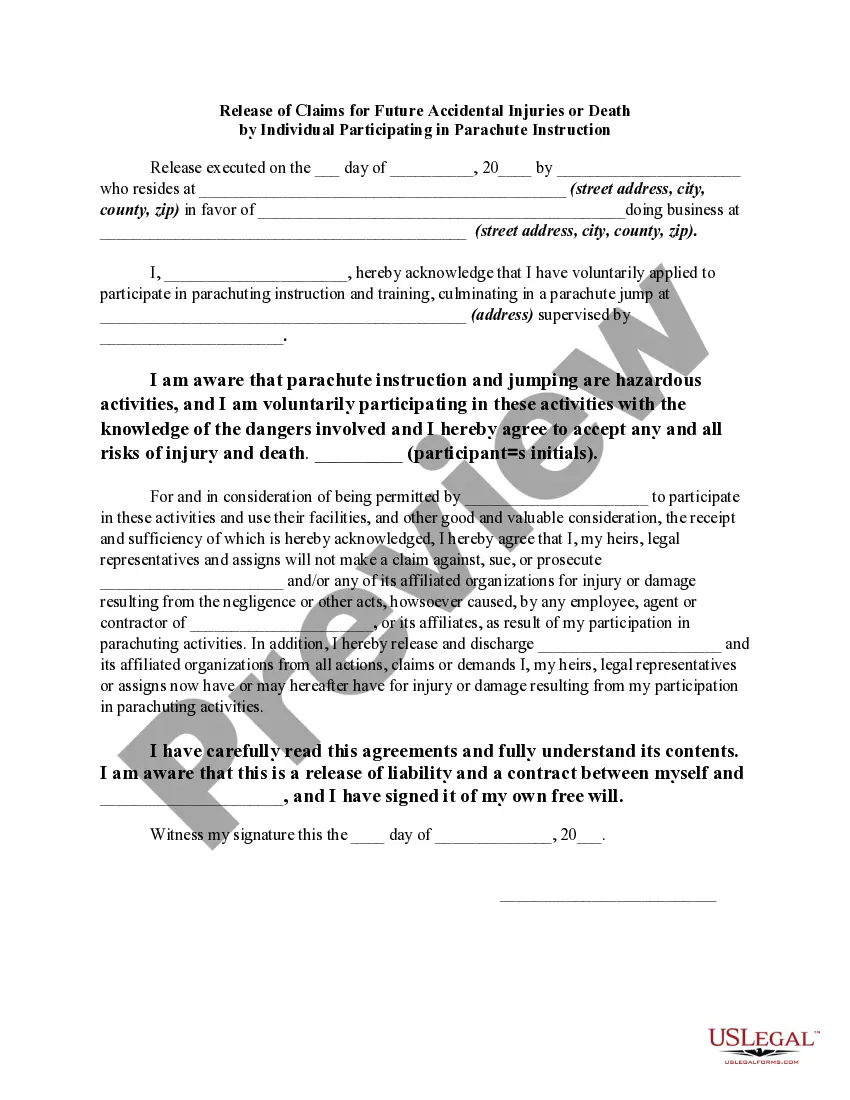
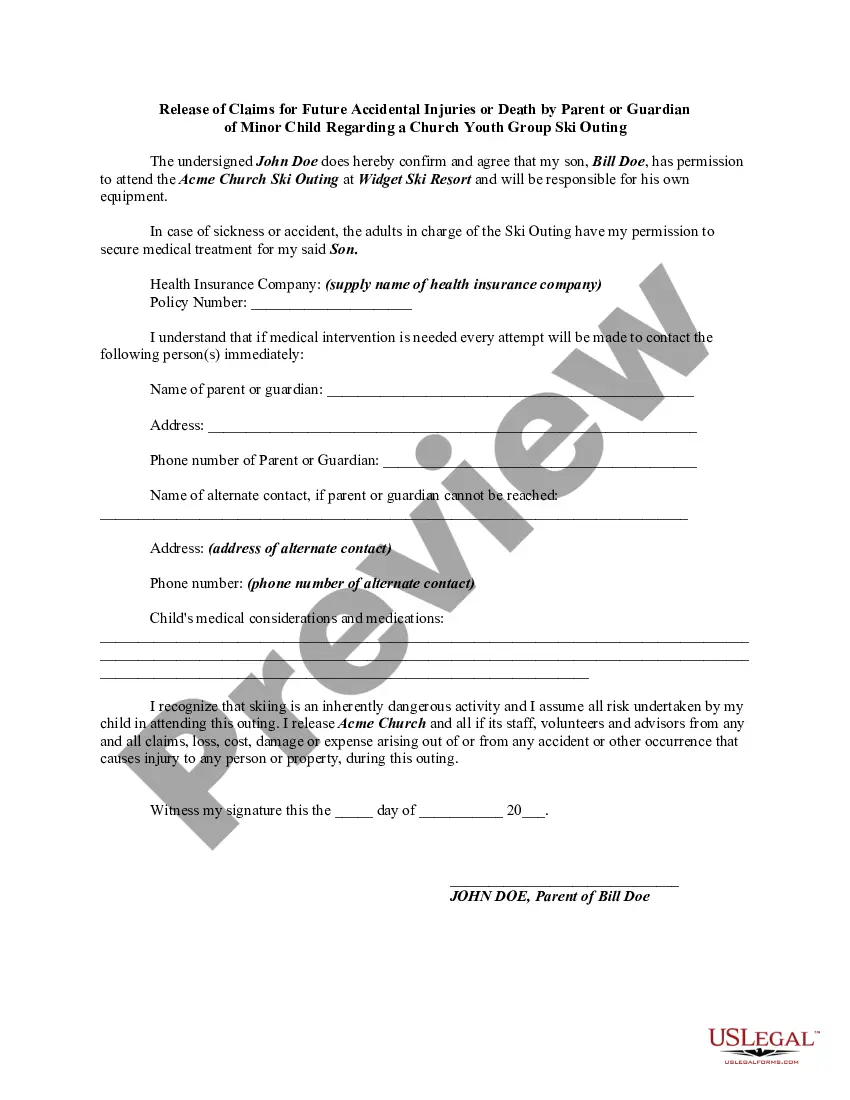
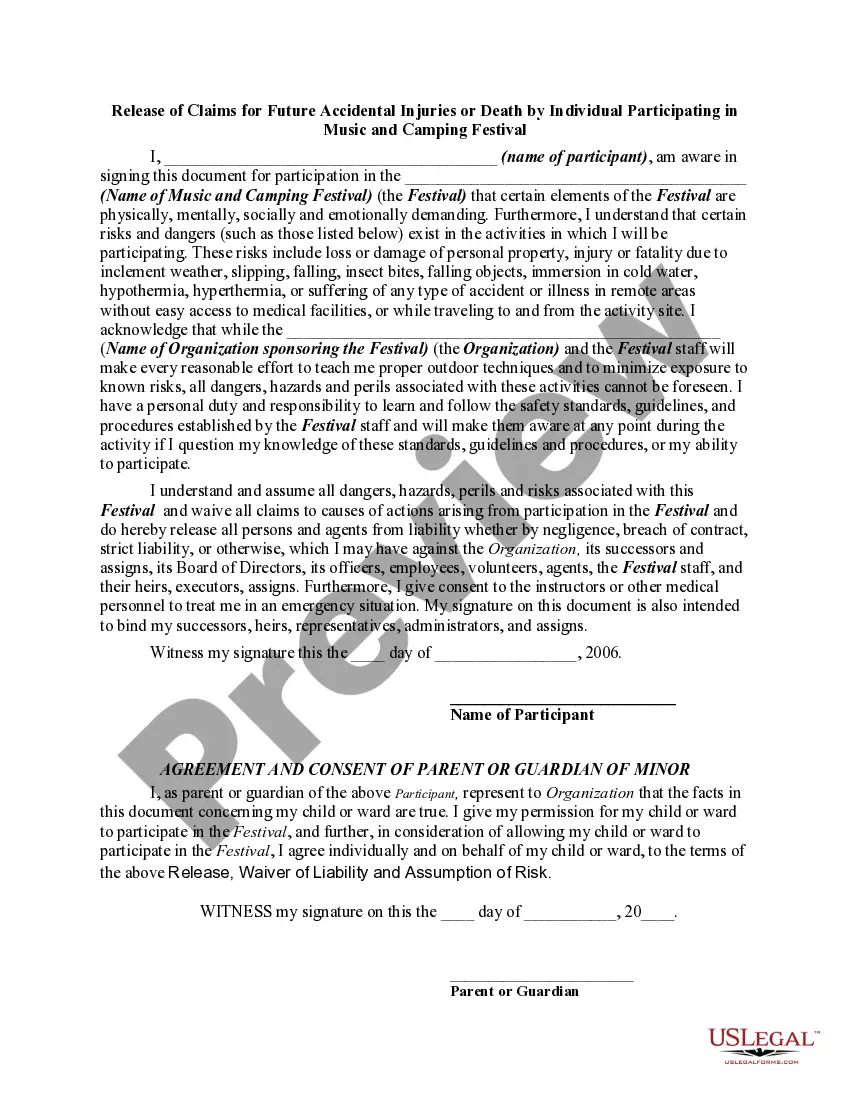
- For new users, start by using the Preview mode to review the form descriptions and ensure you select the correct document that aligns with both your needs and local regulations.
- If the document doesn't fully meet your criteria, utilize the Search tab to find an alternative that fits your requirements before proceeding.
- Select the document you want, then click the Buy Now button to choose a suitable subscription plan. You will need to create an account to benefit from the library's resources.
- Complete your purchase by entering your payment details or using your PayPal account to finalize the subscription.
- Finally, download the form to your device. You can access it at any time through the My Forms section in your profile.
Utilizing US Legal Forms not only ensures you have access to a robust collection of legal resources but also provides peace of mind, knowing that you can rely on expert assistance for form completion when necessary.
Take control of your legal needs today and discover how US Legal Forms can simplify your documentation process. Start now!
Form popularity
FAQ
To fill out your first injury report for accidental injuries for the elderly, begin by documenting the details of the incident, including the time, date, and location. Describe the injuries and how they occurred, ensuring you include any witnesses' contact information. Accuracy and clarity are essential, as this report can play a crucial role in any future claims you may file.
The average payout for a personal injury claim can vary widely, especially in cases involving accidental injuries for the elderly. Generally, payouts may range from thousands to millions of dollars, depending on factors like the severity of the injury and the circumstances surrounding the case. Understanding these factors can help manage expectations when pursuing a claim.
To make a settlement demand for accidental injuries for the elderly, outline the details of your claim, including the facts of the incident and the injuries suffered. Include the medical bills, lost wages, and any other expenses related to the injury. Present your demand in a clear, professional manner to make it easier for the other party to understand your case.
Representing yourself in a personal injury claim for accidental injuries for the elderly requires understanding the legal process and establishing a solid case. Start by gathering all necessary documentation, such as medical records and witness statements. It may also be beneficial to use resources like uslegalforms, which provide guidance and legal forms to assist you in navigating your claim effectively.
To write a personal injury statement for accidental injuries for the elderly, begin by clearly describing the incident, including the date, time, and location. Then, detail the nature of the injuries sustained and how they affected the individual's life. Being honest and thorough in your statement will help convey the full impact of the situation.
A good settlement offer in cases involving accidental injuries for the elderly aims to cover medical expenses, lost wages, and pain and suffering. It should reflect the severity of the injury and the impact on the person's daily life. When negotiating a settlement, consider consulting legal professionals who understand the complexities of elderly injury claims.
Many falls in older adults are related to a combination of factors, including muscle weakness, vision problems, and medication side effects. These issues can hinder balance and coordination, increasing the likelihood of a fall. Addressing these underlying factors is key to preventing accidental injuries for the elderly. Resources like USLegalForms can provide helpful information to create safety plans and legal safeguards for your loved ones.
Falls can lead to various injuries among the elderly, including fractures, bruises, and concussions. These injuries can range from mild to severe, impacting the elder's health and well-being. Understanding these falls related injuries emphasizes the need for protective measures and preventive strategies against accidental injuries for the elderly. Implementing safety reviews in the home can make a significant difference.
After a fall, the most common injury for the elderly is a fracture, particularly of the wrist, ankle, or hip. These injuries can significantly impact an individual's independence and quality of life. It is crucial for caretakers to recognize the importance of fall prevention strategies to reduce accidental injuries for the elderly. Regular check-ups and strength-building exercises can help mitigate these risks.
Elderly individuals often experience three types of falls: slips, trips, and stumbles. Slips occur on wet or slippery surfaces, while trips might happen due to uneven ground or obstacles. Stumbles happen when someone loses balance and falls forward. By understanding these types of falls, you can better address accidental injuries for the elderly and create safer living conditions.