Tax Unitrust Amount For 5 Years
Description
Get your form ready online
Our built-in tools help you complete, sign, share, and store your documents in one place.
Make edits, fill in missing information, and update formatting in US Legal Forms—just like you would in MS Word.
Download a copy, print it, send it by email, or mail it via USPS—whatever works best for your next step.
Sign and collect signatures with our SignNow integration. Send to multiple recipients, set reminders, and more. Go Premium to unlock E-Sign.
If this form requires notarization, complete it online through a secure video call—no need to meet a notary in person or wait for an appointment.
We protect your documents and personal data by following strict security and privacy standards.

Make edits, fill in missing information, and update formatting in US Legal Forms—just like you would in MS Word.

Download a copy, print it, send it by email, or mail it via USPS—whatever works best for your next step.

Sign and collect signatures with our SignNow integration. Send to multiple recipients, set reminders, and more. Go Premium to unlock E-Sign.

If this form requires notarization, complete it online through a secure video call—no need to meet a notary in person or wait for an appointment.

We protect your documents and personal data by following strict security and privacy standards.
Looking for another form?




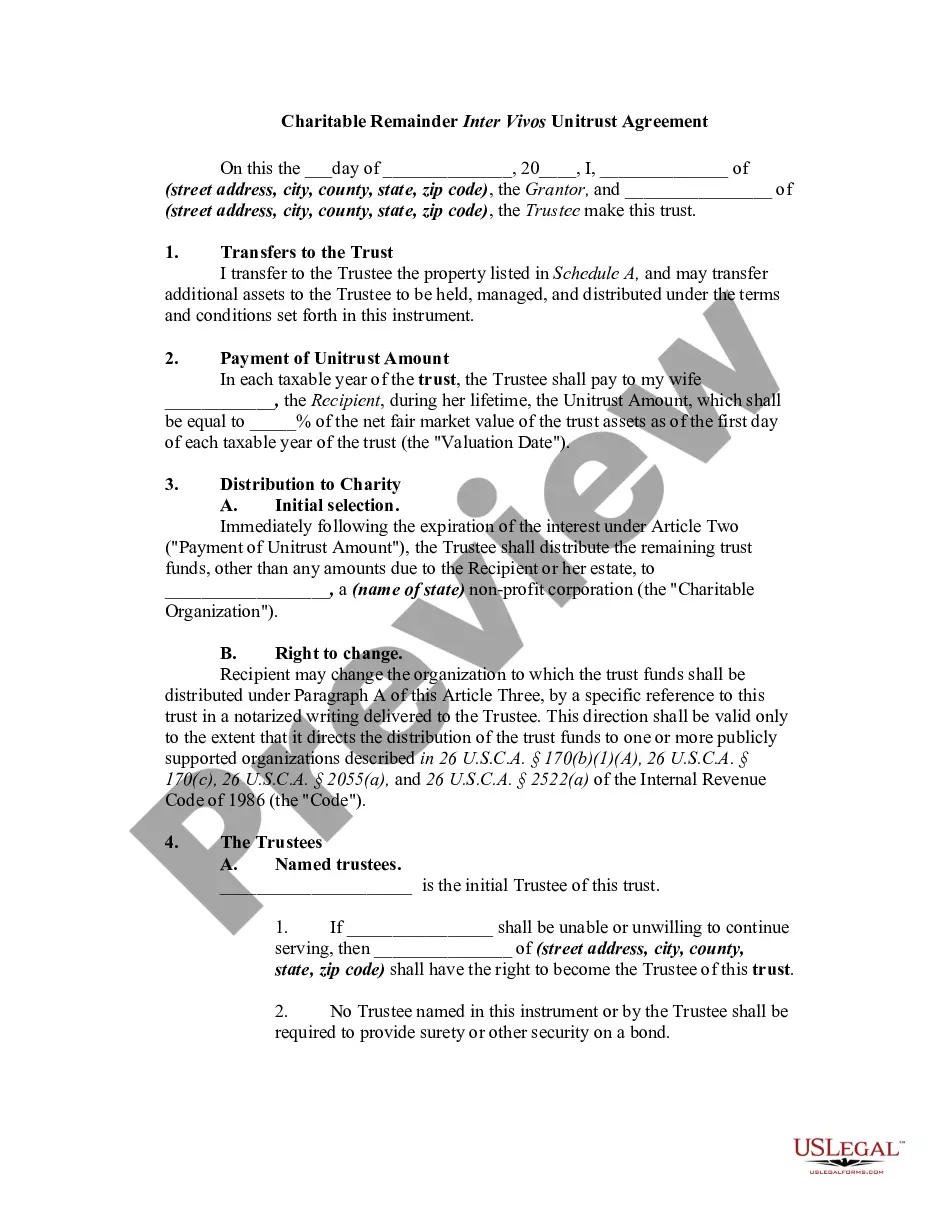
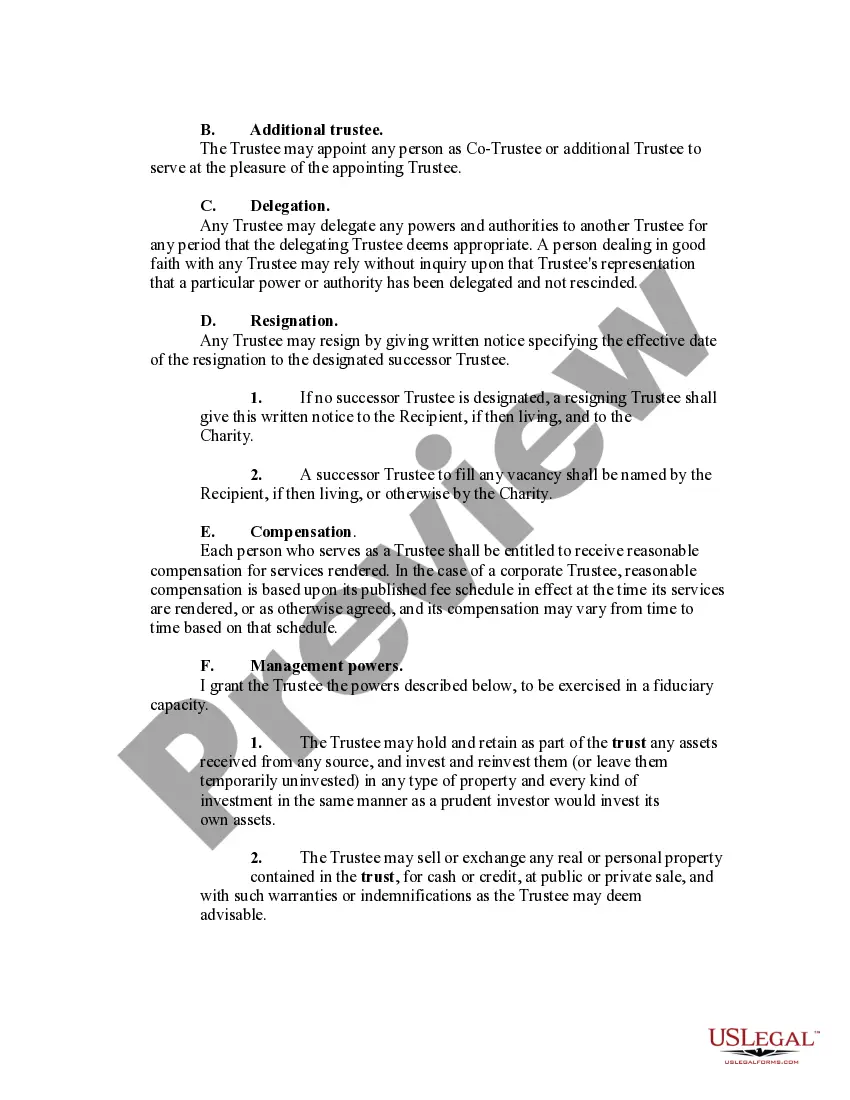
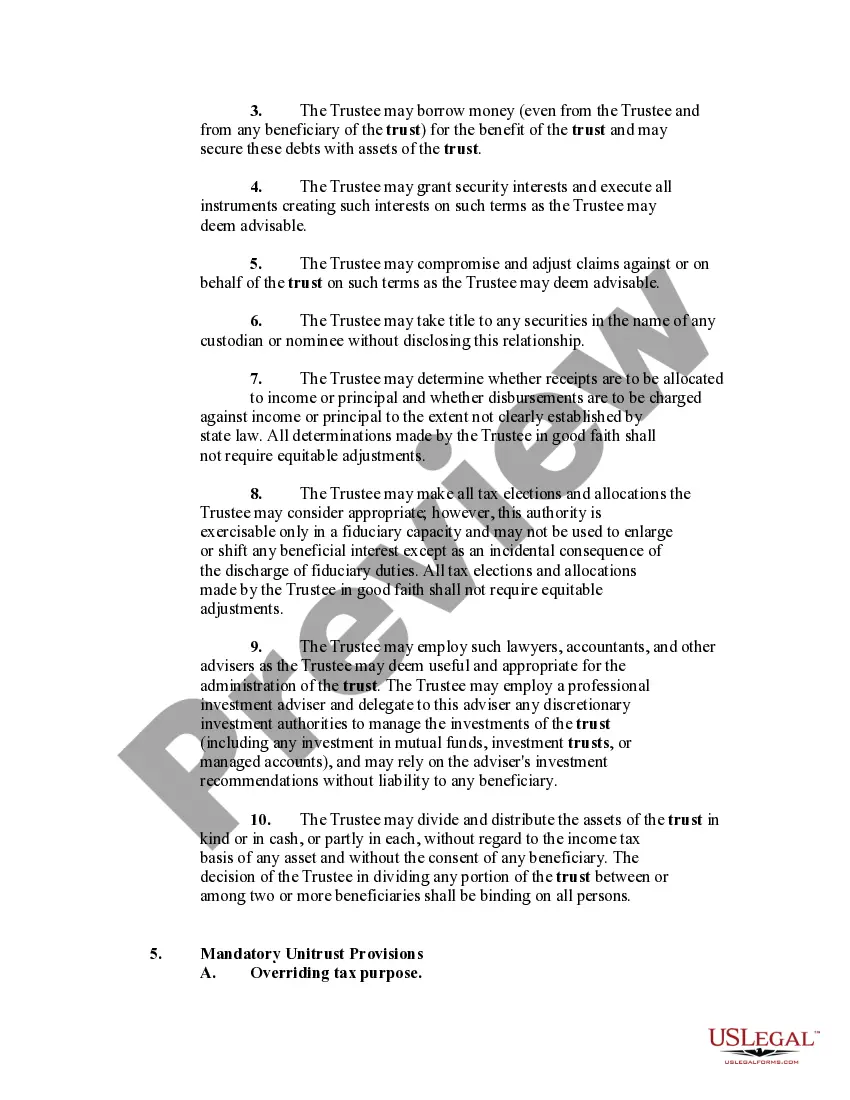
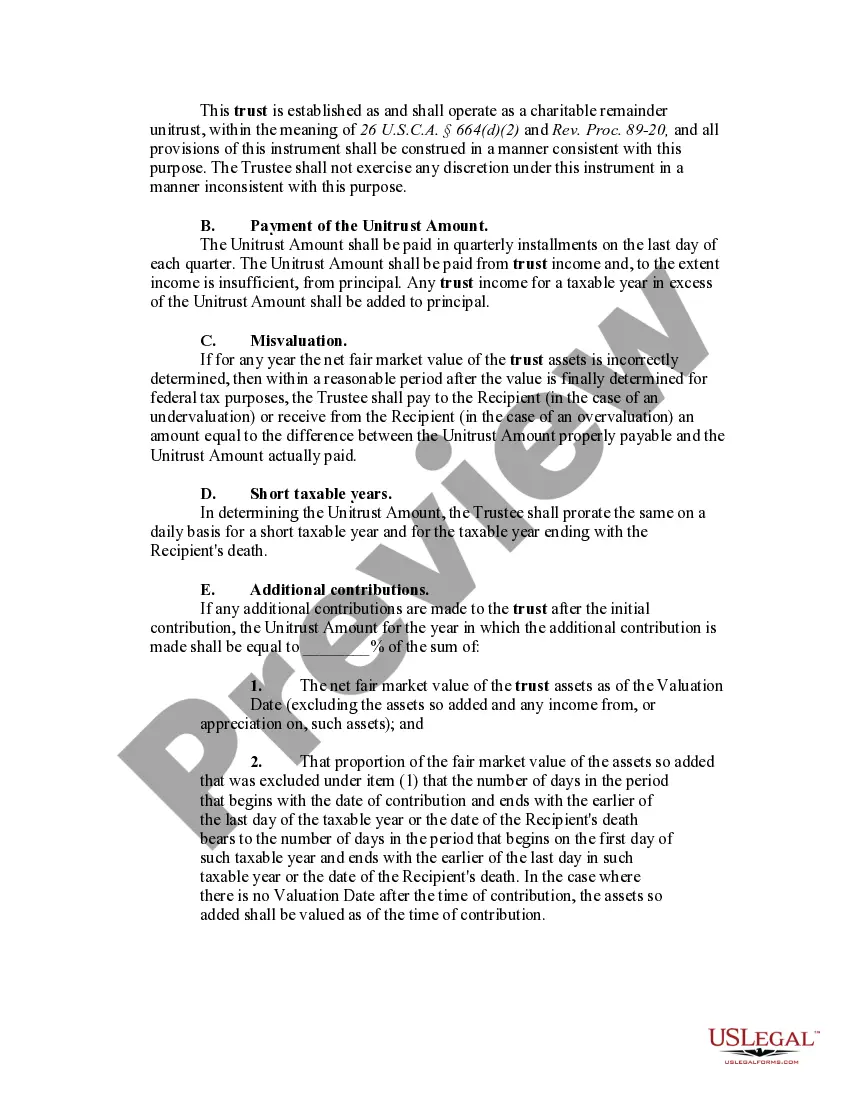
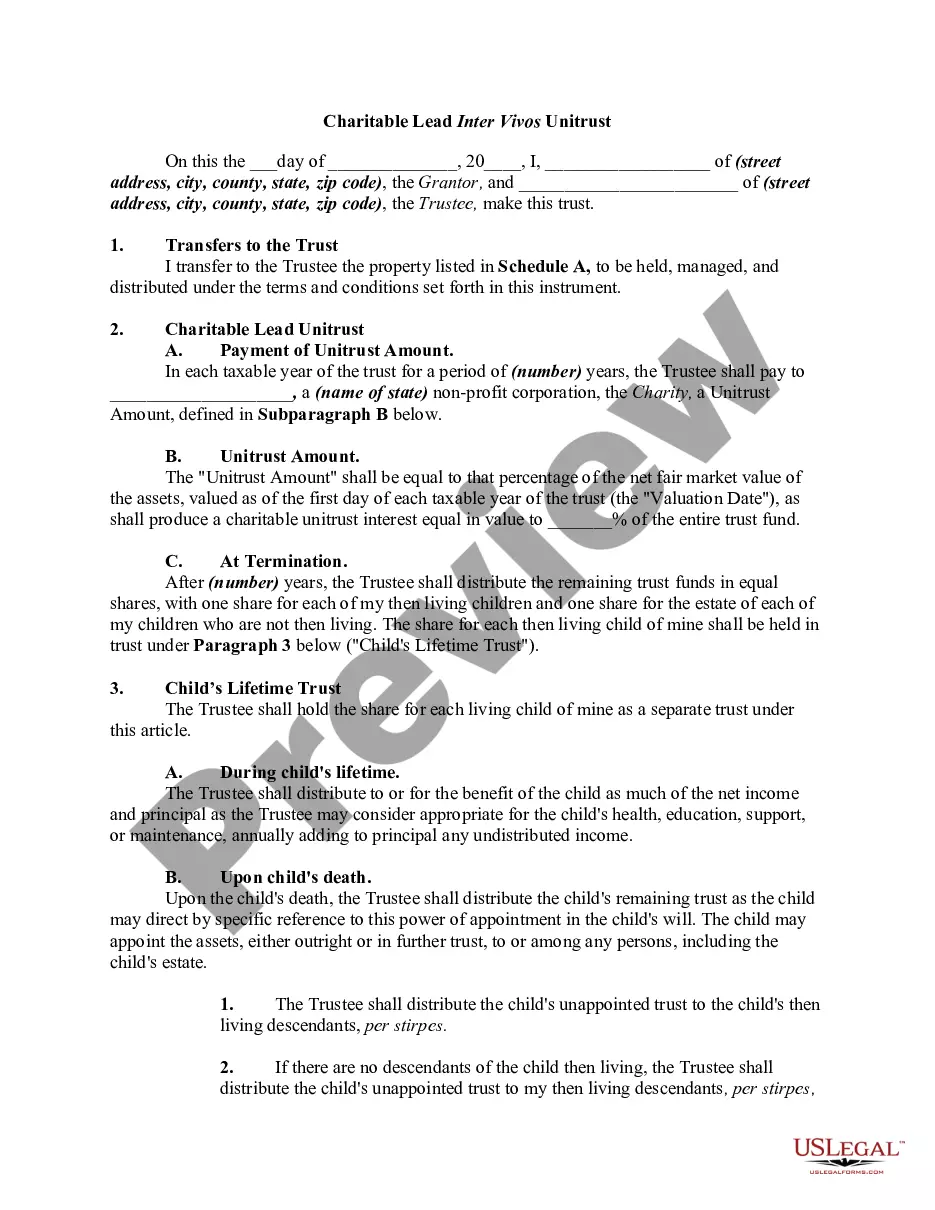
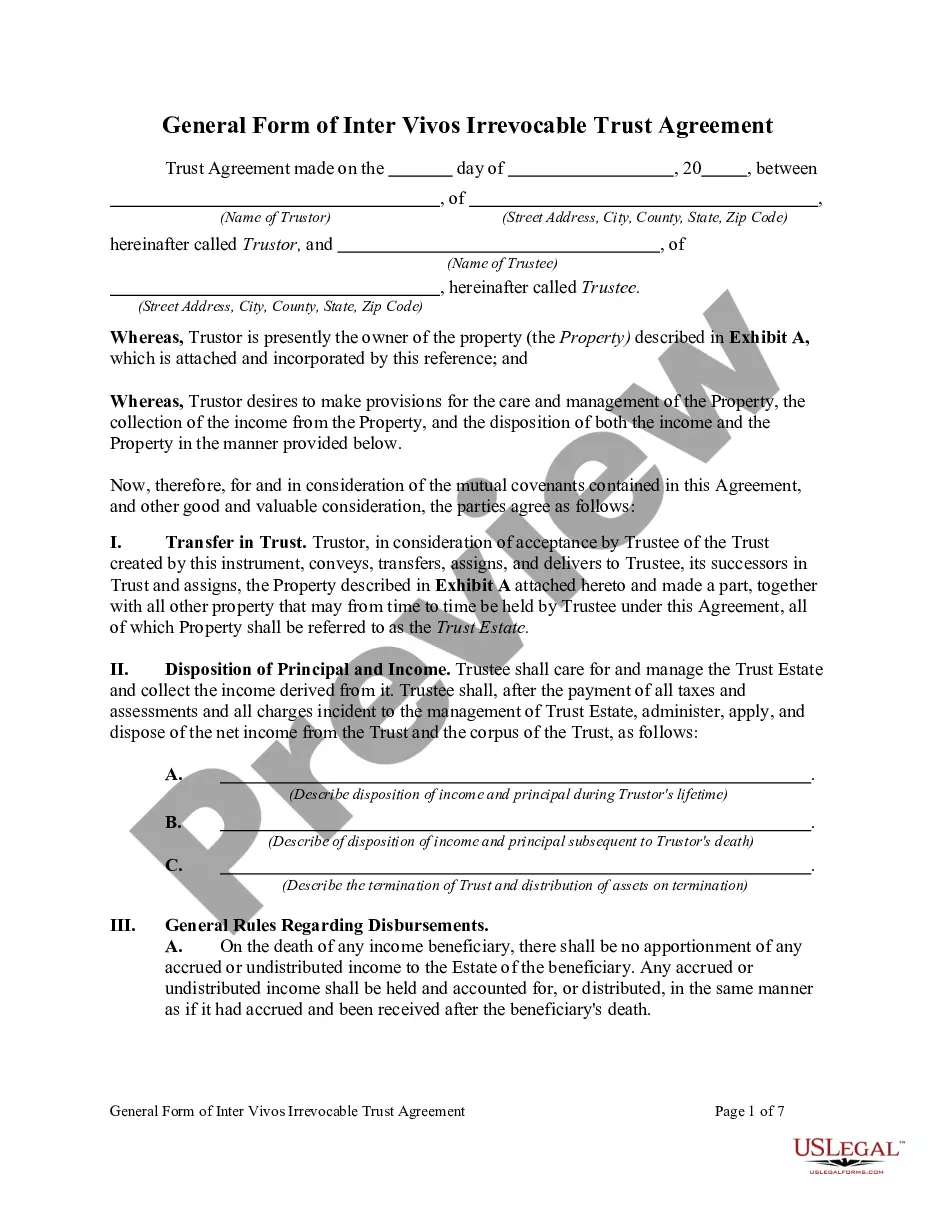
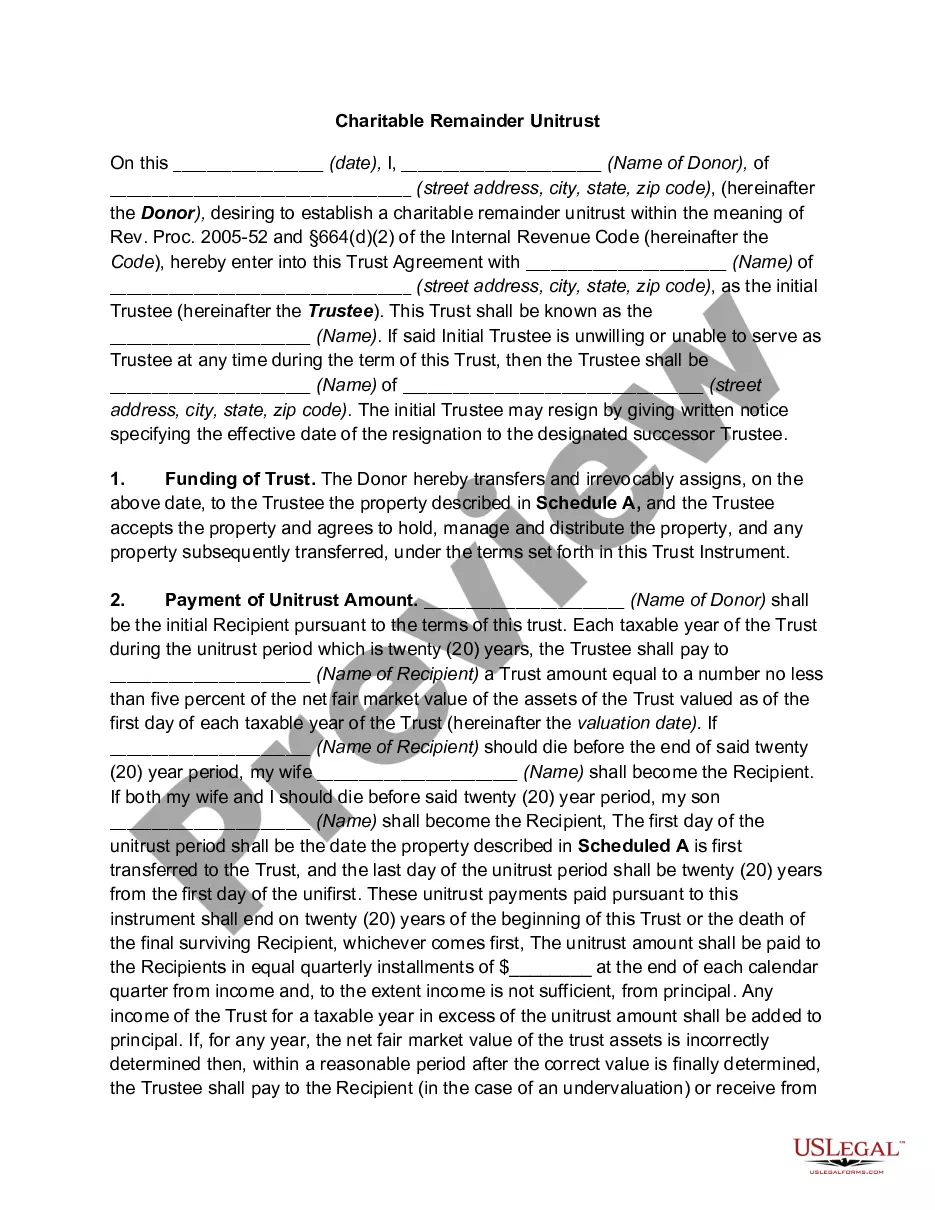
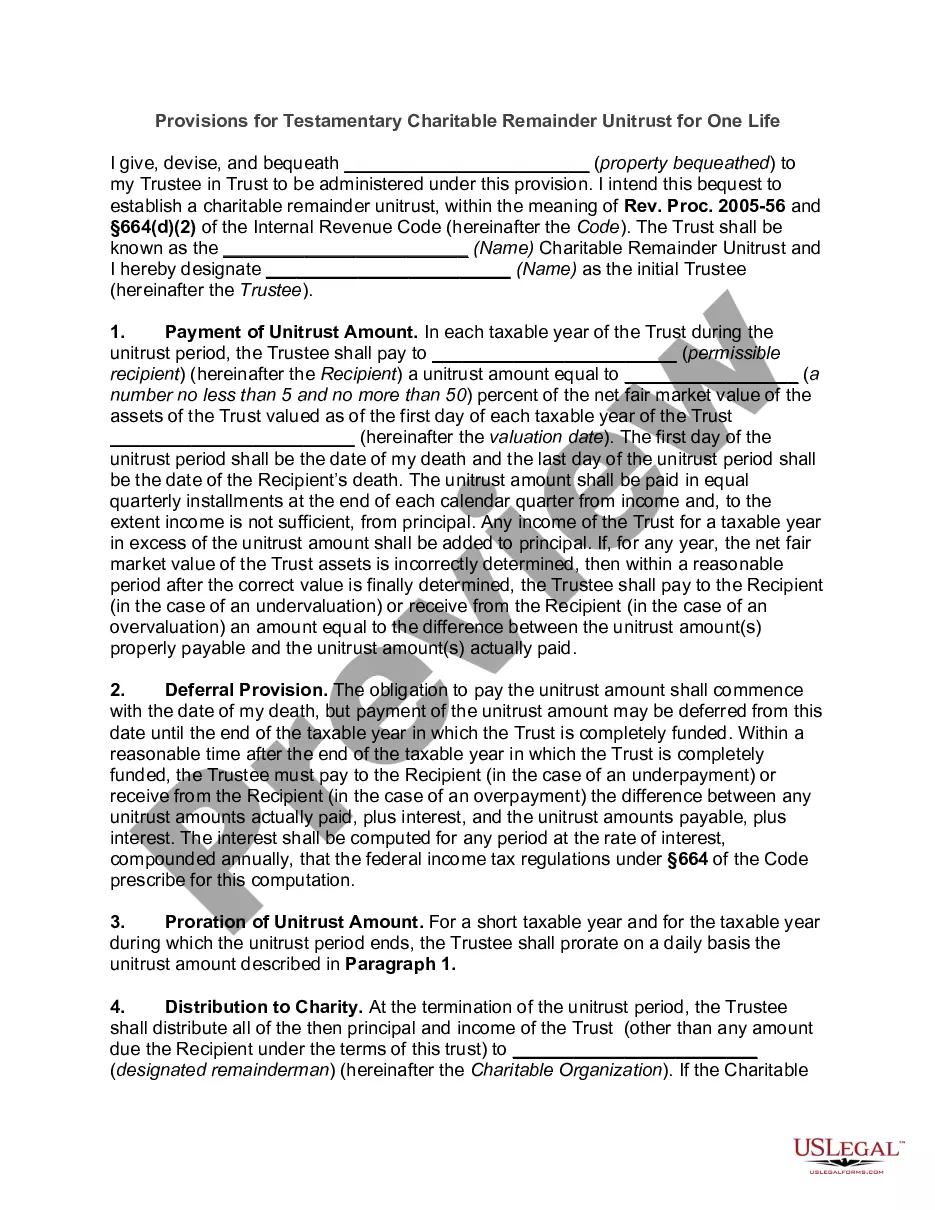
How to fill out Charitable Remainder Inter Vivos Unitrust Agreement?
- Log in to your US Legal Forms account if you are a returning user. Ensure your subscription is active; renew it if necessary.
- For new users, navigate to the platform, and start by reviewing the form descriptions to select the appropriate document that meets your jurisdictional requirements.
- Utilize the search feature to find additional templates if the initial choice does not meet your needs.
- Proceed to purchase the form by selecting the 'Buy Now' button and choose a suitable subscription plan while creating an account to access the full library.
- Complete your purchase securely using your credit card or PayPal account.
- Download the chosen form and save it on your device. You can always revisit your document later through the 'My Forms' section of your profile.
Utilizing US Legal Forms not only facilitates document acquisition but also ensures that your legal documents are comprehensive and accurate. With over 85,000 editable forms at your disposal, you can easily find precisely what you need.
Start your journey with US Legal Forms today and experience the convenience of having expert legal support at your fingertips.
Form popularity
FAQ
The calculation of the unitrust amount involves determining the fair market value of the trust assets at the start of each year, then applying the predetermined unitrust percentage to that value. This method helps clarify what beneficiaries will receive each year. Regular assessments of your tax unitrust amount for 5 years will guide financial decisions and ensure that you're on track to meet your goals.
To calculate the unitrust amount, you typically apply the chosen unitrust percentage to the fair market value of the trust assets, reviewed annually. This calculation can help ensure smooth distributions to beneficiaries. When planning your tax unitrust amount for 5 years, it is essential to keep accurate records and review the asset values regularly for optimal outcomes.
The lifespan of a unitrust can vary based on its specific terms, but it often lasts for the lifetime of the income beneficiary or for a specified term like 5 years. Once the trust term ends, the remaining assets typically transfer to a designated charity. Planning for the end of your unitrust is vital to ensure your intended charity benefits while thinking about your tax unitrust amount for 5 years.
The net income of a unitrust is the total income generated after deducting expenses and losses. This includes various types of income from investments, such as interest, dividends, and capital gains. Understanding the net income calculation is key to determining your tax unitrust amount for 5 years and can help in strategic withdrawal planning.
The unitrust percentage refers to the portion of the trust's net assets that will be distributed as payments to beneficiaries. This percentage is usually set between 5% to 7%, but you can adjust it based on your financial goals. Ensuring you have the right unitrust percentage directly impacts your overall tax unitrust amount for 5 years, making it an essential aspect of your trust planning.
A total return unitrust permits the trustee to invest in a broader range of assets to generate income and capital appreciation. This structure allows for a more flexible management strategy, potentially increasing your tax unitrust amount for 5 years. It can also lead to more significant growth over time, benefiting both the income beneficiaries and the charitable remainder.
Taxation of unitrust payments primarily depends on the type of income distributed. Typically, unitrust payments can include ordinary income, capital gains, and tax-exempt income. When you receive payments from your unitrust, you should expect to report these on your tax return based on the nature of each payment. Understanding how your specific tax unitrust amount for 5 years is taxed is crucial for effective tax planning.
The maximum term for a charitable remainder unitrust typically cannot exceed 20 years. However, many CRUTs are designed to last for the lifetime of the income beneficiary. When considering the tax unitrust amount for 5 years, it's essential to understand how the length of the trust affects donations and distributions. For detailed assistance, the US Legal Forms platform provides insights into managing CRUTs effectively.
Generally, you should keep tax returns for a trust for at least three years from the date of filing. However, if you are claiming a loss, keep them for six years. The tax unitrust amount for 5 years can influence how long to retain certain documents. To ensure compliance and proper record-keeping, the US Legal platform offers resources to help you with trust documentation.
Trust fund payouts often receive different tax treatment depending on the trust's structure and the nature of the funds. Generally, beneficiaries may be subject to income tax on payouts they receive. Understanding the tax unitrust amount for 5 years is crucial for ensuring proper tax reporting. To navigate these complexities, users can benefit from the tools provided by US Legal Forms.