Remainder Living Trust Sample With Beneficiaries
Description
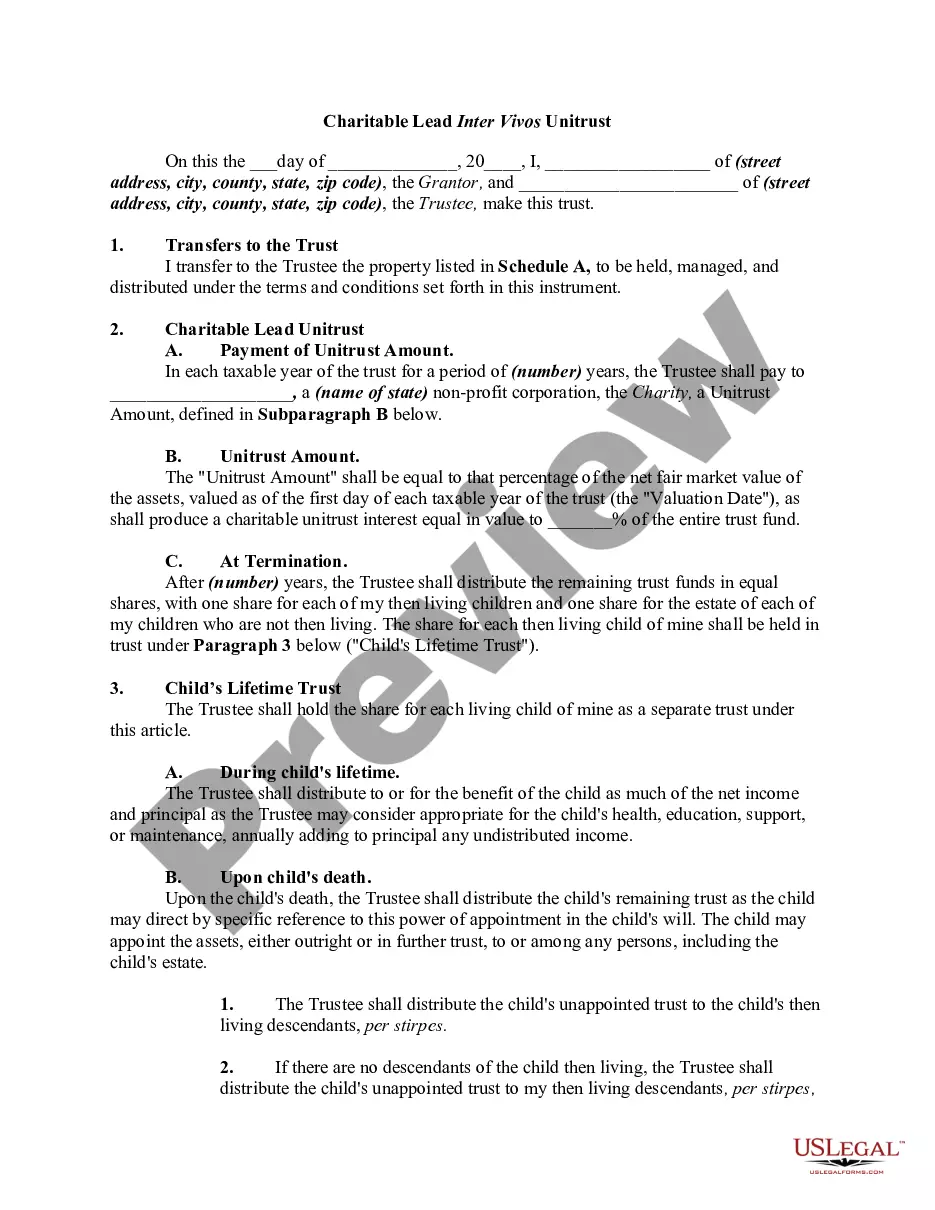
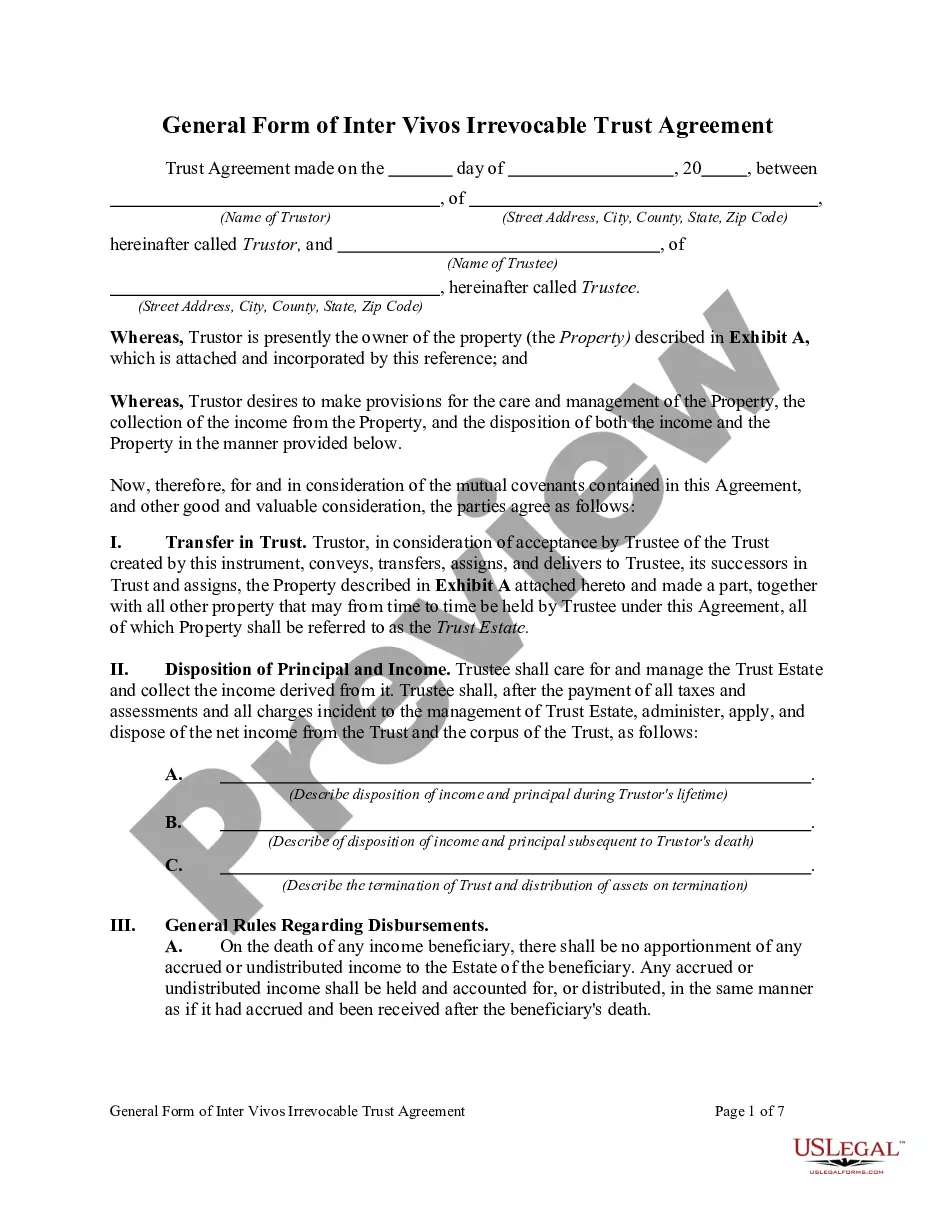
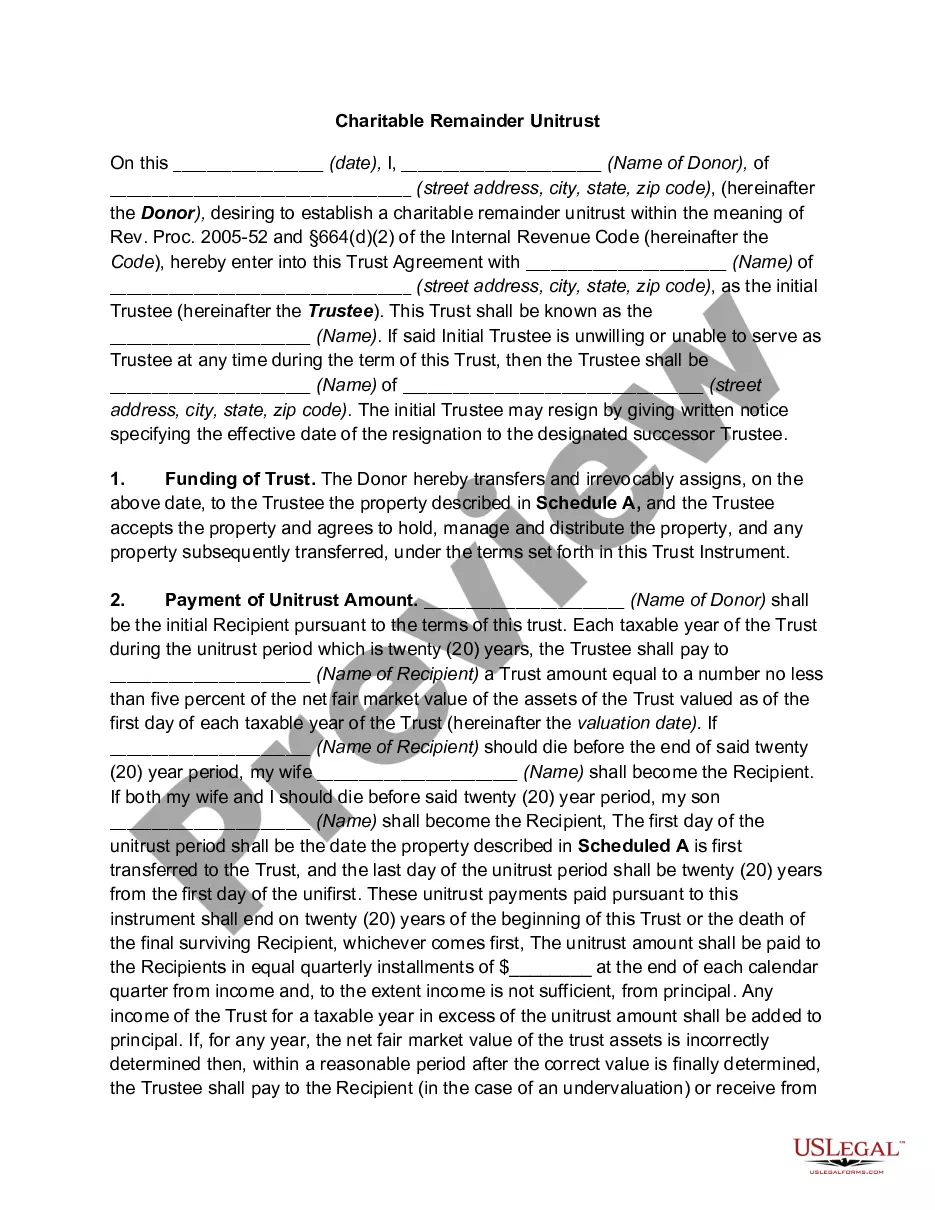
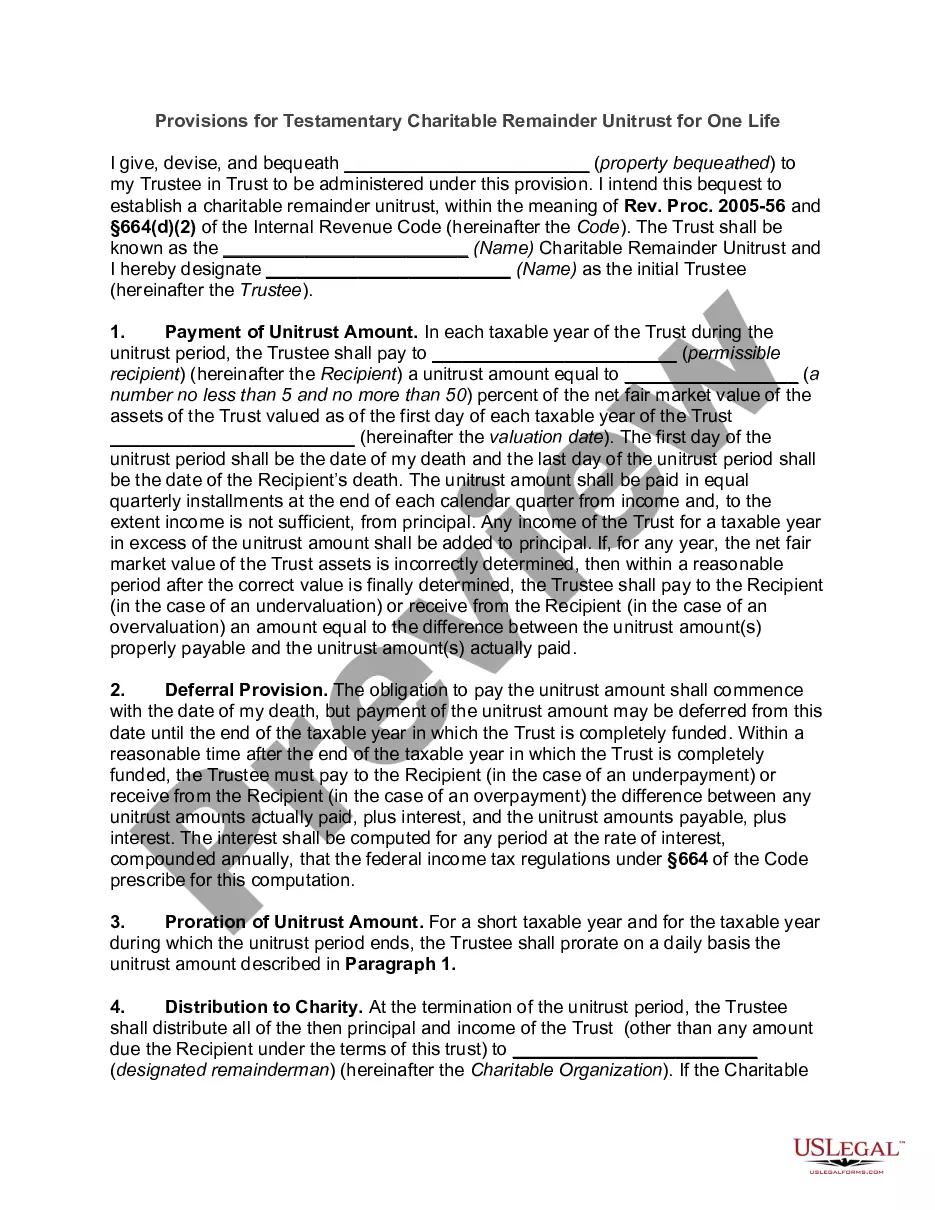
Get your form ready online
Our built-in tools help you complete, sign, share, and store your documents in one place.
Make edits, fill in missing information, and update formatting in US Legal Forms—just like you would in MS Word.
Download a copy, print it, send it by email, or mail it via USPS—whatever works best for your next step.
Sign and collect signatures with our SignNow integration. Send to multiple recipients, set reminders, and more. Go Premium to unlock E-Sign.
If this form requires notarization, complete it online through a secure video call—no need to meet a notary in person or wait for an appointment.
We protect your documents and personal data by following strict security and privacy standards.

Make edits, fill in missing information, and update formatting in US Legal Forms—just like you would in MS Word.

Download a copy, print it, send it by email, or mail it via USPS—whatever works best for your next step.

Sign and collect signatures with our SignNow integration. Send to multiple recipients, set reminders, and more. Go Premium to unlock E-Sign.

If this form requires notarization, complete it online through a secure video call—no need to meet a notary in person or wait for an appointment.

We protect your documents and personal data by following strict security and privacy standards.
Looking for another form?






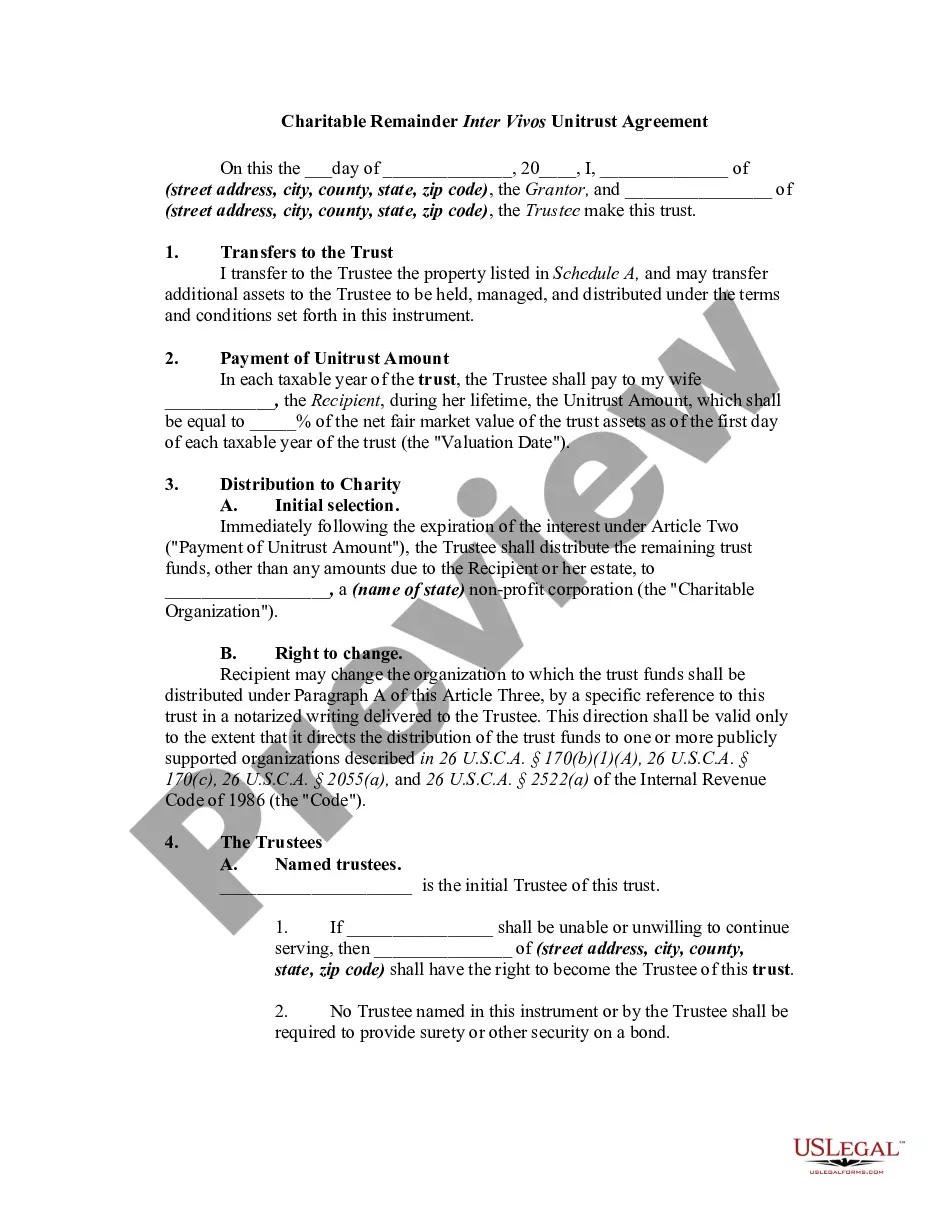
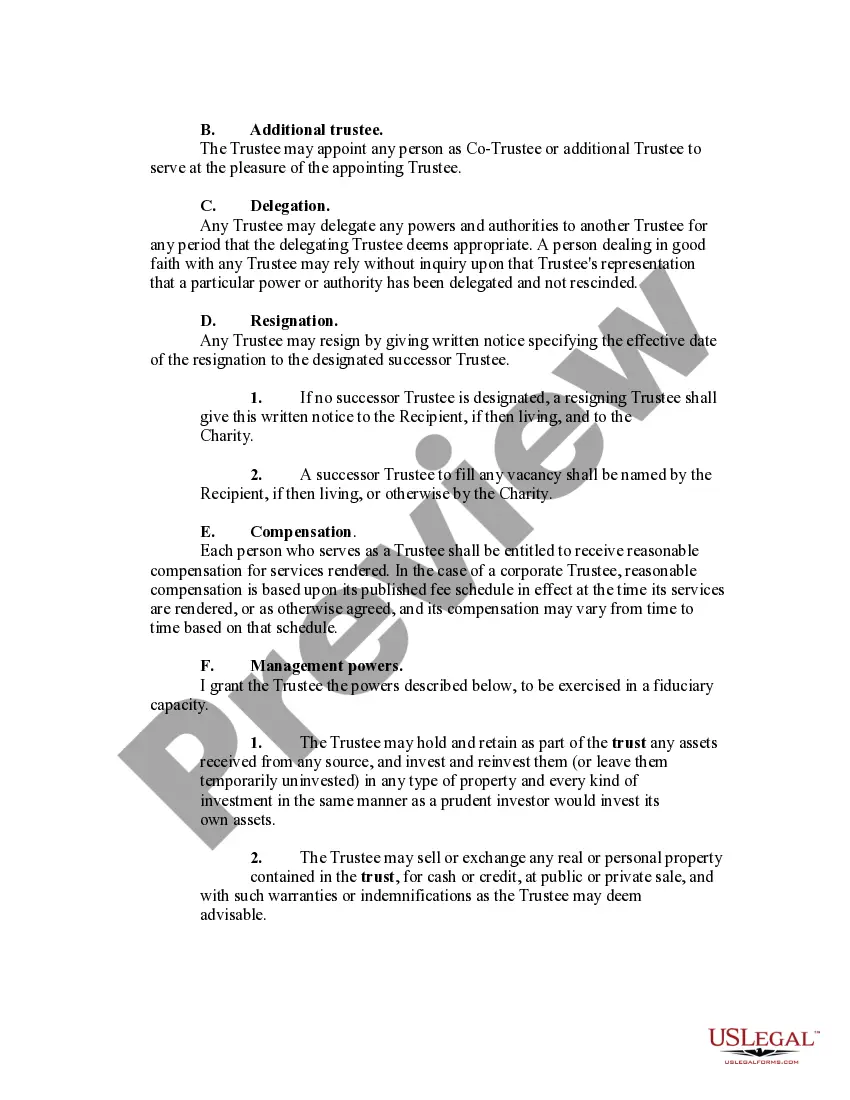
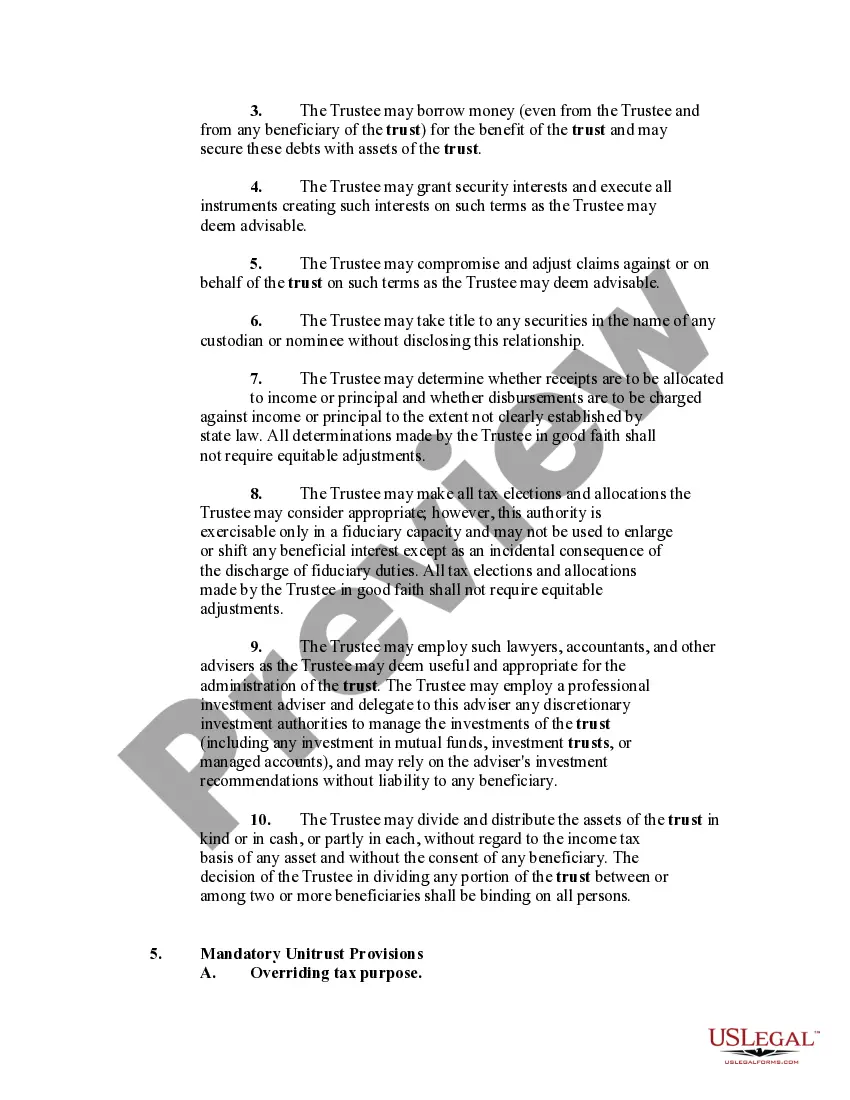
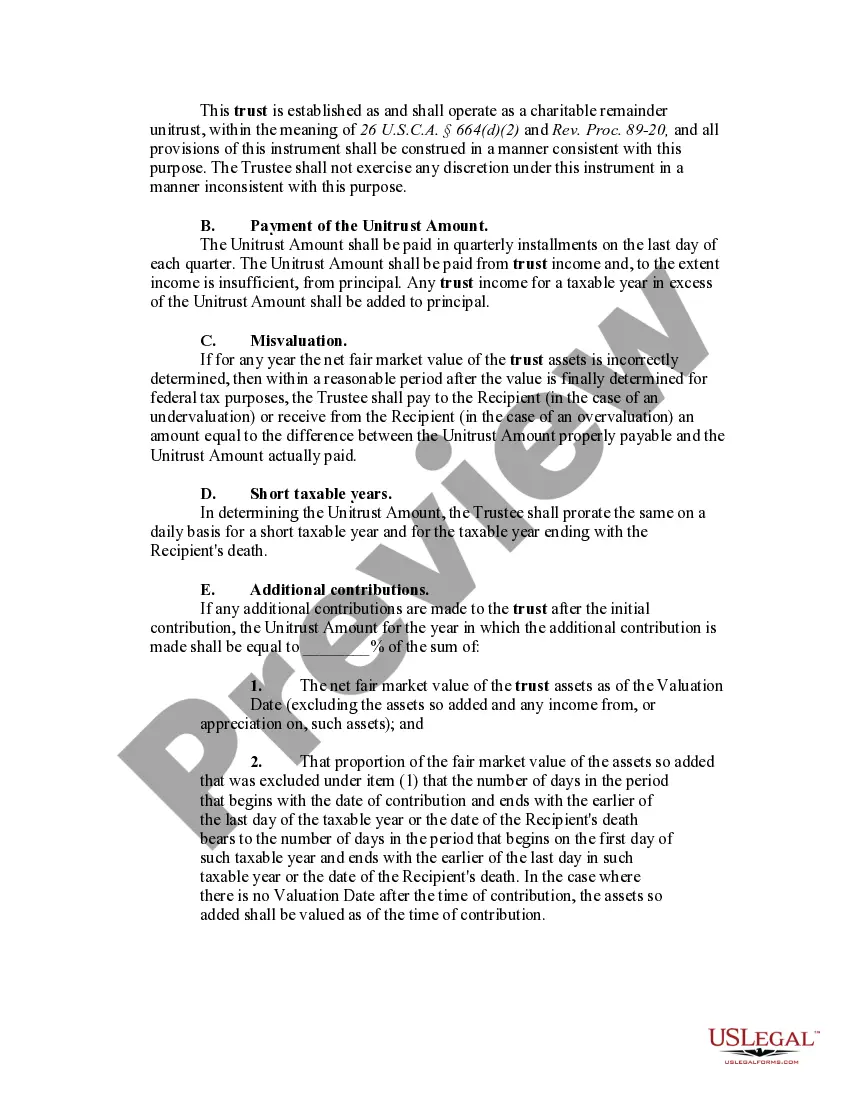
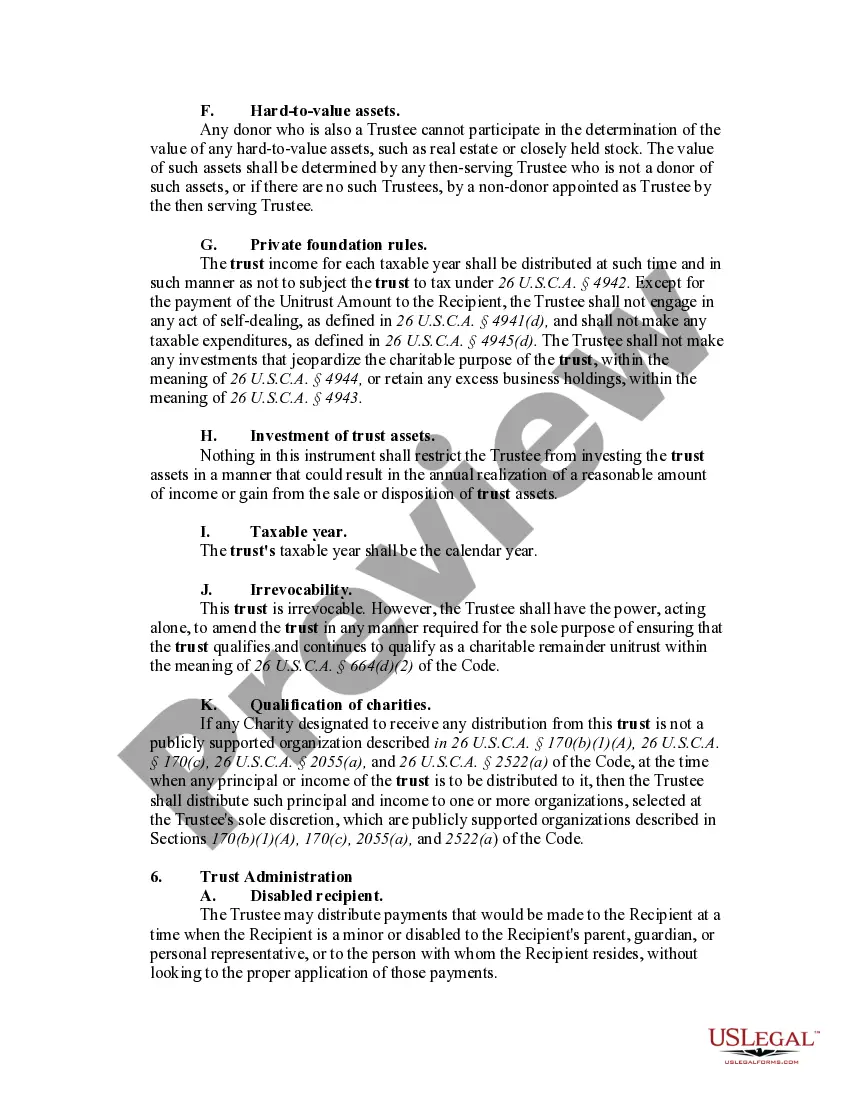
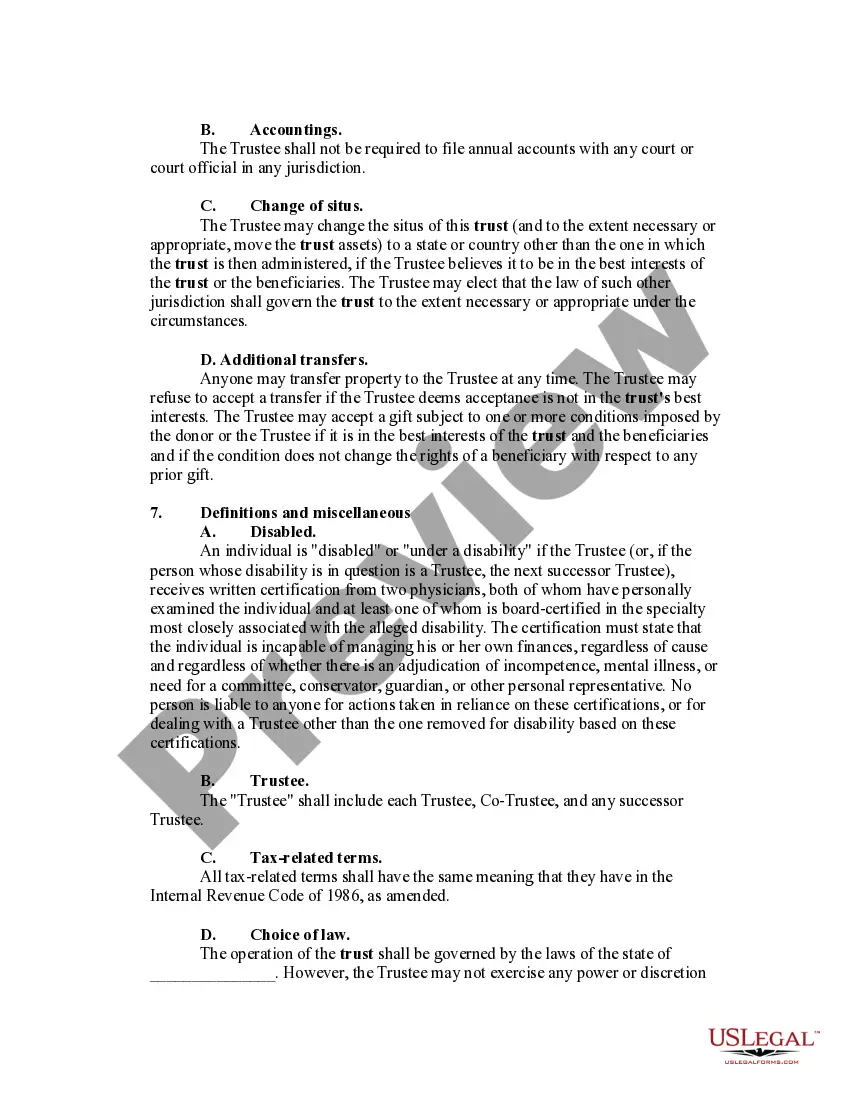
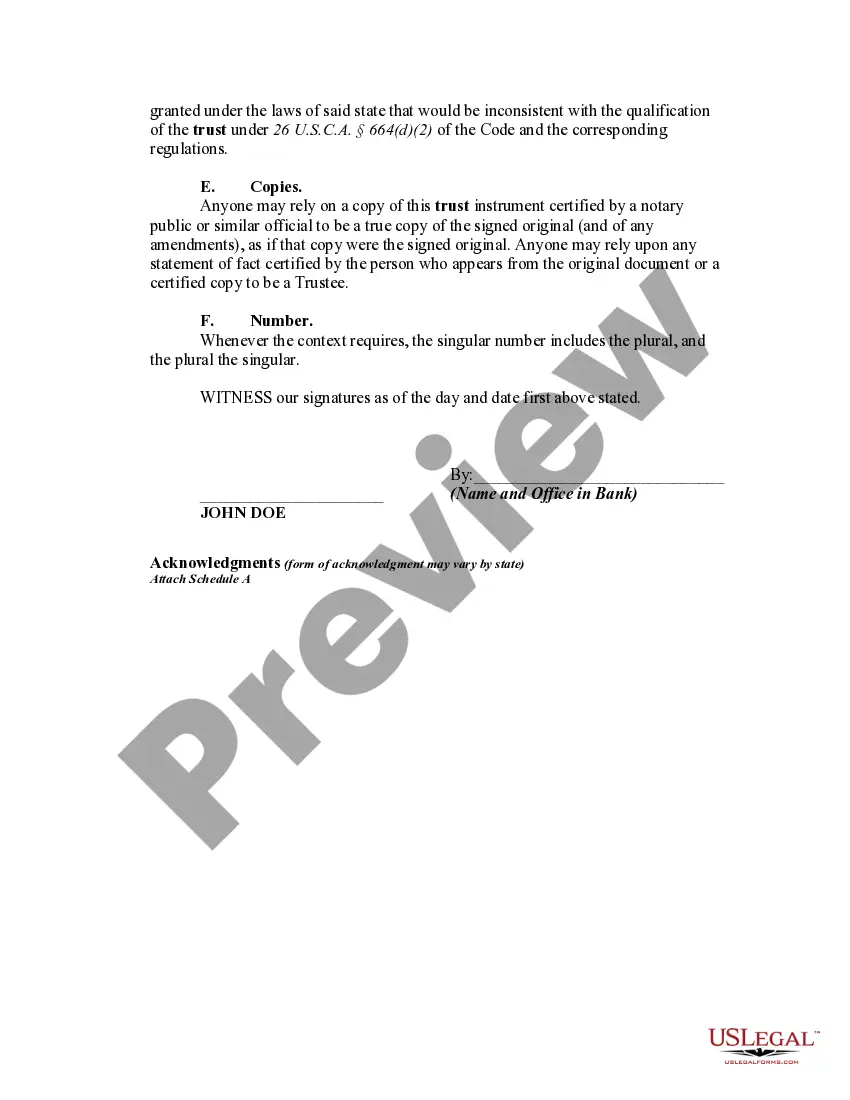
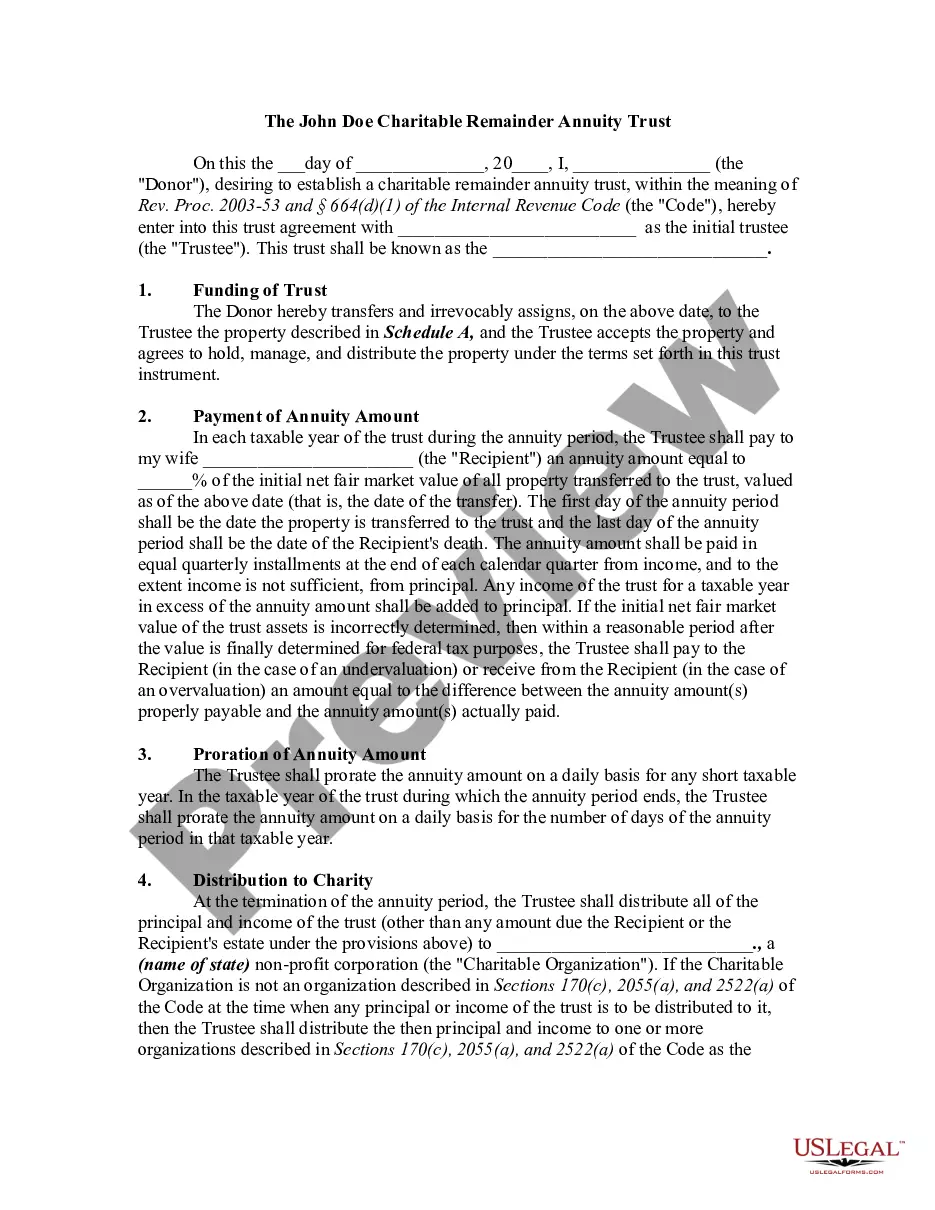
How to fill out Charitable Remainder Inter Vivos Unitrust Agreement?
Regardless of whether for commercial objectives or personal matters, everyone must handle legal issues at some point in their lives. Completing legal documents demands meticulous care, beginning with selecting the appropriate form template. For instance, if you opt for an incorrect version of a Remainder Living Trust Sample With Beneficiaries, it will be denied upon submission. Thus, it's crucial to have a dependable source for legal documents like US Legal Forms.
To obtain a Remainder Living Trust Sample With Beneficiaries template, follow these straightforward steps.
With an extensive US Legal Forms catalog available, you do not need to waste time searching for the correct sample across the internet. Utilize the library’s user-friendly navigation to discover the right template for any circumstance.
- Acquire the sample you require using the search bar or catalog navigation.
- Review the form's details to ensure it fits your situation, state, and county.
- Click on the form’s preview to examine it.
- If it is the incorrect form, return to the search tool to find the Remainder Living Trust Sample With Beneficiaries template you need.
- Obtain the file when it aligns with your criteria.
- If you have a US Legal Forms account, simply click Log in to access previously saved templates in My documents.
- If you do not have an account yet, you can acquire the form by clicking Buy now.
- Choose the appropriate pricing option.
- Fill out the profile registration form.
- Select your payment method: utilize a credit card or PayPal account.
- Pick the file format you wish and download the Remainder Living Trust Sample With Beneficiaries.
- Once downloaded, you can complete the form using editing software or print it and fill it out by hand.
Form popularity
FAQ
The grantor can opt to have the beneficiaries receive trust property directly without any restrictions. The trustee can write the beneficiary a check, give them cash, and transfer real estate by drawing up a new deed or selling the house and giving them the proceeds.
Examples of basic trust include the following scenarios: A baby smiles at you, and you respond with a smile; this simple gesture indicates to the child that the world is a warm and welcoming place.
A simple example would be the situation in which one member of a family advances money to another and asks the second member to hold the money or to invest it for him. A more complicated example of an implied trust would be the situation in which one party provides money to another for the purchase of property.
A remainder beneficiary is a beneficiary of a trust whose benefit vests at a later time. As an example, I may receive income for life and only upon my death what is left of the corpus of the trust goes to my son. I am the income beneficiary and my son is the remainder beneficiary.
To leave property to your living trust, name your trust as beneficiary for that property, using the trustee's name and the name of the trust. For example: John Doe as trustee of the John Doe Living Trust, dated January 1, 20xx.