Remainder Living Trust Sample For Illinois
Description
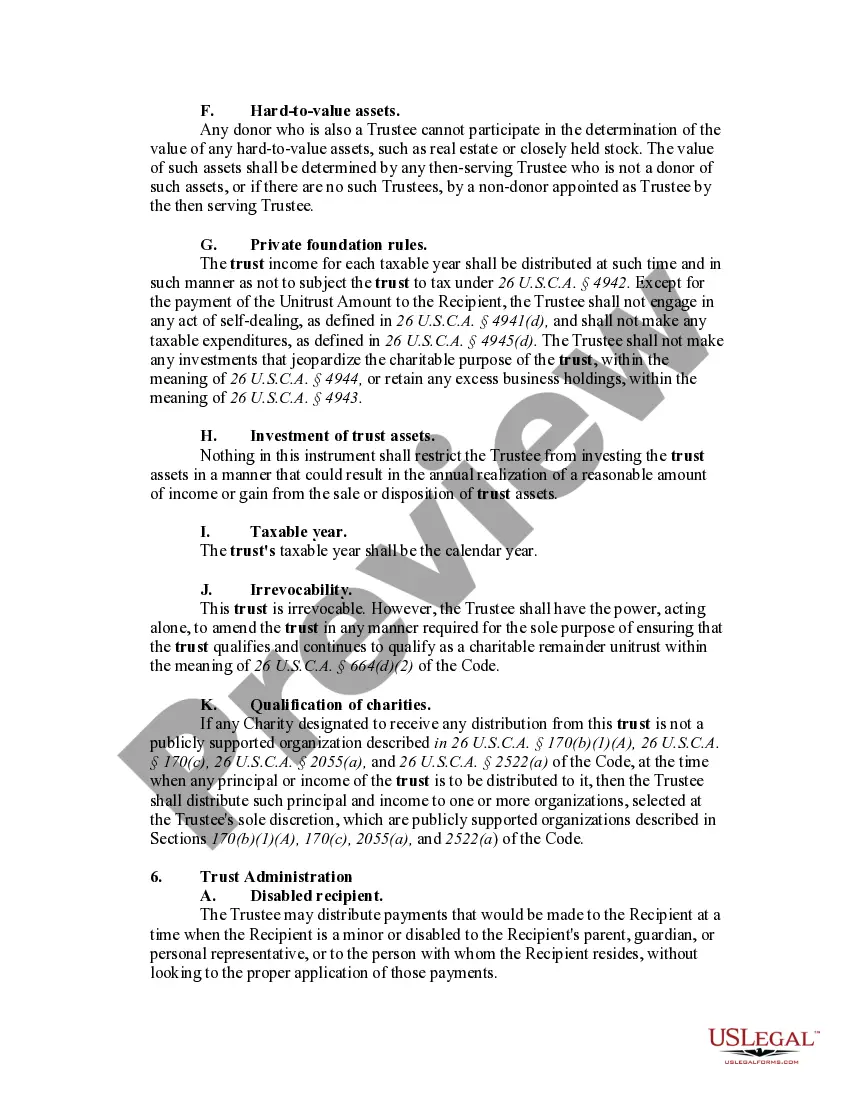
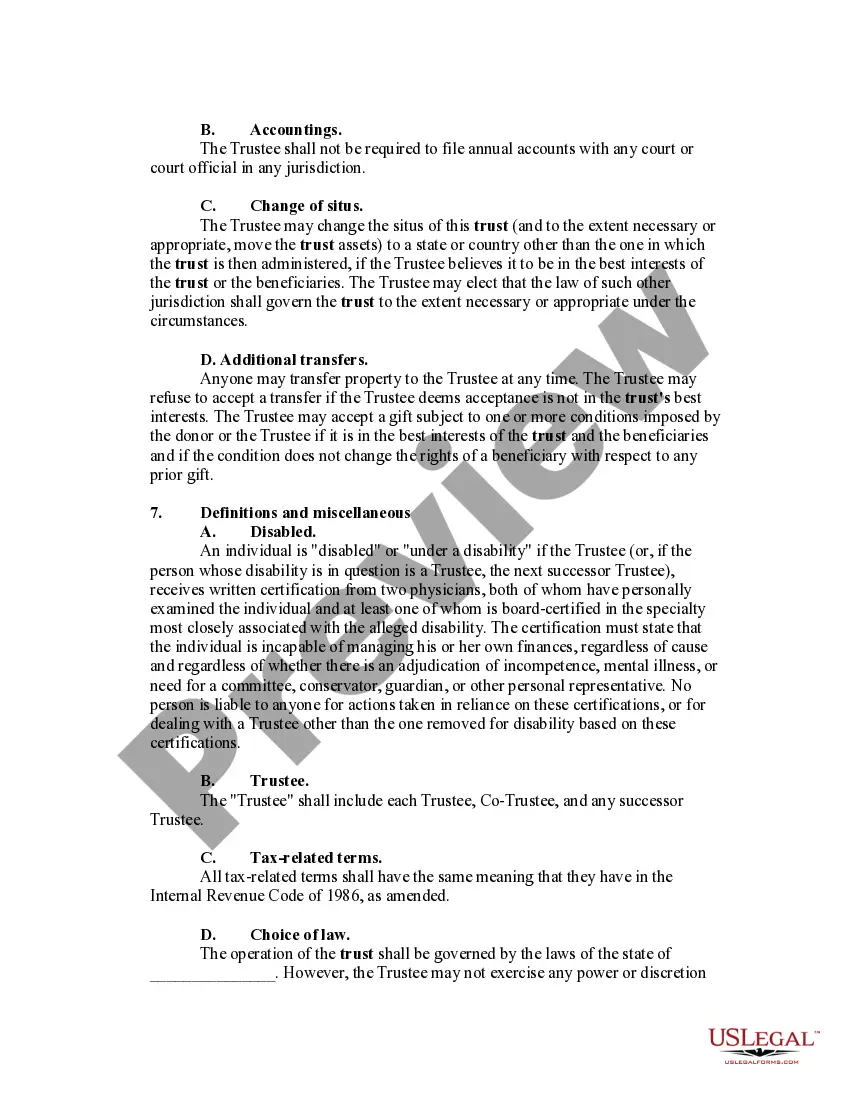
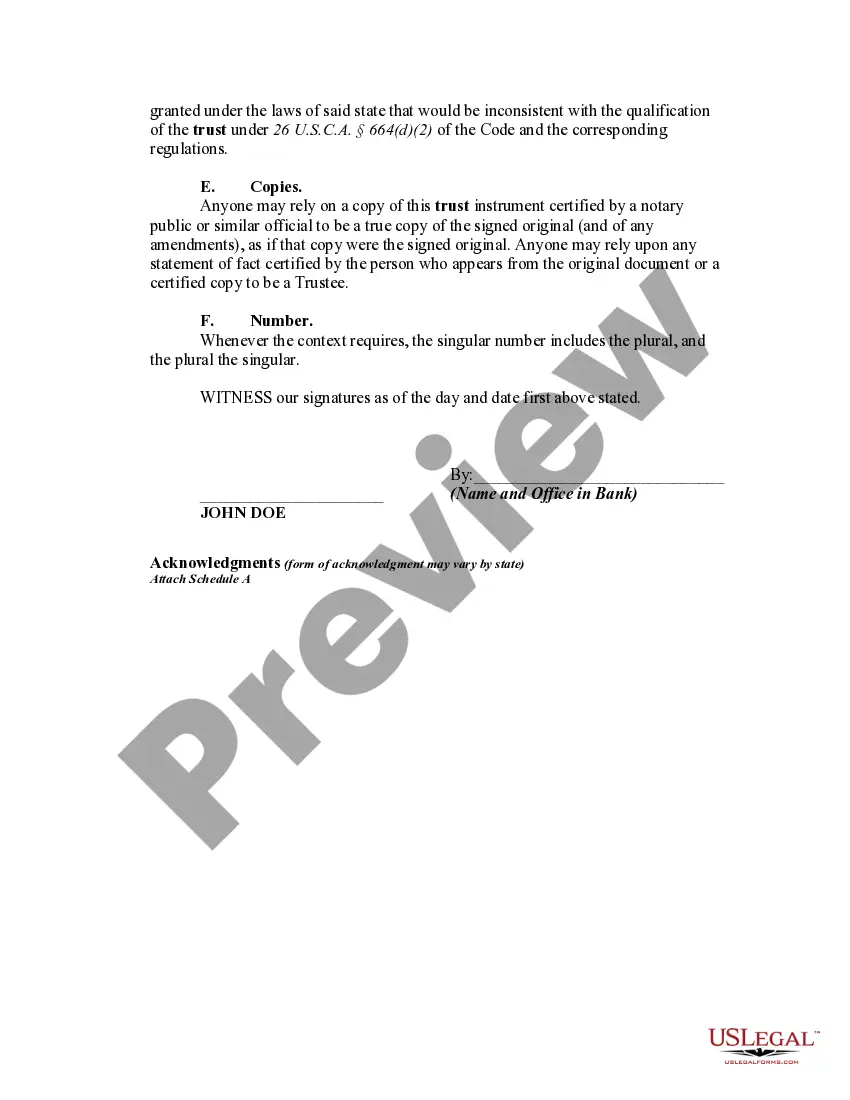
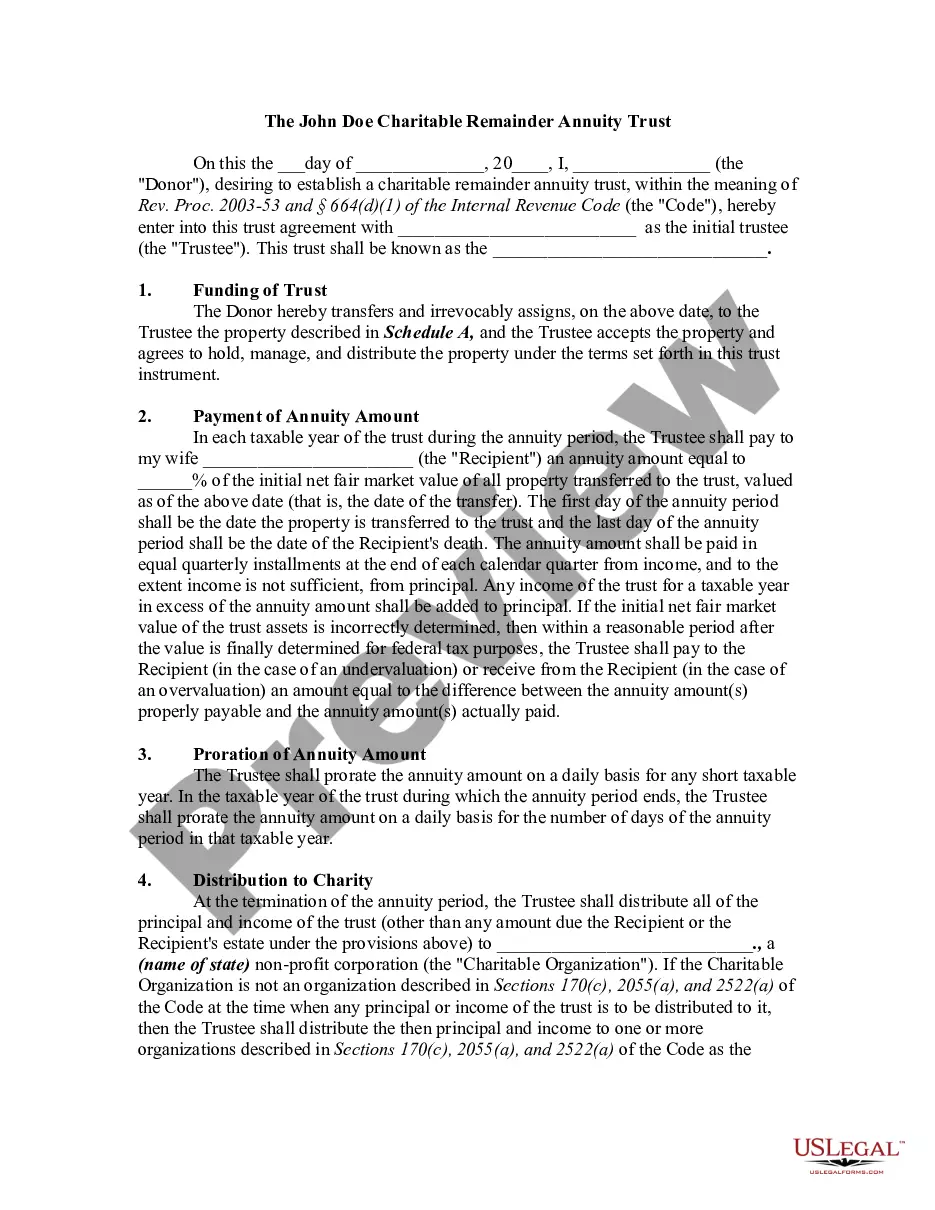
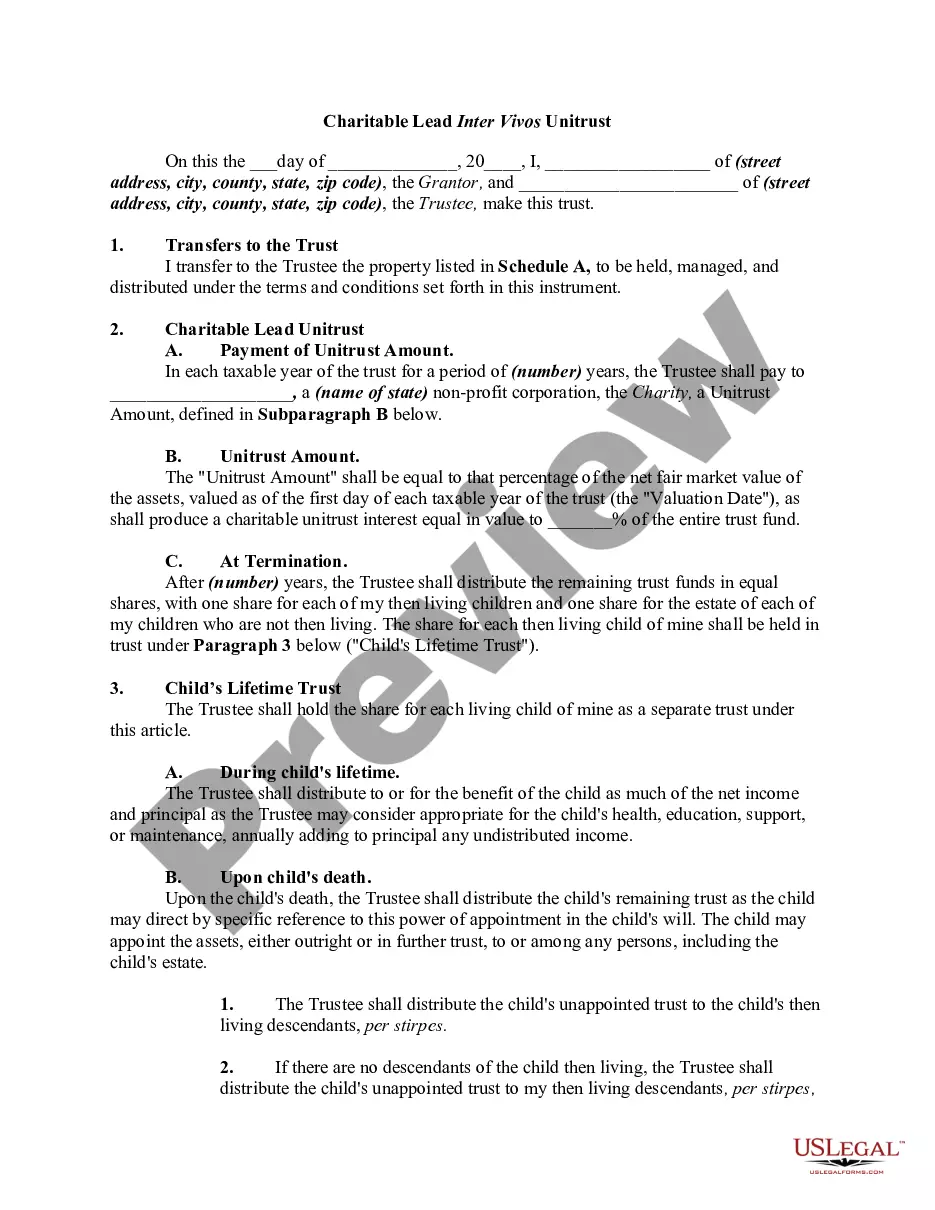
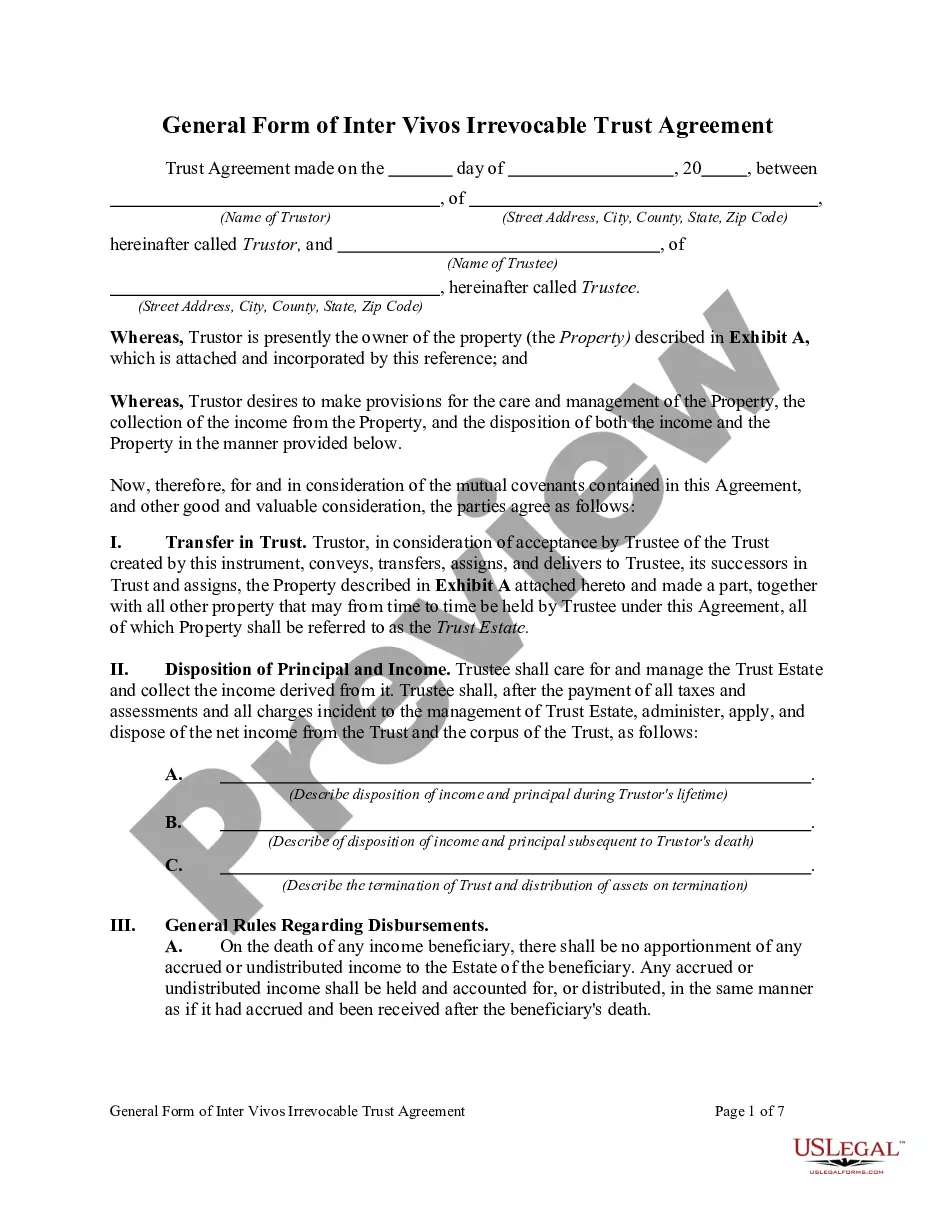
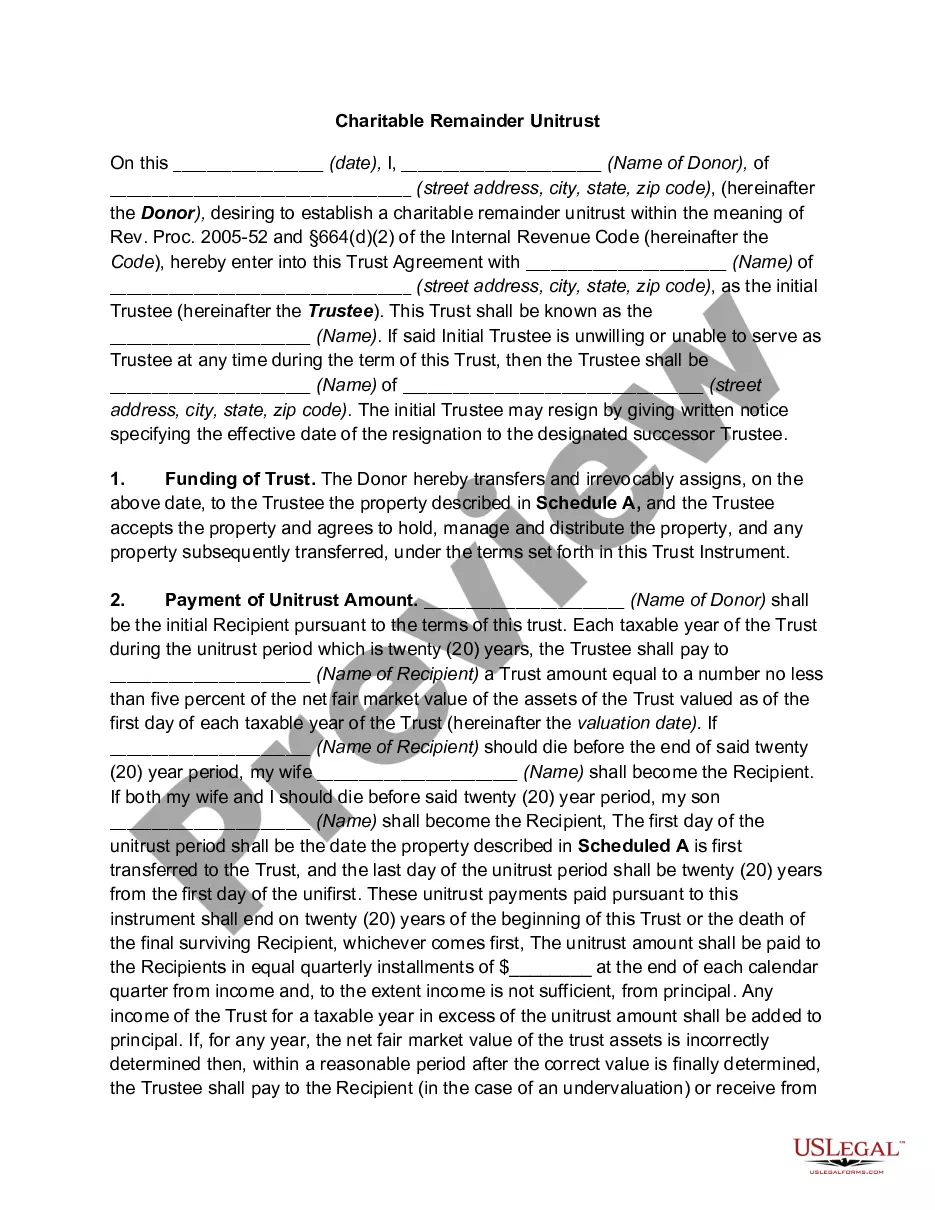
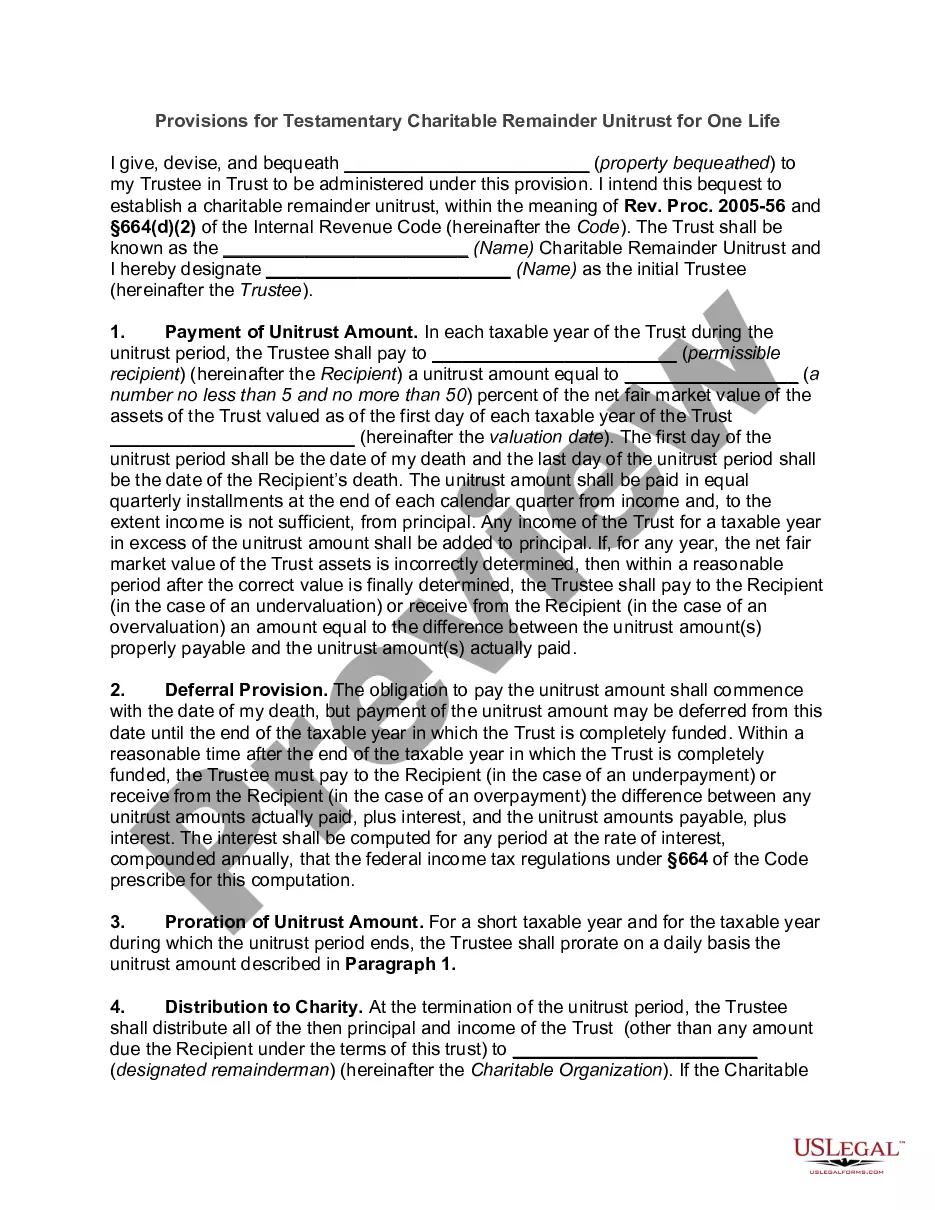
Get your form ready online
Our built-in tools help you complete, sign, share, and store your documents in one place.
Make edits, fill in missing information, and update formatting in US Legal Forms—just like you would in MS Word.
Download a copy, print it, send it by email, or mail it via USPS—whatever works best for your next step.
Sign and collect signatures with our SignNow integration. Send to multiple recipients, set reminders, and more. Go Premium to unlock E-Sign.
If this form requires notarization, complete it online through a secure video call—no need to meet a notary in person or wait for an appointment.
We protect your documents and personal data by following strict security and privacy standards.

Make edits, fill in missing information, and update formatting in US Legal Forms—just like you would in MS Word.

Download a copy, print it, send it by email, or mail it via USPS—whatever works best for your next step.

Sign and collect signatures with our SignNow integration. Send to multiple recipients, set reminders, and more. Go Premium to unlock E-Sign.

If this form requires notarization, complete it online through a secure video call—no need to meet a notary in person or wait for an appointment.

We protect your documents and personal data by following strict security and privacy standards.
Looking for another form?









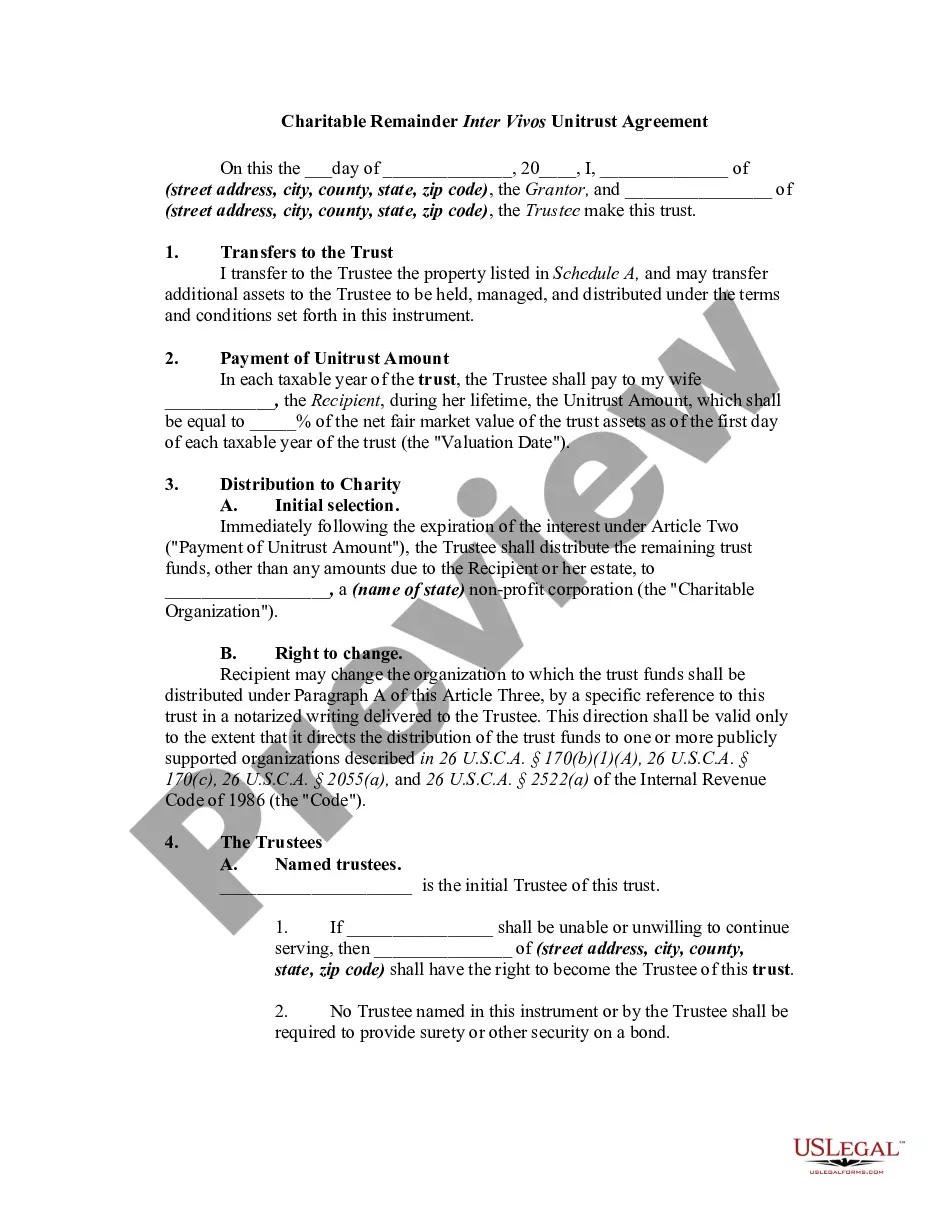
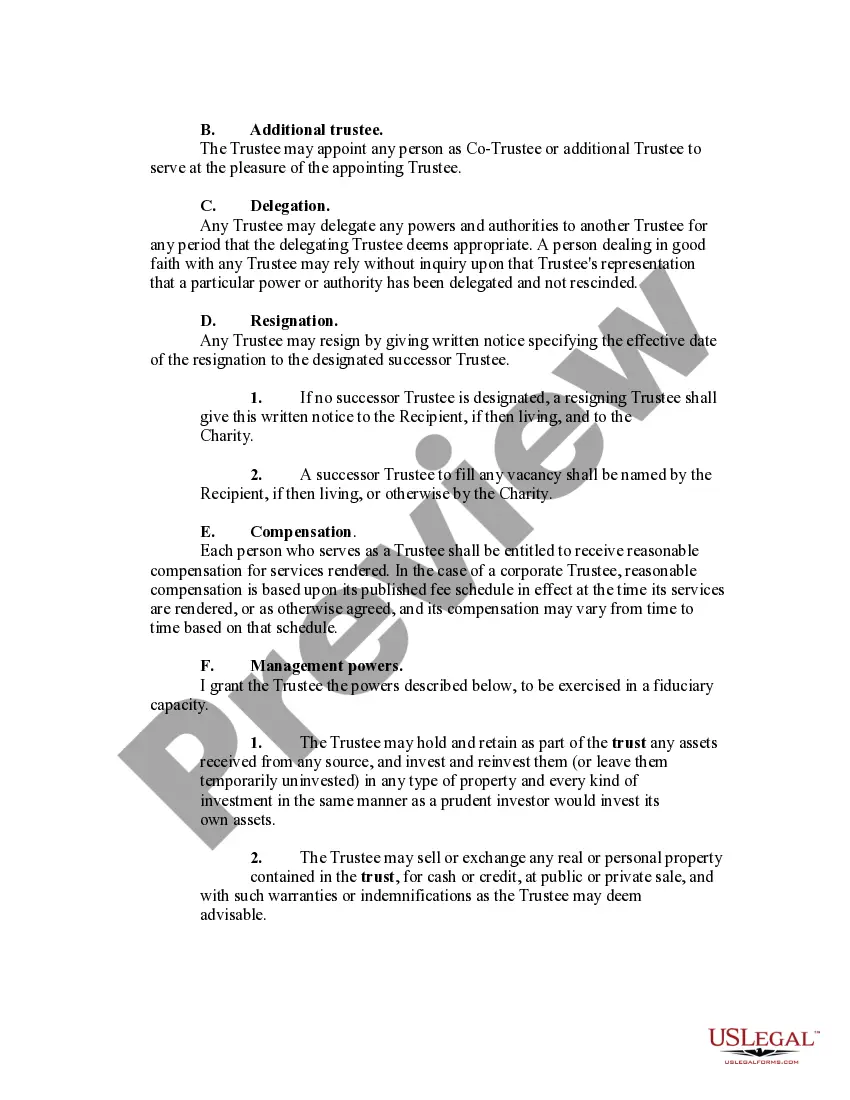
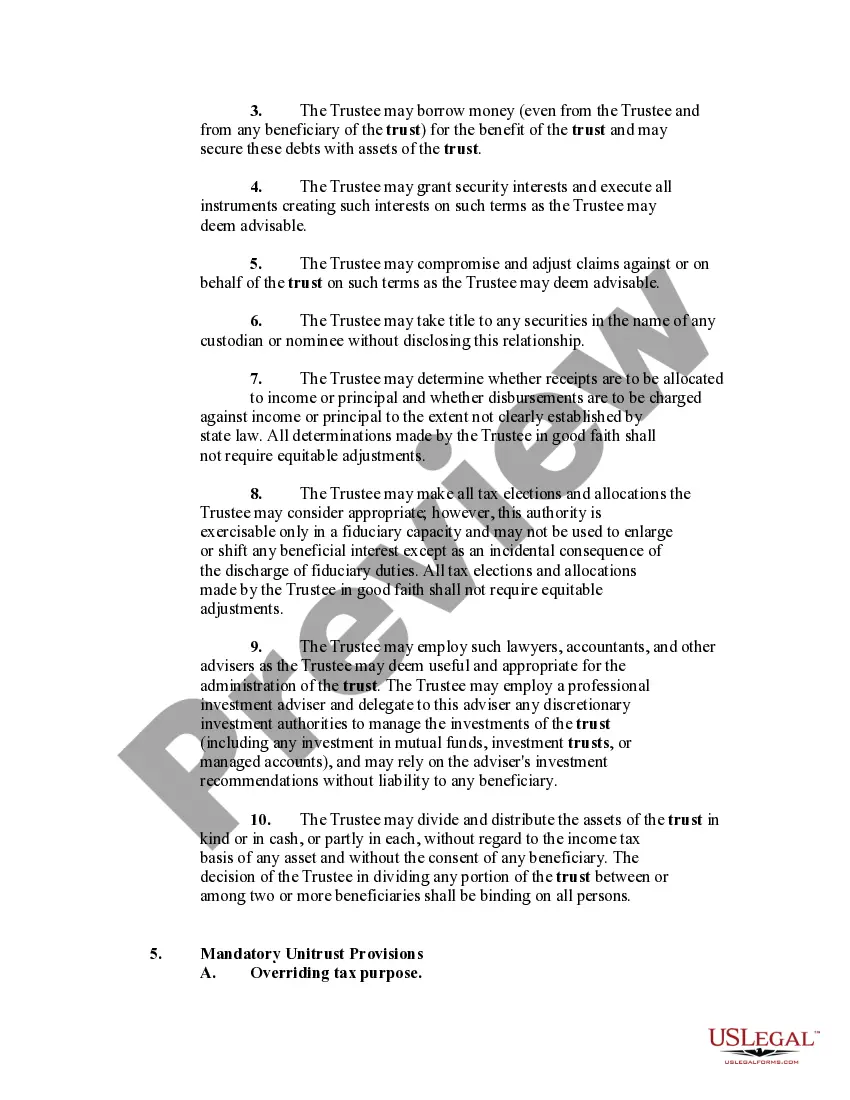
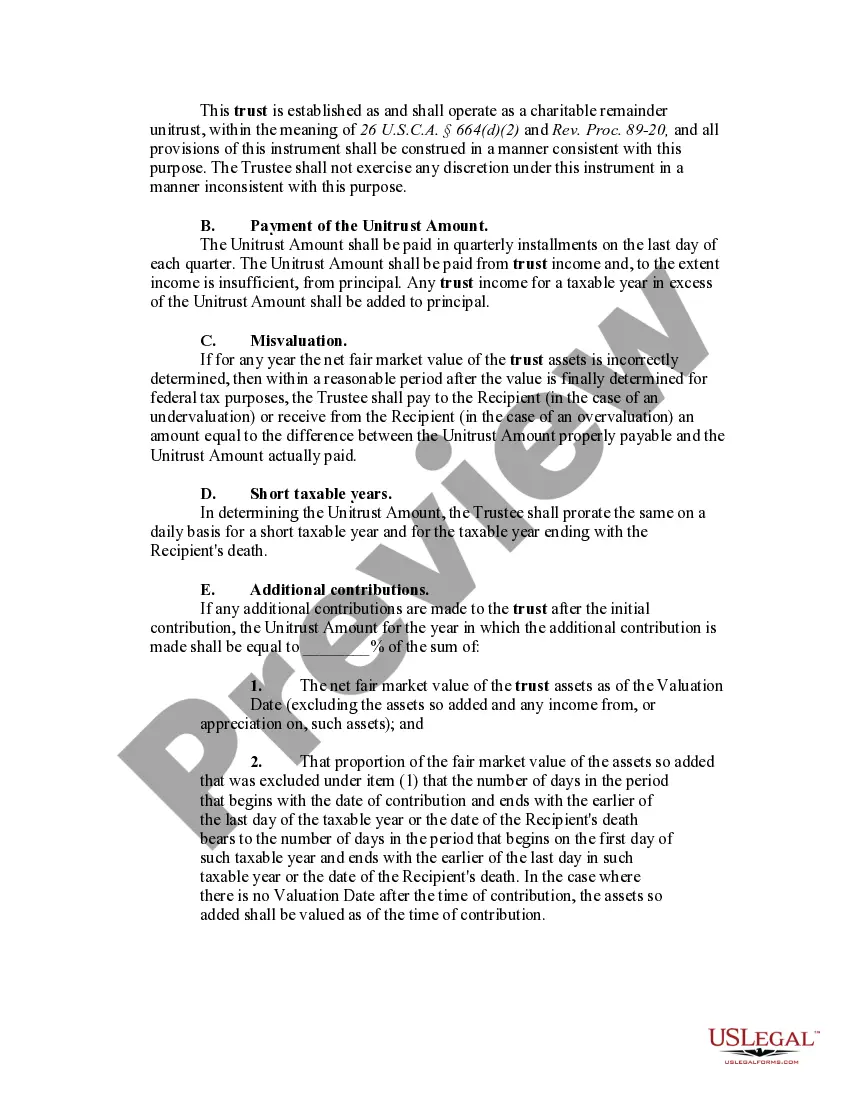
How to fill out Charitable Remainder Inter Vivos Unitrust Agreement?
The Remaining Living Trust Example For Illinois you observe on this page is a reusable formal outline created by professional attorneys in accordance with federal and state statutes.
For over 25 years, US Legal Forms has supplied individuals, organizations, and lawyers with more than 85,000 validated, state-specific documents for any business and personal circumstance. It’s the quickest, most direct, and most reliable method to acquire the paperwork you require, as the service ensures bank-level data security and anti-malware safeguards.
Choose the format you desire for your Remainder Living Trust Sample For Illinois (PDF, Word, RTF) and save the example on your device. Fill out and endorse the documents. Print the template to complete it manually. Alternatively, use an online multifunctional PDF editor to quickly and accurately fill out and sign your form with a legally-binding electronic signature. Retrieve your documents again. Use the same document again whenever needed. Access the My documents tab in your profile to redownload any previously saved forms. Subscribe to US Legal Forms to have verified legal templates for all of life’s situations at your disposal.
- Search for the document you require and review it.
- Look through the example you searched and preview it or check the form description to verify it meets your needs. If it does not, utilize the search bar to find the suitable one. Click Buy Now once you have located the template you need.
- Register and Log In.
- Select the pricing plan that fits you and create an account. Use PayPal or a credit card to make an immediate payment. If you already possess an account, Log In and verify your subscription to proceed.
- Acquire the editable template.
Form popularity
FAQ
To create a living trust in Illinois, the trust document is created and then it is signed in front of a notary public. To fund the trust, assets must be correctly transferred to the ownership of the trust.
A Will and Power of Attorney for Property need to be notarized. A Revocable Trust and Power of Attorney for Healthcare do not require a notary.
A simple example would be the situation in which one member of a family advances money to another and asks the second member to hold the money or to invest it for him. A more complicated example of an implied trust would be the situation in which one party provides money to another for the purchase of property.
A living trust might be especially useful in Illinois because the state does not use the Uniform Probate Code. This means that a living trust has the potential to save time and money for your family. When it comes to creating a living trust, you can do it yourself or work with an attorney.
For example, a trust provision may stipulate that upon the death of the grantor, if all her children are over the age of 30, the trust assets are to be distributed equally amongst them, while if some are under the age of 30, then the trust does not terminate until the youngest reaches that age.