Remainder Inter Vivos Trust Buy For You
Description
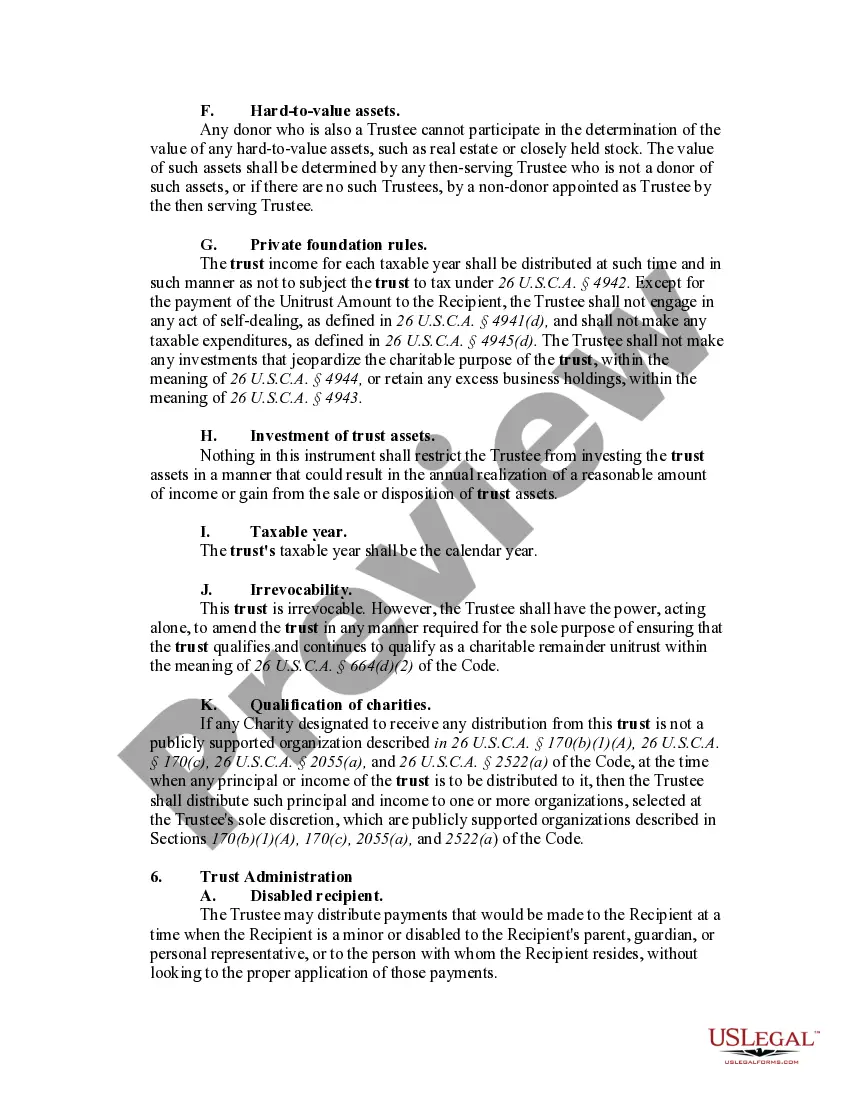
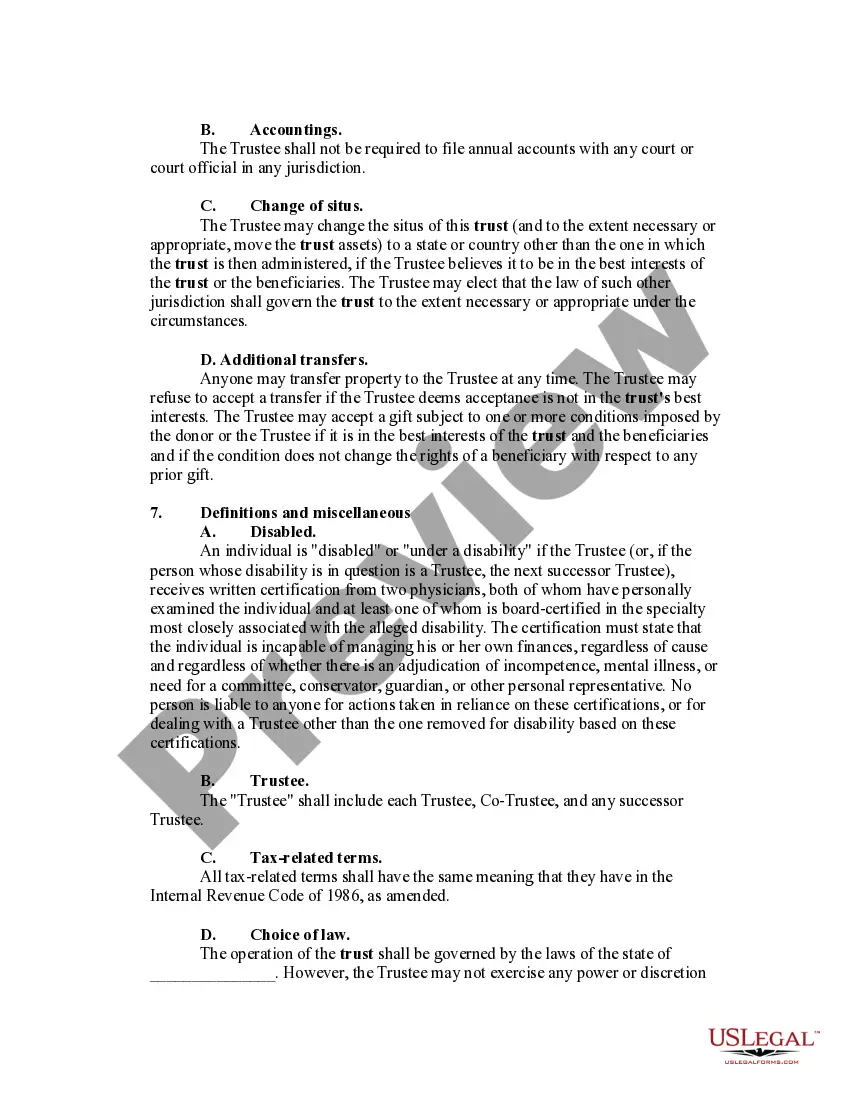
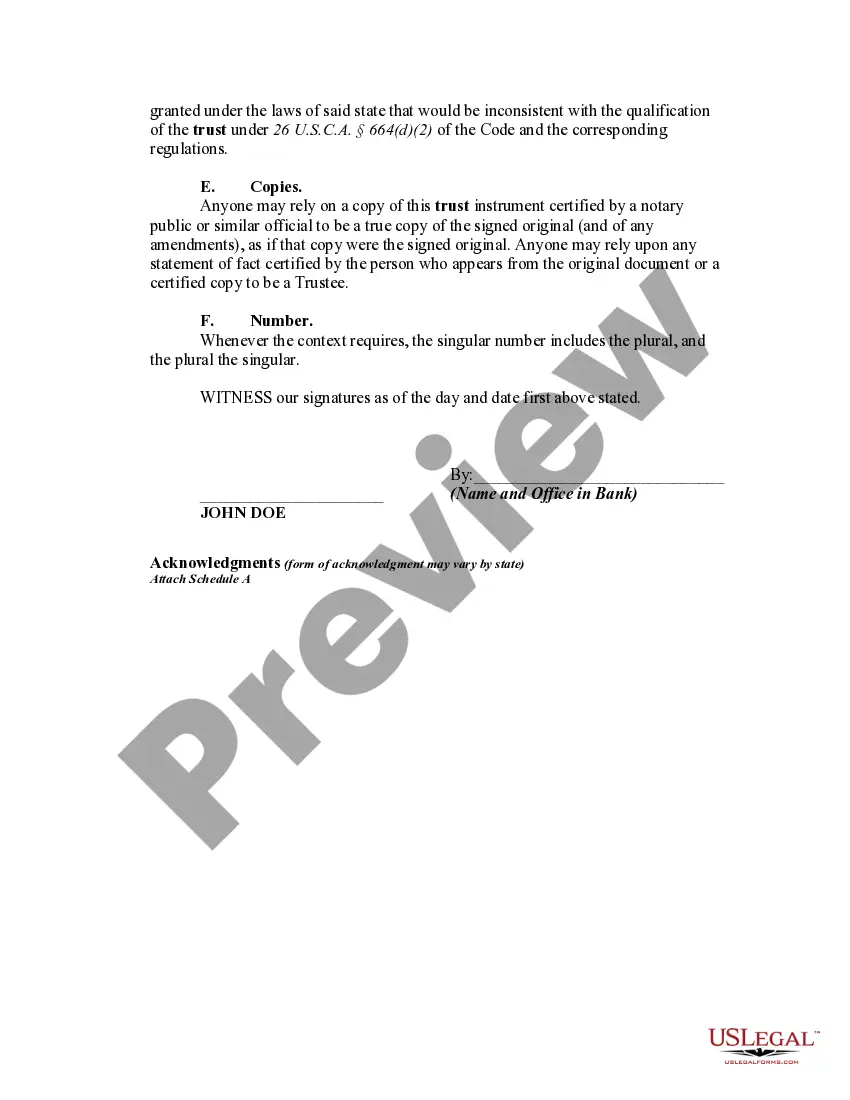
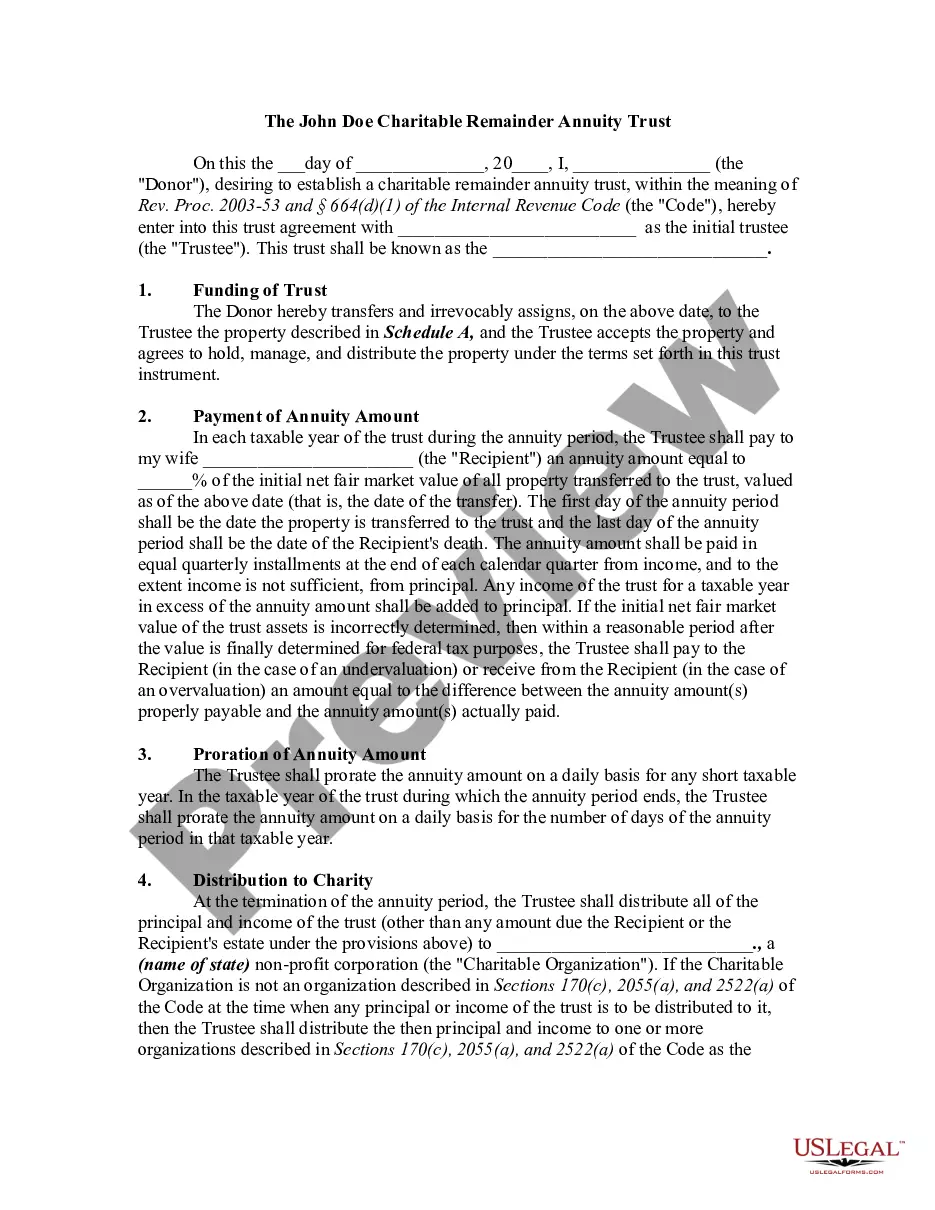
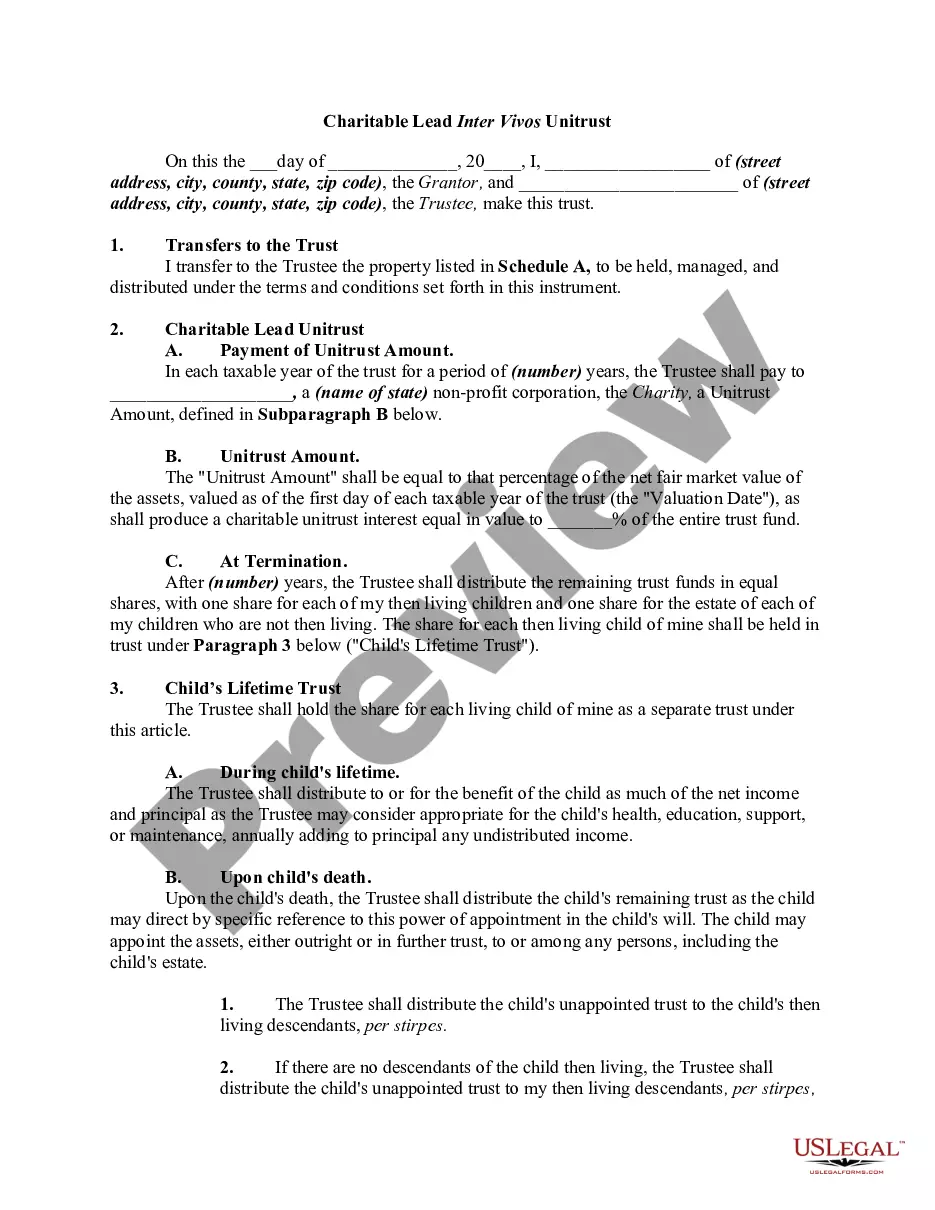
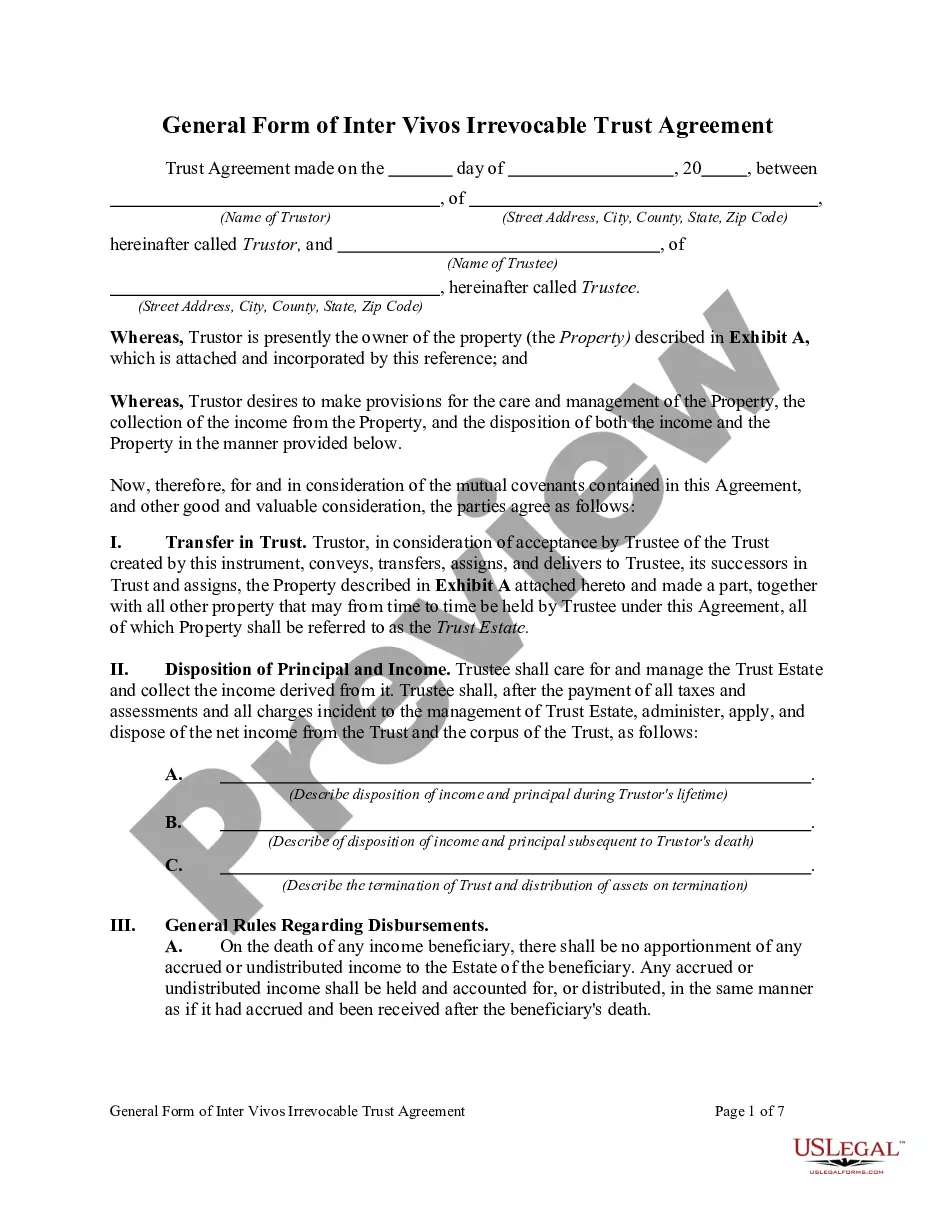
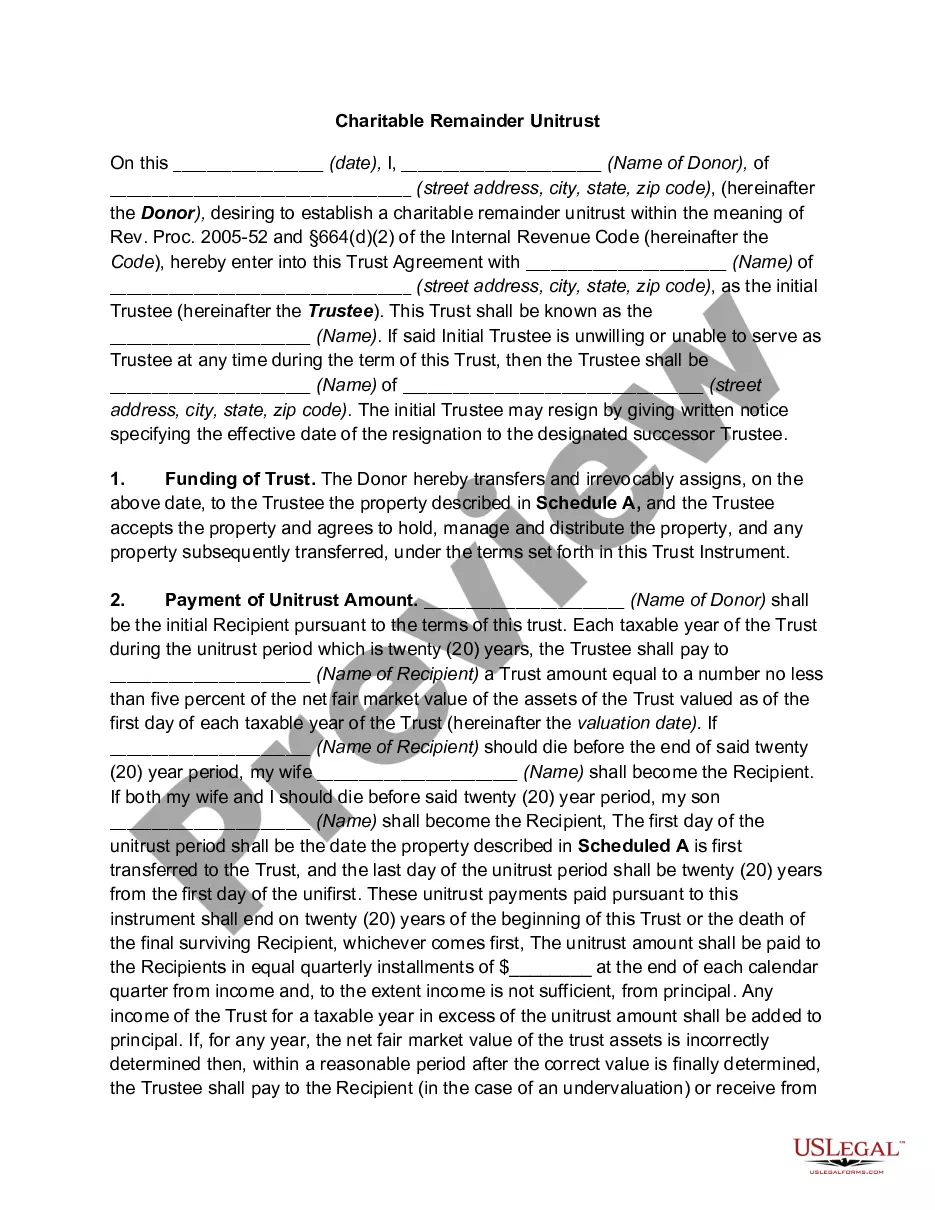
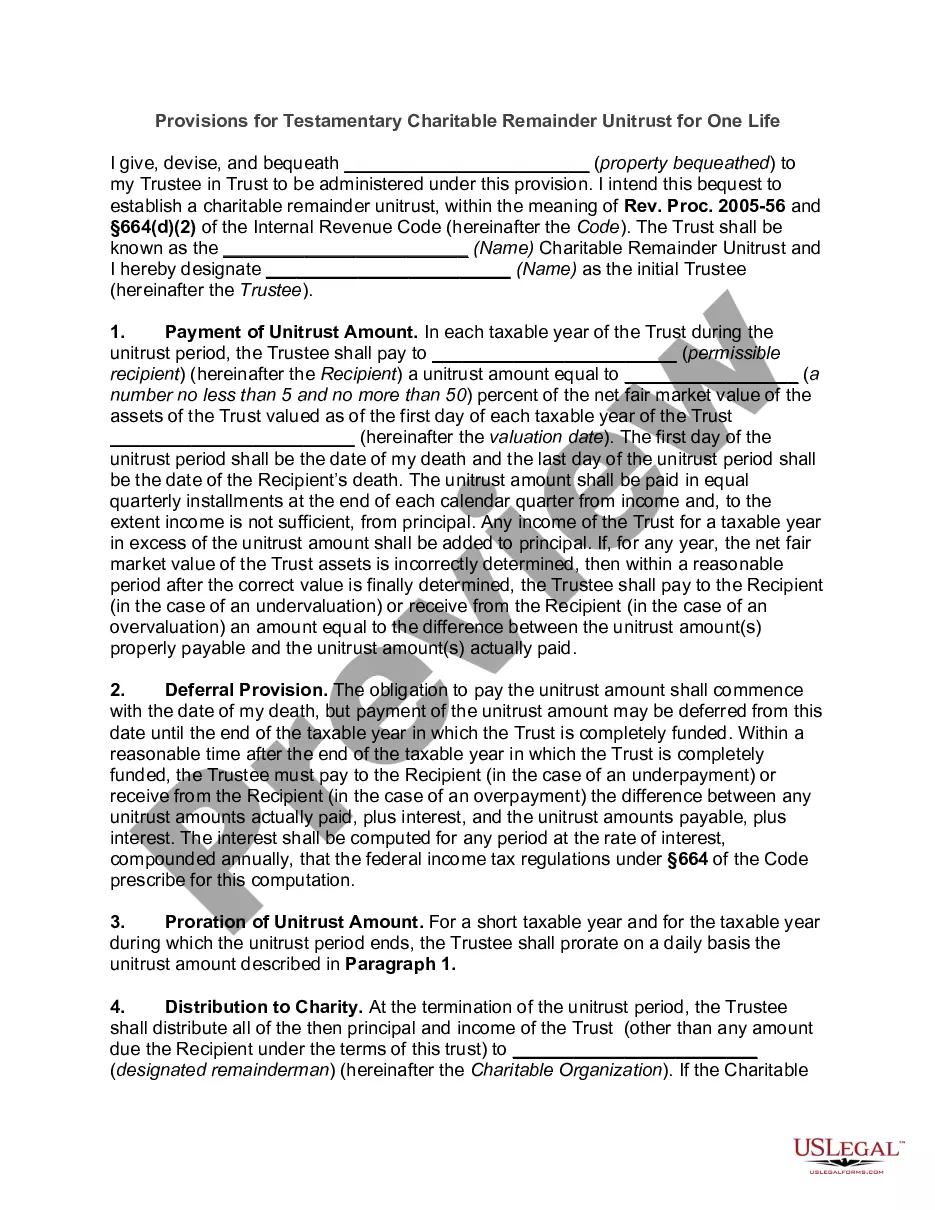
Get your form ready online
Our built-in tools help you complete, sign, share, and store your documents in one place.
Make edits, fill in missing information, and update formatting in US Legal Forms—just like you would in MS Word.
Download a copy, print it, send it by email, or mail it via USPS—whatever works best for your next step.
Sign and collect signatures with our SignNow integration. Send to multiple recipients, set reminders, and more. Go Premium to unlock E-Sign.
If this form requires notarization, complete it online through a secure video call—no need to meet a notary in person or wait for an appointment.
We protect your documents and personal data by following strict security and privacy standards.

Make edits, fill in missing information, and update formatting in US Legal Forms—just like you would in MS Word.

Download a copy, print it, send it by email, or mail it via USPS—whatever works best for your next step.

Sign and collect signatures with our SignNow integration. Send to multiple recipients, set reminders, and more. Go Premium to unlock E-Sign.

If this form requires notarization, complete it online through a secure video call—no need to meet a notary in person or wait for an appointment.

We protect your documents and personal data by following strict security and privacy standards.
Looking for another form?




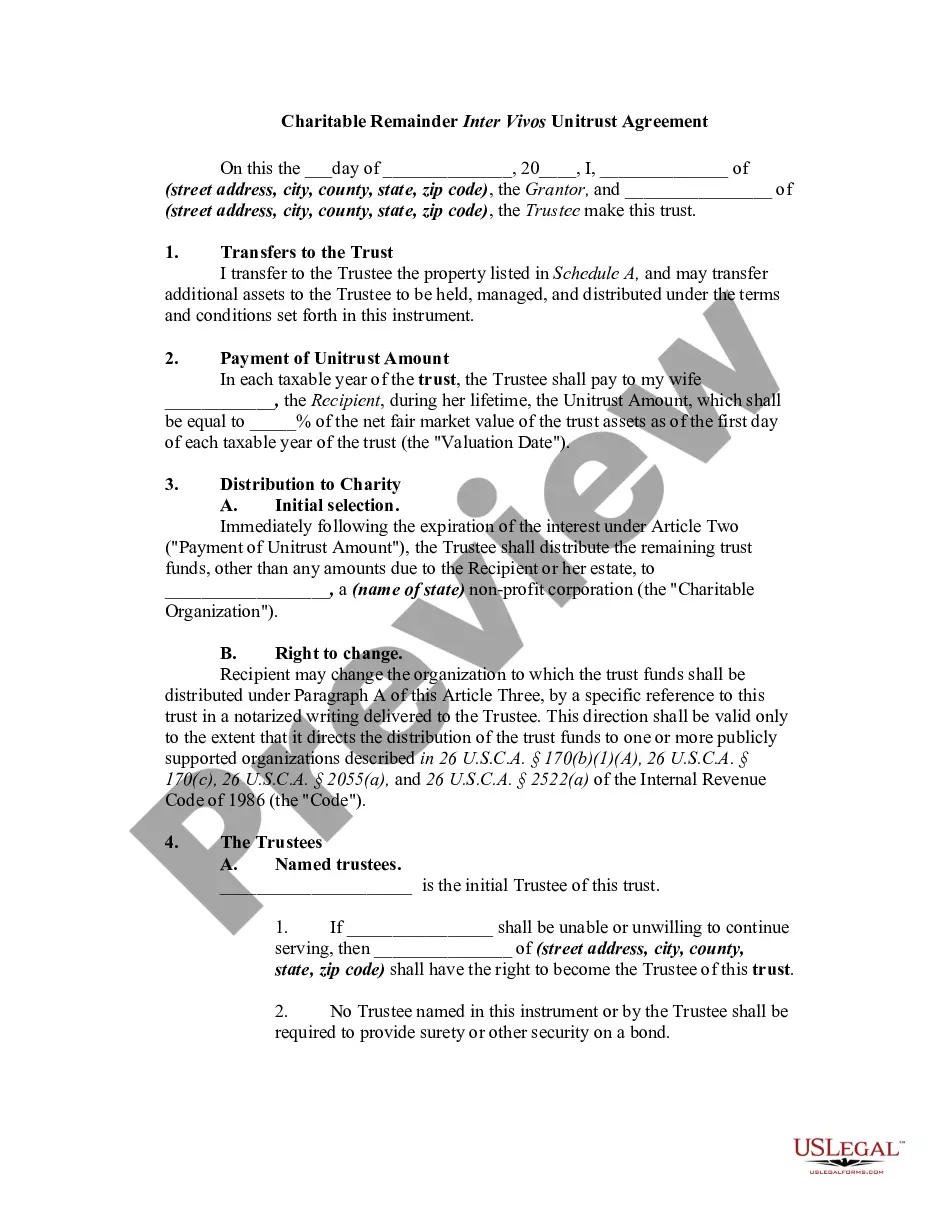
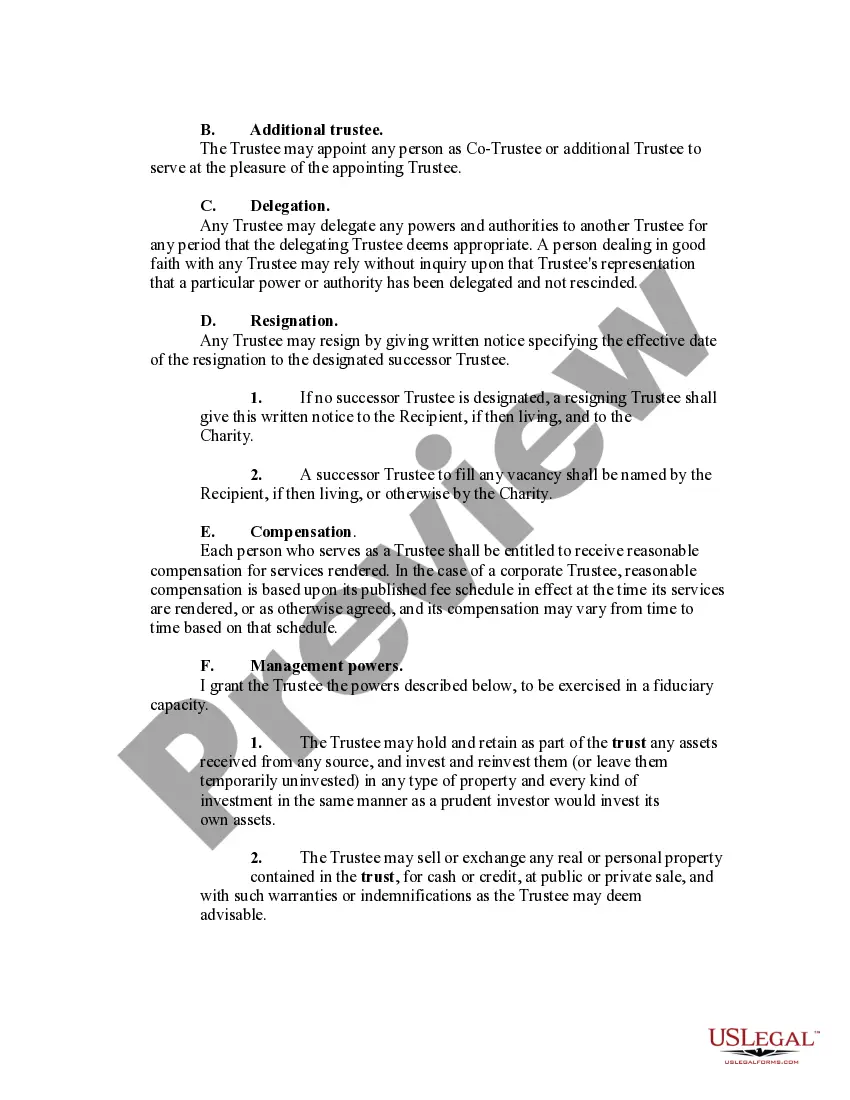
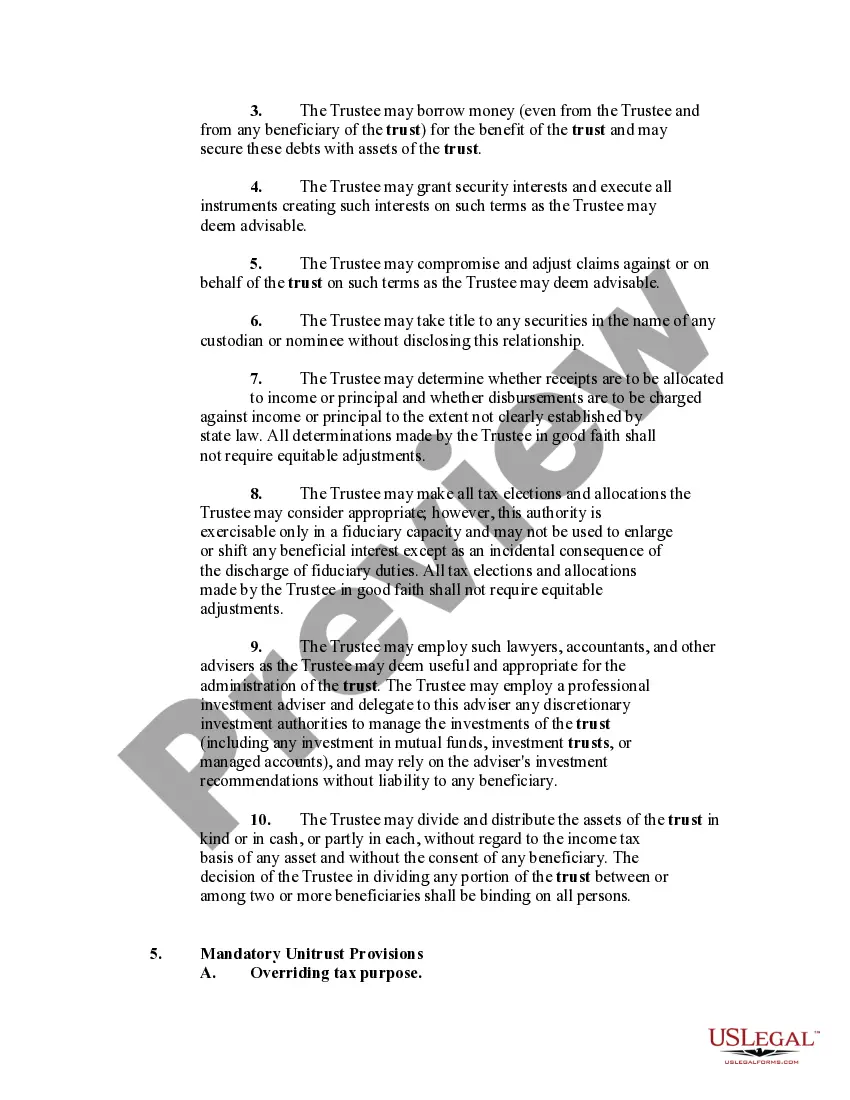
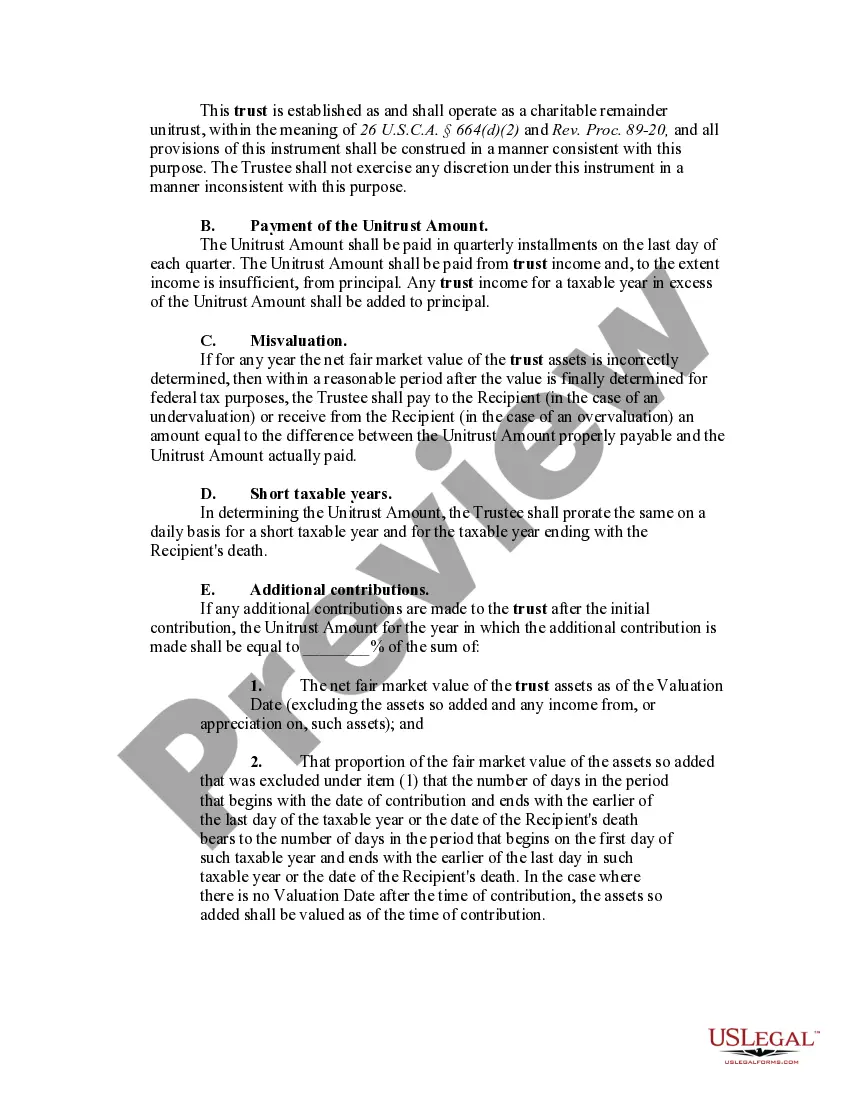
How to fill out Charitable Remainder Inter Vivos Unitrust Agreement?
- If you are already a member, simply log in to your account and download the form template you need. Ensure that your subscription is active; renew if necessary.
- For first-time users, start by browsing the Preview mode and form descriptions to identify the correct document that fits your requirements.
- If you need to refine your search, utilize the Search tab to locate any additional templates that might better serve your needs.
- Once you've identified the right form, click the Buy Now button and select your preferred subscription plan. You will need to create an account to gain access to the full library.
- Complete your transaction by entering your payment details or using your PayPal account to finalize your subscription.
- Finally, download your form and save it on your device. You can access your templates anytime from the My Forms section of your profile.
In conclusion, US Legal Forms offers a simplified approach to obtaining legal documents, making it an invaluable resource for both individuals and legal professionals. Their extensive library and expert assistance ensure that you have the support you need to create legally sound documents.
Take the next step towards securing your legal needs by visiting US Legal Forms today!
Form popularity
FAQ
In general, you may need to file a gift tax return when you make substantial contributions to a charitable remainder trust. This applies when the contributions exceed the annual gift tax exclusion limit. Understanding your obligations can seem daunting, but tools available through uslegalforms can make the process clearer. Using a remainder inter vivos trust can provide you with tax benefits while supporting your chosen charity.
To form a charitable remainder trust, start by identifying the assets you wish to place into the trust. Next, create a formal trust document specifying the trust’s terms, including beneficiaries and the charitable organization involved. Consulting uslegalforms provides templates and resources that make this process smoother, helping you create a remainder inter vivos trust that fulfills your financial and charitable goals.
Yes, an inter vivos trust typically needs to file a tax return. Depending on its structure, it may need to file IRS Form 1041 if it generates income over a certain threshold. This requirement can often confuse many, but understanding your tax obligations is crucial. When dealing with a remainder inter vivos trust, relying on uslegalforms can help you navigate these tax responsibilities efficiently.
To establish a charitable remainder trust, you need to meet specific requirements. First, the trust must provide for a charitable organization to receive a specified portion of the trust's assets upon termination. Additionally, you must assign a clear beneficiary, who can be an individual or an entity. If you are looking to create a remainder inter vivos trust, consider using uslegalforms to simplify the process and ensure compliance with all legal requirements.
To use a charitable remainder annuity trust (CRAT), you first determine the assets you wish to transfer into the trust. You then establish the terms, such as the fixed payout amount and the duration of the trust. By doing so, you not only receive regular income, but you also derive tax advantages. This strategy fits well with a remainder inter vivos trust buy for you, enhancing your estate plans while providing for charitable causes.
A charitable remainder annuity trust (CRAT) pays a fixed annual amount to the beneficiaries for a specified term or until their death. The CRAT can provide a steady income stream, making it beneficial for donors who need predictable returns. Upon termination, the remaining trust assets go to the designated charities. This can work hand-in-hand with a remainder inter vivos trust buy for you, offering financial and charitable benefits.
An example of a charitable remainder unitrust (CRUT) could involve a donor transferring appreciated securities into the trust. The CRUT pays out a fixed percentage of the trust value annually to the donor or designated beneficiaries. Upon the donor's passing, the remaining assets in the trust are distributed to the chosen charity. This scenario illustrates how a remainder inter vivos trust buy for you can integrate seamlessly into your charitable planning.
To set up a charitable remainder unitrust (CRUT), you begin by defining the trust terms, including the income percentage and the beneficiaries. Next, you will need to draft the trust document, which often requires legal assistance. Finally, transfer your chosen assets into the CRUT. This approach can be a strategic choice for those looking to combine charitable giving with a remainder inter vivos trust buy for you.
A grantor retained annuity trust (GRAT) allows you to transfer assets to beneficiaries while retaining an annuity payment for yourself. For instance, if you set up a GRAT with real estate, you receive rental income while the property appreciates. Once the trust term ends, the remaining value passes on to your beneficiaries without significant gift tax. This strategy can effectively complement a remainder inter vivos trust buy for you, allowing for effective estate planning.
While inter vivos trusts offer numerous benefits, they also come with certain disadvantages, such as setup costs and ongoing management requirements. Some may find the need to transfer assets into the trust cumbersome, which can be an additional burden. Additionally, a revocable trust may not provide asset protection from creditors. Evaluating a remainder inter vivos trust buy for you can help mitigate these issues while securing your financial future.