Remainder Inter Vivos Trust Buy For The Future
Description
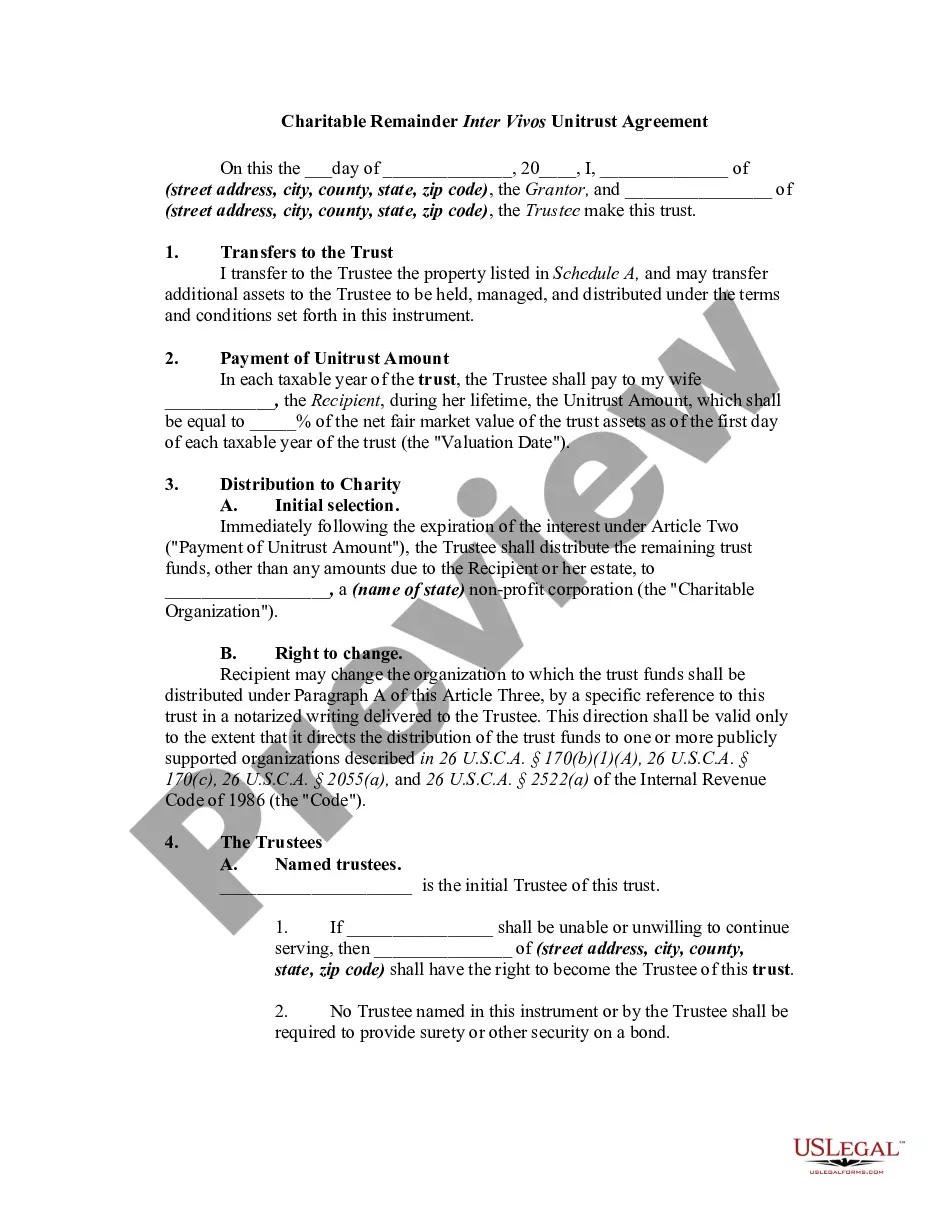
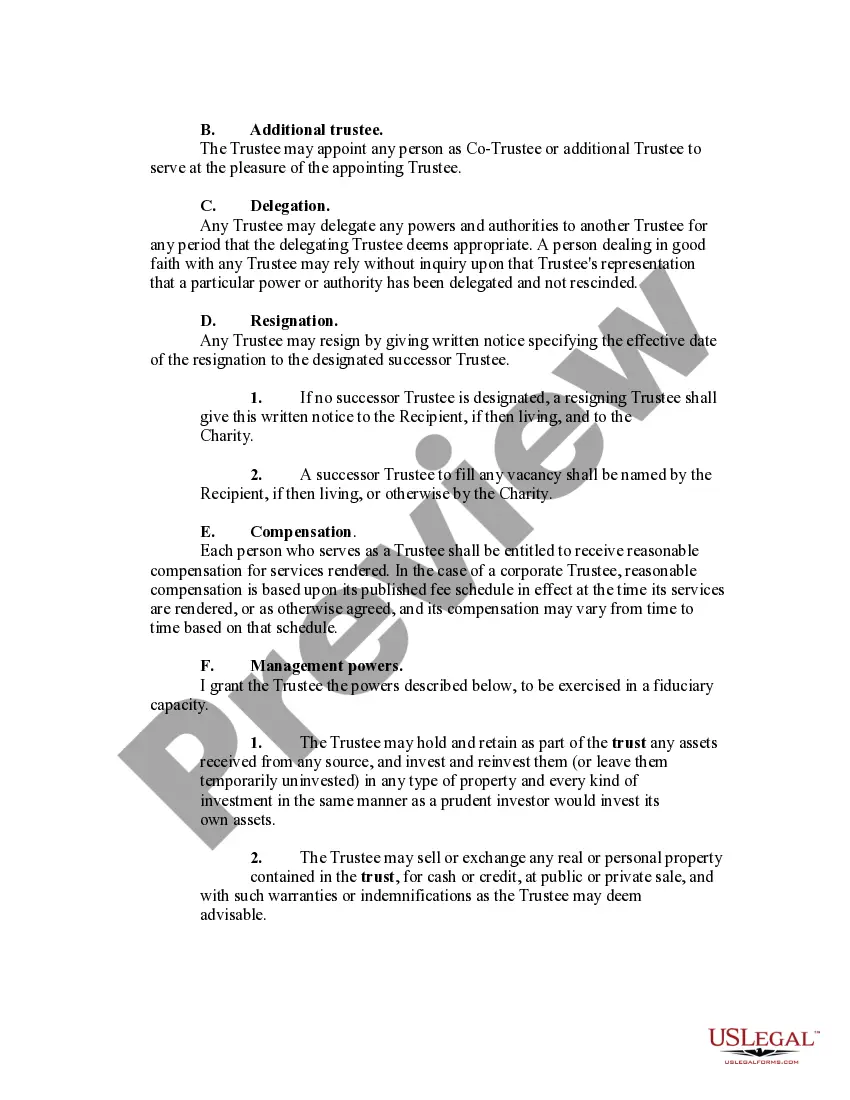
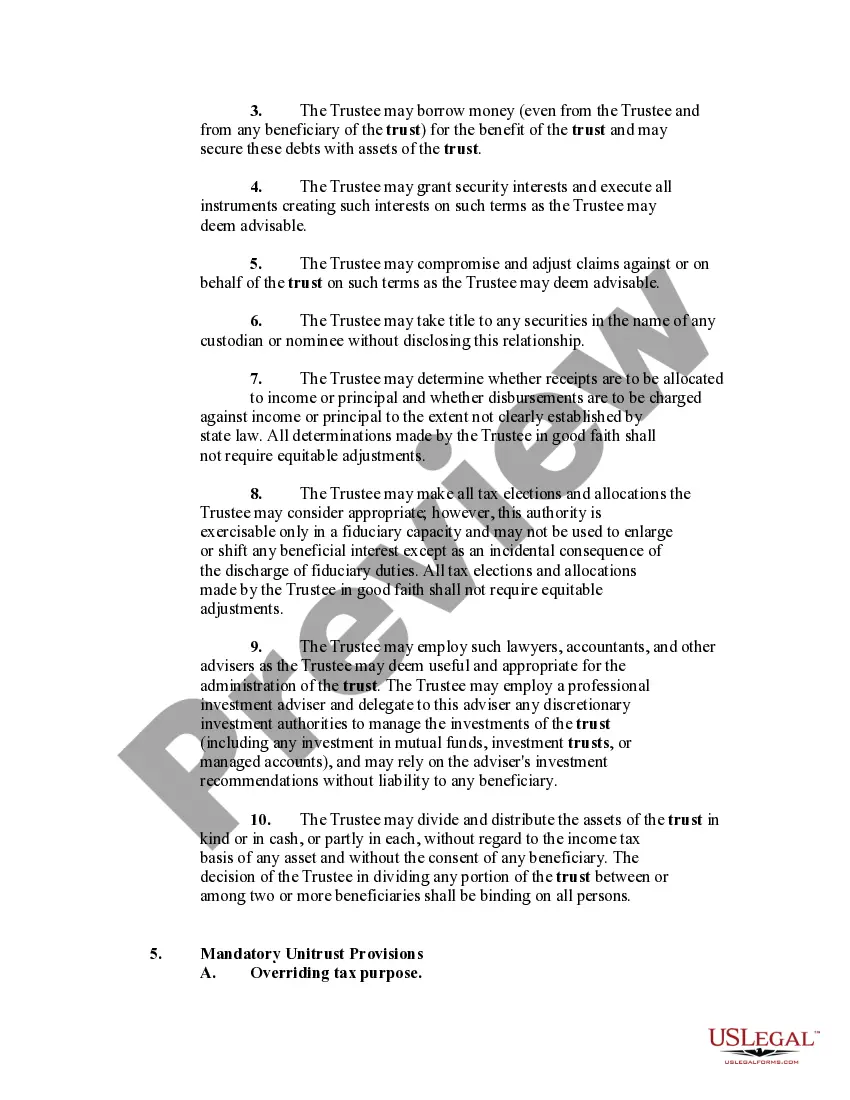
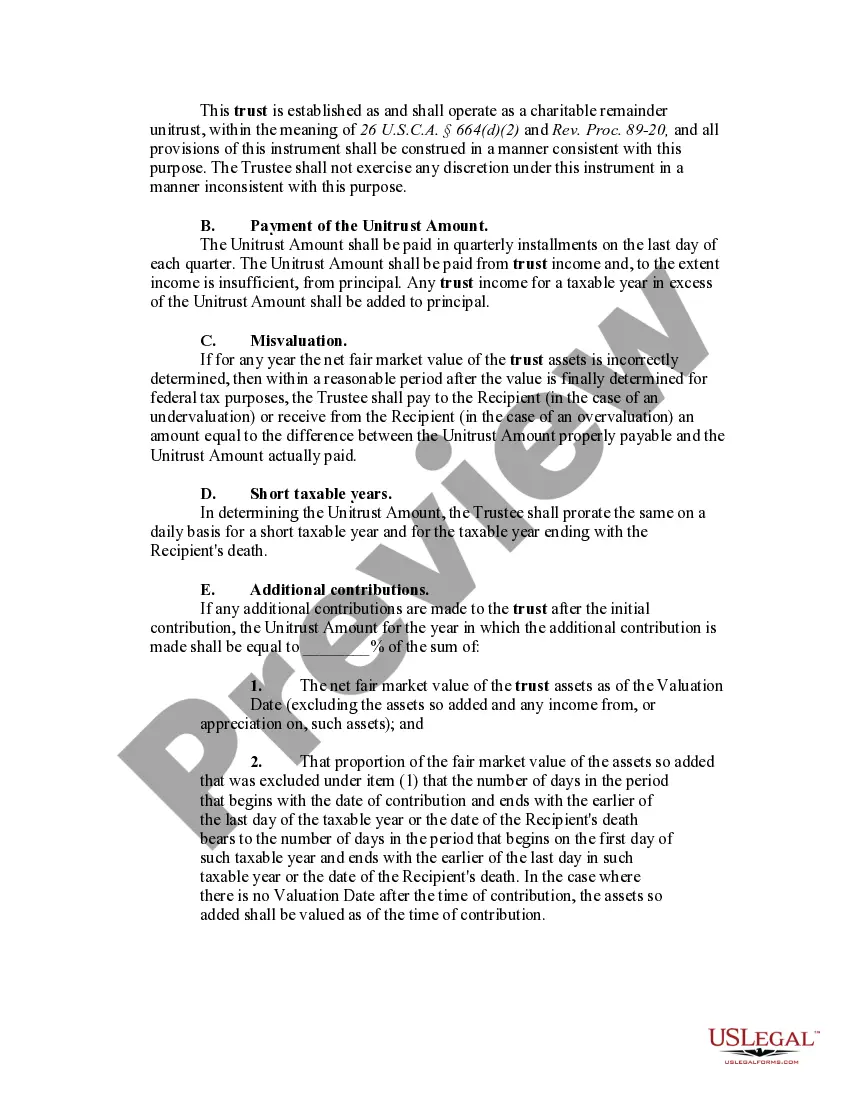
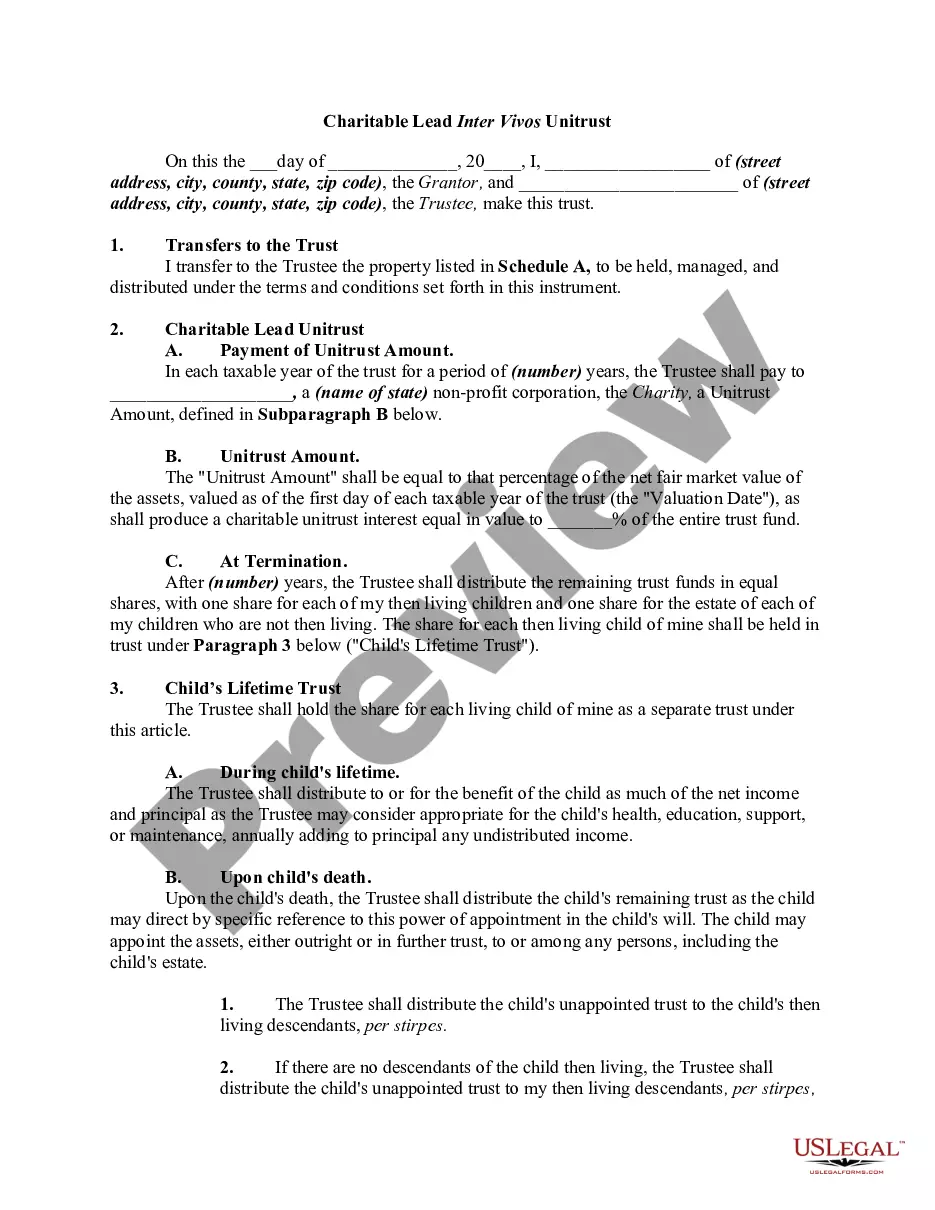
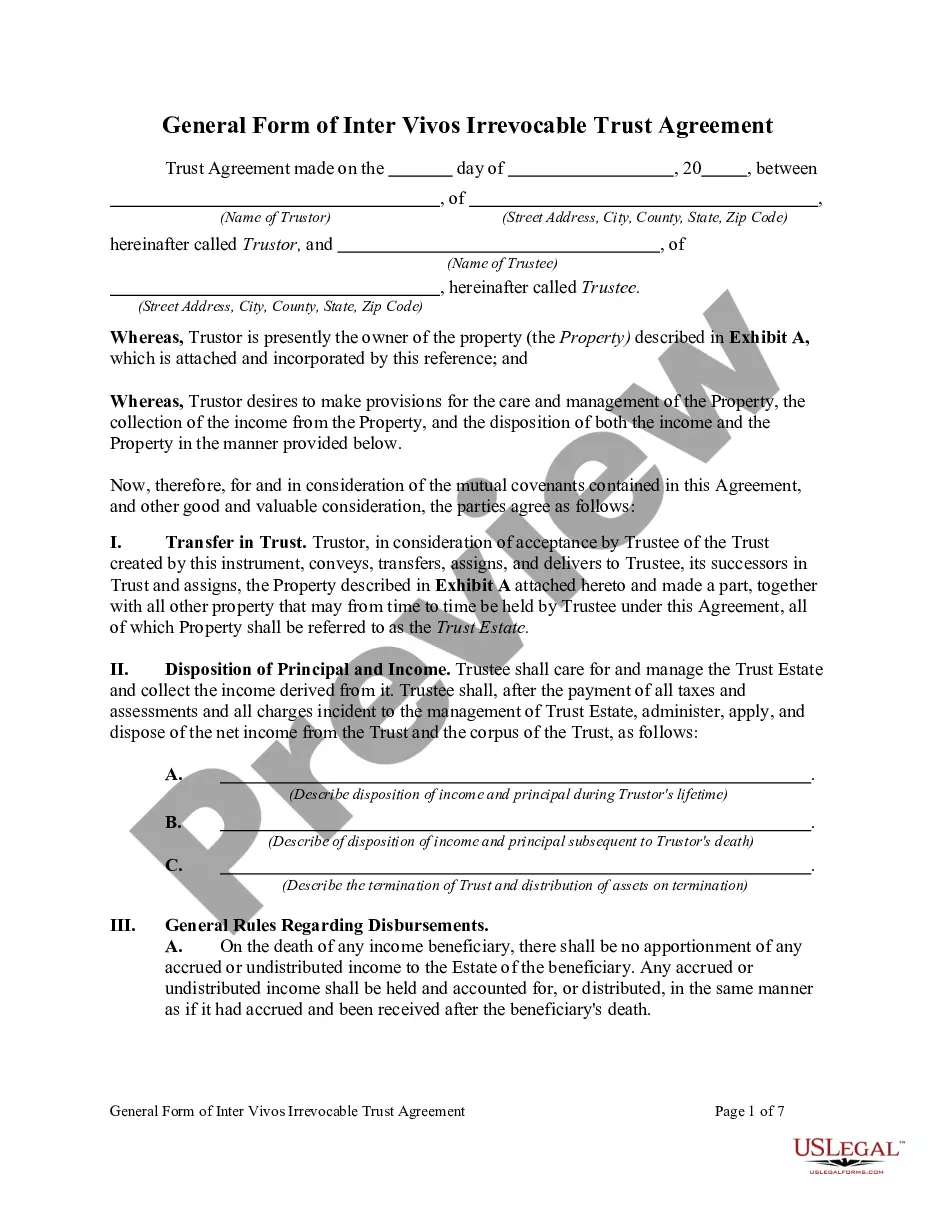
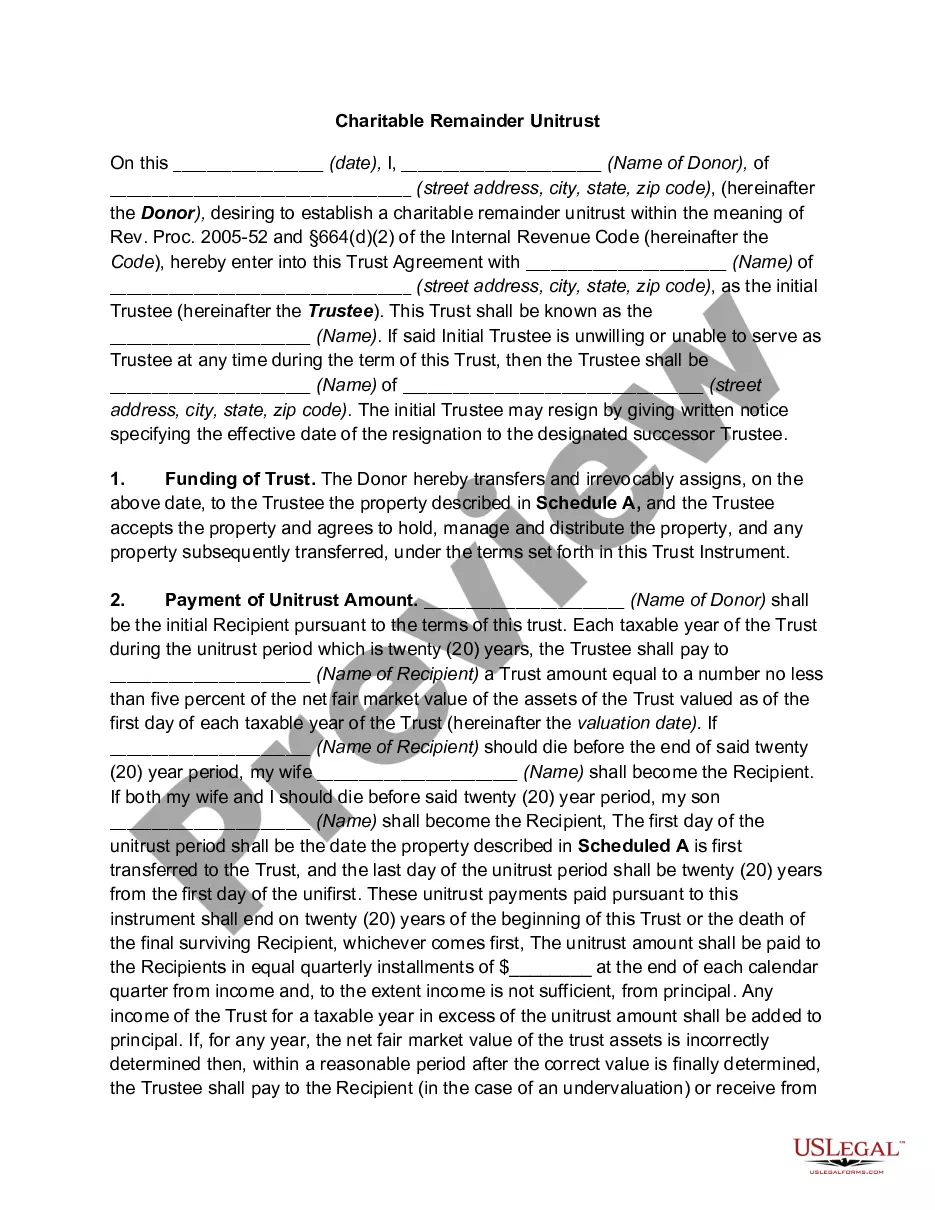
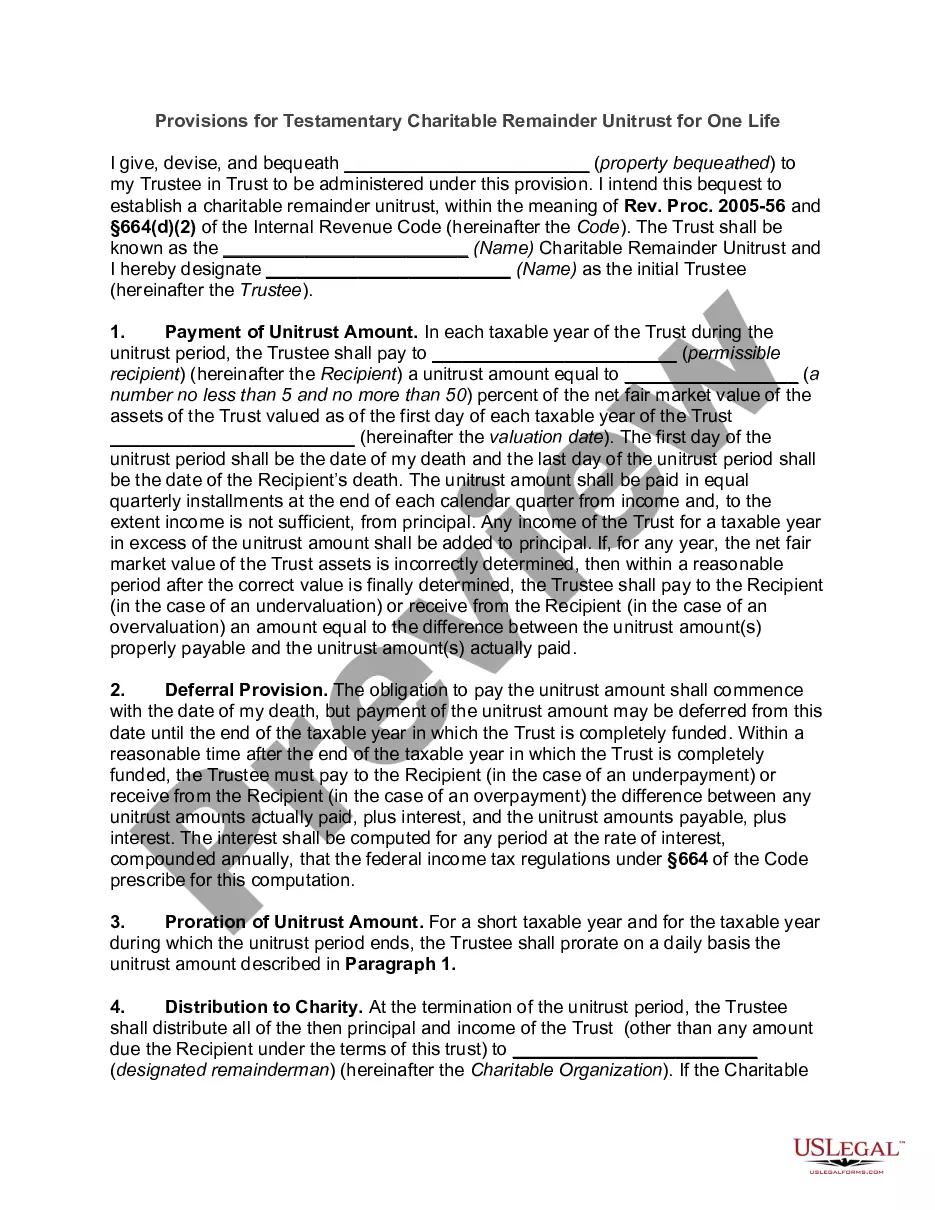
Get your form ready online
Our built-in tools help you complete, sign, share, and store your documents in one place.
Make edits, fill in missing information, and update formatting in US Legal Forms—just like you would in MS Word.
Download a copy, print it, send it by email, or mail it via USPS—whatever works best for your next step.
Sign and collect signatures with our SignNow integration. Send to multiple recipients, set reminders, and more. Go Premium to unlock E-Sign.
If this form requires notarization, complete it online through a secure video call—no need to meet a notary in person or wait for an appointment.
We protect your documents and personal data by following strict security and privacy standards.

Make edits, fill in missing information, and update formatting in US Legal Forms—just like you would in MS Word.

Download a copy, print it, send it by email, or mail it via USPS—whatever works best for your next step.

Sign and collect signatures with our SignNow integration. Send to multiple recipients, set reminders, and more. Go Premium to unlock E-Sign.

If this form requires notarization, complete it online through a secure video call—no need to meet a notary in person or wait for an appointment.

We protect your documents and personal data by following strict security and privacy standards.
Looking for another form?






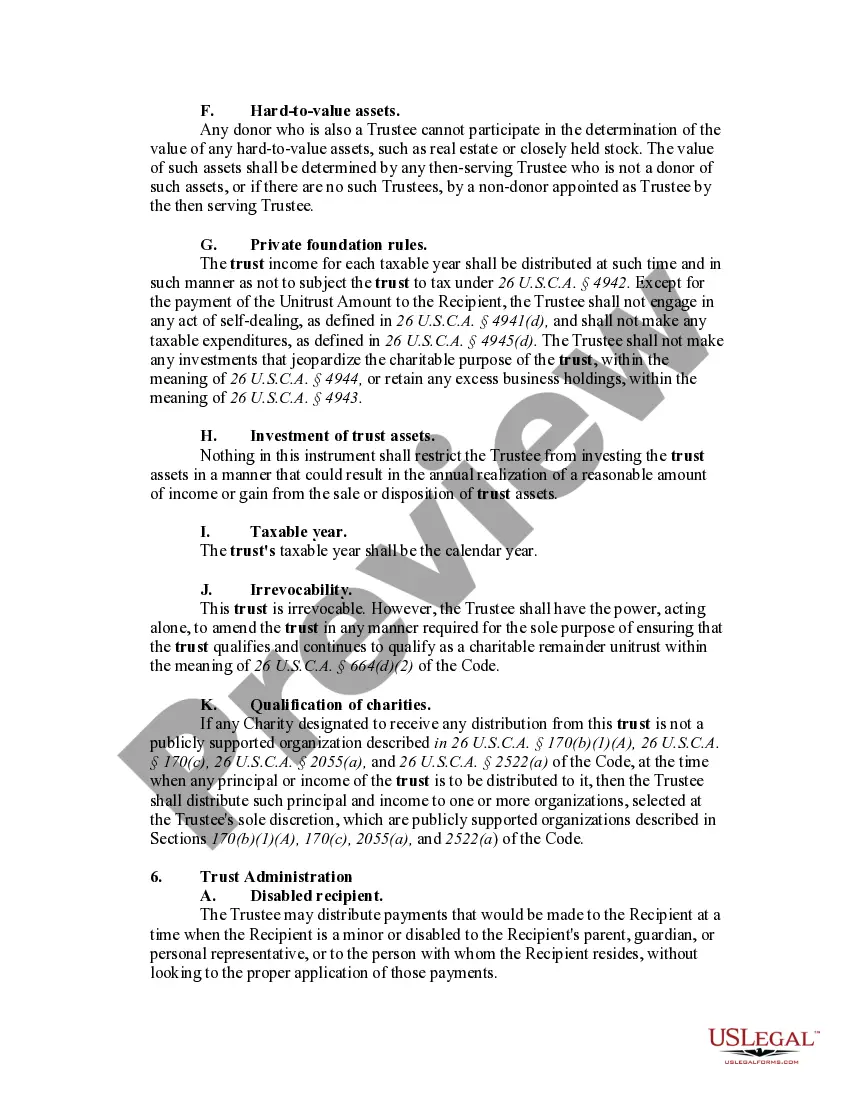
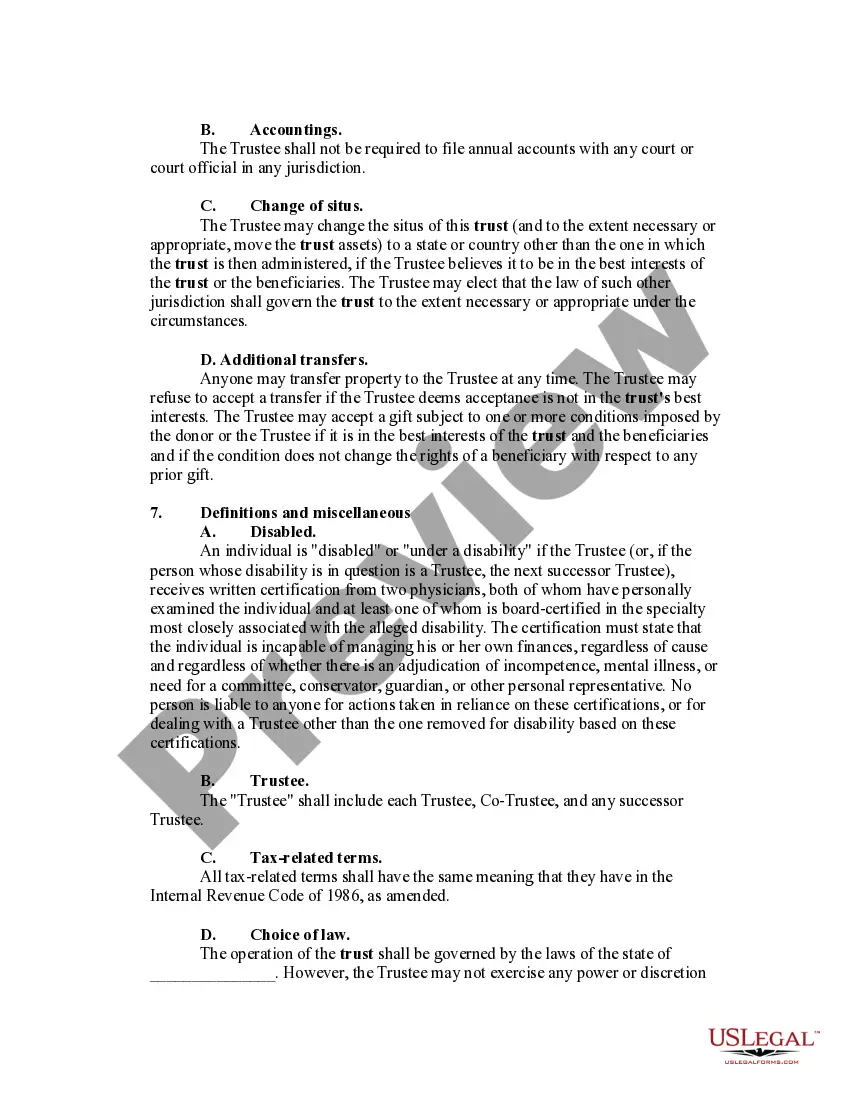
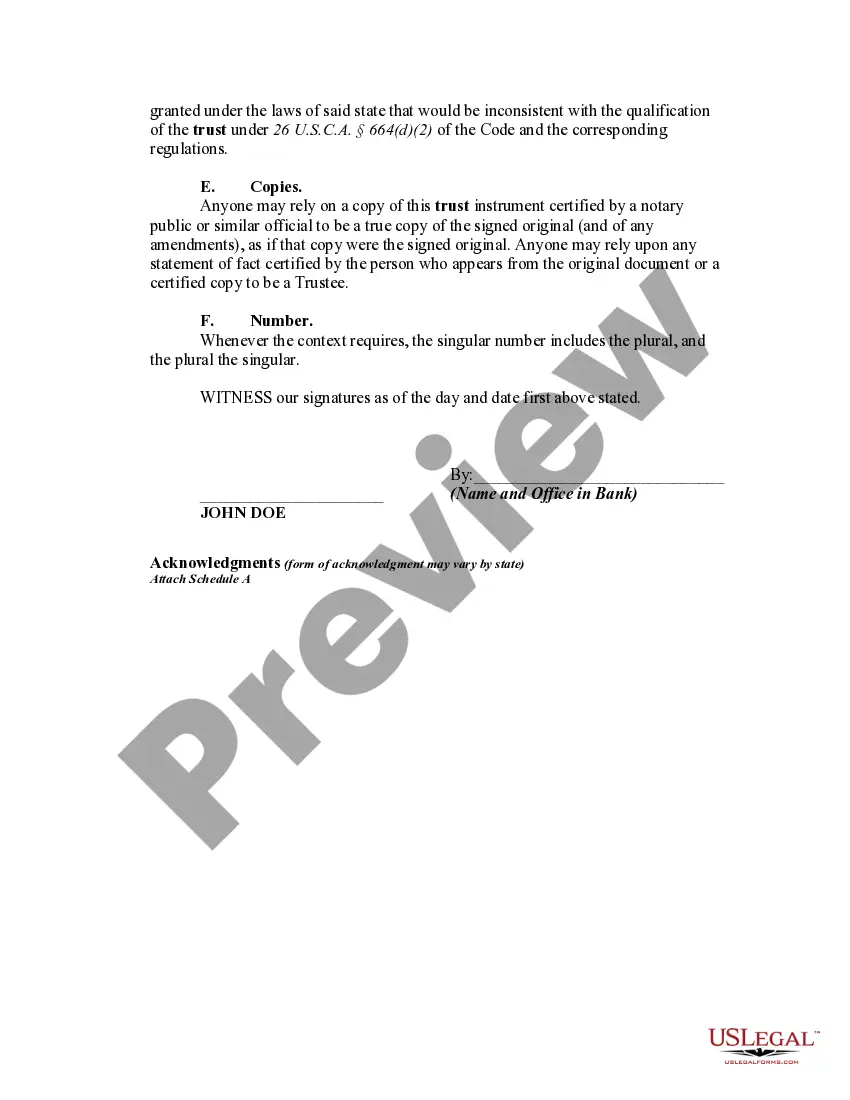
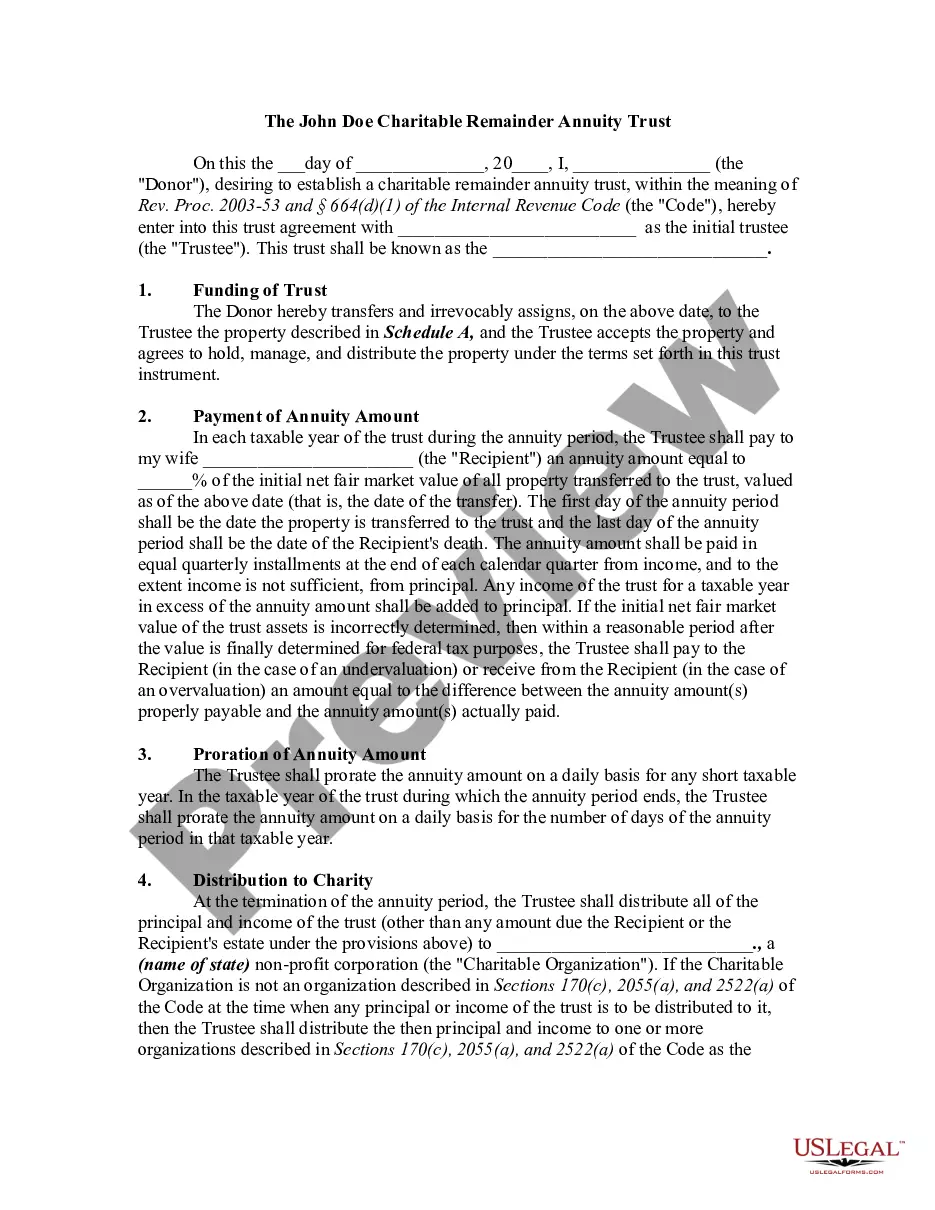
How to fill out Charitable Remainder Inter Vivos Unitrust Agreement?
- If you're a returning customer, log in to download the necessary form onto your device. Ensure your subscription is current, and renew it if required.
- Review the Preview mode and description of the form to verify it meets your specific needs and adheres to local jurisdiction requirements.
- If adjustments are needed, utilize the Search tab to locate any alternate templates that may better suit your needs.
- Purchase the selected document by clicking on the Buy Now button and choose your preferred subscription plan. Create an account to unlock access to the entire library.
- Complete your purchase by entering your payment information via credit card or PayPal.
- Download your form and save it on your device. You can access it anytime from the My Forms section of your profile.
US Legal Forms provides a vast collection of over 85,000 customizable legal forms, empowering you to complete legal documentation with ease. Their platform ensures users receive expert guidance for accurate document preparation.
Start planning for the future today by leveraging US Legal Forms. Your secure and reliable legal solutions are just a click away!
Form popularity
FAQ
Yes, you can create your own charitable remainder trust if you have the right knowledge and resources. It's advisable to consult with a professional who understands the intricacies of estate planning to ensure that your trust meets legal requirements. By doing so, you can establish a remainder inter vivos trust that buys for the future, aligning your financial goals with charitable giving.
Setting up a charitable remainder trust involves several key steps. First, you need to determine the assets you wish to place into the trust. Next, work with an attorney or a financial advisor knowledgeable about estate planning to create legal documents that define the trust terms. This process is essential for a remainder inter vivos trust to buy for the future, as it helps ensure your intentions are legally recognized.
Anyone can set up a charitable remainder trust (CRT), provided they meet certain legal requirements. Typically, individuals who have substantial assets or want to leave a charitable legacy benefit most from establishing a CRT. This option allows you to transform your wealth into a remainder inter vivos trust that buys for the future, ensuring you can support your community while enjoying tax advantages.
A Charitable Remainder Unitrust (CRUT) can indeed last longer than 20 years, depending on how you set it up. While many CRUTs are designed to last for a term of years, some can be structured to continue indefinitely or until the designated beneficiaries pass away. This flexibility allows you to consider how a remainder inter vivos trust buys for the future, as it can provide income for a long time while supporting charitable causes.
Calculating the present value of the remainder interest requires a formula that factors in the payout rate, the duration of the trust, and a discount rate based on IRS tables. By using these calculations, you can understand how much the future interest is worth today. This is vital when planning a remainder inter vivos trust buy for the future as it directly influences both financial and charitable outcomes.
To calculate the charitable deduction for a charitable remainder trust, you must determine the present value of the remainder interest that will go to the charity. This typically involves factoring in the payout rate, trust term, and IRS-prescribed interest rates. By understanding these calculations, you can optimize the benefits of a remainder inter vivos trust buy for the future and maximize your tax deductions.
Another example of a remainder interest can be found when an individual establishes a trust that pays income to themselves for a period and designates a charity to receive the remaining assets after their death. This arrangement allows individuals to enjoy financial benefits throughout their lifetime while still contributing to causes they care about. It’s a practical approach when considering a remainder inter vivos trust buy for the future.
An example of a remainder interest is when a property owner places their home in a trust, allowing a family member to live there for their lifetime. After the family member's passing, the property will transfer to a charity or another designated individual. This showcases how a remainder inter vivos trust buy for the future can fulfill personal and philanthropic goals at the same time.
To value the remainder interest in a trust, you typically use actuarial methods that account for the expected payout and the duration of the trust. This valuation requires considering factors like the life expectancy of the income beneficiary and the anticipated growth of the trust's assets. Accurately valuing the remainder interest is crucial for effective estate planning, especially if you're considering a remainder inter vivos trust buy for the future.
The 5% rule for a charitable remainder trust indicates that the annual payout to beneficiaries must be at least 5% of the trust's value, as determined at the beginning of the trust's term. This rule ensures that charitable organizations receive a designated amount while still offering financial benefits to the income beneficiaries. Employing a remainder inter vivos trust buy for the future can help uphold this standard, creating a win-win for you and your chosen charities.