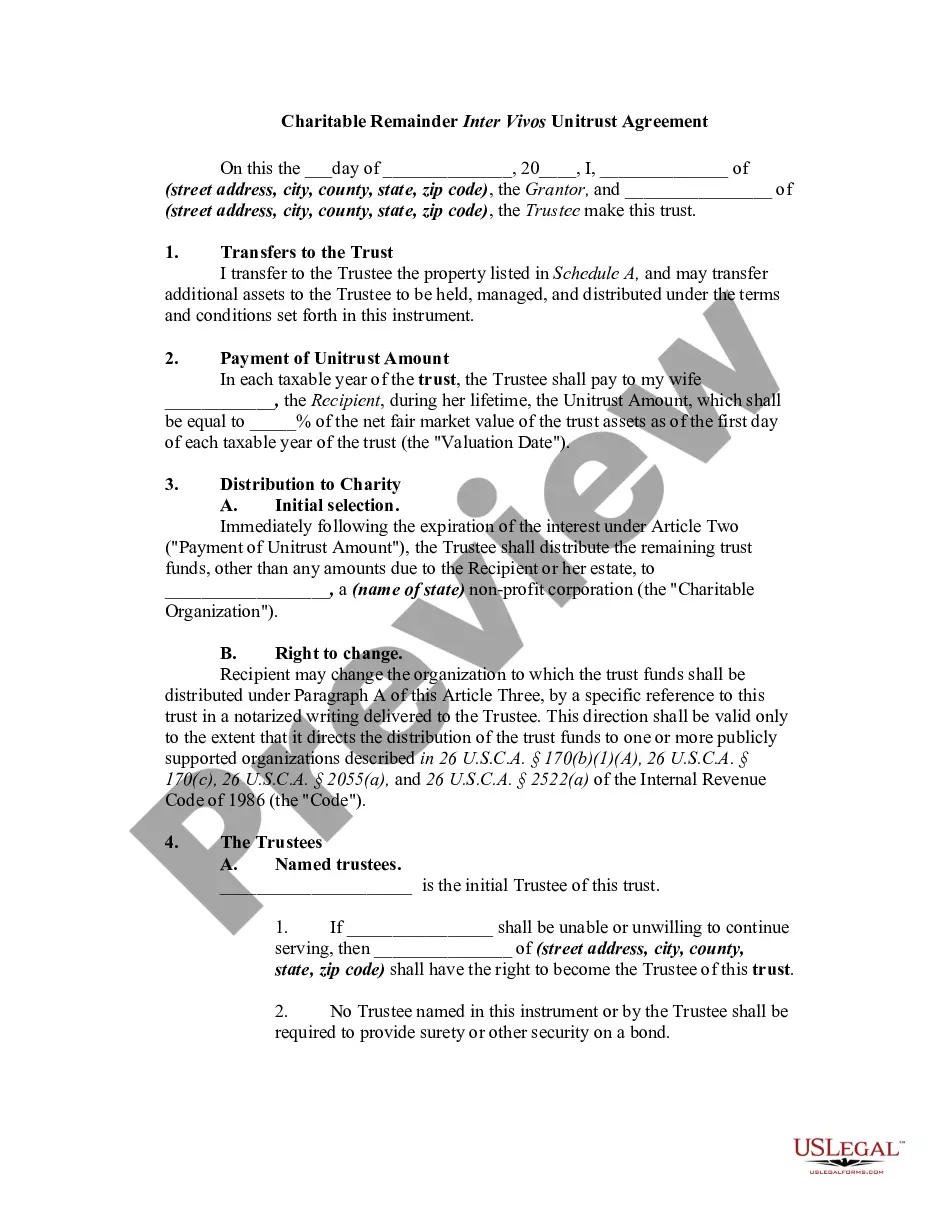
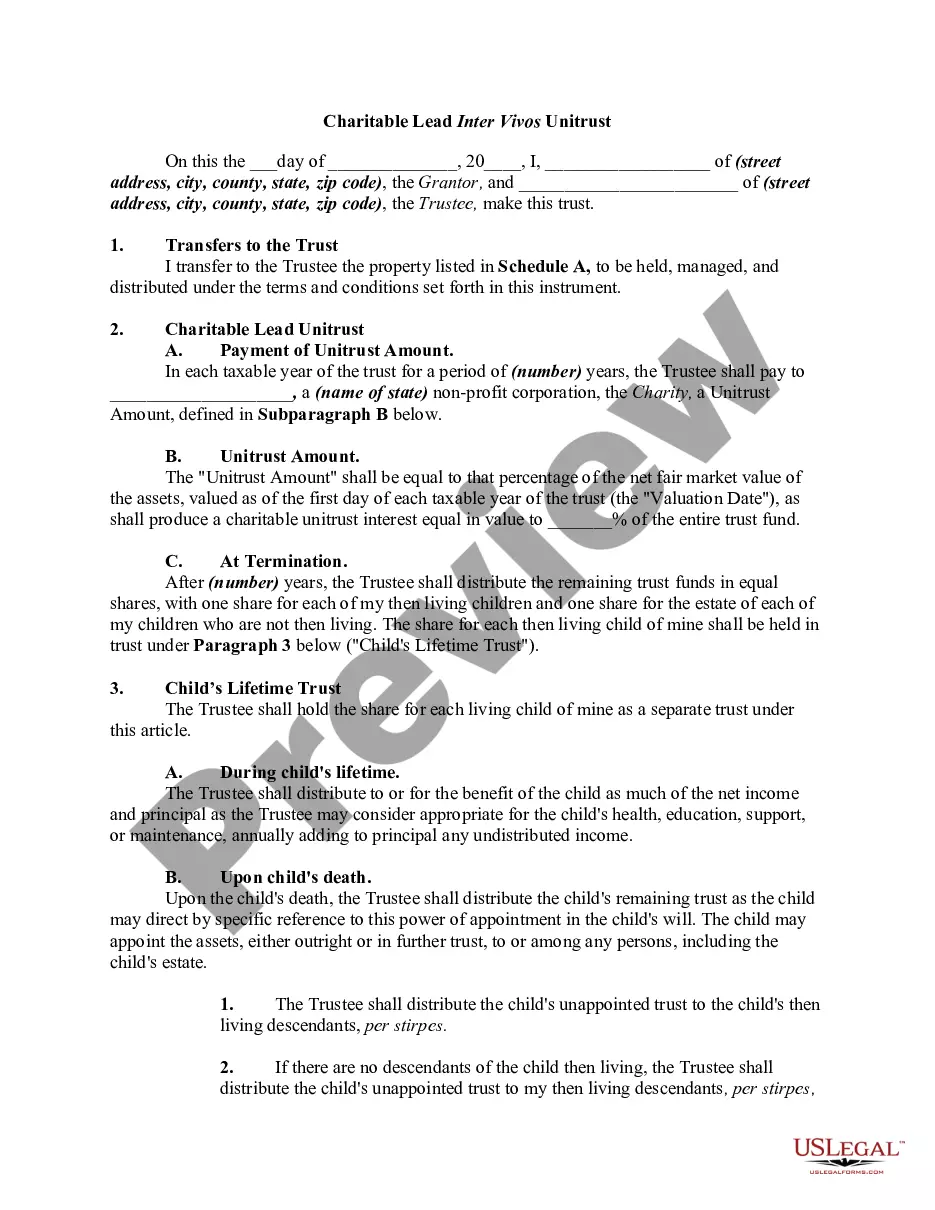
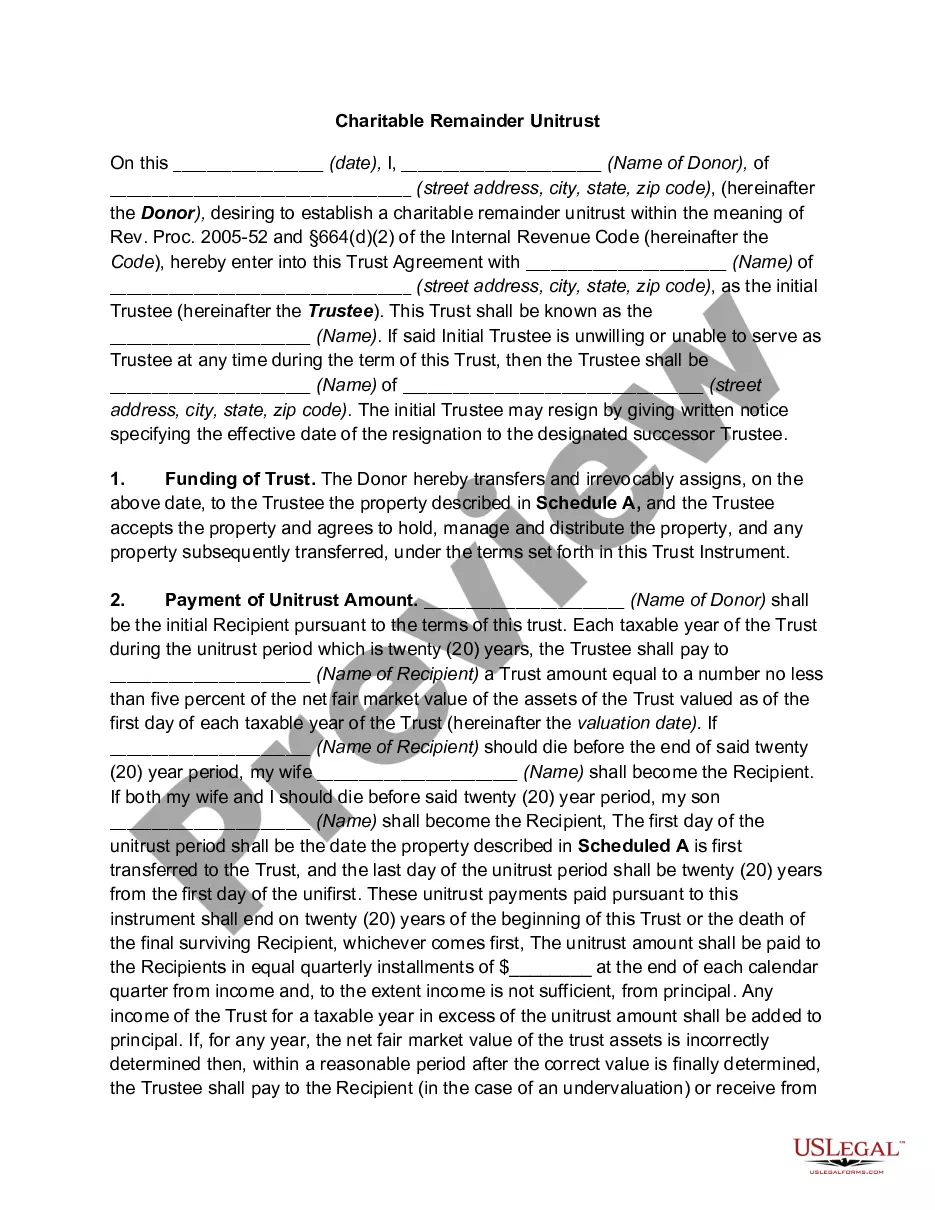
Charitable Unitrust Trust Blank For The Bank
Description
Get your form ready online
Our built-in tools help you complete, sign, share, and store your documents in one place.
Make edits, fill in missing information, and update formatting in US Legal Forms—just like you would in MS Word.
Download a copy, print it, send it by email, or mail it via USPS—whatever works best for your next step.
Sign and collect signatures with our SignNow integration. Send to multiple recipients, set reminders, and more. Go Premium to unlock E-Sign.
If this form requires notarization, complete it online through a secure video call—no need to meet a notary in person or wait for an appointment.
We protect your documents and personal data by following strict security and privacy standards.

Make edits, fill in missing information, and update formatting in US Legal Forms—just like you would in MS Word.

Download a copy, print it, send it by email, or mail it via USPS—whatever works best for your next step.

Sign and collect signatures with our SignNow integration. Send to multiple recipients, set reminders, and more. Go Premium to unlock E-Sign.

If this form requires notarization, complete it online through a secure video call—no need to meet a notary in person or wait for an appointment.

We protect your documents and personal data by following strict security and privacy standards.
Looking for another form?







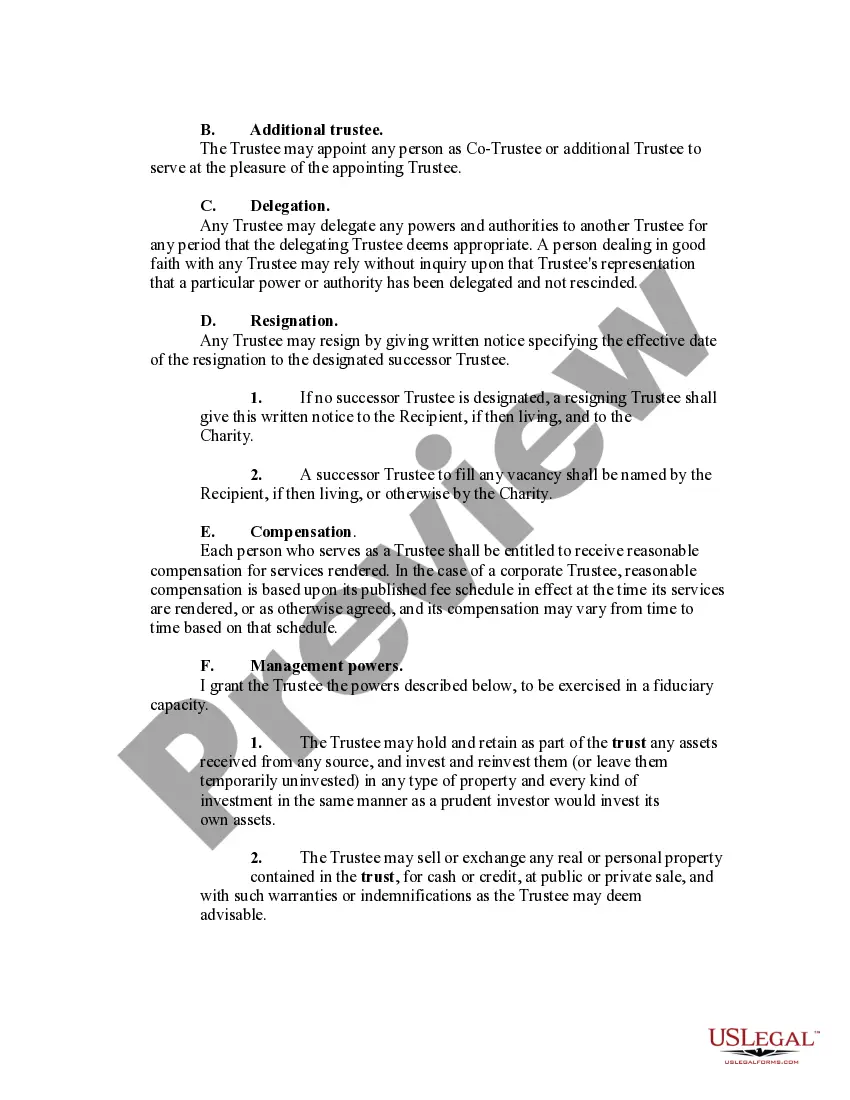
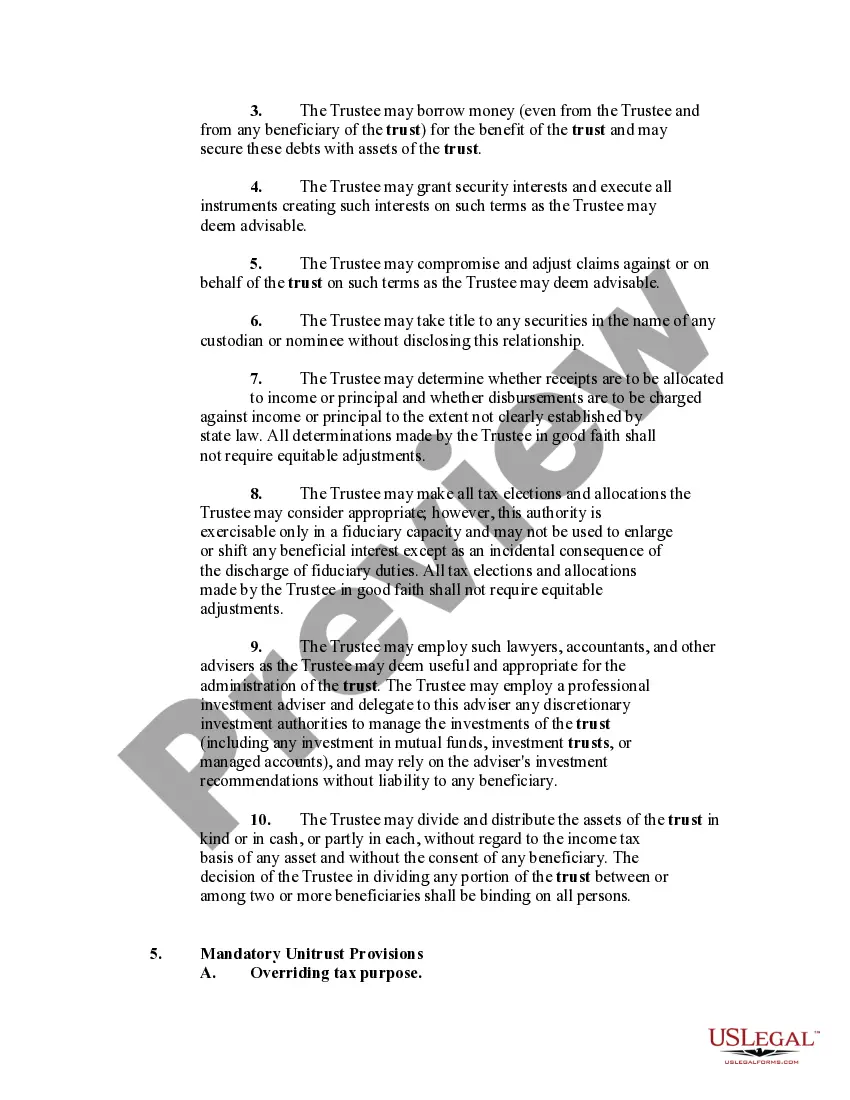
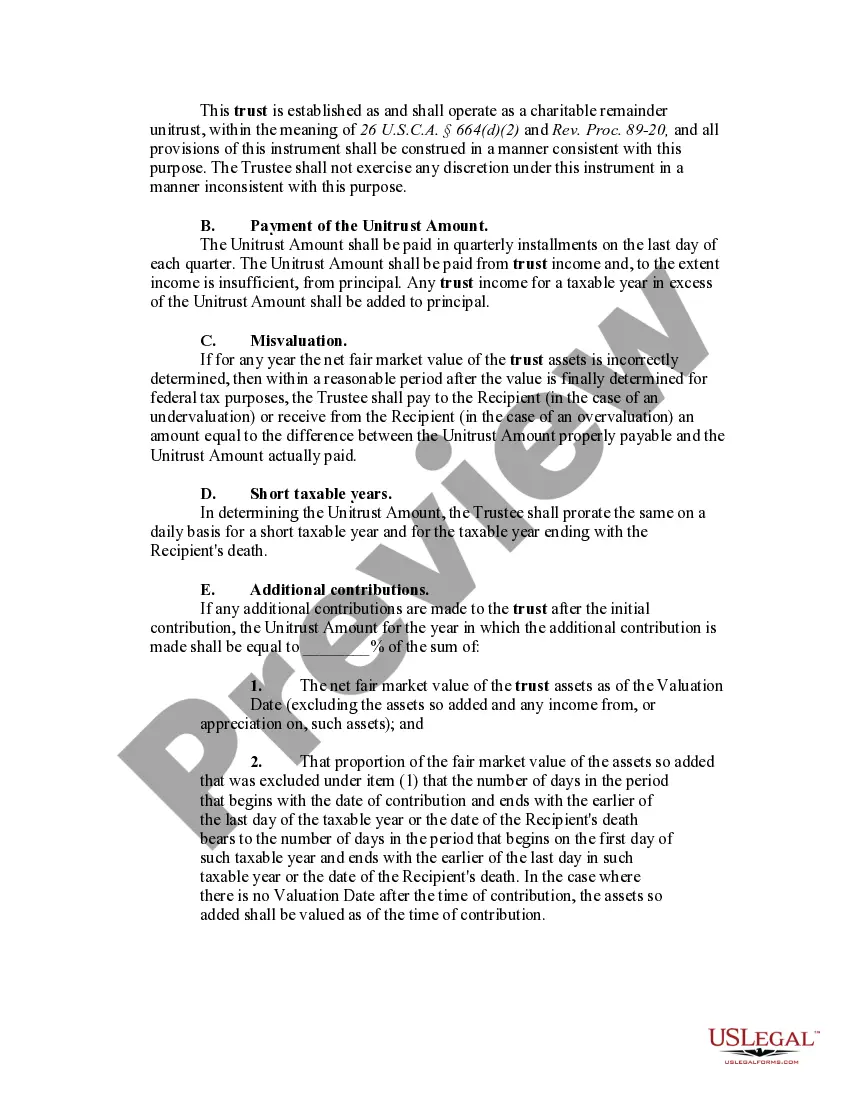
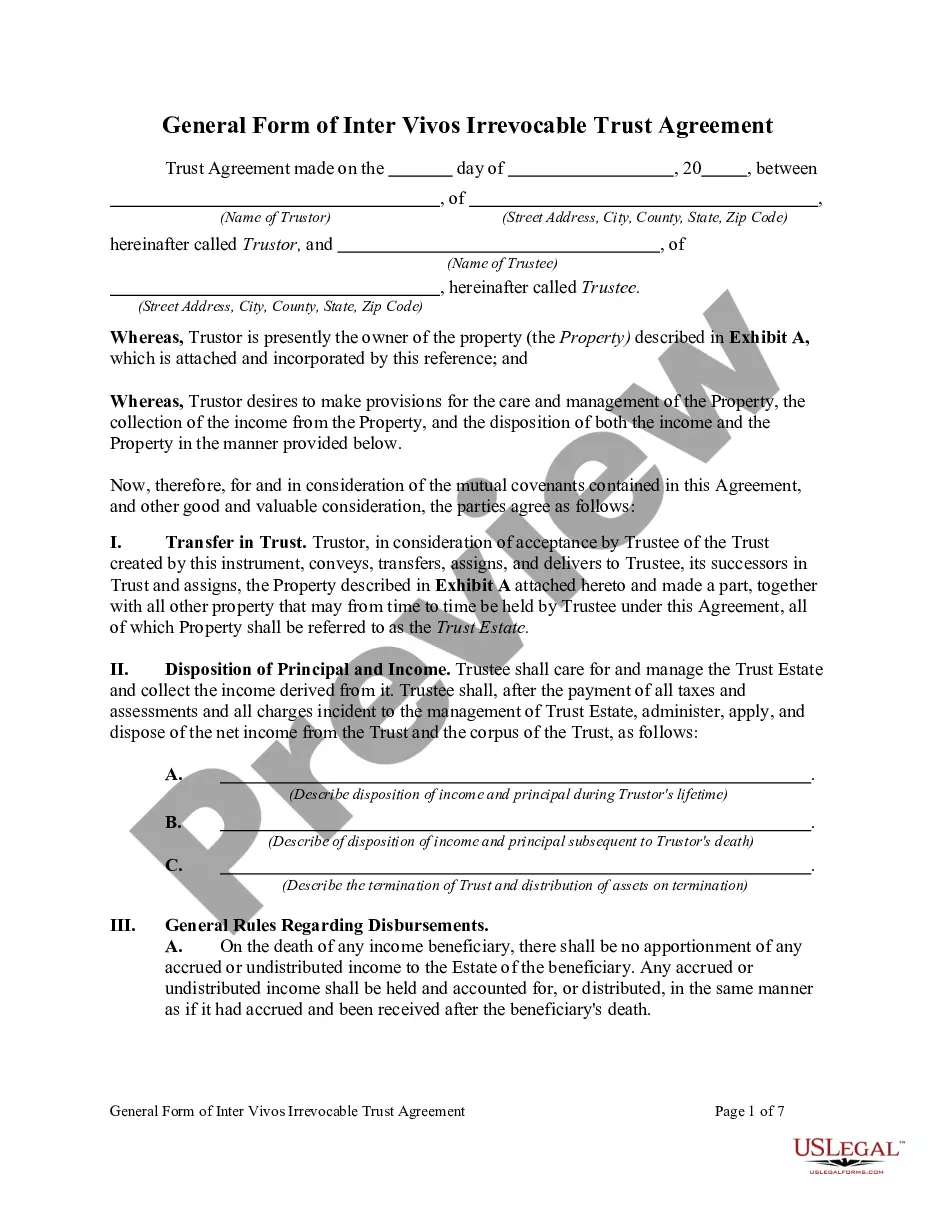
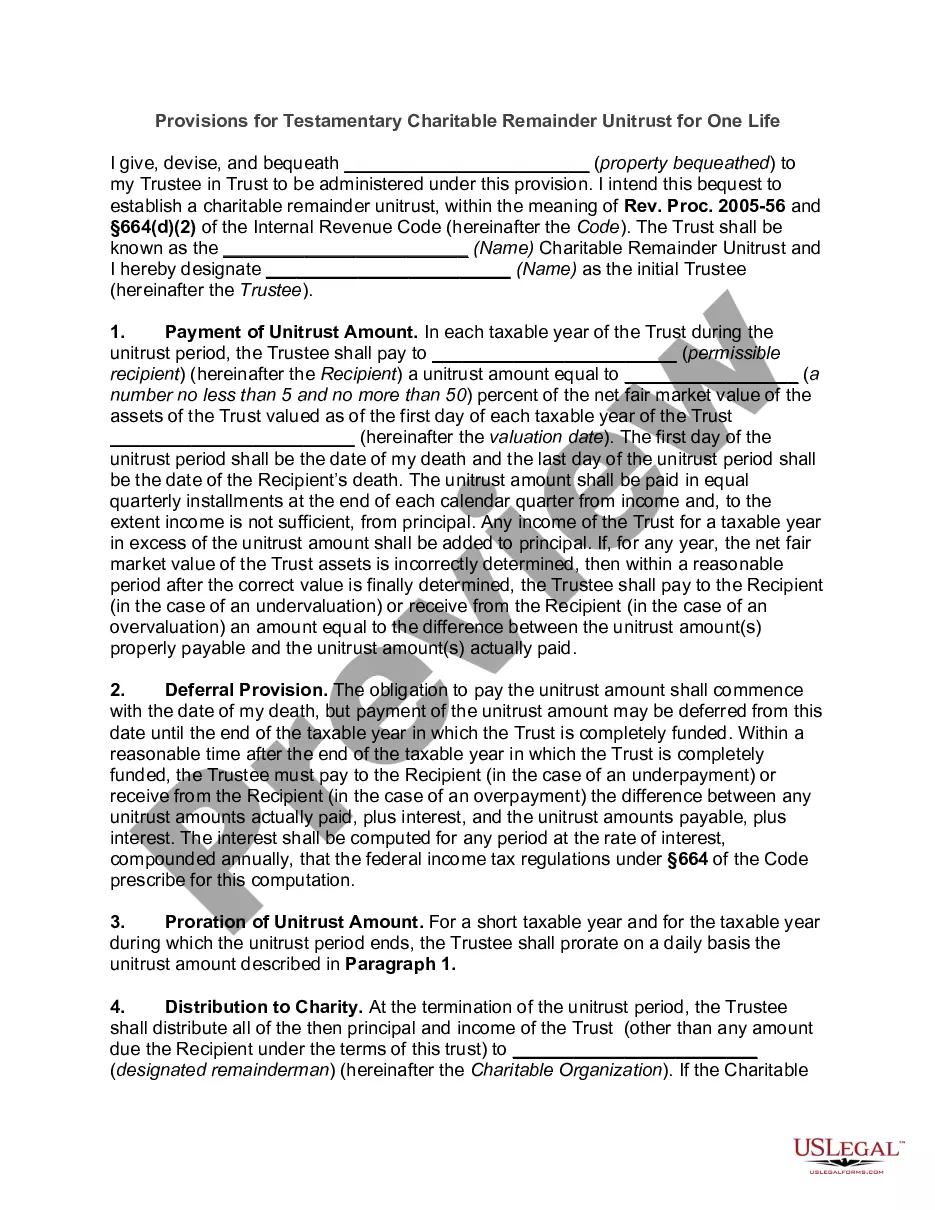
How to fill out Charitable Remainder Inter Vivos Unitrust Agreement?
- Log into your US Legal Forms account. Ensure your subscription is active; if not, renew it as per your selected payment plan.
- Browse using the Preview mode to review the form descriptions and confirm it aligns with your requirements and local laws.
- If the form is incorrect, utilize the Search tab to find an appropriate template that meets your criteria.
- Select the Buy Now option for the document and choose your subscription plan, registering for an account if you need library access.
- Finalize your purchase by entering your credit card information or using your PayPal account.
- Download the completed form to your device for editing and saving; you can easily access it later in the My Forms section of your profile.
Following these steps ensures that you obtain the necessary form with ease and accuracy. US Legal Forms provides an extensive collection of over 85,000 customizable legal documents, making it a valuable resource for individuals and attorneys alike.
Start today by visiting US Legal Forms and ensure your estate planning needs are met efficiently!
Form popularity
FAQ
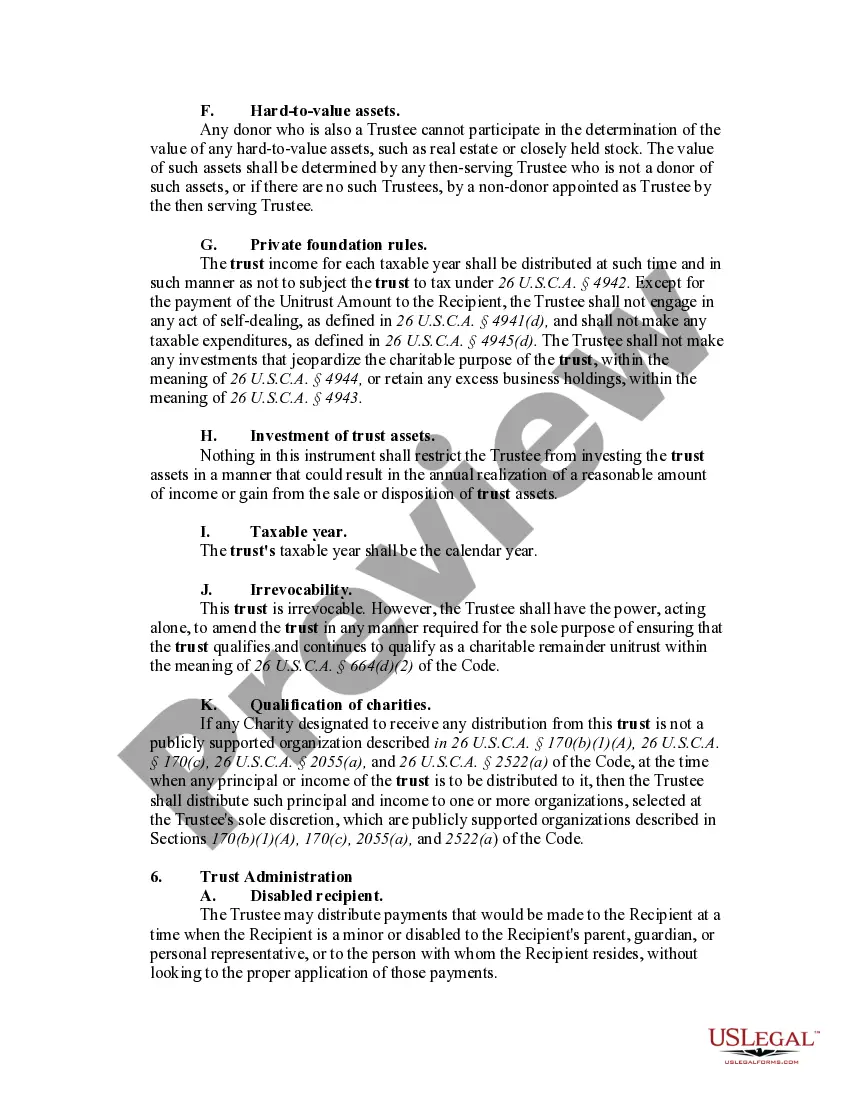
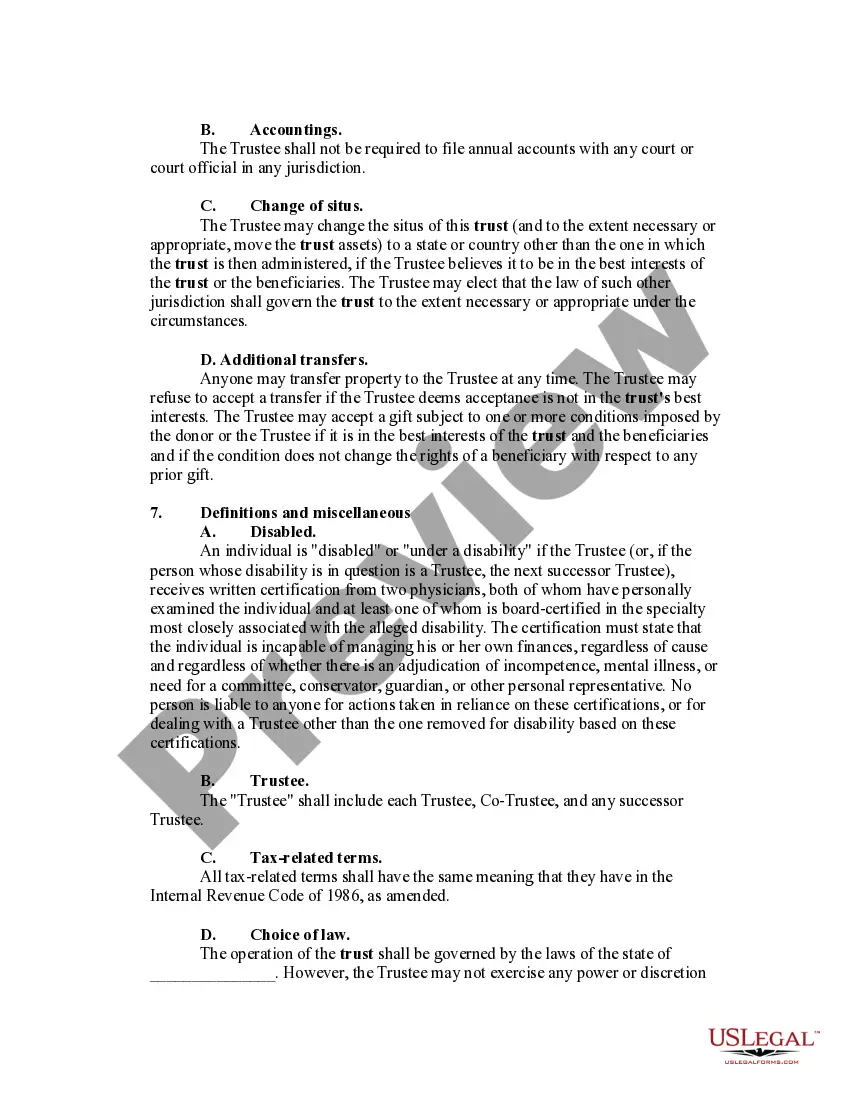
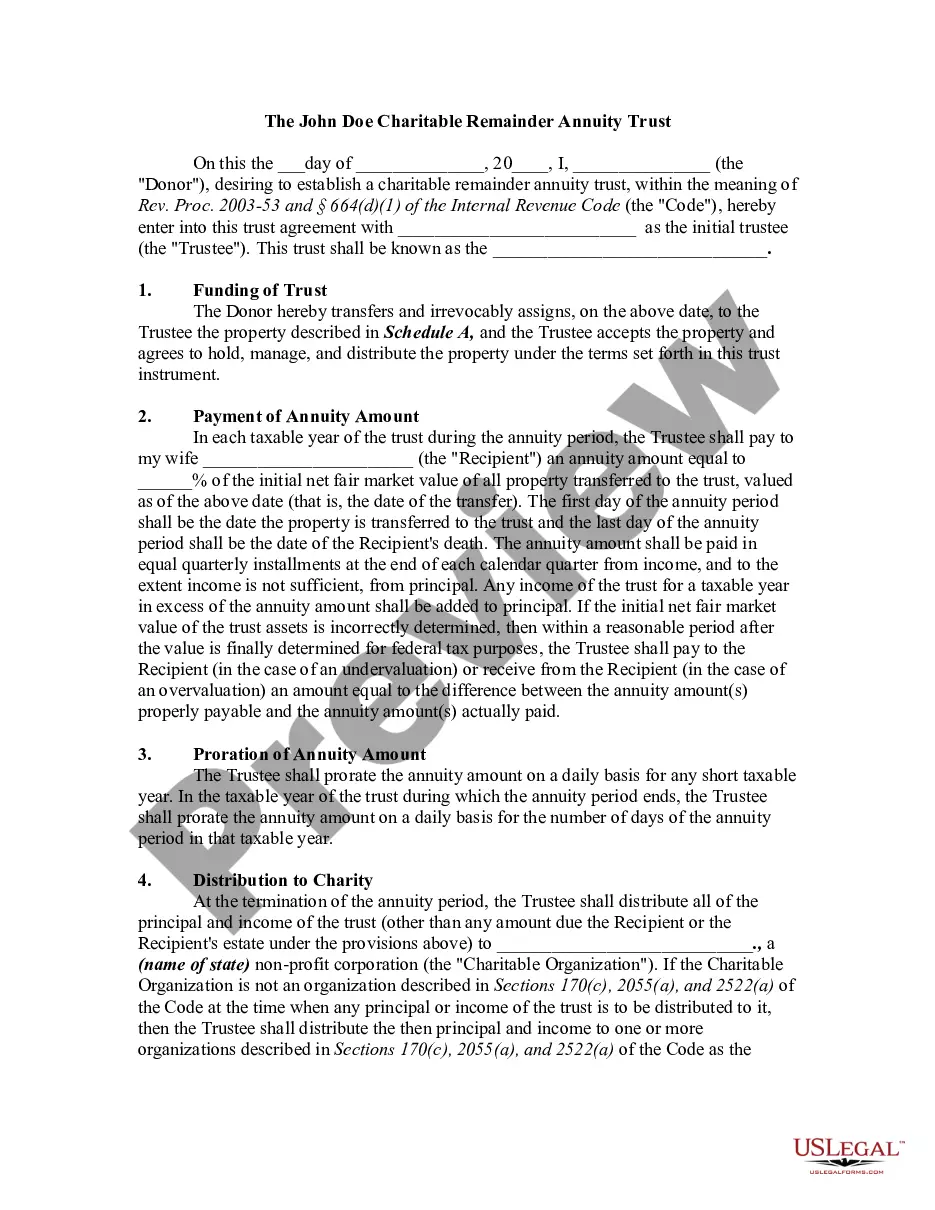
An example of a charitable trust is a charitable remainder unitrust where a donor transfers assets into the trust. The trust pays income to the donor or another beneficiary for a specified period, after which the remaining assets go to a designated charity. This structure can be effectively managed using a charitable unitrust trust blank for the bank found through UsLegalForms.
Currently, Form 5227 cannot be filed electronically. This form must be submitted via mail to the IRS along with any required attachments. Ensure you take the time to fill out your charitable unitrust trust blank for the bank correctly to facilitate smooth processing.
Yes, you can create your own charitable remainder trust, provided you follow the legal requirements. You will need to draft a trust document and decide on the terms, such as the beneficiaries and the distribution method. Utilizing tools from UsLegalForms simplifies this process, particularly when addressing a charitable unitrust trust blank for the bank.
A unitrust is a specific type of charitable remainder trust that pays a fixed percentage of the trust's value to the income beneficiary each year. In contrast, a charitable remainder trust can also provide fixed payments, but there are different structures, such as annuity trusts. Understanding these differences can help you select the right option for your charitable goals, especially when filling out a charitable unitrust trust blank for the bank.
Form 5227 needs to be filed by any charitable remainder trust, including Charitable Remainder Unitrusts (CRUTs). If you are the trustee or administrator of such a trust, you are responsible for this filing. To manage this efficiently, consider using resources like UsLegalForms when dealing with your charitable unitrust trust blank for the bank.
Setting up a Charitable Remainder Unitrust (CRUT) involves several steps. First, you need to draft the trust document, specifying the terms of the trust and the charitable beneficiaries. Additionally, using a platform like UsLegalForms can help guide you through the paperwork required for your charitable unitrust trust blank for the bank, ensuring everything is completed correctly.
The IRS form for a charitable trust is Form 5227. This form is required to report the activities of charitable remainder trusts and is essential for tax compliance. When dealing with a charitable unitrust trust blank for the bank, completing Form 5227 accurately will ensure that you meet federal requirements.
A trust is a general term for a legal arrangement that holds assets for a beneficiary, while a unitrust is a specific type of trust that provides income based on a percentage of the asset's value. A unitrust may fluctuate in income distribution, depending on its overall performance. In this regard, a charitable unitrust trust blank for the bank allows for more dynamic income generation while supporting charitable causes.
The three primary types of trusts are revocable, irrevocable, and charitable trusts. Revocable trusts allow the grantor to maintain control and change terms while alive, while irrevocable trusts cannot be altered once set. Charitable trusts, like the charitable unitrust trust blank for the bank, focus on donating to charitable organizations while providing income to the donor. Understanding these types helps you choose the best fit for your goals.
One downside is the irrevocability of the trust. Once you establish a charitable remainder trust, you typically cannot change your mind about the assets placed in it. Another concern can be the fees associated with managing the trust. While a charitable unitrust trust blank for the bank offers many benefits, it is essential to consider these aspects when planning your financial future.