Charitable Remainder Unitrust Living For The City
Description
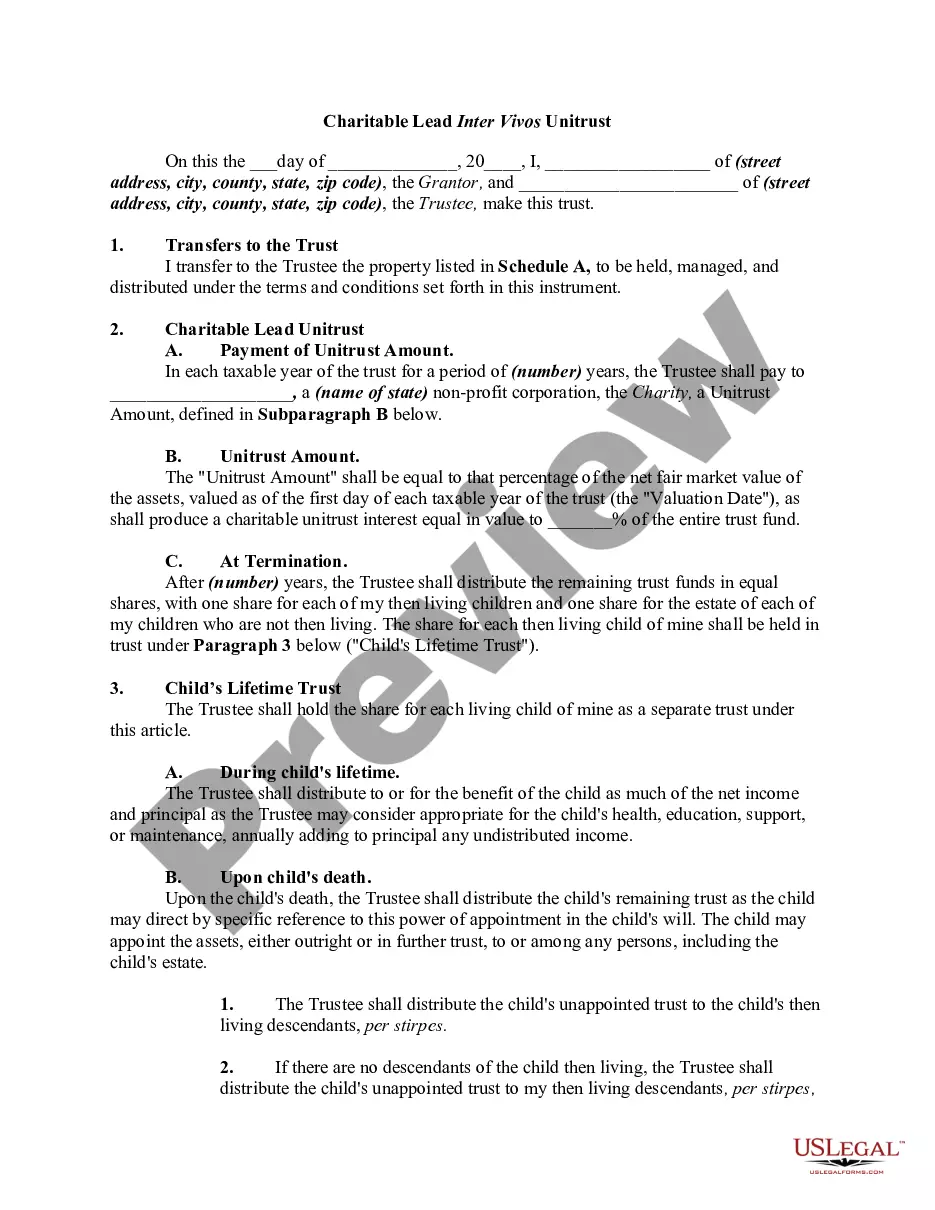
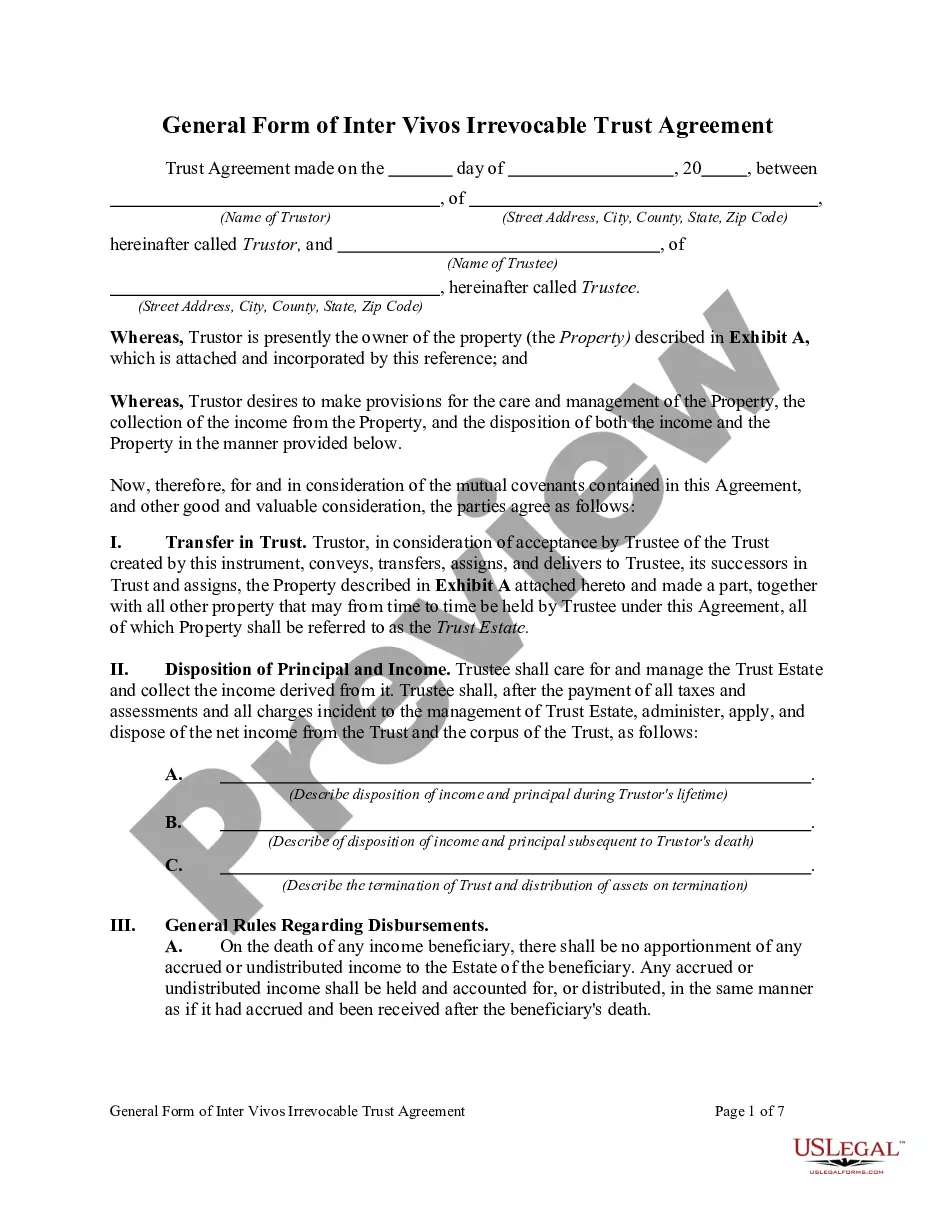
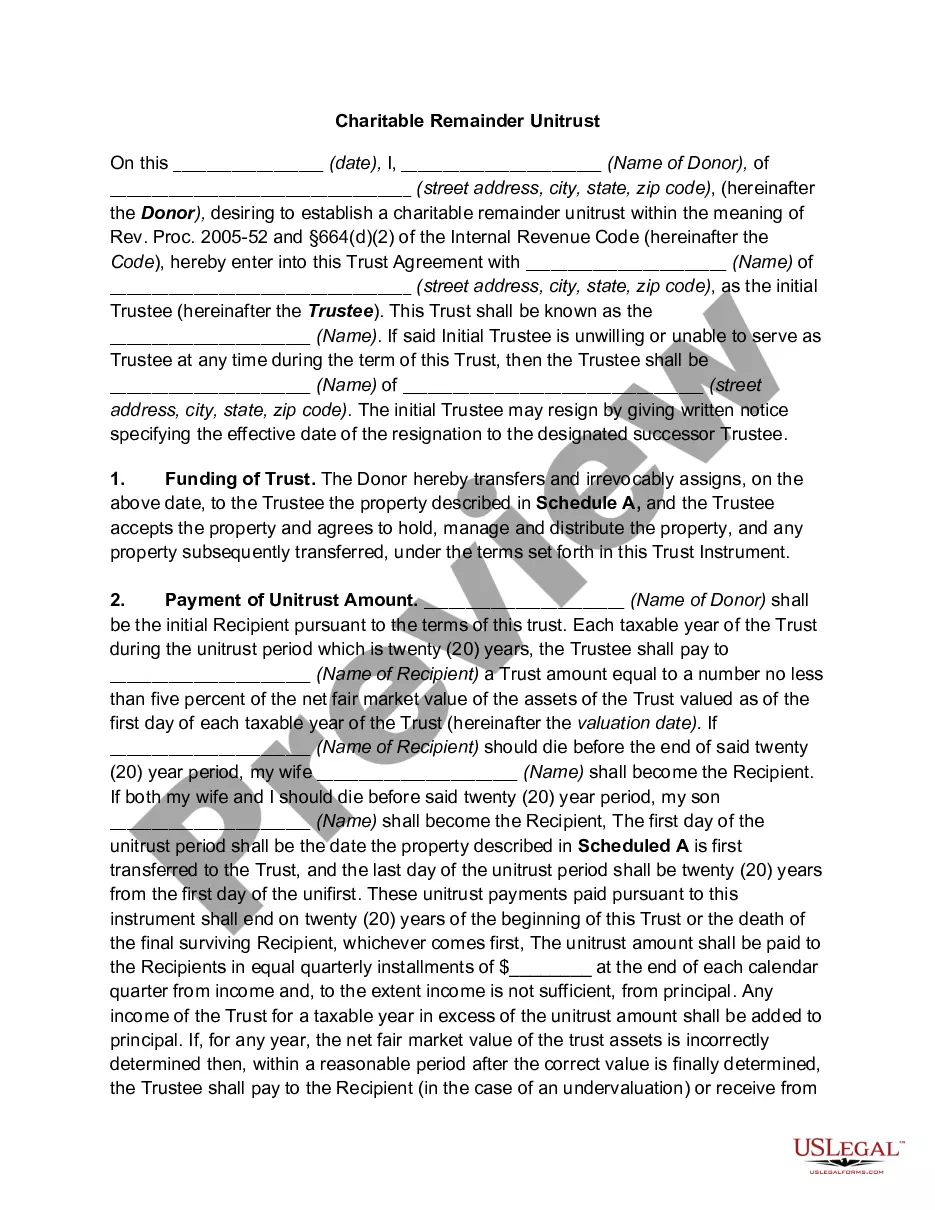
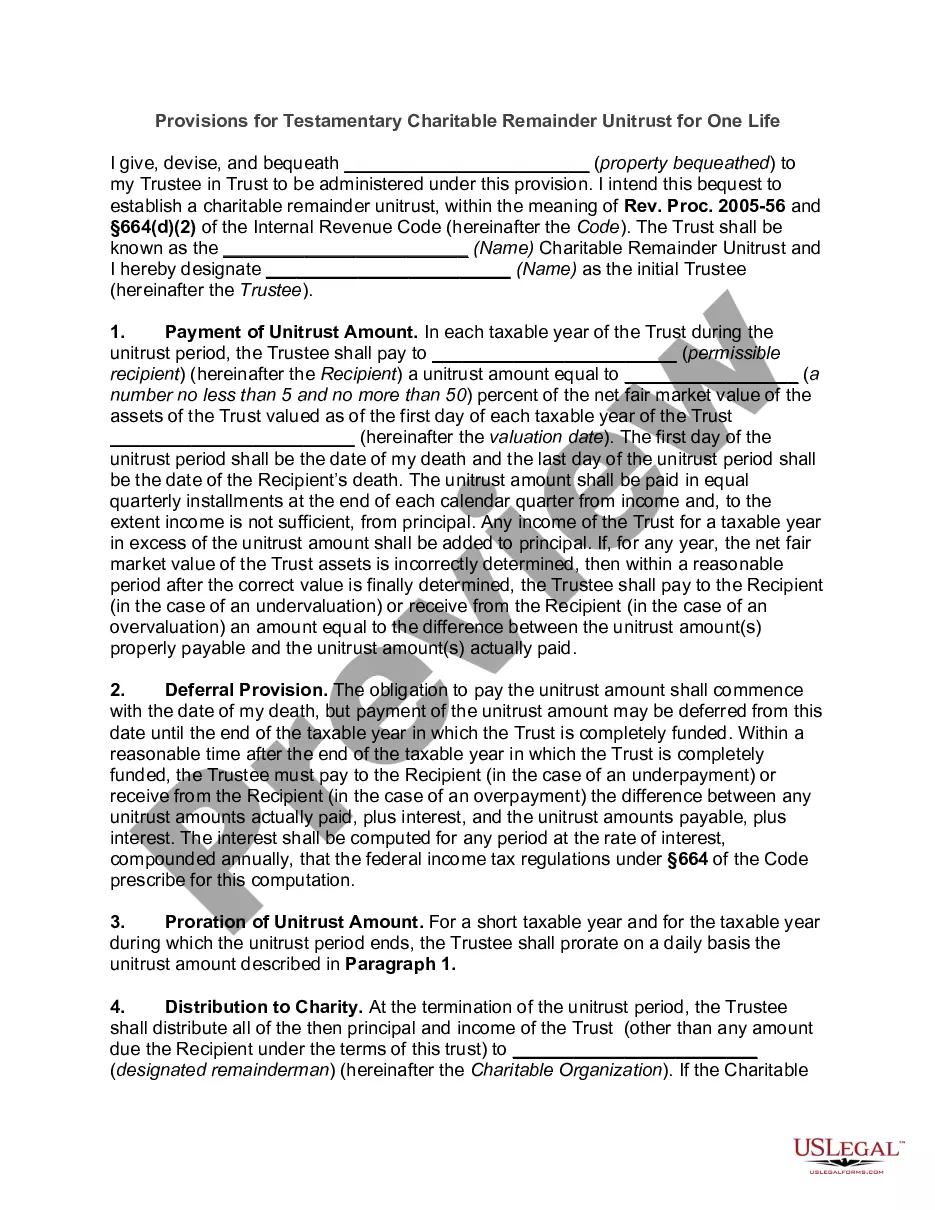
Get your form ready online
Our built-in tools help you complete, sign, share, and store your documents in one place.
Make edits, fill in missing information, and update formatting in US Legal Forms—just like you would in MS Word.
Download a copy, print it, send it by email, or mail it via USPS—whatever works best for your next step.
Sign and collect signatures with our SignNow integration. Send to multiple recipients, set reminders, and more. Go Premium to unlock E-Sign.
If this form requires notarization, complete it online through a secure video call—no need to meet a notary in person or wait for an appointment.
We protect your documents and personal data by following strict security and privacy standards.

Make edits, fill in missing information, and update formatting in US Legal Forms—just like you would in MS Word.

Download a copy, print it, send it by email, or mail it via USPS—whatever works best for your next step.

Sign and collect signatures with our SignNow integration. Send to multiple recipients, set reminders, and more. Go Premium to unlock E-Sign.

If this form requires notarization, complete it online through a secure video call—no need to meet a notary in person or wait for an appointment.

We protect your documents and personal data by following strict security and privacy standards.
Looking for another form?








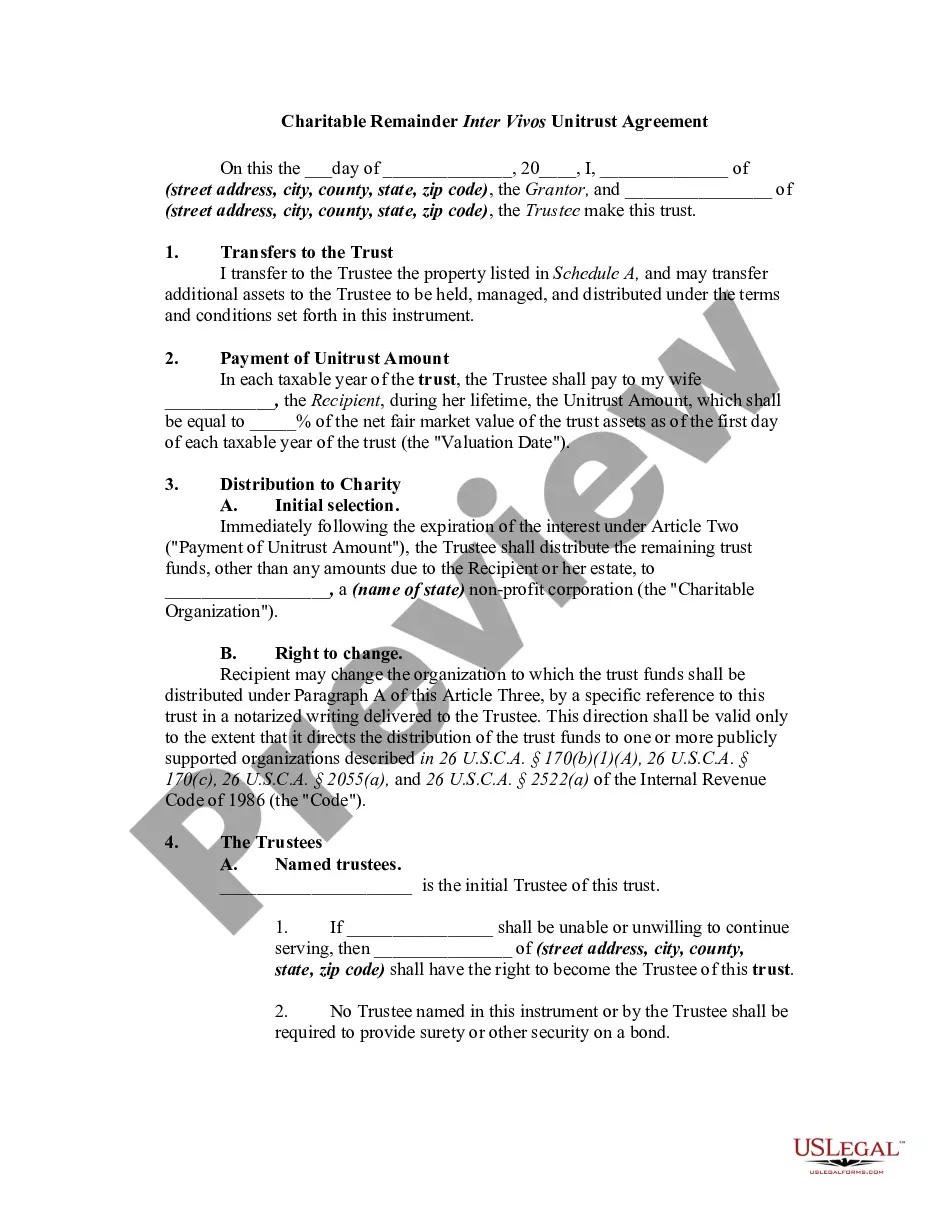
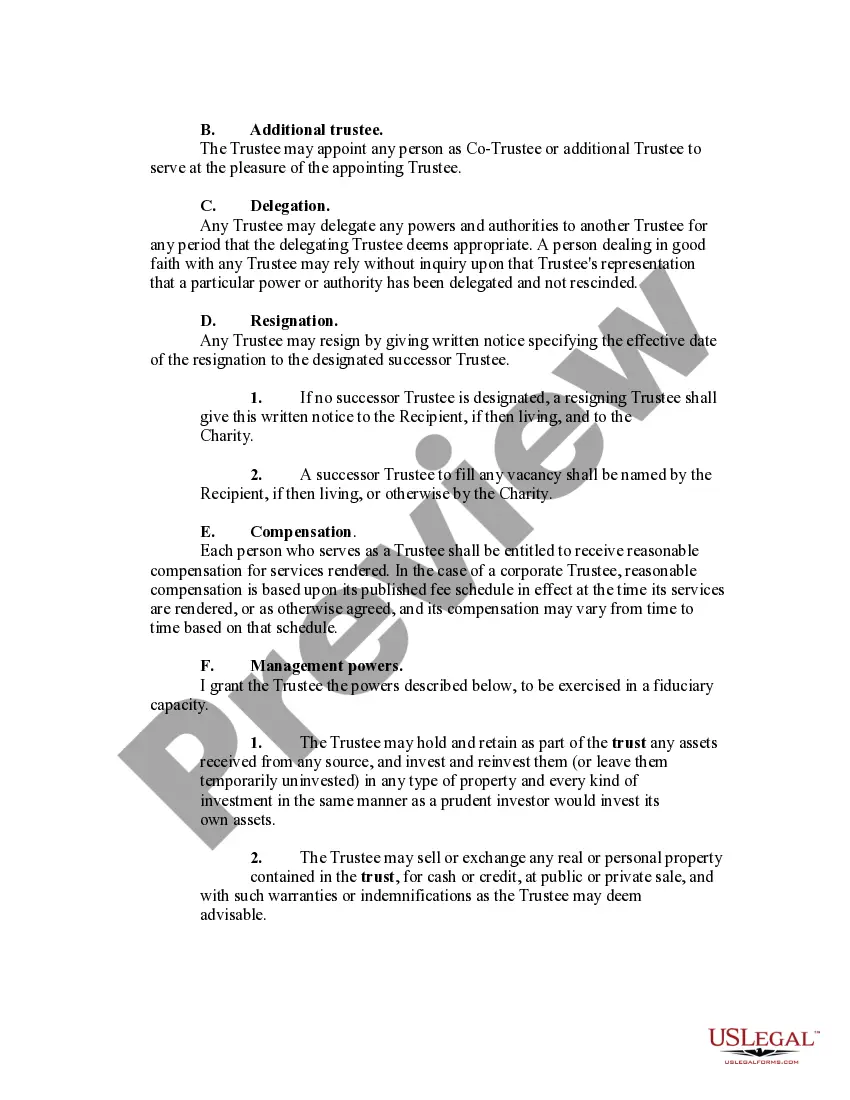
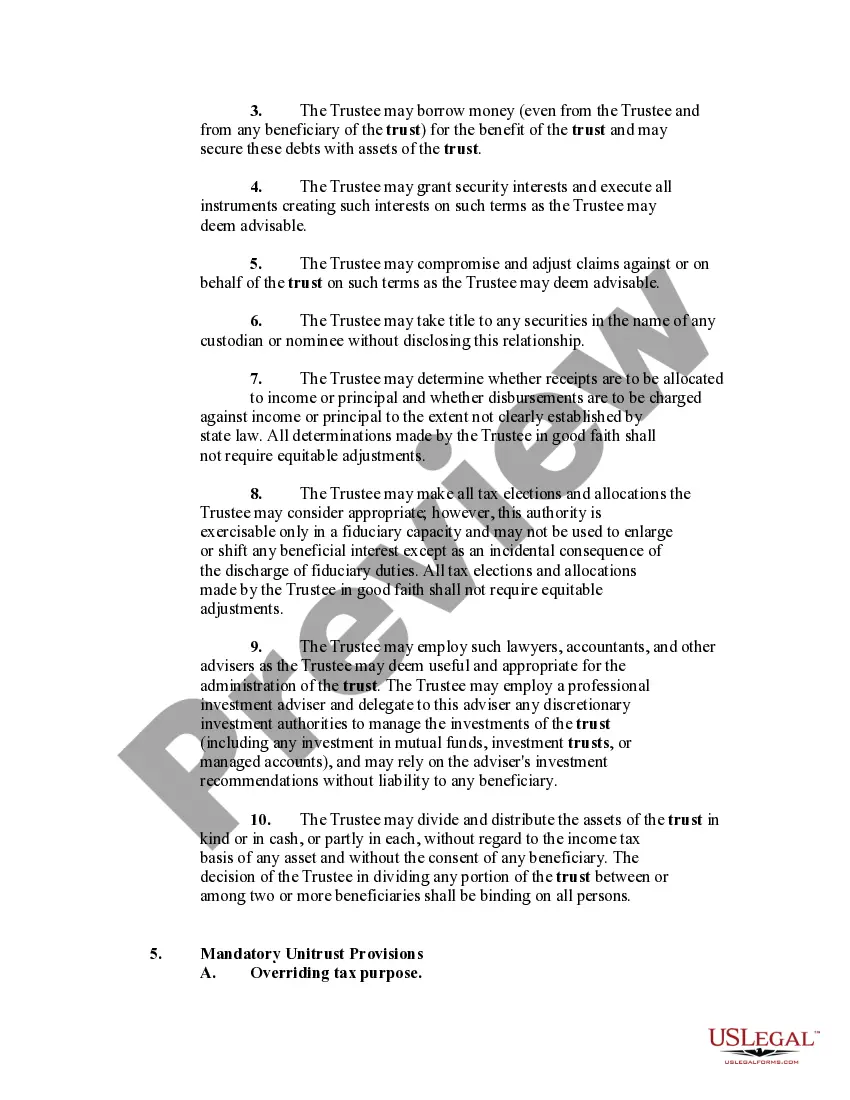
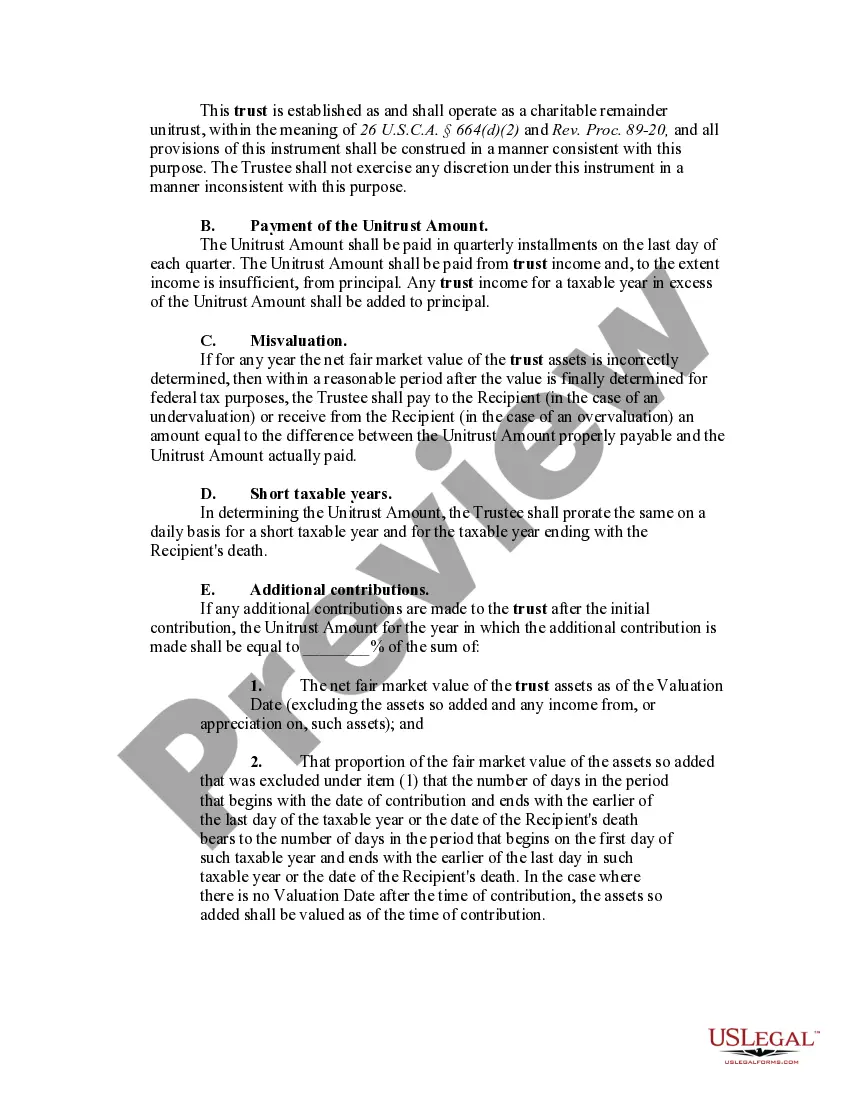
How to fill out Charitable Remainder Inter Vivos Unitrust Agreement?
- If you're an existing user, log in to your US Legal Forms account and access the template you need by clicking the Download button. Ensure your subscription is active; if not, update your payment plan.
- For new users, start by examining the Preview mode and form description to verify that you have selected the correct document for your needs and jurisdiction.
- If the template doesn't meet your requirements, use the Search tab to explore additional options until you find one that suits you.
- Once you have the right document, click the Buy Now button and select a subscription plan that fits your needs, creating an account to access the library.
- Finalize your purchase by submitting your payment information via credit card or PayPal to obtain your subscription.
- Finally, download your form to your device and access it anytime from the My Forms section in your profile.
US Legal Forms not only provides a vast selection of templates—over 85,000—but also connects users with premium experts to ensure documents are filled out correctly and comply with legal standards.
Take the first step towards securing your charitable remainder unitrust today. Explore US Legal Forms and streamline your document preparation!
Form popularity
FAQ
Disqualified persons for a charitable remainder trust include the grantor, their spouse, and direct descendants, among others. This designation ensures that the trust is used primarily for charitable purposes and not for personal gain. Understanding these restrictions is crucial for compliance and maximizing your benefits in the realm of charitable giving. Utilizing resources related to the Charitable remainder unitrust living for the city can clarify these terms further.
Deciding between a Charitable Remainder Annuity Trust (CRAT) and a Charitable Remainder Unitrust (CRUT) depends on how you prefer to receive income. A CRAT offers fixed payments based on the initial funding amount, which may provide stability. On the other hand, a CRUT allows payment amounts to fluctuate with the trust's value, potentially offering higher income as investments grow. Engaging with the Charitable remainder unitrust living for the city can help you evaluate which option suits your financial goals.
A Charitable Remainder Trust (CRT) and a Charitable Lead Trust (CLT) serve different purposes. A CRT provides income to the beneficiary for a set period, after which the remaining assets go to charity. In contrast, a CLT distributes income to a charity for a specified time, with the remainder going to non-charitable beneficiaries. When considering options like these, many find that the Charitable remainder unitrust living for the city can provide clarity and maximize benefits.
A charitable remainder trust (CRT) provides income to beneficiaries with the remainder going to charity, while a charitable lead trust (CLT) pays income to charities for a specific period before passing the assets to beneficiaries. This fundamental difference influences tax benefits and distribution patterns for both trust types. If you are interested in combining your philanthropic goals with financial planning, a charitable remainder unitrust living for the city can align well with your objectives.
A trust generally refers to any legal arrangement where one party holds assets for the benefit of another, while a unitrust specifically disburses a set percentage of its value to beneficiaries each year. This distinction is important as it affects the way distributions are calculated and can impact both the income beneficiaries receive and the overall tax strategy. If you're considering establishing a trust or a unitrust, exploring options like a charitable remainder unitrust living for the city could be beneficial.
A charitable remainder unitrust is a specific type of trust designed to provide income to beneficiaries while supporting charitable causes. Unlike general trusts, which can serve various purposes, a unitrust must distribute a percentage of its assets regularly, creating a steady income stream. If you are interested in supporting charities while also planning your finances, consider establishing a charitable remainder unitrust living for the city.
The main difference lies in how distributions are calculated. A charitable remainder trust pays a fixed dollar amount, while a charitable remainder unitrust distributes a percentage of the trust's value, which can change annually. This means a unitrust can potentially provide more income over time, depending on its performance. Understanding these distinctions can help you choose the best option for your charitable giving through a charitable remainder unitrust living for the city.
Yes, a charitable remainder unitrust must file Form 1041. This is required because the trust generates income and is treated as a separate tax entity. As such, it's important to report any income the trust earns, ensuring compliance with tax laws. You can find more information on how to file through platforms like US Legal Forms.
Creating a charitable remainder unitrust necessitates adherence to certain requirements to function properly. Firstly, the trust must benefit at least one charitable organization and provide income to at least one non-charitable beneficiary. Furthermore, you must ensure your income distributions fall between the mandated minimum and maximum ranges. Understanding these requirements can aid you in successfully establishing a charitable remainder unitrust living for the city that aligns with your financial and charitable aspirations.
Calculating the charitable tax deduction for a charitable remainder trust involves determining the present value of the charity's remainder interest. You take into account the payout rate and the expected duration of the trust, applying IRS-approved tables for accuracy. This calculation is vital in maximizing your deduction and ensuring that you are effectively using charitable remainder unitrust living for the city to combine personal income with a philanthropic mission.