Charitable Remainder Trust For Children
Description
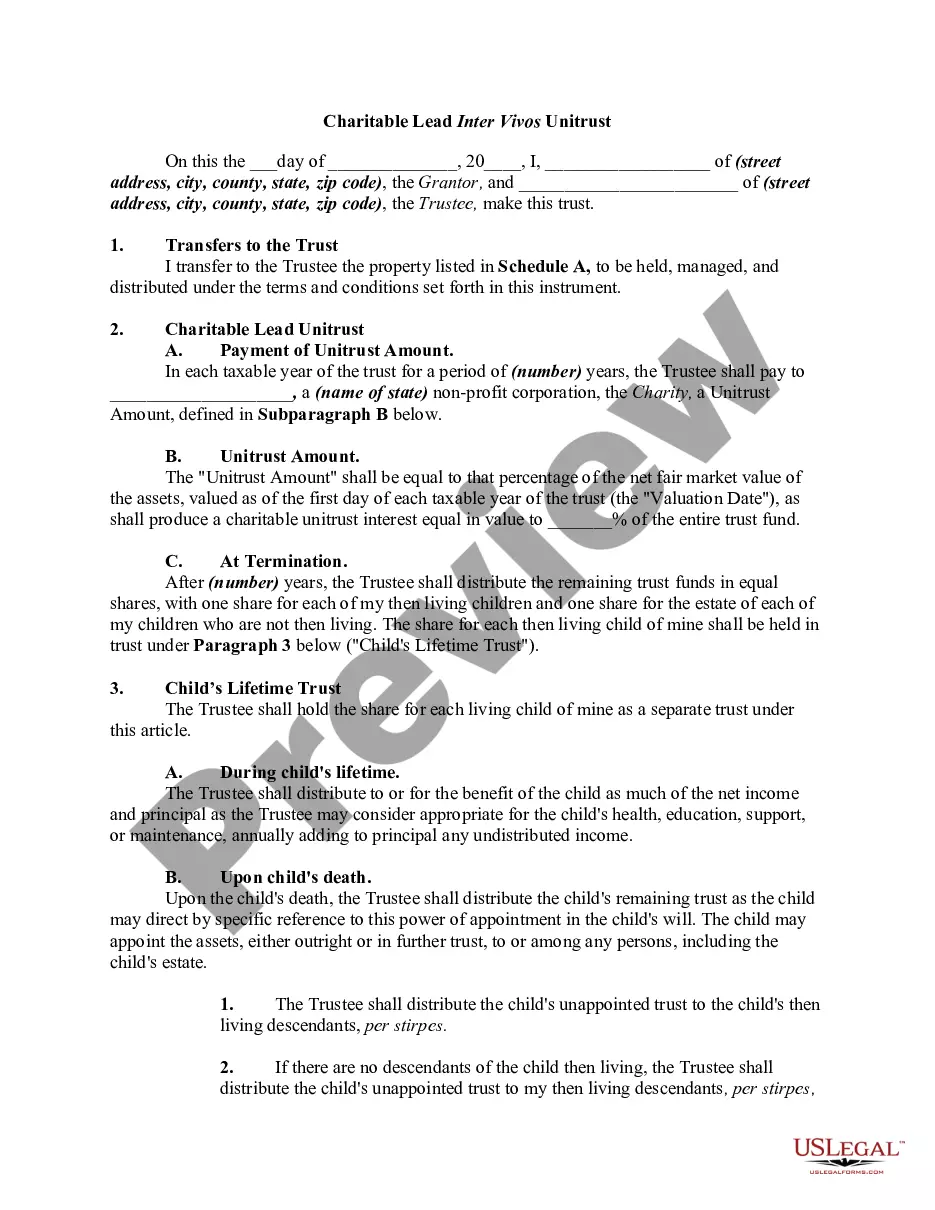
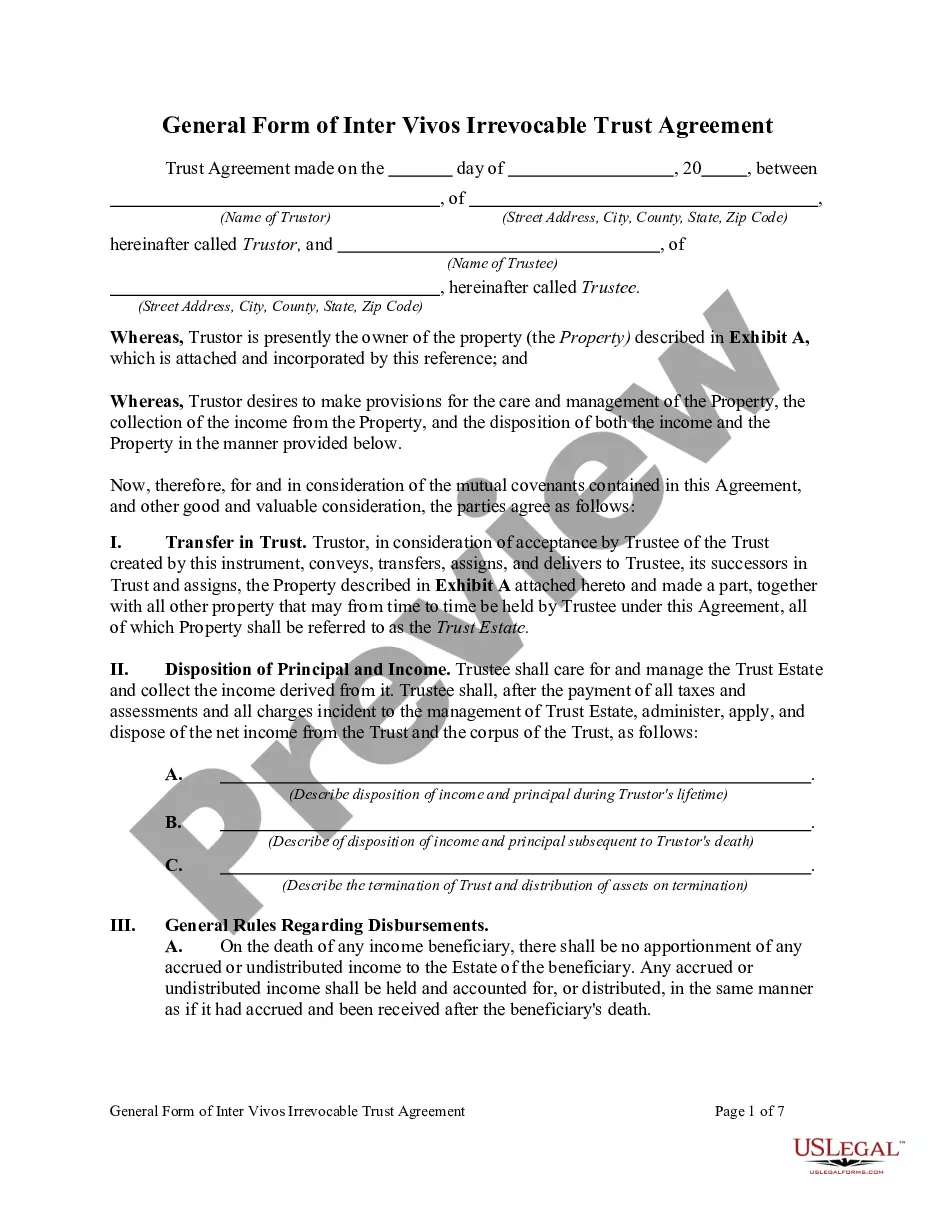
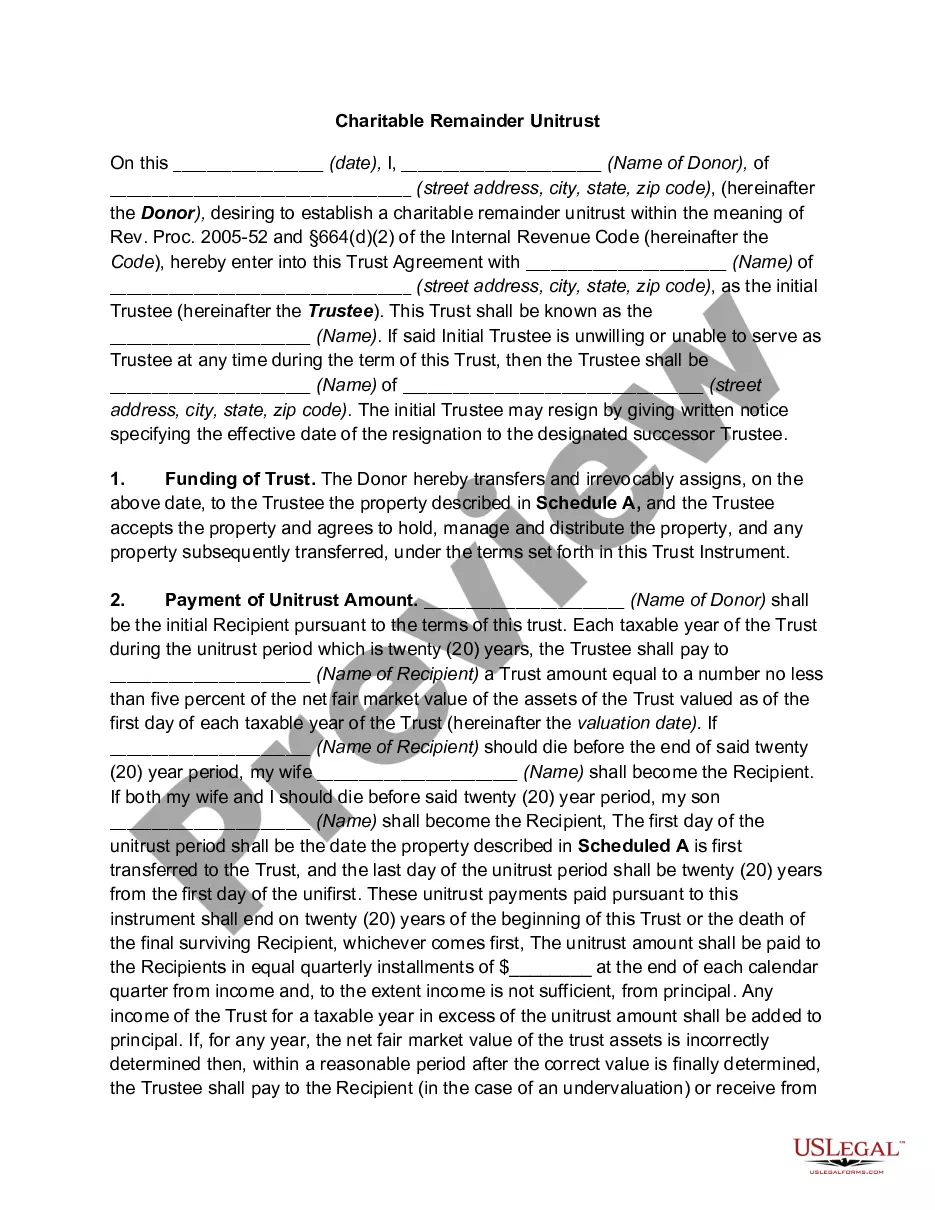
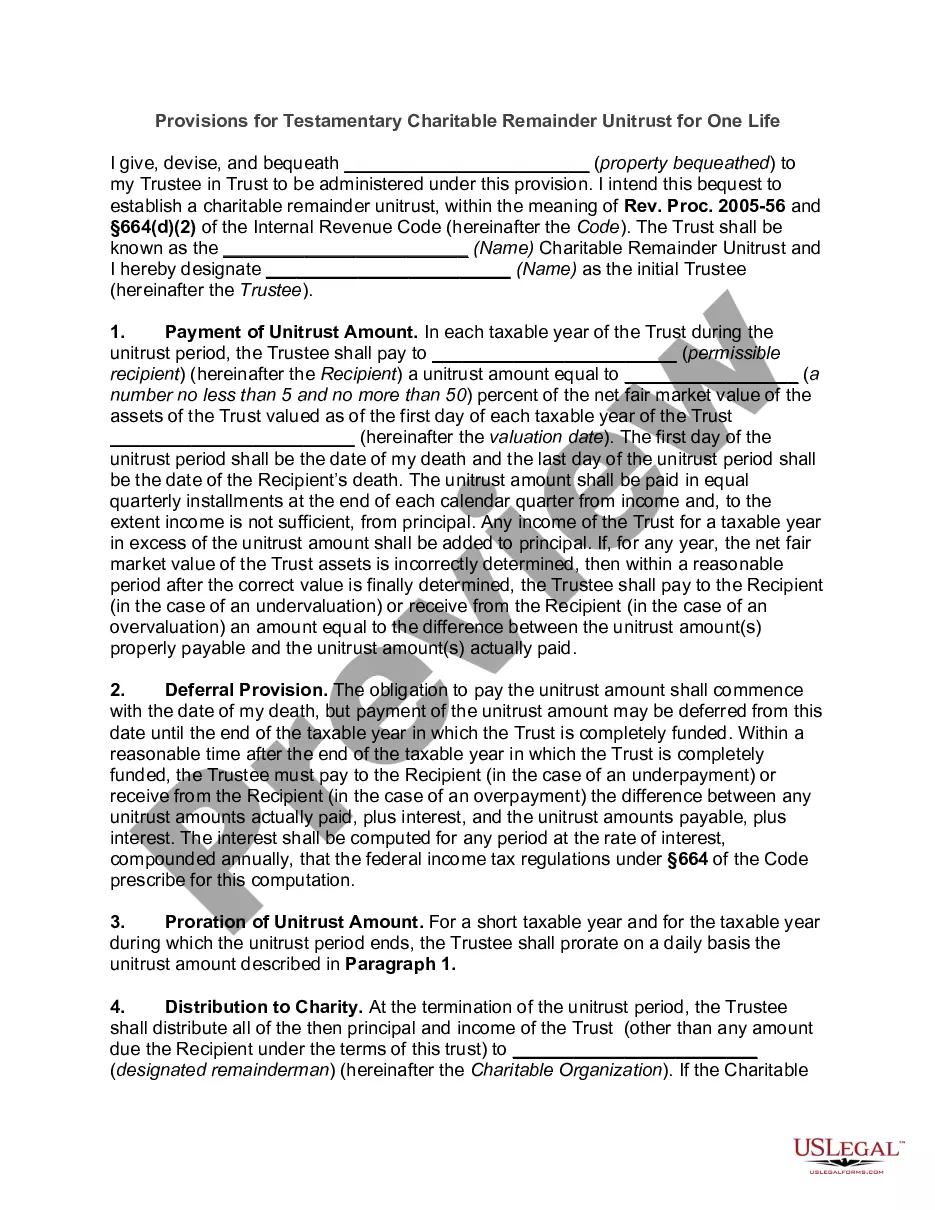
Get your form ready online
Our built-in tools help you complete, sign, share, and store your documents in one place.
Make edits, fill in missing information, and update formatting in US Legal Forms—just like you would in MS Word.
Download a copy, print it, send it by email, or mail it via USPS—whatever works best for your next step.
Sign and collect signatures with our SignNow integration. Send to multiple recipients, set reminders, and more. Go Premium to unlock E-Sign.
If this form requires notarization, complete it online through a secure video call—no need to meet a notary in person or wait for an appointment.
We protect your documents and personal data by following strict security and privacy standards.

Make edits, fill in missing information, and update formatting in US Legal Forms—just like you would in MS Word.

Download a copy, print it, send it by email, or mail it via USPS—whatever works best for your next step.

Sign and collect signatures with our SignNow integration. Send to multiple recipients, set reminders, and more. Go Premium to unlock E-Sign.

If this form requires notarization, complete it online through a secure video call—no need to meet a notary in person or wait for an appointment.

We protect your documents and personal data by following strict security and privacy standards.
Looking for another form?







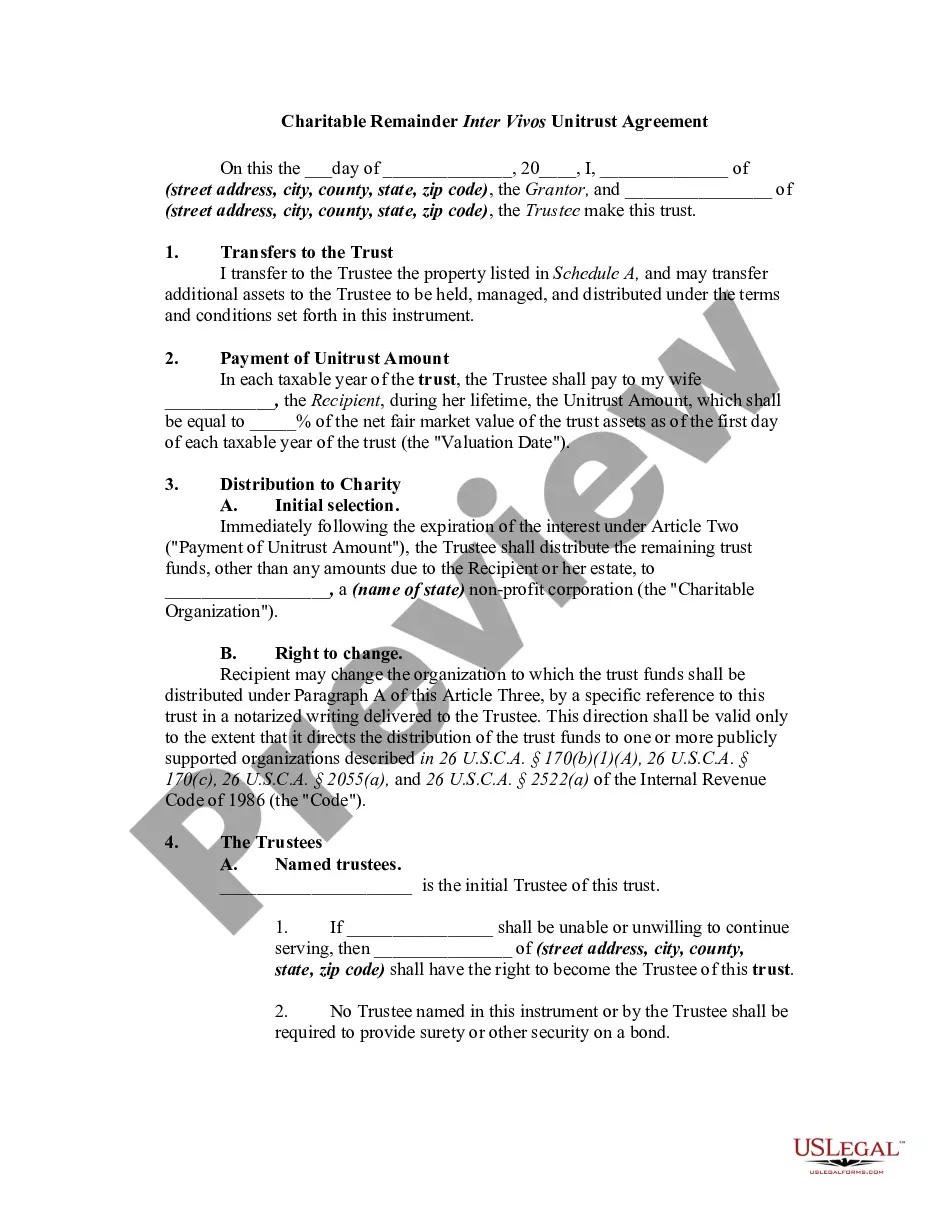
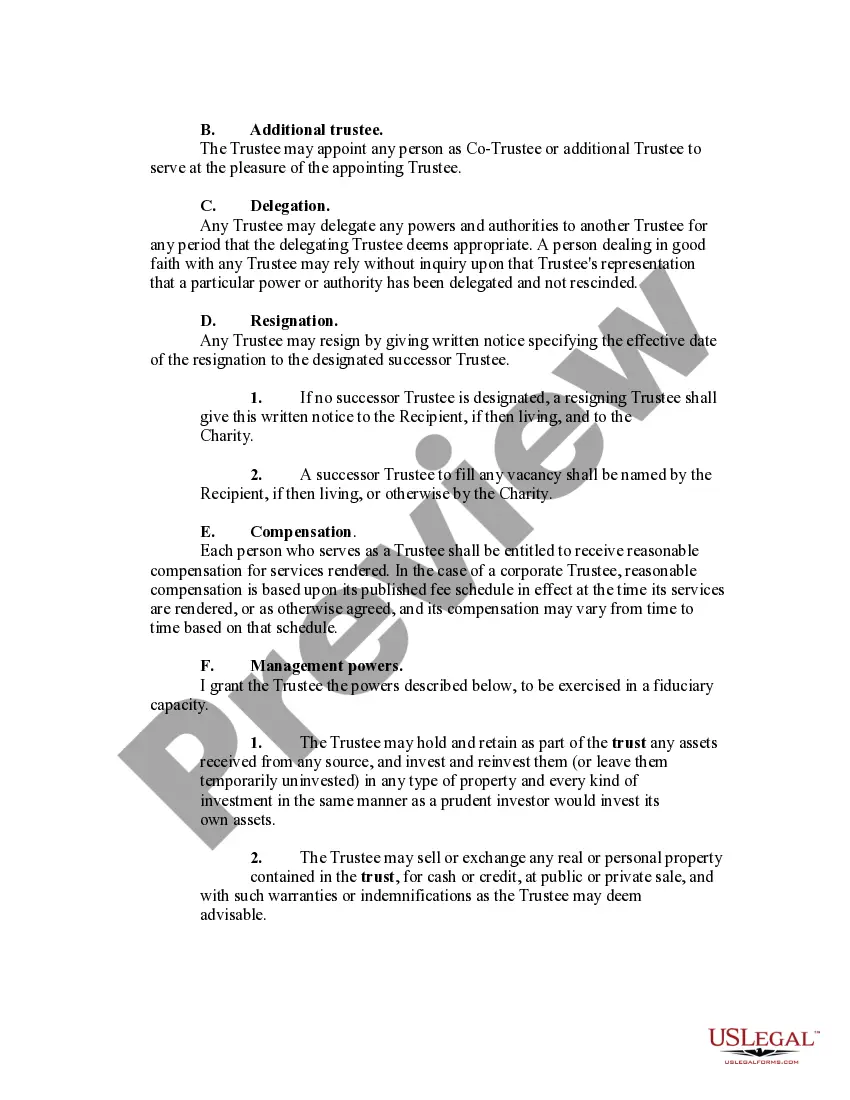
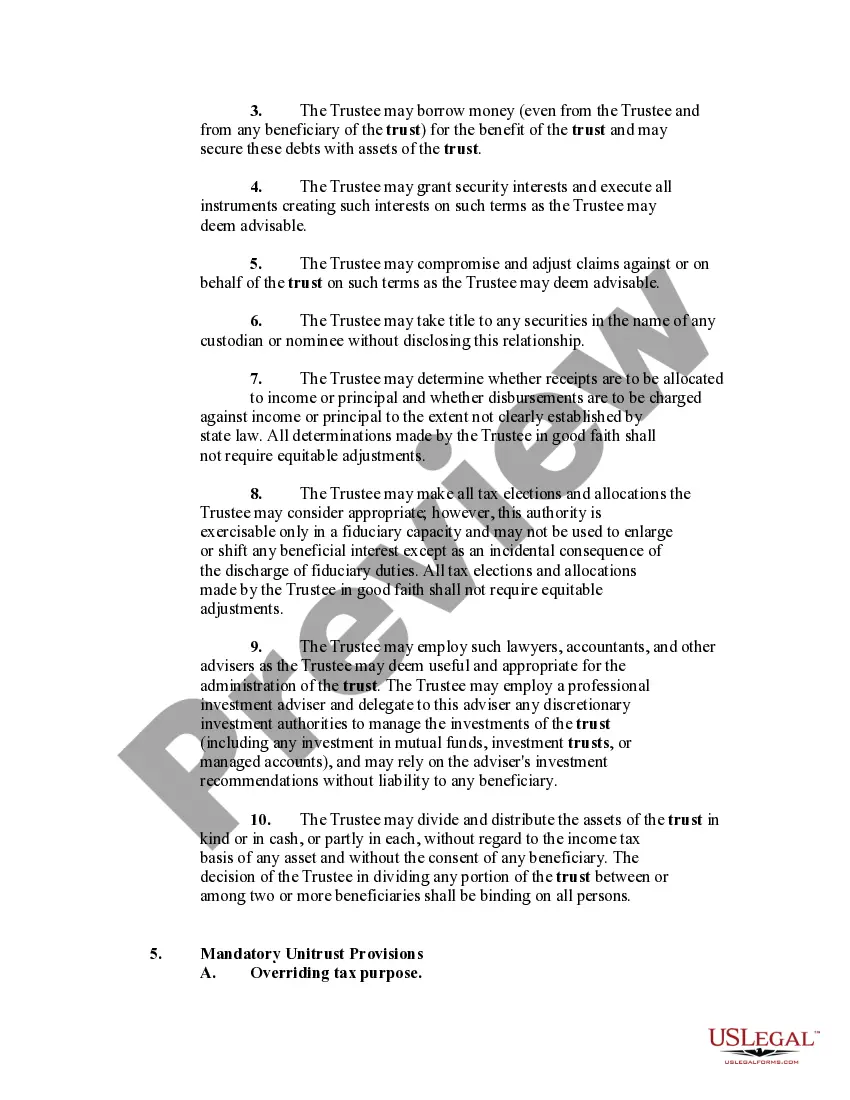
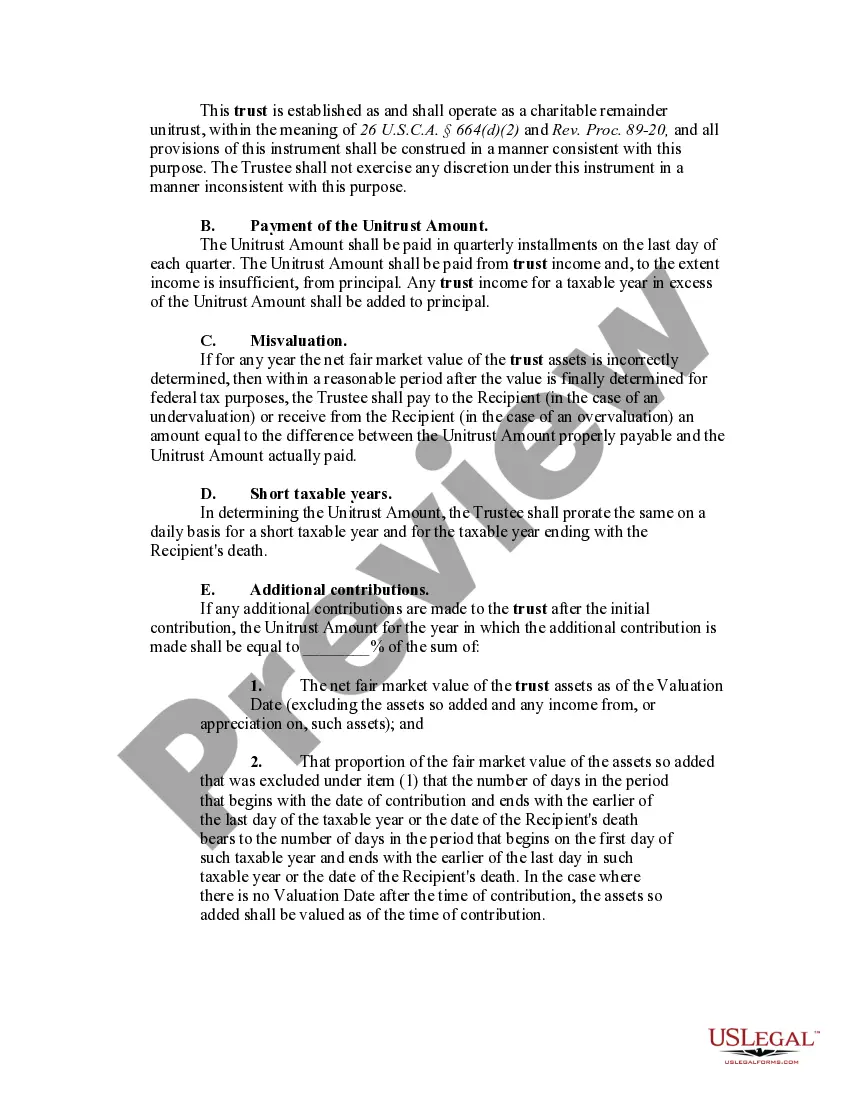
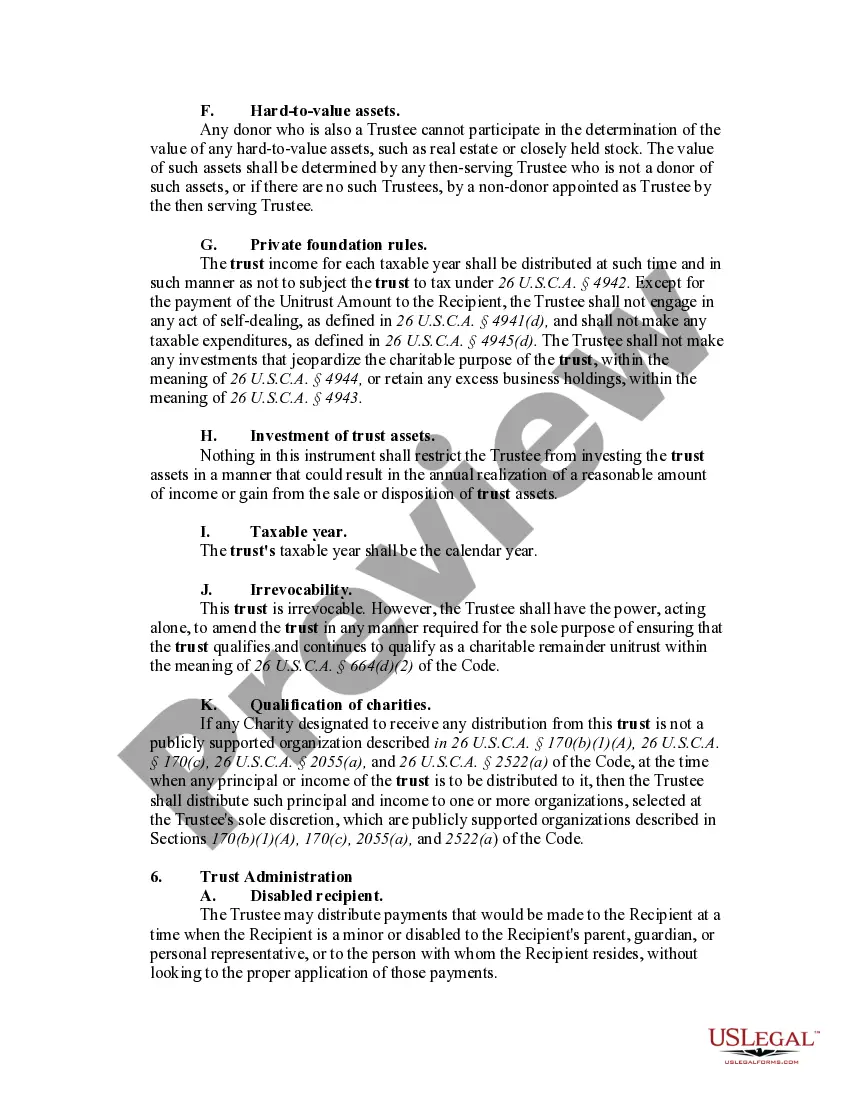
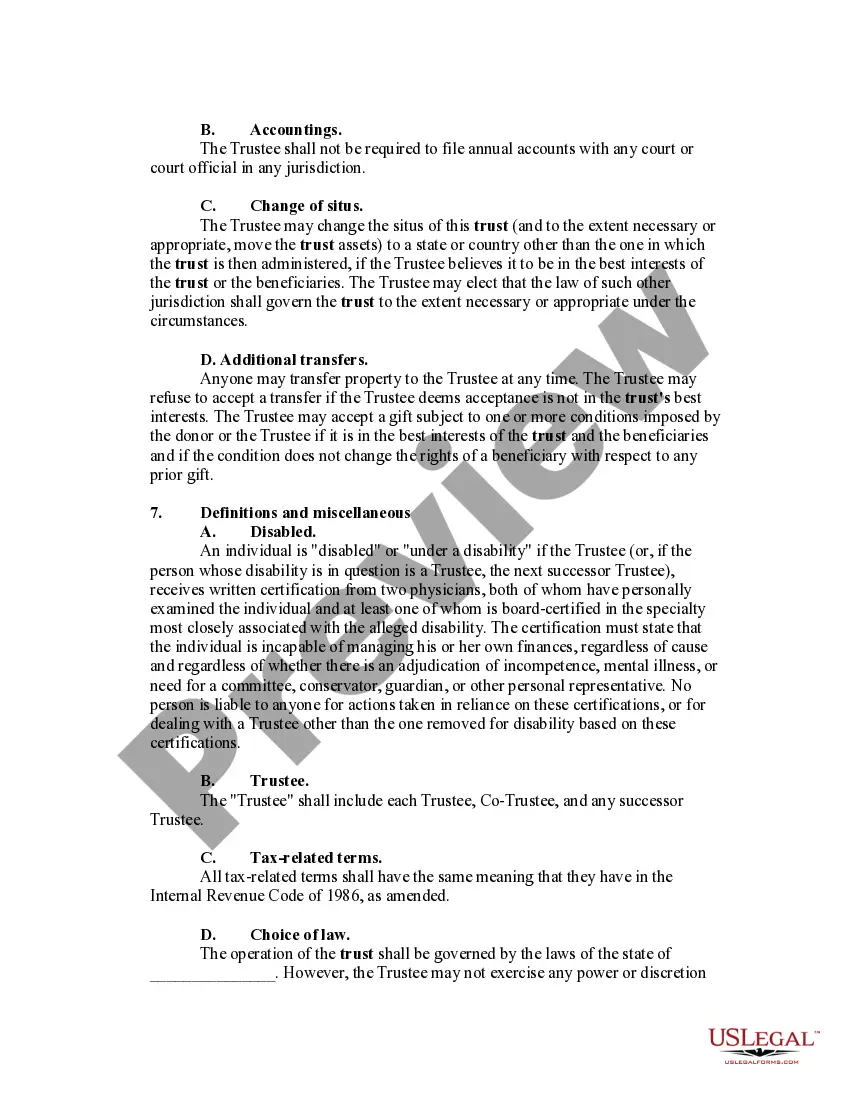
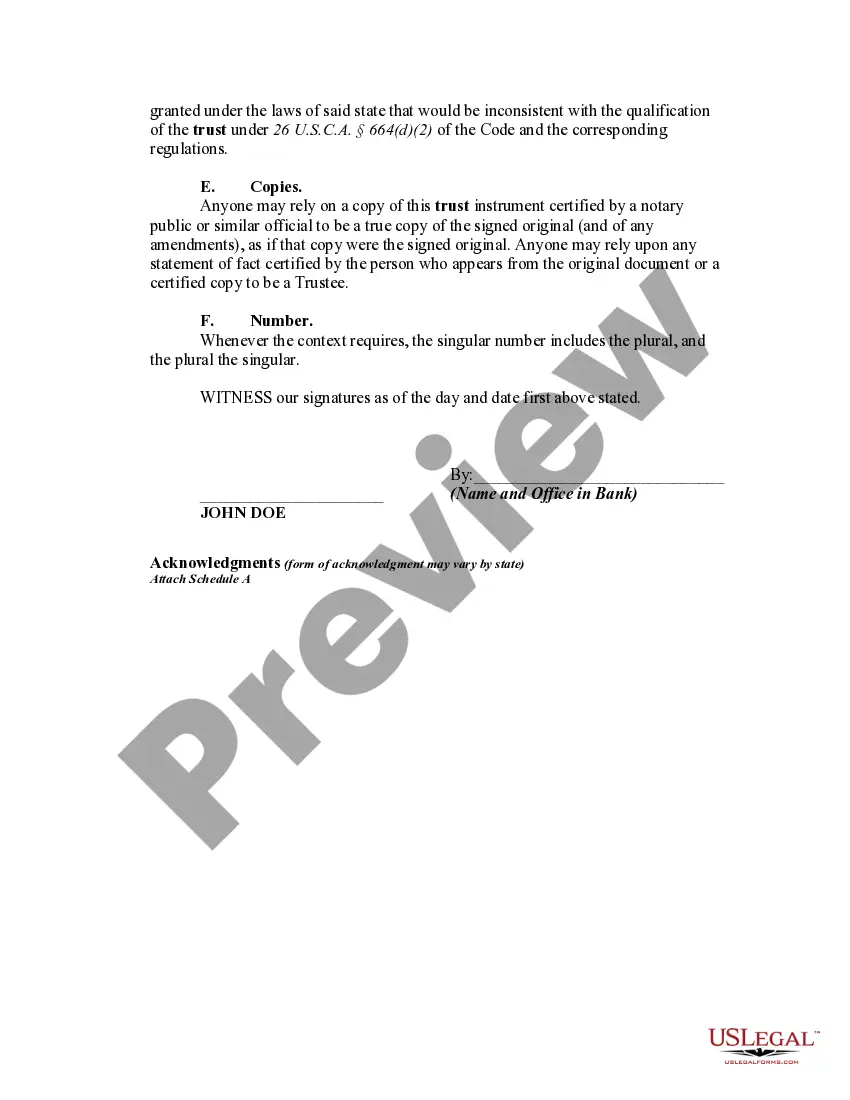
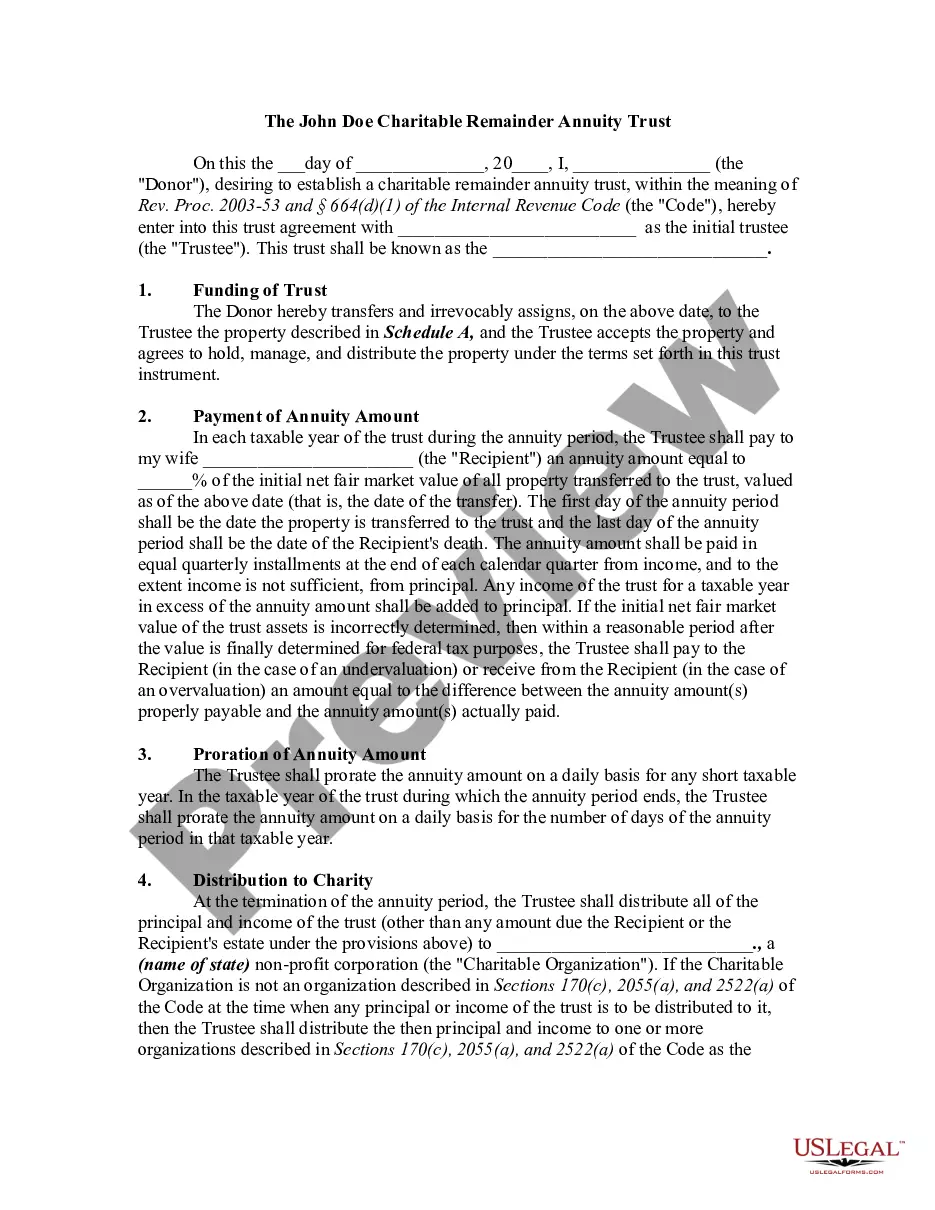
How to fill out Charitable Remainder Inter Vivos Unitrust Agreement?
- Log in to your US Legal Forms account if you have used their services before, ensuring your subscription is active.
- If you're a new user, explore the available forms. Start by reviewing the preview mode and descriptions to ensure they meet your needs and comply with local laws.
- Utilize the Search tab if you need to find additional templates. Confirm that the selected form fits your requirements before proceeding.
- Purchase the document by selecting the 'Buy Now' button and choosing a preferred subscription plan; registration is required.
- Complete the payment using a credit card or PayPal to finalize your subscription order.
- Download your chosen form and save it onto your device. Access it anytime via the 'My Forms' menu in your profile.
Following these steps simplifies the process of establishing a charitable remainder trust for children, ensuring they benefit from your generosity.
Take advantage of US Legal Forms today to quickly create your legal documents with precision. Start your journey by visiting their site now!
Form popularity
FAQ
To establish a charitable remainder trust for children, several requirements must be met. The trust must irrevocably transfer assets to a trustee, who will manage them according to the trust's terms. Additionally, proper documentation must meet IRS regulations regarding payouts and charitable distributions. Understanding these requirements ensures that you create an effective and compliant trust that benefits both your family and charitable organizations.
In the context of a charitable remainder trust for children, a disqualified person includes individuals who have significant ties to the trust, such as the grantor or their descendants. These individuals cannot be income beneficiaries, as their involvement might affect the trust's tax-exempt status. It’s essential to understand this to avoid complications in maintaining the trust's benefits.
The amount of income you can take from a charitable remainder trust varies based on the trust's assets and the payout rate you select. Generally, the payout rate can range from 5% to 50%, depending on the terms you set when establishing the trust. For families considering a charitable remainder trust for children, this flexibility allows for tailored income distribution over time, ensuring both support for heirs and contributions to charitable institutions. If you're unsure about the best structure, using tools from US Legal Forms can simplify the process and guide you effectively.
To form a charitable remainder trust, start by consulting with a financial advisor or attorney who specializes in estate planning. You’ll identify your chosen charitable organization, decide on the terms of the trust, and prepare the necessary legal documents. Platforms like US Legal Forms offer convenient templates and resources to help you effectively create a charitable remainder trust for children, ensuring all requirements are met.
Filing for a charitable remainder trust involves several steps, including drafting the trust document, selecting assets, and deciding on beneficiaries. Once established, you'll need to file Form 5227 with the IRS to report the trust's income, including calculating any distributions. Using platforms like US Legal Forms can simplify the process by providing the necessary documents and guidance tailored for a charitable remainder trust for children.
In most cases, you do not need to file a gift tax return simply for creating a charitable remainder trust. However, if you make contributions to the trust that exceed the annual gift tax exclusion amount, you may need to file a gift tax return. Consulting a tax professional can help clarify your specific situation regarding a charitable remainder trust for children.
Yes, charitable trusts must file tax returns, regardless of whether they generated income. The IRS requires these trusts to report income, deductions, and other relevant financial information. It's essential to comply with this requirement to maintain tax-exempt status while effectively managing a charitable remainder trust for children.
While a charitable remainder trust can offer many benefits, there are downsides to consider. Setting up this trust may require significant legal fees and administrative overhead. Additionally, once you place your assets in the trust, you generally cannot access them, which could limit your financial flexibility.
A charitable remainder trust for children is a financial tool that allows you to support your favorite charity while providing for your children’s future. It enables you to donate assets into a trust, generating income for your children during their lifetime, while the remaining assets go to a charity upon their passing. This strategy serves to benefit both your children and charitable organizations, maximizing your giving potential.
Despite its advantages, a charitable remainder trust for children has some disadvantages. One major drawback is that once you transfer assets into the trust, you often relinquish control over them. Furthermore, there are costs associated with setting up and maintaining the trust, which can impact its overall efficiency. Weighing these factors is crucial when considering this option.