Charitable Form Trust File With Individuals
Description
Get your form ready online
Our built-in tools help you complete, sign, share, and store your documents in one place.
Make edits, fill in missing information, and update formatting in US Legal Forms—just like you would in MS Word.
Download a copy, print it, send it by email, or mail it via USPS—whatever works best for your next step.
Sign and collect signatures with our SignNow integration. Send to multiple recipients, set reminders, and more. Go Premium to unlock E-Sign.
If this form requires notarization, complete it online through a secure video call—no need to meet a notary in person or wait for an appointment.
We protect your documents and personal data by following strict security and privacy standards.

Make edits, fill in missing information, and update formatting in US Legal Forms—just like you would in MS Word.

Download a copy, print it, send it by email, or mail it via USPS—whatever works best for your next step.

Sign and collect signatures with our SignNow integration. Send to multiple recipients, set reminders, and more. Go Premium to unlock E-Sign.

If this form requires notarization, complete it online through a secure video call—no need to meet a notary in person or wait for an appointment.

We protect your documents and personal data by following strict security and privacy standards.
Looking for another form?










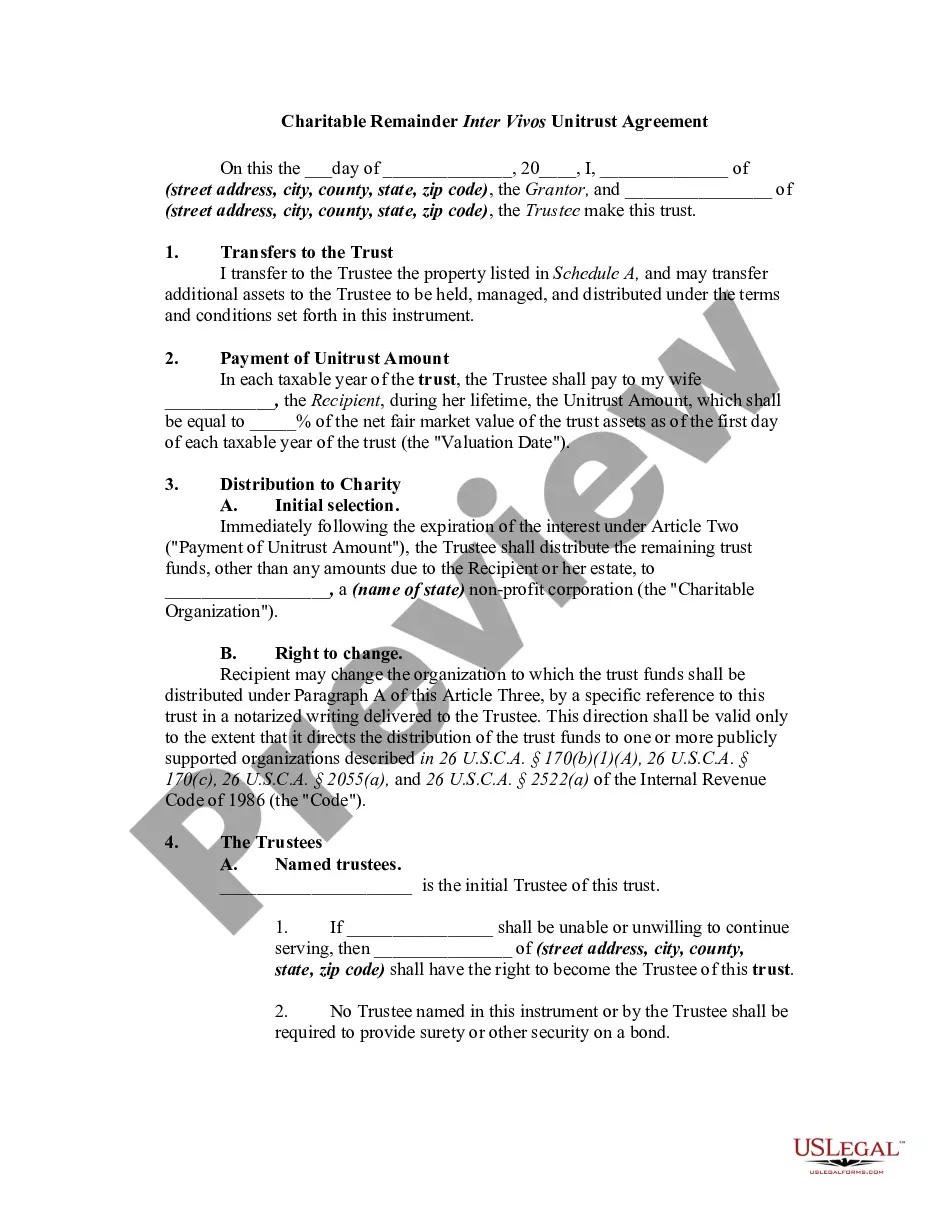
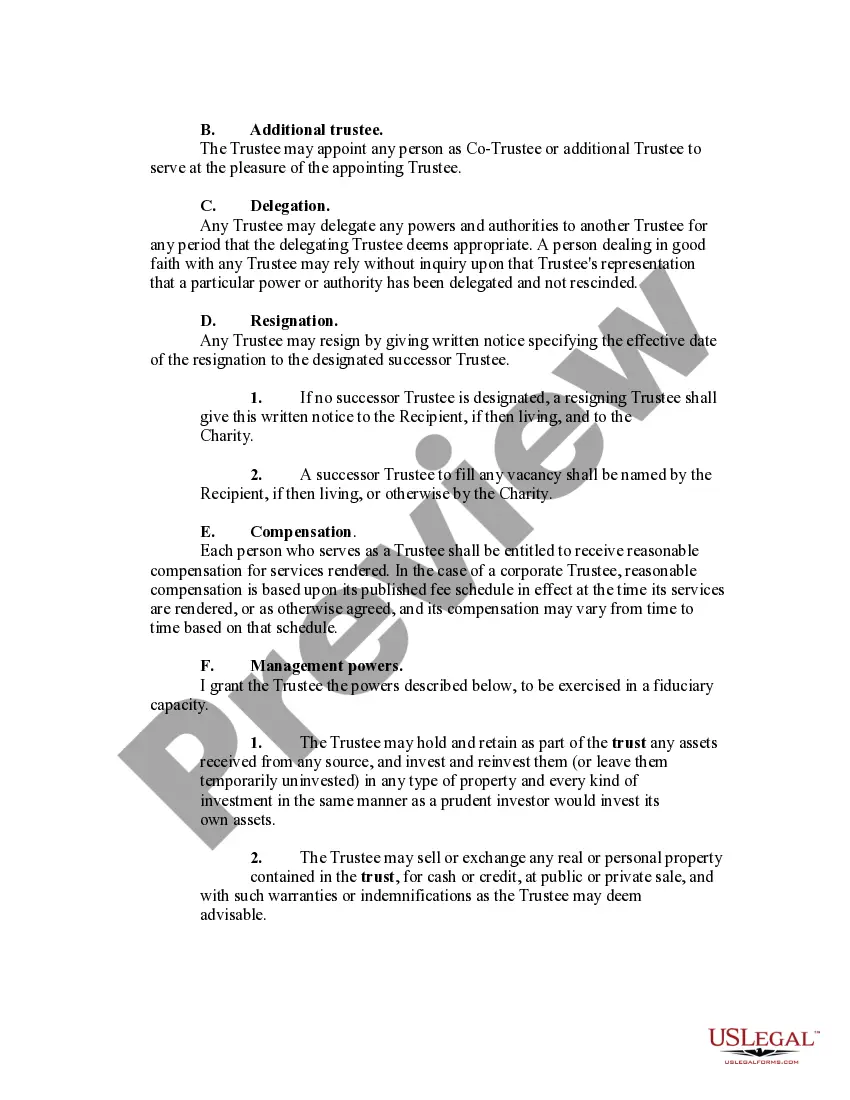
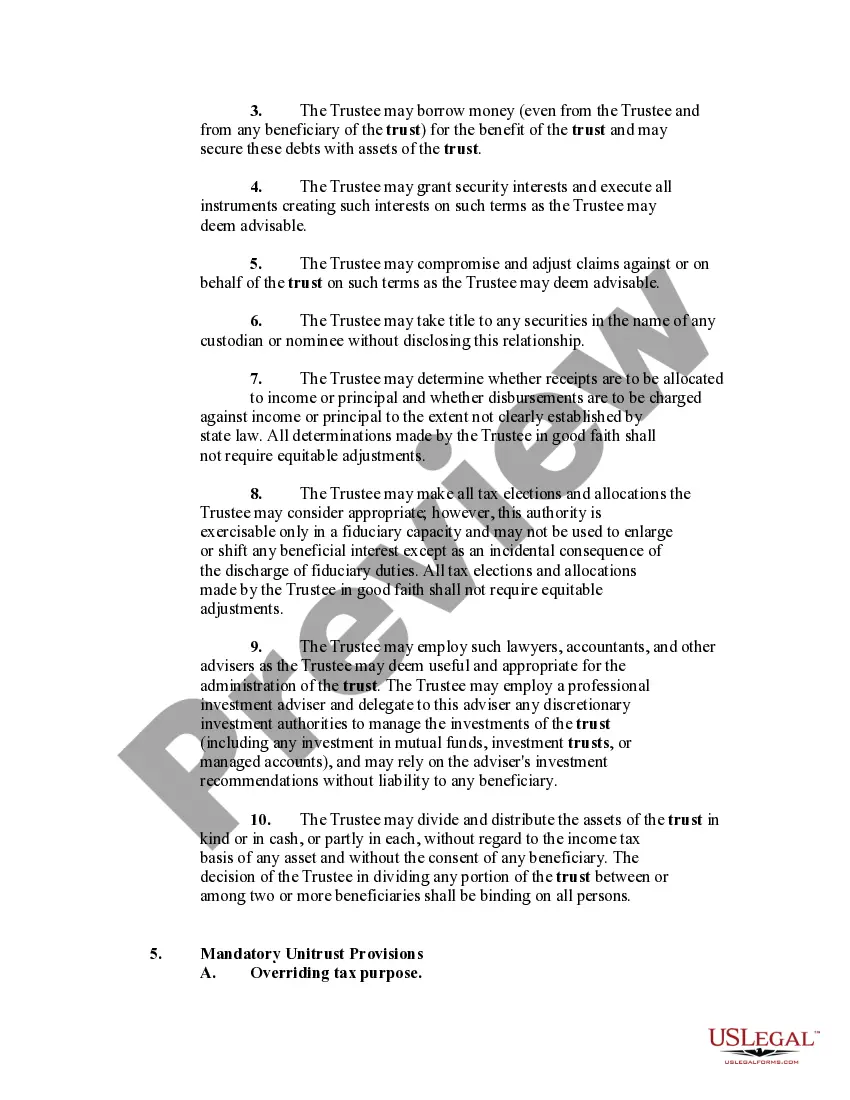
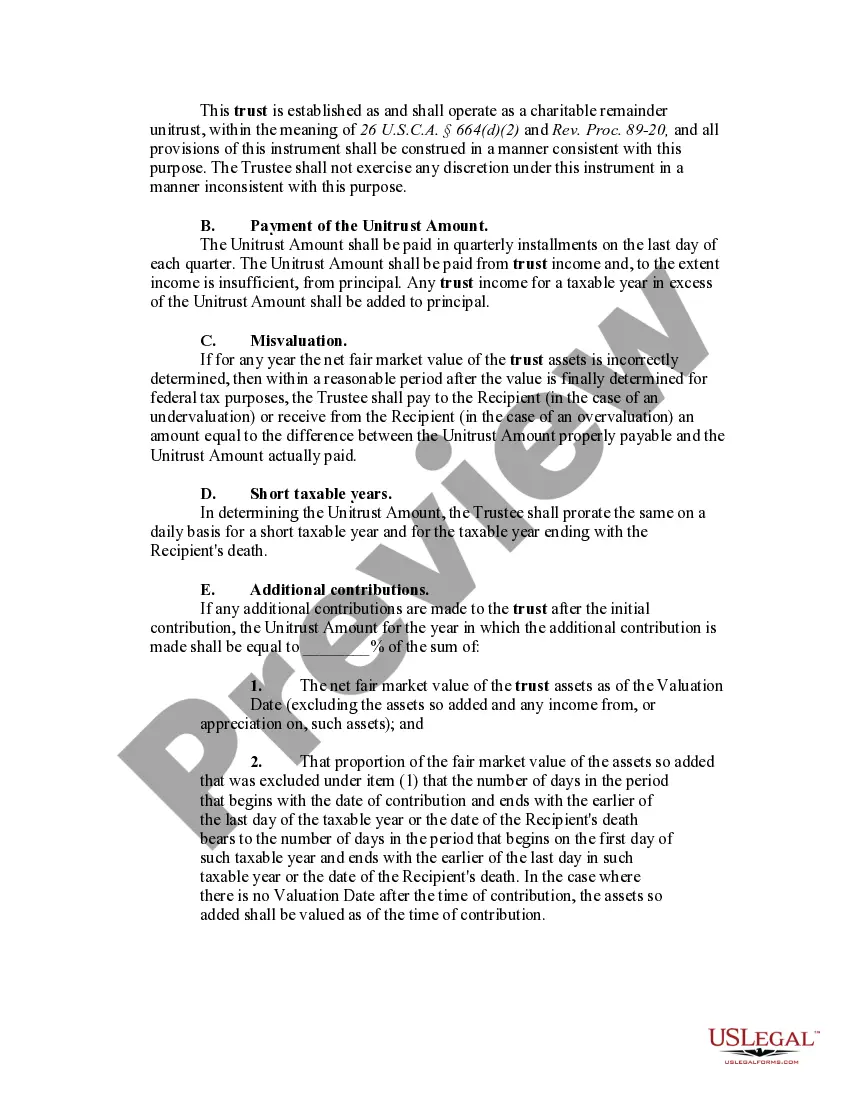
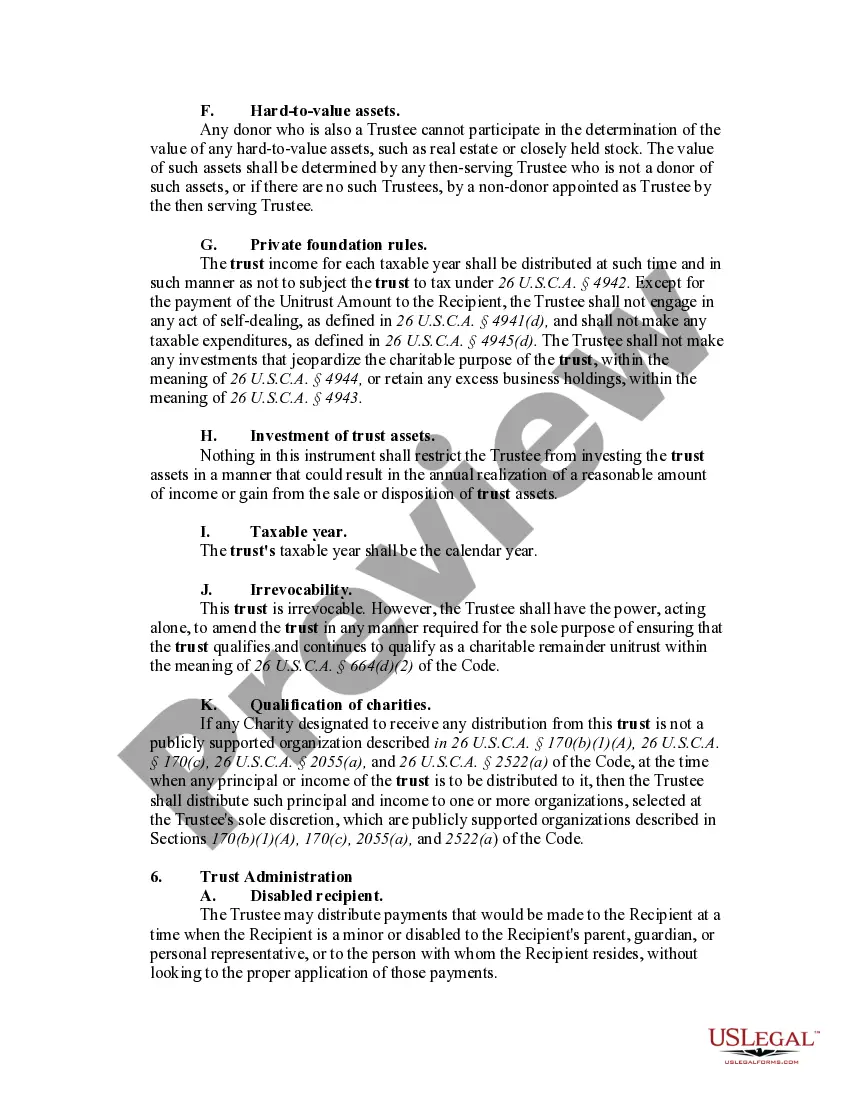
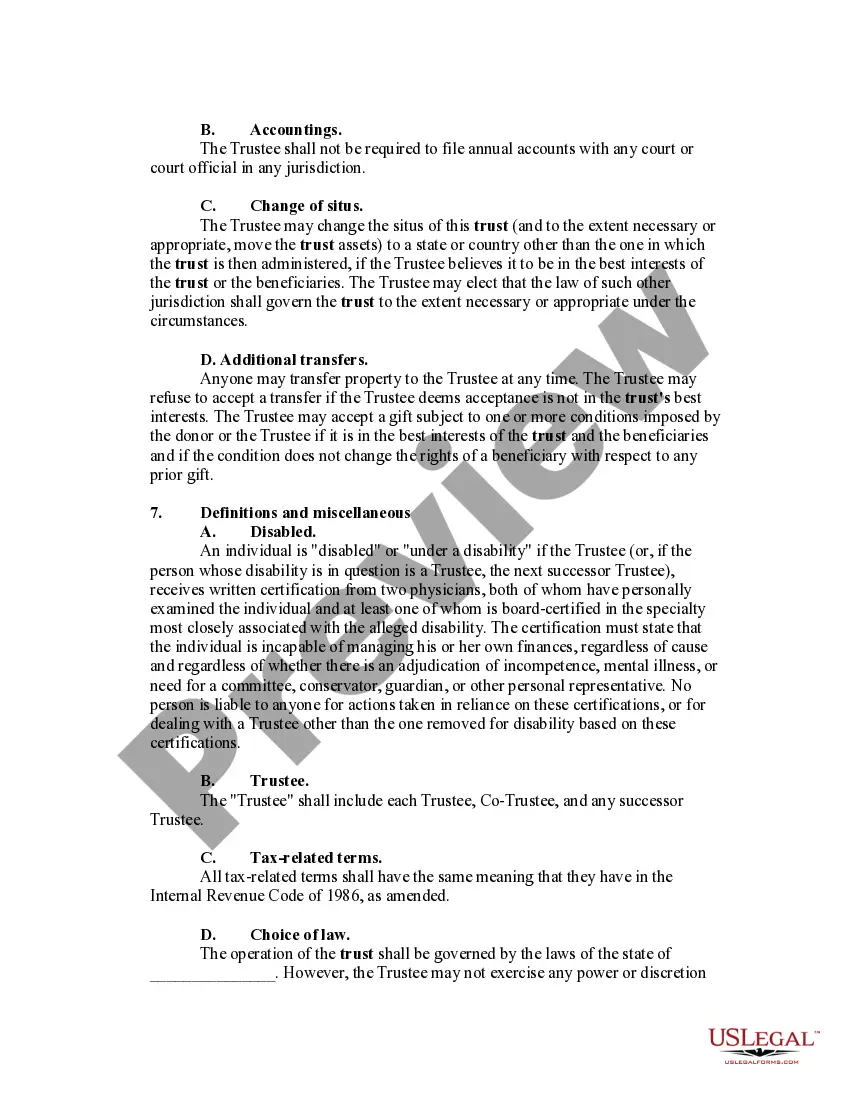
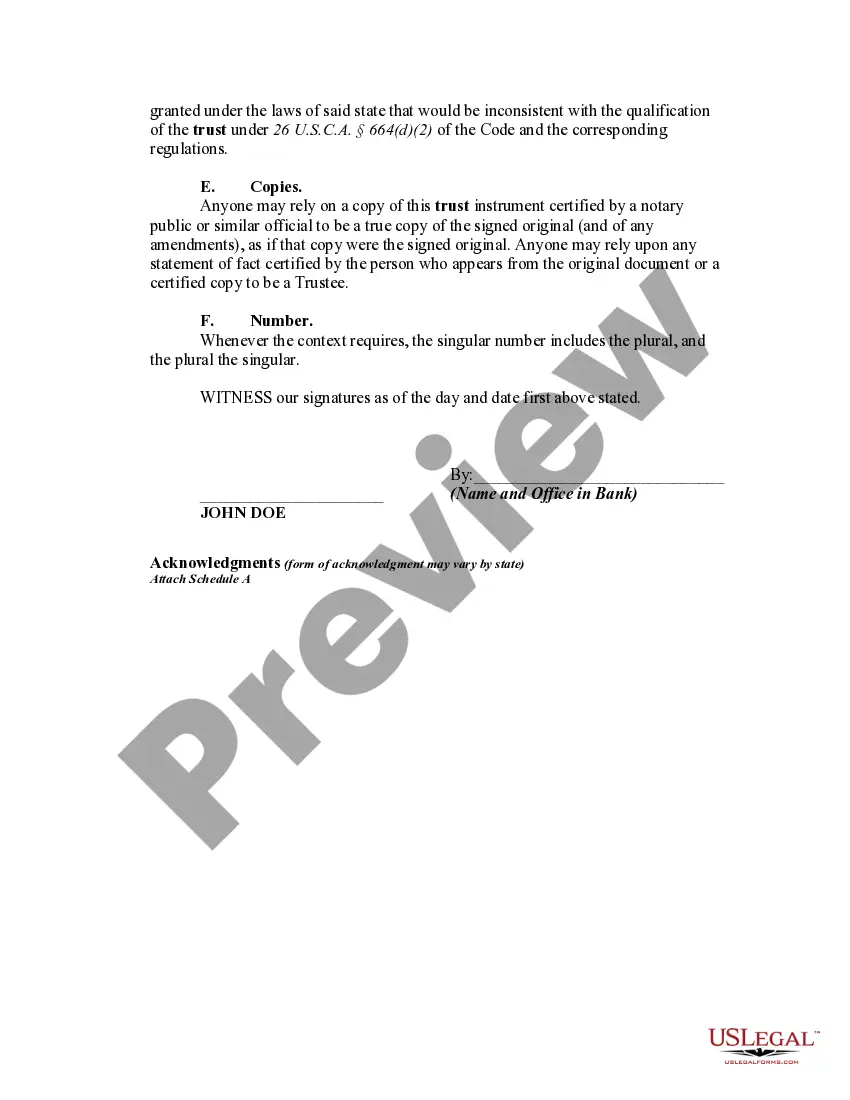
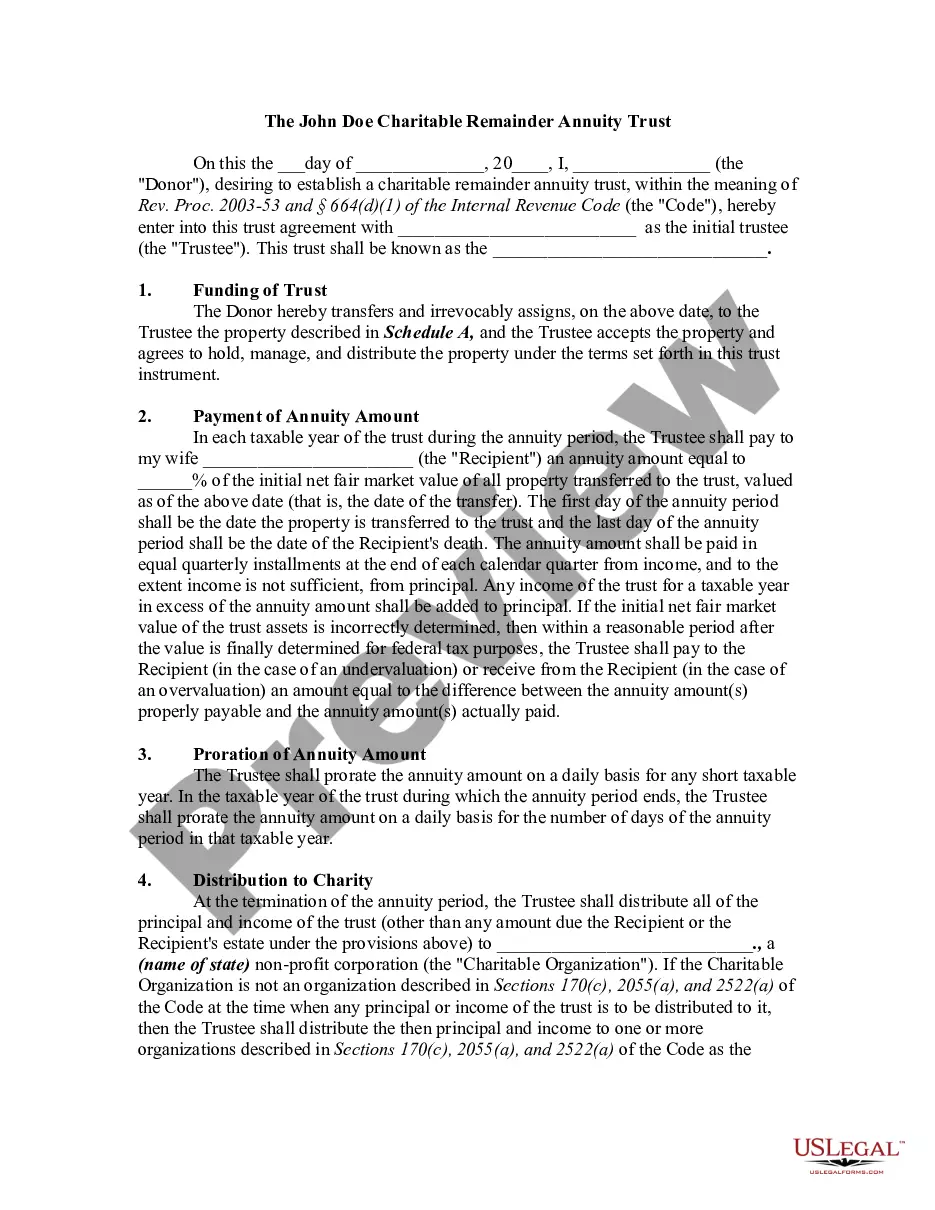
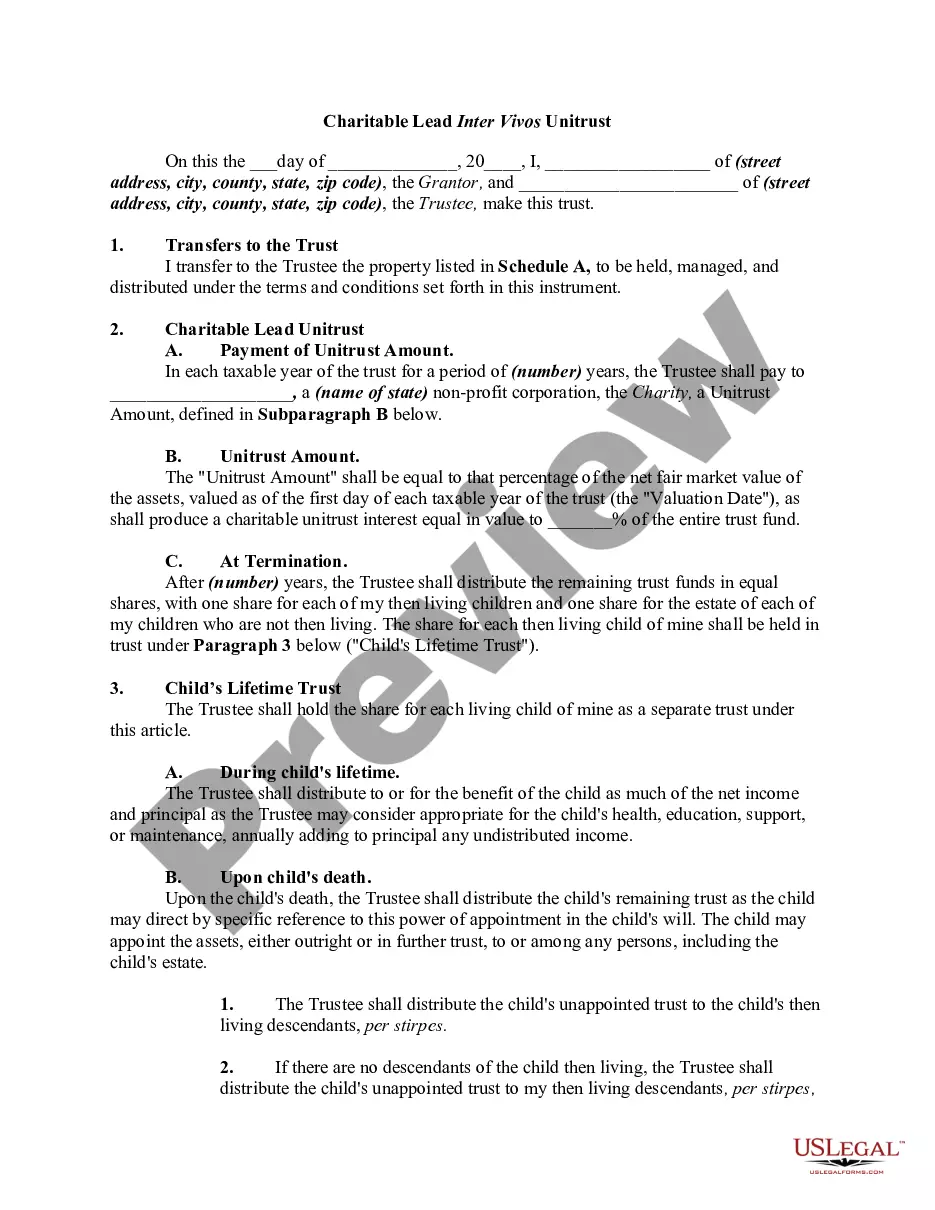
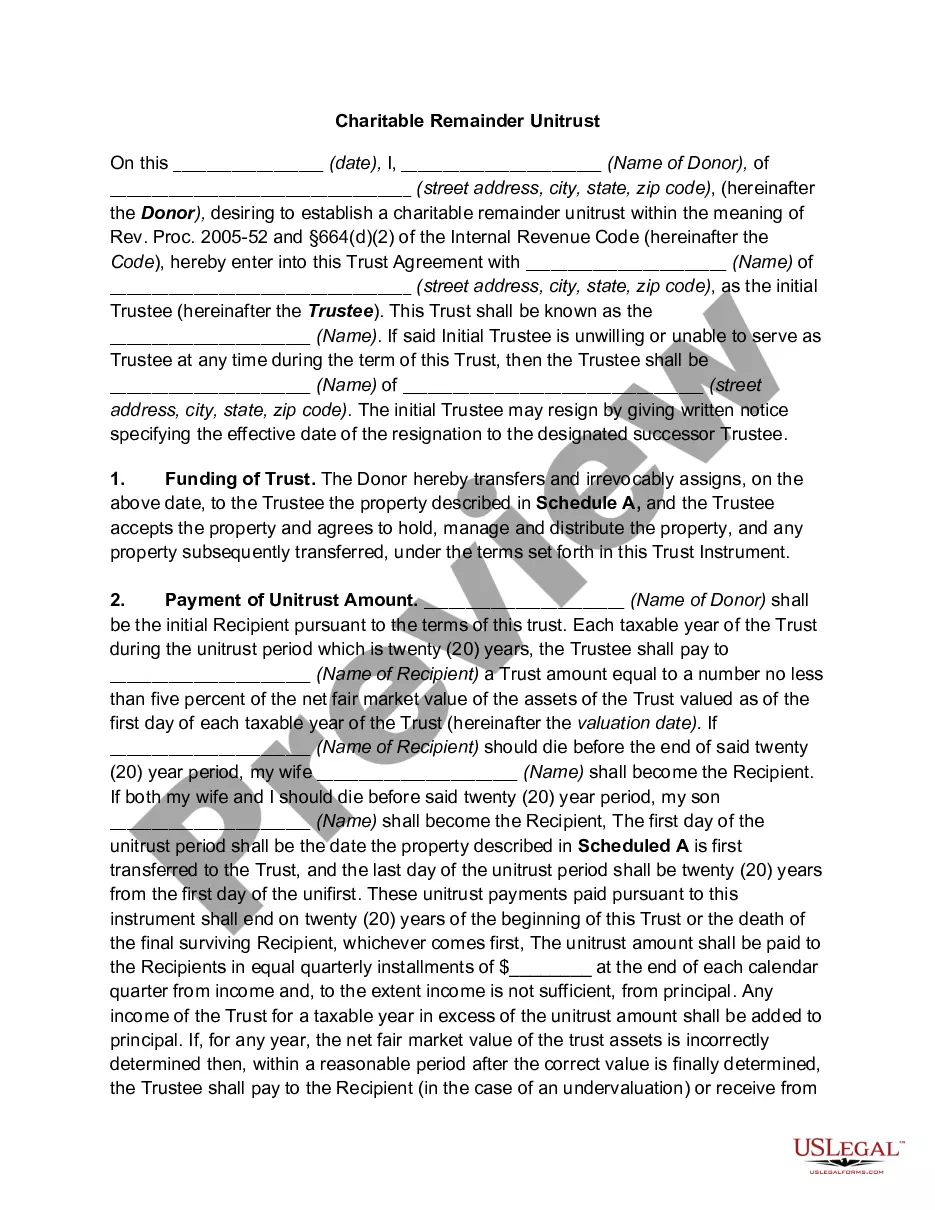
How to fill out Charitable Remainder Inter Vivos Unitrust Agreement?
- Log in to your account if you're a returning user. Ensure your subscription is active, and click the Download button to retrieve the necessary form template.
- For first-time users, start by browsing the online catalog. Review the preview and description of the forms to select one that matches your specific needs and complies with local regulations.
- If you can't find the appropriate form, utilize the Search tab to explore other options that may suit your requirements.
- Once you've found the correct document, click on the Buy Now button, select your preferred subscription plan, and create an account if you don’t already have one.
- Proceed to make your purchase by entering your payment information, either through credit card or PayPal.
- Download the completed form to your device, and access it anytime through the My Forms section of your profile for future reference.
By utilizing US Legal Forms, you benefit from a robust collection of over 85,000 legal forms, all tailored for ease of use. The platform empowers both individuals and legal professionals to quickly create legally sound documents.
Take control of your legal matters today. Visit US Legal Forms to access the forms you need and ensure your charitable form trust is filed correctly and efficiently.
Form popularity
FAQ
Yes, you can file form 1041 electronically, which is beneficial for those managing charitable form trusts with individuals. Filing electronically allows for a faster and more secure submission process. Many platforms, like USLegalForms, offer easy-to-use interfaces that guide you through the electronic filing process. Utilizing these tools can help ensure accuracy and efficiency in managing your charitable form trust.
Yes, a trustee can claim certain expenses from a charitable form trust file with individuals. Trustees are entitled to reimbursement for reasonable costs incurred while managing the trust, such as legal fees and administration expenses. Recording these expenses accurately is vital for transparency and tax reporting.
A charitable form trust file with individuals can reduce taxes through strategic income distribution and deductions. By distributing income to beneficiaries, you may lower the tax burden at the trust level, assuming beneficiaries are in a lower tax bracket. Additionally, take advantage of charitable deductions to further minimize taxable income.
Certainly, you can write off certain expenses in a charitable form trust file with individuals. These expenses may include administrative costs necessary for managing the trust, as well as expenses directly related to producing income. It’s essential to maintain detailed records and consult IRS guidelines to ensure compliance.
Yes, a charitable form trust file with individuals can deduct medical expenses on behalf of a beneficiary. These expenses must be incurred for the treatment of the beneficiary and properly documented. Keep in mind that you need to provide sufficient evidence for the deductions to qualify under IRS rules.
To report income from a charitable form trust file with individuals, begin by identifying the type of trust you have. Most trusts must file an annual tax return using IRS Form 1041. Ensure you accurately report all income earned by the trust, as well as any distributions made to beneficiaries, because both affect tax obligations.
A 1041 A form must be filed by simple trusts that earned more than $600 in gross income, and it needs to report specific details to the IRS. If your trust includes a charitable form trust file with individuals, understanding your filing obligations helps you avoid penalties. Failure to file when required can lead to significant tax complications. Always consider professional help to navigate these filings effectively.
Form 1041-A is required for certain trusts that are not subject to income tax but need to report taxable income for the year. Benefits might arise from estate planning strategies or if you hold a charitable form trust file with individuals. It's important to understand if your trust falls under these requirements to ensure compliance. Consulting a tax professional can guide you in making the right choice.
Yes, a charitable remainder trust typically files Form 1041 because it is treated as a separate entity for tax purposes. This form reports income earned by the trust, ensuring any taxable portion is adequately displayed. If you have established a charitable form trust file with individuals, timely filing can help keep your trust compliant with tax regulations. Staying informed about your reporting requirements is vital.
An estate tax return is triggered if the gross estate value exceeds the filing threshold set by the IRS, which is adjusted annually. Additionally, if you have made significant gifts prior to death or have a charitable form trust file with individuals, those details may impact whether you need to file. Filing this return is essential to settle any estate tax obligations. Always consult the latest IRS guidelines for up-to-date thresholds.