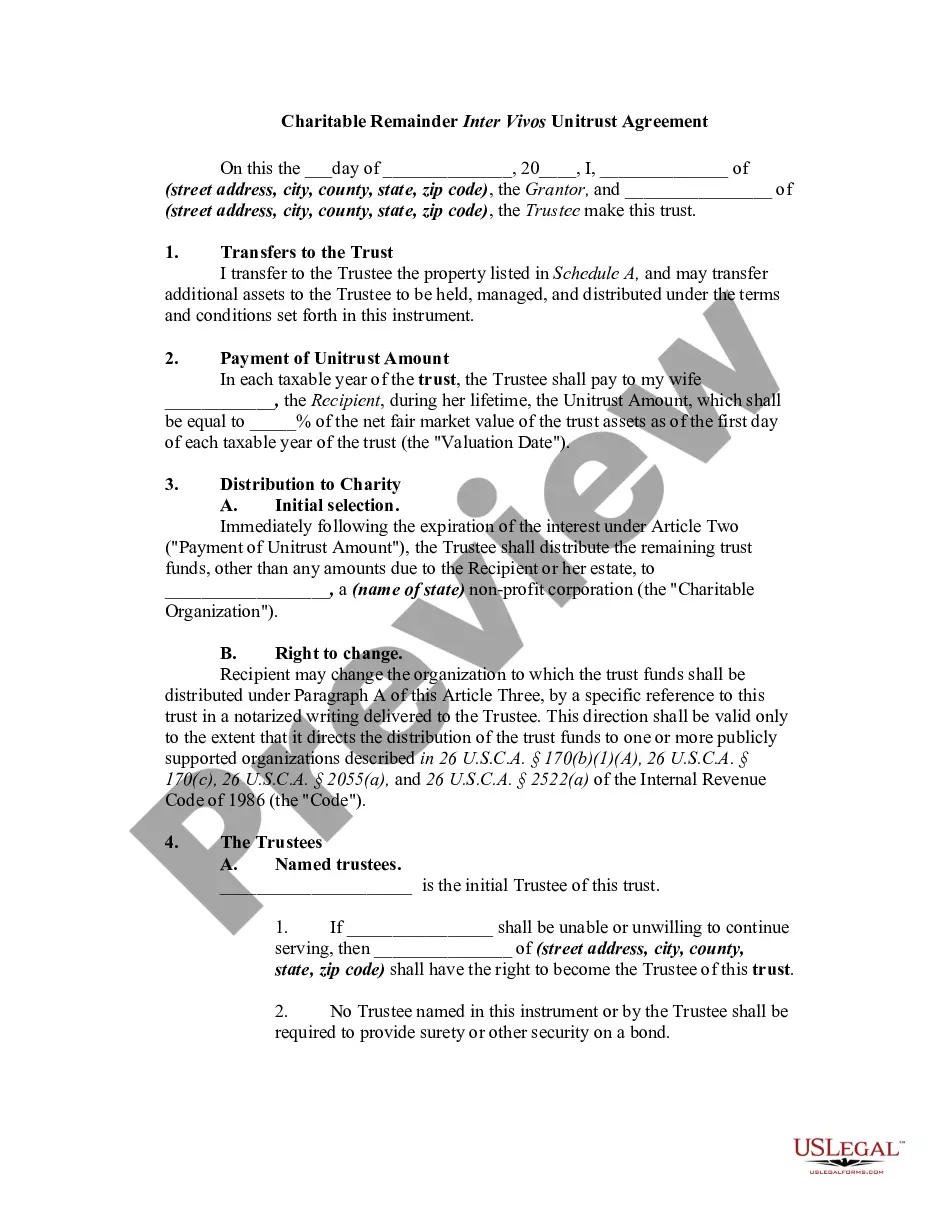
Charitable Agreement Trust Buy For The Future
Description
Get your form ready online
Our built-in tools help you complete, sign, share, and store your documents in one place.
Make edits, fill in missing information, and update formatting in US Legal Forms—just like you would in MS Word.
Download a copy, print it, send it by email, or mail it via USPS—whatever works best for your next step.
Sign and collect signatures with our SignNow integration. Send to multiple recipients, set reminders, and more. Go Premium to unlock E-Sign.
If this form requires notarization, complete it online through a secure video call—no need to meet a notary in person or wait for an appointment.
We protect your documents and personal data by following strict security and privacy standards.

Make edits, fill in missing information, and update formatting in US Legal Forms—just like you would in MS Word.

Download a copy, print it, send it by email, or mail it via USPS—whatever works best for your next step.

Sign and collect signatures with our SignNow integration. Send to multiple recipients, set reminders, and more. Go Premium to unlock E-Sign.

If this form requires notarization, complete it online through a secure video call—no need to meet a notary in person or wait for an appointment.

We protect your documents and personal data by following strict security and privacy standards.
Looking for another form?





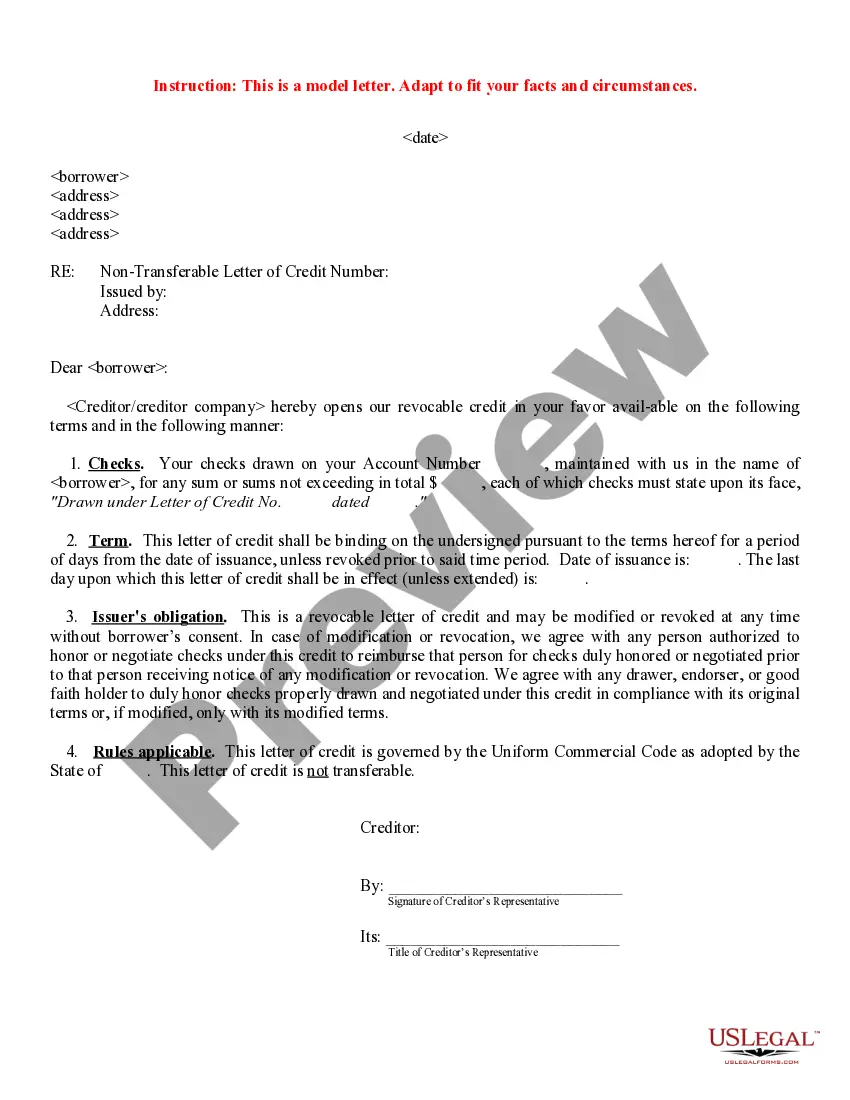
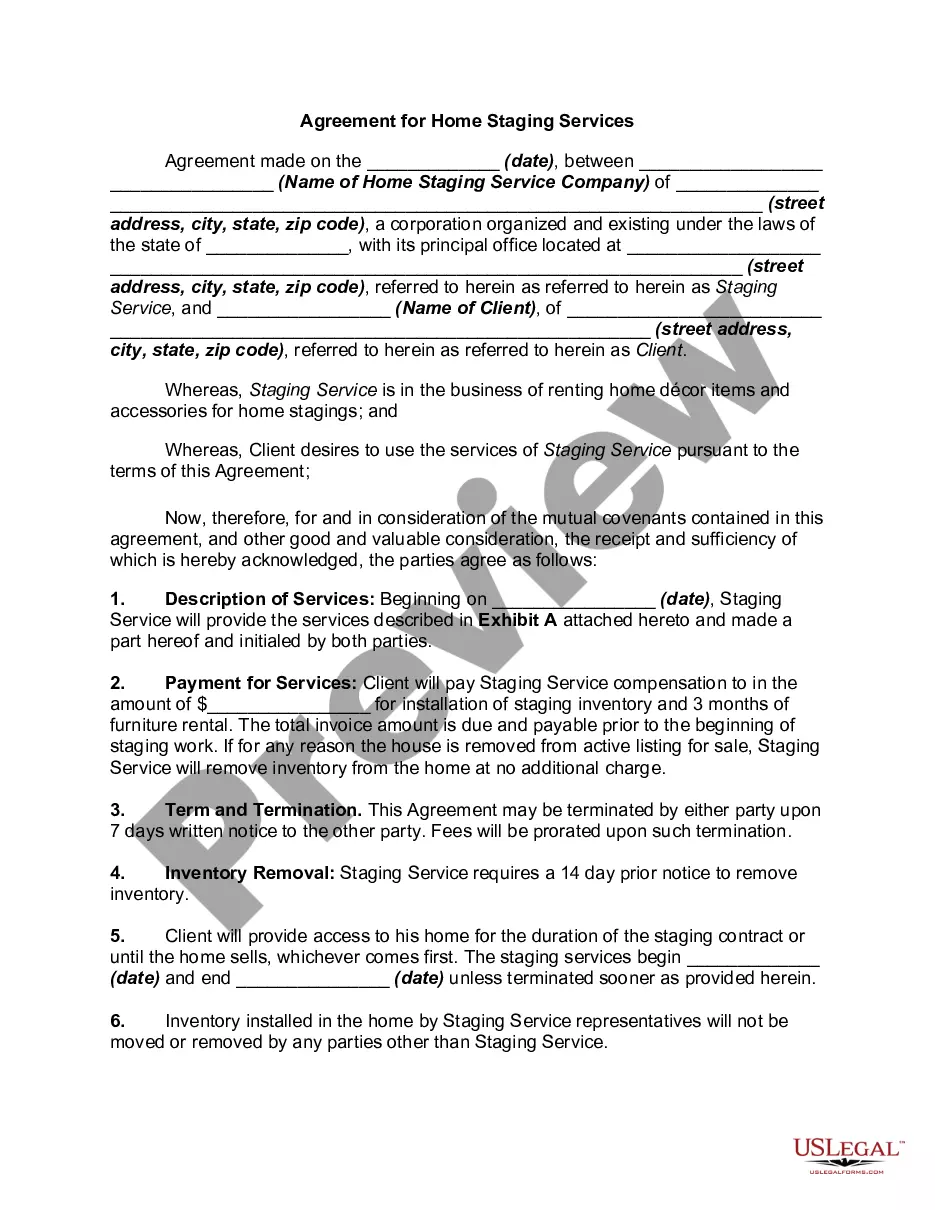
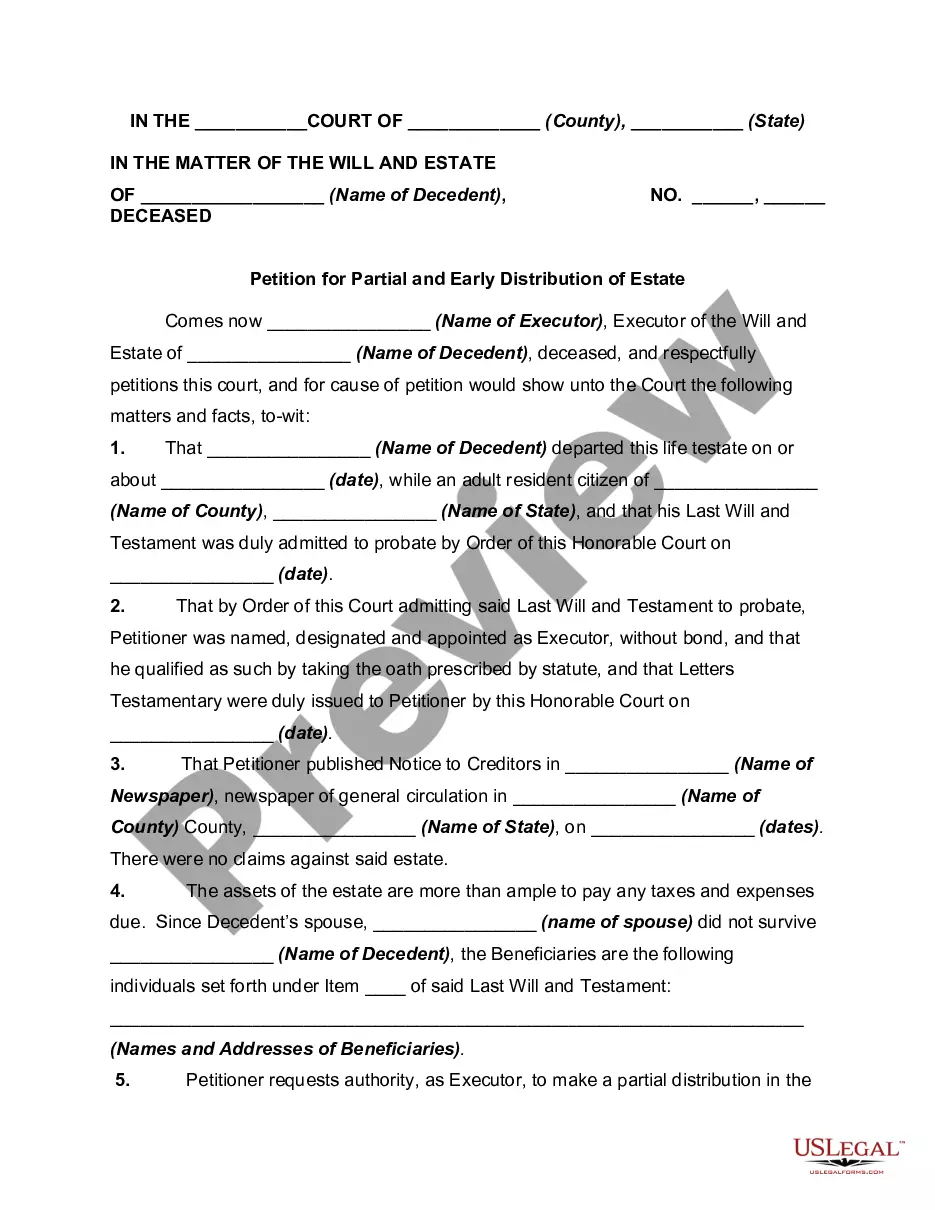


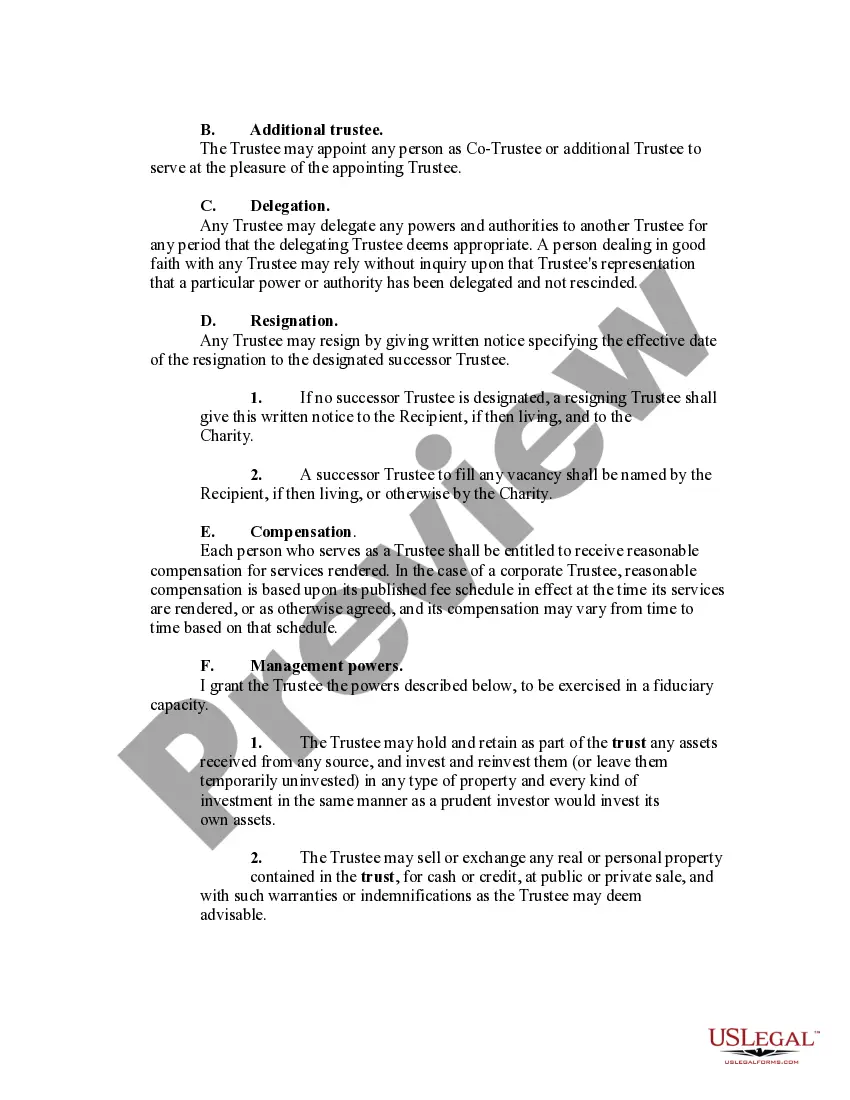
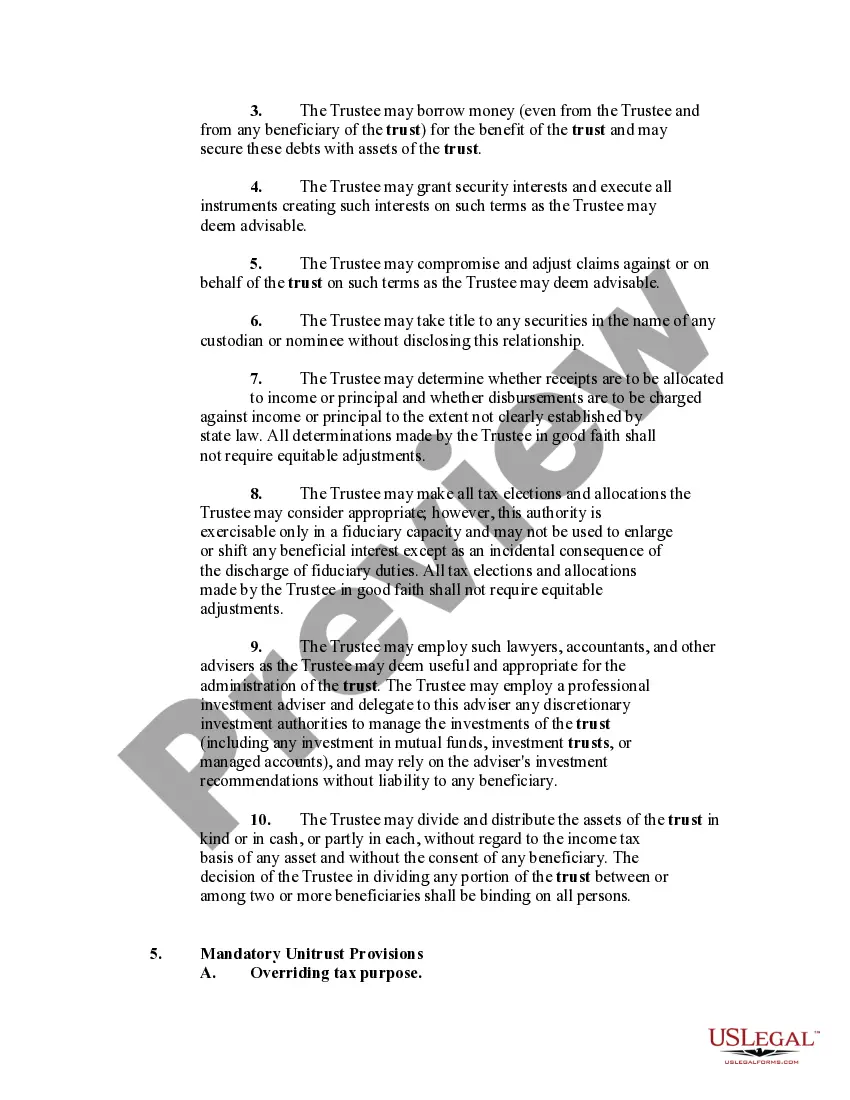
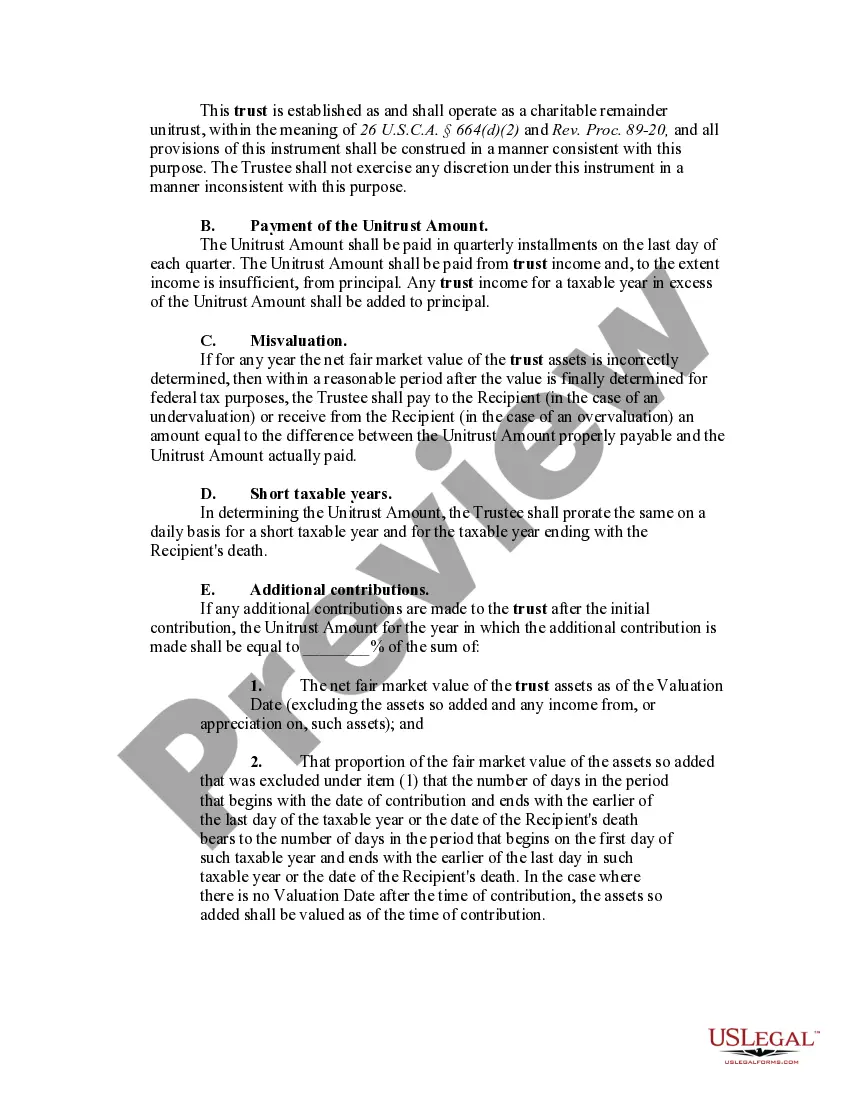
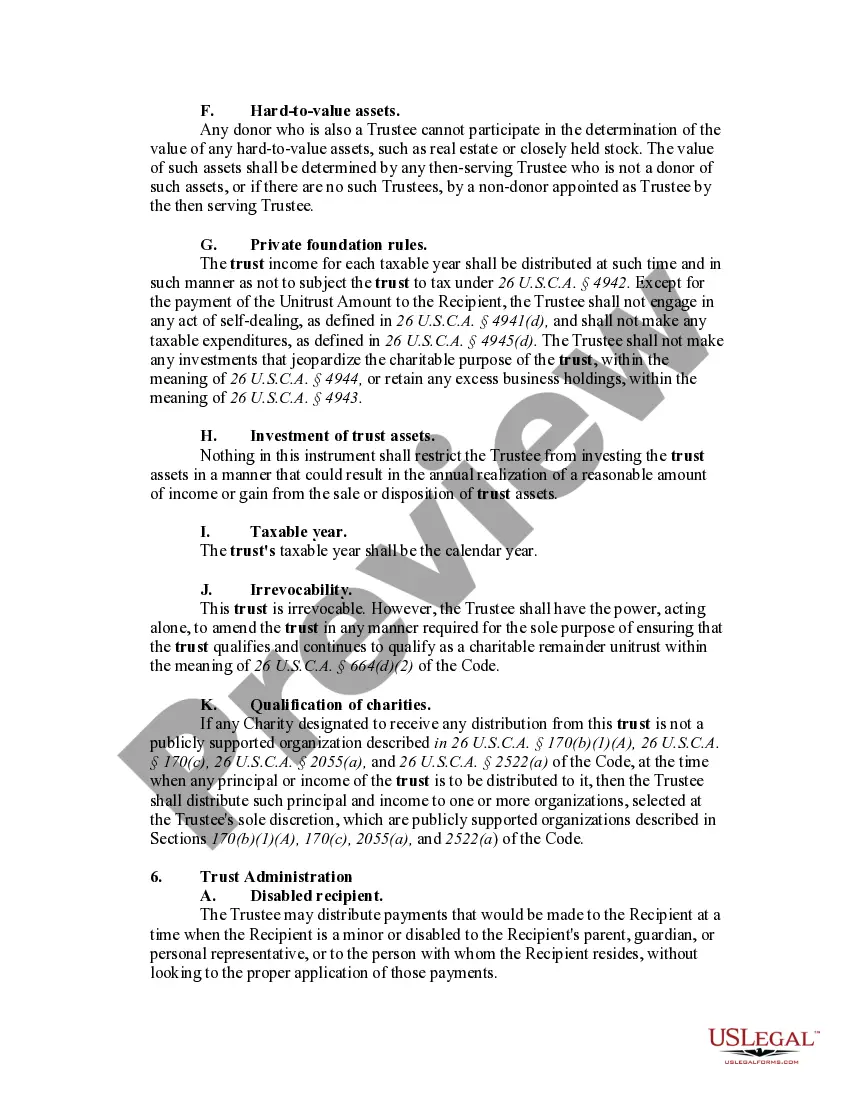
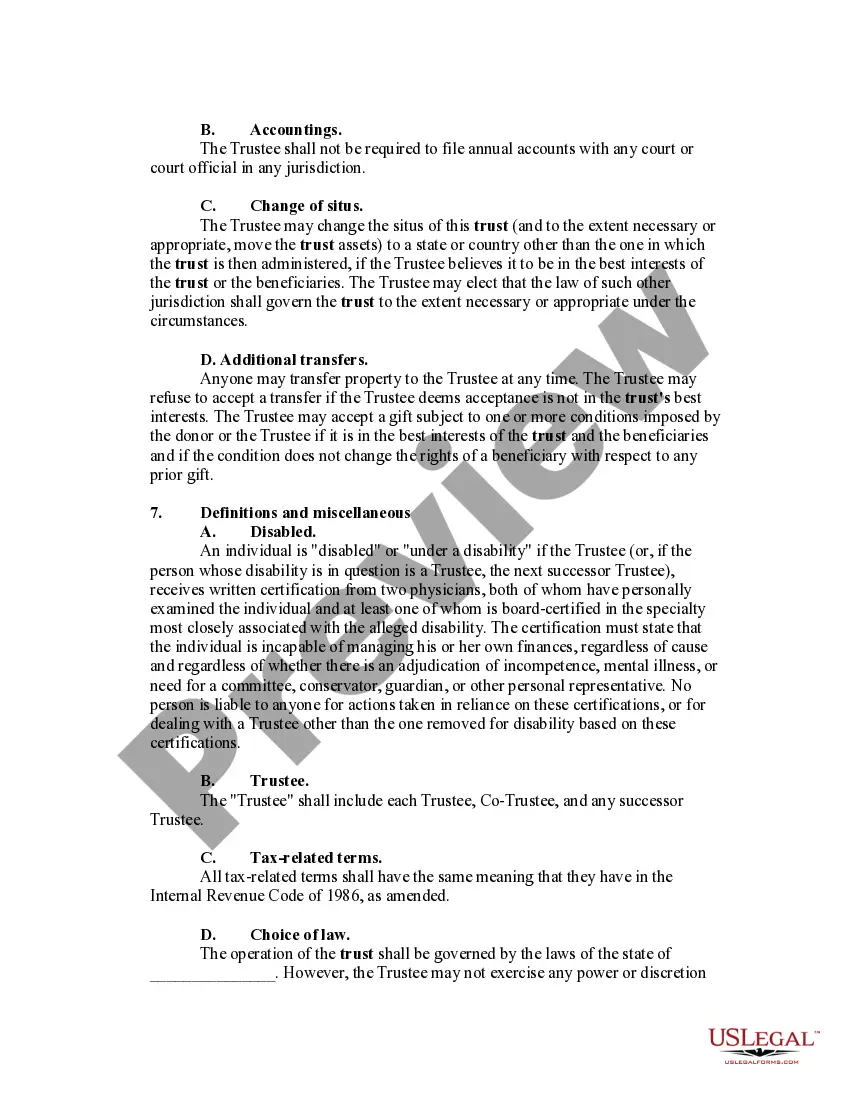
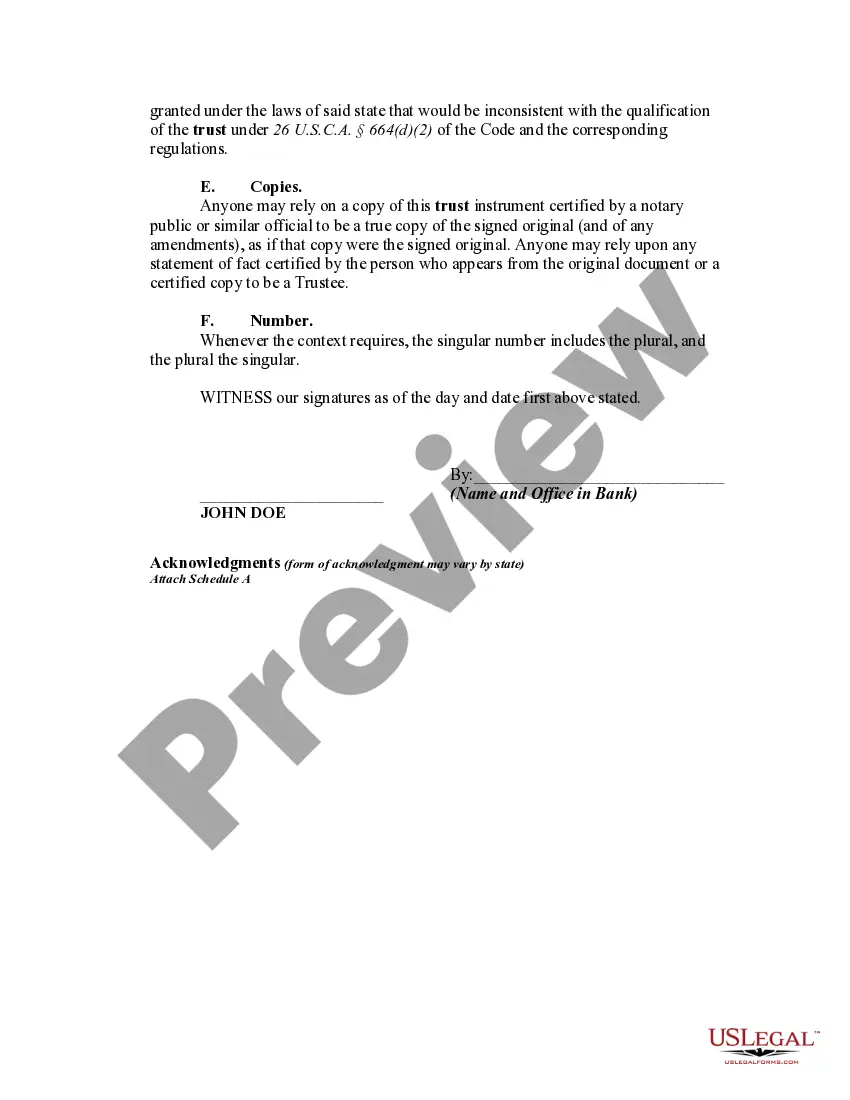
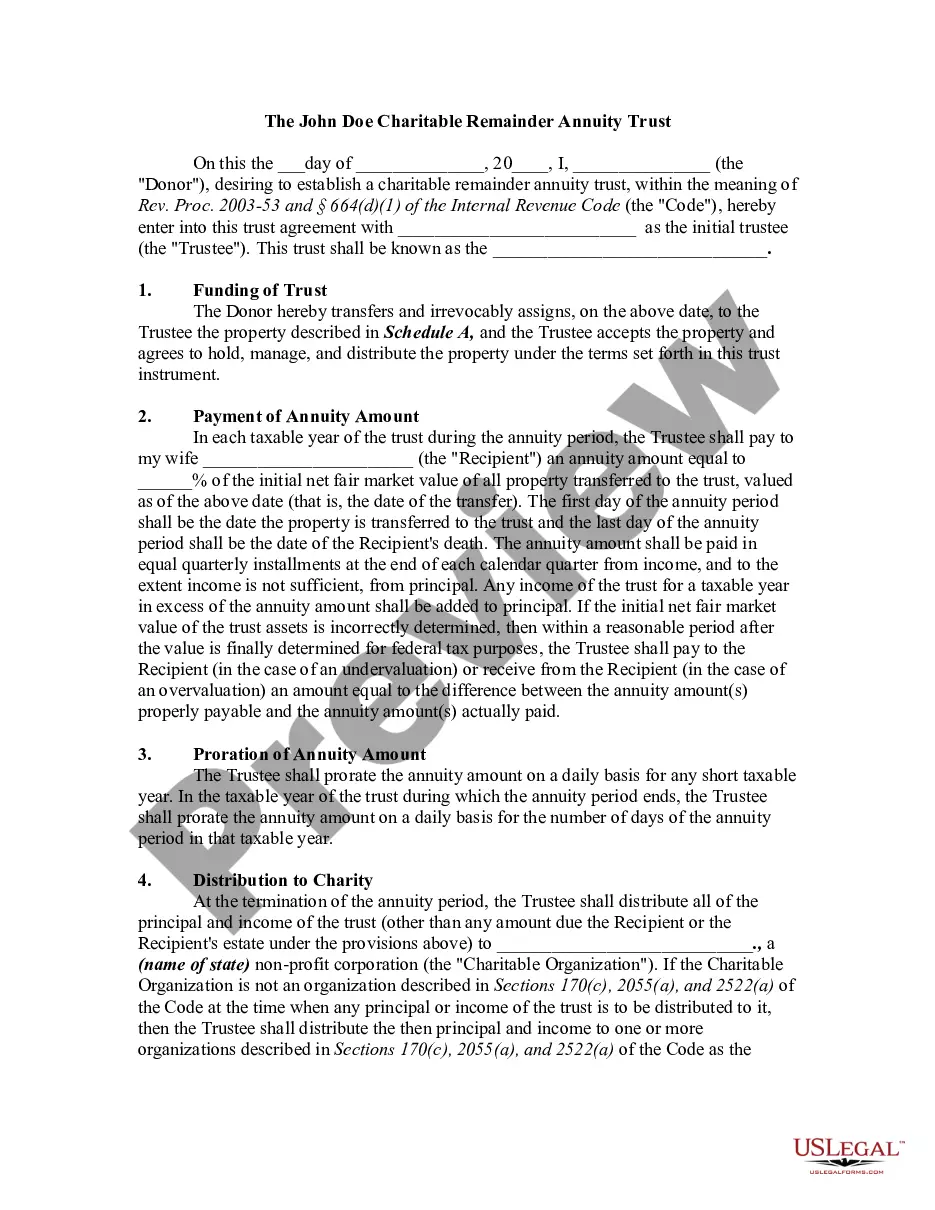
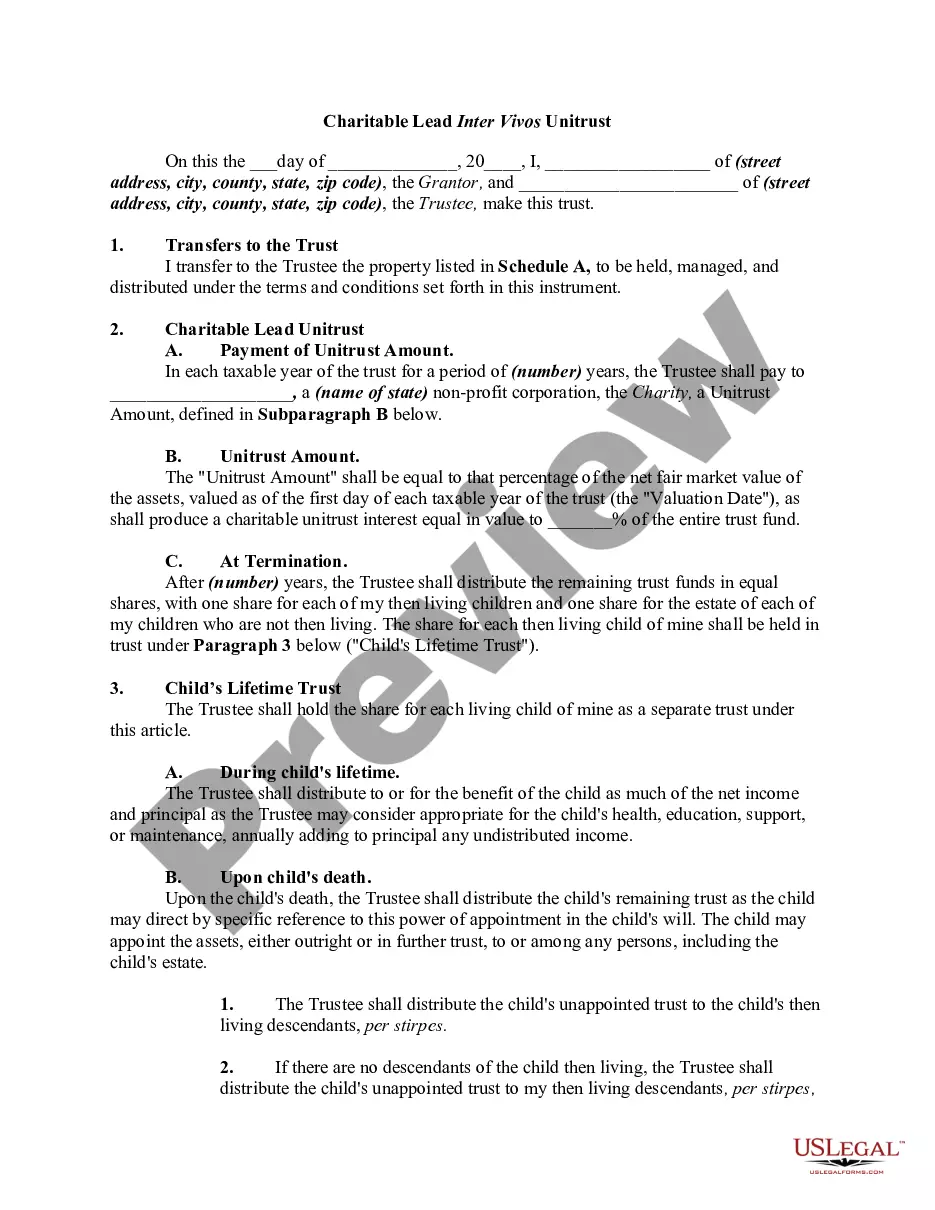
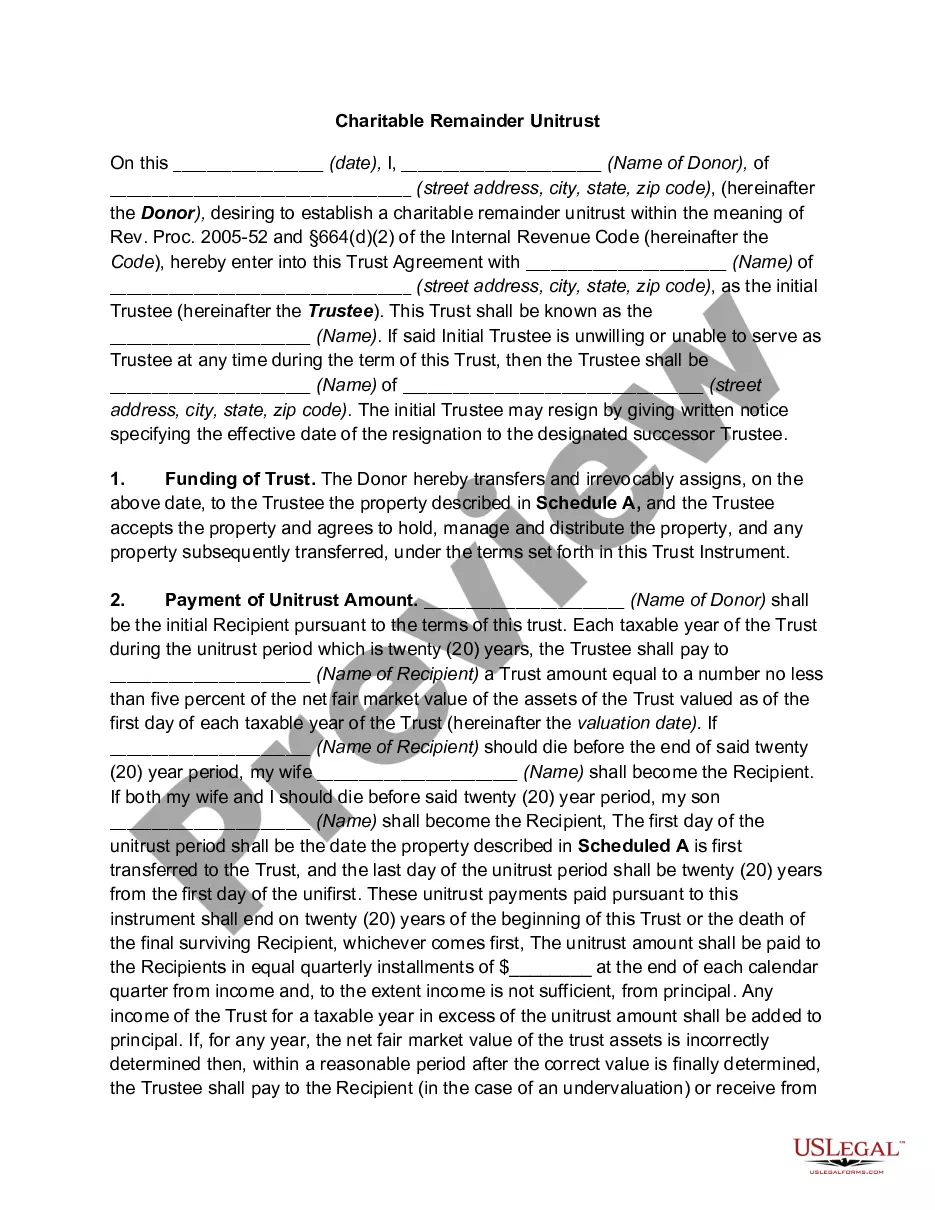
How to fill out Charitable Remainder Inter Vivos Unitrust Agreement?
- If you're already a member, log in to your account and access the form you need. Remember to check that your subscription is active; if it has expired, renew it based on your payment plan.
- For first-time users, begin by exploring the template previews and descriptions. Verify that the document complies with your local jurisdiction and fits your needs.
- If you don’t find the right template, utilize the Search feature to discover other options. Ensure the chosen form aligns with your requirements before proceeding.
- To purchase the document, click the Buy Now button and select your desired subscription plan. You will need to create an account to gain access to the full resources available.
- Complete your purchase by entering your payment details, either through credit card or PayPal.
- Finally, download the form to your device for completion. You can always access your documents in the My Forms section of your profile.
Concluding the purchase process is essential in ensuring that your charitable agreement trust is properly set up for the future. With US Legal Forms, you gain access to a robust library and expert support, making your legal journey seamless.
Start your journey today and experience the convenience of US Legal Forms; your future in charitable giving awaits!
Form popularity
FAQ
A trust can run in perpetuity if it complies with state laws regarding perpetual trusts. This setup allows for ongoing benefits to charitable organizations without an expiration date. A charitable agreement trust buy for the future is an excellent way to secure a lasting legacy that continues to support your favorite causes.
Yes, a charitable remainder trust can last longer than 20 years, depending on how it is structured. The IRS does not impose a strict time limit on the duration, allowing for flexible planning options. By choosing a charitable agreement trust buy for the future, you can ensure that your contributions last as long as needed to support your chosen causes.
The Rule Against Perpetuities prevents a trust from lasting beyond a specific time limit, typically the lives of relevant individuals plus a 21-year period. This rule ensures that property remains productive and does not stay stuck in limbo. When you engage in a charitable agreement trust buy for the future, it's essential to navigate this rule carefully to maximize your charitable goals.
A Charitable Remainder Unitrust (CRUT) offers certain tax benefits, but it also has downsides. For instance, the payout to beneficiaries is tied to the trust's investment performance, which can lead to fluctuating income. Understanding these factors can help you make informed decisions about a charitable agreement trust buy for the future.
The perpetuity rule for trusts limits how long a trust can last. In general, the trust cannot continue indefinitely, as it must ultimately benefit people within a certain time frame. This is where a charitable agreement trust buy for the future becomes vital, allowing you to ensure your charitable intentions endure while adhering to legal requirements.
As of now, you cannot file IRS Form 5227 electronically. This requirement means that you will need to submit a paper form by mail. However, staying organized and using platforms like US Legal Forms can help streamline the preparation and ensure accurate completion of the form.
The IRS form specifically required for a charitable trust is Form 5227, which is designed for reporting information about non-exempt charitable trusts. This form captures the financial activities and distributions made by the trust. Filing this form is essential for the proper management of a charitable agreement trust buy for the future.
Yes, a charitable agreement trust buy for the future must typically file a tax return. The trust may need to submit IRS Form 1041 to report income, deductions, and distributions. Filing ensures compliance with tax laws and allows for accurate reporting of the trust's financial activities.
A Charitable Lead Annuity Trust (CLAT) and a Charitable Lead Unitrust (CLUT) serve different financial strategies within a charitable agreement trust buy for the future. A CLAT provides fixed annuity payments to charities over a set time, whereas a CLUT pays a variable percentage of the trust's value each year based on its current worth. Understanding these differences can help you choose the right option for your financial goals.
Individuals or organizations that manage charitable remainder trusts, including charitable agreement trusts that buy for the future, must file IRS Form 5227. This form provides essential information about the trust's activities and financial operations. It's crucial for ensuring compliance with federal regulations and maintaining transparency.