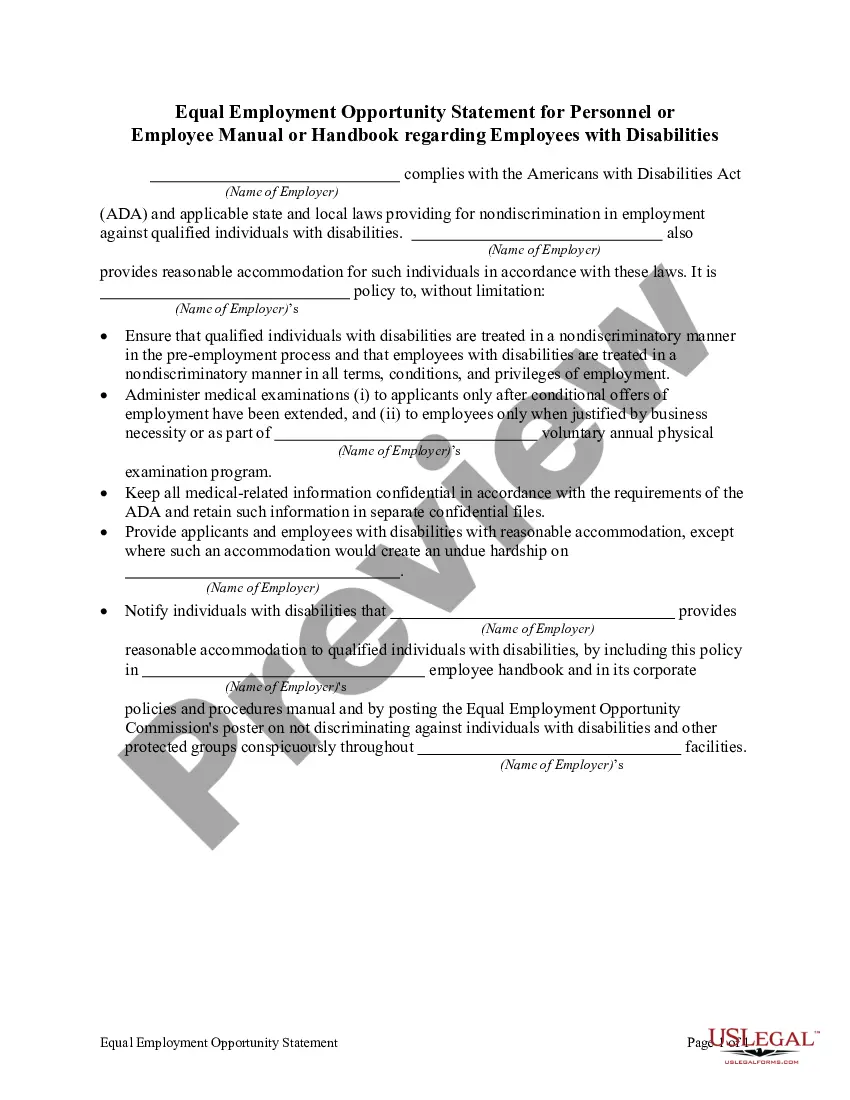
Opportunity Eeo Statement With Join
Description
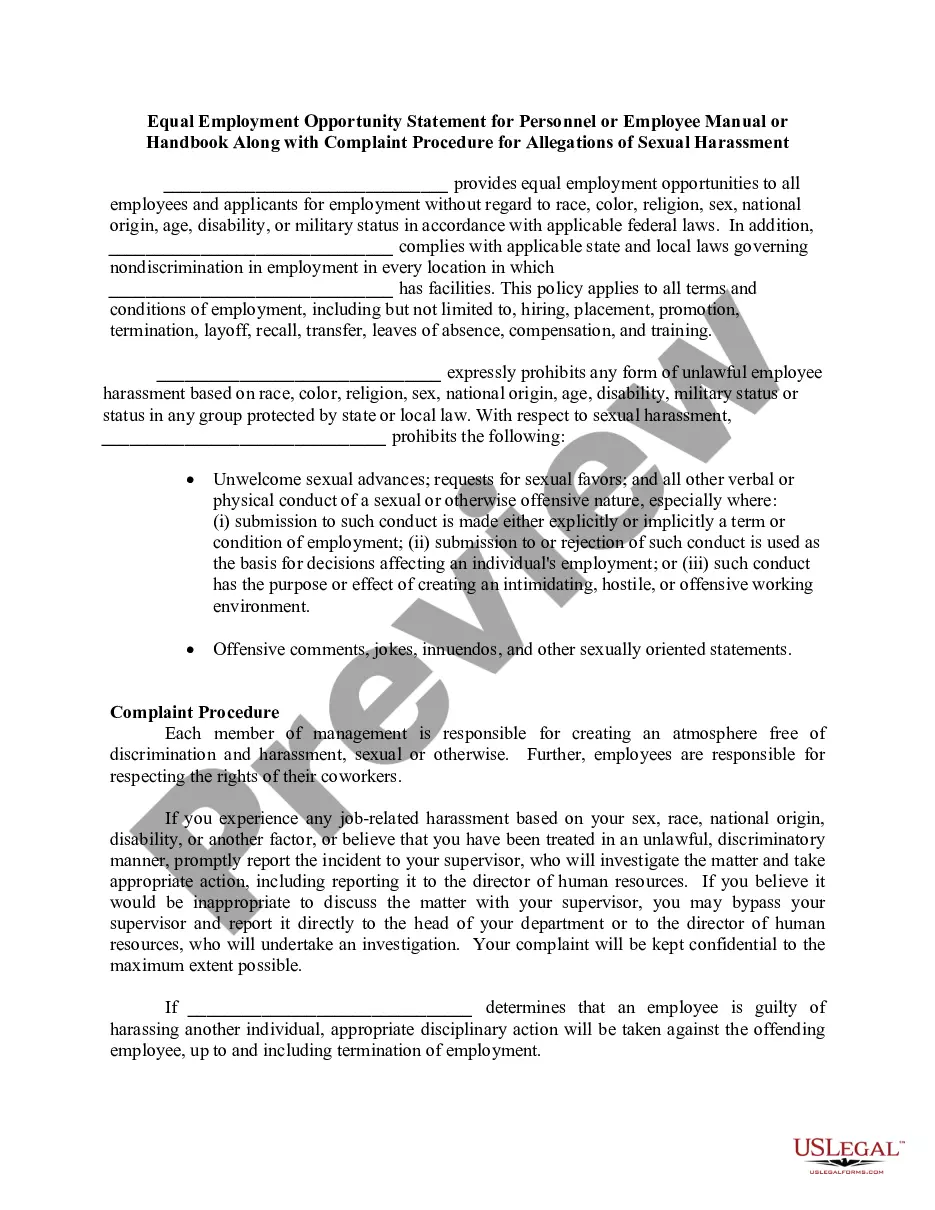
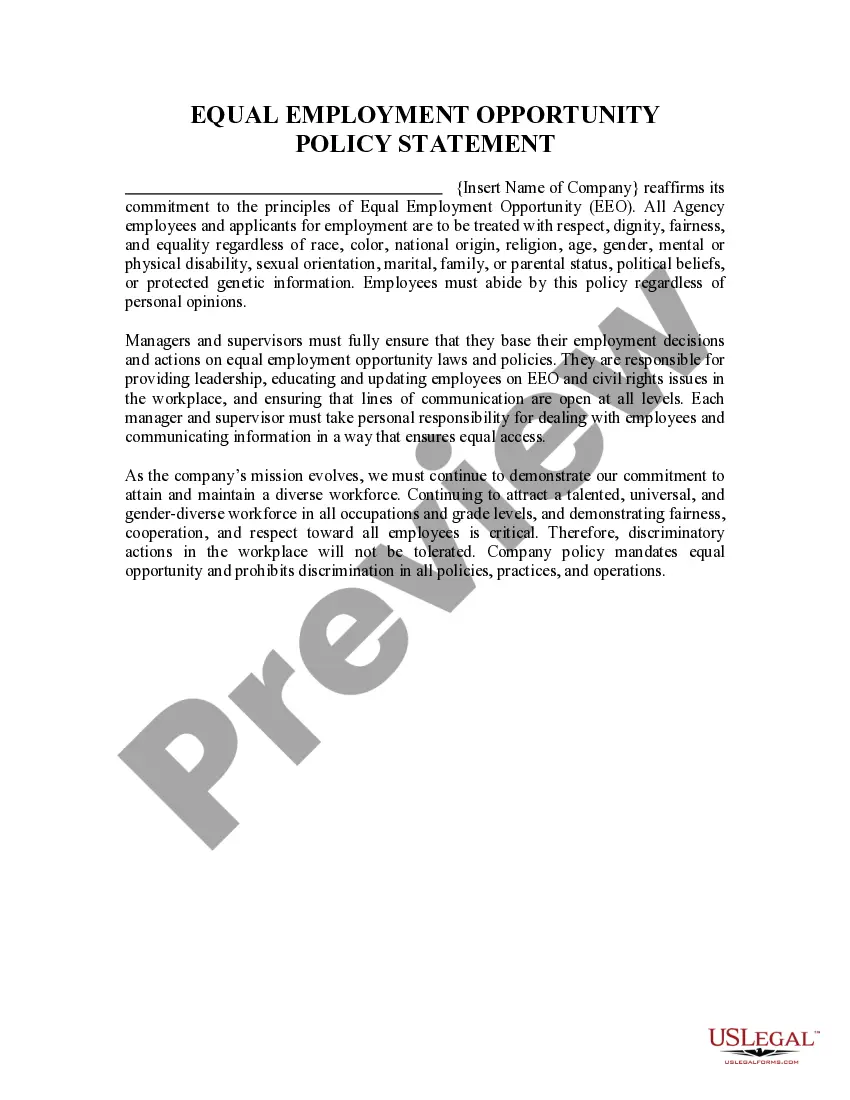
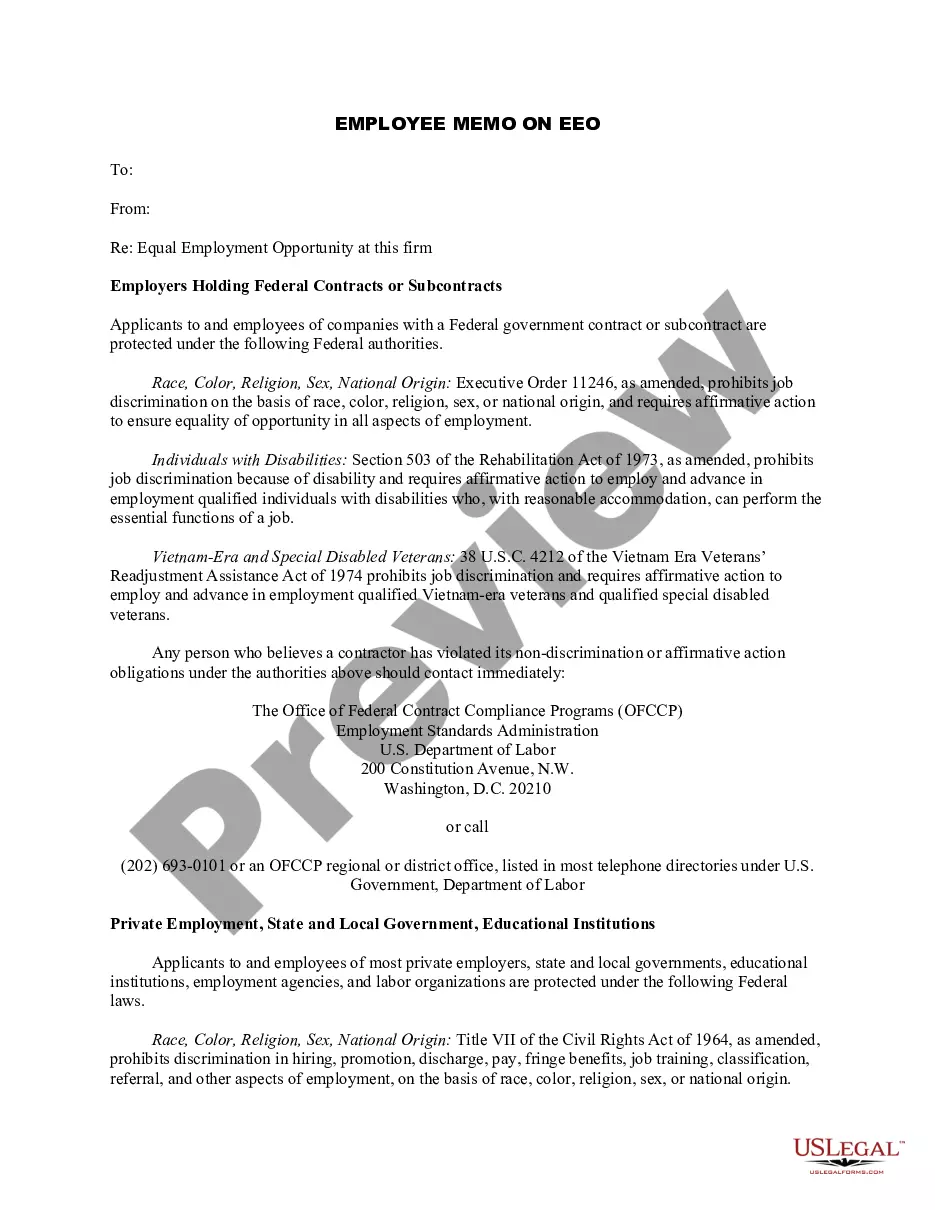




How to fill out Equal Employment Opportunity Statement For Personnel Or Employee Manual Or Handbook Regarding Employees With Disabilities - EEOC?
Whether for business purposes or for individual matters, everybody has to manage legal situations sooner or later in their life. Completing legal documents needs careful attention, starting with picking the appropriate form template. For example, if you pick a wrong version of a Opportunity Eeo Statement With Join, it will be turned down once you submit it. It is therefore crucial to get a reliable source of legal files like US Legal Forms.
If you have to obtain a Opportunity Eeo Statement With Join template, stick to these simple steps:
- Find the template you need by utilizing the search field or catalog navigation.
- Look through the form’s information to make sure it suits your situation, state, and county.
- Click on the form’s preview to see it.
- If it is the incorrect document, return to the search function to find the Opportunity Eeo Statement With Join sample you require.
- Download the template when it meets your needs.
- If you have a US Legal Forms profile, simply click Log in to access previously saved files in My Forms.
- If you don’t have an account yet, you may download the form by clicking Buy now.
- Choose the proper pricing option.
- Complete the profile registration form.
- Select your payment method: you can use a bank card or PayPal account.
- Choose the document format you want and download the Opportunity Eeo Statement With Join.
- After it is saved, you can fill out the form by using editing software or print it and finish it manually.
With a large US Legal Forms catalog at hand, you do not have to spend time looking for the right template across the web. Utilize the library’s simple navigation to get the correct form for any occasion.
Form popularity
FAQ
No, job applicants do not have to answer EEO questions on job applications, but they must decline to answer if they are not willing to take the survey. More so, the data from the questions only becomes relevant if the person accepts the job.
How do you write an equal opportunity employer statement? Be specific. Make sure that your statement emphasizes workplace diversity. Mention which employment practices your EOE statement applies to. State that you make hiring decisions based on merit. Link to your EEO policy.
[Company Name] provides equal employment opportunities to all employees and applicants for employment and prohibits discrimination and harassment of any type without regard to race, color, religion, age, sex, national origin, disability status, genetics, protected veteran status, sexual orientation, gender identity or ...
What does equal opportunity employer mean? An equal opportunity employer is an organization that agrees not to discriminate against any employee or job applicant because of race, color, religion, national origin, sex, physical or mental disability, or age.
The length of EEO statements can vary. Some employers opt for a short, formal acknowledgement: ?We're an equal opportunity employer. All applicants will be considered for employment without attention to race, color, religion, sex, sexual orientation, gender identity, national origin, veteran or disability status.?