Release Record Form For Dogs
Description
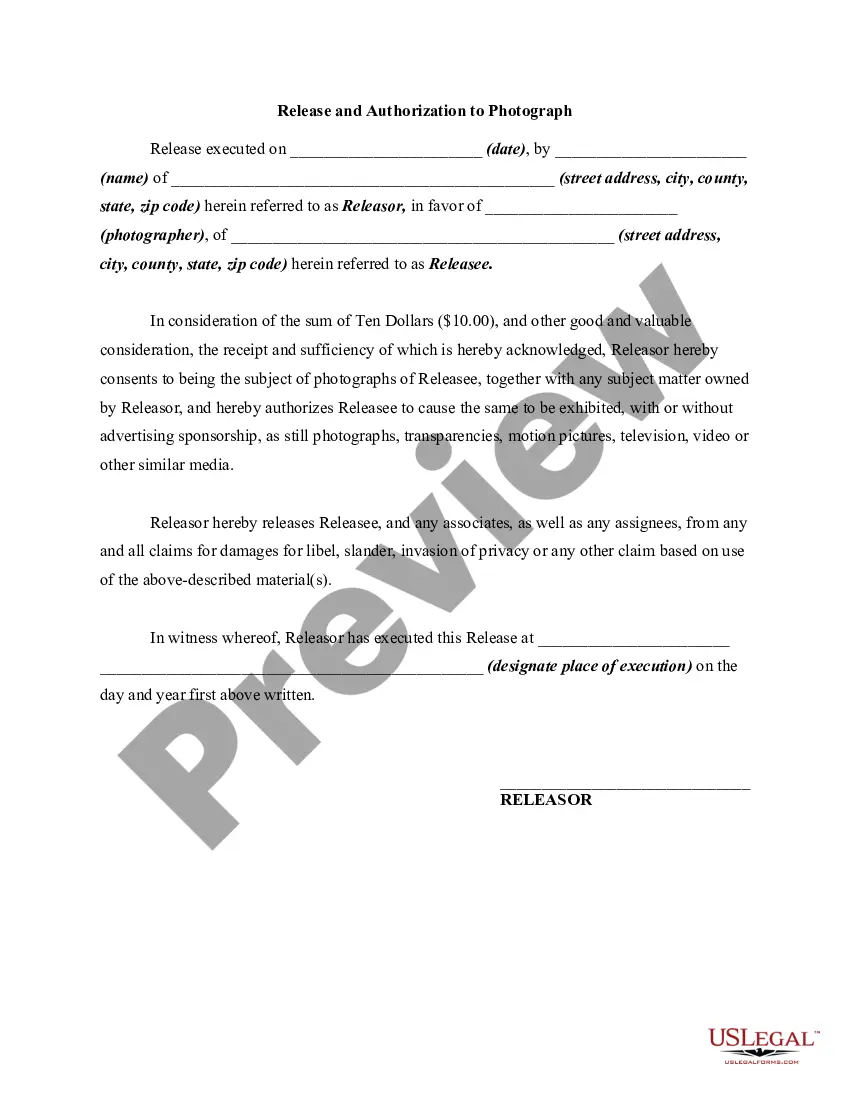
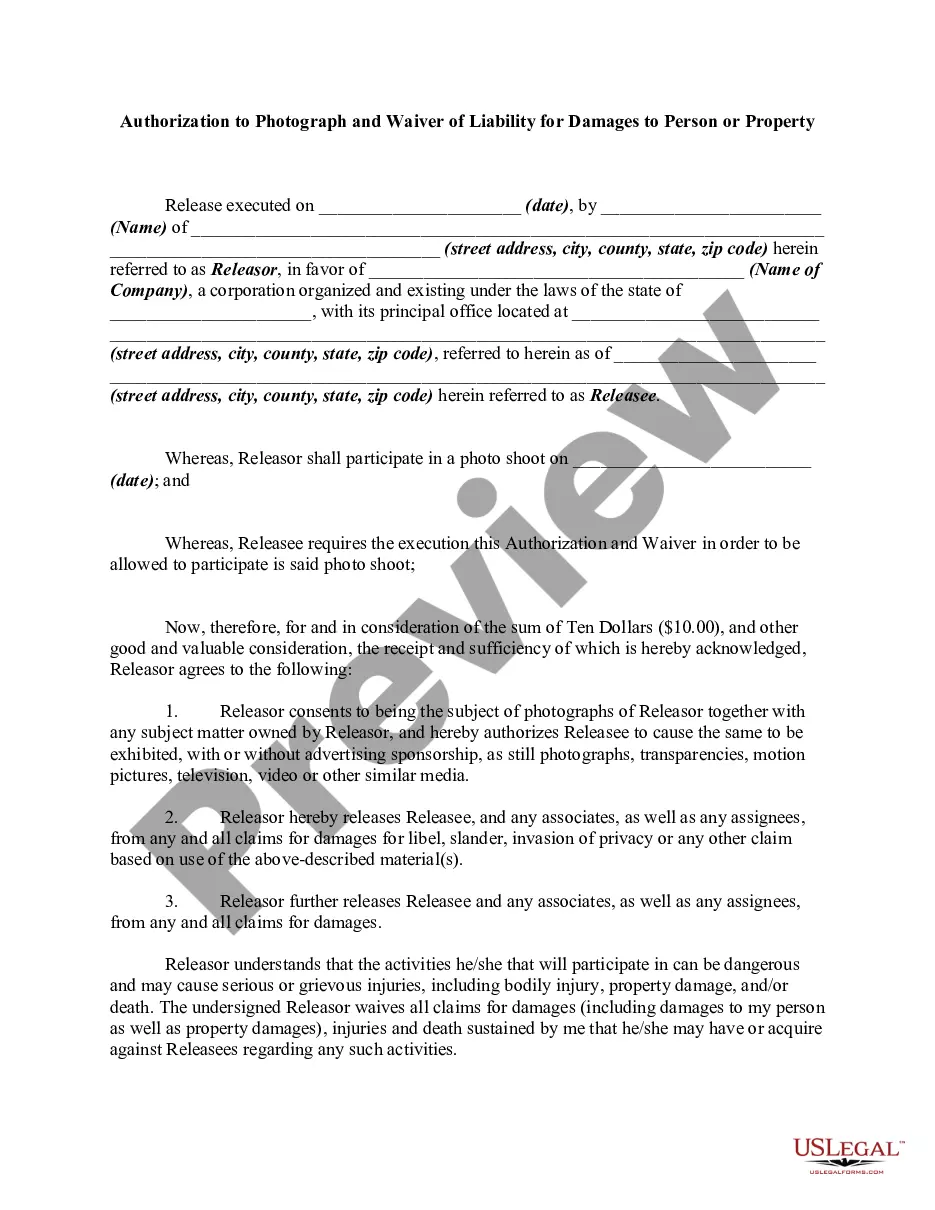
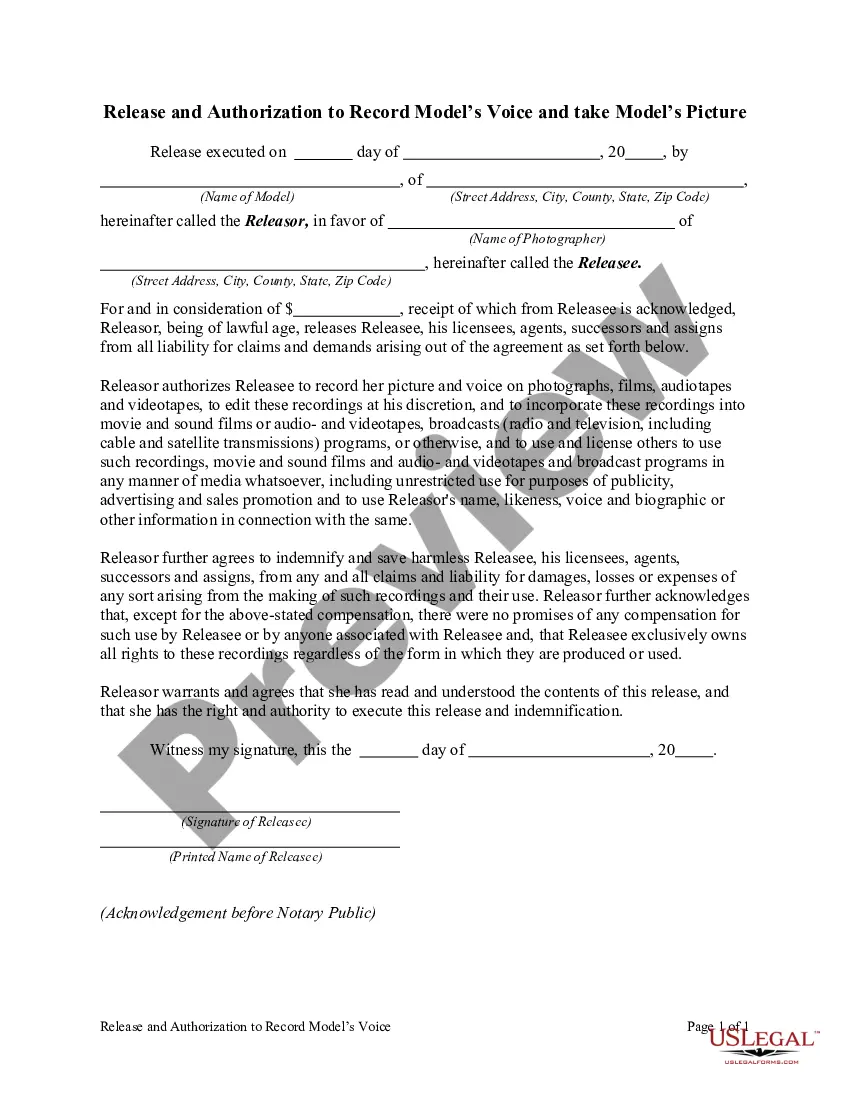


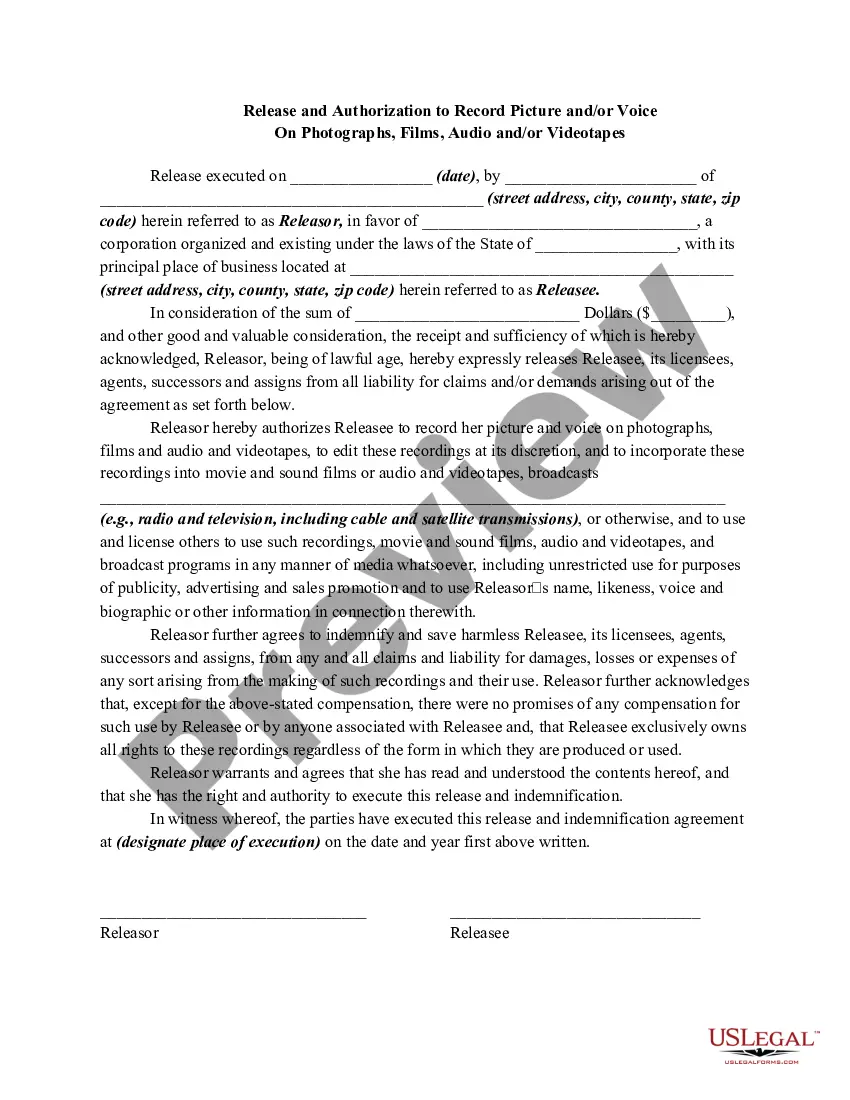
How to fill out Release And Authorization To Record Picture And / Or Voice On Photographs, Films, Audio And / Or Videotapes?
The Dog Release Record Document displayed on this page is a reusable official form crafted by experienced attorneys in accordance with federal and state laws.
For over 25 years, US Legal Forms has supplied individuals, organizations, and lawyers with more than 85,000 validated, state-specific documents for any professional and personal needs. It’s the quickest, simplest, and most reliable method to obtain the forms you require, as the service ensures bank-level data protection and anti-malware safeguards.
Subscribe to US Legal Forms to have verified legal templates for all of life’s situations at your convenience.
- Search for the document you need and examine it.
- Browse through the sample you looked for and preview it or check the form description to verify it meets your needs. If it does not, utilize the search bar to discover the correct one. Click Buy Now once you have found the template you require.
- Subscribe and Log In.
- Choose the pricing plan that fits you and create an account. Use PayPal or a credit card for a swift payment. If you already possess an account, Log In and review your subscription to continue.
- Obtain the fillable template.
- Select the format you wish for your Dog Release Record Document (PDF, DOCX, RTF) and save the template on your device.
- Complete and sign the document.
- Print the template to fill it out manually. Alternatively, use an online versatile PDF editor to quickly and correctly fill out and sign your form with a legally-binding electronic signature.
- Download your documents again.
- Utilize the same document again as needed. Access the My documents tab in your profile to redownload any previously saved forms.
Form popularity
FAQ
DHPP is a canine vaccine that prevents distemper, parvovirus, parainfluenza, and two types of adenovirus (hepatitis). Dogs should receive the DHPP vaccine at 8, 12, and 16 weeks, one year later, and then 1 to 3 years after that. Previously, dogs received DHPP yearly afterward.
After the puppy series, we re-vaccinate the patient when a year has passed. For rabies and distemper, we would go for an every-three-year protocol after the one-year booster. The Leptospirosis, Bordatella, influenza, and Lyme are done annually.
Although getting your dog vaccinated when it is very young is very important ? it is equally important to keep your dog vaccinated throughout its life. How often should dogs be vaccinated after their first inoculations? We recommend that dogs receive a 'booster' vaccinations every 12 months.
The rabies vaccination certificate is formal proof that your dog has been vaccinated against rabies. As of March 1, 2023, the CDC Rabies Vaccination and Microchip Record [PDF ? 1 page] is the only rabies vaccination certificate that CDC will accept from dogs that were vaccinated outside of the United States.
Vaccinal titer testing is a scientifically proven method of determining immunity and protection against the core vaccine agents. Even a so-called ?fully vaccinated? dog may not be actually ?immune?. Titer testing helps to identify animals that would benefit from vaccination.